Heads up: This post contains affiliate links. As an Amazon Associate I earn from qualifying purchases, at no extra cost to you. Learn more
Specs are compiled from manufacturer listings and verified buyer reviews and can change over time — please confirm the key details on the product page before buying.
If your nose bleeds every time the heating comes on, you do not need another drugstore spray that trickles down your throat in ten seconds. You need something that stays put on the nasal lining long enough to keep the tissue from cracking. That is the whole job here, and the five picks below handle it in two different ways: gel moisturizers that prevent the bleed, and a coagulant insert that stops one already running.
This guide is built by comparing the manufacturers’ published specifications and the patterns across verified customer reviews, so you get each pick’s real strengths and trade-offs instead of marketing spin.
Before you buy, decide which problem you have: preventing dryness or stopping an active bleed — they take two different products. This breakdown covers both, so you can pick the right nasal spray for nosebleeds without guessing.
Top Picks
How To Choose The Best Nasal Spray for Nosebleeds
Most people buy the wrong thing because they buy during a bleed instead of before one. Your pick depends on whether you are keeping tissue from cracking in the first place or shutting down a bleed that has already started.
Moisturize first, stop the bleed second
Recurring nosebleeds usually start with a dry nasal lining that cracks when you breathe, blow, or sleep near a heater. A moisturizing gel keeps that lining coated so it stops splitting. A coagulant foam insert is a different tool entirely — it goes in when blood is already flowing and helps a clot form at the source.
Look at what carries the moisture
A plain saline mist is mostly water and runs out of the nose quickly. A gel formula — or a spray that turns to gel — stays on the tissue longer, which is why people with chronic dryness tend to prefer it. Check whether the label lists a gel base, aloe, or sodium hyaluronate, since those are the ingredients that hold moisture in place rather than rinsing straight through.
Watch the salt level and the pH
Salt concentration matters more than most buyers realize. A hypotonic formula carries a lower salt level than your body’s own fluid, and some noses tolerate that better than a standard isotonic saline. pH is the other quiet factor — a formula balanced close to your nose’s natural environment is less likely to sting on contact.
Match the format to the routine
If you use a CPAP machine, oxygen tubing, or live somewhere with dry winters, you want a format you can reach for every night without fuss. Multi-bottle packs cut down on reordering. If you take blood thinners or bleed heavily and often, a coagulant insert kept in a bag or glovebox is the more practical safety net.
Side-by-Side Comparison
| Model | Best For | Format | Size | Pack Count | Amazon |
|---|---|---|---|---|---|
| Ayr Saline Nasal Gel No-Drip Spray with Aloe★ Best Overall | Everyday dryness prevention | No-drip gel spray | 0.75 fl oz each | 3 | Amazon |
| BleedStop Nosebleed StripsBleed Stopper | Stopping an active bleed | Coagulant foam insert | — | — | Amazon |
| NeilMed NasoGel Saline Gel Spray | Dry-air and travel routines | Water-soluble gel spray | 30 mL each | 2 | Amazon |
| Rhinase Soothing Nasal Gel XL | Long-term dry-nose care | Hypotonic nasal gel | 60 g | 1 | Amazon |
| Rhinase Nasal Care Combo Pack | Full gel plus spray routine | Gel and saline spray | 1 oz each | 2 | Amazon |
Detailed Reviews
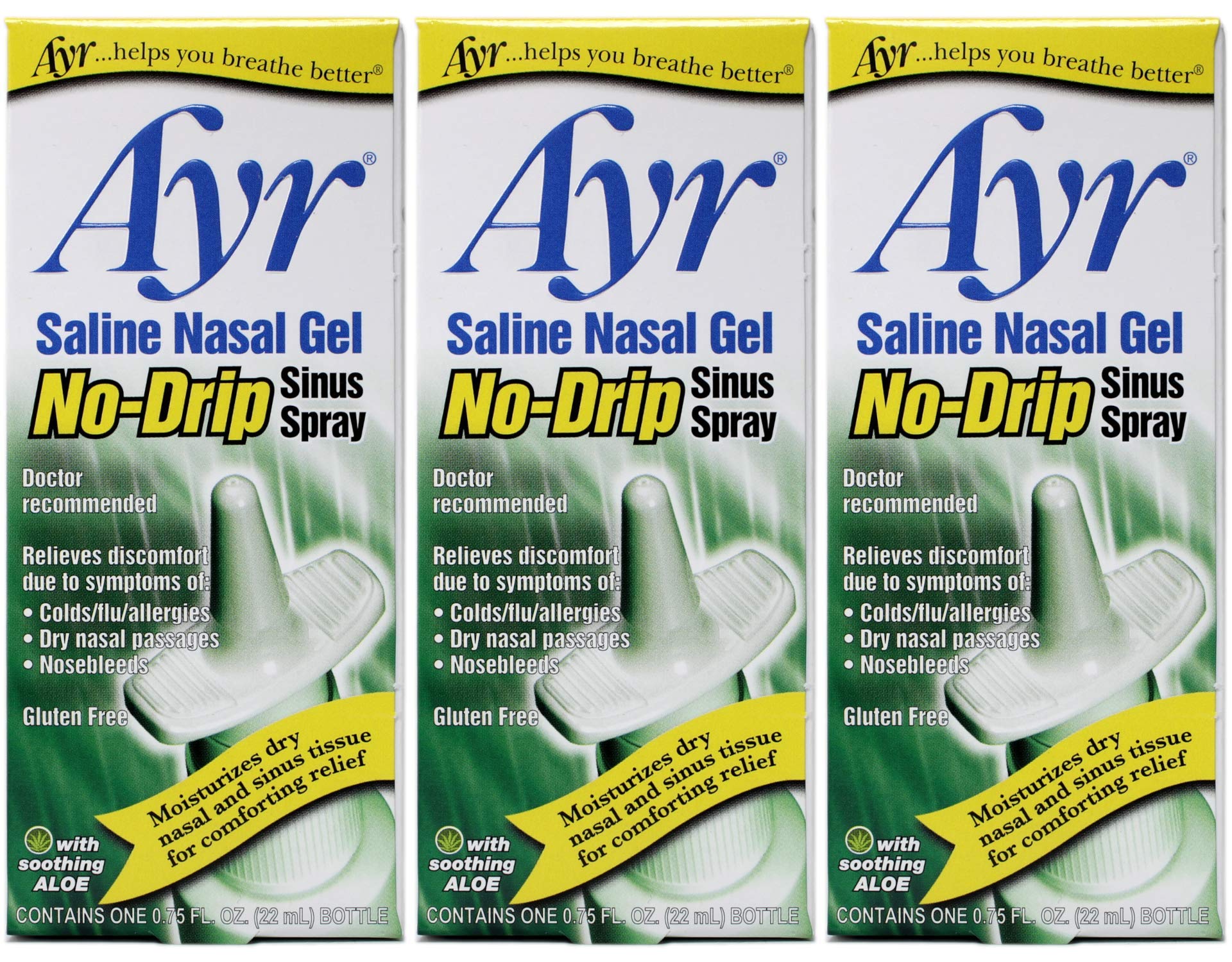
1. Ayr Saline Nasal Gel Pack of 3
Our pick — 4.5+★ from 600+ verified ratings; the strongest balance of quality and price.
The gel spray that coats a cracked nose lining instead of rinsing straight through it.
This is a gel-based saline spray rather than a watery mist, and that single difference is what makes it the pick for anyone whose nose bleeds on a schedule — every dry morning, every blast of winter heat. Because the formula clings instead of running out, you get longer contact with the tissue that keeps splitting. The pack holds three 0.75 fl oz bottles, so you can park one at the bathroom sink, one at your desk, and one in a bag without reordering mid-winter.
Moisture is where this bottle earns its keep, and it does it without the medicine-cabinet harshness. The aloe in the formula is aimed at calming irritated tissue rather than masking it, and the listing positions the spray for people whose dryness comes from colds, allergies, smoke, low humidity, or overnight CPAP and oxygen use. If your nose has been dried out by overusing a decongestant spray, this is the gentler lane back.
The trade-off a buyer should know about is that a gel goes on thicker than a fine saline mist, and some noses notice that heavier feel on the first spray. It is a coating, not a rinse, so it works best used ahead of the dryness rather than only after a bleed has already started. What this bottle really buys you is a quieter morning: a coated lining that does not crack when you roll over and breathe.
Why this one leads the list
- No-drip gel stays on the nasal lining instead of draining down the throat
- Three 0.75 fl oz bottles cover home, work, and travel without a reorder
- Aloe and moisturizing ingredients aimed at irritated, dry tissue
- Suited to CPAP, oxygen therapy, and winter dry-air routines
- Gluten free and made in the USA
What to weigh before you buy
- Thicker gel texture is a different feel from a light saline mist
- Works as prevention, not as a stop-the-bleed tool
- Buying three bottles at once is more supply than an occasional user needs
Reach for this if: your nose dries and cracks on a predictable cycle and you want one bottle everywhere you sit.
Look elsewhere if: you need something to insert during an active bleed — that is a coagulant’s job, not a moisturizer’s.
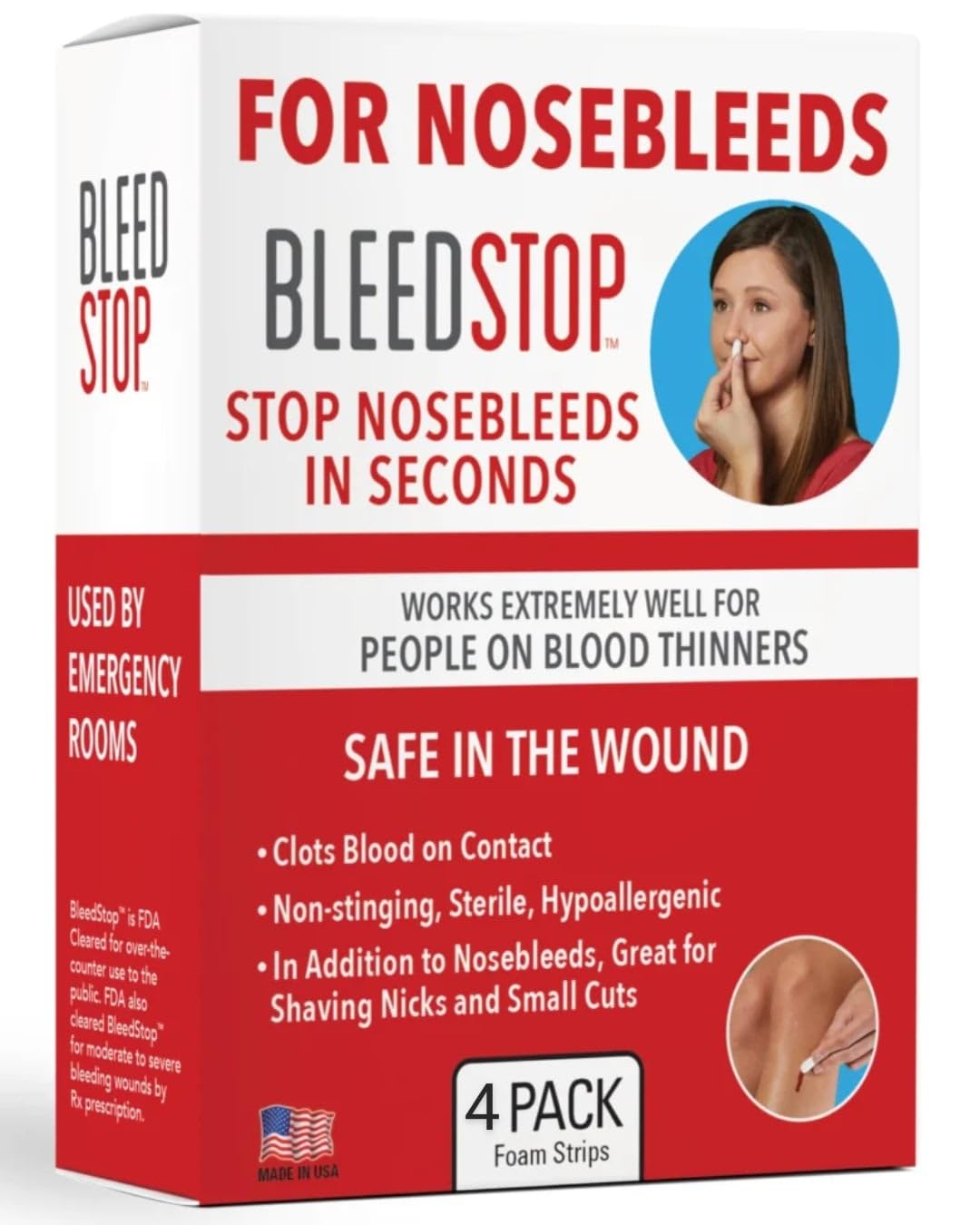
2. BleedStop Nosebleed Strips – Coagulant Foam Inserts
Not a moisturizer at all — a foam insert that goes in while the blood is still running.
Every other product here is built to keep tissue from drying out. This one is built for the ten minutes after it already failed. It is a blood coagulant foam strip, meaning it helps a clot form at the bleeding point rather than leaning on pressure and your body’s own slower clotting. That distinction is the reason it earns a spot on a nosebleed list at all: standard nose plugs only squeeze, while these are designed to help form a natural clotting gel at the source.
The method is simple enough to do half-asleep. You pinch the foam tip so it narrows to fit the nasal cavity, slide it to where the bleeding is, press gently, and hold. The listing also pitches it for people taking blood-thinning medication, which is the group that most needs a real coagulant in the house instead of a tissue and hope. The materials are sterile and hypoallergenic, and the formula is described as non-stinging — note, since raw tissue after a bleed is not a place you want a sharp sensation.
Here is the honest framing: this is a first-aid item, not a daily-use product, and it does not moisturize anything. If your problem is chronic dryness, buying this alone solves half the puzzle and leaves the cause untouched. The sensible setup is a coagulant like this for emergencies plus a gel spray for the rest of the month.
Where it belongs: in the bathroom drawer, the car, and any bag belonging to a household that sees frequent bleeds or manages them on blood thinners. The strip is small and travel-friendly, which is exactly what an emergency item should be.
The other half of the job: it will not stop the bleeds from happening next week. Pair it with a gel moisturizer and you cover both the cause of a bleed and the bleed itself.
Keep this on hand if: bleeds run heavy or frequent in your house and you want something that acts on contact rather than pressing a tissue and waiting.
Not the pick for: a mild occasional dry nose that a nightly gel would handle better.
3. NeilMed NasoGel Nasal Saline Gel Spray, 30mL (Pack of 2)
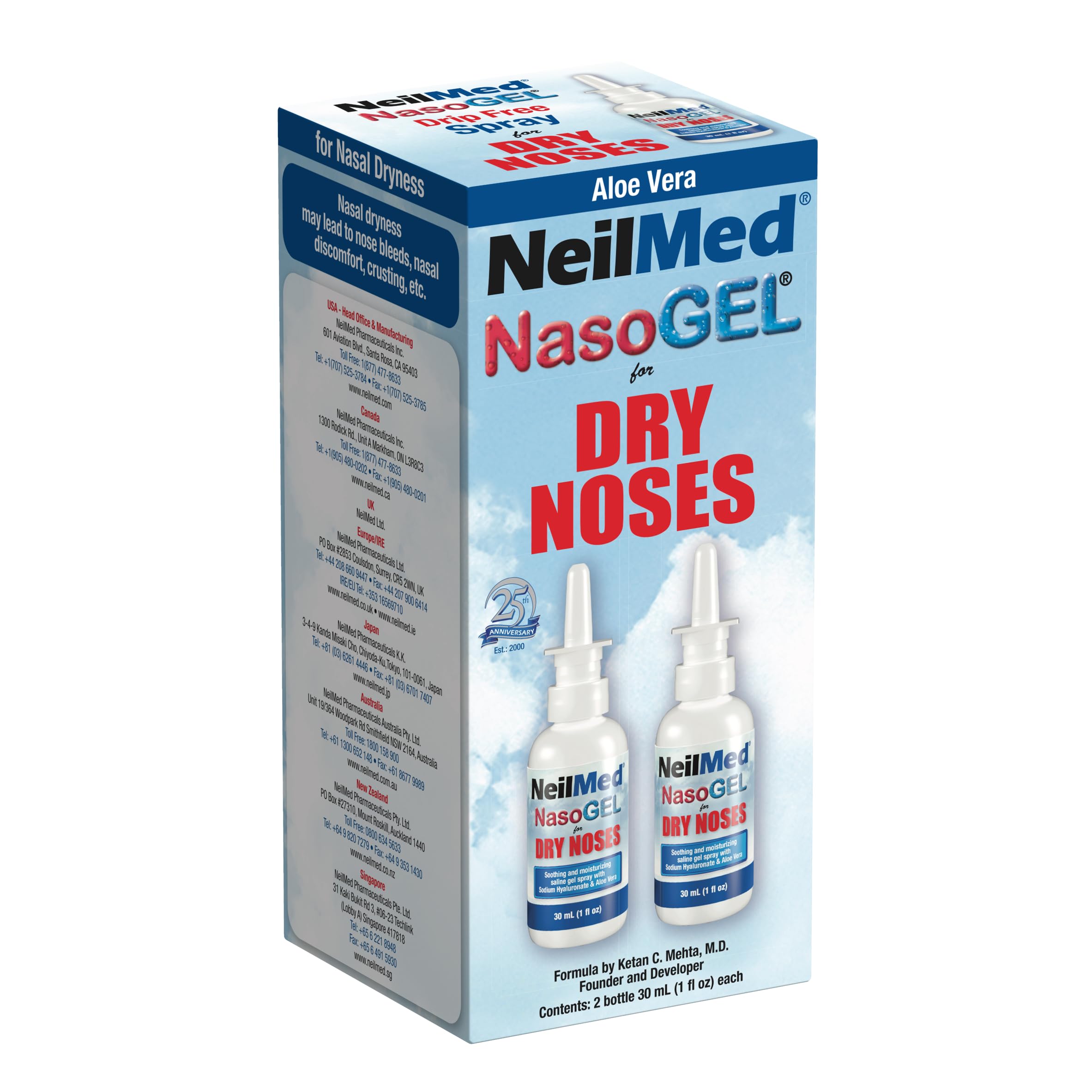
Two slim bottles of water-soluble gel, sized to actually travel with you.
You get 30 mL per bottle, two in the pack, so you can keep one in a carry-on and one in a glovebox or desk drawer. That size suits people whose dryness follows them around — plane cabins, hotel rooms at altitude, offices with the heat cranked. Unlike the Rhinase combo pack up next, which carries 1 oz per bottle across two different products, this is two of the same gel spray, so you get a spare rather than a second formula.
The ingredient list is what separates it from a plain saline rinse. Sodium hyaluronate is in there for deep hydration, and the gel base is water-soluble so it spreads without dripping. Effectiveness is clearly the thing that wins people over — the review pages treat it as a step up from ordinary saline, and the moisturizing reports back that up. The spray format also makes it easy to add to a CPAP or oxygen routine without breaking the habit.
The cap is the catch: opening these bottles gets under some people’s skin, and a few find the pricing hard to justify for the volume you get. Neither is a reason to write off the product — the gel itself does its job — but if hand strength is an issue for you, plan for a bit of a fight at the top of each bottle.
Where it shines: dry airplane air, heated hotel rooms, high-altitude trips, and any CPAP or oxygen routine that needs moisture added without a full sink setup. Two 30 mL bottles means one lives in the bag and one lives at home.
The fit-note: the cap takes some twist to get off, which a handful of buyers find annoying. If your hands are arthritic or weak, this design will test your patience.
Pack this one if: your nose dries out on planes, in dry climates, or under oxygen tubing and you want a bottle that fits in a pocket.
Pass if: you want the largest supply for the money at your bathroom counter — the XL Rhinase below covers more ground per bottle.
4. Rhinase Soothing Nasal Gel XL 60 g for Nasal Dryness
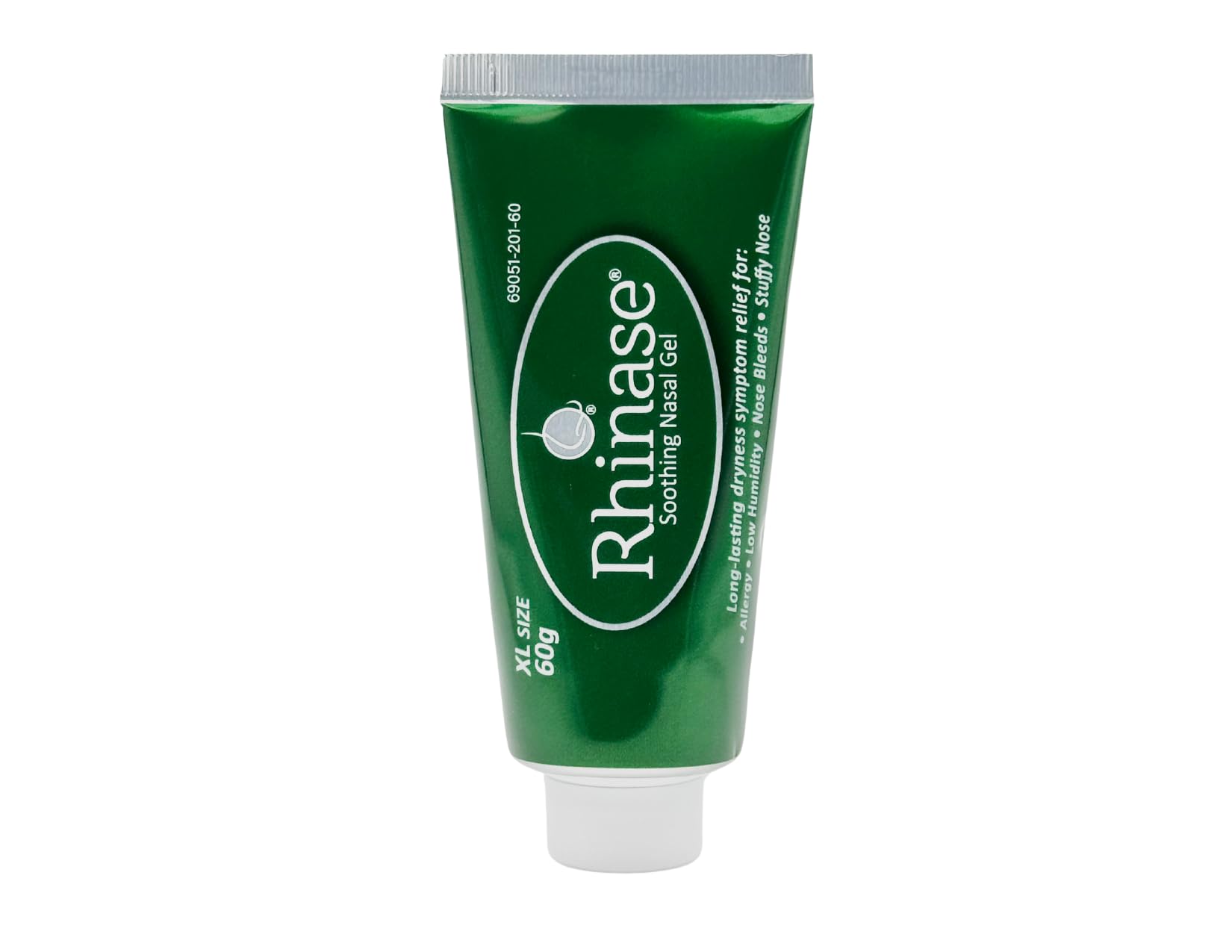
60 grams of steroid-free gel in one tube, built for people who use this every single night.
The headline here is the size: 60 g in a single tube, which is the biggest single-container supply on this list. If you are treating a nose that dries out every night of a long winter, that quantity is the practical difference between reordering monthly and forgetting about it. It carries 1.36 ounces of weight, so it is compact to stash on a nightstand.
The formulation is the interesting part. Most saline products are isotonic or hypertonic — matched to or saltier than your body’s own fluid. This one is hypotonic, meaning it sits at a lower salt concentration, and it carries both sodium and potassium to moisturize the passages. It is also steroid free, which matters if you already use a steroid spray and do not want to stack more of the same, and it is pH balanced at 6.2 so it is less likely to sting or trigger a bleed on contact.
What you give up for the bigger tube is a convenient spray format — this is a gel you apply, not a fine mist, and a gel takes a touch more care to place where you want it. The cost per tube also draws split opinions, with some buyers calling it a bargain and others finding it on the pricey side. Weigh that against the fact that one tube stretches further than a small spray bottle.
The case for the XL tube
- 60 g in one container is the longest single supply here
- Hypotonic dual-salt formula with both sodium and potassium
- Steroid free — safe to use alongside a steroid spray
- pH balanced at 6.2 to reduce stinging
- Fits a nightly routine without constant reordering
Where it asks a little more
- Gel application takes more care than a quick spray
- Per-tube cost splits opinion between bargain and pricey
- One container means no spare in the bag
Built for: the long-haul dry-nose sufferer who wants one tube that lasts all season and prefers a steroid-free formula.
Better served elsewhere: if you want a spray you can hit in two seconds on the way out the door, the Ayr or NeilMed gel sprays are easier targets.
5. Rhinase Nasal Care Combo Pack

One box that covers both jobs — a gel for coating and a spray for rinsing.
This combo is the only pick here that hands you two different formats at once: a 1 oz nasal gel and a 1 oz saline spray, working as a pair rather than a spare. The gel coats the dry lining, the spray handles a quick rinse. It is also the heaviest pick in this set at 2.12 ounces, next to the NeilMed pack’s 1 ounce — a difference you notice if you are deciding what goes in a small travel pouch.
What makes this one stand out for sensitive noses is what is left out. Both bottles are free of aloe, dyes, and fragrances, which lowers the odds of a reaction in someone whose nose already reacts to everything. Each is pH balanced at 6.2, steroid free, and built on a dual-salt base with both sodium and potassium for hydration. Bleed prevention is a real thread in the feedback — the review pages note it working for toddlers in particular — and longevity comes up too, with users saying a bottle stretches well.
The honest friction points: the spray side has drawn complaints about the mist not coming out properly, and the price per box splits opinion sharply, with a chunk of buyers feeling it is steep for the volume. Neither one undoes the formula’s strength, but go in knowing the sprayer is the weaker half of the pair.
what separates it: the aloe-free, dye-free, fragrance-free build. For a household where scented or aloe-based products have triggered irritation, that is a meaningful filter most other picks here do not offer.
The gamble to accept: the spray end is the spotty half — a mist that does not always flow right can waste product. The gel inside the same box is the more dependable of the two.
The right box for you if: you want both a coat and a rinse in one purchase and your nose flares up at fragrances or aloe.
Skip the combo if: you only need one format — buying the gel alone gets you the same formula without the temperamental sprayer.
Know the Specs
Gel versus spray consistency
A spray delivers a thin mist that reaches a wide area but runs off the lining quickly. A gel — whether squeezed from a tube or sprayed as a gel formula — clings longer, so the tissue stays coated between uses. For recurring nosebleeds driven by dryness, the cling time is what matters, not the burst of moisture at the moment of application.
Isotonic versus hypotonic
Isotonic means the salt concentration matches your body’s own fluid. Hypotonic means it sits lower. A hypotonic formula like the Rhinase XL carries a gentler salt load, which some dry, irritated noses tolerate better over repeated use. Neither is inherently stronger — it is about which one your nose accepts without stinging.
pH balance
pH measures how acidic or alkaline a liquid is on a scale where your nose’s natural environment sits near the middle. Formulas balanced close to that range, such as those at 6.2, are designed to sit without stinging or provoking the tissue. It is a quiet spec that decides whether a nightly product feels comfortable or feels like a sharp pinch.
Bottle size and supply
Gel sprays are often sold by volume in milliliters, while gels come by weight in grams or ounces. The bigger the container, the fewer reorders — a 60 g tube outlasts a small spray bottle. If you use it nightly through winter, the bigger container beats a small per-ounce saving. If you only need it for travel, the small bottles win.
What a coagulant does
A coagulant is not a moisturizer. It is designed to help blood clot at the source of a bleed, rather than relying on pressure alone. Foam inserts are for active bleeding; moisturizing sprays are for preventing the dryness that causes bleeds. Owning one does not replace the other.
Ingredients that hold moisture
Sodium hyaluronate, aloe, and dual wetting agents are the ingredients that keep nasal tissue hydrated rather than simply wet. If your nose dries out fast, check the label for one of these before you buy. A plain saline rinse can still help, but it will not hold moisture the way a gel base does.
Common Questions
Should I use a gel or a spray for nosebleeds?
Can a moisturizing spray actually stop a nosebleed that is already running?
What does hypotonic mean on a nasal gel label?
Is a steroid-free nasal gel safe to use with a steroid spray?
Will these sprays help if I sleep with a CPAP machine or use oxygen?
How long does one bottle of nasal gel last?
Are aloe-free formulas better for sensitive noses?
Can a nosebleed insert be used for someone on blood thinners?
Why do some gel sprays complain about the cap?
Do I need to buy a multi-bottle pack or a single tube?
The Bottom Line
For most people dealing with recurring nosebleeds, the winning nasal spray for nosebleeds is the Ayr Saline Nasal Gel No-Drip Spray because its gel base actually clings to a dry lining instead of running off, and the three-bottle pack puts one within reach wherever you sit. If heavy or frequent bleeds are the concern, keep the BleedStop strips in the drawer as a coagulant backup. And for a nightly winter routine that needs the longest supply in one tube, the Rhinase XL is the one to reach for.
How we choose
We do not accept paid placement. Every pick is matched to a real buyer and a real use-case; we do not hands-on test units.
Sources
Specifications: manufacturer listings and product documentation. Review insights: verified customer reviews, as of November 2026. Pricing: not shown on this page (it changes often); check the current price via the retailer link.
As an Amazon Associate, My Heart Lives Here earns from qualifying purchases. This does not affect which products we feature.