Heads up: This post contains affiliate links. As an Amazon Associate I earn from qualifying purchases, at no extra cost to you. Learn more
Specs are compiled from manufacturer listings and verified buyer reviews and can change over time — please confirm the key details on the product page before buying.
If you are buying Moroccan olive oil for the polyphenols, the number to hunt for is printed in milligrams per kilogram (mg/kg) — and most bottles never show it. That single figure is the only reliable measure of how much peppery, throat-catching antioxidant punch you actually get. Below are five genuinely polyphenol-rich bottles, with the real lab figures and what each one is like to cook with and to sip.
This guide is built by comparing the manufacturers’ published specifications and the patterns across verified customer reviews, so you get each pick’s real strengths and trade-offs instead of marketing spin.
The phrase “high polyphenols” gets thrown around loosely, so you need to know which bottles back it up with a real figure. This is the practical breakdown of the Moroccan olive oil with the highest polyphenols you can actually order.
Top Picks

How To Choose The Best Moroccan Olive Oil Highest Polyphenols
Polyphenols are the natural antioxidant compounds in olive oil responsible for its bitterness and the peppery burn at the back of your throat. More of them usually means a fresher, punchier oil — but “more” is only useful if the bottle proves it with a number. Here is what actually separates a serious high-polyphenol bottle from a label that just sounds healthy.
Look for a printed mg/kg figure
A real polyphenol count is written in milligrams per kilogram (mg/kg) or sometimes as total phenols. A bottle that names its number, like 584 mg/kg or 699 mg/kg, is telling you exactly what was measured. A bottle that only says “high polyphenols” with no figure is asking you to take its word for it, which is not the same thing.
Cough if it is real
When you swallow a genuinely polyphenol-heavy oil, you feel a tingle or a cough in your throat. That reaction comes from the same compounds the mg/kg number counts, so a bottle with a strong peppery finish is usually the one with the higher figure. A flat, buttery oil can still taste lovely, but it tends to sit lower on the phenol scale.
Check the harvest and the bottle
Polyphenols fade with age, so a harvest date tells you how fresh the oil really is. Heat and light also eat into those compounds, which is why a dark or ultraviolet-protected bottle helps hold the count steady. A 2-liter jug is economical, but once opened it has more air and time working against it than a tightly capped smaller bottle.
Side-by-Side Comparison
| Model | Best For | Polyphenols | Size | Origin | Amazon |
|---|---|---|---|---|---|
| Atlas Organic Extra Virgin Olive Oil★ Best Overall | Everyday cooking and finishing | High polyphenol (no figure printed) | 1 L (34 fl oz) | Morocco, Atlas Mountains | Amazon |
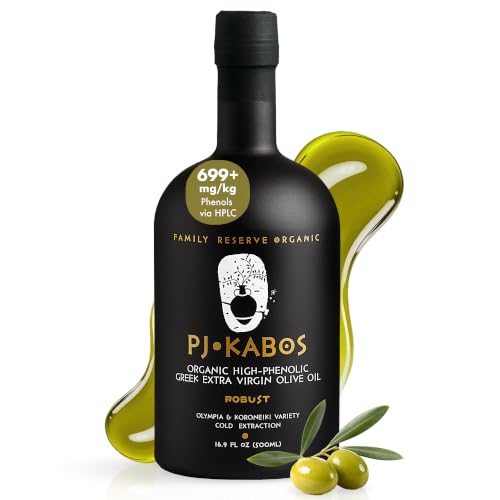
| P.J. KABOS Very High PhenolicHighest Phenol Count | Maximum phenol per bottle | 699 mg/kg | 16.9 fl oz | Greece, Ancient Olympia | Amazon |
| OLIVEA Ultra High Phenolic | Daily phenolic “shot” ritual | 1000+ mg/kg | 500 ml (16.9 oz) | Greece, Koroneiki | Amazon |
| NOOR FÈS 20+ Awards EVOO | Gifting and Moroccan flavor | 584 mg/kg | 17 oz | Morocco, Picholine | Amazon |
| Mabrouka Moroccan Virgin Olive Oil | Bulk everyday use | Virgin (no figure printed) | 2 L (68 fl oz) | Morocco | Amazon |
Detailed Reviews
1. Atlas Organic Extra Virgin Olive Oil 1 L
Our pick — 4.5+★ from 29,500+ verified ratings; the strongest balance of quality and price.
The everyday bottle that makes high-polyphenol Moroccan oil feel easy to cook with.
This is the pick that does not ask you to chase a single number. It is a Moroccan extra virgin (EVOO — oil pressed straight from fresh olives with no refining) out of the Atlas Mountains, sold in a 1 L bottle that pours about 34 fluid ounces. That size is the reason it wins: you get a generous bottle for cooking daily, not a tiny tasting vial. What wins people over is quality, described as the best many have ever cooked with, with a buttery, creamy texture that stays gently complex rather than harsh.
The flavor leans toward almonds, culinary herbs and a citrus-and-basil mix, so it is not a bitter, throat-scorching oil. That makes it unusually easy to use for general cooking, baking and even desserts, and it earns plenty of loyalty from buyers who simply keep reordering. It sits at the same corner of the price range as the P.J. KABOS bottle, but at 34 fl oz versus 16.9 fl oz it gives you far more oil to cook with per bottle — a straight size difference, not a quality one.
The catch is the polyphenol number: this bottle is marketed as high-polyphenol, but it does not print a mg/kg figure the way the KABOS and OLIVEA bottles do. So if you specifically want a lab-panel number to compare, this is the weaker choice on paper. If you want a large, genuinely good Moroccan EVOO to cook with every day, it is the safer buy.
What stands out
- Generous 1 L (34 fl oz) bottle for daily cooking
- Buttery, creamy texture with a mild, herb-and-citrus finish
- Versatile enough for pasta, cheese, toast, salads and baking
- Strong track record of people reordering it again and again
What to weigh first
- No printed mg/kg polyphenol figure to compare against rivals
- A milder, less peppery kick than the punchier high-phenol bottles
- Fewer counted polyphenol-focused mentions than taste or quality
Buy it when: you want one big, reliably good Moroccan EVOO for everyday cooking and finishing.
Pass it up if: a printed lab number on the label is the whole reason you are shopping.
2. P.J. KABOS Extra Virgin Olive Oil
A bold, peppery Greek olive oil that proves its phenol claim with a printed 699 mg/kg figure on the bottle.
You get a number you can actually check: 699 mg/kg of polyphenols, measured by HPLC (a lab method that separates and counts the compounds in the oil). The bottle also states 10 mg of hydroxytyrosol (one of the main polyphenols) per 20 g serving. Both figures are printed on the product, so you are not relying on vague “high phenol” talk. It is Greek, not Moroccan, but it sets the phenol benchmark in this group. The flavor is genuinely sturdy — aromas of cut grass and fresh oregano, medium-to-high bitterness, and a pungency of tomato leaf, arugula and green pepper.
The bottle holds 16.9 fl oz and stands 8.07 inches tall. Compare that to the Atlas bottle at 34 fl oz — you get roughly half the volume here, so plan on a finishing and dressing oil, not a bulk cooking staple. A high smoke point of over 400°F means it can handle sautéing and even frying, so it won’t burn off in a hot pan. It is at its best drizzled raw, though. This is single-origin Greek Koroneiki-area oil from the Olympia region, and it carries USDA Organic and Kosher certifications. It is built to be taken as a daily tablespoon, not poured over a roast.
Two honest caveats sit on the other side. This oil is expensive for a small bottle, and buyers split most on whether the value holds up. A few also report it turning rancid faster than expected, so check the harvest date and store it cool and dark. The punchy bitterness is a feature if you want a real “phenol shot,” and a hurdle if you want a mild cooking oil — so treat the sturdy profile as your reason to buy or to pass.
Why it earns this spot: it is the only bottle here that prints both a 699 mg/kg total phenol figure and an hydroxytyrosol count, so you know exactly what you are drinking.
The honesty check: that certification and lab testing come at a real cost for just 16.9 fl oz, and freshness is worth watching on arrival.
Reach for this: if you want a measured, spicy, throat-tingling oil as a daily antioxidant drizzle.
Think twice: if a mild flavor or a large cooking volume matters more than a printed phenol figure.
3. OLIVEA Ultra High Phenolic Olive Oil, 1000+ mg/kg, 500 ml
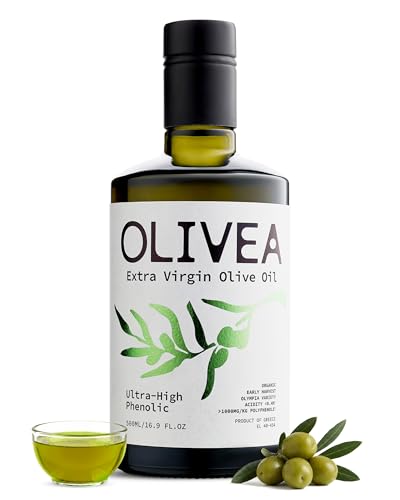
The highest phenol claim in the lineup, sold as a peppery daily “shot” rather than a cooking oil.
If the mg/kg figure is your whole buying decision, start here. OLIVEA claims 1000+ mg/kg of total polyphenols, verified by NMR (a lab technique that confirms the oil’s makeup), pressed from early-harvest Greek Koroneiki olives. It also lists over 10 mg of hydroxytyrosol per 20 g serving. That is a higher phenol representation than the 699 mg/kg KABOS bottle, and it sits well above the 584 mg/kg of the NOOR FÈS. Note that its own review patterns describe buyers seeing 800+ polyphenols, so treat the 1000+ as the maker’s claim rather than a number customers confirm.
The build is small and focused. It is a 500 ml (16.9 oz) bottle, so this is a bottle you take a tablespoon from, not one you pour across a whole roast. It is sold as a one-tablespoon daily phenolic shot for people who want maximum antioxidant intake per pour, with a bold peppery flavor. The flavor follows the phenol count: buyers describe it as peppery with a throat-catching finish, and it earns high marks on quality and health benefit. The bottle itself is where things can snag: buyers report a release valve that sticks, making it tricky to pour at all.
Two things to know before you commit. The value is the split topic here — some find it well worth it and would rebuy, and others find it rather expensive for a small bottle. And the pour valve is the real practical gripe, so expect a bottle that may test your patience before you even taste it. The oil itself is clean: USDA Organic, Non-GMO, Vegan and BPA-free, with no blends or additives.
Best for: anyone chasing the highest measurable polyphenol figure and willing to take it as a daily shot.
Not the one if: you want a large, fuss-free bottle for everyday cooking at the stove.
4. NOOR FÈS EVOO 17 oz
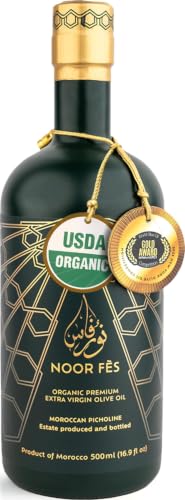
A genuinely Moroccan bottle with a real 584 mg/kg figure and a presentation that looks like a gift.
This is the one that nails the actual Moroccan request. It is single-origin Moroccan Picholine olive oil, hand-harvested and cold-pressed, with a printed 584 mg/kg polyphenol figure. That number sits below the KABOS 699 mg/kg and the OLIVEA 1000+ mg/kg, so it is not the highest in this group — but it is real and printed, and it comes from Morocco, the origin many shoppers are hunting for. The acidity is stated at less than 0.15%, which reads as a smooth, fruity pour rather than a harsh one.
Where it wins on presentation is the packaging. The bottle is ultraviolet-protected to help preserve the oil’s nutrients and flavor, and the label carries golden calligraphy inspired by Moroccan sunrises and Zellige mosaics. It is built as a gift for chefs and culinary people, and the 17 oz size is a one-person finishing bottle rather than a bulk pour. Its taste and quality are the two things buyers agree on most; the flavor is what people reach for it for, with the quality also called out as distinct from ordinary cold-pressed oils.
The trade-offs are fair to name. Value is the split topic — with the maker aiming at a gift-tier presentation, some find it well worth it and others note it is not the cheapest option, and it carries the highest label-tier position here. If you simply want the highest phenol number on the shelf, this bottle is not it; if you want a beautiful Moroccan bottle to give, it is.
The case for it: authentic Moroccan Picholine origin, a real 584 mg/kg figure, and gift-ready packaging that protects the oil from light.
The cost of the presentation: you are paying for the bottle and the story as much as the phenol count.
This is the one to give: if the bottle is a gift or a centerpiece for someone who loves Moroccan flavors.
Not for the pure number-chaser: if maximum mg/kg is your single goal, look upward on this list.
5. Mabrouka Moroccan Virgin Olive Oil 2 Liters

Two liters of first cold-pressed Moroccan oil when the whole family is cooking with it.
If volume is what your kitchen actually needs, this is the bottle. It pours 2 liters — 68 fluid ounces — of first cold-pressed Moroccan virgin olive oil, which is about four times the 16.9 fl oz you get in the KABOS bottle. It is a virgin oil rather than a certified extra virgin, and it does not print a mg/kg polyphenol figure, so treat it as an everyday cooking staple rather than a phenol-measured functional oil. It is certified OU Kosher and Halal and is labeled a product of Morocco.
Quality and flavor are the two things people agree on, with authenticity close behind — buyers describe it as genuine Moroccan oil and enjoy the flavor across salad dressings, grilling, baking, roasting and marinades. It comes in a large plastic bottle that is heavy to lift, so plan a spot for it on a low shelf rather than up high. The aroma is the split point: some note a faint olive scent rather than a big, grassy nose. If you like a neutral, easy-cooking oil, that works in your favor.
Value is the other honest split — some find it worth it and say they will buy again, others consider it pricey for a non-extra-virgin oil. That is the real decision: you are buying bulk and Moroccan authenticity, not a printed polyphenol number. It is the sensible everyday bottle to keep beside the stove, and the one to skip if you want a certified EVOO with a lab figure on it.
Where it delivers
- Huge 2-liter (68 fl oz) bottle for constant cooking
- First cold-pressed Moroccan oil with Kosher and Halal certification
- Enjoys a strong reputation for quality and authentic flavor
Where to temper expectations
- No printed mg/kg polyphenol figure to compare
- Virgin grade, not a certified extra virgin
- Large plastic bottle is heavy to handle; faint aroma for some
Stock up with this: if a busy kitchen burns through oil and wants a real Moroccan staple.
Keep looking if: you need a documented polyphenol count or a certified EVOO.
Know the Specs
Polyphenols in mg/kg
This is the oil’s total polyphenol content, measured in milligrams per kilogram (mg/kg) — the higher the figure, the more antioxidant compounds per bottle. A bottle that prints its figure, like 584 mg/kg or 699 mg/kg, is showing you the measurement. A bottle that only says “high polyphenols” leaves you guessing. Higher figures usually mean a more bitter, peppery oil, because the same compounds that measure high also create that kick.
Hydroxytyrosol
Hydroxytyrosol is one specific polyphenol that makers often list separately, stated here in milligrams per serving. It is the single polyphenol most high-phenol oils print separately to back up their total mg/kg claim. When a bottle prints both a total mg/kg figure and an hydroxytyrosol count, you have two checkpoints instead of one marketing claim.
Cold-pressed vs. virgin vs. extra virgin
Cold-pressed means the oil was extracted without heat, which helps preserve its flavor and its polyphenols. Extra virgin (EVOO) is the top grade of oil from fresh olives with no refining. Virgin is a step below and can be a sensible everyday cooking oil, but it is not held to the same standard as extra virgin. Check which grade you are buying before you compare polyphenol counts.
Harvest date and bottle protection
Polyphenols fade with time, so a recent harvest matters as much as the printed number. Heat and light both break the compounds down, which is why dark or ultraviolet-protected bottles help keep the count where it started. A 2-liter jug is economical but has more time and air working against it once opened than a tightly capped small bottle.
Common Questions
How do I actually compare polyphenol levels across these bottles?
Is Moroccan olive oil higher in polyphenols than Greek olive oil?
Why does high-polyphenol olive oil make me cough?
Should I cook with a high-phenol oil or only drizzle it raw?
How should I store these bottles so the polyphenols do not fade?
What is the difference between the printed 584, 699, and 1000+ mg/kg figures?
Is a virgin oil as good as an extra virgin for polyphenols?
How do I know a bottle is fresh when it arrives?
Is a tablet or capsule a better way to get polyphenols than the oil?
Which of these is the right first bottle to try?
The Bottom Line
For most people who want a moroccan olive oil highest polyphenols bottle they will actually use, the Atlas Organic Extra Virgin Olive Oil is the all-round winner — a big 1 L bottle of genuinely good Moroccan EVOO with a buttery finish that suits daily cooking. If a printed number is your priority, the P.J. KABOS bottle gives you a measured 699 mg/kg and a spicy, throat-catching pour. And if you want the highest stated figure of all, the OLIVEA Ultra High Phenolic at 1000+ mg/kg is the one to reach for.
How we choose
We do not accept paid placement. Every pick is matched to a real buyer and a real use-case; we do not hands-on test units.
Sources
Specifications: manufacturer listings and product documentation. Review insights: verified customer reviews, as of November 2026. Pricing: not shown on this page (it changes often); check the current price via the retailer link.
As an Amazon Associate, My Heart Lives Here earns from qualifying purchases. This does not affect which products we feature.