Heads up: This post contains affiliate links. As an Amazon Associate I earn from qualifying purchases, at no extra cost to you. Learn more
Specs are compiled from manufacturer listings and verified buyer reviews and can change over time — please confirm the key details on the product page before buying.
If your sourdough comes out flat, gummy or pale instead of tall and open-crumbed, the flour is usually the culprit — not your starter and not your folding. This guide covers five flours that real bakers use for sourdough, from heritage American wheat to finely milled Italian Tipo 00, and explains in plain words what each one does to your loaf so you can pick the right bag for the bread you actually want to bake. The short answer: buy the Sunrise Flour Mill Heritage Organic Bread Flour Blend if you want one bag that handles sourdough reliably, and reach for a Tipo 00 only when you want a softer, more delicate crumb.
This guide is built by comparing the manufacturers’ published specifications and the patterns across verified customer reviews, so you get each pick’s real strengths and trade-offs instead of marketing spin.
You will see how protein level, wheat type and milling style change rise, crust colour and chew — and how to match a bag to your starter and your schedule. Every pick below is a real bag you can buy, sorted by what it actually does in a dough bowl, so choosing the best Italian flour for sourdough bread stops being guesswork.
Top Picks

How To Choose The Best Italian Flour for Sourdough Bread
A sourdough loaf asks more of flour than any other bread. Your dough sits wet for hours, so the flour has to hold its structure while wild yeast and bacteria work through it. Pick the wrong one and you get a slack puddle that never lifts in the oven. Pick the right one and the same recipe suddenly gives you height, an open crumb and a crackling crust.
Three things decide that outcome: how much protein the wheat carries, how finely it is milled, and how strong the gluten network is after that milling. Everything else printed on the bag is secondary.
Start with protein and gluten strength
Protein is what becomes gluten, and gluten is the elastic web that traps the gas your starter produces. Higher protein usually means a stronger dough that can take a long wet rise without collapsing. On Italian bags you will often see a “W” figure instead of a percentage — it is a baking-strength index, and the higher it runs, the more water and ferment time the flour can handle before it gives out. Manitaly puts its W at 330-350 and calls the flour strong or special for exactly this reason.
Know what the grinding number means
Tipo 00, Tipo 0 and Tipo 1 are Italian grind grades, not brands. Tipo 00 is the finest of the group, milled to a talc-like powder that gives a soft, even crumb and a pale crust. Finer grind also ferments faster, so a 00 dough can run hot in a warm kitchen. Tipo 0 sits one step coarser and carries a little more bite.
Decide between heritage wheat and modern wheat
Heritage wheats such as Turkey Red and White Sonora are older varieties, and the flours milled from them tend to bring deeper flavour and a golden crumb. Bakers who find modern wheat heavy report that these older varieties sit easier. If you want a flavourful everyday sourdough with a nutty edge, a heritage blend is the simpler start. If you want a delicate, bakery-style crust and a chew that stretches, an Italian Tipo 00 or 0 is the tool for that job.
Side-by-Side Comparison
| Model | Best For | Flour Type | Bag Size | Protein / Strength | Amazon |
|---|---|---|---|---|---|
| Sunrise Flour Mill Heritage Organic Bread Flour Blend★ Best Overall | Everyday sourdough and sandwich loaves | Organic heritage bread blend | 5 lb (80 oz) | High protein | Amazon |
| Antimo Caputo 00 Pizzeria Flour (Blue)Top Performer | Crisp-crust pizza and high-heat bakes | Italian Tipo 00 | 9 lb (144 oz) | Not stated | Amazon |
| Manitaly Manitoba Type 0 | Long-fermentation country loaves | Italian Tipo 0, Manitoba wheat | 2.2 lb (1 kg) | W 330-350 | Amazon |
| Sunrise Flour Mill Heritage Organic White Flour | Versatile all-purpose sourdough and tortillas | Organic heritage all-purpose | 5 lb (80 oz) | High protein | Amazon |
| POLSELLI Organic Tipo 00 | Big-batch Italian-style sourdough and pasta | Organic Italian Tipo 00 | 11 lb (176 oz) | Not stated | Amazon |
Detailed Reviews
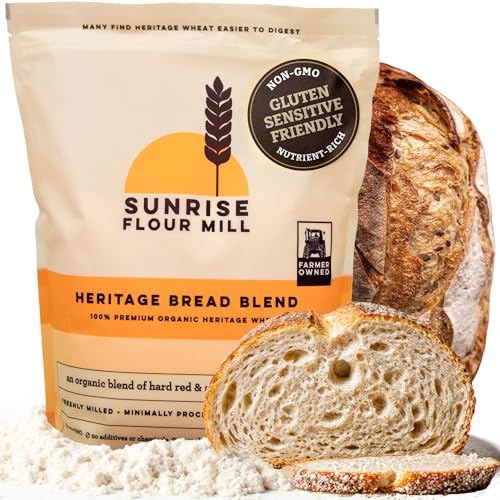
1. Sunrise Flour Mill Heritage Organic Bread Flour Blend
Our pick — 4.5+★ from 1,000+ verified ratings; the strongest balance of quality and price.
The heritage blend that makes sourdough taste like bread used to.
If you only buy one bag for sourdough, this is the one to put in the pantry. It is a high-protein bread blend — protein being the part of wheat that becomes gluten, the elastic net that holds the gas your starter makes — so your dough keeps its shape through a long, wet ferment. It comes from heritage wheat, which means older wheat varieties rather than modern hybrids, and it is milled in a single pass using a 1930s method the mill calls unifine. That fine, fluffy grind is why the finished crumb comes out soft and airy instead of dense.
What wins people over is quality — it is the single most praised thing about this bag, and the gap to the next topic is wide. Taste runs second, and it shows up in the loaf as a smooth, nutty flavour with a creamy-gold colour rather than the flat white of supermarket bread flour. The wheat is a blend of Turkey Red and White Sonora, both heritage varieties, and it is USDA Organic with no chemicals, pesticides or herbicides in the mix. Bag size is 5 pounds, sold as 80 ounces. Compare that to the Polselli bag at 176 ounces and you are getting less than half the flour — which matters if you bake two or three loaves a week.
Bakers who react to standard flour are the other group that keeps reordering, citing the heritage milling as easier to digest. That is not a medical claim and you should treat it as a personal-tolerance thing rather than a guarantee. The honest catch is cost per loaf: this sits at the higher end of the mid-range, and plenty of bakers feel the pinch on value even while they keep reordering. An occasional bag arrives with a compromised seal, so check the packaging when it lands.
What earns it the top spot
- High-protein heritage blend holds structure through a long wet rise.
- Nutty, smooth flavour with a creamy-gold colour in the crumb.
- USDA Organic and milled single-pass from Turkey Red and White Sonora wheat.
- Works equally well in a bread machine for anyone who does not hand-shape.
Where it stings a little
- The 5 lb bag is 80 ounces — well under the Polselli bag’s 176 ounces, so heavy bakers restock often.
- Value is the one split topic: the flour earns its keep on flavour but costs more per loaf than grocery-aisle flour.
Buy this if: you want one dependable bag that makes flavourful, well-risen sourdough without hunting down a specialty Italian import.
Think twice if: you bake in volume and want a big bag that lasts — the Polselli below carries more than double the flour.
2. Antimo Caputo 00 Pizzeria Flour (Blue) 9 Lb Repack
The 00 grind that turns a home oven into a pizzeria.
Caputo’s blue bag is a Tipo 00 — the finest Italian grind grade, milled to a powder so smooth it feels like cornstarch between your fingers. That fineness is the whole point. In a hot oven it gives you a crust that stays crisp under a wet topping and a dough that stretches thin without tearing. If your sourdough ambitions lean toward pizza and focaccia rather than sandwich loaves, this is the grind those bakes are built around.
Quality is the headline here, and it is not close — it is the most-praised trait by a wide margin, with texture a distant second. Owners describe the dough as easy to work and the results as a step up from what they were getting before. Flavour lands as a modest but consistent topic: enough of a taste difference that people notice it. The bag is a 9 lb repack, 144 ounces in total, which is nearly twice the flour in either 5 lb Sunrise bag.
Here is where you need to be careful. A Tipo 00 like this is a fast, fine flour, so it suits a hot, quick pizza bake far better than a slow all-week sourdough ferment — for a long cold retard, a stronger flour does the job better. Value splits opinion, and there is a real quality-control worry: a small group report bugs hatching inside unopened packages. That is a shipping and storage issue rather than a flour flaw, but inspect the bag the day it arrives and freeze it if you are stocking up. It is also a repack, not the original factory sack, so you get the flour without the brand packaging.
Who it serves: home pizza makers and anyone chasing a delicate, blistered crust. The fine 00 grind and easy handling make it forgiving for beginners shaping their first pies.
The watchdog note: inspect on arrival. Insect reports are a minority, but they are specific enough to justify opening the bag outside and storing the flour sealed.
Reach for this if: pizza and flatbread are your main bake and you want the classic Italian 00 texture.
Look elsewhere if: you want one flour for slow, high-hydration sourdough boules — the finer grind ferments fast.
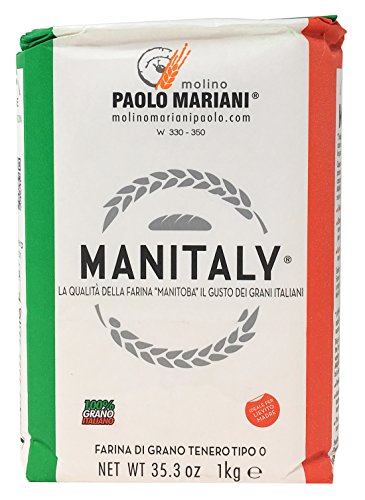
3. Manitaly Manitoba Type 0 Flour
A measurably strong flour built for doughs that take their time.
Most flour bags leave you guessing how strong the wheat really is. This one tells you outright: a W of 330-350. That W figure is a baking-strength index — the higher it runs, the more water and ferment time the flour can carry before the gluten breaks down. In real terms, it means this flour can absorb 90% of its weight in water and still hold together, which is exactly what a wet, slow sourdough needs. It is a Tipo 0, one grind step coarser than 00, so the dough keeps a little more bite.
High gluten and high protein are the reason it behaves this way, and the manufacturer also positions it for adding strength to weaker flour mixes. The practical trick most bakers miss: you do not have to use it alone. Blend a portion into a softer all-purpose and the whole dough firms up for a long rise. It is 100% Italian wheat with a traceable supply chain you can check via the QR code on the package, and it is Non GMO. Quality is the trait owners single out most, with versatility close behind — people use it for bread, pizza dough, focaccia and desserts with long rise times.
The 2.2 lb bag is the smallest here by a wide margin — compare it to the 11 lb Polselli and you are getting a fraction of the flour, which is the biggest knock against it for regular bakers. Cost per pound lands high and owners consistently say it is expensive, with shelf life drawing mixed reactions. Buy it as a strength booster or a trial bag rather than your everyday workhorse.
The strength story: a W 330-350 flour with 90% water absorption is a genuinely capable long-fermentation tool — one of the few bags that hands you the number instead of hiding it.
The honest trade-off: 2.2 lb runs out fast, and the price per pound is the steepest in this lineup. Great as a blend-in, tough as a sole flour.
Best for: bakers chasing an extra-strong dough or running long, wet ferments who want to fortify a weaker flour.
Not ideal for: anyone who bakes weekly in volume — the bag is 2.2 lb and refills come around quickly.
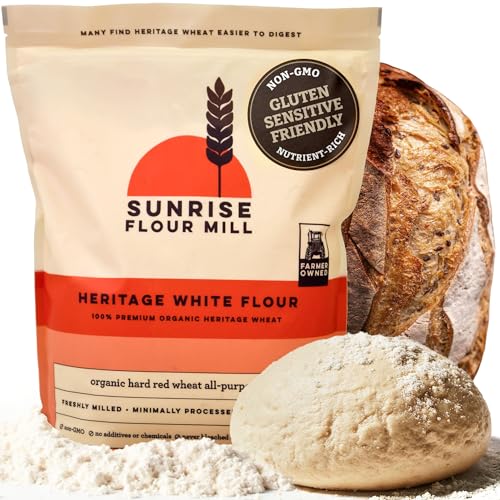
4. Sunrise Flour Mill Heritage Organic White Flour
One bag that handles sourdough, tortillas and pancakes without blinking.
This is the all-purpose sibling of the top pick, and the difference matters. Where the bread blend is tuned for sourdough structure, this one is milled from Turkey Red Heritage Wheat as a versatile all-purpose — unbleached, unbromated, grown without glyphosate and USDA Organic. It is still a high-protein flour, so a sourdough starter will wake up in it, but it also covers tortillas, pancakes and everyday baking from one bag. If you keep a single flour in the cupboard and want it to do everything, this is that bag.
The wheat is grown and harvested by the mill itself, which is why origin comes up so often as a point of pride — freshly milled heritage berries rather than a commodity blend. Texture lands as silky, light and fluffy, and the taste is the sort that gets described as making baked goods genuinely good rather than merely acceptable. It ships as 5 pounds, 80 ounces, in a box measuring 13 by 3 by 10 inches — compact enough for a shelf, tall enough that the bag stands upright. Same 80 ounces as the bread blend, so the two Sunrise bags match on quantity but not on purpose.
Bakers with sensitive stomachs single this bag out, crediting the heritage milling. Treat that as individual experience, not a promise. Value is the one topic that splits down the middle: the flour earns loyalty on flavour and origin, yet the per-loaf cost still stings for anyone used to supermarket prices. It is also all-purpose rather than a dedicated bread flour, so a very wet, very long ferment may want a stronger partner.
Why bakers keep it stocked: versatile enough to run a starter, roll tortillas and bake a cake, all from one unbleached organic bag.
The limit to plan around: all-purpose means it is not the strongest flour in the lineup — pair it with a W-heavy flour for extreme hydration doughs.
The one-flour kitchen answer: buy it if you want a single organic bag that covers sourdough and everything else on the counter.
Skip if: you bake only very wet, long-ferment sourdough and want maximum gluten strength — the Manitaly above is the stronger tool.
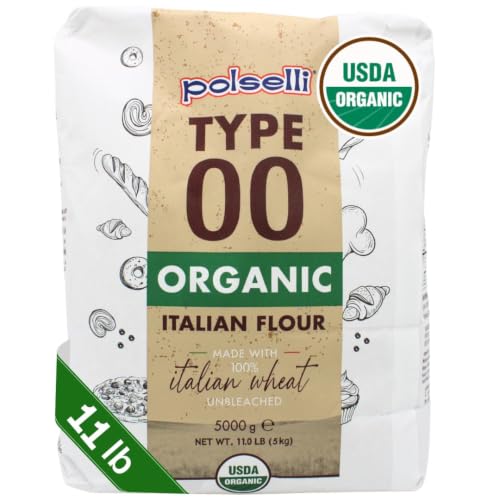
5. POLSELLI Organic Flour Italian Tipo 00
The big Italian bag for bakers who go through flour fast.
Eleven pounds of finely milled Tipo 00 in one sack — that is 176 ounces, more than double the 80 ounces in either Sunrise bag. For a household running two or three bakes a week, that volume alone changes the maths. Polselli has been milling in Italy since 1848, and this is an extra-fine Tipo 00, which means the very finest Italian grind grade: a soft, talc-like powder that gives a light, airy crumb and a pale, even crust. It is unbleached with no bromates or bleaching agents, and it is USDA Organic certified, made from wheat grown without glyphosate.
Quality leads what people report, with taste next in line — the flavour reads as a real chew rather than a neutral backdrop. Versatility and cooking performance follow close behind, because this flour pulls double duty: Neapolitan-style pizza with a crisp yet chewy crust, artisanal bread with a soft interior and golden crust, and fresh pasta with a delicate texture. Digestibility is a smaller but clearly positive thread, with bakers noting the fine 00 grind sits easy. The bag is 11 pounds, sold as 176 ounces, and arrives in packaging roughly the size of a small moving box.
Value is the split topic here, and it cuts both ways. Per pound this is the most economical route into organic Tipo 00, but the outlay lands all at once, which is a real hurdle for a casual baker. The 00 grind is also fast-fermenting, so a warm kitchen can push your dough along quicker than expected — keep an eye on it rather than relying on the clock.
Why bulk bakers pick it
- 176 ounces in one bag — more than double either Sunrise bag.
- Extra-fine Tipo 00 grind for a light crumb and pale crust.
- USDA Organic, unbleached and free of bromates.
- Covers pizza, artisan bread and fresh pasta from the same sack.
What to weigh up
- The whole cost lands at once, which is a lot to commit to if you bake occasionally.
- The fine 00 grind ferments faster — watch dough closely in a warm kitchen.
Stock up with it if: you bake several times a week and want the cheapest-per-ounce route into organic Italian Tipo 00.
Hold off if: you bake once a month — an 11 lb sack is more flour than a casual baker can use before it ages.
Know the Specs
What the W number actually means
On Italian flour bags, W is a baking-strength index — a measure of how much energy the dough can absorb before its gluten network breaks down. A higher W means the flour can take more water and a longer ferment without collapsing. Manitaly lists W 330-350 and carries it as a strong or special flour; it can also absorb 90% of its weight in water. In your kitchen, that translates to a dough that stays tall through an overnight cold rise instead of spreading flat. If a bag does not print a W, you fall back on the protein description and the grind grade.
Tipo 00 versus Tipo 0 versus all-purpose
Tipo 00 is the finest Italian grind, Tipo 0 is one step coarser, and all-purpose is an American catch-all grade. Finer grind gives a softer crumb and a paler crust, but it also ferments faster. Coarser grind carries a bit more bite and tends to hold up longer. Heritage all-purpose flours like the Sunrise white bag sit outside the Italian grades entirely: versatile enough for sourdough, tortillas and cakes, but not as strong as a dedicated bread flour when your dough runs very wet.
Why bag size changes the economics
Flour is heavy, so bag size drives cost per loaf faster than almost anything else. The two Sunrise bags hold 80 ounces each, the Caputo repack holds 144 ounces, and the Polselli holds 176 ounces — more than double either Sunrise. The Manitaly bag is the outlier at 2.2 pounds. If you bake weekly, a larger sack cuts the per-loaf cost; if you bake occasionally, a smaller bag keeps the flour fresher before it ages.
Heritage wheat and digestibility
Heritage wheats such as Turkey Red and White Sonora are older varieties, grown before modern intensive breeding. Bakers who react to standard flour report better tolerance with these bags, though that is personal experience rather than a lab result. That is personal experience, not a medical guarantee, so treat it as one factor among many. What is verifiable is flavour: heritage wheat tends to give a nuttier taste and a golden crumb instead of a flat white one.
Common Questions
Is Tipo 00 flour good for sourdough bread?
What does the W 330-350 on the Manitaly bag mean for my dough?
Can I use the Sunrise all-purpose white flour for a sourdough starter?
How do I store a large bag of flour so it stays fresh?
What is the difference between Tipo 00 and Tipo 0 flour?
Is heritage wheat flour easier to digest than regular flour?
How much flour do I need for a standard sourdough loaf?
Can I blend Italian Tipo 00 with an all-purpose or bread flour?
Is the Caputo 00 pizzeria flour the same as the Polselli Tipo 00 for sourdough?
Does a larger bag of flour actually save money per loaf?
The Bottom Line
The italian flour for sourdough bread pick that suits most kitchens is the Sunrise Flour Mill Heritage Organic Bread Flour Blend, because its high-protein heritage wheat holds through a long wet rise and bakes into a nutty, well-risen loaf. If pizza and a delicate crust are the goal, grab the Antimo Caputo 00 Pizzeria Flour — just inspect the bag on arrival. And for a weekly baker who wants the cheapest-per-ounce route into organic Tipo 00, the POLSELLI Organic Tipo 00 is the one to reach for, with 176 ounces in the sack. Match the bag to how often you bake, not to the fanciest label on the shelf.
How we choose
We do not accept paid placement. Every pick is matched to a real buyer and a real use-case; we do not hands-on test units.
Sources
Specifications: manufacturer listings and product documentation. Review insights: verified customer reviews, as of November 2026. Pricing: not shown on this page (it changes often); check the current price via the retailer link.
As an Amazon Associate, My Heart Lives Here earns from qualifying purchases. This does not affect which products we feature.