Heads up: This post contains affiliate links. As an Amazon Associate I earn from qualifying purchases, at no extra cost to you. Learn more
Specs are compiled from manufacturer listings and verified buyer reviews and can change over time — please confirm the key details on the product page before buying.
You climb hard, you sweat, then you drop in and the wind hits — a backcountry ski jacket has to handle both without turning into a sauna on the way up. A shell that breathes and vents (lets trapped heat escape through openings) will do more for your day than any number on a label. Below are eleven jackets that earn their place on a touring day, from storm-ready shells to insulated 3-in-1s (a shell plus a zip-in liner), so you can match one to how you ride.
This guide is built by comparing the manufacturers’ published specifications and the patterns across verified customer reviews, so you get each pick’s real strengths and trade-offs instead of marketing spin.
Backcountry days swing hard — you climb until you sweat, then drop into wind that bites through wet layers. That is why the waterproof rating, pit vents, and hood-helmet fit decide whether a jacket works. Read on for the picks that hold up once you leave the resort, plus practical notes on picking the backcountry ski jacket that fits your season.
Top Picks
How To Choose The Best Backcountry Ski Jacket
For backcountry skiing, you are your own climate control. You heat up fast on the climb, then the wind hits the moment you stop. The jacket that wins is the one you can open up, vent, and layer under — not the warmest one on the rack.
Waterproofing and breathability ratings
A waterproof rating tells you how much water pressure the fabric holds back before it soaks through — a 15K shell handles wet heavy snow better than a 10K one. Breathability is the flip side: how much sweat vapor escapes so you do not get clammy on the climb. For backcountry use, a shell around 15K/15K hits a sweet balance of storm protection and airflow. Check whether the fabric is a 2-layer or 3-layer build, since 3-layer shells tend to be lighter and more weather-tough for the same protection.
Pit vents and airflow
Mesh-lined underarm zips let you dump heat in seconds without stripping layers on a cold ridge. This is the single most useful feature for touring, because you can regulate temperature while you move. Some jackets also use front vents that double as pockets, though true pit zips are the ones you want when you are genuinely working hard.
Hood, powder skirt, and pockets
A helmet-compatible hood with an adjustable drawcord seals out spindrift on the descent. A powder skirt keeps snow from riding up your back when you tumble. Look for a sleeve ski-pass pocket, an internal goggle or media pocket, and zippered handwarmer pockets — small details that make a full day smoother. If you ride lifts between tours, a detachable hood or removable fur trim lets one jacket do double duty.
Fit and layering
You need room for a base layer and a thin mid layer without the jacket looking like a tent when you are down to one layer. Taller riders want longer sleeves and a hem that covers the hips; shorter riders may find a longer cut drags. Move your arms overhead in the fitting room — if the hem lifts to your ribs, it will ride up on every pole plant.
Side-by-Side Comparison
| Model | Best For | Waterproof Rating | Insulation | Ventilation | Amazon |
|---|---|---|---|---|---|
| Helly-Hansen Men’s Alpha 3.0 Ski Jacket★ Best Overall | Best overall touring shell | — | Shell | Ventilation (8) | Amazon |
| Pionner Camp Women’s Ski Jacket 15kBest Value | Budget women’s insulated | 15K | Insulated | Underarm vents | Amazon |
| Pioneer Camp Men’s 3-in-1Best 3-in-1 | Versatile 3-in-1 value | — | Puffer liner | None noted | Amazon |
| Roxy Women’s Meade 10K | Tall women & resort days | 10K | WarmFlight Eco | Mesh underarm vents | Amazon |
| Dakine Women’s Stoker GORE-TEX 3L | Storm-day backcountry shell | GORE-TEX 3L | Shell | Pit vents | Amazon |
| 686 Men’s Foundation Insulated | Park laps to powder | 10K | InfiLOFT | Air-Flo underarm vents | Amazon |
| Columbia Men’s Whirlibird V | Warmth on a budget | — | Thermal-reflective liner | Underarm vents | Amazon |
| Helly Hansen Sogn Shell 2.0 | Freeride backcountry shell | HELLY TECH Professional 3-layer | Shell | Ventilation zippers | Amazon |
| Obermeyer Men’s Raze | Lightweight ski-ready shell | HydroBlock Pro 15K | Light insulation | Venting | Amazon |
| Mammut Alto Guide HS Hooded | Alpine climbing & touring | DRY Tour 3-layer | Shell | Underarm zips | Amazon |
| Helly Hansen Women’s Alphelia | Premium women’s ski jacket | HELLY TECH Performance 2-layer | Synthetic | Underarm zips | Amazon |
Detailed Reviews
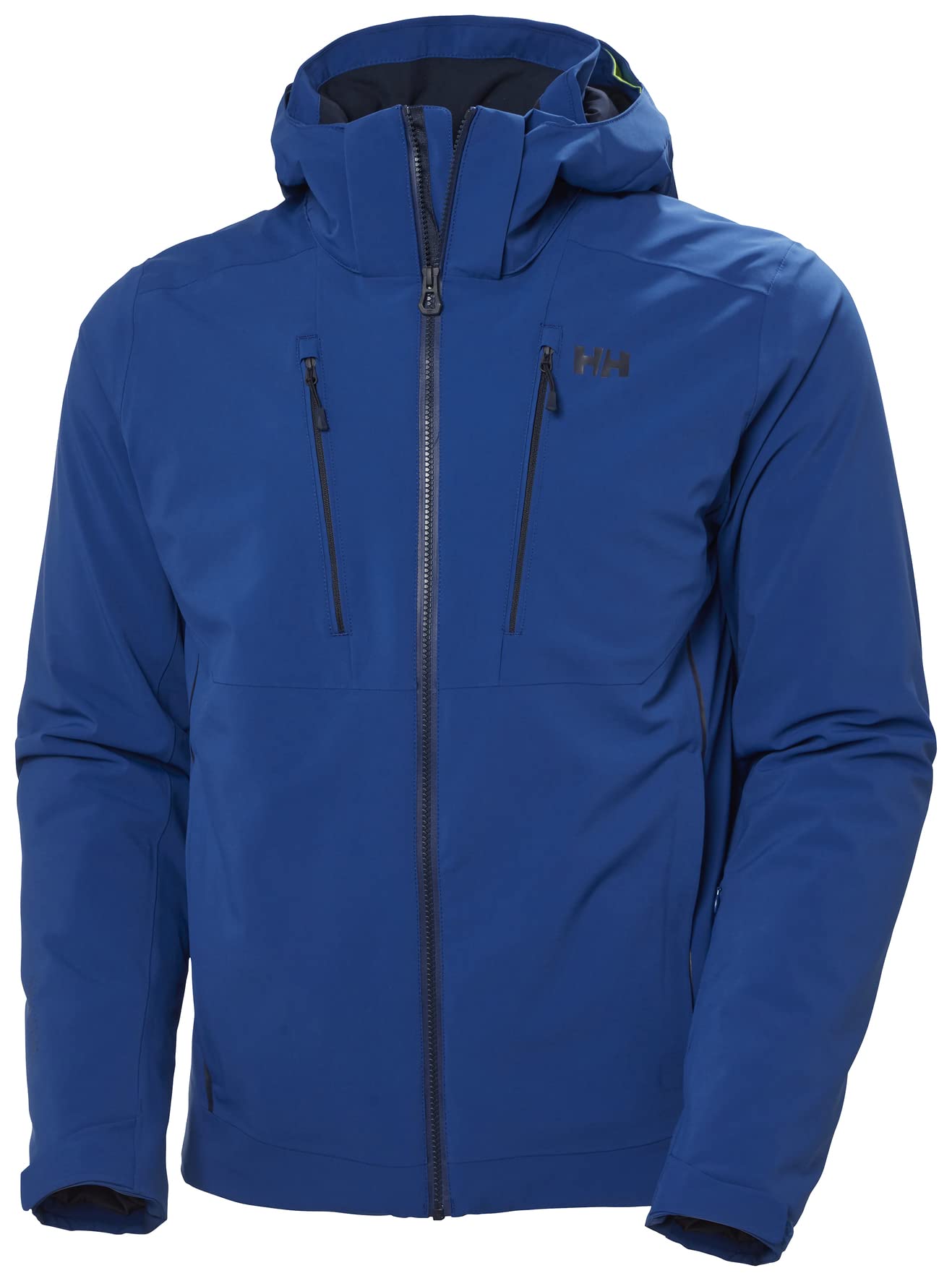
1. Helly-Hansen Men’s Alpha 3.0 Ski Jacket
Our pick — 4.5+★ from 450+ verified ratings; the strongest balance of quality and price.
The jacket owners keep coming back to, with ventilation that opens up on the climb
For the rider who wants one jacket that handles the climb and the descent, this is the strongest all-rounder in the group. Norway’s Helly Hansen has been making professional grade gear for more than 140 years, and the Alpha 3.0 carries that heritage into a lightweight shell with ventilation that opens up for uphill effort. It weighs 2.3 pounds, so it packs down small enough to stuff in a day pack without dragging you down.
What wins people over is the ventilation and breathability — you can open it up on the skin track and stay dry instead of clammy. The cut is not too baggy and not bulky, so it moves with you rather than catching wind. Fit is spot-on through the collar and sleeves, and the multiple pockets keep essentials within reach. Unlike the Pioneer Camp Men’s 3-in-1, which trades ventilation for insulation, this one is built to breathe first.
The catch: value runs mixed, so a minority of buyers find it a bit pricey for what it is. And because it is a shell, you will need to bring your own base and mid layers for deep cold. Pair it with a thin merino base and you have a setup that vents, moves, and packs small.
storm-ready alpine shell
- Ventilation and breathability praised most by owners — you dump heat on the climb without stripping layers
- Lightweight at 2.3 pounds and not bulky, so it packs small in a day pack
- Collar and sleeve measurements fit spot-on, with multiple pockets for glide essentials
- Professional grade build from a maker with more than 140 years in harsh conditions
trim athletic cut
- Value runs mixed — a minority find it a bit pricey for a shell
- As a shell, it needs your own base and mid layers in real cold
- No insulation of its own, so deep-winter resort days demand layers underneath
lift-served days: you want the highest-rated all-rounder for touring days where breathability and a light pack matter most.
warm spring slush: you want a jacket with its own insulation for cold resort laps.
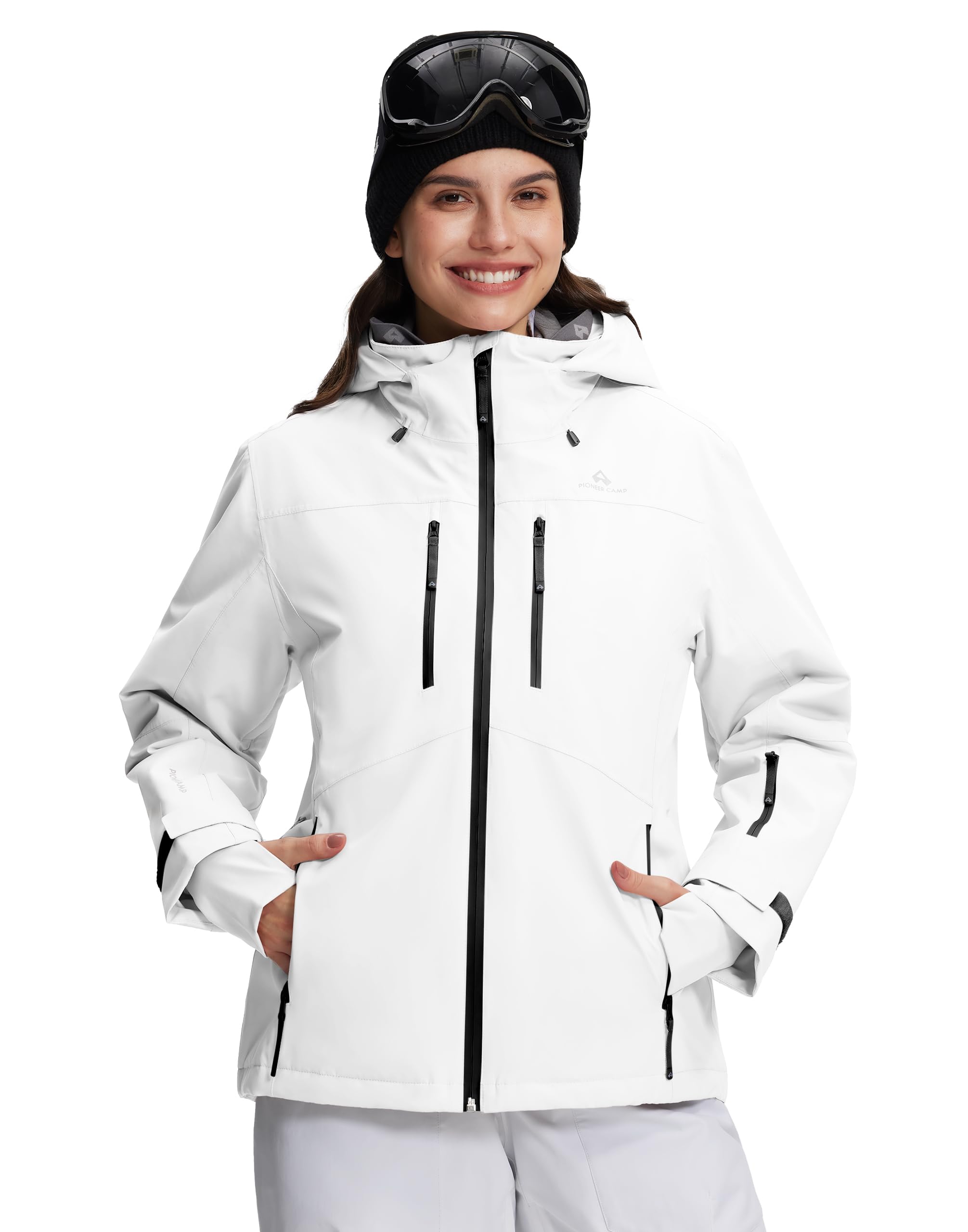
2. Pionner Camp Women’s Ski Jacket 15k Waterproof Insulated
A 15K insulated women’s coat that punches well above its weight on warmth
For the woman who wants insulation built in rather than layering everything herself, this Pioneer Camp jacket delivers a 15K waterproof rating and its own warmth. Buyers report it holds up on a hike in -7°F wind chill with just a base and a thin mid layer underneath. The zippers feel sturdy and smooth, the fabric is good, and there is a sleeve pass pocket for the lift line. Overall build quality and looks are what people praise most — it comes across as far more expensive than it is.
Layering room is the real story here. One buyer found a medium fits over layers at 5’6″ and 138 lb, and another sized up from her usual small to a large and could still have gone XL to fit thick winter layers. The details are thoughtful: underarm vents, a ski pass sleeve pocket, a snow gaiter, and thumbhole lining. The tradeoff is the hood — it is not removable, so you carry it even on milder days.
Fit is the honest caveat. Several note a snug cut at the hips and chest with a mid layer, and busty or broad-shouldered buyers find the shoulders and bust run narrow. Sizing up significantly is the norm here. For a warm, well-equipped women’s jacket on a budget, it is hard to argue with the value.
15k waterproof value: a 15K waterproof rating and built-in insulation mean you get real storm protection and warmth without stacking layers, at a budget price.
basic insulation: the hood is not removable and the cut runs narrow through the shoulders and bust — size up if you layer thick.
budget powder hounds: women who want an insulated 15K coat for cold days and are prepared to size up for layering room.
wet heavy snow: you want a removable hood or have a full bust and broad shoulders.
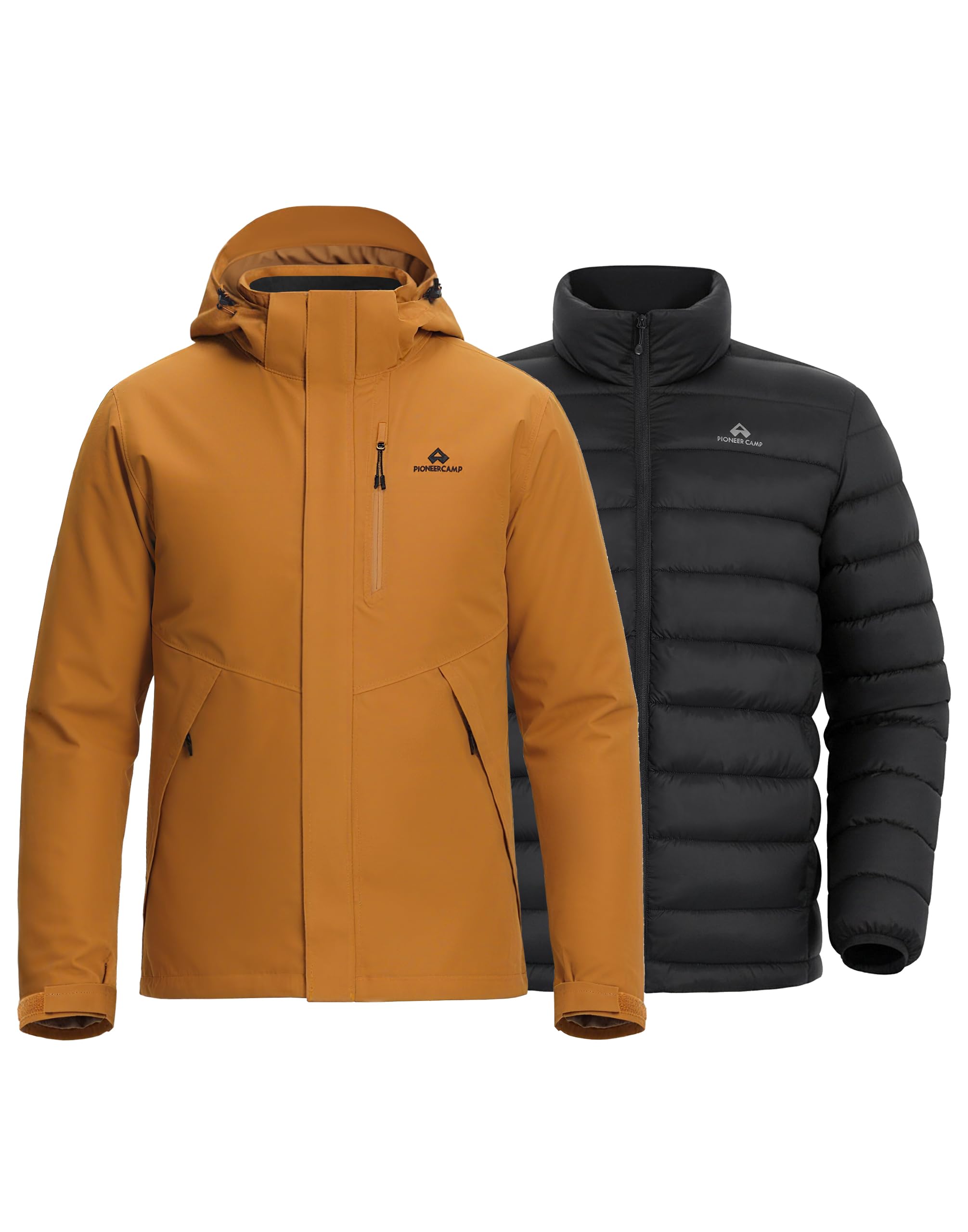
3. Pioneer Camp Men’s 3-in-1 Snow Ski Jacket
One coat, three jobs — a shell, a puffer, or both zipped together
For the skier who wants one jacket to cover a few trips a year without fussing over logos, this Pioneer Camp 3-in-1 does the work. You get a waterproof shell, a detachable puffer liner, and the option to wear them separately or together. The collar gives good wind protection for your face when fully zipped, and there are plenty of zippered pockets to keep items dry. One buyer wore it four days straight in 15-40°F weather and called the quality and fit great.
As a 3-in-1, warmth is the headline. A Michigan buyer reported the coat stays windproof and toasty without the extra weight, even with single-digit air temperatures and windchill down to -23. The shell blocks wind and rain, and the puffer liner adds real insulation when you zip it in. For occasional resort days and snow removal at home, it covers a lot of ground.
The honest catch: it has no vent zippers, so on a hard climb or a warm spring day you will overheat and have to open the front. If you tour hard rather than cruise a few times a year, a dedicated vented shell like the Helly-Hansen Alpha 3.0 will manage sweat better. For everyone else, the value is tough to top.
variable resort days: casual skiers and snowboarders who want a warm 3-in-1 with an optional puffer liner at a value price.
fast backcountry laps: you tour hard and need pit vents to dump heat on the uphill.
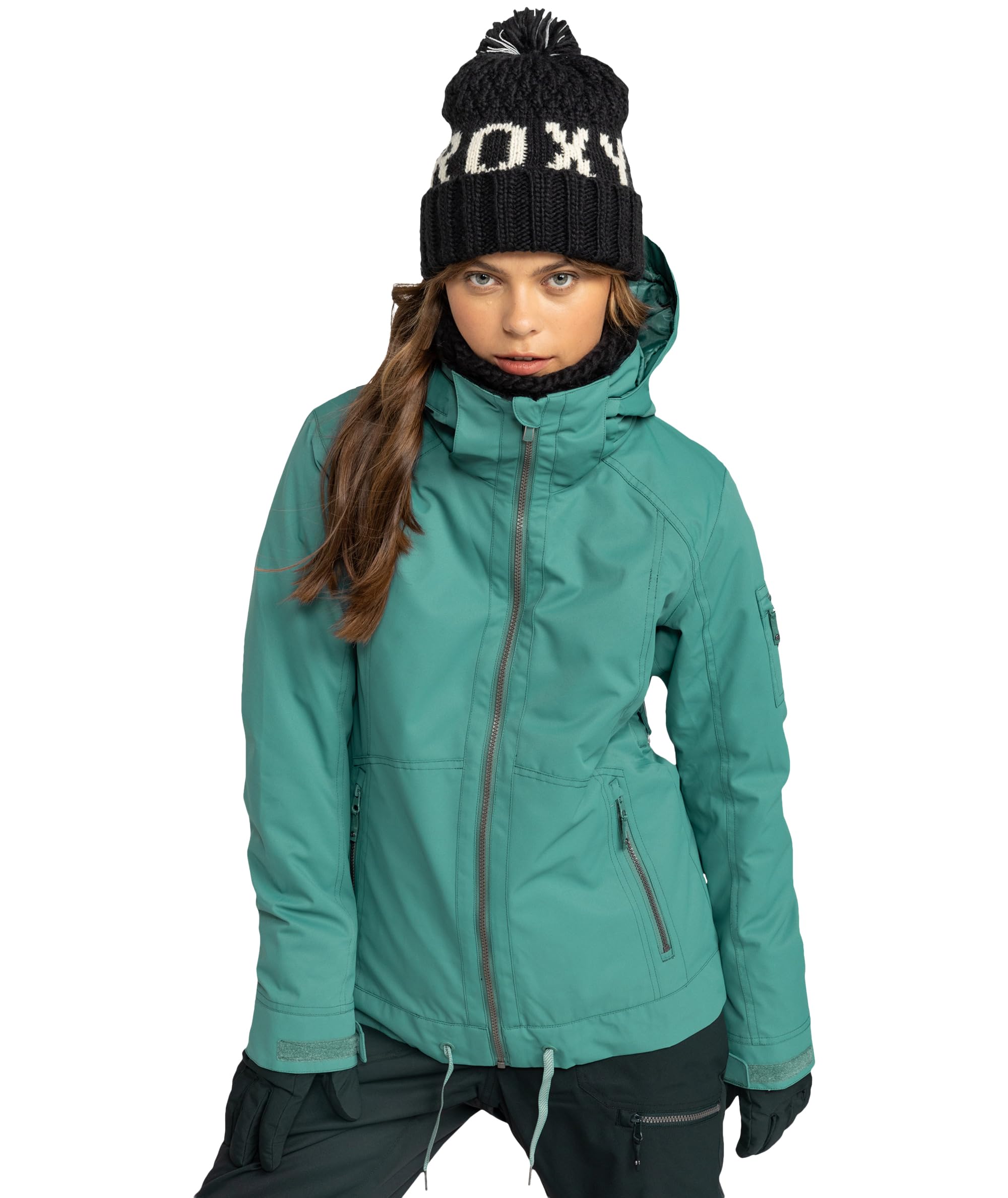
4. Roxy Women’s Meade 10K Waterproof Insulated Snow Jacket
The longer cut and long sleeves that finally fit a taller frame
If most ski jackets leave your wrists hanging out, this is the one to try. The Meade is cut longer than most ski jackets with extra-long arms, and taller women report the sleeves actually reach. It runs 10K ROXY DryFlight waterproofing with a PFC-free water-repellent finish, so rain, wind, and snow bead off. WarmFlight Eco insulation — 120g in the body, 100g in the sleeves, and 60g in the hood — is made from 100% recycled polyester and puts warmth where it counts.
Owners mention wearing it in -15°F weather with wind and calling it super warm, waterproof, and stylish. One rider at 6 feet found it hits mid hip with sleeves long enough, and a woman at 5’6″ liked the roomy fit for layering. The mesh-lined underarm vents help on warmer laps, and the adjustable waist plus 3-way hood with removable faux fur let you tune the fit. The fur trim doubles for village wear if you want one jacket for the slopes and the town.
The honest snag: the fabric holds stains, so a light color can pick up marks on the first wear. The fit also runs mixed — some find it snug in the lower waist, and shorter riders note a bit of extra length. Stay with darker colors if you want it to look new longer.
groomer cruising: tall women who want a warm, long-cut 10K jacket with recycled insulation and versatile fur trim.
deep storm days: you are petite and want a shorter hem, or you favor light colors that resist staining.
5. Dakine Women’s Stoker GORE-TEX 3L Snowboard Jacket

A serious storm-day shell with GORE-TEX and a rescue reflector built in
For the backcountry rider who heads out in weather that would send everyone else home, this Dakine shell is the real deal. It uses GORE-TEX 3-layer waterproofing with a 100% recycled polyester face, fully taped seams, and YKK Vislon Aquaguard zippers, so wet snow does not stand a chance. The articulated fit moves with you on steep descents, and the tri-pull adjustable hood plus anti-fog breath vent keep your vision and airflow clear during high-output climbing.
The tech list is where this one earns its keep: Dakine zippered pit vents (underarm zips that dump heat on the climb), a sleeve pass pocket for your lift ticket, a secure media pocket for your phone, and RECCO technology — an avalanche rescue reflector that responders can detect with a special beacon. It is Bluesign certified (a textile standard for how it was made). Customers note quality and fit are what they praise most, with the well-made feel standing out.
Appearance is where opinions split — some love the look, others are not sold on it. As a shell it carries no insulation of its own, so pair it with layers for cold days and let the GORE-TEX handle the wet. For storm-day lines and alpine exploration, this is a purpose-built piece.
GORE-TEX 3L build: GORE-TEX 3-layer protection, taped seams, and RECCO technology make this a genuine storm-and-safety shell for alpine days.
premium price: riders who tour in serious weather and want a vented, eco-conscious shell — as long as they bring their own insulation.
serious snowboarders: backcountry riders who chase storm days and want GORE-TEX plus a rescue reflector.
casual park laps: you want built-in insulation or you are picky about a bold appearance.
6. 686 Men’s Foundation Insulated Jacket
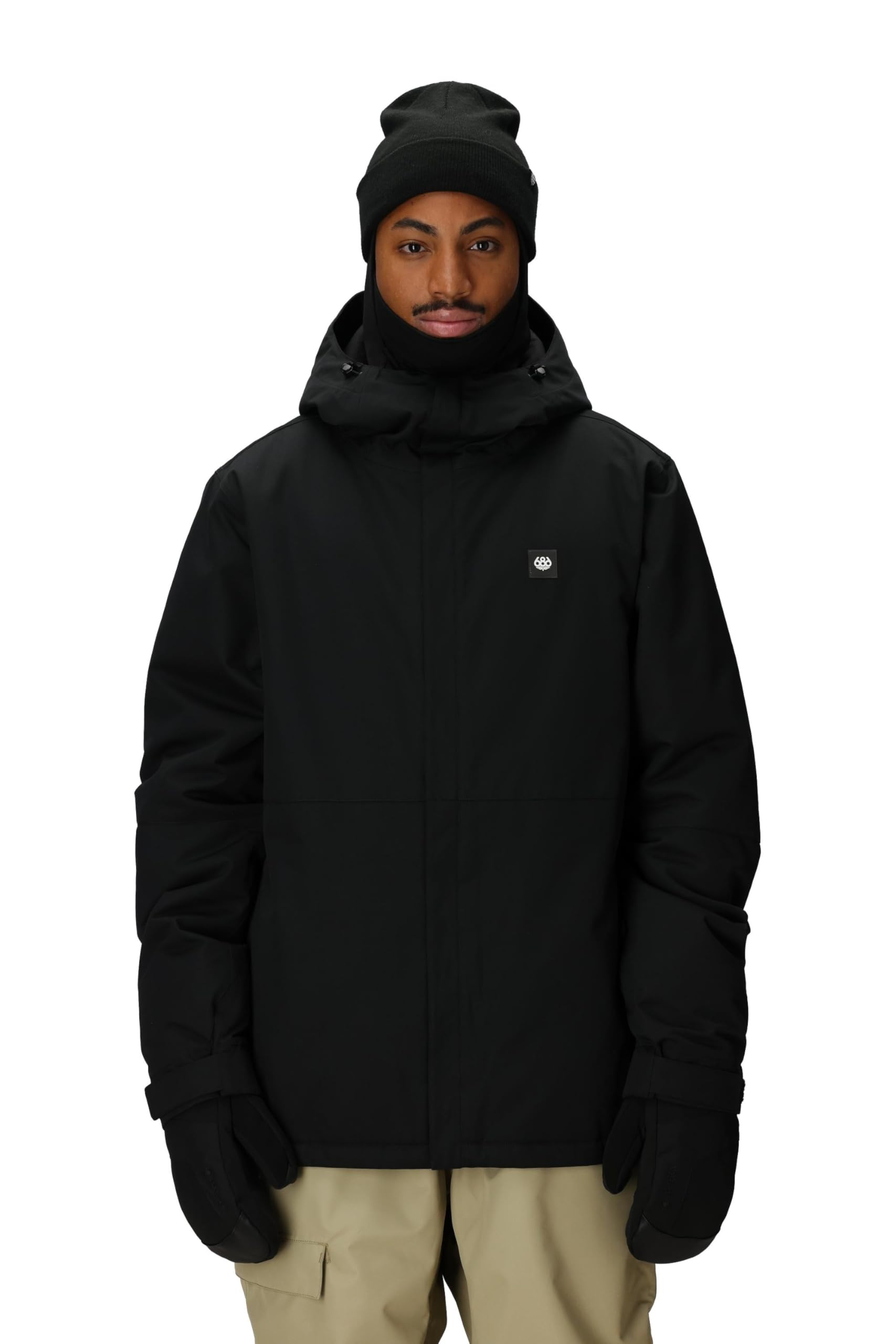
Street-savvy looks with mountain-grade pockets and vents for the park
You get a jacket that looks good on the street and still works on the hill. The 686 Foundation pairs a 2-layer infiDRY 10K fabric with a DWR finish, so it sheds snow and light rain. InfiLOFT insulation is mapped across the body at 60g and the sleeves at 60g, with 40g in the hood for warmth without a bulky feel. Air-Flo mesh-lined underarm vents give you airflow when you heat up, and Bemis seams are critically taped to block moisture at the stress points.
Storage is where this one wins the roomy category: an internal smartphone pocket with an audio cord outlet, internal goggle and goggle-lens stash pockets, a sleeve pass pocket with a key clip, and front hand pockets with an inner key clip. A helmet-compatible hood, an attached adjustable powder skirt (a snow-blocking flap at the hem), and adjustable Death Grip Velcro cuffs round out the mountain-ready build. Owners call it a great jacket for snowboarding and note it looks great too.
The honest note: sizes run true, and one buyer had to swap after ordering the wrong size first, so check the chart before you commit. Otherwise the Foundation covers park laps and powder days with a pocket for everything.
everyday resort riding: riders who want a great-looking insulated jacket with vents and a pocket for every piece of gear.
tall athletic builds: check the chart first — ordering the wrong size is the most common misstep here.
7. Columbia Men’s Whirlibird V Interchange Jacket
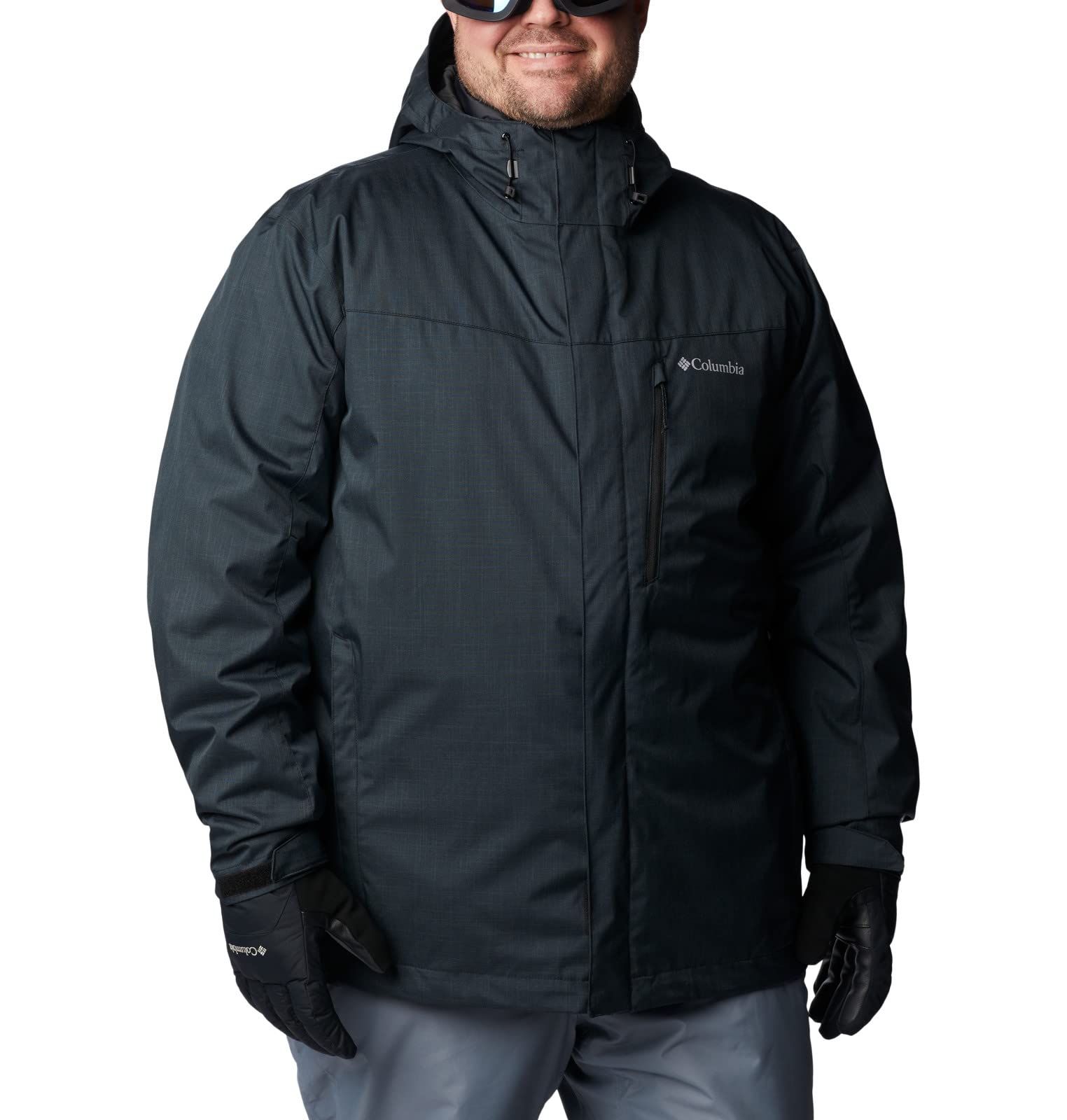
Three jackets in one, from a single waterproof shell to a warm liner
For the skier who wants flexibility across a whole season, the Whirlibird V is built as an interchange system. You can wear the waterproof-breathable shell alone on warm days, the insulated thermal-reflective liner alone around town, or zip both together for serious cold. Recycled insulation, a powder skirt, a ski pass pocket, and underarm vents make it slope-ready, and it comes in multiple colors and sizes with extended sizing available in a regular fit.
Owners praise the quality and warmth in equal measure — the shiny inner liner gives substantial warmth when you zip it in. The fit runs roomy with plenty of pockets, and owners value how versatile it is for year-round outdoor activities. It stays lightweight and performs as expected, which makes it an easy recommendation for occasional ski trips and cold-weather wear alike.
The only real note: because it is a 3-in-1, the combined package is bulkier than a dedicated touring shell, so if lowest weight is your priority a single-layer shell serves you better. For everyone chasing one jacket that adapts to the whole season, this is the pick.
interchange warmth system
- 3-in-1 design wears as a waterproof shell, an insulated liner, or both together
- Thermal-reflective liner adds substantial warmth when zipped in
- Roomy fit with plenty of pockets and a powder skirt for slope days
- Underarm vents and recycled insulation keep it versatile across the season
heavy carry
- Bulkier than a single-layer touring shell when you zip both pieces together
- No dedicated pit-zip count noted, so hard uphill effort may run warm
cold lift days: a versatile one-jacket setup that covers warm, cold, and town days.
mild spring skiing: you want the lightest possible pack for the skintrack.
8. Helly Hansen Sogn Shell 2.0 Jacket
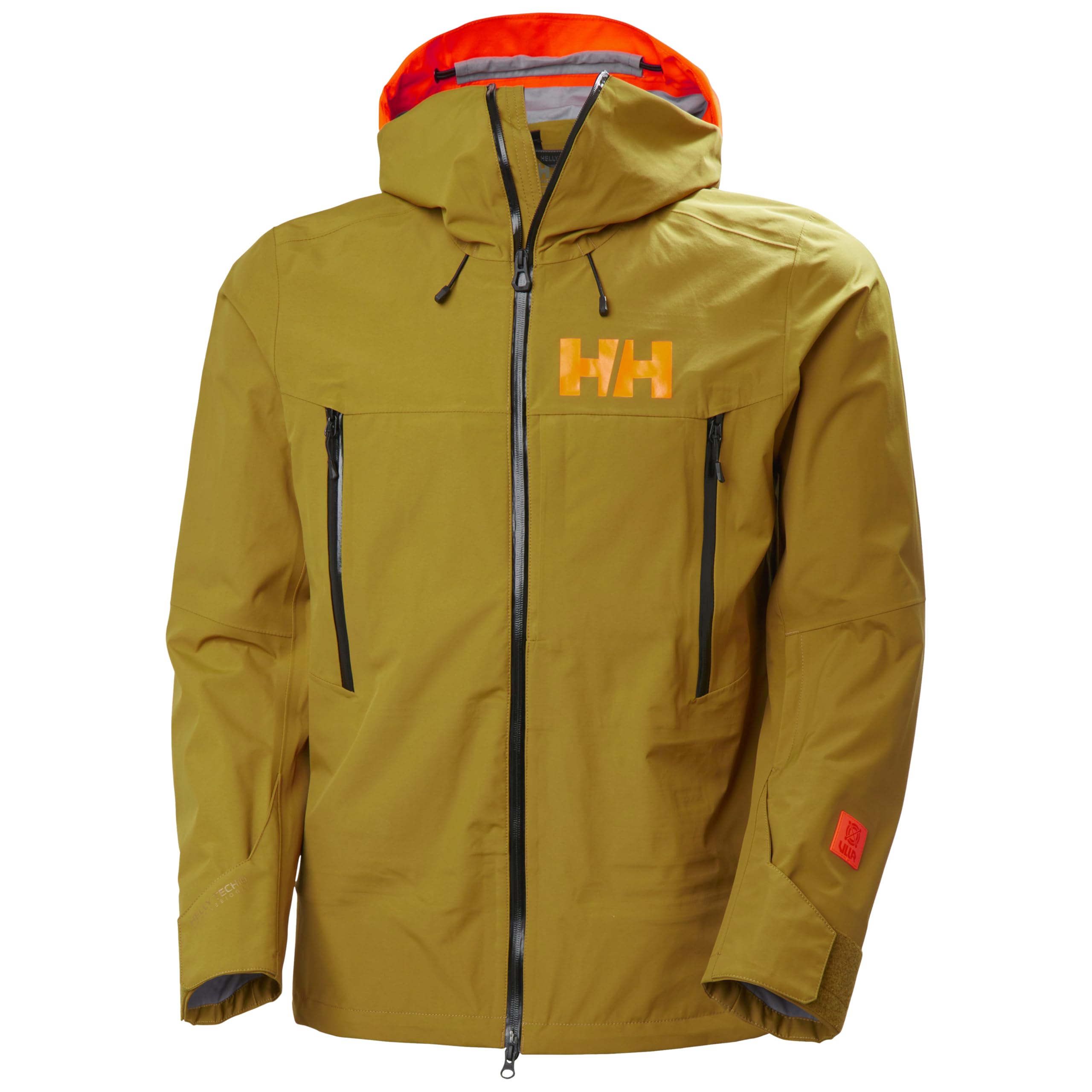
A freeride shell that moves with you on off-piste descents
For the rider who spends more time off-piste than on the groomed runs, the Sogn Shell 2.0 is cut for freedom. It uses 3-layer HELLY TECH Professional construction with fully seam-sealed seams and a DWR treatment, so it blocks water, wind, and stays breathable. Articulated sleeves free up your range of motion for demanding backcountry skiing, and the helmet-compatible hood with a neon-colored brim plus a 2-way front zipper give you practical coverage where you need it.
The details are mountain-focused: ventilation zippers with mesh promote airflow and double as pockets, goggle and ski pass pockets keep essentials handy, and RECCO Advanced Rescue technology (an avalanche rescue reflector responders can detect with a special beacon) pairs with LIFE POCKET+ — a pocket designed to protect a rescue transponder and keep it accessible. Reviewers point out good performance and fit, with a rider at 5’6″ and 250 lb finding the XXL fits well with room for layers. It handles wind and rain and stays warm at 40°F over a merino base.
The catch is small but worth knowing: the pass pocket sits high on the sleeve, so a ski pass card can jab into your inner elbow when you bend your arm. A minor quibble on an otherwise high-quality shell — and its value note splits, with some finding it on the expensive side.
clean shell simplicity: 3-layer HELLY TECH Professional protection with taped seams and RECCO rescue technology make this a serious freeride shell.
no insulation: the sleeve pass pocket sits high, so a pass card can press into your arm when you flex your elbow.
layering freedom: you ride technical off-piste terrain and want a durable, rescue-ready 3-layer shell.
frigid single digits: a low-slung pass pocket or lighter price tag matters more to you.
9. Obermeyer Men’s Raze Ski Jacket
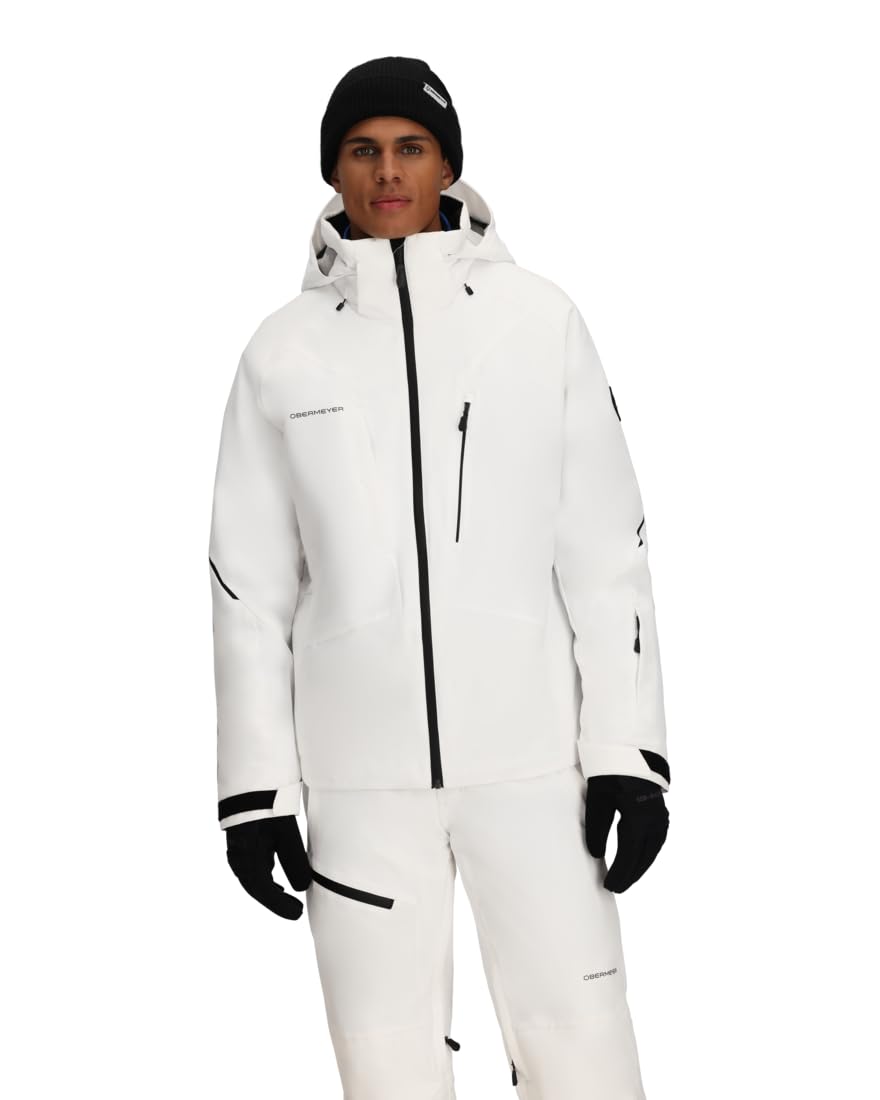
Light insulation and a full range of motion in one ski-ready package
For the skier who runs warm and hates a bulky coat, the Raze is built around light insulation and freedom of movement. Obermeyer calls it one of its most popular styles and backs it with HydroBlock Pro 15k/15k water resistance and YKK AquaGuard zippers. The build uses REPREVE recycled materials, 2-way stretch fabric, and a raglan sleeve construction for a full, unrestricted range of motion — so reaching for a pole plant or a binding feels natural, not restricted.
Shoppers say combining it with a thin base layer and a lightweight mid layer to stay comfortable skiing down to 15°F, which tells you the insulation is light rather than heavy. The length is a real selling point — it sits well without dropping too low around the hips like many jackets of this type. There is an arm pocket for RFID pass scanning, lots of storage, and the venting earns praise for keeping you comfortable as the day warms up. Buyers also report it proving rainproof in wet conditions.
Because the insulation is light, this is not the coat for standing around in deep cold — it is one for active skiing where you generate your own heat. That is a feature, not a flaw, for the right rider.
fair-weather skiers: active skiers who run warm and want a 15K waterproof jacket with light insulation and free movement.
wet coastal storms: you want heavyweight warmth for standing in deep cold.
10. Mammut Alto Guide HS Hooded Jacket
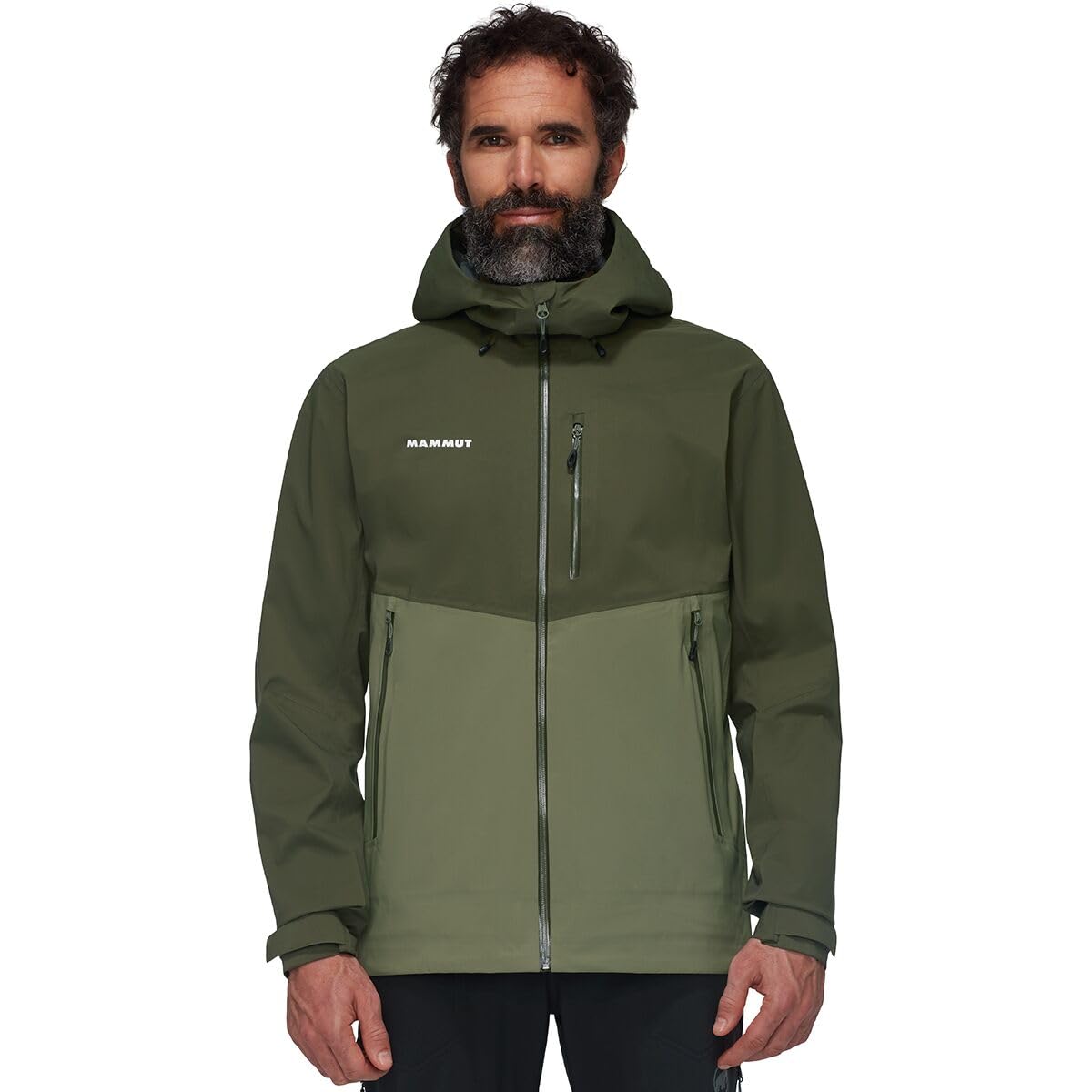
A no-frills alpine hardshell built for climbing as much as skiing
If your backcountry day includes a rope and a harness, this Mammut shell is built for it. A 3-layer Mammut DRY Tour membrane gives waterproof, breathable protection in an extreme-cold-ready shell. The helmet-compatible hood offers full coverage in rough conditions, and two harness-compatible front pockets with waterproof zippers stay reachable when you are roped up. Underarm ventilation zips let you regulate temperature on the move, and at 1 kg the shell is light enough for the approach.
This is a hardshell with no inner insulation, and one buyer returned it thinking it was a 3-in-1 — so know going in that you supply your own layers. Those who get that report it works exactly as described: a lightweight, waterproof hard shell with pit zips. The fabric is 100% nylon with a regular fit, and sizing runs generous — a rider at 176 cm and 67 kg found size S ideal, whether layered under a down jacket or worn alone.
The trade-off is straightforward: no warmth of its own and a fit that runs large, so a first-time buy may need a size down. For mountaineering, skiing, and alpine climbing as one tool, it does the job.
guide-grade durability: 3-layer DRY Tour protection, harness-compatible pockets, and underarm zips suit a shell that climbs and skis.
stiff fabric: it has no insulation at all, so come ready to layer — and consider sizing down, since the fit runs generous.
technical terrain: mountaineers and ski tourers who want a light, harness-friendly hardshell.
park and pipe: you expect built-in warmth or a snug, true-to-size cut.
11. Helly Hansen Women’s Alphelia Ski Jacket
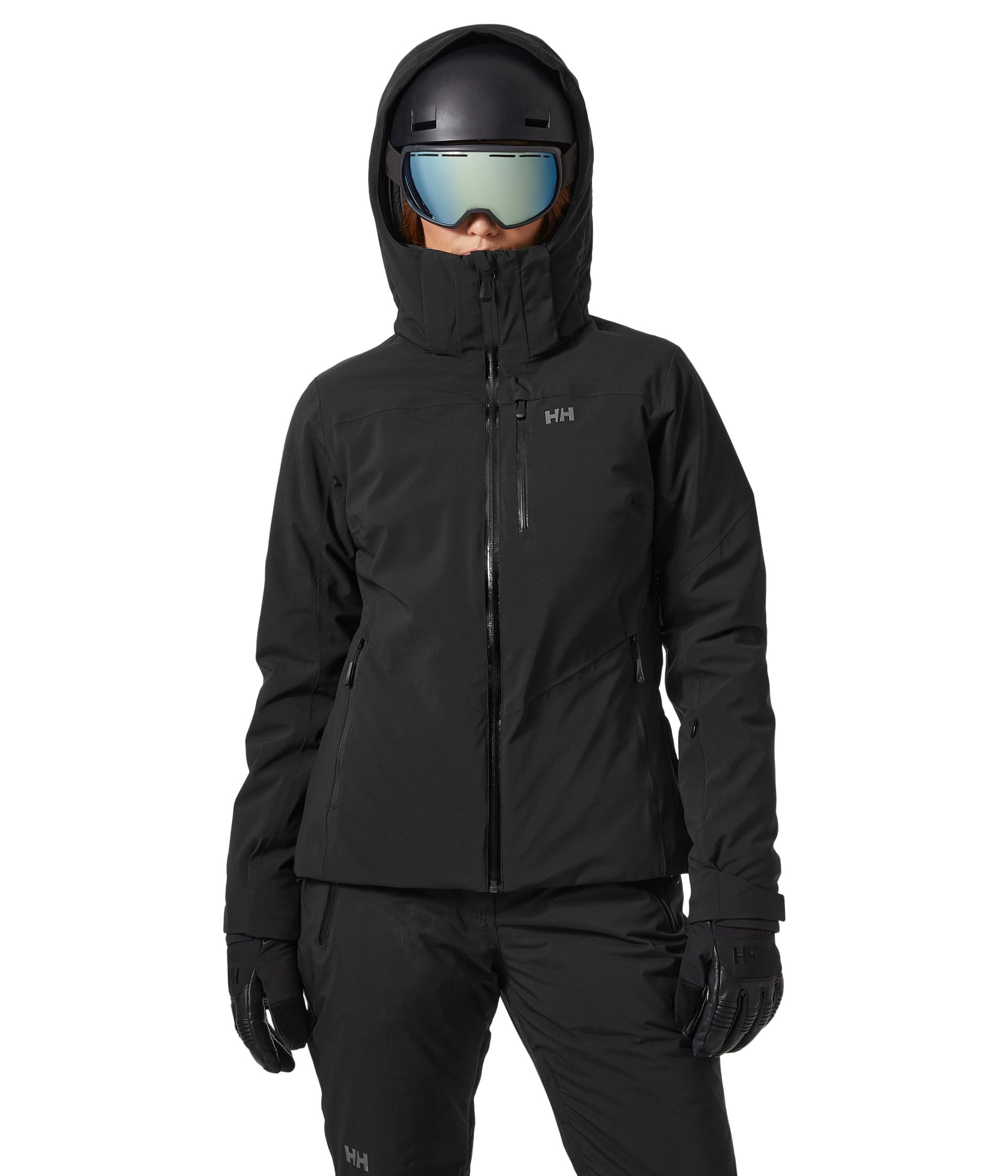
The premium women’s jacket that gets worn everywhere, not just the slopes
For the woman who wants a jacket that looks as good at dinner as it does on the hill, the Alphelia earns the premium tag. HELLY TECH Performance 2-layer construction makes it waterproof, breathable, and wind-resistant, while synthetic insulation with a soft interior baffle keeps you warm without stiffening your movement. 4-way stretch fabric, articulated sleeves, and an adjustable hem support a full range of motion — and it is cut fitted, so it flatters rather than sitting boxy.
Owners call it a keeper that warms them through outdoor sports, dog walks, and dinners alike. The ski-ready list is complete: a detachable hood, adjustable powder skirt, high collar, wrist gaiters, goggle pocket, and a dedicated ski pass pocket, with underarm ventilation zippers to release heat and secure chest and hand pockets for essentials. One buyer who moved to Maine made it her go-to for everything from skiing to walking the dog.
The honest catch is sizing — it runs small, and some buyers went up a size to get the fit they wanted, especially through the shoulders and bust. The flip side of a fitted cut is less room to layer, so size accordingly. Occasionally, longer arms run long on shorter frames.
women’s specific warmth: 2-layer HELLY TECH Performance protection plus 4-way stretch and a fitted cut make this a do-it-all women’s jacket.
snug shoulders: it runs small, so sizing up is common — and a fitted cut leaves less room for thick layers.
cold resort days: women who want one premium jacket that crosses from the slopes to the street with a fitted, flattering cut.
broad-shouldered skiers: you run between sizes or plan to layer thick under it.
Know the Specs
Waterproof ratings (10K, 15K, GORE-TEX)
The number before the “K” tells you how many millimeters of water pressure the fabric holds before it leaks — 10K keeps out typical snowfall, while 15K and up handle wetter, heavier storms. GORE-TEX and 3-layer membranes sit at the top of that scale and tend to be lighter and tougher for the same protection. Match the rating to your snow: dry powder needs less, coastal wet snow needs more.
Breathability and ventilation
Breathability decides how much sweat vapor escapes, and it matters more than raw warmth when you climb. Pit vents and mesh-lined underarm zips let you dump heat fast, so a vented shell often feels better than a warmer one that traps moisture. If you ski hard, prioritize venting over insulation every time.
Insulation vs. shell
A shell gives you weather protection on its own and lets you dial warmth with the layers underneath. An insulated jacket builds warmth in, which is easier for resort days but limits how you regulate heat. A 3-in-1 splits the difference by pairing a shell with a detachable liner you can leave behind on warm days.
Hood, powder skirt, and safety tech
A helmet-compatible hood with a drawcord seals out spindrift, and a powder skirt stops snow from going up your back when you fall. RECCO reflectors help organized rescue teams locate you in the backcountry, and features like wrist gaiters and a sleeve pass pocket keep small tasks easy. These are the details that separate a ski jacket from a winter coat.
Common Questions
What waterproof rating do I need for backcountry skiing?
Is a shell better than an insulated jacket for touring?
Do these jackets fit over a helmet?
How do I size a backcountry ski jacket for layering?
What is RECCO and do I need it?
Can I wear a ski jacket as an everyday winter coat?
What are pit vents and why do they matter?
Will a ski jacket keep me warm without a mid layer?
How long should a backcountry ski jacket last?
The Bottom Line
For most riders chasing the all-rounder, the backcountry ski jacket winner is the Helly-Hansen Men’s Alpha 3.0 because its ventilation and breathability let you manage heat on the climb while staying light on the skin track — the quality-first build the crowd favorite keeps coming back for. If you want a warm 3-in-1 that adapts to the whole season, grab the Columbia Whirlibird V. And for storm-day alpine touring with rescue tech built in, the Helly Hansen Sogn Shell 2.0 is the one to reach for. If comfort and a fitted cut top your list, the Helly Hansen Women’s Alphelia is the premium pick worth sizing up for.
How we choose
We do not accept paid placement. Every pick is matched to a real buyer and a real use-case; we do not hands-on test units.
Sources
Specifications: manufacturer listings and product documentation. Review insights: verified customer reviews, as of October 2026. Pricing: not shown on this page (it changes often); check the current price via the retailer link.
As an Amazon Associate, My Heart Lives Here earns from qualifying purchases. This does not affect which products we feature.