Heads up: This post contains affiliate links. As an Amazon Associate I earn from qualifying purchases, at no extra cost to you. Learn more
Specs are compiled from manufacturer listings and verified buyer reviews and can change over time — please confirm the key details on the product page before buying.
You stop dragging a garden hose across the deck every few days when you fit a float-valve leveler (a valve that opens on water pressure and closes when the pool hits your set height). The one most worth buying is the brass-bodied Staypoollizer, whose 1–200 PSI rating runs on water pressure alone with no electricity or sensors to fail. Below, each unit is judged on how it sits on the pool edge, how the hose connects, and how it handles your house pressure.
This guide is built by comparing the manufacturers’ published specifications and the patterns across verified customer reviews, so you get each pick’s real strengths and trade-offs instead of marketing spin.
Some units use a sliding frame, some use a float on a bracket, and a few hide the hose in a trench to kill the trip hazard. Every pick below is judged on the same handful of measurable traits so you can sort them fast.
Top Picks
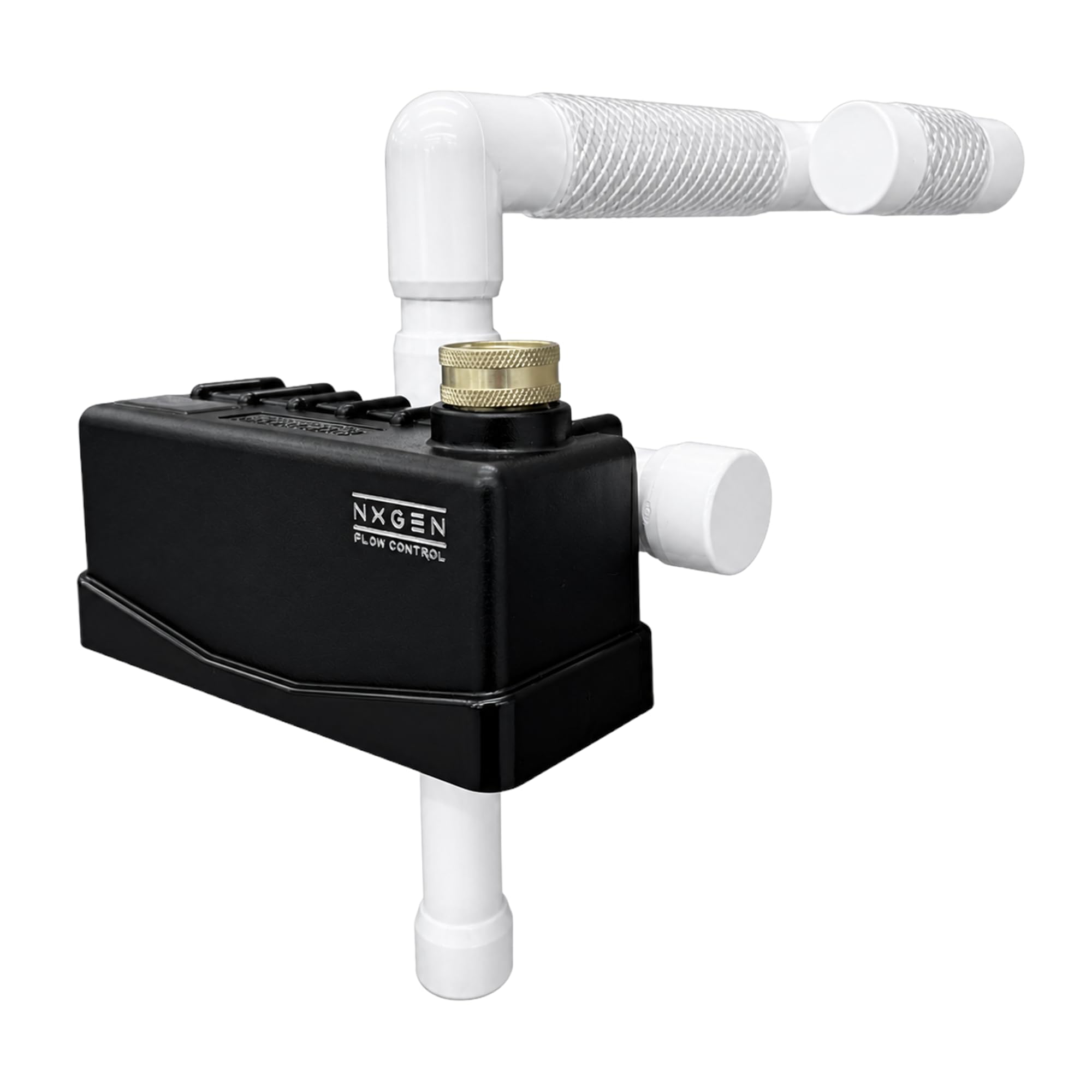

How To Choose The Best Automatic Pool Water Leveler
You want the pool to top itself off and then stop, every time, without you babysitting a hose. That job is done by one small part: the float valve. When the water drops the float falls and opens the flow, and when the water climbs back to your set height the float rises and shuts it off. Everything else on the unit is there to hold that valve at the right height and keep it from tipping into the water.
Match the unit to your water pressure first
Check the pressure on the spigot you plan to use. Most units here are rated to work up to 60 PSI (pounds per square inch — the force pushing the water through the line), and several listings say plainly that anything above that needs a pressure reducing valve. The Staypoollizer is the outlier with a 1–200 PSI rating, so it handles typical household pressure without a separate regulator.
The 2–9 inch adjustment range does the fitting work
That number is the height above your deck the unit can hold the water at. If your coping sits high or your deck slopes, a wide range like 2 to 9 inches covers almost every setup. A unit locked to a narrow band may leave you shimming the base with bricks.
Base weight is what keeps it out of the pool
Look for a base you can fill with water, sand, or pea gravel. Once filled it is far heavier than the empty unit, and that weight plus rubber feet is what stops a gust or a bumped hose from walking it to the edge. Three of the picks here use exactly that trick.
Side-by-Side Comparison
| Model | Best For | Water-Level Adjustment | Max Pressure | Weight | Amazon |
|---|---|---|---|---|---|
| Automatic Pool Filler Brass Swivel★ Best Overall | In-ground pools on a fixed deck hose | 4–9 in. | 1–200 PSI | 4.8 lb | Amazon |
| Pool Water Leveler, Adjustable Height from 2 to 9 inchesBudget Pick | Tight decks on a budget | 2–9 in. | 60 PSI | 1133 g | Amazon |
| Upgrade Auto Swimming Pool Water Leveler | Above-ground and salt pools | 2–9 in. | 60 PSI | 3.45 lb | Amazon |
| 2026 Upgrade Automatic Pool Filler | Quick first-time setup | Rotary adjustable | — | 2.97 lb | Amazon |
| 2026 New Automatic Pool Filler | Multiple water features on one hose | 2–8 in. | — | — | Amazon |
| Swimming Pool Water Leveler, Carbon Black | Trips and tumbles on the deck | 2–9 in. | 60 PSI | 3.54 lb | Amazon |
| Airlie Pool Water Leveler | Sloped and irregular pool edges | 2–9 in. | 60 PSI | — | Amazon |
Detailed Reviews
1. Automatic Pool Filler Brass Swivel
Our pick — 4.5+★ from 150+ verified ratings; the strongest balance of quality and price.
The one that never asks the house for power, batteries, or a sensor reset.
This is the pick for an in-ground pool where you want the fill job handled and then left alone. Its float valve is pure mechanics: water drops, the float drops, the line opens, and the pool refills until the float lifts back to your set height. No wiring, no batteries, no electronic sensor to foul with calcium. You set the tank assembly by sliding it up or down across the 4–9 inch range, and there are no tools or exposed fasteners to loosen over a season.
Household water pressure is where it pulls ahead. Its stainless-steel inlet and nozzle system carries a 1–200 PSI rating (PSI means pounds per square inch, the push behind your water), so the 55–60 PSI at a typical house spigot sits well under its limit. That is why it holds up without a separate regulator under normal use, while the UueeGo and Airlie models both ask you to add one once you pass 60 PSI. It also brings real ballast to the job: at 4.8 pounds it is heavier than the 2.97-pound Xmnbl unit, and that extra weight on the larger deck-mounted frame with adjustable rear supports is what keeps it steady on a sloping coping (the rounded edge of the pool).
What wins people over is that it simply does the job — owners describe the fill running accurately and holding steady, and one buyer reporting flawless operation for three weeks captures the pattern. Setup is genuinely tool-free: position it vertically at the pool edge, connect a standard 3/4-inch garden hose to the brass swivel, turn the water on, and watch it shut off before you walk away. The catch is noise — a handful of buyers find it audible when it is actively filling. That is a fair trade for a 1–200 PSI mechanical valve with nothing to burn out.
What earns it the top spot
- Runs on line pressure alone — 1–200 PSI rating means no regulator needed at normal household pressure
- Brass swivel threads onto a standard 3/4-inch garden hose, sold separately
- Ships assembled; no drilling, plumbing, or wiring to install
- 4–9 inch slide adjustment needs no tools and no fasteners
Where it asks a little patience
- Filling is audible at times, which bothers a few people close to the deck
- The garden hose is not included, so budget for one
Reach for this if: you have an in-ground pool and want the set-and-forget version that shrugs off house pressure.
Think twice if: the unit sits right outside a bedroom window and you want total silence while it fills.
2. Pool Water Leveler Adjustable Height
A rubber-bottomed bracket that grips the deck and holds your line for far less.
If you want the fill job automated on the smallest spend, this Bylot unit does the core task: the bracket height adjusts 2 to 9 inches, and once the pool reaches that set height it stops filling and holds there. It works for both in-ground and above-ground pools. The base is 100% rubber, and the whole point of that is to keep the thing from slipping toward the water when the hose tugs on it.
Here is the hard number to respect: keep your water pressure at or below 60 PSI. The listing is blunt that anything higher causes leakage and needs a pressure reducing valve. That is the real dividing line between this and the Staypoollizer above — the premium pick is rated to 200 PSI, so if your spigot runs hot you will spend more on the reducer than you saved here. The kit does include O-rings for the pipe connection and a spare red-float gasket, which is the kind of small spare that saves a mid-season scramble.
Owners find it straightforward to set and good at holding a level, and it keeps its footing even through stretches of extreme heat. The honest catch is lifespan: some buyers report about 4 years, others say it gives out sooner, so treat this as a replacement-every-few-seasons unit rather than a lifer. At 1133 grams it has enough rubber mass to stay planted, and the simplicity of a float-and-bracket design is why it works at all.
The value read: this is the cheapest route to a self-filling pool that most people will ever need, and the spare parts in the box tell you the maker expects you to keep it running.
The catch to size: durability lands in the mixed column and the 60 PSI ceiling is firm, so it suits a calm household line and a deck that is not punishing.
Best for: above-ground and in-ground owners who want automation without the premium spend and are fine replacing it every few years.
Look elsewhere if: your water line pushes past 60 PSI or you want a unit built to last a decade.
3. Auto Swimming Pool Water Leveler

A weighted base and a hidden hose trench that make it feel anchored.
Above-ground pools and saltwater setups are where this UueeGo unit earns its place. The frame is stainless steel with UV-resistant ABS plastic parts, and the listing explicitly covers salt or fresh water as well as in-ground or above-ground pools. It ships with a stainless steel braided hose, which spares you the floppy garden-hose connection some rivals leave you to sort out.
The stability design is the standout. You fill the base platform with water or sand, and once filled it is noticeably heavier than an empty unit. Five non-slip rubber pads and two non-slip legs sit under the platform, and the combination is what keeps it from sliding into the pool when the deck is wet. The top of the unit has a special trench for the stainless hose, so the line sits down inside instead of arching across the walking path — that is a genuine trip-hazard fix, not marketing.
The float does its job at a slow trickle and shuts off at your level, and the height adjusts across 2–9 inches. Respect the same pressure rule as the rest: past 60 PSI you need a regulator. Functionality leads what buyers talk about here, backed by quality as the second theme, and the reports center on setup being quick and the unit doing what it promised. A one-year warranty covers it. It is the mid-priced pick that stays put on a wet deck.
Why it stands out: the fillable weighted base plus the hose trench solves the two things that actually go wrong with these units — sliding and tripping.
Worth knowing: the 60 PSI ceiling still applies, so check your spigot before you commit.
Pick this for: a saltwater or above-ground pool where the hose crosses a walkway and the deck gets slippery.
skip it if: you need a higher pressure rating or you are set on an all-metal body.
4. Automatic Pool Filler Auto Fill

A wide-mouthed filler built to go from box to water in minutes.
This Xmnbl filler aims at the person who wants a hose connected and the pool handled, with as little fuss as possible. It suits almost any pool type — in-ground, above-ground, inflatable, assembled, cisterns, and hydrotherapy pools — and holds the level at whatever height you dial in with its rotary adjuster. The new version adds a water inlet filter to keep grit from clogging the pipe, which is a small thing that saves a lot of frustration.
Its strongest suit is the first hour of ownership. Setup is the most-talked-about strength by a wide margin, and the reports describe straightforward installs and sturdy construction from the start. The maker also backs it with a 5-year warranty and will exchange or return even after the standard return window. Weight sits at 2.97 pounds, and measured against the 4.8-pound Staypoollizer it is easier to lift and reposition while you are finding the right spot.
Then come the honest caveats. Water level stability and the auto-fill itself draw mixed feedback, with the float occasionally getting stuck and failing to rise to shut the water off. Leakage is a recurring theme, and the listing itself warns you to check the seal and the level control the moment it arrives — good advice, because a stuck float can overflow the pool. Do that first check, and this is a competent budget filler with a long warranty behind it.
The trade-off in plain words: you get the quickest setup and the strongest warranty in the group, plus a filter the others skip.
The catch that matters: verify the shutoff works before you trust it unattended — the float and sealing are the weak points, and a stuck valve means an overflowing pool.
Good match for: a first-time buyer who wants to connect a hose and be done, with a warranty to fall back on.
Not for you if: you want a proven float that never sticks — the premium pick earns that confidence instead.
5. 2026 New Automatic Pool Filler Pool Auto Fill

One filler that also minds your pond, hot tub, and fountain.
If your water features outnumber your pools, this Fxsmgdy unit is the flexible one. It goes beyond the pool to ponds, hot tubs, fountains, and decorative water features, and it adjusts the level between 2 and 8 inches below the deck. The float rises as the water climbs and closes the outlet at your preset point, so the fill stops where you told it to.
The body is UV-resistant ABS plastic with corrosion resistance for outdoor duty, and the base takes small stones or pea gravel to add ballast so it stays anchored on the deck. There is no wiring, plumbing, tools, or electricity involved — connect it to a standard high-pressure garden hose, tighten the float valve, and it runs in minutes. The box includes the leveler, a roll of Teflon plumber’s tape for watertight connections, and a full-color illustrated manual so you are not hunting for a hardware store run. The warranty stretches to 10 years, the longest on this list after the Airlie’s lifetime coverage.
Effectiveness is the clear draw, followed by how easy it is to install, and the reports sketch a filler that makes the pool routine lighter. The honest limit is fit and finish over time: durability, the float mechanism, and leakage all draw a split verdict, so some units hold up and some do not. The base needs filling to stay put, and the frame is plastic rather than the stainless the UueeGo uses. Keep an eye on the float and the seal and the 10-year warranty earns its keep.
The long view: a 10-year warranty and a filler that works across pools, ponds, and tubs make this a smart pick if your water features are scattered.
The uneven part: durability and sealing are hit-or-miss, so inspect the float and connections early and lean on that warranty.
For you if: you want one filler to cover a pool plus a pond or hot tub and you like the safety of a 10-year warranty.
Not ideal if: you want a stainless body and a float you can trust without checking.
6. Swimming Pool Water Leveler, Carbon Black

The stainless, trickle-filling one that treats the walkway as a trip hazard.
This UueeGo unit is the one to look at if you want metal rather than plastic holding the valve. The body is stainless steel with UV-resistant ABS parts and a stainless steel braided hose that fits a 3/4-inch garden hose. It fills at a slow trickle until the water reaches your level, then shuts off and holds there — the everyday-no-action routine you want.
The design that keeps the deck safe is a special trench on top for the stainless hose, so the line tucks down instead of arching across the walkway. That is a real fix for the tripping hazard these units create. You can fill the base with water or sand to add weight, and five non-slip rubber pads plus two non-slip legs sit underneath to keep it from sliding toward the pool. The frame adjusts across 2–9 inches. It weighs 3.54 pounds, so once the base is filled it sits firmly.
Owners talk most about how easy it is to assemble, and construction is the second theme — the reports point to a well-built, leak-proof unit with clear instructions, and one buyer noting wingnut adjustment makes fine-tuning simple. It holds a consistent level and stands up to strong sun on a South Texas patio. The pressure rule still binds: past 60 PSI, add a regulator. A one-year warranty backs it. For the stainless body and the fit-and-finish, it is priced as one of the values in this group.
Why buyers settle on it
- Stainless steel body and braided hose hold up in sun and weather
- Hose trench on top cuts the tripping hazard on the walkway
- Fillable base plus rubber pads keep it anchored
- Wingnut adjustment makes level tweaks easy
The honest fine print
- Needs a pressure reducing valve past 60 PSI
- You are still hand-filling the base with sand or water to lock it down
Make this your choice: when you want stainless durability and a hose that stays out of the walking path.
Pass on it: if your line runs over 60 PSI and you would rather not add a regulator.
7. Airlie Pool Water Leveler

Adjustable legs that level out a sloped coping where other bases wobble.
Uneven decks are the enemy of a steady water level, and Airlie takes them head-on with a set of adjustable legs you raise and lower to sit flush on a sloped pool edge. The float valve keeps the water where you set it, filling when it drops and stopping when it returns, across a 2–9 inch range. The fillable base takes water or sand to add weight and balance, so it does not walk off on its own.
Where it beats the budget picks is what comes in the box. Each unit includes a stainless steel hose extension and a 90° brass connector, so your standard garden hose lies flat rather than kinking at a sharp bend. Several rivals have you buy those accessories separately, and that hidden cost is easy to miss. The result is a cleaner run from spigot to valve, and a lifetime warranty is the strongest coverage of any pick here.
Owners describe it working flawlessly, adjusting easily, and holding the exact level they want, and it feels sturdy in hand. The open question is longevity — confidence in how many years it will last splits both ways, so treat the lifetime warranty as your backstop. Like the rest of the 60 PSI units here, it needs a pressure reducing valve above that mark. At 750+ ratings it is among the more widely vetted units on this list, which is reassuring for a part that sits outside year-round.
The decisive edge: adjustable legs and the included brass 90° connector solve sloped coping and kinked hoses in one shot.
The fair caveat: long-term durability is uneven, so the lifetime warranty is doing real work here — register the product and keep the receipt.
Worth grabbing for: an uneven or sloped pool edge, or anyone tired of a hose that kinks right at the connector.
Choose another if: your spigot tops 60 PSI and you refuse to add a regulator.
Know the Specs
Water-Level Adjustment Range
This is the height above your deck the unit can hold the water at, measured in inches. Most picks here adjust across 2–9 inches, while the Staypoollizer covers 4–9 inches and the Fxsmgdy covers 2–8 inches. A wider range makes it easier to match your coping without shimming the base with bricks. Set it once, watch the valve shut off, and you are done.
PSI Rating and Pressure Reducing Valves
PSI stands for pounds per square inch — the force of the water in your line. Most units here are rated to 60 PSI, and the listings are clear that anything above that needs a separating valve called a pressure reducer, or the unit will leak. The Staypoollizer is rated 1–200 PSI, so it handles typical household pressure without one. Check your spigot’s pressure before you buy to avoid a surprise.
Float Valve and How It Shuts Off
The float is the part that opens and closes the water. When the level drops, the float falls and the line opens; when the water climbs to your set height, the float rises and seals it. It needs no electricity or sensors, which is why these units run for years on nothing but water pressure. A stuck float is the main failure to watch for — it means the pool keeps filling past your level.
Base Weight and Deck Stability
The base is what stops the unit sliding into the pool. A fillable base takes water, sand, or pea gravel to add real weight, and rubber pads or adjustable legs keep the grip on a wet or sloped deck. The filled weight matters more than the shipping weight — once loaded, a unit stays put against a tugging hose. Look for the fillable design on any unit that sits near a walkway.
Common Questions
Do automatic pool water levelers need electricity or batteries?
What water pressure do these units need?
Will it work on an above-ground pool?
How do I set the water level it holds?
Can it overflow the pool if the float sticks?
How long will one of these last?
What size hose does a pool leveler connect to?
Does a leveler replace my regular pool-top-up routine?
Which is better, a stainless body or a plastic one?
Do I need a pressure reducing valve for my setup?
The Bottom Line
For most pool owners, the automatic pool water leveler worth buying is the Staypoollizer Premium — its 1–200 PSI rating means it takes your household pressure without a regulator, and its tool-free 4–9 inch slide sets the level in minutes. If you want stainless durability with the hose kept out of the walking path, the UueeGo Carbon Black is the one. And for a sloped pool edge, the Airlie with its adjustable legs and included brass connector is the pick to reach for.
How we choose
We do not accept paid placement. Every pick is matched to a real buyer and a real use-case; we do not hands-on test units.
Sources
Specifications: manufacturer listings and product documentation. Review insights: verified customer reviews, as of November 2026. Pricing: not shown on this page (it changes often); check the current price via the retailer link.
As an Amazon Associate, My Heart Lives Here earns from qualifying purchases. This does not affect which products we feature.