Heads up: This post contains affiliate links. As an Amazon Associate I earn from qualifying purchases, at no extra cost to you. Learn more
Specs are compiled from manufacturer listings and verified buyer reviews and can change over time — please confirm the key details on the product page before buying.
You know the pattern: you work hard enough to sweat, then stop moving and the wet fabric turns cold against your back. The base layer you pick decides whether that happens. A good one wicks sweat off your skin fast and traps little heat once you are already hot.
This guide is built by comparing the manufacturers’ published specifications and the patterns across verified customer reviews, so you get each pick’s real strengths and trade-offs instead of marketing spin.
A light, fast-drying first layer lets you regulate instead of overheating. The picks below are sorted by how much warmth and how much fabric weight each one puts on your body. Each one earns its spot on the shortlist, and this breakdown of the alpha direct base layer tells you exactly which one fits how hard you move.
Top Picks


How To Choose The Best Alpha Direct Base Layer
The first decision is not brand or color. It is how hard you plan to sweat. A layer built for standing around in the cold will cook you the moment you start climbing. A layer built for hard effort will leave you cold when you stop. Match the layer to how hard you will sweat, not to the forecast.
Match the fabric weight to your effort level
Fabric weight is listed in ounces, and it is the closest thing to a crystal ball you get. A 4.8-ounce top like the Smartwool Active Ultralite is a thin, fast-moving piece for high-output work. A 10.4-ounce merino crew is a warmth-first layer for low-movement days. That 5.6-ounce gap tells you which shirt suits a hard climb and which suits a slow cold day.
Check how the moisture management is built
Two-layer knits put a fiber that pulls sweat away next to your skin and a wicking fiber on the outside. That structure is common in performance base layers because it keeps the damp feeling off your body. Merino wool does the same job a different way, through the fiber itself. Both keep you dry; merino feels soft and synthetic feels slick against skin.
Look at the fit details that ruin a good layer
Sleeve length and cuff style matter more than most buyers expect. Longer sleeves keep the wrist gap covered when you reach overhead. Ribbed cuffs hold the sleeve in place under a jacket. A regular fit that is snug without being restrictive keeps the fabric in contact with skin, which is how wicking actually works. A loose base layer loses much of its wicking because the fabric stops touching your skin.
Side-by-Side Comparison
| Model | Best For | Fabric Weight | Material | Wicking Style | Amazon |
|---|---|---|---|---|---|
| Smartwool Classic Thermal Merino Crew★ Best Overall | Cold-weather warmth | 10.4 oz | Merino wool | Wool fiber | Amazon |
| Helly-Hansen LIFA Active Stripe CrewTop Moisture Manager | Moisture management | — | 100% LIFA fiber inner | Two-layer knit | Amazon |
| Helly-Hansen LIFA Active Crew | All-day active wear | Lightweight class | 65% polyester / 35% polypropylene | Two-layer knit | Amazon |
| Odlo Active F-Dry Eco Light Top | Versatile training | — | Recycled polyester blend | F-Dry fast-drying | Amazon |
| Smartwool Active Ultralite Long Sleeve | High-output hiking | 4.8 oz | Merino wool | Wool fiber | Amazon |
| First Lite Wick Long Sleeve Crew | Hunting and field work | — | Merino wool | Wool fiber | Amazon |
| Under Armour Base 4.0 Crew | Extreme cold, low activity | — | 78% polyester / 22% Elasterell | Brushed grid interior | Amazon |
Detailed Reviews
1. Smartwool Men’s Classic Thermal Merino Base Layer Crew
Our pick — 4.5+★ from 750+ verified ratings; the strongest balance of quality and price.
The warmth-first merino crew that keeps a cold day feeling mild instead of brutal.
If your cold-weather days involve a lot of standing and not a lot of sprinting, this is the layer that earns its keep. It weighs 10.4 ounces, which is roughly double the Ultralite Smartwool further down this list at 4.8 ounces. That extra fabric is the whole point: it holds heat against you when you are not generating much of your own.
What wins people over is the wool itself. The quality of the merino is the trait buyers single out more than any other, and the warmth it delivers runs a close second. It feels soft next to skin rather than scratchy, which is the usual fear with wool. Sleeves run longer than expected, so your wrists stay covered when you reach overhead under a shell or swing a club on a cool morning.
The honest catch is on value. Some buyers feel the wool does not outlast its cost, and a few wonder how it will hold up over repeated seasons. That is a value question, not a performance flaw: for a warmth layer you will wear hard and often, it delivers. If you want one shirt that handles both a freezing lift line and a sweaty climb, you want a thinner piece instead.
What earns it the top spot
- 10.4 ounces of merino that traps warmth on low-effort cold days
- Softness that keeps wool’s usual itch off your skin
- Sleeves cut longer than expected for full wrist coverage
- Snug, true fit that stays in contact with skin so wicking works
Where it asks more of you
- Value splits opinion — the wool costs more and some question the long haul
- At 10.4 ounces it runs warm the moment you start moving hard
Reach for this if: you want a warmth layer for cold, slow days — golf, lift lines, winter walks, a chilly office.
Think twice if: you sweat hard and want one shirt for high-output work — the 10.4-ounce weight will cook you.
2. Helly-Hansen Mens LIFA Active Stripe Crew
The two-layer knit that pulls sweat off your skin and leaves it feeling dry.
This one is built around a simple idea: keep the wet away from you. Its two-layer construction puts 100% LIFA fiber against your skin and a wicking technical fiber on the outside. That outside layer pulls moisture through and spreads it out to dry, so you feel dry instead of clammy even when you are working up a real sweat.
It is the one layer here that pairs real warmth control with that dry feeling. The quality of the construction is the trait buyers point to most, and comfort lands right behind it, which tells you it feels good before it ever gets tested. The snug-but-not-restrictive fit keeps the fabric sitting against your body where wicking actually happens. Bold sleeve stripes are a detail you will either love or shrug at, but they do not change how it performs.
Where it asks something of you: it is a performance piece, not a warmth blanket. On a genuinely freezing, sit-still day it will not hold heat the way the Smartwool merino or the Under Armour Base 4.0 will. That is not a defect — it is a different job. If you move, it rewards you. If you stand, reach for the warmer picks.
The dry-skate advantage: LIFA’s fast-moisture structure is why this layer feels dry mid-effort, and why it is a natural fit for ski touring, cold-weather running, or any day where you alternate pushing and resting.
Matches best with: skiers, runners, and anyone who heats up fast on a cold day and needs the wet pulled away.
Not the one for: sitting still in serious cold — go warmer for that.
3. Helly-Hansen Mens LIFA Active Crew
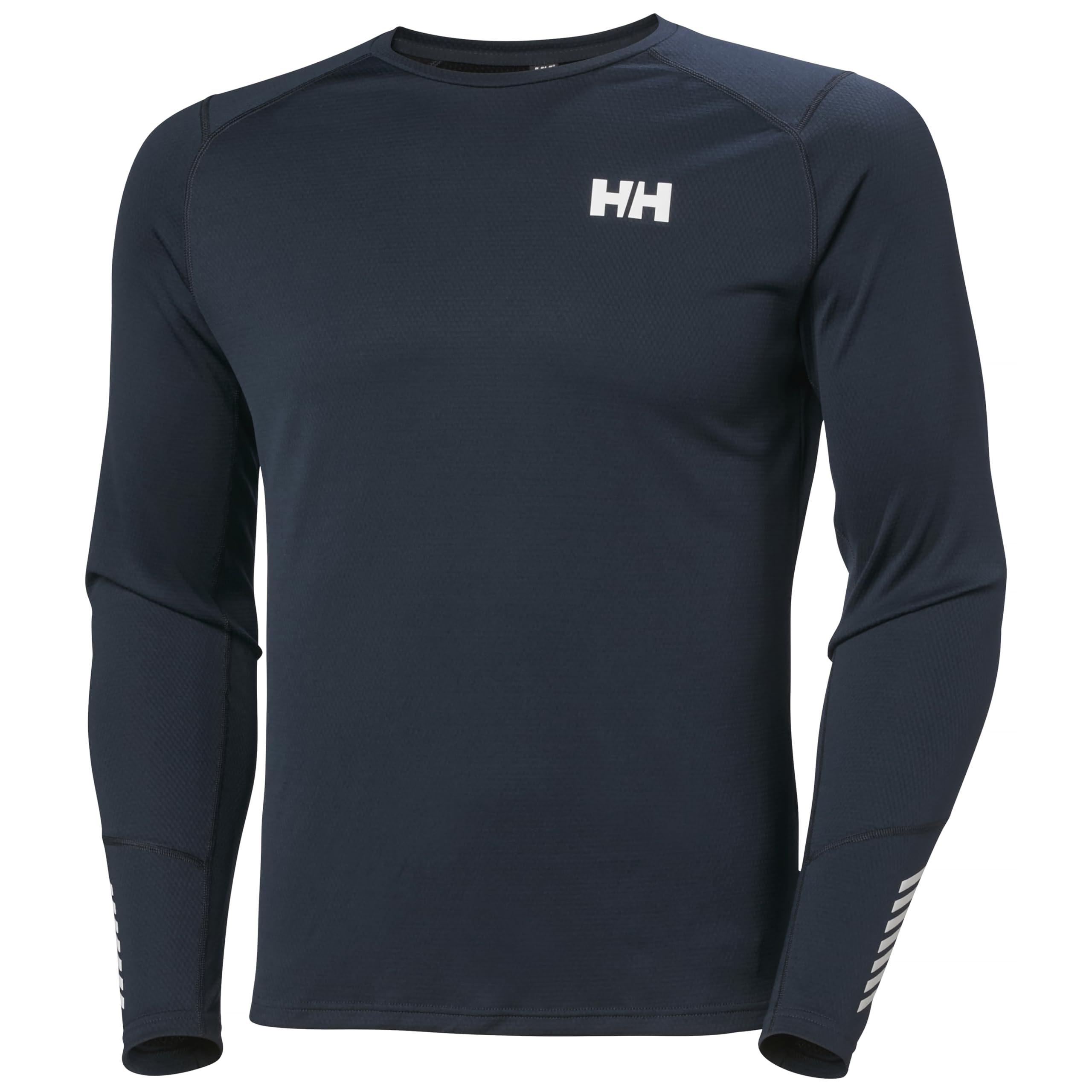
The plainer LIFA crew that adds a recycled fabric story and a ribbed cuff for all-day wear.
Where the Stripe crew leans into its look, this one leans into a cleaner build. It shares the same two-layer knit — a fiber that pulls moisture off your skin and a wicking layer on the outside — and adds Oceanbound recycled materials so you are not choosing between performance and a lighter footprint. The fabric is 65% polyester and 35% polypropylene, and it is a lightweight, regular fit that sits close without squeezing.
The ribbed cuff and straight hem are the quiet details that earn daily use. Ribbed cuffs hold the sleeve where you put it, so it does not ride up under a jacket. A straight hem stays tucked or sits flat at the waist. This is the version you reach for on a cold morning run, a hike that goes from cold to warm, or a bike commute where you start shivery and finish warm.
One thing to plan for: the fabric does not stretch, so it rewards getting the size right the first time. A little room helps if you are between sizes. Treat it as a regular-fit layer rather than a compression piece.
Recycled where it counts: the Oceanbound recycled content makes this the greener pick of the two LIFA crews without dropping the lightweight insulation that keeps you comfortable on the move.
Worth it if: you want LIFA’s dry handling with a cleaner look and a ribbed cuff that stays put.
Plan around: the non-stretch fabric — size it right, not snug-and-hoping.
4. Odlo Mens Active F-Dry Eco Light Base Layer Top

The dual-purpose top that works as a first layer or a shirt on its own.
Some base layers only make sense under something else. This one is built to be worn either way. Odlo’s F-Dry technology is the brand’s fastest-drying fabric, and the soft recycled polyester blend is extremely lightweight and elastic. Wear it next to skin under a shell, or pull it on by itself for a workout and wash it out in the sink afterward.
The ZeroScent technology is the real reason it can pull double duty. It keeps odor from settling into the fabric, so you are not stuck with a top that smells like yesterday’s effort after one wear. That is a big deal for travel, gym bags, and multi-day trips where you are packing light. An elastic fit moves with you rather than fighting your shoulders on the reach.
It is a light layer by design, so do not expect it to carry much warmth on its own in deep cold. Where it excels is the in-between: three-season runs, gym sessions, and hikes where the weather can tip either way. For that, it is the most flexible piece on this list.
Best called for: travelers and gym-goers who want one light layer that doubles as a shirt.
Keep in mind: light fabric means light warmth — layer it under something else for real cold.
5. Smartwool Men’s Active Ultralite Long Sleeve

The thinnest merino here — 4.8 ounces that disappear on a hard climb.
Set this next to the Classic Thermal crew above and the difference is stark. This one weighs 4.8 ounces against 10.4 ounces, which is why it feels airy on your back rather than warm and heavy. That is the point: it is a high-output layer built for when you are moving hard and putting out serious heat. You do not want insulation then — you want breathability and a dry back.
The wool does its quiet work. It breathes, and it manages the wet feeling off your skin. On a long hike that climbs and cools, that combination keeps you comfortable instead of soggy. It is a smart outer layer for warm-weather effort and a smart thermal first layer under a shell in colder conditions. That flexibility is why it earns a spot despite its lighter ratings base.
The fit runs true for some and loose for others, and a few find the fabric thinner than they pictured. The durability is the honest edge here. Thin merino asks for gentle handling and a little care in the wash. Treat it well and it stays comfortable for a long time.
Why high-output days fit it well
- 4.8-ounce merino breathes and dries without trapping heat
- Wicks sweat so a hard climb does not leave a cold, wet back
- Works as a solo shirt or a first layer under a shell
The trade-offs to weigh
- Fit feedback splits — some find it true, some find it roomy
- Thin fabric asks for careful washing and gentle use
It is the one for: hikers and runners who want breathable merino for warm-to-cool efforts.
Hand it back if: you want a warmth layer for freezing days — you want one of the heavier picks.
6. First Lite Men’s Wick Long Sleeve Crew
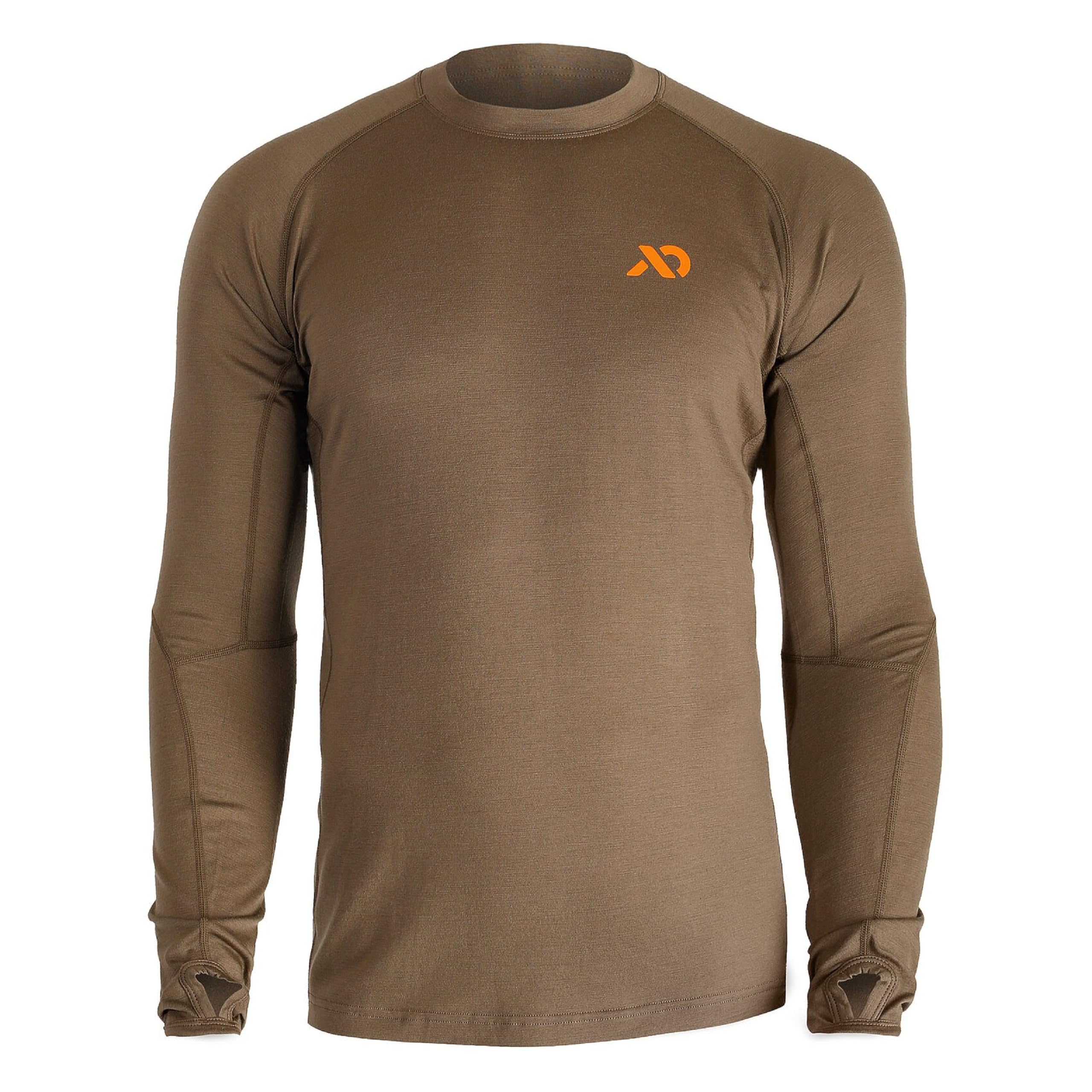
The merino hunting layer that handles sweat, sun, and a long day in the field.
Some base layers are built for the gym. This one is built for cover. It is a merino wool crew with UV protection and moisture management, and it does not hide its intent — the camo print is there so it can be worn as an outer layer in the field without giving you away. That makes it a different kind of pick: you wear it in early season when you are hiking in before first light, then stop and glass for an hour.
The merino is the story. It moves sweat off your skin and keeps you comfortable as the temperature shifts from cold morning to warm midday. UV protection is the detail that matters on open ground where you are not in shade. A long sleeve is right for the job — it protects your arms and keeps the mosquitoes off while you sit still.
The honest note: it is a specialist piece. If you do not hunt or spend long days outside, the camo earns you nothing and the price tag is doing work you will not get back. But for the buyer it is aimed at, it is the right tool, and the merino does exactly the quiet work that keeps you in the field longer.
The right pick for: hunters and field workers who need merino, UV protection, and a layer that stays dry all day.
A hard sell for: anyone who wants a plain under-layer for the gym — the camo and the price are built for a different buyer.
7. Under Armour Men’s Packaged Base 4.0 Crew
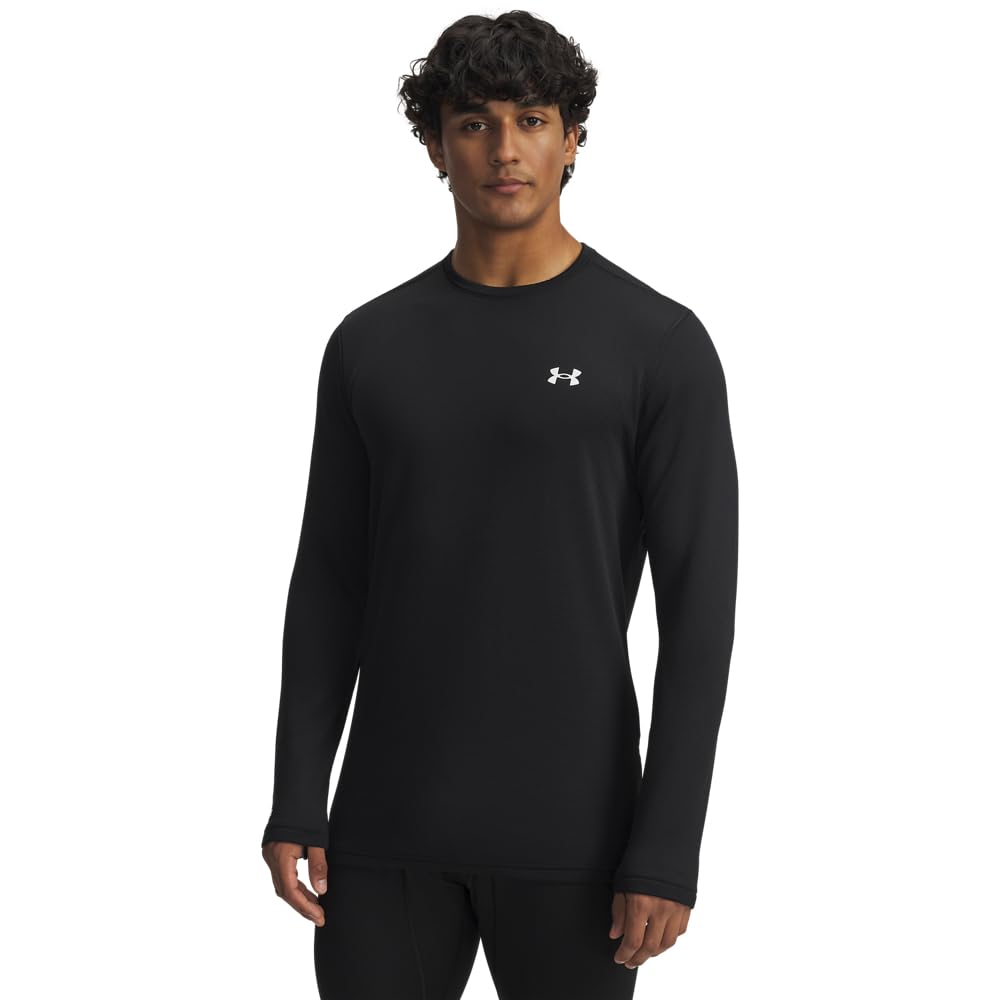
The extreme-cold heavyweight built for days when you barely move.
This is the warmest layer on the list, and it says so plainly. It is built for extreme cold and lower activity — the kind of day where you are out in the cold but not charging up a hill. A unique pattern traps heat without adding bulk, and the soft brushed grid interior holds a pocket of warm air against your body. Think of it as long underwear redesigned to stay close and warm.
The fabric is 78% polyester and 22% Elasterell, and it has 4-way stretch that moves in every direction. Sweat gets wicked and dries fast, so you do not end up cold and wet if the effort picks up. It keeps people warm in the cold and layers cleanly under everything from a shell to a parka.
The design trade-off is direct: warmth this heavy is great when you are standing still and too much when you are moving hard. Save it for the deep-cold day and wear a lighter layer for a warm-up push. For what it is built to do, it is a smart, comfortable choice.
The grid that traps warmth: the brushed grid interior is the reason it feels warm without bulk, and the 4-way stretch keeps it from fighting you when you do move.
Grab it for: deep-cold days with low movement — winter fishing, cold commutes, snow days with a lot of standing.
Not for: high-output activities where you want to stay cool — go lighter.
Know the Specs
Fabric weight in ounces
Weight is measured in ounces per square yard, and it tells you how much warmth the layer will trap. A thinner top in the 4-5 ounce range breathes and dries fast, so it suits hard effort. A heavier top in the 10-ounce range holds heat, so it suits standing around in the cold. Check the weight before you buy, because one layer cannot do both jobs well.
Two-layer wicking construction
A two-layer knit places a fiber that moves moisture away from skin next to your body, then a wicking fiber on the outside to spread and dry it. The result is a dry-feeling back even after you sweat. Merino wool does the same job through the fiber’s own structure, which is why some layers are built from a single wool knit rather than two synthetic layers.
Common Questions
Is a thinner base layer better for skiing or a heavier one?
Does merino wool really wick sweat?
What is a two-layer LIFA construction?
How should an alpha direct base layer fit?
Can I wear a base layer as a stand-alone shirt?
Is a heavier base layer always warmer?
Do base layers run true to size?
What is the difference between a base layer and a regular t-shirt?
Will a base layer keep me warm if I stop moving?
Should I go with merino or synthetic for a first layer?
The Bottom Line
For most people chasing the alpha direct base layer that pairs warm wool with real comfort, the Smartwool Classic Thermal Merino Crew wins because its 10.4-ounce merino keeps a cold day feeling mild without itching. If you sweat hard on the move and want the wet pulled off your skin, grab the Helly-Hansen LIFA Active Stripe Crew for its two-layer LIFA knit. And for deep-cold days with little movement, the Under Armour Base 4.0 is the one to reach for.
How we choose
We do not accept paid placement. Every pick is matched to a real buyer and a real use-case; we do not hands-on test units.
Sources
Specifications: manufacturer listings and product documentation. Review insights: verified customer reviews, as of November 2026. Pricing: not shown on this page (it changes often); check the current price via the retailer link.
As an Amazon Associate, My Heart Lives Here earns from qualifying purchases. This does not affect which products we feature.