Heads up: This post contains affiliate links. As an Amazon Associate I earn from qualifying purchases, at no extra cost to you. Learn more
Specs are compiled from manufacturer listings and verified buyer reviews and can change over time — please confirm the key details on the product page before buying.
Finding a shoe that is genuinely roomy across the forefoot is the hard part — most listings use the word “wide” loosely, and a shoe built for a 2E foot will still pinch a 6E one. The short answer: the FitVille Extra Wide Walking Shoes is the pick that delivers the most usable room for a truly broad foot, and the rest of this list covers the specific jobs the others do better. What matters here is the width the seller actually offers, the toe box depth, and whether the insole comes out so your own orthotic can go in.
This guide is built by comparing the manufacturers’ published specifications and the patterns across verified customer reviews, so you get each pick’s real strengths and trade-offs instead of marketing spin.
Below you’ll find seven real options, sorted so the roomiest and most dependable come first, plus plain-English notes on what each width code actually means before you buy. Every pick here is a real listing with real published specs, which is exactly what you want when shopping for 6e wide shoes.
Top Picks


How To Choose The Best 6E Wide Shoes
The single mistake most people make is trusting the word “wide” on a listing without checking the width letter behind it. A shoe sold as wide may only reach 2E or 4E, so on a genuinely broad forefoot it still presses the little toe and bunches at the ball of the foot. Read the width code first, then read everything else.
Start with the width letter, not the size number
Width letters describe how much circumference the shoe adds around the ball of your foot. 2E is wide, 4E is extra wide, and 6E is extra-extra wide. Several shoes on this list publish their full run of widths, so you can confirm the room is real before you order. If a listing only says “wide” with no letter, treat it as a question mark.
Toe box height matters as much as toe box width
A broad foot often comes with a high instep or a tender spot on top of the toes. A roomy toe box that is shallow will still rub. Look for a design described with a high instep and a broad toe area, which keeps the upper off the top of your foot rather than pressing down on it.
Check whether the insole lifts out
If you wear a prescription orthotic, the factory insole has to come out or the shoe will fit tight everywhere. A removable insole lets you swap in a fresher footbed later instead of replacing the whole shoe.
Side-by-Side Comparison
| Model | Best For | Upper Material | Weight | Removable Insole | Amazon |
|---|---|---|---|---|---|
| FitVille Extra Wide Walking Shoes★ Best Overall | Broadest room, all-day standing | — | — | Yes | Amazon |
| New Balance Made in USA 990 V6Premium Pick | Premium everyday ride | Pigskin and synthetic over mesh | 2.1 pounds | — | Amazon |
| New Balance 857 V3 Cross Trainer | Gym days and stability | Leather | 2.4 pounds | — | Amazon |
| Extra Wide Walking Sneakers with Arch Support | Swollen feet and flat feet | — | — | — | Amazon |
| FitVille Wide Trail Running Shoes | Trail walks and toe room | — | — | — | Amazon |
| Propet Stability Fly | Knit upper, lightweight feel | Precision knit mesh | 2.13 pounds | — | Amazon |
| Dunham Winslow Oxford | Dress-casual leather wear | Leather | 1.7 pounds | Yes | Amazon |
Detailed Reviews
1. FitVille Extra Wide Walking Shoes
Our pick — 4.0+★ from 750+ verified ratings; the strongest balance of quality and price.
The pick built for a foot that has outgrown every standard “wide” label.
Here is the number that decides it for a 6E foot: this shoe is offered in widths running from Wide (2E) all the way up to X-Wide (4E) and beyond, with a wide toe box and a high instep cut. In plain terms, the top of the shoe is shaped to hold its height over your foot instead of pressing down on your toes. If standard widths have been pinching the ball of your foot, this is the listing to start with.
The ArchCore insole lifts straight out, so you can drop in your own orthotic without fighting the factory footbed. The midsole is built from two different densities of high-rebound EVA — a springy foam cushioning material — with a softer feel at the heel and a firmer one under the forefoot. The outsole is rubber with good traction, which is the part you notice on wet pavement or a polished floor.
What wins people over is the construction itself — it is the most-praised thing about this shoe by a clear margin, well ahead of the value and the looks. Owners describe wearing them through a full work shift without foot pain. The honest catch is the cushioning: some owners find it supportive and springy while others say it feels too firm underfoot. Buy this one for the room and the build, and know that firm may be exactly what your foot wants anyway.
Where it earns its keep
- Width run goes from Wide (2E) into X-Wide territory — genuine room, not a relabelled standard fit
- High instep and wide toe box keep pressure off the top of the foot
- Removable ArchCore insole takes a custom orthotic cleanly
- Two-density EVA midsole cushions the heel and supports the forefoot
The trade-off to know
- Cushioning splits opinion — firm underfoot for some wearers
- Built for walking and prolonged standing, so it is not a running shoe
Reach for this if: your forefoot needs real width and you stand or walk for long stretches of the day.
Look elsewhere if: you want a pillowy, deep-cushioned ride — the midsole here leans firm.
2. New Balance Unisex Adult Made in USA 990 V6 Sneakers
The one that proves a premium build and a light step can share a shoe.
At 2.1 pounds, this is the lighter of the two New Balance pairs on this list — the 857 V3 cross trainer tips the scales at 2.4 pounds. That difference is the kind you feel on a long walk rather than a quick trip to the shop. The upper trades the usual midfoot saddle for pigskin and synthetic overlays flowing heel to toe over a mesh underlay, which reads as an airier, more streamlined fit across the top of the foot.
The bigger story is under your foot. FuelCell midsole cushioning is the foam layer between your foot and the ground, and it is what gives this pair its springy forward roll. Owners talk about walking all day feeling easy, and the support under the arch gets steady praise. It is also note the shoe is listed at 12.7 x 7.9 x 4.5 inches against the Propet Stability Fly’s 11.2 x 7.7 x 4.2 inches, so it is the longer and taller of the two in hand.
Build quality is what carries this shoe in owner experience — it is far and away the thing buyers bring up, with value and looks trailing behind. Where it gets murky is fit: the sizing is the mixed note here, so try before you commit to a final number. Treat this as the dress-up-or-down everyday pair for someone who wants a made-in-USA label and does not need the absolute widest last on the shelf.
What the price buys: a pigskin-and-mesh upper, FuelCell foam, and a 2.1-pound build that stays light on the foot while feeling solidly put together.
The fit question: sizing is the one point that splits owners, so confirm your width before ordering rather than assuming the 990 last runs the same as an older pair.
Best for: the buyer who wants one good-looking pair for errands, travel, and long days on pavement.
Not the one if: you need the widest forefoot available — this is a fit-first shoe, not a width specialist.
3. New Balance Men’s 857 V3 Cross Trainer Shoes

A stability-first trainer for the days you lift, lunge, and stand around.
The part that defines this shoe is the ROLLBAR stability post — a firm structure set into the midsole that resists your foot rolling inward. If your ankle tends to cave when you shift weight sideways, that post is the reason to care. A PU insert sits underfoot for support, and the all-leather upper is the durable outer layer that holds its shape through repeated gym trips.
Room in the toe area is the strong suit — owners consistently describe plenty of space up front. That is where the good news needs a caveat. The same reviews that like the toe box also note the shoe runs narrow in width, so an extra-wide foot may find this one snug even in its largest size. It is heavier too: at 2.4 pounds it outweighs the 990 V6 by a fair margin, and you feel that in hand.
Construction is what buyers talk about most here, well above the fit and the support. Longevity is the split note — some pairs hold up for a long stretch while others come apart within a couple of months of wear, so this is the pick to buy for the training-floor job and keep an eye on rather than the one to count on for years. Leather also runs warmer than mesh, which matters if you are in them all afternoon.
Why it holds a spot: the ROLLBAR post and leather upper make it the stability-and-durability choice on this list, and the toe box gives your front-of-foot room to sit flat.
What to weigh first: the width runs narrow and the weight is up at 2.4 pounds, so a genuinely broad foot should size carefully or look at a wider-lasted pick.
Choose this when: you want lateral support and a leather upper for gym sessions and everyday wear.
Pass on it when: your forefoot needs maximum width — the narrow sizing will pinch.
4. Men’s Extra Wide Walking Sneakers
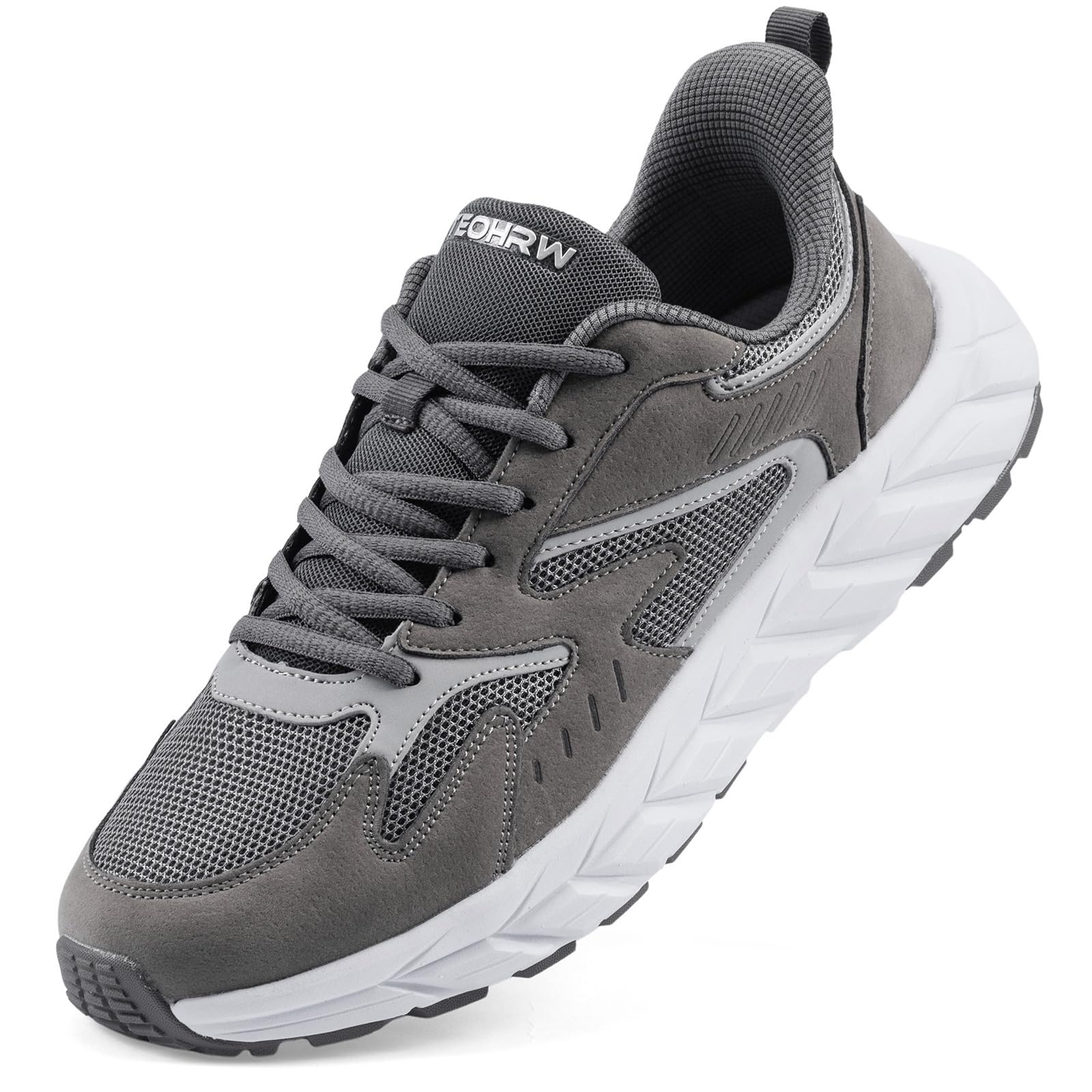
The one sized for a foot that swells through the day and needs the room.
For a foot that changes size as the day goes on, this sneaker is the straightforward answer. Owners describe it fitting well even when their feet swell, and they credit the wide toe box. If you have ever had to loosen laces by lunchtime, that is the exact problem this shoe is built around.
Comfort and fit are the two things owners bring up most, with the toe width coming in right behind them. Flat-footed wearers are the group most often praising its arch support. The look and the value both get a fair share of positive notes too, so it does not read as a purely functional purchase.
The one variable is the cushioning. Some owners describe it as soft and giving, while others say it feels hard underfoot. That split is worth knowing before you order, because it changes the shoe depending on what your own foot prefers. Buy it for the width and the arch, and treat the underfoot feel as the swing factor.
What it gets right
- Wide toe box gives swollen feet room to spread out
- Arch support is a genuine standout for flat-footed wearers
- Comfort and fit earn the most praise among owners
- Looks and value both hold up alongside the fit
The honest footnote
- Cushioning divides owners — soft to some, firm to others
Ideal for: anyone whose feet swell, or who needs a broad box combined with arch support for daily walking.
Think twice if: you need a plush underfoot feel — the cushion firmness is a coin flip here.
5. FitVille Mens Wide Trail Running Shoes
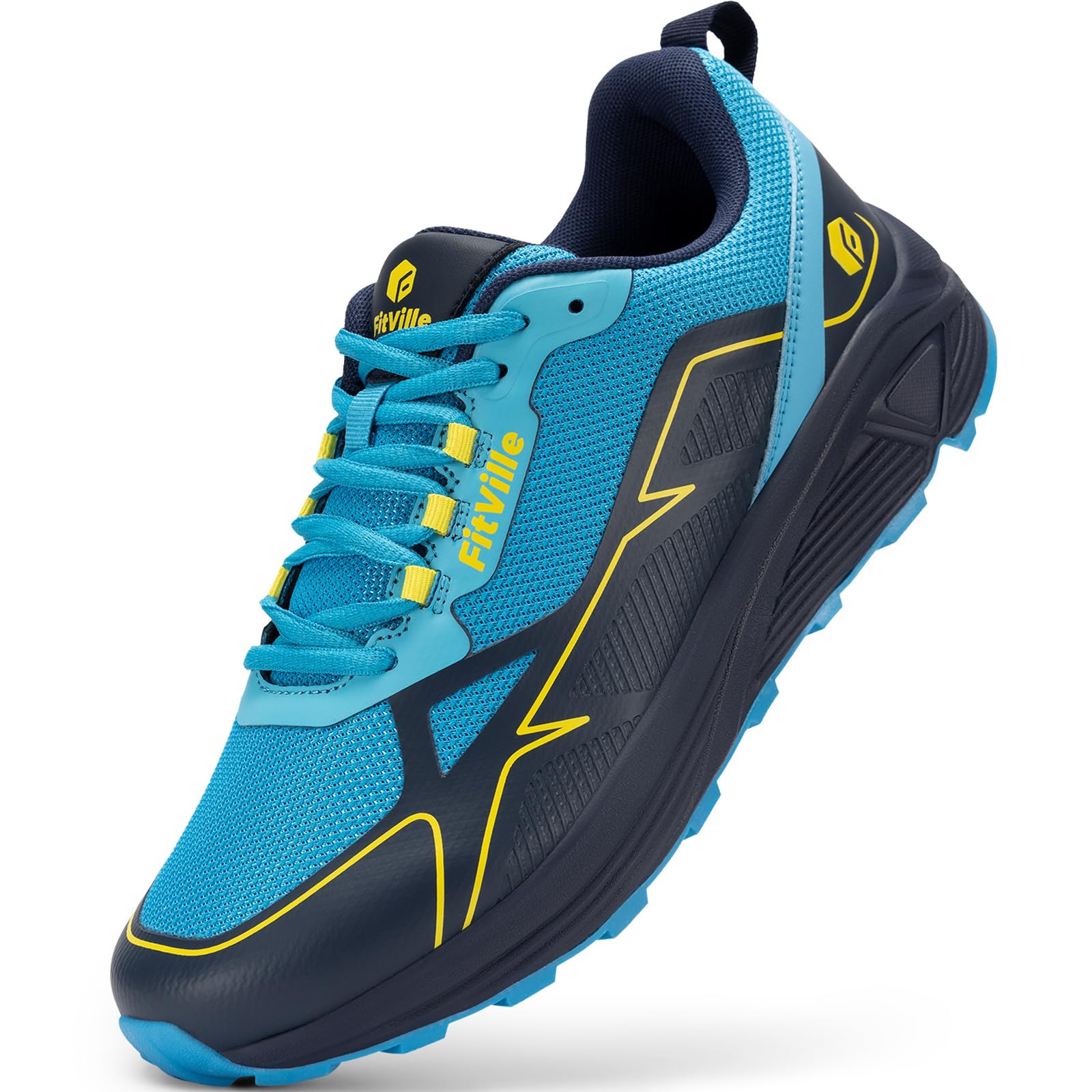
A wide trail shoe for the walker who wants toe room off the pavement.
The headline here is toe room again, from the same brand that takes the top spot. Owners describe plenty of space for their toes and a nice wide toe box, making fit one of the two most-praised things about the shoe alongside overall build. If you want the FitVille width but you walk on gravel paths and park trails rather than sidewalks, this is the version to look at.
Arch support and value round out the positive side, and the look earns its share of favorable mentions. That places it firmly in the value-minded walking camp rather than the performance-trail camp. It is not the shoe for technical terrain or long mountain days — it is the one for a wide foot that wants to get off the sidewalk.
The one thing to watch is longevity. Owner experience runs from pairs lasting over a year to pairs coming apart within a month, so this is a build where the outcome varies. Cushioning and general comfort also get a mixed read. Go in knowing that, and you have a wide, affordable trail walker rather than a shoe you can count on for hard use.
The case for it: a wide toe box and arch support for trail and path walking, at a price band that keeps it in reach.
The caveat: durability is the split note, with owner experience ranging from a long year of wear to early failure.
Worth grabbing if: you want FitVille width for trail paths and low-impact outdoor walks.
Better to skip if: you need a shoe you can count on for heavy, repetitive daily wear over years.
6. Propet Mens Stability Fly Sneakers
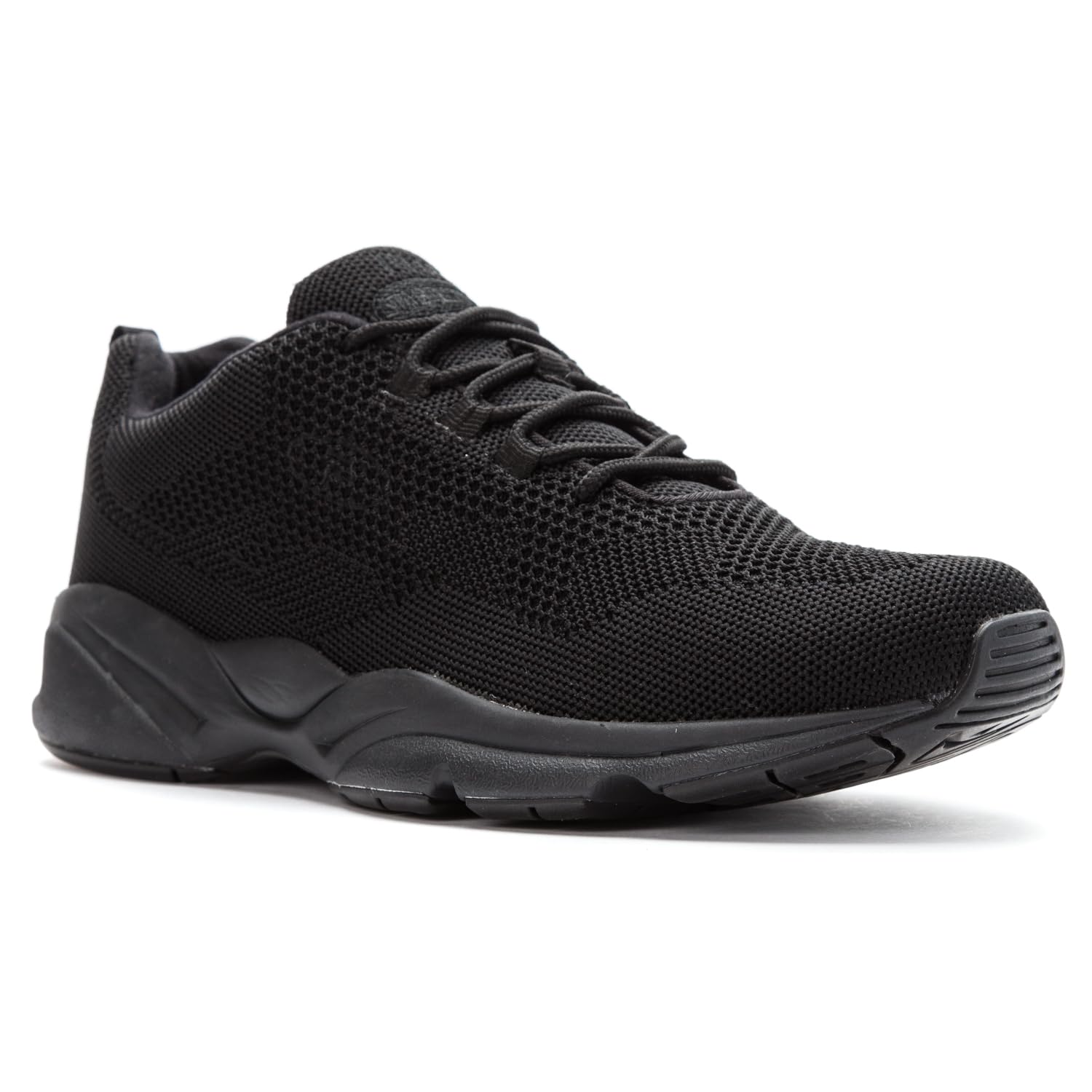
Soft knit that lets your toes spread, with a gel pad in the heel.
Precision knit mesh is the reason this shoe feels different from the leather options here — it is a woven upper that gives instead of holding a rigid shape. That gives your toes space to spread out, which the maker credits for the shoe’s stability. A soft PU footbed with comfort ridges in the forefoot and a gel insert in the heel handles the underfoot feel.
Fit is what owners bring up most by a wide margin, with build quality right behind it. At 2.13 pounds it is light in hand, and it sits at 11.2 x 7.7 x 4.2 inches against the longer 990 V6 at 12.7 x 7.9 x 4.5 inches — so it is the more compact of the two. A supportive EVA midsole with a rubber outsole keeps the stride smooth underfoot, which is the part that matters on a long walk.
Looks get steady praise, and the blue finish wears well with everyday clothes. The mixed notes land on durability, value, and how comfortable it feels over long stretches. That makes it the pick for the person who wants a flexible knit upper and heel cushioning rather than a structured leather shoe.
What stands out: knit mesh that moves with your foot, gel in the heel, and a light 2.13-pound build.
What to watch: durability and value carry mixed feedback, so treat it as a comfort-first knit shoe rather than a long-haul workhorse.
Pick this one for: flexible knit comfort and a heel that takes the impact on long walks.
Leave it for the leather fans: if you want a stiff, structured upper that holds its shape, this is not it.
7. Dunham Men’s Winslow Oxford

An oxford you do not have to lace, for the days you need to look put together.
At 1.7 pounds, this is the lightest shoe on the list — noticeably lighter than the 857 V3 at 2.4 pounds. The leather upper with tonal stitching keeps it looking like a proper shoe for pants or khakis, and the dual hook-and-loop straps mean you close it with a pull instead of a bow. Padded tongue and collar keep the edges soft where the shoe meets your ankle.
Owners describe it as comfortable, particularly on narrow feet, and they like the look for everyday wear across seasons. Arch support and everyday function come up as real strengths, including one owner who wears them for trail walking in the woods. The removable insole lets you add your own orthotic, and the soft textile lining keeps things breathable on a long day.
The catch is the fit model. Despite the broad-size reputation of the brand, the comfort notes here center on narrow feet, so a genuinely wide forefoot should confirm the exact width before committing. Treat this as the dress-casual option in the group rather than the widest one. It fits the reader who needs a shoe that looks presentable and closes fast, and who does not mind giving up the broadest box to get it.
Where it fits in: a light, leather, strap-closed oxford for smart-casual days and easy on-and-off at the door.
The catch: the comfort experience leans toward narrower feet, so check the width offer before you buy if your forefoot runs broad.
Go for it if: you want an easy-close leather shoe that looks tidy with everything from khakis to jeans.
Skip the swap if: you’re shopping purely for maximum forefoot room — the narrow-footed fit notes are the tell.
Know the Specs
Width Letters (2E, 4E, 6E)
A width letter tells you how much extra circumference a shoe adds around the ball of your foot. 2E is wide, 4E is extra wide, and 6E is extra-extra wide. A shoe that only lists “wide” with no letter is a gamble for a broad foot — always look for the numbered letter so you know how much room you are actually getting. Where a listing publishes its full run of widths, that range is your proof.
Removable Insole
A removable insole is a footbed you can lift out of the shoe. If you wear a prescription orthotic, this has to be there or the shoe will fit tight everywhere. It also means you can swap in a fresh footbed months later instead of replacing the whole shoe.
Midsole Foam (EVA and FuelCell)
The midsole is the cushioning layer between your foot and the outsole. EVA is a springy foam used in many walking shoes, and the FitVille pick uses two densities of it — softer at the heel, firmer under the forefoot. FuelCell is New Balance’s own cushioning foam, and it is what gives the 990 V6 its rolling feel. Firmer foam means more support; softer foam means more give.
Upper Material and Closure
The upper is everything above the sole, and it decides how the shoe holds your foot. Leather holds its shape and runs warm; knit mesh gives with your foot and breathes. Closure matters too — laces let you fine-tune the tightness point by point, while hook-and-loop straps close in one motion and suit anyone who has trouble reaching down to tie.
Common Questions
What does 6E width actually mean in a shoe?
Will the FitVille Extra Wide Walking Shoes take my own orthotic?
Is a wide toe box better for a swollen foot?
Should I size up or order a wider width?
Can I wear the New Balance 857 V3 all day at work?
Do wide shoes still work for flat feet?
Is knit mesh or leather better for an extra wide foot?
How long should a wide walking shoe last?
Can I wear a trail shoe like the FitVille on the sidewalk?
What is the lightest shoe on this list?
The Bottom Line
For most people shopping for 6e wide shoes, the FitVille Extra Wide Walking Shoes is the pick because it offers the widest published range of room, a high instep cut, and a removable insole that takes your orthotic. If you want the lightest, longest-wearing everyday pair with a premium build, the New Balance 990 V6 at 2.1 pounds is the step up. And for a shoe that fits over a swollen foot with arch support built in, reach for the Extra Wide Walking Sneakers. Whatever you choose, order the width letter you actually need rather than sizing up — that one decision is what makes or breaks a wide fit.
How we choose
We do not accept paid placement. Every pick is matched to a real buyer and a real use-case; we do not hands-on test units.
Sources
Specifications: manufacturer listings and product documentation. Review insights: verified customer reviews, as of November 2026. Pricing: not shown on this page (it changes often); check the current price via the retailer link.
As an Amazon Associate, My Heart Lives Here earns from qualifying purchases. This does not affect which products we feature.