Heads up: This post contains affiliate links. As an Amazon Associate I earn from qualifying purchases, at no extra cost to you. Learn more
Specs are compiled from manufacturer listings and verified buyer reviews and can change over time — please confirm the key details on the product page before buying.
If you want a shoe that sits low to the ground and lets your toes spread out, the answer is simple: the Inov-8 Roclite G 290 V2 is the safest all-round pick here, and the two Altra road models are the ones to consider if you mostly run on pavement. A 4mm heel-to-toe drop means the heel sits just 4mm higher than the toe, so your foot lands flatter and rolls forward instead of being tipped downhill. That flatter platform is the whole point of this category, and it is also where most buyers get surprised.
This guide is built by comparing the manufacturers’ published specifications and the patterns across verified customer reviews, so you get each pick’s real strengths and trade-offs instead of marketing spin.
Below you will find the exact stack heights, weights, and upper materials that separate these four shoes, plus where each one genuinely falls short. Read on for a straight comparison of 4mm heel-to-toe drop shoes.
Top Picks
How To Choose The Best 4mm Heel-to-Toe Drop Shoes
The first thing to get straight is that a 4mm drop is a position, not a promise. It tells you how the shoe is tilted under your foot, and nothing about how soft it is, how wide it is, or how long it lasts. So judge a low-drop shoe on three separate things: the drop itself, the stack height, and the shape of the toe box.
Read the drop and the stack height together
A 4mm drop paired with a 28mm heel and 32mm forefoot stack (the thickness of cushioning under your foot) gives you a low, flat platform with real foam under the ball of your foot. That combination is what makes a rocker-shaped sole roll you forward smoothly. If you are coming from a taller, more tilted shoe, give yourself a few short runs first — your calves and Achilles do more of the work when the heel sits low.
Expect the toe box to behave differently model to model
A roomy toe box is the other half of the low-drop story, because your toes can spread when the platform is flat. But “roomy” is measured by the last (the foot-shaped mould the shoe is built on), and it changes between models — even inside one brand. Some of these shoes fit true to size with plenty of width; others run small. Check the return window before you commit, and try them on late in the day when your feet are at their largest.
Match the outsole to where you actually run
Trail rubber and road rubber are not the same compound. A sticky trail outsole earns its keep on wet roots and loose gravel, while a smoother road outsole rolls quietly on pavement. Buying a trail shoe for the treadmill wastes grip you paid for; buying a road shoe for real trails is the more common mistake, and it shows up fast on descents.
Side-by-Side Comparison
| Model | Best For | Drop | Weight | Stack Height | Amazon |
|---|---|---|---|---|---|
| Inov-8 Roclite G 290 V2★ Best Overall | Mixed trail days | 4mm | — | — | Amazon |
| ALTRA Experience Wild 2 | Technical trails | 4mm | 10.4 oz | 28mm / 32mm | Amazon |
| ALTRA Experience Flow | Daily road miles | 4mm | 8.4 oz | 28mm / 32mm | Amazon |
| ALTRA Women’s AltraFWD Experience | Women’s road running | 4mm | — | — | Amazon |
Detailed Reviews
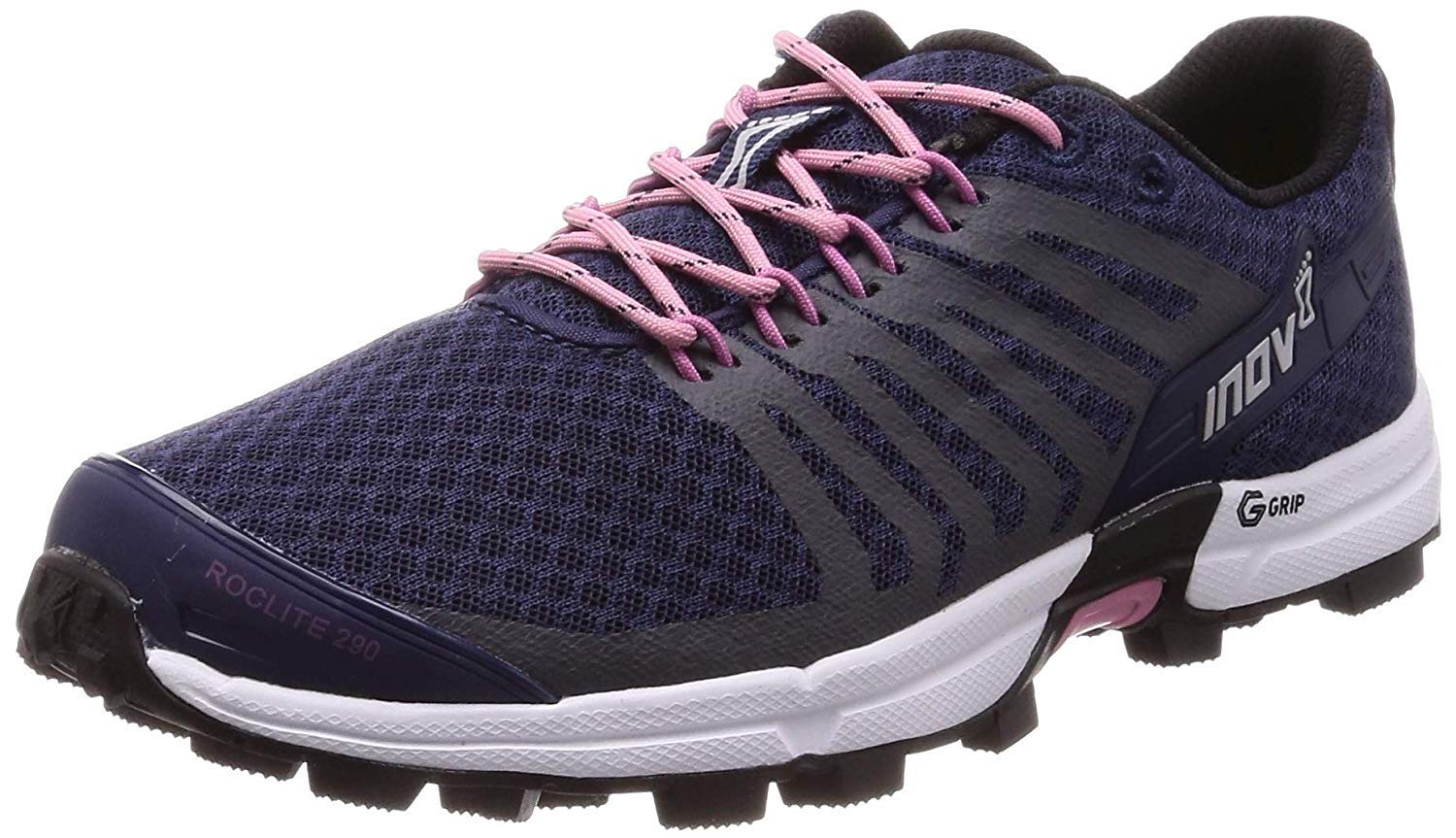
1. Inov-8 Roclite G 290 V2
Our pick — 4.5+★ from 90+ verified ratings; the strongest balance of quality and price.
A 4mm-drop trail shoe whose graphene G-Grip outsole and consistent fit carry it on mixed ground.
What makes this Inov-8 the pick to start with is fit. Of everything owners talk about across the review pages, sizing and comfort around the foot come up more than anything else, and almost all of it lands on the positive side. For a low-drop trail shoe, that matters more than usual: when the heel sits barely off the ground, a sloppy fit turns into a blister on the first long descent.
The grip is the second story, and it is a clean one. The graphene-enhanced G-Grip rubber (graphene is a carbon additive the maker says is used to toughen the outsole compound) is the reason this shoe feels planted on loose gravel and damp dirt. The brand also gives it an external heel cage at the back for support and a welded film toe bumper at the front, so rock strikes land on the bumper rather than your toes.
Here is the honest catch. The listing’s own copy is contradictory — the description talks about the updated TRAILTALON 235, and the technical specs list the department as womens with a 1-pound shipping weight. Neither of those is a spec you can plan a. Judge this shoe on what owners vouch for: the fit and the traction. And if you have wide feet, order with a return window open rather than assuming.
What wins people over
- Fit is the most-discussed topic in the reviews and it skews strongly positive
- Graphene G-Grip outsole gives real bite on mixed trail surfaces
- External heel cage adds support at the back of the foot
- Welded film toe bumper shields the front from rock strikes
Where it asks patience
- Listing details are inconsistent, so confirm the size you need before ordering
- No listed stack height or weight figure to compare against the Altra models
Reach for this if: you split your miles between groomed paths and rougher ground and want a low platform you can trust underfoot.
One caveat: the product page itself is muddled on sizing details, so buy where you can exchange.
2. ALTRA Men’s Experience Wild 2 Trail Running Shoe
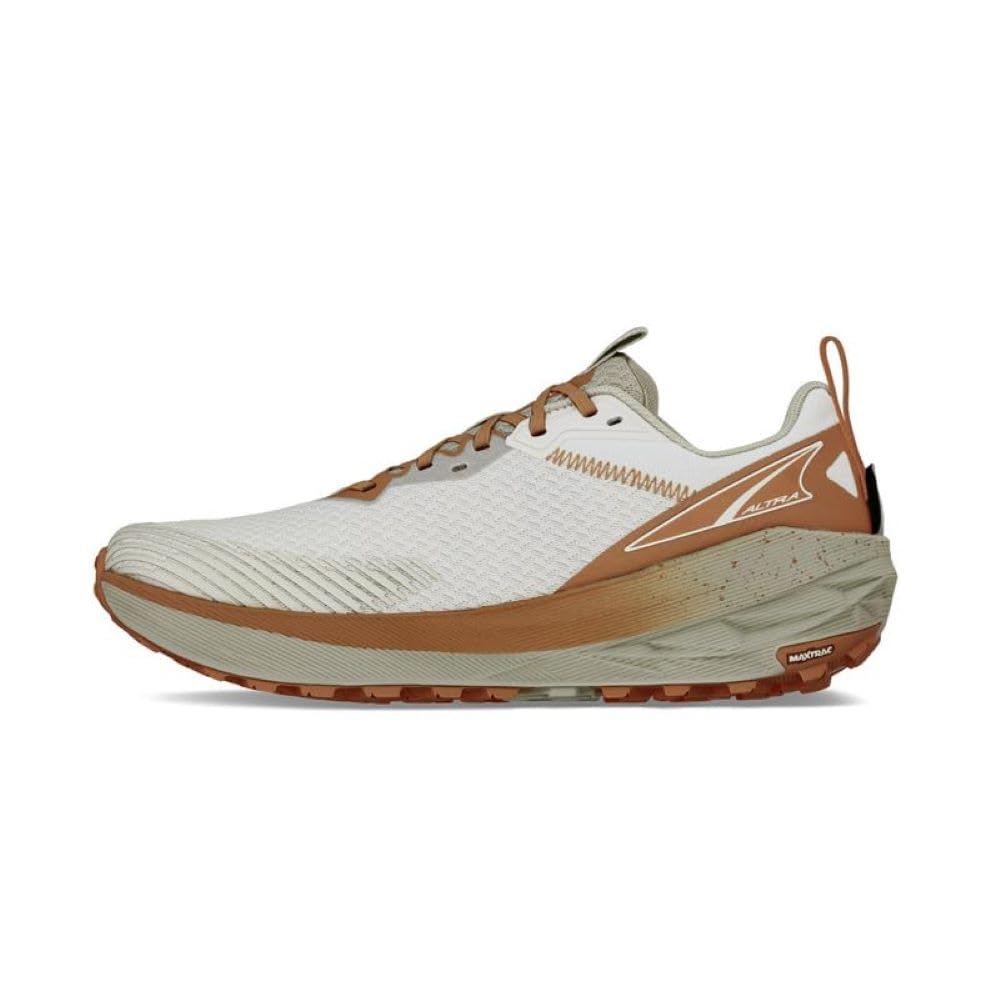
A 10.4 oz trail shoe with a MaxTrac outsole and TPU toe overlay, 2 oz heavier than the Experience Flow.
The Experience Wild 2 is the trail half of Altra’s low-drop pair, and the weight tells you where it sits. At 10.4 oz it is a full 2 oz heavier than the Experience Flow road shoe at 8.4 oz, and that extra mass buys you a MaxTrac outsole (a rubber compound Altra builds for grip and abrasion resistance) plus a pumped-up TPU overlay across the toe. On a rocky descent, that trade is worth making.
Comfort is what the reviews come back to more than anything, followed by fit and then cushioning, and those three topics dominate the positive side of the page. The midsole is compression-molded EVA foam, and the rocker shape (a curved sole that tips you forward) pushes you into an efficient toe-off without flattening your natural stride. The mesh upper was updated for breathability this generation, and there is an integrated GaiterTrap so you can clip on a trail gaiter and keep grit out.
Now the part you should know before you buy. The toe box draws genuinely split opinions — some love the room, others find the shoe runs small. Durability is the other split topic, with the fabric at the outside front named in the complaints. Both point to sizing carefully and keeping this shoe on dirt rather than pavement.
What the trail buys you: A 28mm heel and 32mm forefoot stack on a 4mm drop, wrapped in a grippy MaxTrac outsole and a reinforced toe. For loose gravel and rooted singletrack, this is the most purpose-built shoe in the group.
The fit question: Because the toe box divides opinion and the shoe can run small, order your usual size only if you have tried Altra before. First-timers should size up or buy with an easy return.
Pick this one if: your runs happen on dirt and rock and you want the extra protection that the 10.4 oz build delivers.
Think twice if: you want one shoe for pavement and trail both — the durability gripes cluster around hard, repeated use.
3. ALTRA Men’s Experience Flow Road Running Shoe
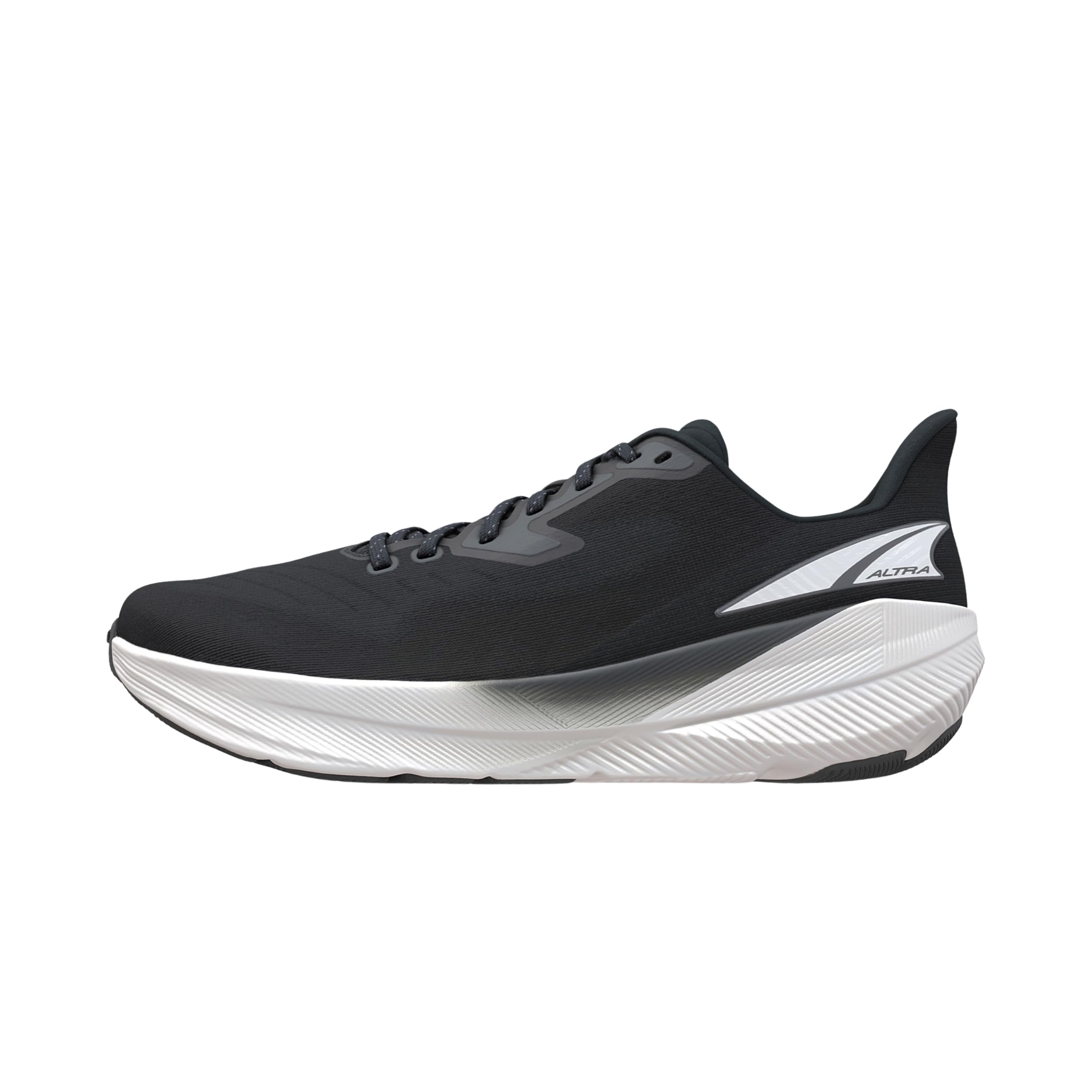
The lightest shoe here at 8.4 oz, built for pavement with a rubber road outsole on a 4mm drop.
If your running is mostly sidewalk and asphalt, start here. The Experience Flow pairs the same 4mm drop and 28mm/32mm stack as the Wild 2 with a rubber road outsole, and it does it at 8.4 oz — 2 oz lighter than the trail version, which is the kind of difference you feel in the last mile rather than the first.
Comfort and overall quality are the two things that come up most in the feedback, and both land strongly positive. The upper is a two-color engineered mesh built for breathability, and the compression-molded EVA midsole stays responsive without feeling dead. The rocker geometry (that curved sole again) rolls you forward, and Altra’s FootShape last gives you a wide toe box with a secure midfoot. Walking gets its own positive mentions too, so it doubles as a daily shoe if you stand a lot.
The honest limitation is longevity. Durability is the one topic on this page that reads negative overall, with the outsole and the interior padding both named as wearing early. Treat it as a shoe to rotate on pavement rather than one to grind into the ground. Keep it off gravel and it will stay comfortable far longer.
Why it leads on pavement
- At 8.4 oz it is 2 oz lighter than the Experience Wild 2 trail shoe
- Roomy toe box with a secure midfoot, via Altra’s FootShape last
- Engineered mesh upper for breathability on warm runs
- Rocker sole encourages a smooth, quick roll through your stride
The trade you accept
- Outsole and interior padding are the two wear points flagged most
- Rubber road outsole is not built for loose or wet trail surfaces
Best suited to: the runner logging steady miles on pavement who wants a light, flat-riding shoe that still feels roomy up front.
Not the one for: anyone planning regular dirt and gravel — that is what the Wild 2 above is for.
4. ALTRA Women’s AltraFWD Experience Road Running Shoe
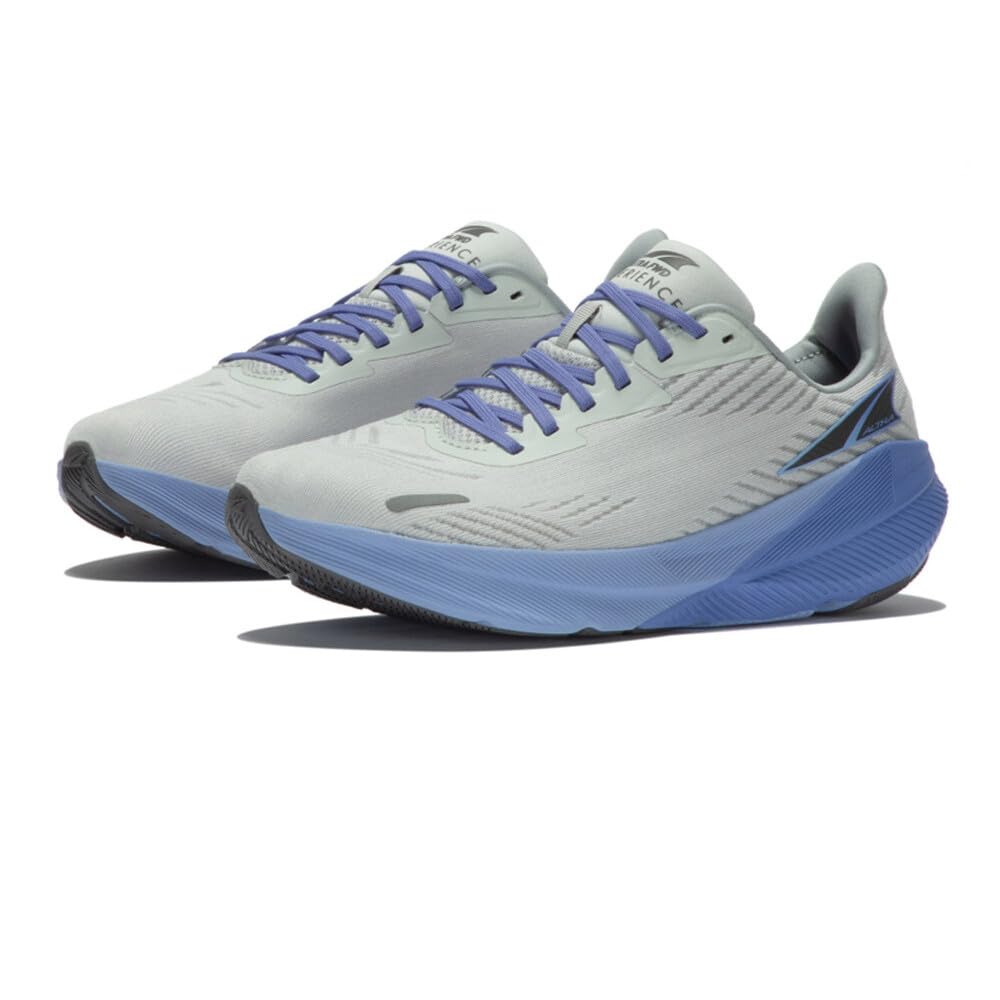
A women’s-specific 4mm-drop road shoe with a rocker sole and Altra’s FootShape toe box.
This is the shoe that hooks people on appearance first. Looks are the top topic on the page and comfort ties it, with buyers describing the AltraFWD Experience as the best version of this style they have owned. It carries the same 4mm drop and rocker sole as the men’s Flow, paired with the compression-molded midsole foam and Altra’s roomy toe box.
Support and day-to-day effectiveness round out the positives, and the shoe is a genuine option if you want a low, flat platform under a women’s-specific fit. The rocker shape tips you into an efficient toe-off, which is the whole reason a 4mm shoe rolls rather than drags.
The catch is sizing, and it is worth taking seriously. Fit is the one split topic here — plenty find it true to size with a generous toe box, while a real share say it runs small and that the toe box is tighter than earlier Altra models. Cushioning is also split, with a few noticing foam bumps that stick out. Try these on before you commit, and if you are between sizes, go up.
The standout: Appearance and comfort carry this shoe’s reputation, and a supportive, flat-riding platform underneath makes it more than a pretty face for easy road days.
Size before you settle: Because fit and cushioning both read mixed, the smart move is to order your normal size and one up, keep the better pair, and send the other back.
Go for it if: you want a women’s low-drop road shoe that looks sharp and rolls smoothly through easy miles.
Look elsewhere if: you have wide feet or relied on the roominess of older Altras — this toe box may run tighter than you expect.
Know the Specs
Heel-to-toe drop
The drop is how much higher the heel sits than the toe, measured in millimetres. A 4mm drop is a low, near-flat platform, so your foot lands closer to level and your calf does more of the work. If you are used to a taller shoe, ease in with short runs before you go long.
Stack height
Stack height is the thickness of foam under your foot, listed heel-first. A 28mm heel and 32mm forefoot gives you a slightly thicker forefoot than heel — the flatter arrangement that makes a rocker sole roll you forward. More stack means more cushioning; less means more ground feel.
Toe box and last
The last is the foot-shaped mould a shoe is built around, and it decides how much room your toes get. A roomy toe box lets toes spread on a flat platform, but the same brand can build different lasts — so check the fit notes for each model rather than assuming.
Outsole compound
Outsole rubber is formulated for a surface. Trail compounds like MaxTrac and graphene G-Grip are built for grip on loose ground, while road rubber rolls smooth on pavement. Using the wrong one wears the shoe faster and gives up traction where you need it.
Common Questions
Is a 4mm heel-to-toe drop good for everyday running?
Will a 4mm drop shoe fix my running form?
Do these low-drop shoes run true to size?
Can I wear a 4mm drop trail shoe on the road?
How long should a low-drop running shoe last?
Is the Altra Experience Flow the same shoe as the AltraFWD Experience?
Which of these is better for wide feet?
Do I need a rock plate or gaiter for low-drop trail shoes?
Is the Inov-8 Roclite G 290 V2 suitable for road running?
Should I go up a size in the ALTRA Experience Wild 2?
The Bottom Line
The safest call among these 4mm heel-to-toe drop shoes is the Inov-8 Roclite G 290 V2, because it pairs a genuinely trusted fit with a graphene G-Grip outsole, heel cage, and toe bumper that hold up on mixed ground. If your running happens on pavement, the ALTRA Experience Flow is the lightest way to get a flat, roomy ride at 8.4 oz. For real trail work where protection matters more than weight, the ALTRA Experience Wild 2 brings the MaxTrac grip and reinforced toe. And if you want a women’s-specific cut, the ALTRA Women’s AltraFWD Experience earns its place on comfort and looks — just size carefully. Two things to keep straight before you buy: check the toe box feedback for the model you pick, and match the outsole to where you actually run.
How we choose
We do not accept paid placement. Every pick is matched to a real buyer and a real use-case; we do not hands-on test units.
Sources
Specifications: manufacturer listings and product documentation. Review insights: verified customer reviews, as of November 2026. Pricing: not shown on this page (it changes often); check the current price via the retailer link.
As an Amazon Associate, My Heart Lives Here earns from qualifying purchases. This does not affect which products we feature.