Heads up: This post contains affiliate links. As an Amazon Associate I earn from qualifying purchases, at no extra cost to you. Learn more
Specs are compiled from manufacturer listings and verified buyer reviews and can change over time — please confirm the key details on the product page before buying.
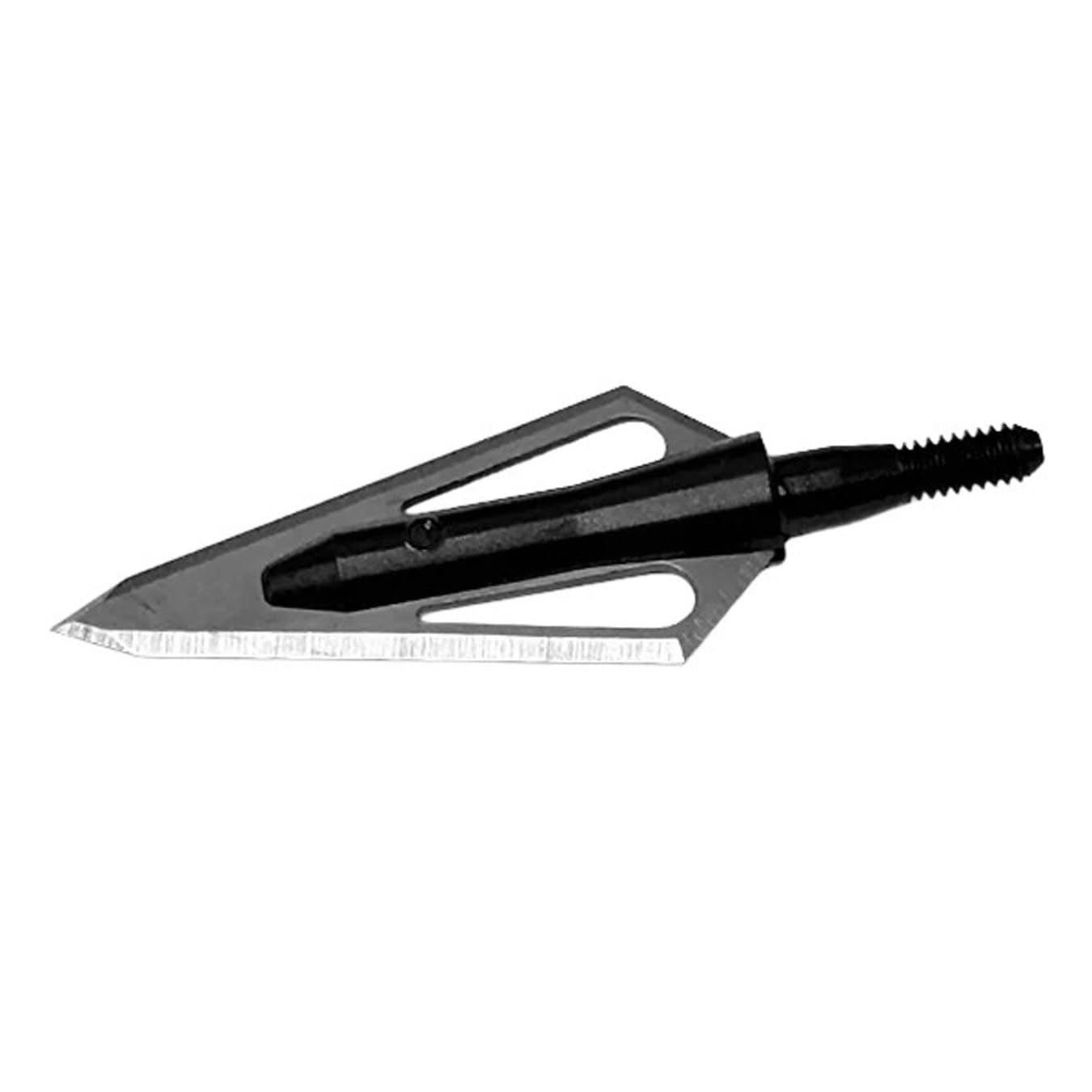
A 150 grain broadhead shifts your arrow’s front-of-center balance, so the head has to fly straight and cut deep without wandering at 40 yards. The short answer is that the Magnus 4 Blade Hornet Ser-Razor is the safest first pick for most compound setups, and the rest of this list fills in the specific gaps — crossbow shooters, traditional bows, fixed-blade fans who sharpen their own steel.
This guide is built by comparing the manufacturers’ published specifications and the patterns across verified customer reviews, so you get each pick’s real strengths and trade-offs instead of marketing spin.
Weight is only half the story, so each pick below is sorted by how it actually flies and cuts. Here is what separates the strongest 150 grain broadheads on the shelf today from the ones that just look tough in the package.
Top Picks

How To Choose The Best 150 Grain Broadheads
Heavy broadheads are not a fashion choice. A 150 grain head pushes more weight to the front of your arrow, which steadies flight but punishes an arrow spine that is too weak for it. Pair it with a stiff enough spine and the head tracks like your field points; go too weak and it wobbles all season.
Match the head to your bow, not the other way around
A crossbow wants a head built and tuneable for crossbow velocities, which is why blade alignment features matter there. A traditional recurve or longbow at lower speed usually does better with a cut-on-contact tip that starts cutting the moment it lands. Compound shooters at high speed sit in the middle and can run either style.
Blade count versus penetration
Four blades open a wider wound channel and tend to leave a heavier blood trail. Two blades cut a narrower slot but meet less resistance through hide and sinew. Neither is wrong — the choice depends on the game you chase and the kinetic energy your arrow carries.
Sharpenable steel and the warranty
Replaceable, resharpenable blades stretch a three-pack across multiple seasons instead of one. A lifetime replacement guarantee is worth reading closely, because a bent ferrule mid-season is the difference between hunting and sitting out.
Side-by-Side Comparison
| Model | Best For | Blade Count | Cutting Width | Ferrule Material | Amazon |
|---|---|---|---|---|---|
| Magnus 4 Blade Hornet Ser-Razor★ Best Overall | All-around compound hunting | 4 | — | Stainless Steel | Amazon |
| Magnus Stinger 2 BladeBest Value | Deep penetration on a budget | 2 | — | Aluminum | Amazon |
| Magnus Stinger Buzz Cut 4 BladeMost Aggressive Cut | Aggressive tissue damage | 4 | 2 3/16in x 1 1/8in | Alloy Steel, Aluminum | Amazon |
| Wasp SharpShooter Traditional | Traditional bows, cut on contact | 4 (main + bleeder) | 1″ | Stainless Steel | Amazon |
| Magnus Stinger Buzzcut 2-Blade | Long-range accuracy | 2 | — | Stainless Steel | Amazon |
| Stinger 4 Blade Arrow Broadhead | Spin-tested consistency | 4 | — | Stainless Steel | Amazon |
| Excalibur Boltcutter B.A.T. | Crossbow long range | — | 1 1/16″ | Stainless Steel | Amazon |
| Slick Trick XbowTrick 4pk | Crossbow and compound crossover | 4 | 2 1/4″ total | Super Steel | Amazon |
Detailed Reviews
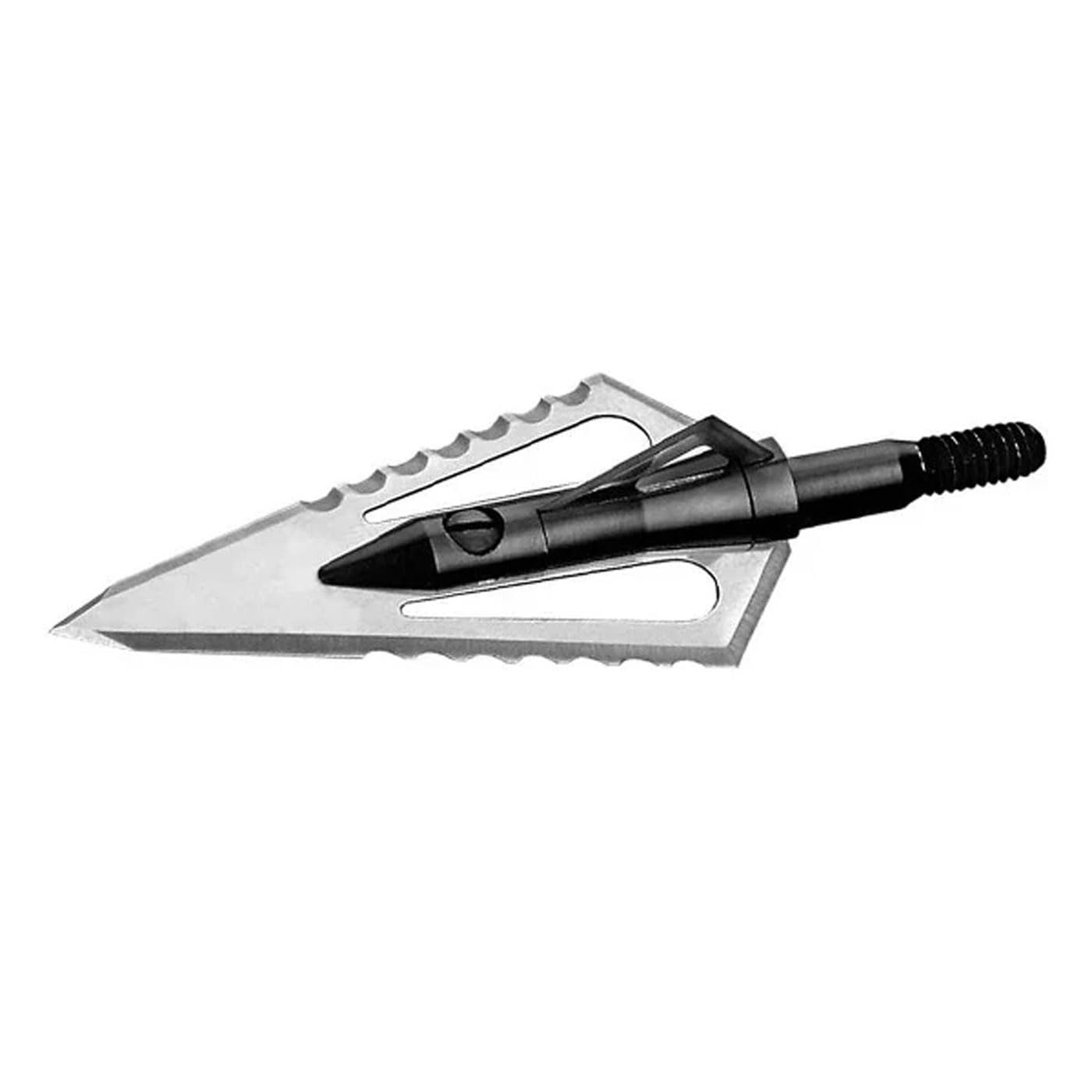
1. Magnus 4 Blade Hornet Ser-Razor Broadhead (3-Pack)
Our pick — 4.5+★ from 200+ verified ratings; the strongest balance of quality and price.
The four-blade that flies like a field point and cuts on arrival.
A.059-inch main blade paired with.040-inch bleeders is what gives this head its reach — two sizes of steel stacked into one broadhead. In plain terms, the main blades do the deep cutting while the shorter bleeders open a wider channel behind them. That combination is why it earns the top slot for a general compound setup.
What wins people over is the flight. Buyers put it this way: “they perform like field points at 302 fps out to 50 yards.” That is fast-bow territory, where a fixed-blade head usually starts to wander. The serrated edge slices soft tissue rather than pushing through it, so the wound channel stays generous and the trail stays readable. Flight, quality, and sharpness are the three things buyers talk about most, and all three land on the positive side.
The blades are user-sharpenable and replaceable, which stretches a three-pack across multiple seasons instead of one. Magnus backs the whole head with a lifetime guarantee, so a bent one gets replaced. The honest catch is that serrated steel demands care — you need to clean the serrations properly and touch them up rather than let them go. Sharpen them well and they reward you; neglect them and a broadhead that once slid through hide starts to grab.
Where this head earns its keep
- Dual-size blade stack (.059-inch main,.040-inch bleeder) cuts deep and wide at once
- Field-point accuracy holds even at high compound speeds
- Serrated edge promotes generous blood trails for easier tracking
- Replaceable and resharpenable blades plus a lifetime guarantee
What to weigh before you buy
- Serrated edges take real effort to keep clean and sharp
- Four blades meet more resistance than a two-blade on heavy bone
Reach for this if: you shoot a fast compound and want one head that flies true and opens a wide channel.
Think twice if: you prefer a head you never have to maintain — the serrations demand upkeep.
2. Magnus Stinger 2 Blade Broadheads, 3 Pack
Two blades, less drag, and a build meant to punch through rather than spread.
If your arrow is carrying modest energy, fewer blades is the smarter bet. A two-blade head meets less resistance through hide and sinew, so it sinks deeper with the same draw weight. And at 2.4 ounces this pack runs heavier than the 1.6-ounce Hornet pack above, giving it a more substantial feel in hand.
Quality is what people single out about this one — sharp blades that arrive cutting-ready straight from the package. The aluminum ferrule with the patented Stinger design (U.S. Patent No. 7,160,217) keeps the head light and balanced, which is why it holds a field-tip line shot after shot. Main blades sharpen or swap out, so three heads can cover several seasons.
Here is what to know before you commit: a two-blade cut leaves a narrower channel, which can mean a tighter blood trail than a four-blade produces. If you hunt in thick cover and rely on a heavy trail, weigh that against the penetration gain. The lifetime guarantee softens the risk either way.
The honest read: a deep-penetration specialist that trades wound width for reach through tough tissue.
The one snag: a thinner cut can produce a sparser trail, so heavy-cover hunters should think about tracking.
Best match for: bowhunters on a modest-energy setup who want maximum penetration per arrow.
Look elsewhere if: a wide, obvious blood trail matters more to you than depth.
3. Magnus SBC150-4 Stinger Buzz Cut Broadheads
A chisel-cut serration pattern that tears rather than slices, and that is the point.
The Buzzcut’s main blade uses an exclusive chisel-cut serration, distinct from the standard serrated edge on the Hornet. It is built to work through tough hide and sinew while keeping the cut aggressive, then let the four-blade layout carry it deep. At 2 3/16in x 1 1/8in in width it presents a substantial face going in.
This head lives in alloy steel and aluminum, ambidextrous so it drops onto any arrow without alignment fuss. The Stinger patent (U.S. Patent No. 7,160,217) sits underneath the design. Expect copious soft-tissue trauma from the serrations — the intent is a rapid, clean harvest and a blood trail you can follow without guesswork.
The catch is the same one that follows any aggressive serrated head: sharpening that chisel profile is fussier than honing a flat edge, and the wide face is not your friend on a marginal-energy setup. Pair it with enough spine and draw weight and it performs exactly as designed. Treat it as a specialized tool for hunters with enough spine and draw weight to drive its wide face.
The verdict in one line: maximum cutting aggression for hunters who want the widest, messiest channel from a fixed four-blade.
The maintenance note: the chisel serration wants careful upkeep and benefits from a stouter arrow spine.
Right choice for: experienced hunters chasing the heaviest blood trail from a fixed four-blade.
Skip if: you want a head you can touch up with a few quick strokes and forget.
4. Wasp Archery SharpShooter Broadhead

Built for the recurve and longbow crowd, where every foot per second counts.
A 100% steel cut-on-contact tip starts cutting the instant it touches hide, with no need for the arrow to build momentum first. On a traditional bow pushing lower speed, that matters — the head is doing work from the first inch. The 1″ cutting diameter keeps drag sensible while the.040″ main bleeder and replaceable.027″ bleeder slice behind it.
Quality is the theme in what people report, and the broadhead itself gets specific praise. It ships as a fixed 150 grain head, three to a package, with field-point accuracy claimed straight from the makers. For a stickbow hunter who wants a dependable cut-on-contact head at a fair tier, this is a natural fit.
Now the balanced picture: sharpness draws mixed reports — some find it razor-ready, others see it go dull over time, and durability reads the same way. Keep a stone handy and check the edge before opening day.
Why it stands out: the cut-on-contact geometry is exactly what low-speed traditional setups need.
The honest caveat: edge life and durability draw split feedback, so plan to resharpen before the season.
Ideal for: recurve and longbow hunters wanting a steel cut-on-contact head at 150 grains.
Consider another pick if: you want factory-fresh sharpness that never needs attention.
5. Magnus Stinger Buzzcut 2-Blade Broadhead, 3-Pack
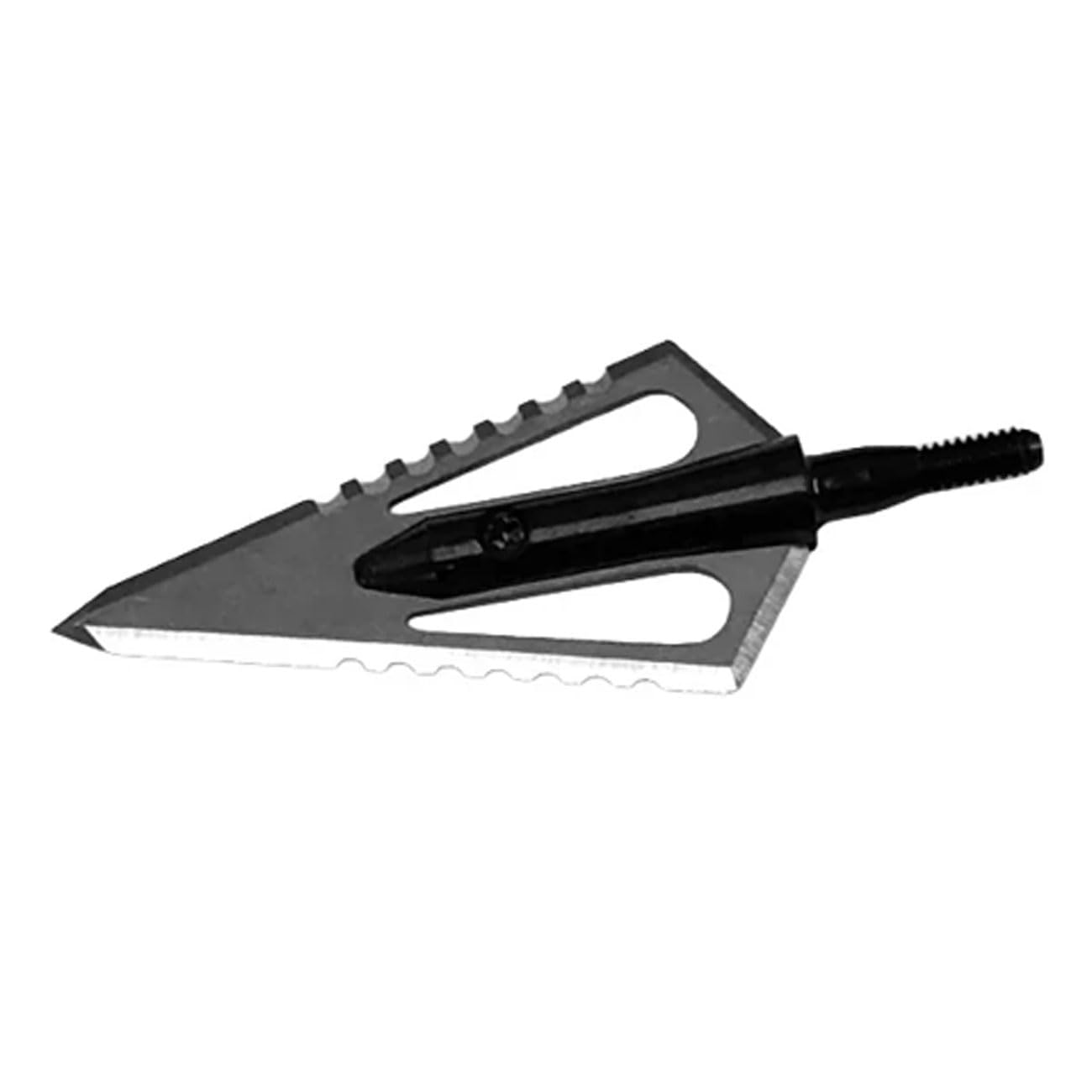
The two-blade that holds its line far past where most heads drift.
Distance is where a broadhead proves itself, and this one makes the case plainly. As buyers report, “they shoot accurately at 60 and 80 yards” — and they consider the money well spent. A two-blade chisel-cut main blade with aggressive Buzzcut serrations works through tough hide and sinew without giving up flight. Stainless steel throughout keeps it honest in the field.
Quality leads everything here, with sharpness and flight quality close behind in what buyers notice. The Stinger patent (U.S. Patent No. 7,160,217) sits under the design, and it comes in 85, 100, 125 and 150 Grain so you can dial to your arrow. Durable enough that one buyer notes it drove through a wild pig and came out the far side.
Two blades, though, mean you are choosing penetration over channel width. If you want the widest possible cut, a four-blade model opens more. If your hunt is about clean reach through a heavy animal and shot placement at distance, this pairing of serration and two-blade flight is hard to argue with.
Why distance hunters like it
- Accurate flight reported out to 60 and 80 yards
- Buzzcut serrations grip tough hide and sinew
- Durable stainless build that survives a deep pass-through
- Available in 85, 100, 125 and 150 Grain
The flip side
- Two-blade cut is narrower than a four-blade channel
- Serrated edge needs cleaning and upkeep
Pick this for: long-range accuracy paired with a cutting edge that holds through hide.
Pass if: you prioritize the widest wound channel above all else.
6. Stinger 4 Blade Arrow Broadhead
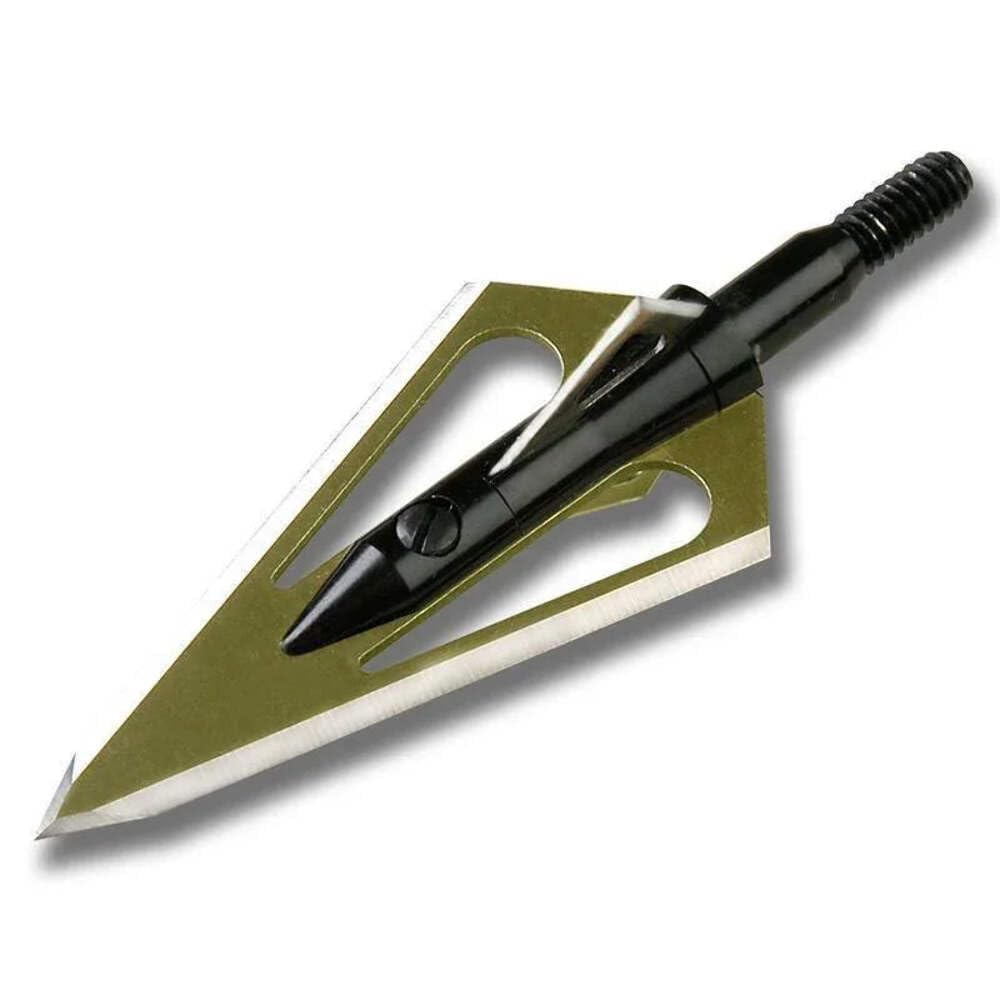
Spin tested before it ships, so the head starts true instead of getting tuned.
Spinning each head before it leaves the factory is a small detail with a real payoff: a head that is not perfectly aligned will wobble no matter how good your form. This one arrives checked. Stainless steel gives it a solid frame, and the 4-blade layout opens a broad channel through the vitals. Buyers also like that it takes a sharp edge — as they put it, “easy to get a razor-sharp edge.”
Flight and accuracy are the two things people mention right alongside quality, and the head flies straight with effective penetration and a strong blood trail. It is built in 85, 100, 125 and 150 Grain, so a spine-matched 150-grain version is ready to go. The lifetime replacement guarantee sits over the whole thing.
No gimmicks here — just a spin-tested four-blade that flies straight. Match it to a shaft that can carry the front weight and it tracks cleanly.
The standout detail: factory spin testing removes a variable most heads leave you to solve yourself.
Worth knowing: the four-blade drag wants a properly spined arrow to fly its best.
Built for: hunters who want a true-flying four-blade straight from the package.
Not the first pick if: your arrow spine is on the light side for a 150 grain head.
7. Excalibur Boltcutter B.A.T. Broadheads
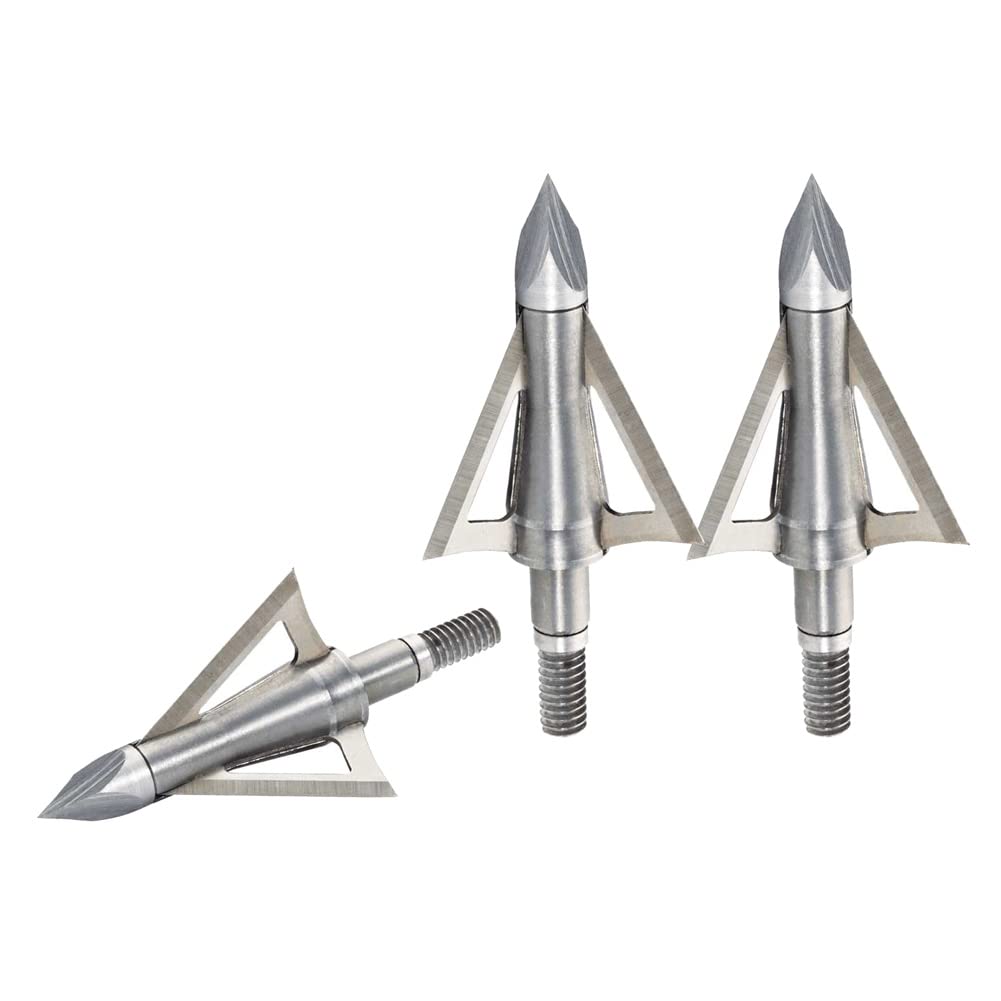
Blade alignment you can tune, which is why crossbow shooters reach for it at range.
The B.A.T. stands for Blade Alignment Technology, and it solves the specific headache of crossbow flight. You can rotate each head so the blades line up identically every time it loads, which keeps a quiver full of heads flying the same way. At 1 1/16″ cutting diameter and 150 grains, it presents a serious face in a stainless steel frame built for high-speed bows.
Heavier heads push the front of center forward, and that is exactly what steadies a fast crossbow at extended range. The head is designed as a compromise between durability, velocity and accuracy, with the extra weight doing the stabilising work. A single head ships per pack, so plan your quiver accordingly.
The honest note: this is not built for vertical bows, and a single-head pack means you need to think about backups before the season starts. Get the alignment right and load it consistently, and the flight is predictable even far out. Skip the tuning step and you lose the very advantage you paid for.
The core benefit: tuneable blade alignment makes every head in the quiver fly the same at long crossbow range.
The follow-up question: a one-head pack means you should order spares rather than rely on a single.
Made for: high-speed crossbow hunters who need repeatable flight at extreme range.
Not for you if: you shoot a compound or traditional bow — this head is a crossbow design.
8. Slick Trick XbowTrick 4pk

A four-pack of crossbow heads that split bone on the way in.
Total cut here is 1 1/8″ plus 1 1/8″, landing at 2 1/4″ of cutting width across four.035 stainless blades. The four-edge tip is built to split bone rather than glance off it, and the Super Steel ferrule with the Alcatraz bladelock holds the blades tight under impact. It works for crossbows, compound bows and recurve bows, which is where the versatility claim comes from.
Build quality is what buyers talk about most, with performance and accuracy close behind. It flies on a field-point path, and one buyer notes good performance with the Excalibur matrix 360. Four heads to a pack gives you a fuller quiver from a single order, which matters when you are shooting crossbow speeds.
Durability draws split feedback — some find it super durable, others report issues — so treat it as a head that performs best on well-placed shots rather than a bone-masher you abuse. The bladelock does its part; the blade steel is thinner than some, so keep shots clean. Aligned and seated properly, it holds together through a standard pass-through.
What makes it flexible
- 2 1/4″ total cut across four.035 stainless blades
- Four-edge bone-splitting tip for hard impacts
- Runs on crossbows, compound bows and recurve bows
- Four to a pack fills a quiver faster
Where to be careful
- Durability feedback is split — placement matters
- Thin.035 blade stock rewards good shot angles
Choose it for: a crossbow-to-compound crossover head with wide cut and a bone-splitting tip.
Hold off if: you need a head that shrugs off rough, off-angle impacts repeatedly.
Know the Specs
Grain Weight and Front of Center
Grain is a unit of weight used for arrows and heads, and 150 grains is on the heavy end for a broadhead. More weight up front shifts the balance forward — the “front of center” — which can steady flight but demands an arrow spine stout enough to carry it. A light-spined arrow under a heavy head will wobble no matter how well the head is built.
Cut-On-Contact Versus Serrated Tips
A cut-on-contact tip starts slicing the moment it meets hide, which suits lower-speed traditional bows. Serrated or chisel-cut edges work through tough tissue with a sawing action instead, opening a wider channel but asking more of your sharpening routine. Neither style is inherently better — the choice tracks your bow speed and the game you hunt.
Blade Count and Cutting Diameter
Cutting diameter is the width of the slot the blades carve. Four blades open a wider total cut and typically a heavier blood trail; two blades cut narrower but meet less resistance. A 1″ diameter head keeps drag modest, while a 2 1/4″ total cut opens a far larger channel — at the cost of more resistance going in.
Ferrule Material
The ferrule is the body that holds the blades and screws onto your arrow. Stainless steel resists bending on hard impacts, aluminum trims weight, and alloy blends fall between. A stouter ferrule survives bone; a lighter one trims front weight. Match ferrule material to your shot demands: stainless for bone, aluminum for lighter front weight.
Common Questions
Will a 150 grain broadhead fly straight out of my compound bow?
Are 150 grain broadheads better than 100 grain ones?
Can I shoot crossbow broadheads from a compound bow?
Do I need a heavier arrow spine for a 150 grain head?
How do I sharpen serrated broadheads?
What does cut-on-contact mean on a broadhead?
How many broadheads should I carry in a season?
Does a wider cutting diameter always mean a better blood trail?
Are replaceable blades worth it over fixed ones?
The Bottom Line
For a fast compound setup, the Magnus 4 Blade Hornet Ser-Razor is the one to start with — the dual-size blade stack cuts deep and leaves a trail you can follow, and the lifetime guarantee means a bent head is not a lost season. If reach through a heavy animal matters most to you, the Magnus Stinger Buzzcut 2-Blade pairs long-range accuracy with a cutting edge that holds. And for crossbow shooters, the Excalibur Boltcutter B.A.T. gives you tuneable blade alignment so every head in the quiver flies the same. Match the head to your bow speed and arrow spine, and any of these will fly true in the field.
How we choose
We do not accept paid placement. Every pick is matched to a real buyer and a real use-case; we do not hands-on test units.
Sources
Specifications: manufacturer listings and product documentation. Review insights: verified customer reviews, as of November 2026. Pricing: not shown on this page (it changes often); check the current price via the retailer link.
As an Amazon Associate, My Heart Lives Here earns from qualifying purchases. This does not affect which products we feature.