Heads up: This post contains affiliate links. As an Amazon Associate I earn from qualifying purchases, at no extra cost to you. Learn more
Specs are compiled from manufacturer listings and verified buyer reviews and can change over time — please confirm the key details on the product page before buying.
You know the sound: a clutch that grabs cleanly at first and then starts to feel vague, and gears that clunk instead of click. On a wet-clutch motorcycle the oil is not just lubricant — it is the fluid your clutch plates bite into, so the wrong bottle changes how the bike shifts. This guide covers the 10W-30 oils that keep that bite consistent, from a dealer-counter standard to ester-reinforced semi-synthetics.
This guide is built by comparing the manufacturers’ published specifications and the patterns across verified customer reviews, so you get each pick’s real strengths and trade-offs instead of marketing spin.
The picks below cover dealer-standard bottles, ester-based semi-synthetics and break-in formulas, each judged on how it behaves in a shared engine-and-gearbox sump. Read on for the 10w30 motorcycle oil that matches your bike, your riding and your clutch.
Top Picks

How To Choose The Best 10W30 Motorcycle Oil
Most riders start with the viscosity number and stop there. That is backwards. On a motorcycle the oil carries three jobs at once — lubricating the engine, cushioning the gearbox, and letting the clutch plates grip — so the friction rating on the back label decides whether the bike shifts well or slips.
Start with the clutch rating, not the weight
JASO MA2 is a friction standard written specifically for wet clutches — the plates that run bathed in the same oil as your engine. An oil certified to it is tested to hold the right friction so the clutch engages without slipping. If your bike shares one sump across engine, gearbox and clutch, this is the first box to check.
Understand what 10W-30 is telling you
The “10W” half describes how the oil flows when cold, which is what you feel on a frosty morning start. The “30” half describes its thickness once the engine is hot and running at highway pace. A 10W-30 sits in the middle of both scales, which is why so many four-stroke street bikes and dirt bikes spec it.
Match the bottle to how you ride
A dealer-standard oil suits a stock bike on a normal service schedule. A semi-synthetic with ester in the base stock holds up longer under heat and high revs, which helps gearbox feel on a bike that gets ridden hard. A break-in formula is for a fresh top end, not for routine changes once the rings have seated.
Check the volume against your sump
Bottles come in single liters, quart bottles, and larger multi-liter containers. Measure what your manual asks for before you pour — a bottle that is generous for a small single is only part of a fill on a bigger engine.
Side-by-Side Comparison
| Model | Best For | Viscosity Grade | Volume | Base / Certification | Amazon |
|---|---|---|---|---|---|
| Pro Honda GN4 4-Stroke 10W-30★ Best Overall | Stock bikes on a dealer schedule | 10W-30 | 32 fl oz | — | Amazon |
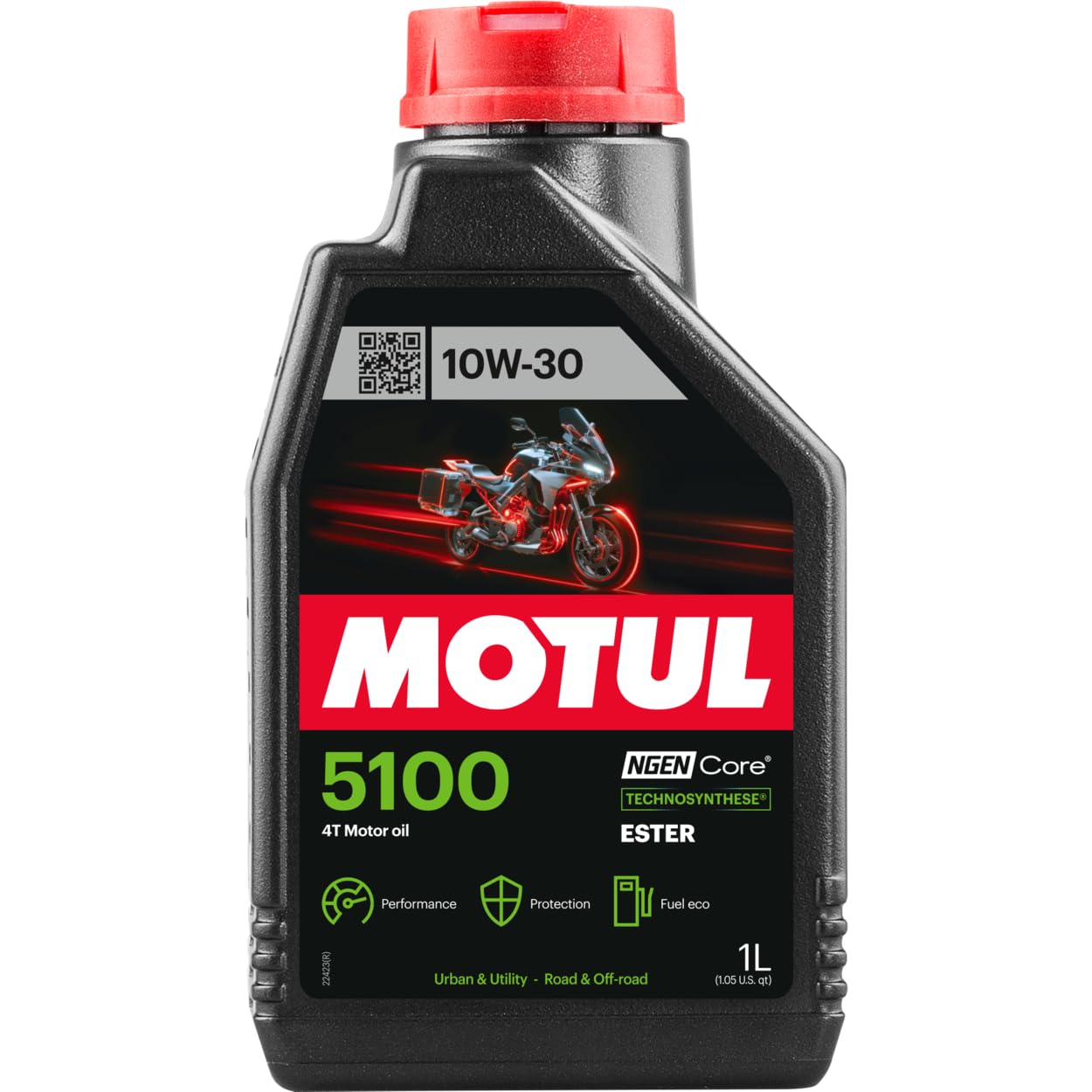
| Motul 5100 4T 10W-30Top Performer | Hard riders who want smoother shifts | 10W-30 | 1 L | Technosynthese semi-synthetic with Ester / JASO MA2, API SP | Amazon |
| Royal Purple Max Cycle 10W-30 | ATV and powersport owners | 10W-30 | 1 Quart (32 Ounces) | Synthetic / Synerlec additive technology | Amazon |
| Maxima Premium Break-in 10W-30 | Fresh top ends and rebuilds | 10W-30 | 2 liters (pack of 2) | Break-in formula / exceeds API SL and JASO MA2 | Amazon |
| Liqui Moly Oil Street 4T 10W30 | Big fills and long service runs | 10W-30 | 4 liters | Synthetic technology / wet or dry clutch | Amazon |
Detailed Reviews
1. Pro Honda GN4 4-Stroke Motor Oil 10W-30 32 oz.
Our pick — 4.5+★ from 500+ verified ratings; the strongest balance of quality and price.
The dealer-counter bottle that does its job so quietly owners forget it is there.
If you ride a stock four-stroke and change oil on the schedule in the manual, this is the least dramatic and most sensible bottle on the list. It is a 10W-30 grade — the mid-point oil that flows well on a cold start and holds thickness once the engine is hot — filled in a 32 fluid ounce bottle, which is a clean single fill for a lot of small and mid-size bikes.
Owners specifically report that it runs cleanly in a Goldwing DCT and a 2016 Honda CRF250X. That second one matters, because the CRF250X is a dirt bike with a shared sump and a wet clutch — exactly the kind of machine where a thin car oil would make the clutch feel mushy.
Honda lists it as vehicle-specific fit for motorcycle use, sold as a single bottle. It also is not a long-interval synthetic, so if you stretch changes out on a hard-ridden bike, look at the semi-synthetic option instead.
What holds up in real use
- Genuine 10W-30 grade in a 32 fluid ounce bottle — a clean single fill for many small and mid-size four-strokes.
- Buyers report clean running in both a Goldwing DCT and a CRF250X, covering street and dirt duty.
- Straightforward dealer-standard choice for a stock bike on the manual’s service interval.
Where it asks you to compromise
- Some riders find the per-bottle cost steep against generic equivalents.
- Not a long-drain synthetic, so hard riders stretching intervals should step up a tier.
Straight answer: Buy this if you want the bottle the dealer would pour and you change oil on schedule.
Think twice: Riders chasing extended drain intervals on a high-revving bike will get more from an ester-based semi-synthetic.
2. Motul 5100 4T 10W-30 Motorcycle Oil
The shifter’s oil — the one you buy because gears should click, not clunk.
Here is a bottle that names its standard out loud: certified JASO MA2 (the wet-clutch friction spec that keeps plates gripping instead of sliding) under the T903:2023 standard, certificate number M033MOT206. That matters because your clutch plates sit in the same oil as your engine, so a friction rating that has been tested is the difference between clean engagement and a clutch that feels like it is slipping under load.
The base stock is an ester-reinforced Technosynthese blend, and the numbers behind it are unusually specific: a flash point of 228°C (442°F), a viscosity index of 146, and a pour point of -36°C (-33°F). In plain terms, it resists burning off when the engine gets hot and still flows when the morning is freezing. Motul also lists drain intervals up to 16,000 km (10,000 miles) according to OEM guidelines, which is the long-interval answer the Honda bottle cannot give you.
Smoother, lighter gear changes are the consistent theme after switching — the ester film is doing its work on gearbox friction. Phosphorus and sulfur stay below 1200 ppm per the JASO MA2 spec, so it plays nicely with a catalytic converter. Two things to know: it is a 1 liter bottle, so a bigger sump needs more than one, and the hierarchy puts it between Motul’s mineral 3000 and full-synthetic 7100 — you are paying for the semi-synthetic step, not the top of the range.
Where the shift feel lives: The ester-reinforced film is the reason gear changes come out lighter, and the 228°C (442°F) flash point backs up the heat claim rather than just implying it.
The honest catch: One liter per bottle means a two-liter or three-liter fill becomes a multi-bottle purchase, and the listing’s weight figure does not reflect a full bottle — judge it by the 1 liter volume stamped on the label.
Reach for this if: Your gearbox feels sloppy and you want a certified wet-clutch oil with a real drain-interval figure behind it.
Look elsewhere if: You want a big single-container fill for a large sump and would rather not buy liters one at a time.
3. Royal Purple Max Cycle 10W-30 Motorcycle Oil
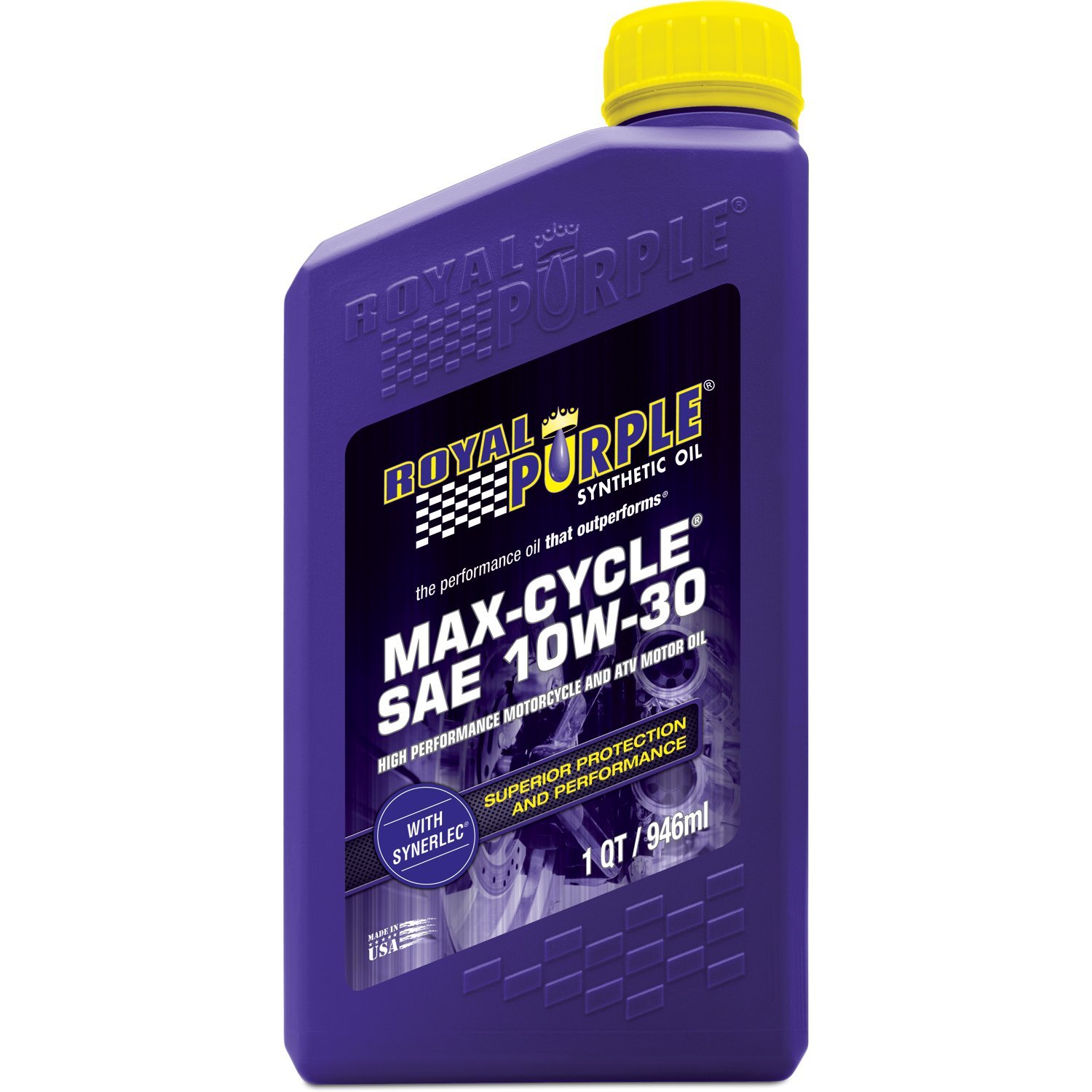
A full-synthetic quart built around one additive — and the packaging itself draws the most attention.
Royal Purple builds this around Synerlec, its own additive technology, and the maker’s stated aims are wear protection, increased performance, rust and corrosion protection, and a clean-running engine. It is a 10W-30 oil — cold-flow on one end, hot-running thickness on the other — sold as a single quart bottle holding 946 ml.
The fitment note is the one to read carefully: the listing specifies ATV as the compatible vehicle type, with vehicle-specific fit. If your machine is a quad or a powersport unit rather than a street motorcycle, that alignment is a point in its favor. Reviewers consistently praise the oil quality and report a noticeable performance improvement once it goes in.
With the thinnest review base of the five, treat it as the ATV specialist rather than the safe default. It also ships without a manufacturer warranty stated on the listing. For a rider who wants a full-synthetic quart for an ATV or a powersport engine and does not need an OEM badge on the bottle, it is a tidy fit.
Suits: ATV and powersport owners who want a full-synthetic quart built on the Synerlec additive.
The trade-off to weigh: The listing names ATV fitment and carries no stated manufacturer warranty — a street-bike rider should confirm the spec against the manual first.
4. Maxima Premium Break-in 10W-30 Motorcycle Engine Oil
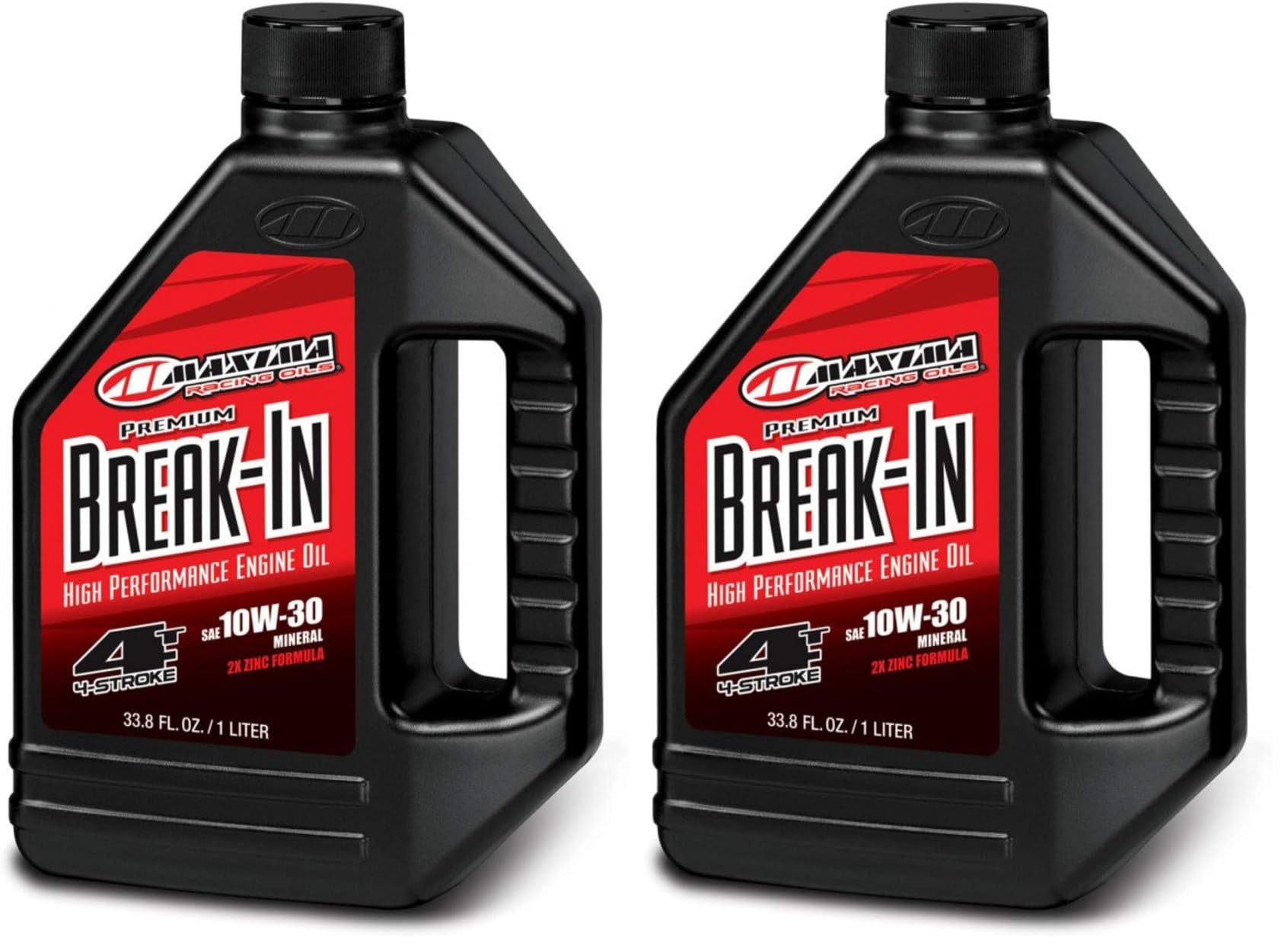
For the first hundred miles after a rebuild, when everything is still seating itself.
Break-in oil is its own job. A fresh top end needs the rings and cylinder walls to mate properly, and a dedicated formula is built for that window rather than for the long haul afterward. Maxima’s version is a 10W-30 that exceeds API SL and JASO MA2 — the second of those being the wet-clutch friction standard, so your clutch still behaves while the engine beds in.
The stated aims are specific to that phase: superior protection at any temperature, clutch feel and clutch protection, a shear-stable formula that holds viscosity and film thickness, and cleanliness while controlling oxidation and wear. Performance feedback centers on exactly that use, with a successfully broken-in predator motorcycle cited as the scenario.
Volume is where this pick differs from the crowd. You get 2 liters in a pack of 2, which at 4 pounds total makes it a lighter box to lift than the Liqui Moly 4-liter container at 8.1 pounds — the same 2.0x gap applies to the liquid volume, 4 liters against 2. Value opinions split, with some finding it genuinely good and others calling it very expensive, so weigh the cost against how long your break-in window actually is.
Why it earns the slot: A dedicated break-in formulation that still carries JASO MA2 means you are not trading clutch behavior for ring-seating.
Straight talk on the cost: It is a short-window oil at a premium-tier outlay, which is exactly why the value verdict divides — sensible if you rebuild often, steep if you do it once.
Best match: Anyone finishing a top-end rebuild or breaking in a new engine who wants the clutch spec respected during the process.
Not the tool for: Routine oil changes on a settled engine — the break-in formula is aimed at one phase, not the whole service life.
5. Liqui Moly Oil Street 4T 10W30 4L 20420

Four liters in one jug — the bottle you buy when one change is never enough.
Start with the size, because it is the whole argument: 4 liters in a single container, weighing 8.1 pounds. Put that beside the Maxima break-in pack at 2 liters and 4 pounds and the gap is a clean 2.0x on both counts — twice the liquid, twice the weight to heft onto the bench. One container covers a large sump or several changes on a smaller bike, which is the practical case for it.
The formula is built on synthetic technology, aimed at maximum performance and engine protection under all operating conditions. The maker’s claims run to optimum lubrication, engine cleanliness, good friction behavior and minimal wear, and it is developed for air- and water-cooled four-stroke engines under normal to extreme use. Universal fit is listed, with car and motorcycle both named as compatible vehicle types.
The line that matters for a bike with a shared sump: it is suitable for engines with or without a wet clutch. That is a broader compatibility statement than the clutch-specific bottles above make, and it is worth checking against your manual rather than assuming. The size cuts both ways: a 4-liter jug is convenient if you own several machines and dead weight if you ride one small bike that takes a partial fill.
The case for the big jug
- 4 liters in one container — one purchase covers a large sump or several services.
- Stated as suitable for engines with or without a wet clutch, plus air- and water-cooled four-strokes.
- Synthetic-technology base aimed at cleanliness and minimal wear under normal to extreme running.
What to weigh before buying
- At 8.1 pounds the jug is a two-handed lift and awkward to pour precisely on a small fill.
- Big-container value only pays off if you will actually use 4 liters before it sits on the shelf.
Pick it when: You run several bikes, a large sump, or simply want one container to cover the season.
Hold off if: Your manual calls for a small fill and the rest of a 4 liter jug would age on the shelf.
Know the Specs
JASO MA2 — the wet-clutch friction rating
JASO MA2 is a standard written for motorcycles whose clutch plates run in the same oil as the engine. An oil certified to it has been tested so the plates grip and engage without slipping under load. If your bike shares one sump across engine, gearbox and clutch, this rating is the first thing to look for on the label — a friction-modified car oil can make the clutch feel vague instead.
10W-30 — the two halves of the grade
The number before the W describes cold-flow behavior, so it tells you how willingly the oil moves on a cold start. The number after describes thickness at running temperature, so it tells you how well the film holds once the engine is hot. A 10W-30 sits mid-scale on both, which is why so many four-stroke street and dirt bikes specify it.
Semi-synthetic vs full synthetic
A semi-synthetic blend mixes synthetic and mineral base stocks — Motul’s Technosynthese with ester sits in that tier, between its mineral 3000 series and full-synthetic 7100 series. A full synthetic, like the Royal Purple formula, is built entirely on synthetic base stock. The synthetic share is what resists heat and shear over a longer drain interval.
Flash point and pour point
A flash point is the temperature at which the oil starts to give off ignitable vapor, and it hints at how well it copes with heat — Motul lists 228°C (442°F) for the 5100. A pour point is the temperature at which it stops flowing freely, listed at -36°C (-33°F) for the same oil. Together they frame the cold-start-to-highway range it can handle.
Common Questions
Is 10W-30 motorcycle oil safe for a wet clutch?
What is the difference between JASO MA and JASO MA2?
Can I use 10W-30 motorcycle oil in an ATV or UTV?
How often should I change 10W-30 motorcycle oil?
Do I need a break-in oil for a rebuilt engine?
What does semi-synthetic mean on a motorcycle oil bottle?
Will a 10W-30 oil work in a shared engine and gearbox sump?
Does the oil filter need changing with the oil?
Is a full synthetic better than a semi-synthetic for a motorcycle?
Why does the same 10W-30 oil come in different bottle sizes?
The Bottom Line
For most riders the 10w30 motorcycle oil answer is the Pro Honda GN4 4-Stroke, because it is a clean 32 fluid ounce fill of the exact grade a stock four-stroke asks for and the engine quality holds up in both street and dirt use. If sloppy gear changes are your complaint, the Motul 5100 4T earns the step up with its certified JASO MA2 rating, a 228°C (442°F) flash point and drain intervals up to 16,000 km (10,000 miles). And for the first miles after a rebuild, the Maxima Premium Break-in is the bottle built for that one job. Whichever you choose, confirm the wet-clutch spec against your own manual — that single line on the back label is what keeps the clutch biting.
How we choose
We do not accept paid placement. Every pick is matched to a real buyer and a real use-case; we do not hands-on test units.
Sources
Specifications: manufacturer listings and product documentation. Review insights: verified customer reviews, as of November 2026. Pricing: not shown on this page (it changes often); check the current price via the retailer link.
As an Amazon Associate, My Heart Lives Here earns from qualifying purchases. This does not affect which products we feature.