Heads up: This post contains affiliate links. As an Amazon Associate I earn from qualifying purchases, at no extra cost to you. Learn more
Specs are compiled from manufacturer listings and verified buyer reviews and can change over time — please confirm the key details on the product page before buying.
You want a tin of sardines that tastes like fish and not like a punishment. The shortlist below splits the difference between convenience and character: skinless and boneless for people who want protein with zero fuss, and whole, skin-on Portuguese-style tins for anyone chasing that deep, savory, olive-oil finish. If you just want the straight answer, the twelve-pack of Brunswick skinless and boneless in olive oil is the safest all-rounder for most pantries.
This guide is built by comparing the manufacturers’ published specifications and the patterns across verified customer reviews, so you get each pick’s real strengths and trade-offs instead of marketing spin.
Below you will find the tins worth your shelf space, sorted by whether they suit snacking, cooking, or a quick protein hit — a working shortlist of the Portuguese Sardines that actually earns its place in your pantry.
Top Picks

How To Choose The Best Portuguese Sardines
The choice that changes your eating experience most is skinless, boneless fillets versus whole fish with skin on. Skinless fillets give you a clean, mild bite you can fork straight from the tin onto a cracker. Whole skin-on fish carries more of the oily, savory character people mean when they say a tin tastes “like the sea”, but you will meet scales and small bones. Skinless suits fuss-free eaters; whole skin-on suits anyone who wants the savory, oily character.
Read the packing liquid before anything else
Olive oil is the traditional Portuguese and Iberian pack, and it carries flavor into the fish while it sits. Spring water or brine keeps the taste plainer and lighter, which suits people who plan to cook with the fish or watch added oil. Tomato sauce sits in between: it adds sweetness and acidity, and it usually means the tin is ready to eat as a standalone dish.
Check protein per can, not per pack
A bulk case only helps if each can carries enough protein to count as a real meal component. Protein per can varies widely between brands — one 4.4 ounce tin here carries 21 grams, while a 4.23 ounce brisling tin carries 14 grams. Divide your daily target by that per-can figure to see how many tins you actually need.
Decide how you will eat them
Straight-from-the-tin snacking rewards a firm, meaty texture and a sauce that tastes good cold. Cooking rewards a plainer pack you can fold into pasta, salads, or toast without fighting the seasoning. Buy for your weekly habit — snacking, cooking, or a daily protein hit — not a one-off recipe.
Side-by-Side Comparison
| Model | Best For | Pack Size | Packing Liquid | Protein per Can | Amazon |
|---|---|---|---|---|---|
| Brunswick Skinless & Boneless in Olive Oil★ Best Overall | Fuss-free daily protein | 12 cans, 4.4 oz each | Olive oil | 21 g | Amazon |
| Santo Amaro Sardines in Tomato SauceBest Tomato Tin | Iberian-style tomato tins | 6 cans, 25.4 oz total | Tomato puree | — | Amazon |
| Flower Brand Spiced Sardines | Spice lovers and snackers | 5 cans, 4.38 oz each | Olive oil | — | Amazon |
| Brunswick Brisling in Extra Virgin Olive Oil | Premium pantry upgrade | 12 cans, 4.23 oz each | Extra virgin olive oil | 14 g | Amazon |
| Brunswick Sardines in Spring Water | Light, cook-with-it tins | 12 cans, 3.75 oz each | Spring water | 18 g | Amazon |
Detailed Reviews
1. Brunswick Skinless & Boneless Sardines 12-Pack
Our pick — 4.5+★ from 850+ verified ratings; the strongest balance of quality and price.
A twelve-can case that turns sardines into boring, reliable, no-thought protein.
If you want sardines you can eat without thinking about bones, this is the pick. Wild-caught pilchard fillets sit in olive oil, and the case packs twelve cans for a total of 52.8 ounces of fish. That is the largest total weight here, well ahead of the 21.9 ounces in the five-can Flower Brand box.
Quality is the most-praised thing about these tins by a wide margin, with taste close behind. Both are positive reads, which matches the plain logic of the product: nothing controversial, nothing to argue with. The fish is gluten free, keto and paleo friendly, and Kosher certified, so it fits most eating plans without a second look. Each can is shelf-stable with no refrigeration, which is the whole point of keeping a case in the cupboard.
The catch is texture. Skinless and boneless fillets are soft by nature, and the split in owner opinion runs between “firm” and “mushy”. If you want a meaty bite you can flake with a fork, look at the brisling pack instead. If you want spreadable protein on toast or crackers, that softness works in your favor. A few buyers also find the olive-oil pack on the oily side — drain the tin if that bothers you.
What earns the top slot
- 21 grams of protein per 4.4 oz can — a full serving of protein in one small tin
- Twelve cans, 52.8 ounces total, so the pantry stays stocked for weeks
- No bones, no skin, no prep — open and eat straight from the can
- Kosher certified, gluten free, keto and paleo friendly
Where it asks something of you
- Skinless fillets run soft; some eaters find them mushy rather than firm
- Packed in olive oil, so drain if you want a lighter bite
Buy this one if: you want protein you can eat without picking bones out, straight from the tin.
Pass if: you eat sardines for the firm, meaty bite — the brisling pack suits that better.
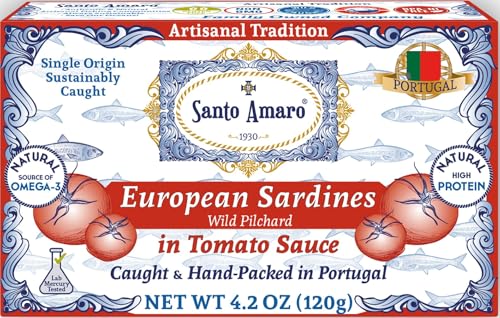
2. Santo Amaro Sardines in Tomato Sauce from Puree, Pack of 6
The tin that tastes like a Portuguese kitchen rather than a survival ration.
This is the pick for anyone who wants sardines to taste like a meal instead of a chore. Santo Amaro uses Sardina Pilchardus Walbaum, the European wild sardine, hand-packed in Portugal, and the sauce is a puree built from low-acidity Portuguese tomatoes with sea salt. Six cans total 25.4 ounces. There is no vegetable broth and no phosphates added — a specific detail that separates it from plenty of cheaper Iberian tins.
Taste is what this tin is known for, and quality lands right behind it, which tracks with the better than other brands thread running through owner feedback. The texture reads firm rather than soft, so it holds together when you tip it over rice or fold it through pasta. It fits Whole30, Keto, Paleo, Mediterranean, Flexitarian, Dash and Ayurvedic diets, is GMO free and BPA free, and needs no cooking at all. Salad, tacos, pasta, or straight from the tin with a glass of wine — it does all of it.
Two honest notes. The tins draw mixed reaction on fish size, with some buyers noting the fish are not scaled — check for scales before you commit the whole tin to a dish. And the oil level splits opinion: some love the olive-oil-based sauce, others find it greasier than expected. Both are small things you notice once and adjust to.
What it does best: a genuine Portuguese-packed pilchard in a real tomato puree, not a thin sauce — the kind of tin that stands alone as a snack or a light lunch with bread.
The honest limit: unscaled fish mean a quick wipe-down before eating, and the sauce runs oily for some palates.
Reach for this if: you want sardines that eat like a proper dish, sauce included.
Look elsewhere if: you prefer a clean olive-oil pack with nothing to wipe off.
3. Flower Brand Spiced Sardines Pack of 5

Five spiced tins with real heat — the snack pick for people bored of plain sardines.
Moroccan wild-caught sardines in olive oil with a spice blend, five cans at 4.38 ounces each, 21.9 ounces total. This is the smallest total haul on the list — the twelve-can Brunswick brisling case carries 50.8 ounces — so treat it as a tasting pack rather than a pantry stock-up. What you trade in volume you get back in character: the seasoning is the reason people buy it twice.
Flavor leads everything here, quality right behind it, and the spice level earns its own consistent praise — described as similar to Moroccan sardines and Nuris, with a bit of heat that never tips into too spicy. The texture comes through firm and meaty, and the fish are notably not tiny, so each tin actually fills a plate. Keto and gluten free, and shelf-stable with no prep. Straight from the tin, over a salad, or on a sandwich, it works.
Value is the contested ground. Some buyers call it good value and worth the purchase, others find it expensive enough that they would not buy again — the per-tin character is real, but the pack is small. Scales also turn up, and how many you meet seems to vary tin to tin. If you want guaranteed clean fillets, this is not that product.
Who this tin is for: the snacker who wants a spiced, meaty, restaurant-adjacent bite without cooking anything.
What you accept: five tins is a short run, scales appear, and the per-tin value is the split point among buyers.
This beats plain tins on: flavor and heat, with a firm bite to match.
skip it if: you are stocking a pantry or want perfectly scaled fish.
4. Brunswick Brisling Sardines Pack of 12
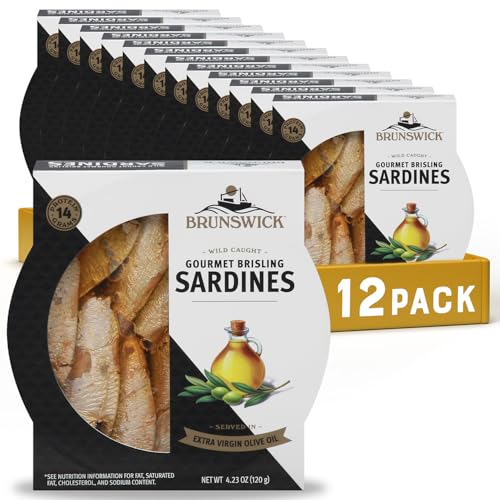
Small, smoked brisling in extra virgin oil — the tin you buy when flavor outranks volume.
Brisling are the smaller fish, lightly smoked before they go in the tin, and here they sit in extra virgin olive oil rather than a generic pack. Twelve cans total 50.8 ounces, and each 4.23 ounce tin carries 14 grams of protein plus 25% of the daily value for Vitamin D. That is 14 grams against the 21 grams in the skinless Brunswick twelve-pack — you give up a chunk of protein per can for the more distinctive, smoked flavor.
Quality and taste are the two things this tin is bought for, and they sit close together in owner feedback. Olive oil is a genuine point of praise rather than a neutral detail: the tins are packed in it rather than drenched, which keeps the fish from turning oily in the mouth. It is gluten free, keto and paleo friendly, needs no refrigeration, and eats as a healthy snack with real Vitamin D behind it. Fold it into pasta, layer it on toast, or fork it straight out of the tin — the smoke gives it enough backbone to stand alone.
Texture is the divider, and it is the one thing to weigh. Owners split between tender and too soft or mushy, and repurchase intent follows the same line — some rebuy quietly, some do not. If you need a firm, meaty fillet, the Flower Brand spiced tin is the firmer pick. If you want smoke and softness, this delivers both.
The case for the smoked tin
- Lightly smoked brisling in extra virgin olive oil — a more layered flavor than plain oil packs
- 25% of the daily Vitamin D value in each 4.23 oz can
- Packed in oil, not drowning in it, so the fish stays neat
- Twelve cans, 50.8 ounces, ready with no prep or refrigeration
What you concede
- 14 grams of protein per can is modest for the pack size
- Soft, sometimes mushy texture loses some eaters
Pick this when: you want smoked, tender brisling and Vitamin D in the same tin.
Think twice if: you buy sardines mainly for protein density or a firm bite.
5. Brunswick Sardines in Spring Water, 3.75 oz (Pack of 12)

Straightforward water-packed tins for cooking, portioning, and clean protein.
Twelve cans at 3.75 ounces each, packed in spring water with no sauce and no added oil. Each can carries 18 grams of protein, and the case totals 45 ounces. The tins run smaller than the 4.4 ounce skinless pack, so you get less fish per can — but you also get a plainer base you can season yourself. That makes it the natural cooking tin: pasta, pizza, salads, or a quick topper for crackers.
What wins people over is the quality, and taste lands right behind it — Reviewers praise this tin’s quality more than any other pack here, which fits how often people cook with it rather than snack on it. The pieces come out large and the texture is not mushy, two things that matter once the fish is going into a hot pan. Gluten free, keto and paleo friendly, Kosher certified, shelf-stable with no refrigeration. If you fork sardines straight from the tin every morning, this plain water-packed tin is the least interesting on the list — by design.
There are two real caveats. The meat type sparks argument: a notable share of buyers report these are herring rather than true sardines, so if species matters to you, read the label carefully. Salt is the other one — some find them free of it, others find them loaded with it, and anyone watching sodium should note the split. The butterfly cut makes them easy to eat for some, while others find them awkward straight from the can.
The value read: a twelve-can case of plain wild-caught fish in water, 18 grams of protein per tin, built for cooking rather than snacking.
Read the label on: the species question and the salt level, both of which divide buyers.
Best for: cooks who want a neutral, water-packed tin they can season and use in recipes.
Not for: anyone who wants a snack-ready tin with sauce or strong flavor built in.
Know the Specs
Packing liquid: oil, water, or sauce
Olive oil carries flavor into the fish and keeps it moist; it also adds calories and a greasy mouthfeel some eaters dislike. Spring water keeps the taste plain and lets you season the tin yourself, which is why cooks favor it. Tomato sauce turns a tin into a ready dish, adding sweetness and acidity on its own. Pick by use: oil for flavor and texture, water for cooking control, sauce for eating straight from the tin.
Skin-on versus skinless fillets
Skinless, boneless fillets are the fuss-free option: no picking, no bones, ready on a cracker. The trade is texture, which tends to run soft and sometimes mushy. Whole skin-on fish keeps more of the rich, savory character, but you will meet scales and small bones. Serious tinned-fish eaters often prefer skin-on for flavor and accept the extra work.
Protein per can and per-case math
Compare protein per can, not per case, because can sizes differ. A 4.4 ounce can at 21 grams delivers more protein than a 4.23 ounce can at 14 grams, even though the two cases weigh almost the same. If protein is your reason for buying, divide your daily target by the per-can figure to see how many tins a day actually covers.
What “Portuguese” actually means on a label
Sardina Pilchardus Walbaum is the European wild sardine, and a tin that names it and describes hand-packing in Portugal follows the traditional Iberian method. Tins packed elsewhere can still be excellent — Morocco is a major sardine fishery — but the flavor, species, and sauce style will differ from a Portuguese pack.
Common Questions
Are Portuguese sardines different from regular canned sardines?
Should I buy sardines in olive oil or spring water?
Is skinless and boneless worth it, or am I losing flavor?
How much protein is in a can of sardines?
Do sardines need to be refrigerated before opening?
Why do some sardines taste mushy?
Are scales safe to eat in canned sardines?
Are sardines keto and paleo friendly?
What is a brisling sardine, and is it different from a regular sardine?
Do sardines in tomato sauce need cooking?
The Bottom Line
For most pantries, the portuguese sardines pick that earns its shelf space is the Brunswick Skinless & Boneless in Olive Oil — it delivers the most protein per can at 21 grams, comes in a twelve-tin case, and needs no bones picked out. If you want a genuine Portuguese-packed tin that eats like a dish, the Santo Amaro in Tomato Sauce is the one to reach for. And for cooks who want a neutral, water-packed tin they can season and use in recipes, the Brunswick Spring Water case is the value play. Start with one case of the olive-oil skinless tins and a single pack of the spiced Flower Brand — together they cover the week’s snacking and the weekend’s cooking.
How we choose
We do not accept paid placement. Every pick is matched to a real buyer and a real use-case; we do not hands-on test units.
Sources
Specifications: manufacturer listings and product documentation. Review insights: verified customer reviews, as of November 2026. Pricing: not shown on this page (it changes often); check the current price via the retailer link.
As an Amazon Associate, My Heart Lives Here earns from qualifying purchases. This does not affect which products we feature.