Heads up: This post contains affiliate links. As an Amazon Associate I earn from qualifying purchases, at no extra cost to you. Learn more
Specs are compiled from manufacturer listings and verified buyer reviews and can change over time — please confirm the key details on the product page before buying.
Dairy-free protein powder is tricky for one simple reason: plant proteins are harder to hide than whey. Rice and pea powders can turn gritty, pea isolate can taste grassy, and a scoop with too much stevia can wreck the whole shake. The 7 powders below all deliver real protein per scoop and skip the milk, lactose, and whey — but they don’t all taste the same, and that’s the thing worth sorting out before you buy.
This guide is built by comparing the manufacturers’ published specifications and the patterns across verified customer reviews, so you get each pick’s real strengths and trade-offs instead of marketing spin.
You want a scoop that mixes into your morning without a stomach ache or a chalky aftertaste — that’s the bar these seven are judged against. These picks answer that everyday question for a genuine dairy-free protein powder. You’ll see which one fits your routine: a thick chocolate shake, a neutral base that disappears into a smoothie, or a high-protein tub that lasts.
Top Picks


How To Choose The Best Dairy-Free Protein Powder
If you are buying plant protein instead of whey, the goal is usually one of two things — avoid the dairy because it upsets your stomach, or eat a fully vegan diet. Both reasons mean you should read the label differently than you would for a whey shake. Here is what actually steers the decision.
Protein per scoop versus servings per tub
You get more value when you check servings and protein together, not just the protein number. A 30-serving tub at 17-20 grams per serving keeps you stocked longer. A 20-serving tub at 25 grams packs more protein into each glass. Decide if you want longevity or punch per shake.
Read the protein blend, not just the first ingredient
A single-source pea isolate tastes grassier than a blend of pea, brown rice, chia, quinoa, and amaranth. Blends balance out pea’s grassy edge, but the extra sources can leave a finer, dustier grind. If a brand makes a point of listing every source on the label, that transparency is a good sign the flavor was engineered rather than masked with sweetener.
Sweetener choice decides whether you’ll drink it
Some dairy-free powders rely on stevia, which can turn bitter for a lot of people, while others sweeten with monk fruit or skip sweetener entirely. If you plan to blend into a smoothie with fruit, an unflavored version lets the fruit do the work. If you want a ready-to-drink chocolate shake, a flavored scoop with a sweetener you already know you like saves trial and error.
Mixability and texture matter more than the brand
Plant fibers clump when they hit liquid, so how a powder dissolves is a real daily annoyance, not a minor detail. A scoop that needs a blender is fine for home mornings but useless in a shaker bottle at the gym. Check whether a powder is described as easy to mix with just a glass and spoon, or whether it expects a blender — that single line tells you how it will behave when you are in a hurry.
Side-by-Side Comparison
| Model | Best For | Servings | Protein Per Serving | Flavor | Amazon |
|---|---|---|---|---|---|
| Sunwarrior Classic Plus★ Best Overall | Best all-round plant protein | 30 | 17-20g | Chocolate | Amazon |
| FlavCity Vegan Almond ShakeNo-Blender Pick | No-blender smoothie | 20 | 20g | Vanilla Cream | Amazon |
| Vega Essential Protein | High protein, zero sugar | 20 | 25g | Rich Chocolate | Amazon |
| Orgain Organic Vegan | Budget-friendly everyday scoop | 20 | 21g | Creamy Chocolate Fudge | Amazon |
| Optimum Nutrition Gold Standard Plant | Complete amino acid blend | — | — | Creamy Vanilla | Amazon |
| Truvani Organic Plant Protein | Clean 5-ingredient label | 20 | — | Unflavored | Amazon |
| Carlyle Pea Protein Isolate | Bulk protein value | — | 29g | Unflavored | Amazon |
Detailed Reviews
1. Sunwarrior Classic Plus Protein Powder
Our pick — 4.5+★ from 450+ verified ratings; the strongest balance of quality and price.
The one that wins on flavor first and keeps you stocked for a full month
Sunwarrior Classic Plus is the powder you reach for when taste is the thing you refuse to compromise on. Every scoop blends yellow pea, brown rice, chia seed, quinoa, and amaranth — five separate plant proteins rather than one — for 17-20 grams of protein per serving. That five-source blend costs the maker more effort than a plain pea isolate, and you can taste the difference in how smooth the chocolate lands instead of turning grassy.
Where this one clears the field is longevity. The tub holds 30 servings, and the FlavCity shake below only manages 20 — a real gap of 50% more scoops in the Sunwarrior tub. If you scoop five days a week, that is roughly six weeks of shakes versus four, before you’re reordering.
Chocolate is the flavor buyers keep coming back for. It scratches a dessert itch without added sugar, and the plant-base recipe sits easy on the stomach. Whey-switchers pick it because the five-source blend sits quietly on the stomach. As one ten-year protein user summed up the switch: “I have been using protein regularly for over 10 years.” The honest catch: some buyers notice a finer grind that reads as dusty in a dry scoop, and the price lands in the premium tier. Mix it into liquid and that disappears.
What earns it the top spot
- Five-source plant blend — pea, brown rice, chia, quinoa, amaranth — for 17-20g per serving
- 30 servings, the longest-lasting tub on this list and 50% more scoops than the FlavCity pick
- Chocolate flavor that satisfies a sweet craving with no added sugar
- Gentle on digestion and blends without clumping
Where it asks patience
- A fine grind some buyers find dusty straight from the scoop
- Premium-tier price per tub even though each serving stretches far
- Flavored only — no unflavored option for baking
Buy this if: you want a chocolate shake that tastes like a treat and a tub that lasts through the month.
Pass if: you need a neutral unflavored base for baking, since this one only comes flavored.
2. FlavCity Vegan Almond Protein Shake Powder
Skip the blender entirely — two scoops, a shaker, and you’re out the door
Most plant proteins expect a blender. FlavCity built this one for the shaker bottle: two scoops into 14-16 oz of plant milk, a good shake, done. That no-prep angle is the whole point — it is the pick for a gym-bag scoop or a rushed morning when a blender is out of reach. Each serving delivers 20g of almond protein, a smoother and milder base than pea.
The clean-label crowd is what this appeals to. The formula leans on organic bananas, coconut, and functional mushrooms — Reishi and Cordyceps — alongside the almond protein, and it is dairy-free and vegan with non-GMO sourcing. Buyers who care about reading every line on the panel tend to land here. The vanilla base is mild, so it plays well with fruit added to the cup.
The texture question is the one to think through. Palates split cleanly: some drinkers call the shake smooth and creamy, others hit a gritty note that needs more shaking time. The safest move is more liquid than you think and a hard shake, not a gentle stir. Flavor follows the same split — vanilla reads gentle to some and flat to others.
The real draw: a shaker-ready shake with functional mushrooms and organic fruit in the canister, no blender clean-up afterward.
The fair warning: with only 20 servings and a split verdict on texture, blend it long and start with one scoop less liquid to dial in your ratio.
Worth grabbing when: you blend on the go and want the mushroom and fruit extras built in.
Think again if: you expect a thick, dessert-like shake — this one runs light and creamy.
3. Vega Essential Protein

The biggest protein hit per scoop — 25 grams with no sugar at all
You need fewer scoops to hit a daily protein total with Vega Essential: 25 grams of pea protein per scoop beats the Sunwarrior scoop at 17-20 grams. It is built as a zero sugar shake, so the sweetness is dialed back and the calories come from protein, not sugar.
What wins people over is how it dissolves. A thick chocolate shake can turn into a clumpy mess in a shaker, but this Vega blend mixes cleanly with fruit and liquid — the fruit-and-liquid smoothie is its natural home. Most drinkers report it sits easily, and the no-clump mixing carries into muffins, so a protein-forward bake doesn’t come out chewy.
The chocolate is where the house divides. It is deliberately sweet-heavy — some buyers taste a rich dessert, others find the stevia edge too loud and the flavor too sweet for daily drinking. The honest way to frame it: this is a chocolate forward enough that if you want a subtle, milky scoop you will not enjoy it. The tub gives 20 servings and a sturdy plastic build that stacks cleanly in a pantry.
Why the protein chasers pick it
- 25g per serving — the most protein per scoop on this list
- Zero sugar formula with easy mixing in smoothies or baking
- Gentle, bloat-light digestion for most drinkers
- 20 servings in a sturdy, pantry-friendly tub
Who it will not suit
- Chocolate runs sweet and stevia-forward — a rich-too-rich flavor for some
- Texture splits room: creamy for some, gritty for others
- 20 servings means more frequent reorders if you scoop daily
Best match for: anyone counting grams who wants a zero sugar, high-protein chocolate mix.
Look elsewhere if: stevia sweetness reads bitter to you — the flavor is bold, not subtle.
4. Orgain Organic Vegan Protein Powder
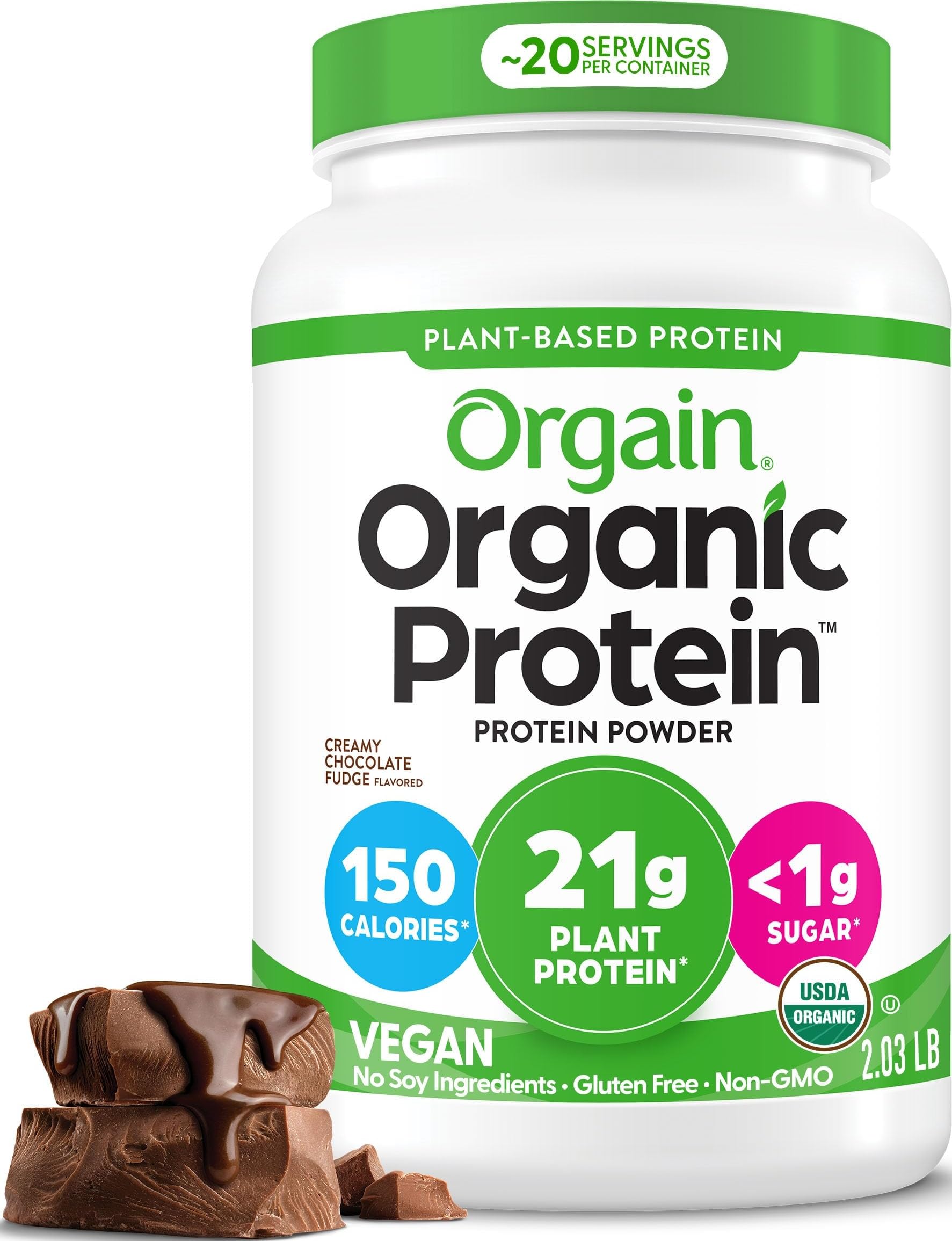
The everyday chocolate scoop that keeps you full straight through to lunch
Orgain’s organic blend of peas, brown rice, and chia delivers 21g of protein per serving with 0g sugar and 6g of prebiotic fiber for gut support. That 21g protein plus 6g prebiotic fiber is what makes it stick — reviewers consistently describe a shake that quiets hunger for hours instead of leaving them grazing an hour later. It is a favorite among people using plant protein as a meal swap rather than only a post-workout drink.
On the ingredients front it is genuinely certified: USDA Organic and third-party verified plant-based, with no erythritol, gluten, soy, carrageenan, lactose, or artificial colors and sweeteners. That short list of exclusions is why it turns up in so many pantries — it fits a range of restriction-driven diets without extra label-squinting. The creamy chocolate fudge flavor reads rich without going overly sweet.
Here it is worth flagging the one trade-off. This tub holds 2.03 pounds of powder against the Optimum Nutrition’s 1.5 pounds — literally 35% more powder in the canister. That extra fill is why it is the value pick. But texture divides: plenty find it creamy and smooth, and some hit a chalky grit that calls for a longer blend or a splash of oat milk.
The case for it: certified organic, high-fiber, no-sugar chocolate that doubles as a filling meal replacement and gives you more powder per tub than the Optimum pick.
The texture caveat: this is a finicky one in the blender — give it a full cycle or a nut-milk base to smooth out the occasional chalky edge.
Reach for it when: you want a certified-organic, filling chocolate shake at a budget-friendly tier.
Hold off if: you drink it mixed with plain water and hate any grain — it wants a good blend.
5. Optimum Nutrition Gold Standard Plant Based Protein
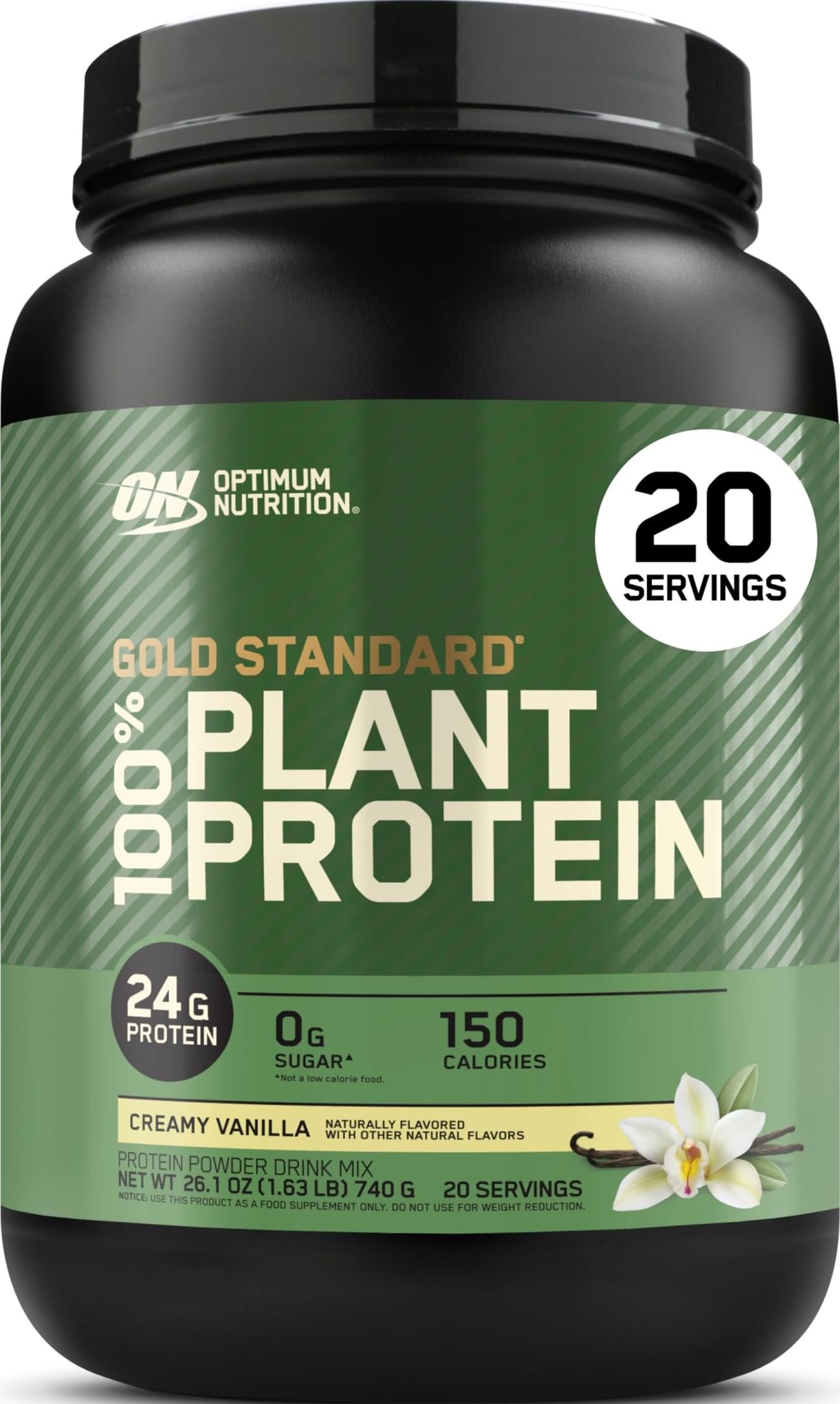
A three-protein blend built for a full amino acid profile in a glass and spoon
Optimum Nutrition’s plant formula blends pea, rice, and fava bean into one scoop that provides 20 amino acids, including all 9 essential ones. That trio is the point — each plant protein is short on one amino acid and strong on another, so combining them fills the gaps. It is an “anytime” shake, meant to be stirred with about a scoop of powder and 10-12 fl oz of cold water or almond milk, with zero sugar and gluten-free labeling.
The digestion angle is its quiet strength. If bloating is why you left whey, this pea-rice-fava blend is the one to note: drinkers report a settled stomach and a shake that holds until the next meal. Mixing with just a glass and spoon is a real convenience if you are not dragging out a blender.
Where it asks something of you is flavor and texture consistency. Vanilla is a polarizing one — some call it amazing, others say too sweet — and texture lands creamy for some and grainy for others. The practical read: start with more liquid than feels right and stir hard. Also worth knowing — the 1.5 pound tub holds less powder than the Orgain’s 2.03 pounds.
Go with it for: a complete twenty-amino-acid vegan scoop with a settle-your-stomach feel, mixed with no blender required.
Weigh the trade-off: the vanilla is sweet-leaning and the tub is a smaller 1.5 pounds — fine for a first try, less so for daily scoopers.
6. Truvani Organic Plant Based Protein Powder, Unflavored
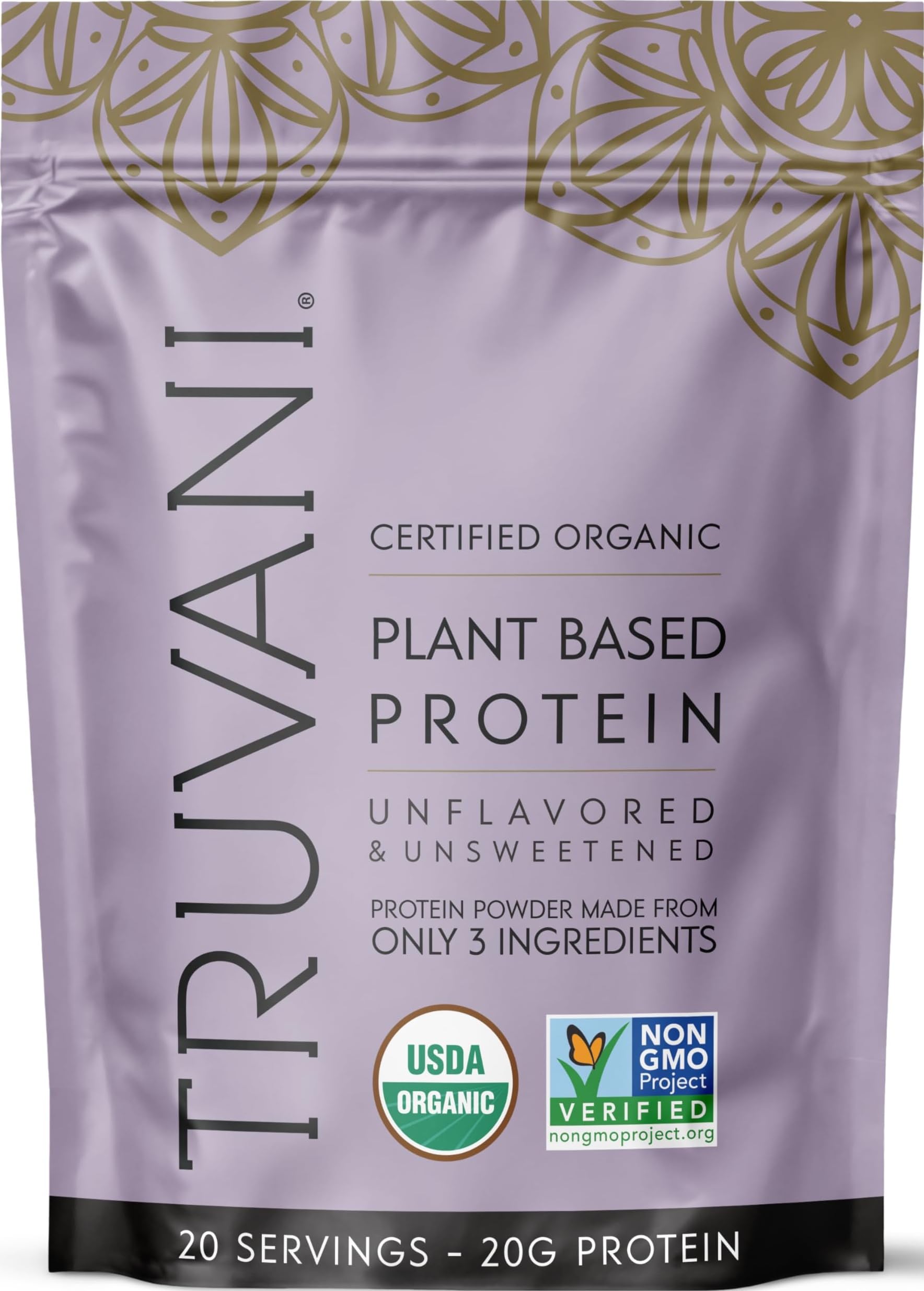
Five ingredients on the panel — the shortest list here by a wide margin
Truvani makes its case on the ingredient panel: an unflavored plant protein built from organic pea, pumpkin seed, and chia, with no soy, wheat, dairy, gluten, or stevia and sweetness coming only from organic monk fruit. Certified USDA Organic and non-GMO, it drops into a smoothie or a bake without fighting whatever else is in the cup. If the reason you want dairy-free is that you’re tired of mystery additives, this is the one built for you.
The clean-label crowd clearly rewards it — the feedback that matters here zeroes in on the ingredient integrity, that short five-ingredient list and its straightforward, traceable build. That is a genuine draw for anyone with sensitivities, since fewer ingredients means fewer things to cross-check against a restriction list.
The trade-off is the one you might guess from an unflavored, five-ingredient formula: it is not going to deliver a dessert-grade vanilla or banana cinnamon punch on its own, and it costs premium money for that simplicity. The other honest note is that unflavored means unflavored — its neutral profile is designed to disappear, not delight, so people chasing a flavored shake should treat this as a base, not a finished drink.
Why the label-first crowd loves it
- Five ingredients, three plant sources: pea, pumpkin seed, and chia
- Sweetened only with organic monk fruit — no stevia, no added sugar
- USDA Organic, non-GMO, and free of soy, wheat, dairy, gluten
- Neutral, unflavored base that won’t clash in a smoothie or bake
What you give up
- Unflavored means no dessert taste — the powder has no flavor punch on its own
- Premium-tier price for a plain base
- 20 servings per tub
7. Carlyle Pea Protein Isolate Powder, 7lb, Unflavored
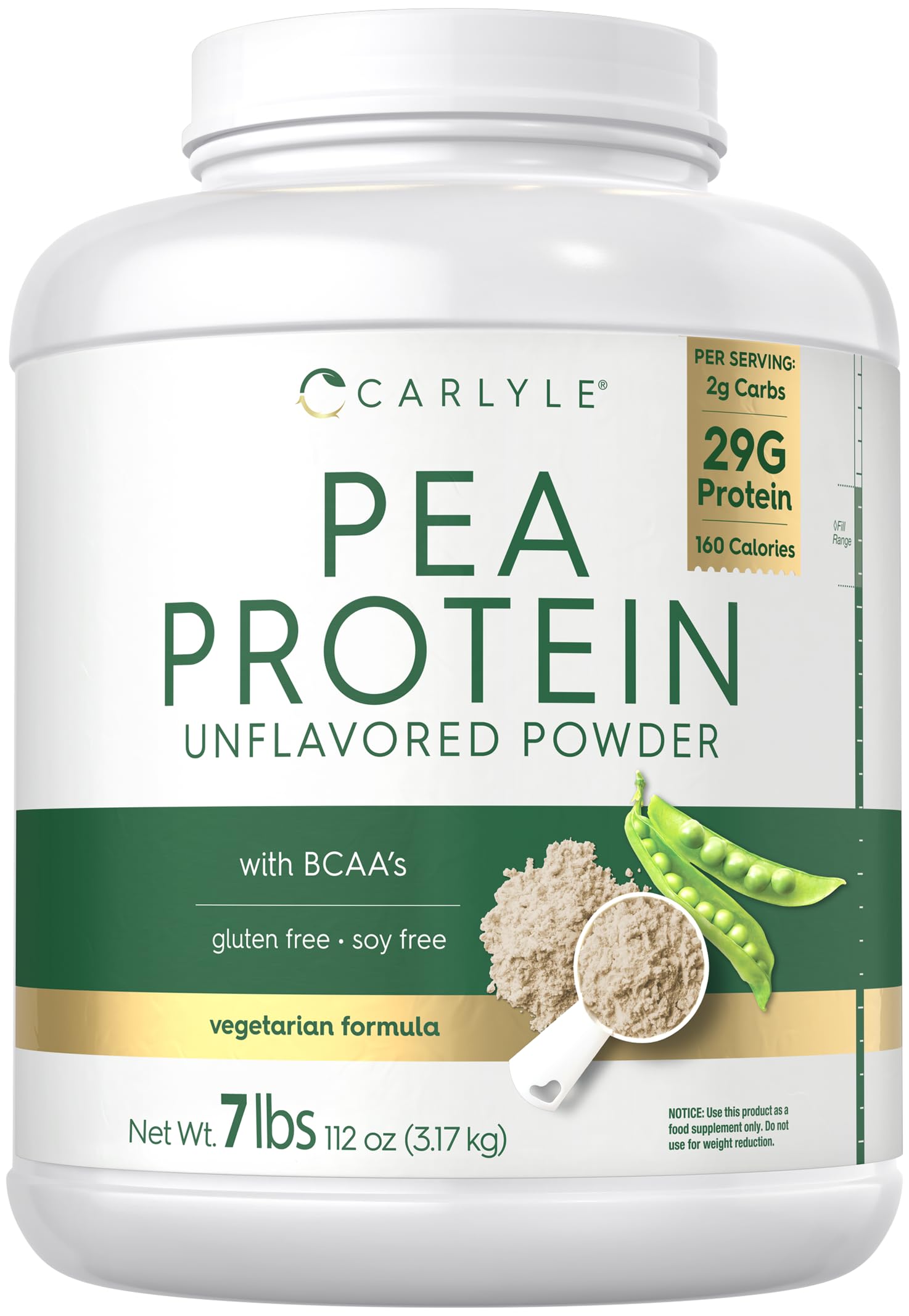
Twenty-nine grams per scoop and a seven-pound bag that lasts months
The standout number here is 29g of protein per scoop — the highest per-serving figure on the list, with BCAAs (branched-chain amino acids, the building blocks tied to muscle recovery) included. It comes in a 7lb unflavored bag, so you are buying a bulk supply rather than a flavored tub. For a vegan or vegetarian household that downs a shake most days, that math works out to far fewer reorders.
Quality and value are the twin reasons people commit to it — buyers describe it as solid pea protein and an excellent deal for the size, with a protein content that holds at a full 29 grams. It is naturally free of gluten, wheat, milk, lactose, soy, artificial flavors, and preservatives, and it is non-GMO, which matters if you are stacking it with other dietary restrictions.
Unflavored is the catch. With no sweetener and no flavoring, it takes on whatever you blend it with — and the room splits on smoothness, with some finding it easy in a smoothie and others hitting grit in water alone. Treat it as a base to flavor yourself: a banana, a spoon of cocoa, or a little maple. The seven-pound bag is also a big commitment of cupboard space if you are testing it for the first time.
For the bulk buyer: 29g per scoop with BCAAs, in a 7lb unflavored bag that suits everyday smoothie users who flavor their own.
Consider the size: seven pounds is a long commitment, and the unflavored base brings grit in plain water — a blender and a banana fix both.
Pick it if: you scoop daily, want the most grams per scoop, and don’t mind flavoring it yourself.
Skip the bulk bag if: you want a ready-to-drink shake — this base is grainy in water and grainy without anything added.
Know the Specs
Protein Per Serving
This is the grams of protein you actually get in one scoop. Higher numbers per scoop mean fewer scoops to hit a daily target. Vega Essential’s 25g and Carlyle’s 29g are on the high end, while the Sunwarrior’s 17-20g range reflects its mixed five-protein formula. Every gram count on these labels is a per-serving figure — double the scoops and you double the protein, so shake recipes matter as much as the label number.
Servings Per Tub
The serving count tells you how long a tub lasts, and it is often the real divider between two otherwise similar powders. A 30-serving tub scooped five days a week gives about six weeks; a 20-serving tub gives about four. Always read servings with protein-per-serving, because a high-protein scoop with a low serving count can cost more per shake than the labels suggest.
Protein Source Blend
Single-source pea protein tastes different from a blend of pea, brown rice, chia, quinoa, and amaranth. Blends smooth out each source’s weak amino acid and grassy note. Some formulas — like Optimum’s pea, rice, and fava trio — are built specifically to cover all nine essential amino acids, while single-pea powders lean on added BCAAs to complete the profile. Read the source list, not just the protein number.
Flavored vs Unflavored
Flavored powders let you drink a shake with just liquid, but they bring sweeteners like stevia or monk fruit into the mix. Unflavored powders like Truvani and Carlyle hand you a neutral base for baking, smoothies, or oats — you control the flavor. Unflavored is not a taste guarantee of “good”; it is a taste guarantee of “neutral,” which some drinkers find watery or grainy in plain water.
Common Questions
Is dairy-free protein powder the same as vegan protein powder?
Will dairy-free protein powder upset my stomach?
How much protein per serving should I look for?
What does unflavored plant protein actually taste like?
Do these powders work in baking or overnight oats?
How long does a tub of protein powder last?
Is a pea protein blend better than single-source pea protein?
Can I use dairy-free protein powder as a meal replacement?
Which sweetener should I avoid in a dairy-free protein powder?
Do I need a blender for plant protein powder?
The Bottom Line
The strongest scoop for most people is the Sunwarrior Classic Plus — a five-protein blend in a 30-serving tub that lasts longer than any 20-serving rival, with a chocolate flavor that stays drinkable. If you want the highest protein per serving, the Vega Essential packs 25g with zero sugar. And for a blend you can drink on the run without a blender, the FlavCity Vegan Almond Shake is the one to reach for.
How we choose
We do not accept paid placement. Every pick is matched to a real buyer and a real use-case; we do not hands-on test units.
Sources
Specifications: manufacturer listings and product documentation. Review insights: verified customer reviews, as of November 2026. Pricing: not shown on this page (it changes often); check the current price via the retailer link.
As an Amazon Associate, My Heart Lives Here earns from qualifying purchases. This does not affect which products we feature.