Heads up: This post contains affiliate links. As an Amazon Associate I earn from qualifying purchases, at no extra cost to you. Learn more
Specs are compiled from manufacturer listings and verified buyer reviews and can change over time — please confirm the key details on the product page before buying.
Here is the short answer before you read anything else. If you want one amp that covers rehearsals, small rooms and the occasional unmiked gig, the Fender Rumble 100 is the safest buy on this list. Every amp below puts out around 100 watts, but they do not behave the same once you turn up. Speaker size, cabinet weight and how the tone controls actually work decide whether you can hear yourself or not.
This guide is built by comparing the manufacturers’ published specifications and the patterns across verified customer reviews, so you get each pick’s real strengths and trade-offs instead of marketing spin.
A 100-watt bass combo is the one amp that has to fit in your car, survive a rehearsal room and still hold its own when the drummer gets loud. That is exactly the job this list is built around, and it is why the picks below cover different rooms rather than different badges.
Top Picks


How To Choose The Best 100 Watt Bass Amp
The number on the front panel is the least interesting thing about these amps, because four of the five picks here all say 100 watts. What changes from amp to amp is the speaker that 100 watts gets pushed through, and the cabinet that speaker sits in. Get the speaker and cabinet right and the rest of the decision follows.
Speaker size decides the room you can fill
A larger speaker generally moves more air, which is why it tends to fill a room with less strain. That is the practical difference between a 1×10 cabinet like the Gallien-Krueger MB110 and a 1×15 cabinet like the Orange Crush 100. Small speakers stay tight and fast; big speakers feel bigger under the low notes.
Weight you can carry alone changes how often you play
An amp you dread lifting is an amp you leave at home. A ported cabinet built around a Class-D power section cuts weight dramatically, and that is the whole reason Fender calls its Rumble line compact. Weigh your own stairs and car boot honestly before you fall for a bigger cabinet.
The connection you will actually use live
A direct output sends your bass straight to the front-of-house mixing desk, so the amp can stay modest on stage. Check whether a pick has a balanced XLR direct output or an unbalanced line out — if the venue mics your cab instead, the difference matters far less.
Tone shaping that suits your band, not the demo
An on-board overdrive circuit is useful when you want grit without a pedalboard. A contour or mid control lets you scoop or push the mids so the bass sits where it should. Three bands of EQ is the common standard here; the Orange goes further with a parametric mid control.
Side-by-Side Comparison
| Model | Best For | Power / Speaker | Amplifier Type | Weight | Amazon |
|---|---|---|---|---|---|
| Fender Rumble 100 V3★ Best Overall | One amp for most players | 100W / 12″ Eminence | Class-D | 23.3 lb | Amazon |
| Gallien-Krueger MB110Best for Medium Rooms | Medium rooms, compact rig | 100W / 1×10″ Paragon | Solid State | 25 lb | Amazon |
| Ampeg Rocket Bass RB112 | Vintage-styled gigging | 100W / 1×12″ | Solid State | — | Amazon |
| Ampeg Micro CL Stack | Stage look and DI send | 100W @ 8 ohms / stack | Solid State | — | Amazon |
| Royal Sovereign Orange Crush 100 | Tone hunters with a 15″ taste | 100W / 1×15″ | Solid State | 9.1 lb | Amazon |
Detailed Reviews
1. Fender Rumble 100 V3 Bass Amp
Our pick — 4.5+★ from 650+ verified ratings; the strongest balance of quality and price.
A 12″ Eminence driver in a 23.3-pound cabinet that most players can carry in one hand.
The first thing to know is that this is a Class-D amp (a lightweight power design that runs cool instead of heavy), which is why 100 watts fits inside a 23.3-pound box. Compare that to the Orange Crush 100 on this list and the gap runs the other way: the Crush weighs 9.1 pounds, so the Fender is the heavier of the two by a wide margin. The cabinet itself measures 7.72″D x 22.83″W x 20.28″H, narrow enough front-to-back to slide behind a sofa. A ported plywood enclosure does the low-end work here, and the grille pops off if you ever need to get at the speaker.
What wins people over is how complete it feels for the size. The 12″ Eminence Special Design speaker is voiced to cut through a band rather than sit under it, and the built-in overdrive circuit plus switchable contour controls give you grit and a mid-scoop without adding a single pedal. A direct XLR output sends your signal to the house desk, and an aux input lets you play along with a track in your headphones or through the speaker. Fender backs the amp with a two-year limited warranty against defects in materials and workmanship.
The honest follow-up question is whether it stays clean when the drummer leans in. This is a 100-watt combo, not a stack, and a loud rehearsal with two guitars can push it toward its ceiling. It also carries a stainless steel spec on the enclosure listing, which surprises people expecting the usual wood-and-tolex — read that line carefully if cosmetics matter to you. For small to medium venues, which is the job this amp is built for, it holds up.
Why it earns the top slot
- A 12″ Eminence Special Design speaker gives you low-end weight from a cabinet that is only 23.3 pounds.
- Overdrive circuit and switchable contour are built in, so you shape tone without pedals.
- Direct XLR output plus an aux input cover both the stage and the practice room.
- Two-year limited warranty from Fender on materials and workmanship.
Where it tops out
- It is heavier than the Orange Crush 100 — 23.3 pounds against 9.1 pounds.
- 100 watts through one 12″ speaker has a limit in very loud rooms.
Go for it when: you want a single amp for rehearsals, small rooms and the odd gig, and you want the overdrive and DI already onboard.
Know this first: the plywood cabinet is ported and light, but 23.3 pounds is still a real lift up a flight of stairs.
2. Gallien-Krueger MB110 Bass Combo Amplifier
The small-cabinet amp that behaves bigger than its 1×10 speaker suggests.
Here is the useful thing about the MB110: that 1×10″ Paragon driver stays punchy and defined where a larger speaker can turn muddy. The amp is a solid-state design (a conventional transistor power section rather than the lighter Class-D type), and it puts out 100 watts. It weighs 25 pounds, so it sits in the same carrying bracket as the Fender above rather than the featherweight end of the list.
You can keep this combo small for rehearsals and grow it into a bigger rig for a louder date without buying a second amplifier. The reason is the chain output, a connection that lets you drive MBP Series powered cabinets from this combo. It also carries two output channels, so the routing has some flexibility built in. Players using it in medium-sized venues report it holds together at gig volume.
The scaling trick: buy the compact 1×10 combo now and add a powered cabinet later through the chain output when your gigs get bigger.
The trade-off to weigh: a 1×10 cabinet will not move the same air as the 1×12 in the Rocket Bass or the 1×15 in the Orange, so judge it on how tight you want the low end.
Reach for this if: you play medium rooms and like a defined, fast low end, and you want room to add a cabinet down the line.
Look elsewhere if: your heart is set on the deep push of a 15″ speaker from a single box.
3. Ampeg Rocket Bass RB112 Bass Combo
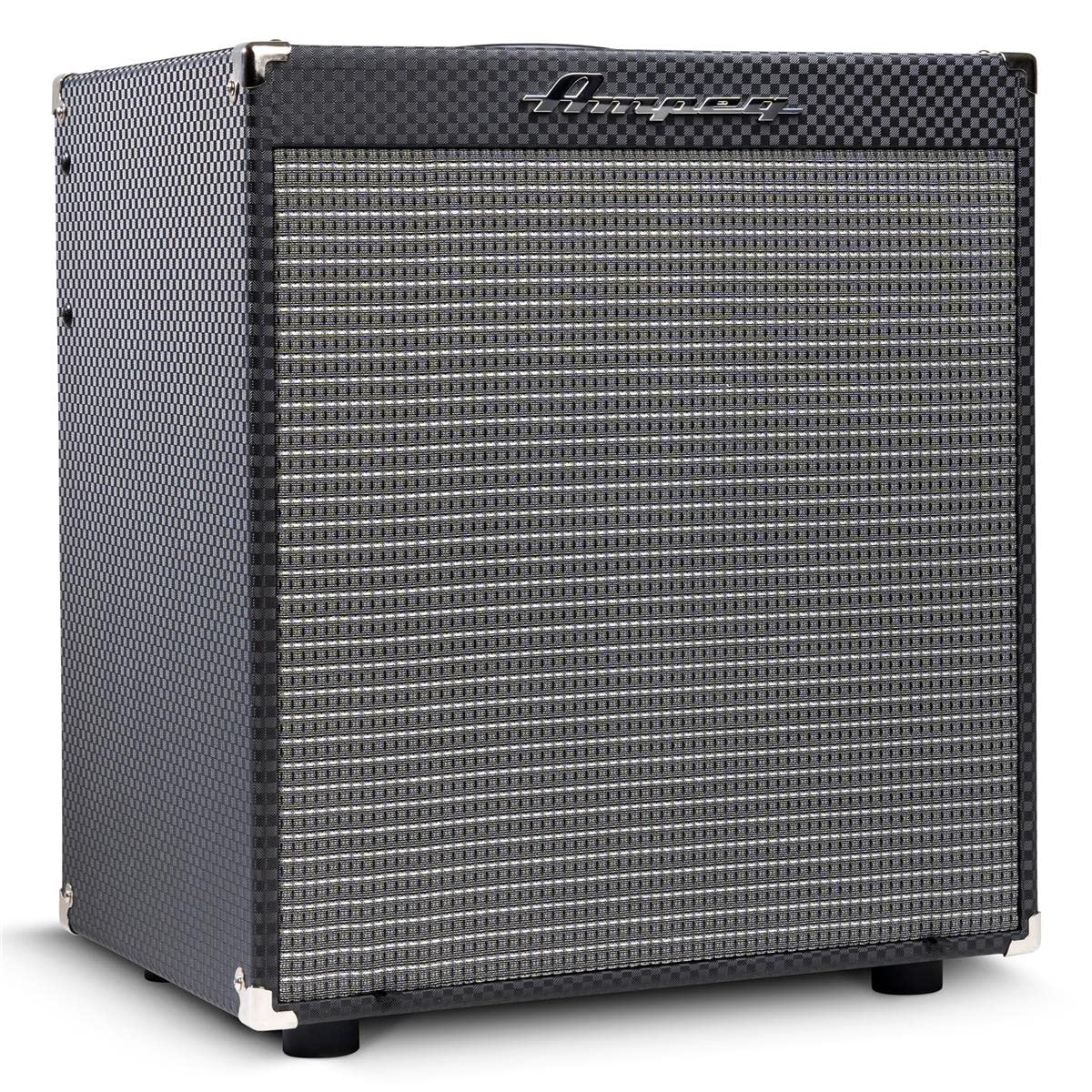
Vintage looks, a 1×12 driver and two input sensitivities for active or passive basses.
A 1×12″ speaker is the middle ground in this group, and the RB112 pairs it with a 100-watt solid-state power section. The detail that earns it a spot here is the pair of inputs: one at 0dB and one at -15dB. The 0dB jack suits a passive bass with a normal output, while the -15dB input pads down a hot active bass so it does not overload the front end. If you switch between basses with different pickups, that is a genuinely useful feature rather than a spec-sheet flourish.
On the tone side, Ampeg’s Super Grit Technology overdrive gives you a dirty option without a pedal, and the three-band EQ is there for shaping. The XLR direct output is the one that matters on a stage where the amp is not miked. Styling leans vintage, which is deliberate and will either be the reason you buy it or the reason you do not.
Where to be careful: the listed dimensions read 1″D x 12″W x 112″H, which is clearly a data oddity rather than a real cabinet measurement, so judge the size from the 1×12″ speaker spec instead. It is also note the compatible-devices line reads double bass, so check with the seller if you are pairing it with a specific instrument.
Two inputs, two basses: the 0dB and -15dB jacks mean an active and a passive bass can both plug in without fiddling with settings.
Pair it with the stage: the XLR direct output is what makes this amp work in a venue that wants a clean line to the desk.
Pick it when: you gig with two different basses, want overdrive onboard, and like the vintage cabinet look.
Only caveat: the published dimensions on the listing are not a usable guide to the size, so confirm the cabinet footprint before you buy.
4. Ampeg Micro CL 100W Solid State SVT Classic Stack

The only stack here — a separate head and cabinet in Ampeg’s Classic styling.
This is a tall stack you set up in two pieces, not a single box you sling in a car boot. A two-piece rig is a different purchase from a combo, and the size gap here is dramatic. The Micro CL measures 13.75″D x 14″W x 36″H, against the Rocket Bass RB112 combo at 1″D x 12″W x 112″H as listed. Treat those numbers as wildly inconsistent listing data rather than a literal measurement, but the shape of the point holds.
Under the hood it is solid-state through and through — a solid-state preamp feeding a solid-state power amp, rated at 100 watts at 8 ohms. Tone controls are bass, mid and treble across three bands, and there is an unbalanced line out for sending signal onward. If you know Ampeg’s Classic look from big stages and want that silhouette at a fraction of the footprint, this is the pick that delivers it.
What the stack gives you
- Separate head and cabinet, so you carry each piece on its own and set up the vintage look you cannot get from a combo.
- Three tone controls across bass, mid and treble for dialling in your own sound.
- Rated 100 watts at 8 ohms, so you know exactly what load it wants.
What to plan around
- Two pieces to transport instead of one, and a taller footprint than any combo here.
- The line out is unbalanced, so a long cable run to a desk is less ideal than a balanced DI.
Best matched to: players who want the Classic stack presence and do not mind two trips to the car.
The honest snag: the listing’s dimension figures do not agree with the real world, so check the cabinet size before committing.
5. Royal Sovereign Orange Crush 100 Bass Combo
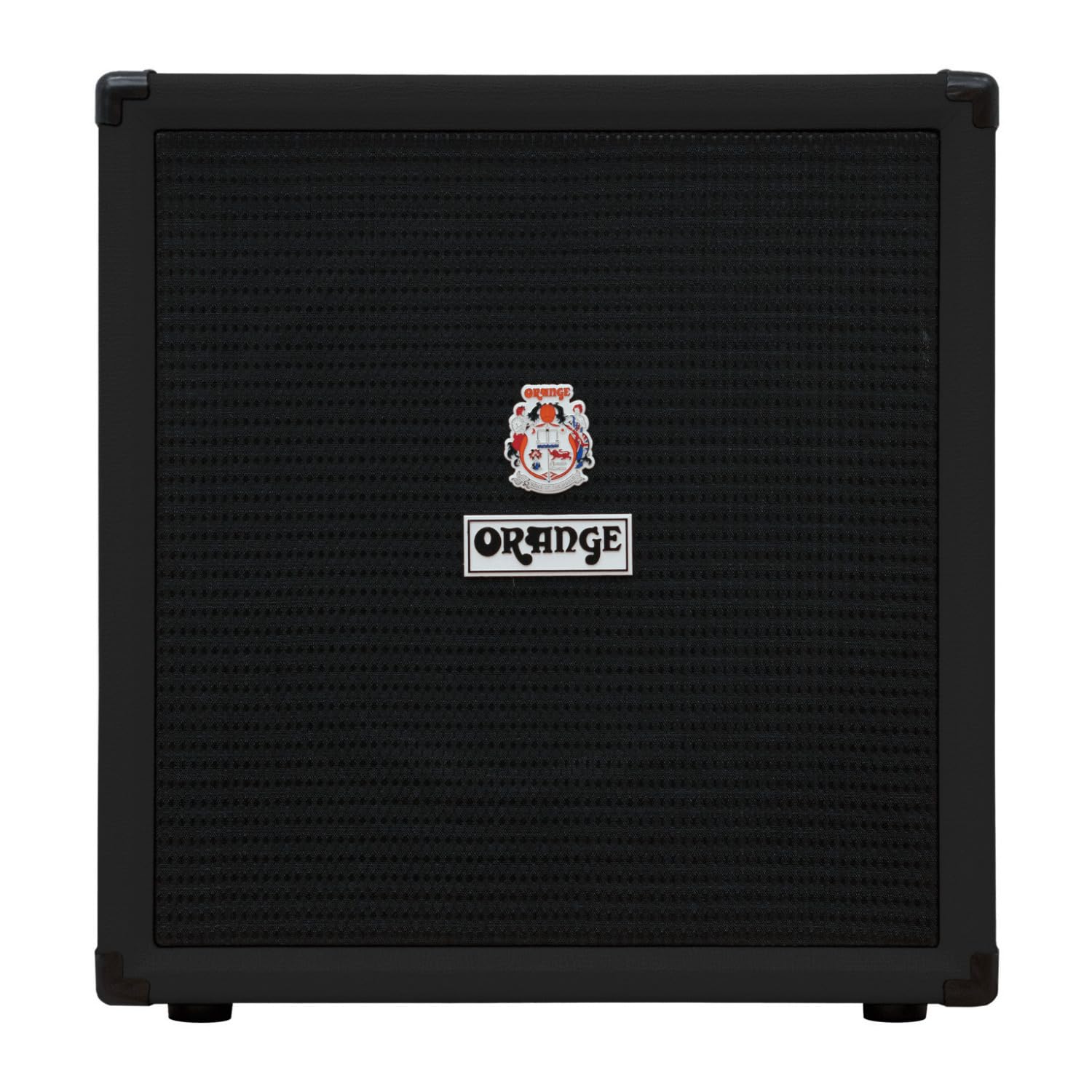
A 1×15 cab listed at 9.1 pounds — the lightest amp on the page by a long way.
If you load in alone every week, this is the one to pick: the listed weight is 9.1 pounds, against 23.3 pounds for the Fender Rumble 100 by comparison. The 1×15″ speaker is the biggest in this group, and that is the whole reason to look at the Crush 100. A bigger driver tends to push more low end with less effort, so a room that swallows a smaller cab will still feel this one.
Tone tools are where this amp earns the “tone hunter” label. You get an active 3-band EQ, a parametric mid control for scooping or pushing a chosen mid frequency, and bi-amp inspired blend and gain controls that are footswitchable. There is also a balanced output for the house desk and a buffered effects loop, so your pedals behave the way they do at home. Reviewers describe the tone as clean and steady, and several players treat it as a solid gigging amp.
Be honest about the listing, though: a 15″ combo at 9.1 pounds is a figure worth confirming with the seller before you rely on it for load-in planning. Fit is the other question — a 1×15 cabinet takes up more floor space and boot volume than a 1×10 or 1×12, so measure your car before you fall for the spec.
The tone controls are the story: an active 3-band EQ plus a parametric mid plus footswitchable blend and gain give you more shaping than any other amp here.
Why the 15″ matters: the largest speaker in the group is built to fill a room without fighting for it.
Choose it when: you want the biggest speaker here, a stacked set of tone controls and a balanced output for the stage.
Double-check this: confirm the listed 9.1-pound weight with the seller, because a 1×15 combo at that figure is unusual.
Know the Specs
Class-D vs. solid state
Class-D is a lightweight power design that runs cooler and often lets a maker fit 100 watts into a smaller, lighter cabinet. A solid-state amp uses a conventional transistor power section. Both deliver the wattage on the label, and neither is automatically louder — the speaker and cabinet do the heavy lifting on volume. The Rumble 100 is the Class-D pick here, while the other four are solid state.
What an XLR direct output does
A balanced XLR output sends your bass to a mixing desk as a clean signal, which lets the amp stay quiet on a loud stage. An unbalanced line out works too, but it is less suited to long cable runs. The Fender and the Ampeg Rocket Bass both offer a direct output, and the Orange adds a balanced output as well.
Speaker size and what it changes
A 1×10 tends to stay tight and defined. A 1×12 sits in the middle. A 1×15 pushes more low end with less effort. No speaker size wins outright; the room and the band decide. Pick the speaker size that suits the rooms you play in most often, then let the weight and controls narrow it down.
Portability, honestly weighed
Weight is the spec you live with at every load-in. A 9.1-pound combo and a 25-pound combo both sound like numbers until you carry them up stairs. Match the cabinet to your load-in reality: stairs, car boot and door widths.
Common Questions
Is a 100 watt bass amp loud enough to play with a drummer?
Will a 100 watt bass amp be enough for a gig without PA support?
What is the difference between a Class-D and a solid state bass amp?
How do I use the direct output on a bass amp at a venue?
Can I plug an active bass into a 100 watt combo?
Do I need a separate cabinet with a bass combo amp?
Is a 1×15 speaker better than a 1×12 for bass?
How often should I replace the speaker in a bass combo?
What does the contour or mid control actually do on a bass amp?
The Bottom Line
For most players, the 100 watt bass amp that makes the most sense is the Fender Rumble 100 V3. Its 12″ Eminence speaker, onboard overdrive and direct XLR output (a balanced connection that runs straight to a PA or desk) cover rehearsals, small rooms and unmiked gigs in a 23.3-pound cabinet. If you play medium rooms and like a tight, defined low end with room to add a cabinet later, the Gallien-Krueger MB110 is the smarter fit. And when you want the biggest speaker here plus the deepest tone controls, the Orange Crush 100 is the one to reach for — just confirm that light listed weight with the seller before you plan your load-in around it.
How we choose
We do not accept paid placement. Every pick is matched to a real buyer and a real use-case; we do not hands-on test units.
Sources
Specifications: manufacturer listings and product documentation. Review insights: verified customer reviews, as of November 2026. Pricing: not shown on this page (it changes often); check the current price via the retailer link.
As an Amazon Associate, My Heart Lives Here earns from qualifying purchases. This does not affect which products we feature.