Heads up: This post contains affiliate links. As an Amazon Associate I earn from qualifying purchases, at no extra cost to you. Learn more
Specs are compiled from manufacturer listings and verified buyer reviews and can change over time — please confirm the key details on the product page before buying.
If someone you love spends most of the day in bed, you need a surface that keeps shifting weight off their hips, heels and lower back before red marks turn into open skin. That is what the pads below do. Which one fits you depends on what you need: a full bed overlay, a sit-up cushion, or a simple furry layer.
This guide is built by comparing the manufacturers’ published specifications and the patterns across verified customer reviews, so you get each pick’s real strengths and trade-offs instead of marketing spin.
A good pad moves pressure around on its own while your parent or partner sleeps, so you are not the only thing standing between them and a new sore. This guide ranks the bed sore pads that actually hold up to round-the-clock use and tells you which one fits your care setup.
Top Picks

How To Choose The Best Bed Sore Pads
Pressure sores form when one spot on the body carries the same weight for too long. A pad only helps you if it keeps changing where that weight lands. Everything else — thickness, fabric, noise — is a comfort detail around that one job.
Alternating air versus a static cushion or fleece
An alternating pad has rows of air chambers that inflate and deflate in a cycle, so the pressure point keeps moving on its own. A static pad — memory foam, sheepskin or fleece — holds its shape and relies on you turning the person regularly. If your loved one is fully bedbound and you cannot turn them every couple of hours, the air-cycling type is doing work you physically cannot keep up with.
The pump noise number worth checking
Pumps are rated in decibels, written as dBA. A lower number is quieter. A typical bedroom at night sits around 30 dBA, so a pump rated below that blends into the background instead of cutting through it. If the person beside them is a light sleeper, this is often the single spec that decides whether the pad stays plugged in or gets unplugged at night.
Weight capacity and inflated size
Every pad here lists a weight limit, and matching it to the user matters — an overloaded pad will not inflate evenly. The inflated footprint is usually around 75 inches long and 35 inches wide, which is sized for a hospital-style bed and standard frames. Check that number against the bed you actually have before you buy.
Keeping the surface clean
Accidents and spills happen. A waterproof surface you can wipe down with a damp cloth saves hours of laundry each week. Most of the air pads here use a vinyl or PVC top for exactly that reason; the fleece style is machine or hand washable instead.
Side-by-Side Comparison
| Model | Best For | Type | Pump Noise | Inflated Size | Amazon |
|---|---|---|---|---|---|
| MedVance Premium Alternating Air Pressure Pad★ Best Overall | All-round bedbound care | Alternating air | Under 20 dB | Fits most standard hospital beds | Amazon |
| Niceput Bed Sore Cushion for ButtBest for Sitting | Sitting and wheelchair relief | Memory foam cushion | — | 18″L x 16″W x 4.5″H | Amazon |
| Drydiet Synthetic Sheepskin Pad (2 Pack)Budget Twin Pack | Budget twin-pack overlay | Synthetic sheepskin | — | 30″ x 40″ each | Amazon |
| Voinnokal Alternating Air Pressure Pad | Five-setting firmness control | Alternating air | Less than 40 dB | 75″ x 35″ | Amazon |
| Chumia Medical Sheepskin Pad | Full-length fleece coverage | Synthetic sheepskin | — | Approx. 31.5″ x 78.7″ | Amazon |
| KEKOY Alternating Air Pressure Pad | Long-term home and facility care | Alternating air | Below 28 dBA | 75″ L x 35″ W | Amazon |
| Careboda Alternating Pressure Mattress | Higher weight capacity | Alternating air | Less than 40 dB | 75″L x 35″W x 2.8″H | Amazon |
| Alcedo Alternating Air Pressure Pad | Post-surgery recovery | Alternating air | Ultra-quiet pump | 75″ x 35″ | Amazon |
| Lunderg Alternating Air Pressure Pad | Steady nights and calm turning | Alternating air with static mode | 23 dBA | Fits hospital or home mattress | Amazon |
Detailed Reviews
1. MedVance Alternating Air Pressure Mattress Pad
Our pick — 4.0+★ from 700+ verified ratings; the strongest balance of quality and price.
The pump that disappears into the night and the cycle that keeps the pressure moving.
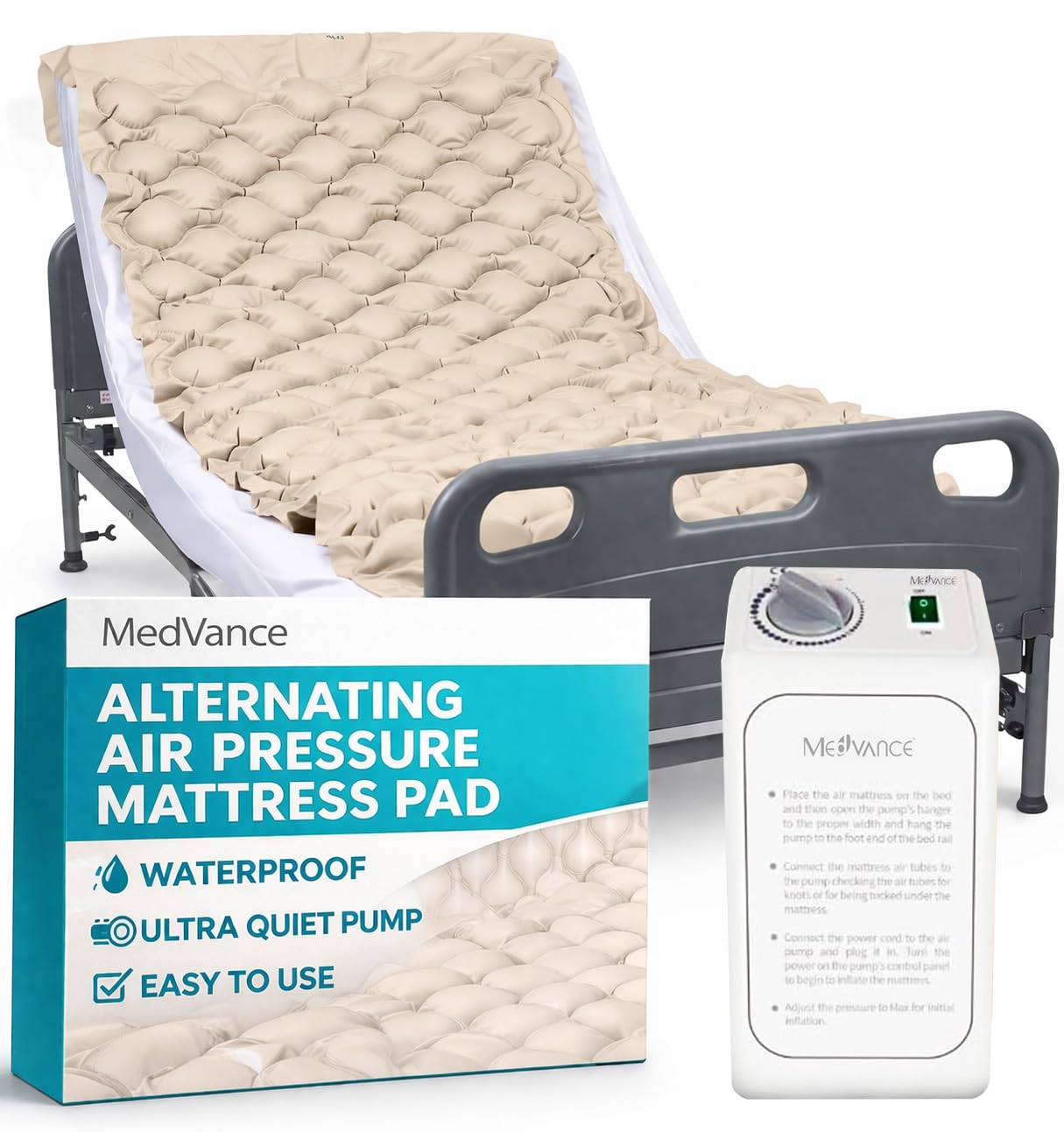
For a parent who has moved home from a care facility, this is the pad that does the repositioning when you are asleep. Its air chambers refill on a six-minute rotation, so the weight under the hips, heels and shoulders keeps sliding to a new spot instead of settling into one. That steady movement is the whole point of an alternating pad, and here it runs on a dual-core pump rated under 20 dB — quiet enough that it sits below normal bedroom background sound rather than over it.
What wins people over is the comfort, which comes through in the reviews more than anything else by a wide margin, with relief from pressure and sores close behind. One caregiver bought a second unit after the first wore out, and another used it on a father with advanced Parkinson’s disease who slept more peacefully within a week. The cover is medical-grade vinyl over nylon, it wipes clean with a damp cloth and mild soap, and it is built to fit most standard hospital beds.
The catch is the sound, and it is genuinely a split verdict rather than a flaw. Some setups hum along like white noise; others develop a knocking sound that a light sleeper in the same room may notice. If the person across the hall from the pump is a very light sleeper, run it during the day first to hear what your unit does. This is the crowd favorite of the group, and its rating record is the deepest of the mid-range picks.
Where it earns its keep: the six-minute cycle and the sub-20 dB pump together mean overnight pressure relief happens without anyone waking up to do it manually, which is the realistic goal for home care.
Reach for this if: you are caring for someone fully bedbound at home and want one pad to cover overnight repositioning, easy wipe-down cleaning and hospital-bed fit.
Hear it first if: the pump shares a bedroom with a very light sleeper — you will want to test the noise before you commit to running it all night.
2. Bed Sore Cushions for Butt
A T-shaped foam cushion that opens a gap under the tailbone while you sit.
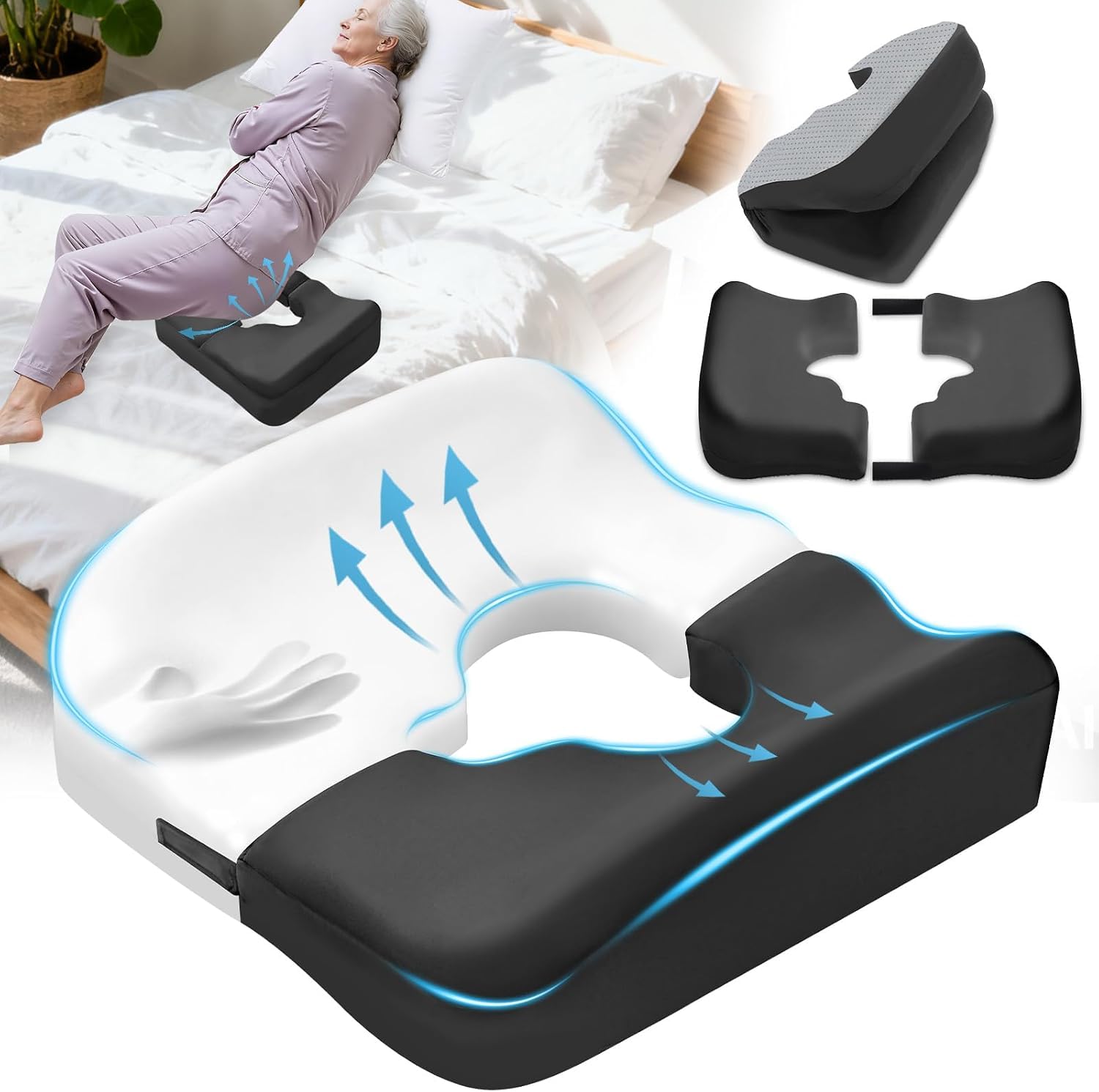
Pressure does not only come from lying down. Anyone who spends hours in a wheelchair, a desk chair or a car seat puts the same weight through their tailbone and sitting bones, hour after hour. This Niceput cushion is a high-density memory foam pad with a T-shaped opening cut through the middle, which creates a hollow space right where the coccyx sits. The foam is slow-rebound, so it molds to your hips instead of pushing back hard against them.
The pain relief is what the reviews keep landing on — the thing buyers talk about first by a clear margin, with build quality and comfort close behind. It works well in a wheelchair, according to the people who use it that way, and it separates into two pieces when you want a different shape. At 18 inches long, 16 inches wide and 4.5 inches thick, it is small enough to drop into a suitcase. It is the firm, stable opposite of the softer fleece pads like the Chumia further down this list.
There is a split-down-the-middle feature that earns its own paragraph: strong Velcro holds the two halves together, and releasing one side lets a caregiver lift a section to create a gentle slope that helps turn a bedbound person. That is a real ergonomic assist for whoever does the heavy lifting. It ships with a removable, machine-washable cover, weighs 1.7 pounds and carries a two-year warranty.
The tailbone gap that actually works
- The T-shaped center opening suspends the coccyx and sitting bones instead of pressing on them.
- Splits into two halves on Velcro so a caregiver can angle one side up when turning someone.
- Non-slip rubber nubs under the base hold it in place on chairs and seats.
Where it stops helping
- It relieves sitting pressure only — it is not a full-length bed overlay for someone who lies flat all day.
- It is 4.5 inches thick, so it lifts a wheelchair user noticeably higher in the seat.
Best for: chair-bound users, long drives and anyone recovering from hip or tailbone pressure who still sits upright for meals.
3. Drydiet 2 Pcs Medical Sheepskin Pad
Two fleece layers for the price of one, but know exactly what you are getting.
If you want a soft, wipeable layer to add under a sheet and you want a spare on hand, this Drydiet pair is worth understanding before you buy — including its limits. You get two synthetic lambskin pads, each about 30 by 40 inches, made of polyester. The idea is that the fibers wick moisture away from the body and let it evaporate, and the size is generous enough to drape over a bed, chair or sofa. The listing counts the number of items as 2, which is what gives you the backup.
Here is the honest part, and it comes straight from buyers who opened the package: “Extremely thin, not a pad—more like a furry sheet. 4x thinner than ‘sheepette’ pads used for heel pressure injury prevention. Vacuum-packed; opening destroyed packaging. Poor quality, ineffective cushioning. Returned.” Others describe it as barely thicker than a dish rag, and some reviews say the material is not medical grade. So treat this as a light comfort layer, not a cushioned pressure pad. Anyone expecting a thick plush surface will be disappointed.
Where it fits: as a budget overlay across a chair or a bed for someone who is mostly mobile, or as a cheap underlayer you do not mind washing often. It is hand wash and machine wash friendly. For actual weight-bearing relief, the alternating air pads above and below do the job this fleece cannot.
Set expectations first: the fiber does the moisture-wicking and soft-touch job well, but the cushioning is thin, so it belongs on a chair or as a secondary layer rather than as your main pressure surface.
Look here if: you want two washable fleece covers for a mostly mobile user on a tight budget.
Move on if: you need real padding under a bedbound person — go with an air pad instead.
4. Voinnokal Alternating Air Pressure Mattress Pad

Five firmness settings and a whisper-quiet pump for under-40 dB nights.
The standout number here is the pump noise: this one runs below 40 decibels, and it lets you dial the firmness across five settings instead of a single fixed feel. If the person you are caring for wants a firmer surface in the morning and a softer one at night, that adjustability is the whole point. The pad is built from vinyl, measures 75 inches by 35 inches when inflated, and carries a 300-pound weight capacity.
It uses 130 independent air cells, and the pump cycles continuously so the pressure under the body is always shifting slightly. Reviews describe the setup as easy, and One buyer notes the five settings let their father-in-law find a comfortable position in his hospital bed. The waterproof, heat-resistant surface is the practical part — a damp wipe handles spills, and it is designed for both home care beds and standard frames.
Where it sits next to the MedVance is interesting. MedVance pushes its pump even quieter with a digital control panel and alarms, while this one trades that digital display for a simple 40 dB floor and five manual settings. If you value quieter operation at its peak, the MedVance edges ahead; if you want straightforward firmness control without extra electronics, this delivers that cleanly.
The value read: a five-setting pump with a sub-40 dB rating and a 300-pound capacity covers the normal home-care situation without the extras someone on a facility bed may not need.
Pick this one if: you want adjustable firmness for a parent whose comfort needs change through the day.
Not the one for: a very heavy user — check the 300-pound limit against the person using it before buying.
5. Chumia Medical Sheepskin Pads
A full-body fleece layer that runs the whole length of the bed.
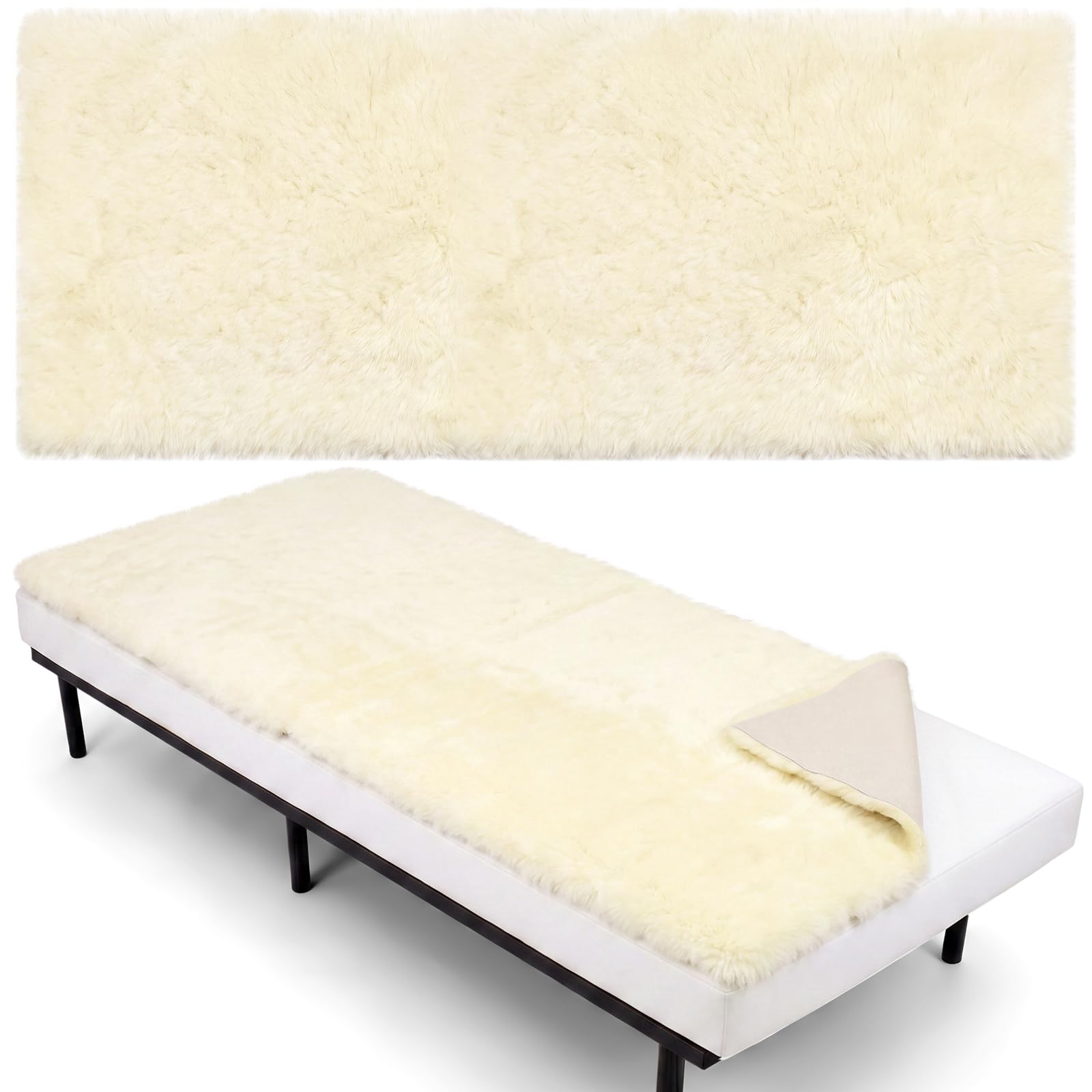
Sometimes you do not want a pump and a hose — you want a soft layer that lies flat and stays put. This Chumia pad measures roughly 31.5 by 78.7 inches, which is long enough to run from the shoulders to the feet, and it has a non-slip back so it does not slide out from under a restless sleeper. The synthetic sheepskin is designed to breathe and wick moisture, and it is simple to hand wash or machine wash.
The appeal for a bedbound person is the airflow: the fibers are meant to keep the surface dry, which matters as much as cushioning when someone is lying still for long stretches. The reviews are split on thickness. One buyer calls it the best thing they have found for a bedridden family member; another felt it was thinner than the advertised “thick” claim. Treat the thickness as light and the fit and coverage as the real reasons to buy.
It is the largest single-piece fleece option on this list, and it is more flexible than the tight-fitting air pads for use on a sofa, recliner or car seat as well. If you have already bought an air pad and want a soft breathable layer to go on top, this is the complementary pick rather than a replacement.
Why the full-length shape matters
- Roughly 31.5 by 78.7 inches covers the whole body rather than just the middle of the bed.
- Non-slip back holds it in place on a mattress, recliner or seat.
- Breathable and moisture-wicking fibers keep the surface dry.
What to know before you buy
- The thickness is light — a couple of buyers expected a plumper cushion than it is.
- It is a static layer, so it does nothing to move pressure around for someone who cannot reposition on their own.
A good match for: adding breathable coverage and a soft feel across a full mattress or recliner.
Not a substitute for: an air pad if the user is fully bedbound and needs automatic pressure relief.
6. KEKOY Alternating Air Pressure Mattress Pad
An upgraded aluminum pump that runs below 28 dBA and is built for all-night duty.
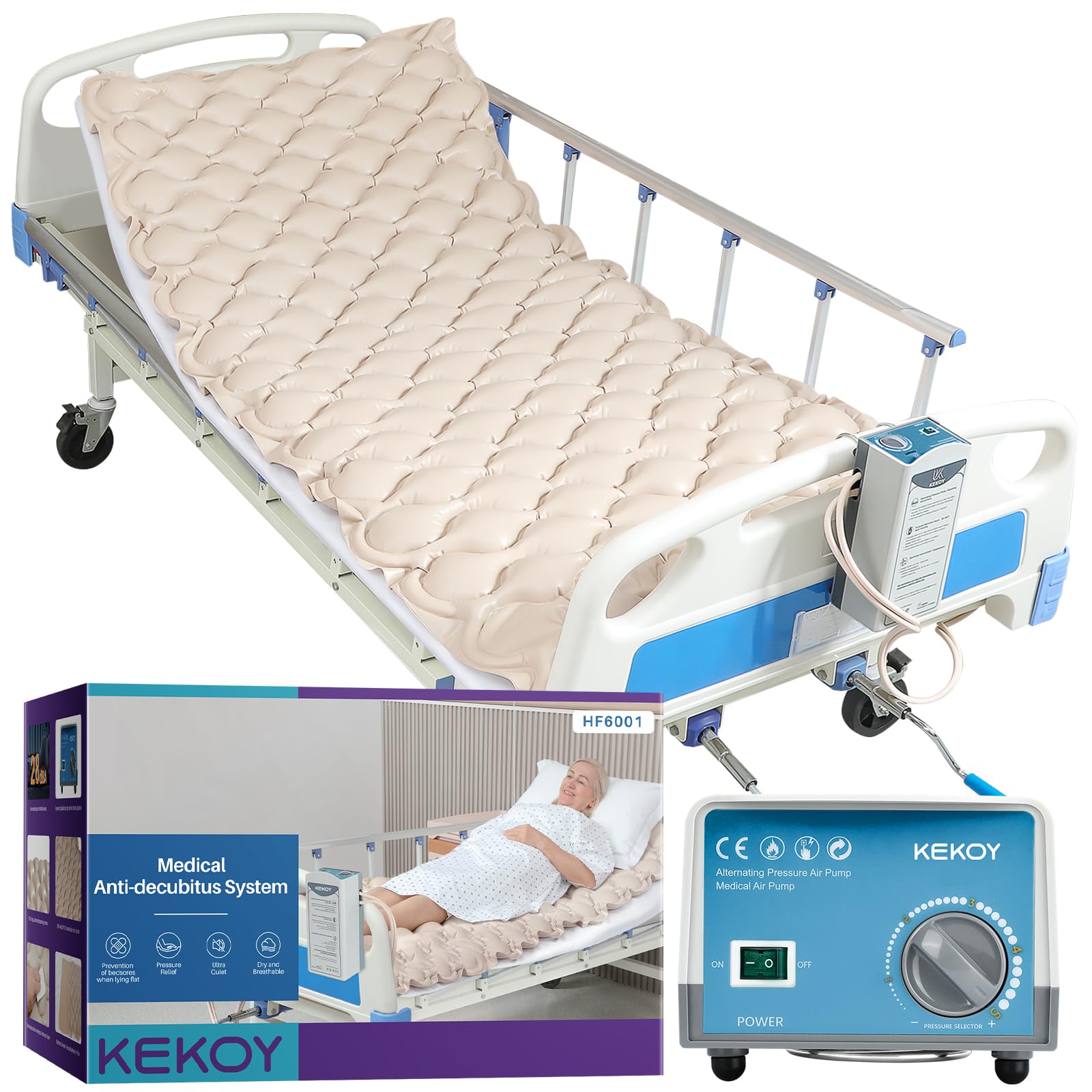
If noise is the deal-breaker in your house, this is the quietest-leaning full air pad here, with an aluminum pump that runs below 28 dBA — quieter than a normal whisper. It uses 130 bubble air cells that alternately inflate and deflate to shift weight off the hips, lower back, shoulders and heels, and the cycle runs roughly every 10 to 12 minutes. You get five pressure levels, from a soft Level 1 to a firm Level 5, so you can match the surface to the user’s body weight.
What people keep coming back to is that it stays reliable shift after shift — the reviews rank functionality as the most-discussed aspect by a clear margin, with fit right behind it. One buyer reports it helped their mother sleep better and lasted months without issues; another bought a second one for elderly relatives with limited mobility. The listing also notes it is FSA and HSA eligible, which is worth checking with your provider.
Two practical points you need before ordering. First, the pump must stay plugged in during use, or the alternating cycle stops. Second, the manufacturer says to let the mattress ventilate for 48 hours after unboxing. The waterproof medical-grade PVC wipes clean, and there is a repair patch kit in the box. It measures 75 inches by 35 inches and supports up to 300 pounds.
The overnight calculus: a pump that stays below 28 dBA and a cycle that runs every 10 to 12 minutes together mean you get through the night without either of you being woken by the equipment.
Suits: home or facility care where quiet operation and steady long-term reliability matter most.
Plan around: the fact the pump stays plugged in permanently — you will need an outlet near the bed.
7. Careboda Alternating Pressure Mattress
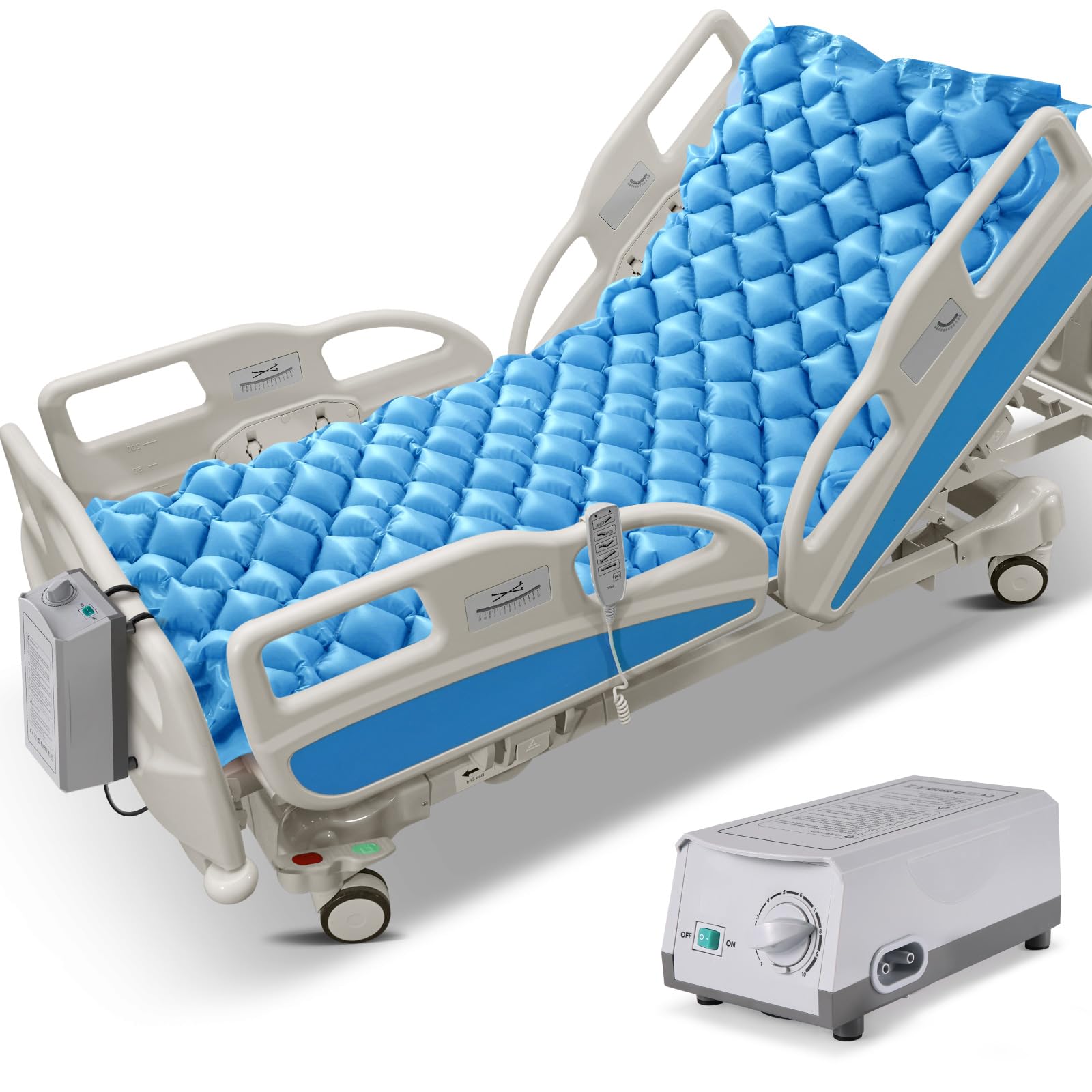
The pad that takes the most weight of the group without sagging out of shape.
Not every user is under 300 pounds, and this is the pick that accounts for that. The Careboda mattress supports up to 350 lbs — higher than most others here — while still running its alternating pressure cycle through sealed air chambers and a pump rated under 40 dB. It has multi-level adjustment, so you can find a firmness that holds a heavier body evenly. Inflated, it measures 75 by 35 by 2.8 inches and fits most standard medical bed sizes.
Two design touches stand out for day-to-day caregiving. The pump has two back hooks so you can hang it off the foot of the bed instead of hunting for floor space. And the extended sections of the pad tuck under the mattress, which is what keeps the whole thing from creeping out of position. The medical-grade PVC surface is easy to clean, breathable and waterproof.
The honest caveat is longevity. One reviewer noted the unit stopped working after about a month, with air loss from the chamber seams; another got five months of daily use. Most air pads in this range carry some risk of seam wear over time, so it is worth treating the pump and pad gently and keeping the receipt. Given the 350-pound capacity, it is still the strongest choice for a heavier user.
Reach for this if: the user is heavier than the standard limit and you need a 350-pound-capacity pad with a hanging pump.
Treat gently: keep sharp objects away from the chambers and expect that seam integrity is the wear point over time.
8. Alcedo Alternating Air Pressure Mattress Pad
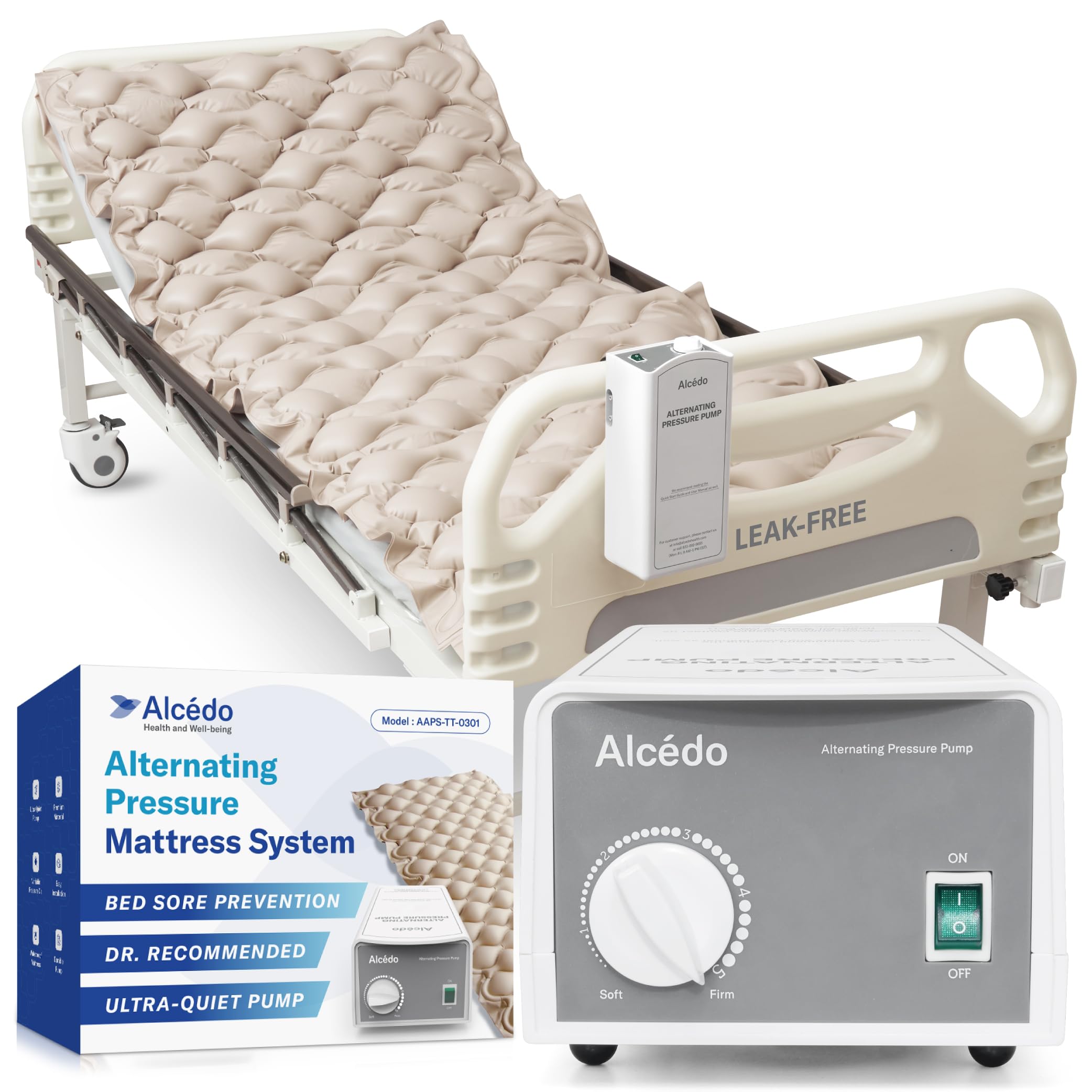
A bed overlay that recovered skin after surgery and folds straight from the start.
Recovery from hip surgery, a spinal procedure or any stretch of enforced bed rest is where this one comes into its own. The Alcedo pad uses alternating pressure technology to move weight off sensitive areas, runs on a pump with five adjustable pressure settings, and has built-in metal hooks so it hangs securely rather than sitting on the floor. The inflated bubble area is 75 by 35 inches, sized for hospital, homecare and standard beds, and it supports up to 300 pounds.
Its build is what separates it from cheaper pads. It uses high-density materials with reinforced seams and a breathable, waterproof surface (air passes through, but spills and moisture stay out). Buyers mention quality most often, with bed-sore relief and comfort right behind. One reviewer recovering from hip surgery with eight weeks of no weight-bearing rated it ten out of ten. Another said it is easy to set up and adjusts well without taking up too much space. It is also FSA and HSA eligible (you can pay with pre-tax health savings funds).
Compared to the MedVance, this one gives you the same alternating-pressure core approach but leans its pitch toward recovery-period comfort rather than digital controls. It is slightly heavier on paper, with a focus on durable construction over a display panel.
The recovery read: five firmness settings and reinforced seams make this a solid choice for the weeks after a procedure when you need gentle but consistent pressure relief.
Suits: anyone recovering from surgery or caring for a bedbound relative who needs reinforced durability rather than electronics.
One note: as with most air pads, if you sleep on a king bed you may need to reposition the overlay daily.
9. Lunderg Alternating Air Pressure Mattress Pad
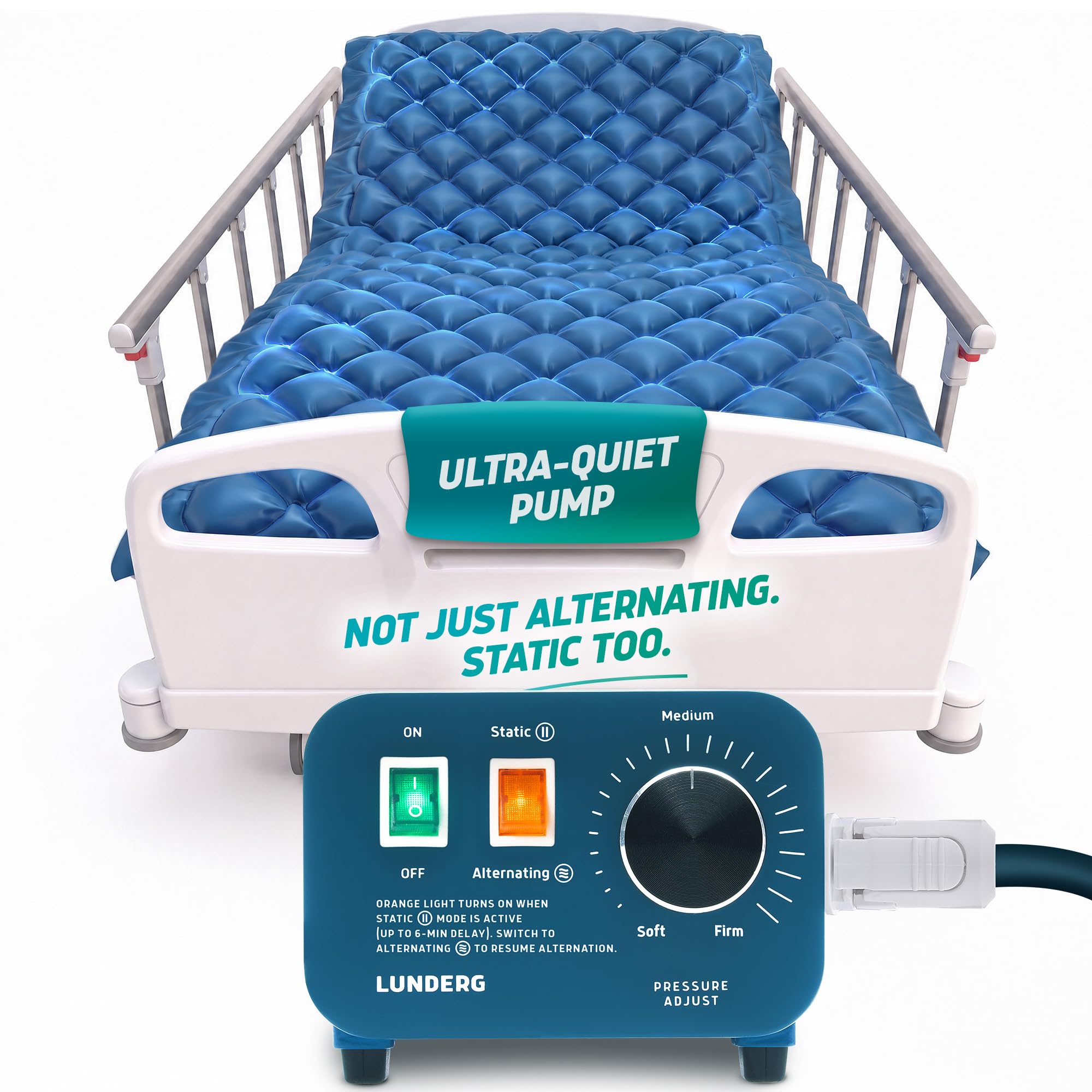
The only pad here that switches off the alternation and goes fully solid.
Some nights you want the airflow cycling; other times you want a completely still surface. The Lunderg pad gives you both. A Static Mode holds all the air cells fully inflated for a stable, flat feel when the person wants to sit up or rest without the subtle movement. Its upgraded pump runs at just 23 dBA (a whisper-quiet noise level, the quietest fixed rating on this list), so it will not disturb sleep. A knob lets you set pressure from soft to firm. It supports up to 300 pounds.
What owners rave about is that it simply works: functionality is the most-discussed aspect by a wide margin, with quiet operation close behind, followed by sleep quality and sore relief. The reports describe it easing discomfort during long stretches in bed and barely audible pump noise. Setup is straightforward — unroll the pad, connect the hoses with the quick connector, plug in the pump and let it fully inflate to Firm, which the manufacturer says takes about 20 minutes. A sheet over the top is recommended to keep moisture off the waterproof PVC.
The knobs and connector make this more flexible than a fixed-cycle pump, but the pump stays on and the alternation runs unless you switch to Static. The 20-minute inflation time is the one thing to plan around if you are setting it up for a new arrival — start it before the person gets into bed.
What you get that the others do not
- Static Mode holds every cell fully inflated for a stable, level surface on demand.
- A 23 dBA pump is the quietest fixed noise rating on this list.
- Quick connector and hook setup make the initial install simple.
The fine print
- Full inflation takes about 20 minutes on first setup.
- It needs a 300-pound-or-under user, and the pump runs continuously.
Pick this if: you want one pad that toggles between active alternation and a calm static surface, with the quietest fixed pump rating in the group.
Check first: the 300-pound weight limit and the 20-minute inflation window before the first night.
Know the Specs
Alternating Cycle Time
The cycle is how long the pad takes to move pressure from one set of air cells to the next. A six-minute rotation, like the MedVance uses, shifts the weight fairly often; the KEKOY runs its cycle roughly every 10 to 12 minutes. A shorter cycle moves pressure more frequently, but the length you want also depends on how the person is lying. The key is that the alternation is running at all — a pad that has stopped cycling is just an inflated flat surface.
Pump Noise in dBA
Decibels, written dBA, measure how loud the pump is. The lower the number, the quieter the pad. The Lunderg rates at 23 dBA and the KEKOY below 28 dBA, both under the normal background hum of a quiet bedroom. The MedVance is rated under 20 dB and the Voinnokal under 40 dB. If the pump shares a room with a light sleeper, this number is often the deciding factor between leaving it on all night and unplugging it.
Common Questions
How often should an alternating air pad cycle?
Will a bed sore pad fit my hospital bed?
Do I still need to turn a bedbound person if they use an air pad?
Are these pads waterproof?
Can a bed sore cushion work in a wheelchair?
How much weight can each pad hold?
What is the difference between a static pad and an alternating one?
How long does a bed sore pad last?
Is a sheepskin pad as good as an air pad for a fully bedbound person?
Can I use my FSA or HSA to buy one of these pads?
The Bottom Line
For most caregivers, the bed sore pads winner is the MedVance Premium Alternating Air Pressure Pad because its six-minute cycle and sub-20 dB pump keep the pressure moving through the night without waking anyone. If quiet is your top priority and you want the lowest fixed pump rating, the Lunderg Alternating Air Pressure Pad with its 23 dBA pump and switchable Static Mode is the one to reach for. And for a chair-bound user who still sits up for meals, the foldable memory foam Niceput cushion solves a different problem — tailbone pressure while sitting — and deserves a spot on your shortlist.
How we choose
We do not accept paid placement. Every pick is matched to a real buyer and a real use-case; we do not hands-on test units.
Sources
Specifications: manufacturer listings and product documentation. Review insights: verified customer reviews, as of October 2026. Pricing: not shown on this page (it changes often); check the current price via the retailer link.
As an Amazon Associate, My Heart Lives Here earns from qualifying purchases. This does not affect which products we feature.