Heads up: This post contains affiliate links. As an Amazon Associate I earn from qualifying purchases, at no extra cost to you. Learn more
Specs are compiled from manufacturer listings and verified buyer reviews and can change over time — please confirm the key details on the product page before buying.
Bed bugs hide where sprays cannot reach — inside wall voids, along baseboards, and deep in the seams of your mattress. A powder sits in those gaps and keeps killing long after a liquid spray has dried. Some are chemical dusts that kill fast, others are natural powders that dry insects out, and each suits a different room and household.
This guide is built by comparing the manufacturers’ published specifications and the patterns across verified customer reviews, so you get each pick’s real strengths and trade-offs instead of marketing spin.
Below you will find seven powders ranked by what they actually do well, from fast chemical dusts to food-grade natural options, plus a plain-English look at how to apply each one safely. Choosing the right bed bug killer powder starts with matching the formula to the space you are treating.
Top Picks

How To Choose The Best Bed Bug Killer Powder
Picking a powder is really about two questions: what is the powder made of, and where are you going to put it.
Chemical dust or natural diatomaceous earth
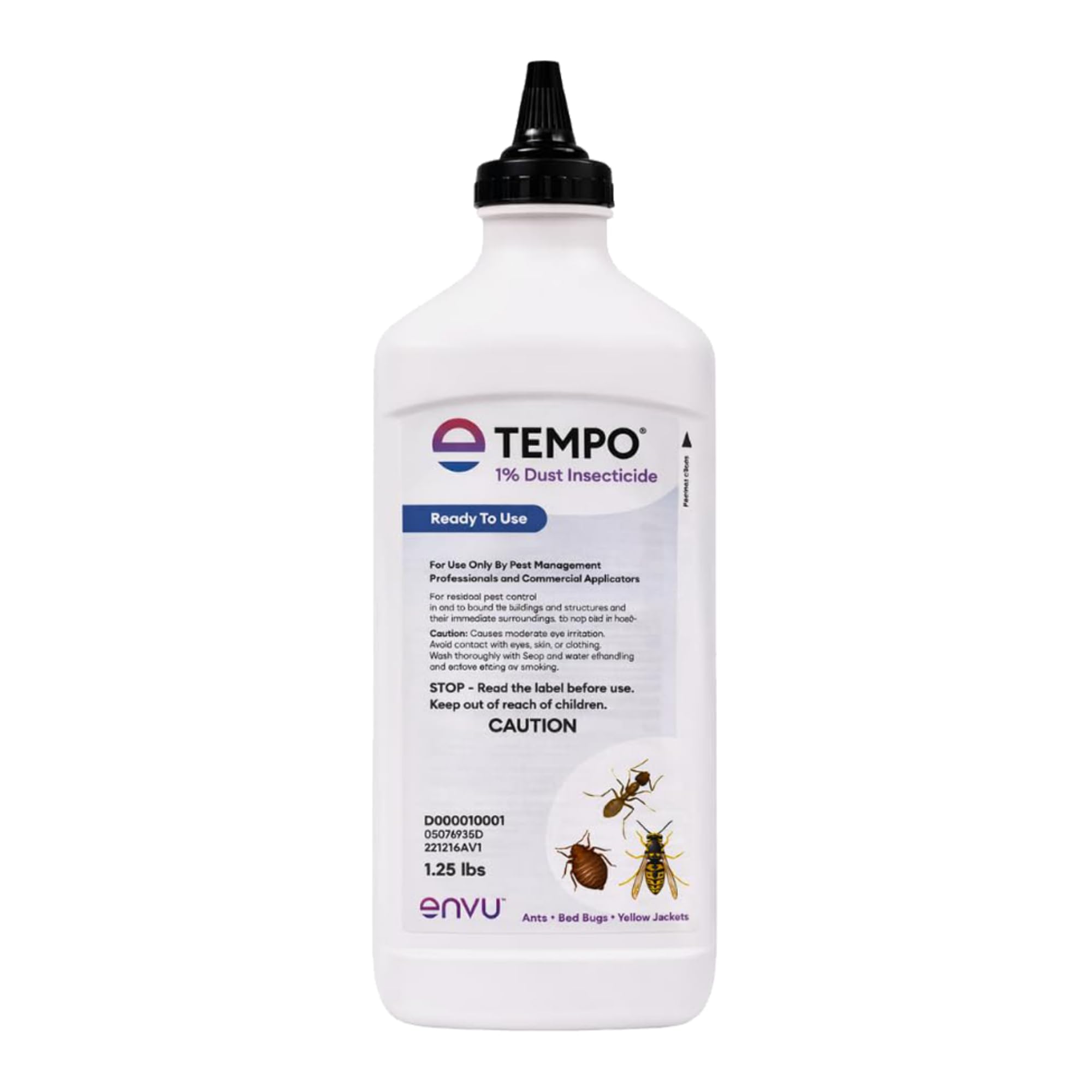
A chemical dust carries an active ingredient — Tempo uses 1% cyfluthrin, for example, and D-Fense Dust is built for water resistance and long control. These tend to knock pests down faster and they are what many people use in voids and eaves where nobody sleeps. A natural powder is diatomaceous earth, the fossilized shell material that scratches an insect’s outer shell so it dries out and dies. It is slower, but it is typically the choice for a bedroom where pets and children are nearby. Look at the label: Safer’s 4 lb bag lists 85% silicon dioxide from diatomaceous earth, while the 7 oz Safer canister lists 77.69%.
Match the container to the hiding spot
Bed bugs live in seams, screw holes, and the gap behind a baseboard. A squeeze bottle works for baseboards, but a puffer with a narrow tip lets you push powder into the crack itself. Harris includes a puffer tip precisely for that. If you plan to dust a wall void or an outlet, a longer duster with a puff of air is easier to aim. Whatever you choose, apply a light film — a heavy pile just makes a mess and does not kill any faster.
Think about the surface under the powder
A powder keeps working only while it stays dry and undisturbed. On carpet it works its way down into the fibers, which is why a vacuum with a bag or a wet vac is the tool for cleanup — a standard vacuum can be damaged by fine dust. On hard floors and along trim, a light line is enough. If the room is damp, a water-resistant dust holds up better than a plain one.
Side-by-Side Comparison
| Model | Best For | Formula | Container Size | Form | Amazon |
|---|---|---|---|---|---|
| Tempo 1% Dust Insecticide★ Best Overall | Cracks, voids and stubborn stinging insects | 1% Cyfluthrin dust | 1.25 lbs | Powder | Amazon |
| Safer Home Diatomaceous Earth 4 lbBest Value | Whole-home natural treatment | 85% Silicon Dioxide (DE) | 4 lb / 67.2 oz | Powder | Amazon |
| Safer Brand 5168 DE Powder | Small jobs and apartments | 77.69% Diatomaceous Earth | 7 oz | Powder | Amazon |
| Harris 8 oz Diatomaceous Earth | Targeted cracks with a built-in duster | 100% Diatomaceous Earth | 8 oz | Powder | Amazon |
| RobiGuard DE & Peppermint Powder | Scented natural control | Food-grade DE + peppermint oil | 1 lb / 16 oz | Powder | Amazon |
| D-Fense Dust 1 lb | Water-resistant long control | Water-resistant dust | 1 lb / 16 oz | Powder | Amazon |
| Bonide Diatomaceous Earth 1.3 lbs | Gardens, barns and grain storage | Diatomaceous Earth | 1.3 lbs / 20.8 oz | Dust or slurry | Amazon |
Detailed Reviews
1. Tempo 1% Dust Insecticide 1.25 lbs
Our pick — 4.5+★ from 200+ verified ratings; the strongest balance of quality and price.
The chemical dust that reaches inside the wall where nothing else can follow.
This is the strongest pick on the list for pure knockdown, and the reason sits in one number: 1% cyfluthrin. That is a synthetic insecticide that keeps killing for as long as it stays where you put it. Bed bugs and their eggs hide deep inside seams, screw holes, and the hollow space behind trim. A liquid spray hits the surface and dries; this powder stays in the gap and keeps working. 200+ owners have rated it 4.5+ out of 5.
What wins people over is raw effectiveness. Yellow jackets, wasps, and ants are what the review pages talk about most, and one buyer put it plainly: Work great on yellow jacket. Tried Sevin and even Delta dust it doesn’t work. Tempo work fast.. 24hr activity reduced. 48 hrs silent. The amount also goes a long way — a little fills a void, and a single 120mL application in one case ended an aggressive nest in a day. At 1.3 pounds it is 3.2 times heavier than the D-Fense Dust below, so you get a lot of dust for the same crack-and-crevice job.
The honest catch is safety. A powder this strong is not something you scatter around a bedroom you sleep in, and it is not pet-friendly — the label work belongs in voids, cracks, and outdoor nests, applied lightly and away from kids and animals. It also ships as a single bottle with no applicator included, so plan on a puffer or bellows (a squeeze tool that puffs dust into cracks) to aim it. Handle it as directed and keep it out of reach.
What makes it the top pick
- 1% cyfluthrin stays active in cracks long after sprays dry
- Works on bed bugs and stinging insects alike per the label
- A 1.3 lb bottle covers a lot of void space — little goes far
Where it asks more of you
- Not pet-friendly — keep it to voids and outdoor nests
- No duster included, so add a puffer for tight cracks
- Chemical formula means gloves and care during application
Reach for this if: you need a hard-hitting dust for wall voids, eaves, baseboard gaps, and outdoor nests.
Choose another if: the powder is going where pets and children spend their days.
2. Safer Home Diatomaceous Earth 4 lb Organic OMRI DE
The big natural bag that turns a whole house into a treated zone.
If you want to treat an entire home without chemicals, the 4 lb bag is the obvious starting point. It is 85% silicon dioxide from diatomaceous earth — a fine white powder that works mechanically rather than chemically. Insects walk through it, the sharp particles scratch their outer shell, and they dehydrate and die. Because nothing here is a poison, it is the safer choice for a nursery, a pet bed, or any room you sleep in.
The size is the whole story. A 67.2-ounce bag dwarfs the 7 oz Safer canister — a 9.6 times difference in the amount of powder — so you can line every baseboard and still have plenty left. It is also 4.2 pounds against the Tempo’s 1.3 pounds, meaning a lot more dust to spread over more rooms. The kit is OMRI listed for organic gardening and non-staining and odorless, and the label notes bed bugs and roaches dehydrate within 48 hours of contact.
Know the trade-off before you open the bag: diatomaceous earth is messy. Expect a fine haze on surfaces if you over-apply, and expect to vacuum afterward with a vac you do not mind risking — the review pages warn that a normal vacuum can be clogged by the powder. It also needs reapplication if it gets wet, and because it kills slowly, it works best alongside heat treatment rather than instead of it.
The natural-workhorse angle: this is the bag for anyone treating flooring, baseboards, and furniture who wants zero chemical residue in the room.
The practical note: one reviewer noted the powder spreads everywhere and is very hard to clean up, so apply it light and keep a dedicated vac for the job.
Best for: a chemical-free whole-home treatment where pets and kids share the space.
Look elsewhere if: you want fast knockdown in a wall void — a chemical dust gets there quicker.
3. Safer Brand 5168 Diatomaceous Earth Powder, 7 Ounces

The pint-size canister for a single apartment or one bed bug problem.
Not everyone needs a four-pound bag. For one bedroom, one apartment, or one spot under the sink, the 7 oz canister is the sensible entry point. It holds diatomaceous earth at 77.69%, close to the concentration in the larger bag, and it carries the same OMRI listing for organic gardening. The squeeze-top canister is refillable, which means you can buy a bigger bag later and pour straight into it.
Buyers report it shines on small, annoying jobs — ants near a light fixture dropping to zero, bed bugs gone within a day when paired with a steam pass, and mild infestations cleared without a pro. It also has a bonus: where a liquid insecticide can spread between attached homes, a powder stays where you put it, and one buyer credited it with saving thousands against an exterminator bill.
The canister is the whole catch. It has to be held sideways to dust a crack, and it is less precise than a pistol-grip or a puffer with a narrow tip, so you will get powder where you want it more slowly. The powder itself is also slow-acting compared with a chemical dust, so on a heavy infestation you may want to step up. Keep it dry and it holds up for months.
Why it earns its spot: the tight canister makes it the easiest one to stash in a drawer and reach for when you spot the first bug.
What to plan around: it is a light sprinkle container — for a full-house job you will be refilling fast and may find a puffer worth adding.
Ideal for: renters and small-space owners who want a starter amount they will actually finish.
Better to size up if: the problem has spread beyond one room.
4. Harris 8 oz Diatomaceous Earth Crawling Insect Killer

Pure powder with a duster built right into the bottle.
Harris strips the formula to one ingredient: 100% freshwater diatomaceous earth with no additives. That is the cleanest label of the natural group here, and it is what makes this the pick to hand a family with pets. There is no bait, no added oil, nothing to react to — just the fossil-shell powder that abrades an insect’s outer shell and dries it out. It is EPA registered under No. 3-18, and the brand has been selling pest control since 1928.
The header of the review pages is effectiveness, and the sharpest selling point in the box is the puffer. The powder duster has a narrow tip, so you can push a controlled puff straight into a crack instead of flooding a surface. Buyers use that for drywall voids, baseboard gaps, and entry points, and one noted it killed all the fruit flies in indoor plants while another cleared a doorway of critters. It is odor free, and importantly for anyone using it around the house, it is safe around dogs and cats when used as directed.
Where it asks patience: this is slow-acting, and a few users find the 8 oz bottle runs out faster than expected on a larger job. Some also report the spout occasionally jams and needs to be worked loose or bypassed. Plan on a couple of applications, and add a bigger bag if the treatment area is the whole home.
Trustworthy corner: a single-ingredient, EPA-registered dust (registered with the U.S. Environmental Protection Agency) that comes with its own applicator is tough to top for spot-treating cracks around a family home.
Room to grow: the 8 oz size is a starter amount; heavier infestations will want a refill bag on hand.
A clean fit for: pet households and anyone who wants one ingredient and no scent in the bedroom.
Think bigger if: you are treating a full home and want a bulk bag that lasts season to season.
5. RobiGuard Diatomaceous Earth Food Grade

The one powder that announces itself with a peppermint note instead of a chemical smell.
This is diatomaceous earth blended with peppermint oil, and the blend is the whole reason to pick it. Standard DE is odorless dust that gets everywhere; the peppermint turns each application into something with a fresh, clean scent, which matters a lot when you are dusting a bedroom. The powder is a 16-ounce / 1 lb container and meets food-grade standards, meaning it is free of additives and fillers and is sold as suitable around people and pets and for organic gardening.
Ants are the target reviewers mention most, and the peppermint side seems to do part of the work — one owner used it to repel ants and found it worked almost immediately with a pleasant smell, unlike a spray. Others rate the scent itself as a genuine plus, and it handles fleas and other crawling pests too. It is also a heavier 1 lb pour than the 8 oz Harris, so it lasts longer between refills for the same crack-and-crevice jobs.
The oddity worth knowing about: customers have used the mint version in the garden to keep squirrels off rose bushes, which is a gentle use rather than a bug use, but it shows how the scent travels. The finer point is that a scented powder still needs the same dry, undisturbed surface to keep working, and you still want a mask and care during close-up application. Expect to reapply over time as with any DE.
Why the peppermint earns its keep
- Food-grade DE with no additives or fillers
- Pleasant peppermint scent instead of the usual dusty smell
- 1 lb container holds more than an 8 oz starter bottle
What to budget for
- Still a fine dust — mask and care needed up close
- Odor fades over time even though the powder stays on the surface
- Scattered sprinkling wastes powder; targeted application works best
Suits you if: you want a natural dust that does not smell like one, especially in bedrooms.
Skip the mint if: you would rather have a completely unscented, single-ingredient powder.
6. D-Fense Dust 1 lb with USA Supply Gloves
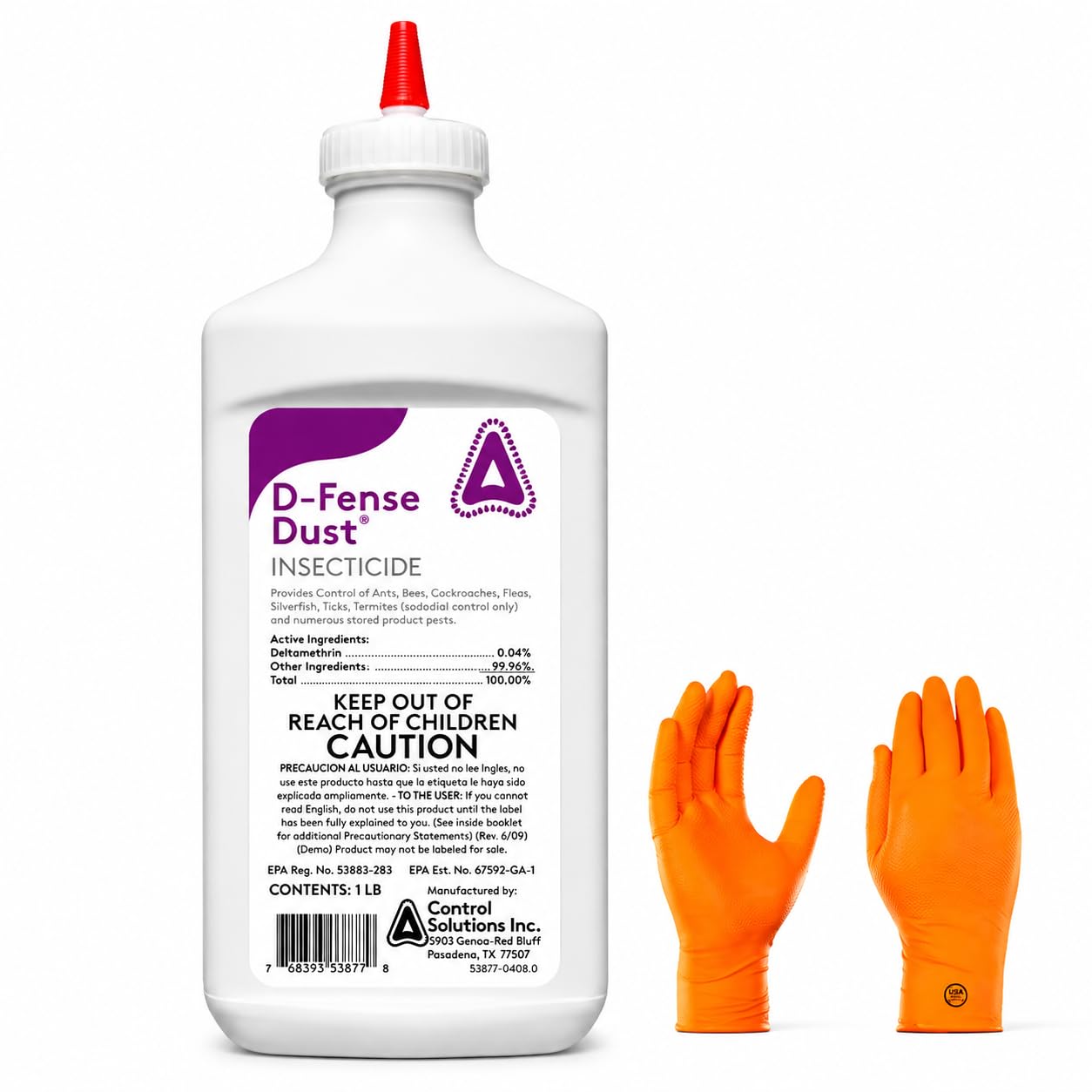
A water-resistant dust sold with gloves and a pest card for the committed DIYer.
The headline here is water resistance and an eight-month control claim — this is the dust for spots that see moisture, like a basement corner, a garage wall, or an area near plumbing where a plain DE (diatomaceous earth, a soft natural powder) would clump and stop working. It is a 1 lb / 16 oz container, and the kit ships with a pair of USA Supply gloves with ReSist technology plus a pest identification card, so you can match what you are seeing to the right treatment. At 1.3 pounds it is lighter than the 4.2-pound Safer bag, but this is a concentrated controlled dust rather than a bulk natural powder.
Here is where it lands honestly: the reviews are mixed on effectiveness. Many owners find it works — one killed a full set of wasps over several days, another took down an underground yellowjacket nest in about two days with a pump duster, and another found it reliable for keeping wasps out of eaves. Others report it did nothing for their problem at all. That spread is normal for a controlled dust that depends heavily on how and where you apply it, and it is not pet-friendly, so it belongs in voids and outdoor areas, never around animals or in a sleeping space.
Seen fairly, this is the pick for someone who wants a water-resistant, long-residual chemical dust and is willing to apply it carefully with a duster and a mask. It does not come with a duster, so add one. And if your target is a bedroom with pets, the natural picks above are the better fit.
The honest verdict: buy it for water-resistant, long-control chemical dusting in tough spots — not as a bedroom powder.
The fit note: keep it away from pets and children, and follow the label for application and disposal.
Worth it for: moisture-prone spots where a water-resistant residual matters.
Not the one if: you are treating a room shared with pets or kids.
7. Bonide Diatomaceous Earth Crawling Insect Killer, 1.3 lbs

The do-it-all DE you can dust indoors or mix into a spray for the garden.
Bonide plays a wider game than the bedroom-only powders. The 1.3 lb container lists a long roster of crawling insects — ants, cockroaches, earwigs, silverfish, beetles, slugs, millipedes, fleas, bedbugs, grasshoppers, and centipedes — and it can be applied as a dry dust or mixed into a slurry (a watery mix you spray) if you would rather spray. It is labeled for use in homes, barns, stables, and gardens, and it can go over the top while animals are present on crops and stored grain when you follow the directions.
The selling point for many is the range. Insects that contact or eat it die within 48 hours and cannot build immunity to its action, so repeat treatments keep working. Owners mention it clearing carpet mites over a couple of applications and keeping ants out of the house.
The catch most people mention is the container: it can arrive partly full, which is a common packaging complaint on this type of product. Plan on a separate duster since none is included, and if you are treating a bedroom specifically, the Harris or Safer picks are more targeted. For the yard, barn, and garage, though, this is a lot of coverage for a budget price.
Where it shines: the garden-to-garage versatility. Dust it or mix it into a spray — one container covers both.
The honest footnote: the container may not arrive full, and there is no duster in the box, so factor in an applicator.
Choose this for: farms, gardens, barns, and outbuildings where one big dust does everything.
Go with a bedroom pick instead if: the job is a mattress or sleeping area and you want a purpose-made formula.
Know the Specs
Active ingredient: cyfluthrin vs diatomaceous earth
The two families of bed bug powder work in completely different ways. A chemical dust like Tempo carries 1% cyfluthrin, which is a synthetic insecticide that attacks the insect’s nervous system and keeps working for as long as the powder stays in place. A natural powder is diatomaceous earth — the fossilized shells of tiny aquatic organisms, listed as silicon dioxide on the label. It does not poison the bug; the sharp particles scratch its outer shell and dry it out so it dies. Chemical dusts tend to knock pests down faster, while natural powders are usually the choice for bedrooms, nurseries, and homes with pets.
Particle size and application fit
Both kinds of powder only work where they land, so the way you apply matters as much as the formula. A fine dust needs a puffer with a narrow tip or a squeeze container so you can push it into a crack rather than flood the surface. A light film is the goal — a heavy pile wastes powder and is harder to clean. Because powders stop working when they get wet, a water-resistant dust is a better pick for damp spots like basements, while a plain DE suits dry bedrooms and baseboards.
Common Questions
Will a bed bug powder kill bed bugs or just keep them away?
Is diatomaceous earth bed bug powder safe around pets and kids?
How long does a powder stay effective once applied?
Will diatomaceous earth kill bed bug eggs?
How do I apply the powder without making a mess?
Can I mix diatomaceous earth into a spray?
Which pick is best for a wall void or behind an outlet?
Does a bed bug powder keep working in a damp basement or bathroom?
Can a powder reach bugs hiding inside a mattress seam?
Is a powder or a spray better for bed bugs?
The Bottom Line
For fast, hard-hitting control inside the cracks and voids where bed bugs travel, the Tempo 1% Dust Insecticide is the strongest pick here, with the label coverage to match the buzz around it. If you want a chemical-free option that is safe to dust around a whole home and family, grab the Safer Home Diatomaceous Earth 4 lb. And for pet households that want one clean ingredient with a duster built in, the Harris 8 oz Diatomaceous Earth is the one to reach for.
Dust the seams, the baseboards, the screw holes, and the voids, keep the layer dry, and be patient — most of these powders take about 48 hours to finish the job. Pair the dust with a vacuum and a steam pass to cover the seams and carpet fibers it cannot reach.
How we choose
We do not accept paid placement. Every pick is matched to a real buyer and a real use-case; we do not hands-on test units.
Sources
Specifications: manufacturer listings and product documentation. Review insights: verified customer reviews, as of October 2026. Pricing: not shown on this page (it changes often); check the current price via the retailer link.
As an Amazon Associate, My Heart Lives Here earns from qualifying purchases. This does not affect which products we feature.