Heads up: This post contains affiliate links. As an Amazon Associate I earn from qualifying purchases, at no extra cost to you. Learn more
Specs are compiled from manufacturer listings and verified buyer reviews and can change over time — please confirm the key details on the product page before buying.
You want DSLR-grade photos without hauling a brick around your neck — and the mirrorless bodies here are the shortlist that actually delivers that. A point and shoot mirrorless camera is simply a compact body with a big sensor and changeable lenses: you get pocketable size plus the option to grow. This guide covers 11 real bodies, from vlogging-first picks to full-frame hybrids.
This guide is built by comparing the manufacturers’ published specifications and the patterns across verified customer reviews, so you get each pick’s real strengths and trade-offs instead of marketing spin.
From autofocus speed to sensor size, every pick below was weighed on the specs that matter most when shopping for the best point and shoot mirrorless camera.
Top Picks


How To Choose The Best Point and Shoot Mirrorless Camera
Three things decide whether you will actually enjoy the camera a year from now.
Sensor size first
A larger sensor catches more light, so full-frame bodies handle dim rooms better than APS-C or Micro Four Thirds ones — but they also mean bigger lenses.
Autofocus system
Phase-detection autofocus (the kind that judges distance) locks onto moving kids and pets faster than contrast-only systems, so check the point count and subject tracking.
Body size and stabilisation
In-body image stabilization (a sensor that physically shifts to cancel handshake) lets you shoot handheld in low light, and a truly compact body is the one you carry.
Side-by-Side Comparison
| Model | Best For | Sensor / Resolution | Autofocus Points | Bit Depth | Amazon |
|---|---|---|---|---|---|
| Sony Alpha a6400★ Best Overall | All-round stills | APS-C / 24.2MP | 850 | 14 Bit | Amazon |
| FUJIFILM X HalfPocket Fun Pick | Fun pocket shooting | 18MP effective | — | — | Amazon |
| Nikon Z 30 (16-50mm)Vlog Starter | Vlogging and streaming | APS-C | 209 | 14 Bit | Amazon |
| Sony ZV-E10 | Creator video | APS-C / 24.2MP | 425 | 14 Bit | Amazon |
| OM SYSTEM OM-5 Mark II | Outdoor adventures | Micro Four Thirds / 20.4MP | 121 | 12 Bit | Amazon |
| OM SYSTEM E-M10 Mark IV | Light travel kit | Micro Four Thirds / 20MP | 121 | 12 Bit | Amazon |
| Nikon Z 6II | Full-frame hybrid | Full-frame / 24.5MP | 273 | 14 Bit | Amazon |
| Panasonic LUMIX G85 | Budget 4K value | Micro Four Thirds / 16MP | 49 | 16 Bit | Amazon |
| Canon EOS R8 | Full-frame action | Full-frame / 24.2MP | — | 10 Bit | Amazon |
| Canon EOS R10 Kit | Beginner-friendly zoom range | APS-C / 24.2MP | 651 | 16 Bit | Amazon |
| LUMIX S5II | Serious video work | Full-frame / 24.2MP | — | 10 Bit | Amazon |
Detailed Reviews
1. Sony Alpha a6400 APS-C Mirrorless Camera Body 4K Black
Our pick — 4.5+★ from 600+ verified ratings; the strongest balance of quality and price.
The focus-chasing speedster that nails a sprinting toddler without a second try.
The number worth knowing here is 850 — that is how many autofocus points this body spreads across the frame. Plain English: the camera can track a moving subject almost anywhere in your shot, not just the middle. Sony claims a 0.02 sec focus lock, and the tiltable LCD flips up for vlogging or down for overhead shots.
Burst shooting runs to 11fps at 24.2MP, so a kid blowing out birthday candles gives you real choices instead of one blurry frame. The 14-bit colour depth keeps gradients smooth in sunsets. Landscapes and portraits come out crisp, and the crowd favorite verdict — 4.5+ stars across 600+ ratings — backs that. What wins people over is build quality above all, with sharp image quality close behind.
The catch: it ships as a body only, so you need an E-mount lens before you shoot anything. The menu system splits opinion too — some find it fiddly.
What earns the top spot
- 850 autofocus points cover 84% of the sensor
- 11fps at 24.2MP for fast action
- Tiltable LCD suits both vlogging and stills
Before you click buy
- Body only — no lens in the box
Go for it if: you want the fastest-tracking stills camera here and already own E-mount glass.
Hold off if: you need a lens in the box to shoot on day one.
2. FUJIFILM X Half Mirrorless Camera – Charcoal Silver
A coat-pocket camera built to make photography feel like play again.
This one is about feel, not specs: dial-based controls, a retro film-camera body, and 26 analog-inspired film and filter options. It prints straight to a compatible Instax Mini printer or shares through the dedicated app. The 18MP effective resolution and 100-6400 ISO range cover everyday daylight work.
Fun is the loudest theme in the reviews, followed by picture quality — and it genuinely slips into a coat pocket.
Think of it as a second camera for people who already own a serious body.
Where it wins: portability and the printing loop — shoot, print, hand someone a physical photo.
Where it asks patience: 2-hour battery life, so pack a spare for a full day out.
Reach for this if: you want a stylish everyday carry that prints.
Look elsewhere if: you need one camera to do everything professionally.
3. Nikon Z 30 with Wide-Angle Zoom Lens
Nikon’s creator kit that streams over USB-C without extra hardware.
You get a 16-50mm zoom in the box — wider reach than the 12-60mm on the LUMIX G85 — plus 4K video with eye tracking for people and pets. The flip-out touchscreen and built-in stereo mic with adjustable sensitivity make self-recording simple, and a red REC light tells you when you are live.
209 autofocus points and 14-bit depth keep stills clean, and the quality story is strong. Battery life is the real-world snag: it will not run while charging over that same cable. A few units have also stopped working early, so buy with a return window in mind.
The NIKKOR Z mount means you can add fast primes later without replacing the body.
Why creators like it
- Lens included, so you shoot immediately
- Plug-and-play webcam over USB-C
The honest snag
- Battery drains and will not charge while recording
Your match if: you are starting a channel and want one box that covers lens, mic and screen.
Wrong turn if: long shoots without a spare battery are your norm.
4. Sony ZV-E10 APS-C Mirrorless Camera Body Black
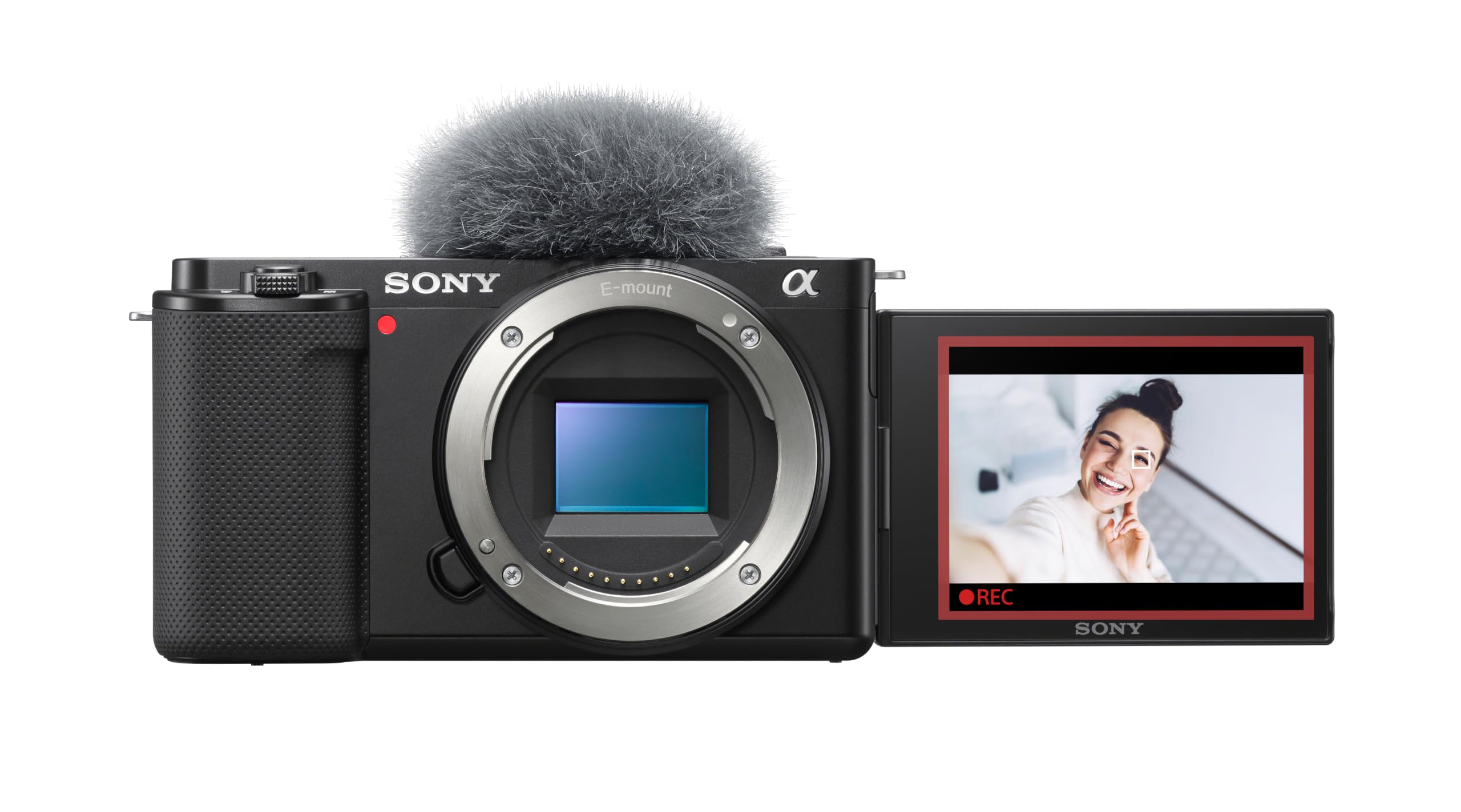
Built for the talking-head creator who wants blur without a lens swap.
Its 4K footage is oversampled from 6K with full pixel readout and no pixel binning — meaning the camera reads every pixel, so detail stays crisp. The Background Defocus button toggles shallow depth of field in one press, and the Product Showcase setting snaps focus from your face to whatever you hold up.
That 24.2MP APS-C sensor holds more resolution than the Panasonic LUMIX G85’s 16MP, and its 14-bit depth outruns the OM SYSTEM E-M10 Mark IV’s 12-bit. Livestreaming works with a single USB cable and no extra software. Reliability is the one mixed signal — most units run fine, a few have quit after a couple of months.
The real pull: 425 autofocus points with eye detection, so focus sticks to a moving face while you talk.
Plan around this: body only — budget for an E-mount lens alongside it.
Pick this if: streaming and solo video make up most of what you shoot.
Skip the line here if: you mostly shoot stills and need a viewfinder.
5. OM SYSTEM OM-5 Mark II with 12-45mm PRO Lens
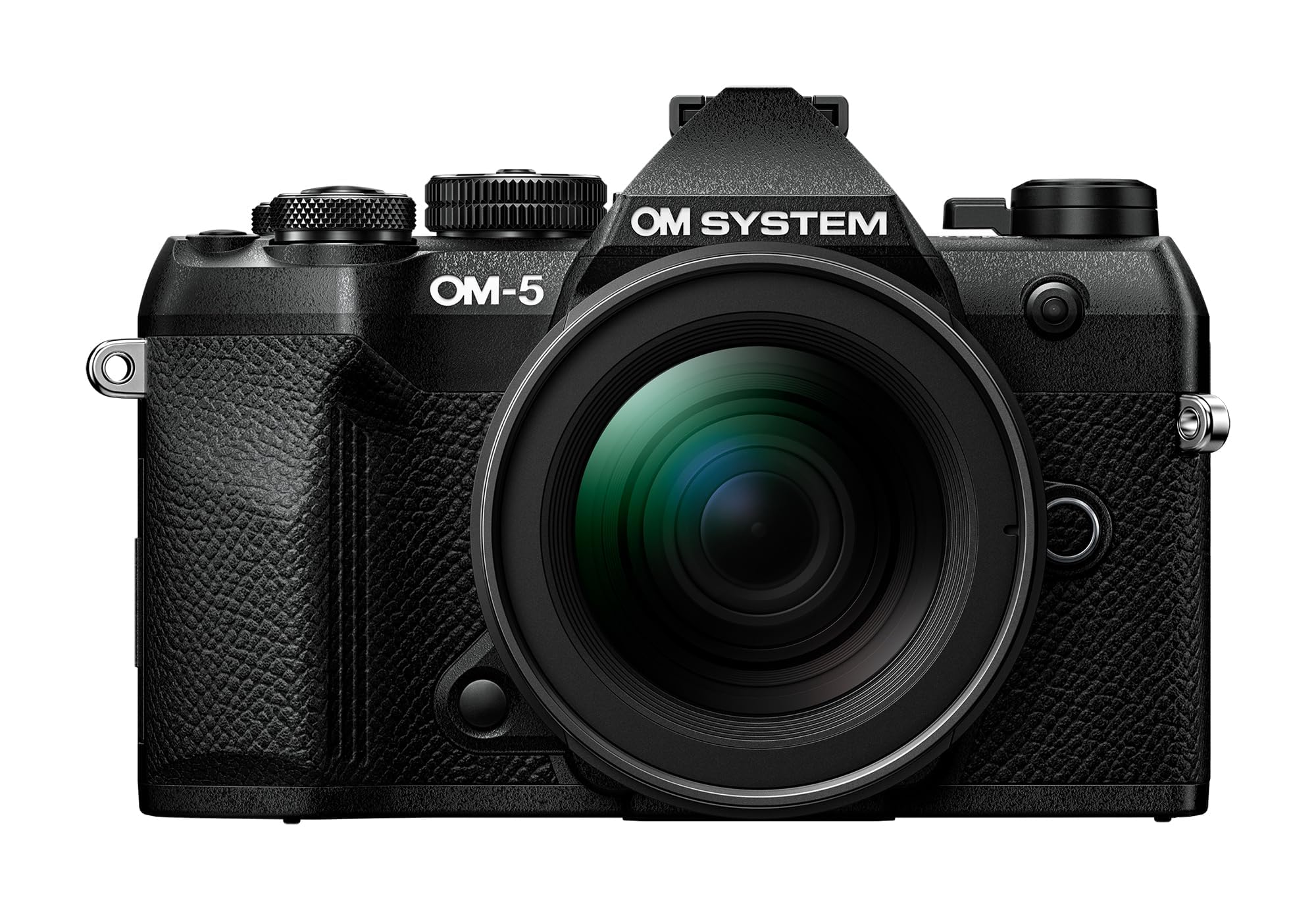
A featherweight adventure body rated to shrug off rain and dust.
At 0.82 lbs for the body alone with IP53 dust and splash protection, this is the one you take up a wet trail. The 20.4MP Live MOS sensor pairs with 5-axis in-body stabilization rated to 7.5 stops of compensation with a compatible Sync IS lens — that means handheld shots stay sharp when light drops. Freezeproof down to -10°C (14°F) backs the outdoor pitch.
A dedicated computational-photography button open up Handheld High Res Shot up to 50MP and Live ND up to ND16 in camera. The 121-point cross-type autofocus is reliable for tracking, and the bundled 12-45mm F4.0 PRO lens holds a constant aperture across the zoom.
One caution: the autofocus point count is the lowest of the phase-detect bodies here, so fast sport is not its game.
Made for: hikers and travelers who shoot in weather other cameras fear.
Not your body if: sideline sports and speeding subjects are the priority.
6. OM SYSTEM Olympus E-M10 Mark IV with 14-42mm EZ Kit

The beginner-friendly kit with a flip-down screen that turns selfie mode on automatically.
Inside is a 20MP Live MOS sensor with in-body 5-axis stabilization rated to 4.5 shutter speed steps of compensation — enough to save handheld shots in a dim restaurant. It carries 16 art filters (31 types) including an Instant Film look, plus a 3.0x optical zoom on the bundled 14-42mm lens.
Weight and size are what buyers bring up again and again, and the light body makes a whole-day carry painless. The one caveat is the honest one in the reviews: several reports of units that would not turn on or failed to recognize a lens, so keep the receipt handy.
The 121 autofocus points trail the Sony a6400’s 850 by a wide margin — fine for portraits, weaker for action.
Best fit for: first-time buyers who want a light kit that does not intimidate.
Second thoughts if: you plan to shoot moving subjects or need rock-solid reliability from the start.
7. Nikon Z 6II Full-Frame Mirrorless Stills/Video Hybrid

Two card slots and full-frame depth for people who shoot events for keeps.
The 24.5MP backside-illuminated sensor pulls detail out of low light, and 14 fps handles fast action. Video runs 4K UHD 60p with full pixel readout. Dual slots take CFexpress/XQD plus UHS-II SD — so a wedding shoot can back up every frame as it happens.
273 phase-detect points sharpen focus over its predecessor, and the buffer is larger too. USB-C constant power keeps livestreams and timelapses alive. Performance draws near-universal praise, and the body works with roughly 360 F-mount lenses via the FTZ adapter (sold separately).
What sellers will tell you: it is the safest full-frame hybrid for paid work because nothing is lost if one card fails.
The trade-off: full-frame glass and a body this capable weigh more than the APS-C picks above.
Made for: event and wedding shooters who cannot risk a lost card.
Look past it if: you want a camera to carry in a jacket pocket.
8. Panasonic LUMIX G85 4K Digital Camera with 12-60mm Lens

The value champ that pairs a 12-60mm zoom with in-body stabilization.
Its 16MP Micro Four Thirds sensor drops the low-pass filter, which Panasonic says gives a near 10 percent boost in fine-detail resolving power. The 12-60mm lens covers a wide everyday range, and 5-axis dual image stabilization keeps handheld 4K steady even in low light. The 2360K-dot OLED viewfinder is a rare find at this tier.
Buyers rate picture quality above DSLR standards, and value comes up constantly as the reason they picked it. Autofocus is the honest weak point — slow to lock on quick subjects, so it is best for landscapes and slower scenes.
Where your money goes
- 16-bit depth — the highest in this list
- 4K video plus 4K Photo at up to 30fps
- Everything in one kit, ready to shoot
What to expect
- Autofocus lags behind the Sony and Canon picks
Choose it if: you want the most complete kit for the least outlay.
skip it if: fast-moving kids or pets are your main subject.
9. Canon EOS R8 Mirrorless Camera (Body Only)

Canon’s lightest full-frame body pushes 40 frames per second.
That burst rate at 40 frames per second makes fast action feel easy, and the 24.2MP CMOS sensor with DIGIC X processing keeps detail clean. Dual Pixel CMOS AF II covers the whole frame with 1,053 AF zones and auto-detects people, animals, vehicles, aircraft, trains, and horses. Uncropped 4K at 60fps is oversampled from 6K.
The 0.39-inch OLED viewfinder refreshes up to 120fps, and the 3.0-inch vari-angle touchscreen rotates for overhead or low angles. Autofocus and value both score high in the reviews, though battery life is the recurring gripe — it drains quickly, so carry a spare on a long day.
The standout number: 40 frames per second with subject tracking, faster than any other full-frame body here.
The daily catch: plan on two batteries for a full shooting day.
Right for you if: sports, wildlife, and fast family moments are the goal.
Not for you if: you want one charge to last all day.
10. Canon EOS R10 Mirrorless Camera RF-S18-150mm Lens Kit

One lens that reaches from wide room shots to distant details.
The bundled RF-S18-150mm covers a huge range, so you leave the bag at home. Inside, a 24.2MP APS-C sensor with DIGIC X processing keeps photos crisp, and 651 phase-detect autofocus points with subject detection track well. Mechanical shutter bursts run to 15 fps. The anti-smudge LCD and firm grip make handling confident.
Intuitive controls and beginner-friendly operation are what buyers highlight, along with the lightweight body. Recent firmware expands subject detection to aircraft, trains, and horses. Battery uses the LP-E17 pack, and USB power lets you charge it inside the camera.
Value is the split note: some feel the range earns its tier, others want more for the outlay.
Fits you if: you want one body and one lens that handles birthdays to wildlife.
Think twice if: you plan to buy multiple lenses and want the cheapest way in.
11. LUMIX S5II Full Frame Mirrorless Hybrid Camera
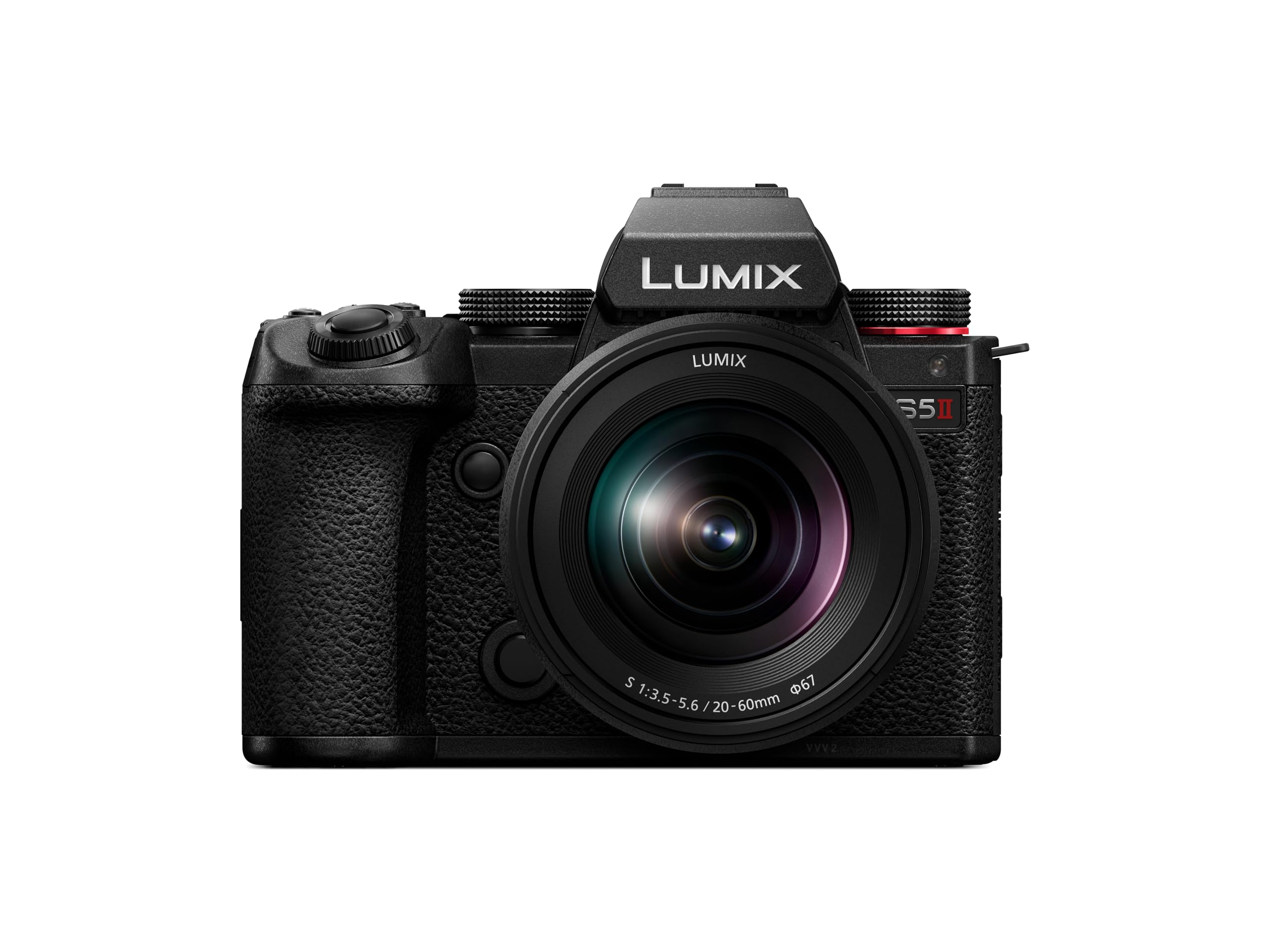
Unlimited recording and 6K Open Gate for creators who never want the timer to blink.
A 24.2MP full-frame CMOS sensor with Phase Hybrid autofocus keeps subjects locked even in bad light and tracks many moving objects. Active I.S. stabilizes walking shots. The 14+ stop V-Log capture covers a broad dynamic range, and REAL TIME LUT turns color grading into an in-camera step. The heat-dispersion fan behind the unlimited 6K 30p Open Gate recording keeps the body compact.
This is the video-first body on the list — stills take a back seat to its recording stamina. It arrives as a body only, so an L-mount lens is a separate purchase.
The one that never overheats: a built-in fan and heat sink mean long shoots keep rolling.
What to plan for: no lens in the box, and this is the priciest tier of the group.
Built for: videographers who record long takes and want full-frame colors.
Wrong buy if: photos are your priority and you want something light.
Know the Specs
Autofocus points tell you how many spots a camera can check for focus — more points, like the Sony a6400’s 850, mean better tracking of moving subjects. Sensor size controls low light: full-frame bodies catch more light than APS-C or Micro Four Thirds. Bit depth is how much colour detail each pixel records — 14-bit files give you more room to edit shadows than 10-bit. And battery life, often overlooked, decides how long you shoot before a swap.
Common Questions
Is a mirrorless camera as good as a DSLR?
Do I need a lens for the Sony a6400?
Which body handles low light best?
The Bottom Line
For most shooters, the point and shoot mirrorless camera to buy is the Sony Alpha a6400, because its 850 autofocus points and 11fps burst give you the fastest reliable focus in the smallest body. If video is your main job, grab the Sony ZV-E10 for its 6K-oversampled 4K and creator buttons. And for weather-sealed outdoor work, the OM SYSTEM OM-5 Mark II is the one to reach for.
How we choose
We do not accept paid placement. Every pick is matched to a real buyer and a real use-case; we do not hands-on test units.
Sources
Specifications: manufacturer listings and product documentation. Review insights: verified customer reviews, as of November 2026. Pricing: not shown on this page (it changes often); check the current price via the retailer link.
As an Amazon Associate, My Heart Lives Here earns from qualifying purchases. This does not affect which products we feature.