Heads up: This post contains affiliate links. As an Amazon Associate I earn from qualifying purchases, at no extra cost to you. Learn more
Specs are compiled from manufacturer listings and verified buyer reviews and can change over time — please confirm the key details on the product page before buying.
You can still buy a phone that grows with you. The trick is picking one with a microSD tray you can feed cheap cards into, instead of paying the maker’s premium for a bigger internal drive you can never change. This list covers nine open up phones that take a microSD card or carry huge built-in space instead — sorted by what they genuinely do best, so you can match one to your carrier bands and budget tier.
This guide is built by comparing the manufacturers’ published specifications and the patterns across verified customer reviews, so you get each pick’s real strengths and trade-offs instead of marketing spin.
Some of these have a physical tray for a card, and some carry enough onboard space that the slot stops mattering. Every pick below is judged on internal storage, card-slot type, battery capacity, and carrier band support. Expect to finish this read knowing exactly which phones with sd card slot fits your pocket and your carrier.
Top Picks
How to Choose the Best Phones With SD Card Slot
Most buyers start with the gigabyte number on the box. That is the wrong place to start when a card slot is the whole point. A 128GB phone with an open microSD tray outlasts a 512GB phone the day you fill it, because a card costs a fraction of the internal upgrade and swaps in a minute. Two things decide whether that actually works out for you: whether the slot is shared with your second SIM card, and whether the phone will read a big card at speed.
Is the card slot shared with a SIM?
A shared slot means the tray holds two phone lines or one line plus a memory card — not both. If you only carry one line, a shared tray is a non-issue: the card goes in and stays. If you juggle a work number and a personal one, a shared tray forces a real decision. Some phones sidestep this by using an eSIM for the second line, which leaves the physical tray free for your card.
How much internal storage you genuinely need
Apps install to internal memory, never to the card, so build in headroom for updates and games. A card is for photos, videos, downloaded music, and offloading files. That means an 128GB internal drive plus a card is a sane pairing for most people, while 256GB or 512GB internal on a phone with no slot keeps you in range longer before you hit a wall.
Carrier bands decide whether the phone works at all
An open up phone is only open up on paper if the network in your area does not recognize it. International models commonly work fine on one carrier and fail on another, so check the radio bands in the listing against the carrier you actually use. Several picks here list the exact LTE and 5G bands they support for this reason — read that line before you order, not after.
Battery capacity in real terms
Battery capacity in milliamp-hours (mAh) is the size of the tank. A 7,300 mAh cell is a notably big tank for a phone, while something in the 4,000 to 5,000 mAh range is the everyday norm. Bigger capacity buys you more screen-on time, but a high-refresh display and heavy camera use still drain any phone fast.
Side-by-Side Comparison
| Model | Best For | Internal Storage | Battery Capacity | Carrier Support | Amazon |
|---|---|---|---|---|---|
| OnePlus 15★ Best Overall | All-day endurance and top-tier speed | 512GB | 7,300 mAh | open up 5G | Amazon |
| Google Pixel 10aBest Battery Life | Battery that reaches a second day | 256GB | 4,300 mAh | Google Fi, Verizon, T-Mobile, AT&T | Amazon |
| Google Pixel 10Best Camera Pick | Camera-first everyday use | 128GB | 4,970 mAh | Google Fi, Verizon, T-Mobile, AT&T | Amazon |
| Nothing Phone (3) | Distinctive design and quad cameras | 512GB | 5,150 mAh | AT&T and T-Mobile; limited Verizon | Amazon |
| Samsung Galaxy Z Fold5 | Big screen for work and streaming | 512GB | 4,400 mAh | open up, US version | Amazon |
| Apple iPhone 13 Pro (Renewed) | iOS on a tighter budget | 256GB | 3,095 mAh | open up | Amazon |
| Samsung A26 5G | Expandable storage on a budget | 256GB + microSDXC | 5,000 mAh | International; T-Mobile new activations | Amazon |
| Motorola Edge 2025 | Durable all-carrier daily driver | 256GB | 5,200 mAh | Verizon, AT&T, T-Mobile | Amazon |
| BLU Bold N4 5G | Two screens on the tightest budget | 512GB | 5,000 mAh | T-Mobile, Metro PCS | Amazon |
Detailed Reviews
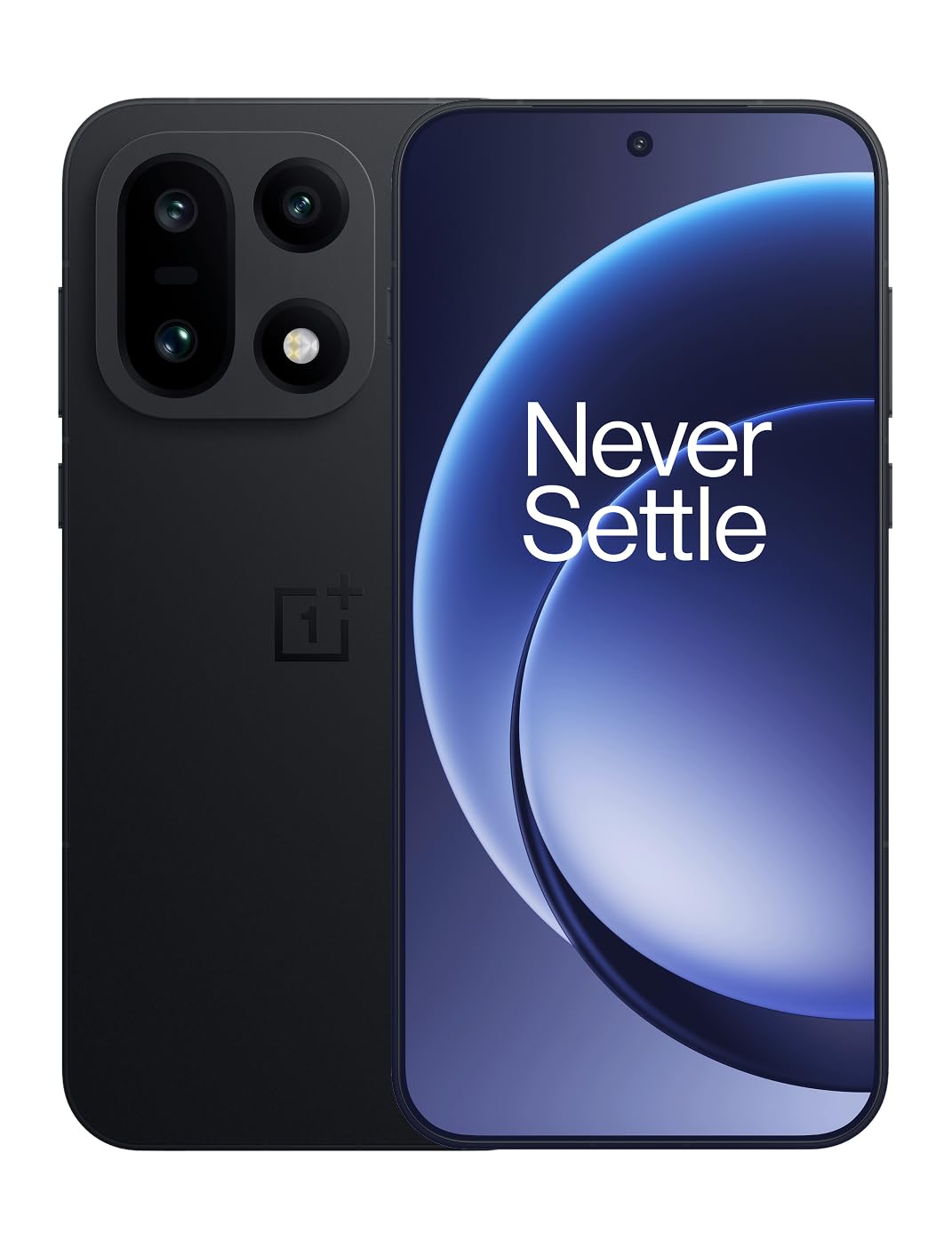
1. OnePlus 15 512GB
Our pick — 4.5+★ from 250+ verified ratings; the strongest balance of quality and price.
The phone that stopped worrying about a charger and packed half a terabyte instead.
The headline here is stamina, not the camera. A 7,300 mAh battery is one of the largest cells you will find in a mainstream phone — the Motorola Edge 2025, by comparison, carries 5,200 mAh — so this is the pick for anyone who resents hunting an outlet by mid-afternoon. It gets that endurance without going slow, thanks to a Snapdragon 8 Elite Gen 5 processor paired with 16GB of RAM.
Storage is the other half of the story. You get 512GB built in, and 16GB of RAM means app switching and big game loads stay fluid instead of stuttering. The 6.78-inch AMOLED display runs at 165 Hz, a refresh rate that redraws the screen 165 times a second — scrolling and fast-paced games look liquid-smooth rather than smeary. The triple camera array is 50MP across wide, ultra-wide, and telephoto, so you get real zoom reach instead of a digital crop.
The catch is the reason most people end up here: there is no memory card slot in the published spec list. You are buying 512GB of fixed internal space, and that is your ceiling. For a lot of buyers who want expandable storage, that shift is exactly the trade — onboard room so large you never need a card, in exchange for the freedom to add one later. If swapping cards is a hard requirement, look further down this list.
Where the OnePlus 15 earns its top spot
- 7,300 mAh cell for genuinely long days between charges
- 512GB internal plus 16GB RAM means no storage anxiety from the start
- 165 Hz AMOLED keeps motion crisp and scrolling smooth
- IP66/IP68/IP69 and IP19K dust and water ratings for everyday knocks
What you give up
- No card slot — the internal drive is your only storage
- Premium-tier spend for the endurance and speed
Choose it for: heavy use where charging twice a day is not an option and 512GB covers you for years.
Pass on it if: you want a tray you can feed a cheap card into later.
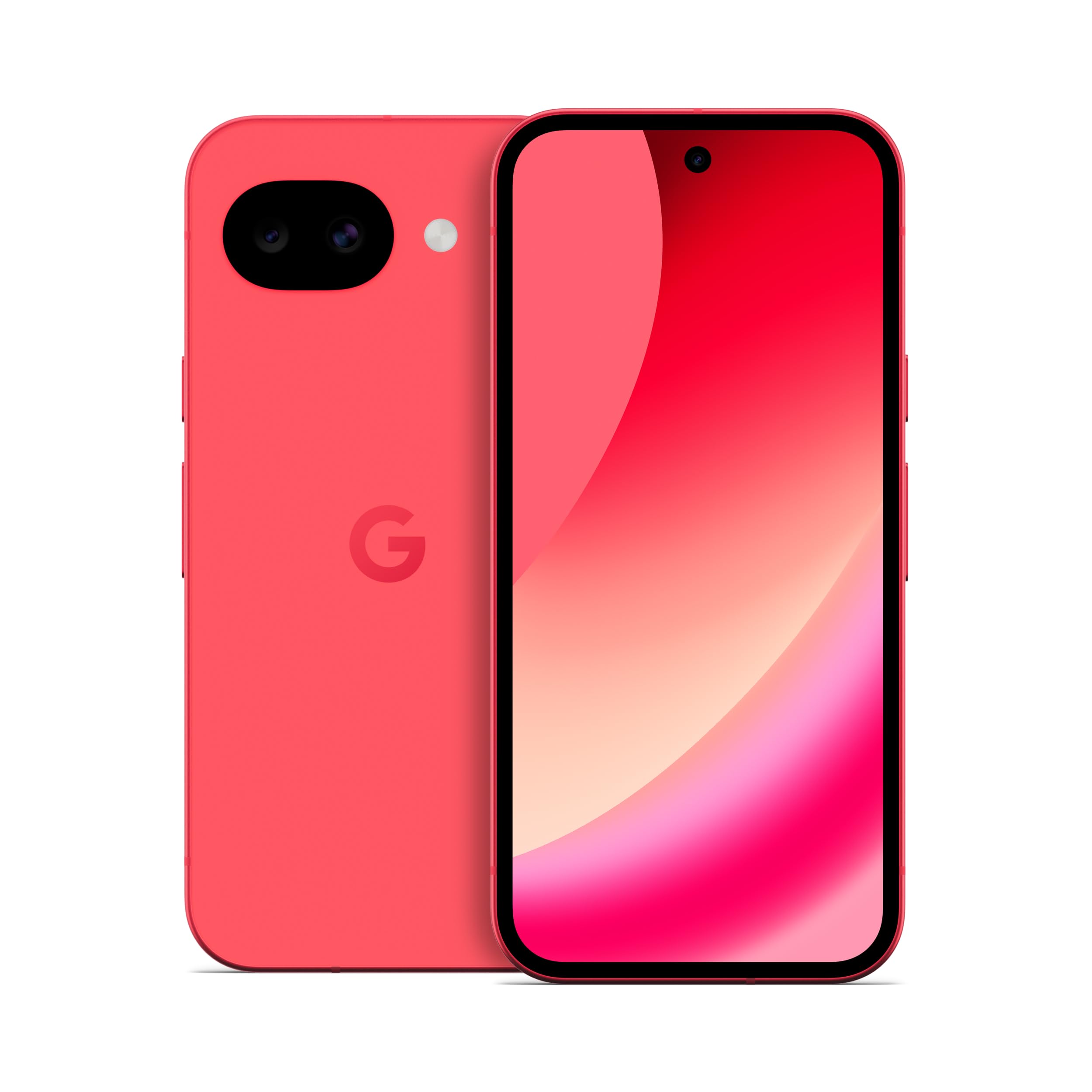
2. Google Pixel 10a 256GB
Google’s answer for the person who forgets the charging cable and does not miss it.
Start with the number on the box: 30 hours of rated battery life and up to 30 hours of talk time. In practice owners describe it running a day and a half comfortably on a single charge, which is the sort of cushion that turns a phone from a daily chore into something you top up every other night. It does that with a 4,300 mAh cell, showing that the chip and the screen do as much of the work as raw capacity does.
The display is where the value lands. It is an Actua panel rated at 3,000-nit peak brightness — nits are a measure of how bright the screen can get, and 3,000 is enough to read comfortably in direct summer sun on a car dashboard. Scratch-resistant Corning Gorilla Glass 7i covers it, and an IP68 rating means it survives a dunk in the rain or a dropped-in-the-sink moment. Rounding it out is Gemini built in, plus a 256GB drive that gives you room before you ever think about storage.
Reach for this over the Pixel 10 if battery is your daily pain point. The 10a carries the longer endurance rating between the two on paper, and its photos lean on the same Google camera processing that keeps portraits clean and colours natural. The honest caveat is that this is not a card-slot phone in the traditional sense; the 256GB internal drive is what you get, and that is the focus here — generous onboard room rather than a tray for expansion.
The value read: what wins people over is just how much phone lands in the mid-to-premium band — a bright 3,000-nit display, IP68 protection, and 30-hour endurance in one package. Functionality is the single most discussed theme across its reviews, and the tone is broadly approving rather than mixed.
The one honest wobble: performance is the topic that splits opinion, with a minority describing units that would not stay working. Sized against the wider feedback, most buyers simply plug it in and use it.
Right fit: a two-day charge cycle and an outdoor-readable screen matter more to you than a card tray.
Mismatch: you insist on removing your storage card and moving it between phones.
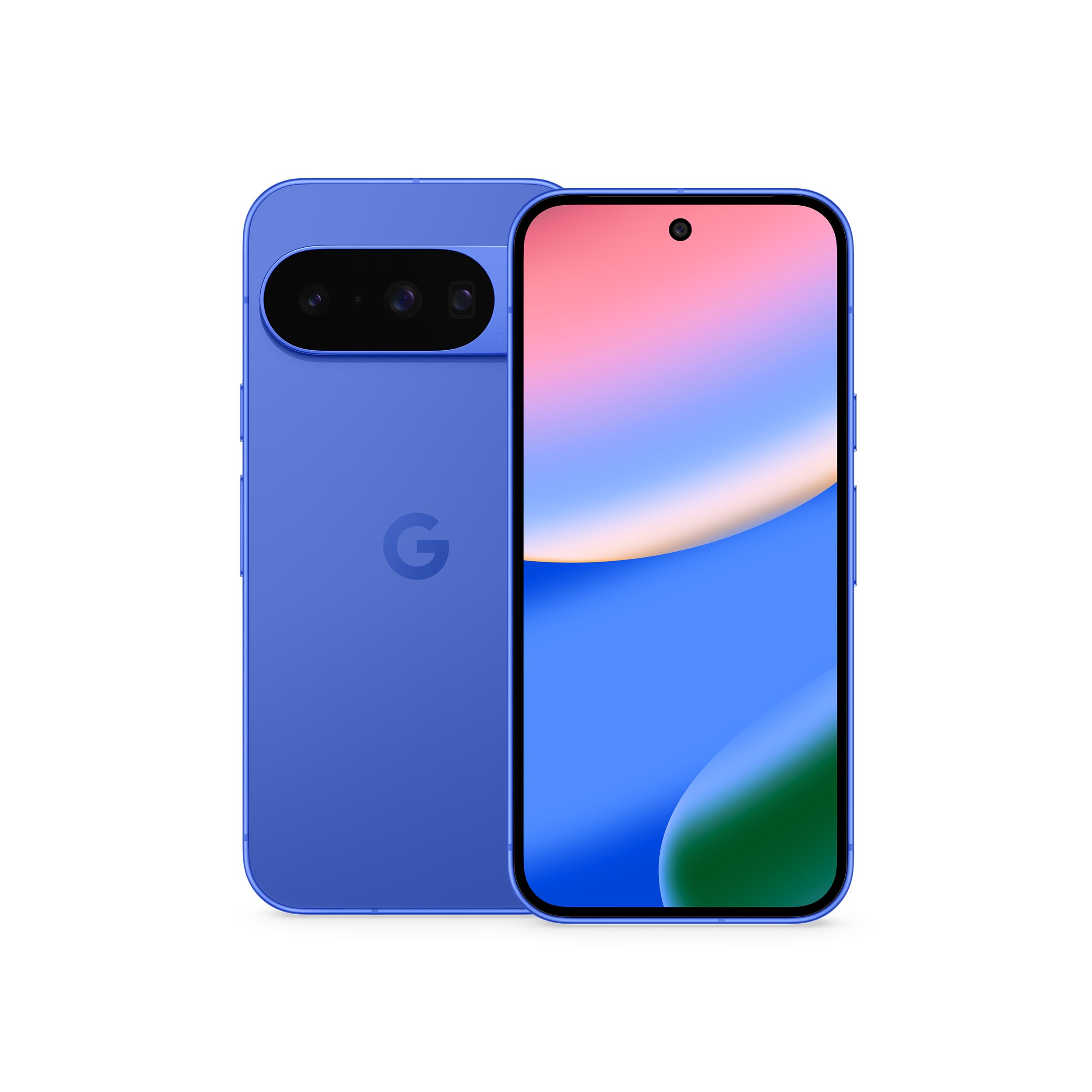
3. Google Pixel 10 128 GB
The everyday Pixel whose zoom reach does the heavy lifting for photos.
A new 5x telephoto lens anchors the triple rear camera system here, and it reaches out to up to 20x Super Res Zoom. In plain terms, that is real optical magnification for school plays, sports stands, and far-off signs — then software fills in beyond that. Night Sight keeps low-light shots usable without a flash, and Camera Coach is an on-screen helper that suggests how to frame your shot.
Under that sits Google Tensor G5, the phone’s processing chip, and Gemini built in for on-device AI help. The 4,970 mAh battery is rated for 21 hours of talk time, and the Actua display hits 3,000-nit peak brightness so the screen stays readable in daylight. Corning Gorilla Glass Victus 2 handles scratches and an IP68 rating covers dust and water. Storage is 128GB internal, which is the smallest drive on this list and the reason to weigh your photo habit before choosing it.
Compare it with the Pixel 10a above and the split is clear: the 10 brings the 5x telephoto lens, while the 10a brings the longer battery rating. Which one wins depends on whether you shoot more than you scroll. If you take hundreds of pictures a month, the 128GB drive is the honest limit to plan around — an argument for cloud backups or for a different pick with more room.
What owners reward: camera quality is praised widely, with resolution and low-light shots drawing the most approving words. Phone quality overall is the most-discussed theme, and reviewers describe it as an excellent buy rather than a compromise.
Plan the storage: 128GB fills faster than you think once 4K video and a full photo library land on it — budget for cloud sync or offload to a computer.
Best for: photographers who want Google’s zoom and image processing without stepping up a tier in size.
Look elsewhere if: a 128GB ceiling feels tight for your media habits.
4. Nothing Phone (3) 512GB

A phone that lights up when someone calls, and shoots with four 50MP sensors.
The Glyph interface is the part nobody else offers. Instead of a silent notification dot, the back of the phone runs a light matrix that animates for calls, NFC taps, and a set of little light-based mini games — notifications you can read across a room without touching the screen. Design carries real weight in what draws people to it, and appearance is one of the things owners respond to most.
The camera hardware is serious for the tier: four 50MP sensors covering main, periscope zoom, ultra-wide, and the front selfie camera. That means the wide and the zoom both get full-resolution sensors rather than a token drop to a lower megapixel count. The 6.67-inch 1.5K AMOLED flex display runs at 120 Hz with adaptive refresh, and Nothing lists a 4,500-nit peak brightness alongside an IP68 rating. Power comes from a 5,150 mAh battery with 512GB of internal storage.
Carrier support needs a careful read before you buy. It is fully documented for AT&T and T-Mobile bands, while Verizon is a limited case that requires whitelisting your device’s IMEI through their customer service first — and Nothing does not recommend it on that network. If you are on either of the two supported carriers, that caveat is a non-issue. If Verizon is your carrier, this pick is the wrong fit for you, full stop.
Why the Nothing Phone (3) stands out
- Four 50MP cameras give every lens real resolution
- 512GB of internal storage handles years of photos and video
- Glyph Matrix turns notifications into something you can see at a glance
- IP68 protection and a bright 1.5K AMOLED display
Where it needs a caveat
- Verizon needs manual IMEI whitelisting and is not recommended by the maker
- Functionality is strong overall but a minority report units that stop working
Snap it up if: you are on AT&T or T-Mobile and want a phone that does not look like anything else on the table.
Skip the idea of it if: Verizon is your network — the setup friction is built into the listing.
5. SAMSUNG Galaxy Z Fold5 512GB

A tablet that folds into a pocket, with 512GB already aboard.
Unfolded, this is a 7.6-inch interior screen and a 6.2-inch cover display outside. That is the whole pitch, and it is a good one for anyone who reads long documents, streams shows on a tray table, or runs two apps side by side — you can drag a photo straight into a text message while a shopping site stays open in the other half. The S Pen works on the big panel for notes and markup.
It is built to fold without flinching at ordinary life, with Gorilla Glass Victus 2 on the outside and an IPX8 water resistance rating for a dunk. The 4,400 mAh battery backs the two screens, and the Snapdragon chip keeps the Flex Mode — a half-folded stance that props the phone up for hands-free video — running smoothly. Storage lands at 512GB internal, which is plenty of room for a travel-heavy routine.
The trade-offs here are the ones a foldable always brings. Durability is the topic that splits feedback most, with the inner screen taking particular attention, so a case and some care are part of the deal. Battery life is another mixed point — a 4,400 mAh cell has to feed two displays, so heavy users will notice it. Neither kills the appeal if you want the big screen; both are what you accept for it.
The big-screen case: productivity and streaming on a genuinely large panel are the reasons to buy it, and functionality is the theme reviewers praise most. The foldable design itself draws specific praise for feeling innovative rather than gimmicky.
What to budget for: a case and a little care — the inner screen wants protection, and this is the most-flagged long-term concern with folding phones like it.
Ideal for: multitaskers who want tablet space without carrying a tablet, on a 512GB drive.
Think twice if: you want a phone you can toss in a bag without a case.
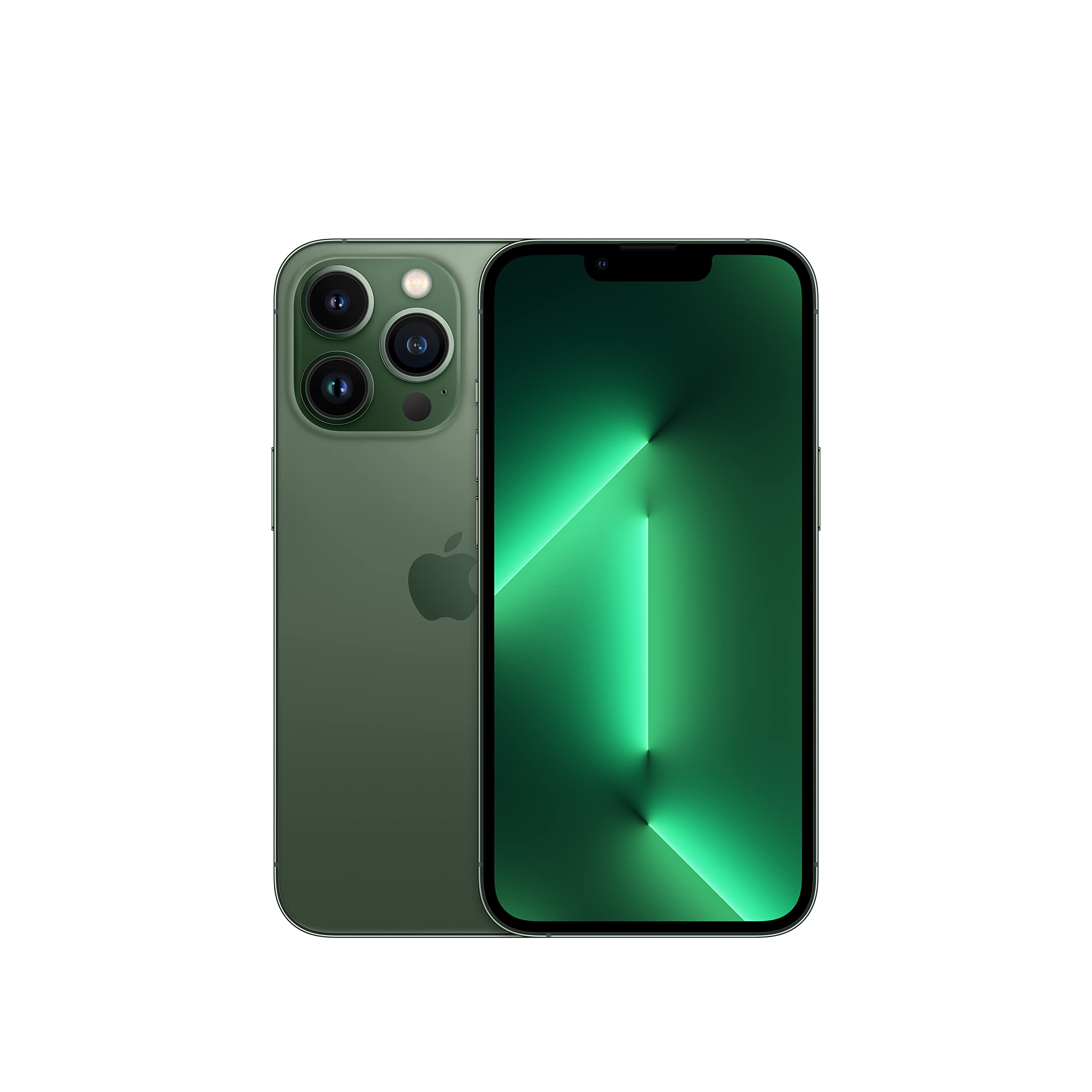
6. Apple iPhone 13 Pro, 256GB, Alpine Green – open up (Renewed)
A renewed route into iOS, with 256GB and a screen that smooths out motion.
If you want Apple’s ecosystem without the new-phone tier, this is the ticket. The 6.1-inch Super Retina XDR display uses ProMotion, a flow of the screen refresh that makes scrolling and games look smoother. The A15 Bionic chip — a 6-core CPU with two performance and four efficiency cores, a 5-core GPU, and a 16-core Neural Engine — still handles daily apps with composure.
Camera work is where it earns its name. Cinematic mode shoots 1080p at 30 fps, Dolby Vision HDR video records up to 4K at 60 fps, and the three-lens system offers a 6X optical zoom range. The 256GB drive gives you room for a healthy photo library. On the durability side you get Ceramic Shield on the front and a surgical-grade stainless steel frame. It charges over Lightning, not USB-C — a thing worth knowing before you buy cables for it.
Be clear-eyed about the renewed part. Condition is generally described as excellent, with people opening the box to a phone that looks new, and appearance feedback is strongly favourable. But battery health is the split topic — the phone may arrive with a degraded battery under the original spec, and the 3,095 mAh cell is modest by modern standards. If you buy renewed, price in a battery replacement or plan to charge nightly.
The Apple case: a renewed iPhone 13 Pro lands you in iOS with a 256GB drive and a ProMotion screen, and the condition people receive is overwhelmingly described as like-new.
The renewed gamble: battery health is the one thing that varies unit to unit — check it on arrival and know what you are in for.
Worth it when: you want iOS and the A15’s speed, and you are comfortable with a renewed phone.
Not the pick if: you want a fresh battery for certain — this one is a coin-flip on that front.
7. Samsung A26 5G International open up 8+256GB Mint DualSIM

The one on this list that actually takes a card you can swap.
Here is the pick for the buyer who reads the keyword literally. The Samsung A26 lists a microSDXC slot — a memory card you slide into the tray to add space beyond the 256GB internal drive and 8GB of RAM already aboard. There is a trade to know: it is a shared SIM slot, so the tray takes either two phone lines or one line plus your card, not all three at once. On a single-line setup, the card slides in and stays.
The rest of the package is unusual for the tier. A 6.7-inch Super AMOLED display at 120 Hz gives you vivid colour and smooth motion, the Exynos 1280 (5nm) chip handles everyday apps, and the battery is a 5,000 mAh cell rated to last all day with quick charging. Samsung commits to up to six major Android upgrades, which matters if you keep a phone for years. The rear setup is a 50MP main, 8MP ultrawide, and 2MP macro, and the included 25W charger is a generic accessory rather than a Samsung-branded unit.
The honest caveat is the international model tag. It will plug into T-Mobile for a new activation, but most U.S. carriers may not recognize an international IMEI as compatible, and there is no U.S. manufacturer warranty — the seller’s return policy is what covers you. Confirm your carrier before ordering. Performance and value are what people praise most about it; functionality and network compatibility are the mixed areas, so a quick compatibility check up front saves a headache later.
Why the A26 is the card-slot buy
- microSDXC slot adds room on top of 256GB internal
- 6.7″ Super AMOLED at 120 Hz for smooth scrolling
- Up to six major Android upgrades for a long service life
- 5,000 mAh battery and a 25W charger included
What to check first
- Shared SIM slot — you cannot run two lines and a card together
- International IMEI may not be recognized by some U.S. carriers
- No U.S. manufacturer warranty, only the seller’s return policy
Buy it for: real expandable storage, a 120 Hz AMOLED display, and a long update window at the value tier.
Before you order: run your carrier’s compatibility check — that is the make-or-break step with an international model.
8. Motorola Edge 2025 8/256GB

Built for a real drop, and charged back up in six minutes flat.
The flashiest number on this phone is the charge rate. A 68W TurboPower charger (sold separately) is rated to put enough charge in six minutes for up to 12 hours of mixed use, per Motorola’s figures. That turns a hurried plug-in before leaving the house into a real top-up instead of a token bump. The battery itself is a 5,200 mAh cell — about two thirds of the OnePlus 15’s 7,300 mAh, so plan to charge it more often but not constantly.
Durability is where Motorola put the design focus. A quad-curved body with a soft-touch finish wraps Gorilla Glass 7i, tested to the MIL-STD-810H standard, and the phone carries IP68/IP69 ratings for withstanding dust and high-pressure water jets. The 6.7-inch Super HD display runs at 1220p with Dolby Atmos stereo sound. Inside sits a MediaTek Dimensity 7400 chip, 8GB of RAM, and 256GB storage with a 50MP main camera and a four-camera system overall.
The one thing to read carefully is carrier compatibility. It is designed for the U.S. and lists Verizon, AT&T, and T-Mobile support — but feedback splits on real-world activation, with some reporting trouble connecting the phone to their network. If compatibility with a particular regional carrier relies on an odd subsidiary or a hearing-aid situation, test it before the return window closes. Software support for storage is fixed at 256GB, so no card tray here.
Design and durability: quality is the theme praised far more than any other, and people describe the soft-touch finish and curved edges as genuinely handsome — appearance feedback is almost entirely positive.
The compatibility watch-out: it is a “made for US” phone, but some buyers find their provider not fully on board, so the return window matters more here than usual.
Reach for it if: you want a tough glass body, fast charging, and an all-carrier open up phone with 256GB.
Leave it if: your carrier record is murky — check compatibility on day one and act fast if it fails.
9. BLU Bold N4 5G 512GB
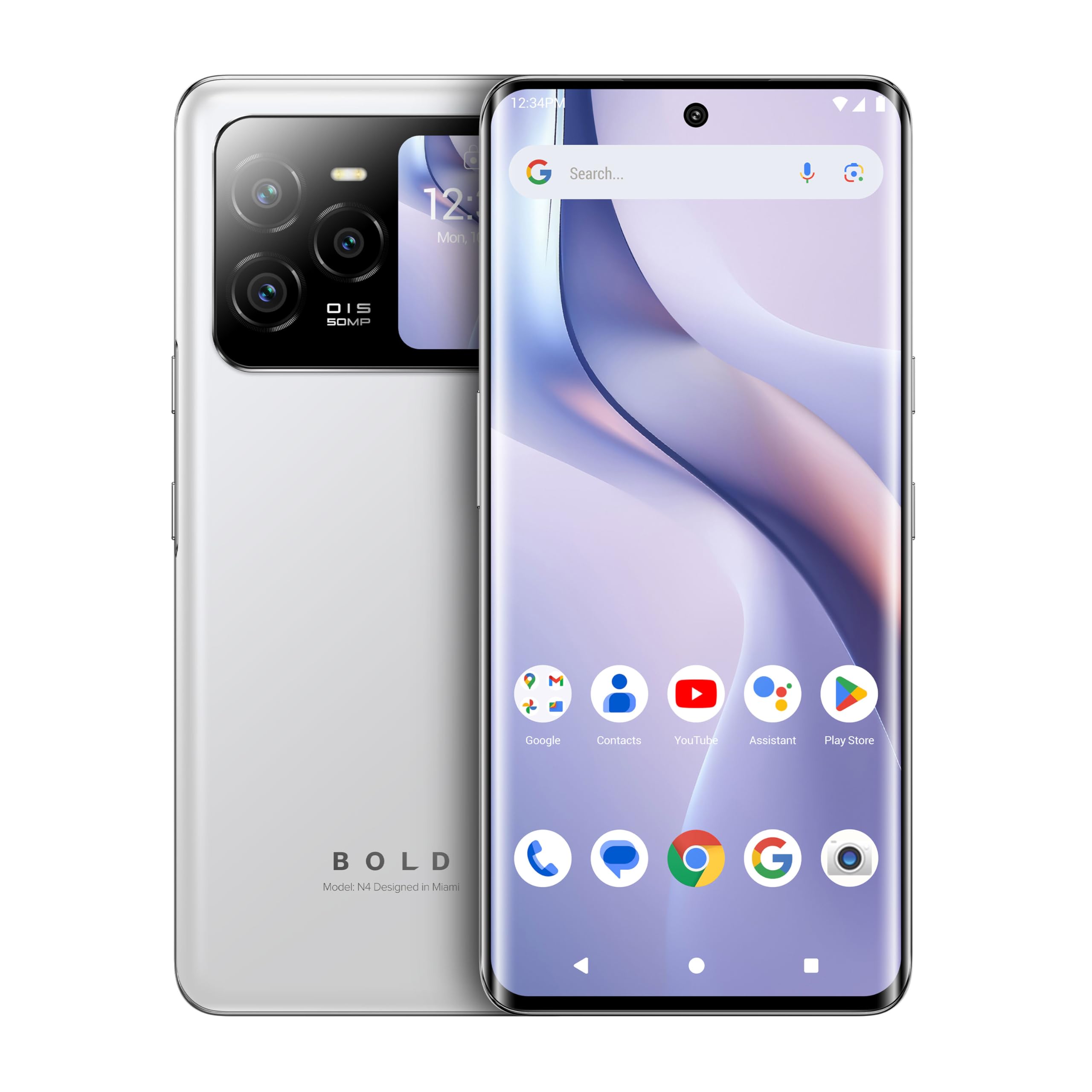
Two screens, half a terabyte, and the tightest spend on the whole list.
The a neat extra is the second panel. A 6.78-inch AMOLED main display does the streaming and gaming, while a small 1.74-inch rear screen handles quick selfie framing, message previews, and music controls — you flip the phone over to check a text, or line up a selfie using the main camera instead of the front one. Display is one of the things people respond to most warmly, with the little rear screen getting singled out.
What you get for the budget tier is fairly remarkable: 512GB of internal storage, 8GB of RAM, and a 5,000 mAh battery with 66W quick charging, which the listing says takes it from flat to full in about 20 minutes. Cameras include a triple rear array and a 16MP selfie shooter with 4K video. It is open up for GSM carriers, supports NFC tap-to-pay, and runs Android 15.
The critical thing to check is right on the listing: it is not compatible with AT&T, Cricket, or CDMA networks like Verizon and Sprint. T-Mobile and Metro PCS are the intended carriers here. Add that the camera quality and display are the areas where feedback splits most, and you have a phone that rewards a buyer who confirms carrier support and sets expectations on camera performance. Reliability is another mixed topic, worth a careful read of the return policy.
The BLU delivers on
- 512GB internal storage at the value tier
- Rear 1.74″ display for selfies and quick controls
- 66W charging stated to reach full in about 20 minutes
- NFC tap-to-pay and Android 15 from the start
The fine print
- Not compatible with AT&T, Cricket, Verizon, or Sprint — T-Mobile and Metro PCS only
- Camera quality and reliability are the most split topics in feedback
Lock it in if: you are on T-Mobile or Metro PCS and want 512GB plus a second display on a budget.
Walk away if: your line rides on AT&T, Cricket, or Verizon — it simply will not work on those networks.
Know the Specs
Internal Storage vs. Memory Card
Internal storage is the drive soldered inside the phone; a memory card is a removable chip you slide into a tray. Apps go on internal memory, while photos, video, and offline music can live on a card if the phone has a slot. A phone with 512GB internal may not need a card at all, while a budget phone with a card slot lets you add space cheaply as your library grows. Check whether that slot shares its tray with a second SIM before you commit.
Battery Capacity and Charging Watts
Capacity in milliamp-hours (mAh) tells you the physical size of the battery — 7,300 mAh is a big one, 4,300 mAh is modest. Charging watts tell you how fast it refills: 68W and 66W are fast-charge numbers, while a 25W charger is slower. Big capacity buys longer sessions between charges; high wattage buys a quick top-up when you are short on time. You want to know both before you buy, because they solve different problems.
Display Refresh Rate and Brightness
Refresh rate in hertz (Hz) measures how many times per second the screen redraws — 120 Hz and 165 Hz both look noticeably smoother than a standard panel when you scroll or play a game. Peak brightness in nits tells you how visible the screen stays in sunlight, and 3,000-nit displays are built to be readable outdoors. High refresh looks better; high brightness stays usable.
Carrier Bands and open up
An open up phone can accept any carrier’s SIM, but it must also support that carrier’s radio bands to actually connect. International models frequently list exact LTE and 5G band numbers for this reason, and a carrier may not recognize an international IMEI — the phone’s unique hardware ID — as compatible. Always cross-check the band list against your provider before buying, since network support is the one spec you cannot change after the fact.
Common Questions
Which phone on this list actually has a memory card slot?
Does a shared SIM slot mean I cannot use two lines and a card together?
Will an international open up phone work with my U.S. carrier?
Is 256GB of internal storage enough if I take a lot of photos?
What does an IP68 or IP69 rating actually mean on a phone?
How does the OnePlus 15 battery compare with the Pixel 10a?
Do these phones support wireless charging?
Is a renewed iPhone 13 Pro reliable enough to buy instead of new?
What does a 165 Hz display do for me in normal use?
Can I move a memory card from my old phone into a new one?
The Bottom Line
If you want expandable storage in the literal sense — a tray you can feed a card into — the Samsung A26 5G is the phone that delivers it, with a microSDXC slot, a 120 Hz AMOLED display, and up to six major Android upgrades to keep it current. For everyone who would rather never think about a card again, the OnePlus 15 takes the top spot with 512GB built in and a 7,300 mAh battery that outlasts the Motorola Edge 2025’s 5,200 mAh cell. And if a second-day charge is what you crave, the Pixel 10a and its 30-hour rating is the one to reach for. Whichever way you lean, match the phone to your carrier bands first — that is the one choice you cannot undo later.
How we choose
We do not accept paid placement. Every pick is matched to a real buyer and a real use-case; we do not hands-on test units.
Sources
Specifications: manufacturer listings and product documentation. Review insights: verified customer reviews, as of November 2026. Pricing: not shown on this page (it changes often); check the current price via the retailer link.
As an Amazon Associate, My Heart Lives Here earns from qualifying purchases. This does not affect which products we feature.