Heads up: This post contains affiliate links. As an Amazon Associate I earn from qualifying purchases, at no extra cost to you. Learn more
Specs are compiled from manufacturer listings and verified buyer reviews and can change over time — please confirm the key details on the product page before buying.
If your feet throb by lunchtime, the culprit is usually the footbed under the steel cap, not the cap itself. The right pair here shields your toes from a dropped crate and still cushions a plantar-fascia ache through a ten-hour shift. Below you get nine picks sorted by what each one does best, so you can match the shoe to your floor, your weather and your arch.
This guide is built by comparing the manufacturers’ published specifications and the patterns across verified customer reviews, so you get each pick’s real strengths and trade-offs instead of marketing spin.
Some pairs here carry a steel toe, others a composite cap that stays warm in the cold; either way, the fit and the insole decide your day. This breakdown of the best orthopedic steel toe shoes pairs each cap with the arch support that keeps you standing.
Top Picks

How To Choose The Best Orthopedic Steel Toe Shoes
Start with the floor you stand on, not the cap. A concrete warehouse and a wet farmyard ask for different outsoles, and a cushioned footbed matters far more on a hard slab than on dirt. Once you know the surface, the toe type, the shank and the fit fall into place.
Toe cap: steel versus composite
A steel toe is a metal cap that shields your toes from a dropped or rolling load. A composite toe does the same job without metal, so it will not trip a metal detector and it does not pull cold into your toes the way a steel cap can. If you work near electrical hazards or move between cold and warm zones, the composite route often feels better on your feet.
The footbed and shank under your arch
An orthopedic work shoe lives or dies by its arch support and footbed. A removable footbed with rebound foam lets you swap in your own orthotic without fighting the factory insole. A steel shank is a stiff strip set between the insole and the outsole that spreads your weight and cuts the flex that tires a foot over a long day.
Slip resistance and the standards label
Slip resistance is graded, and a shoe that passes a standard slip test is a safer bet on a greasy shop floor than one that just looks treaded. Look for a mark like ASTM F2413 or ASTM F3445 on the label, which tells you the toe and slip claims have been tested to a published benchmark rather than just described.
Sizing when a chart is not enough
Your foot length rarely matches a shoe’s listed size exactly. One maker here asks you to pick a size roughly 0.16 inches longer than your measured foot, which gives your toes room to swell by the end of a shift. When the reviews split on fit, that half-size cushion is usually the fix.
Side-by-Side Comparison
| Model | Best For | Toe Type | Waterproof | Upper Material | Amazon |
|---|---|---|---|---|---|
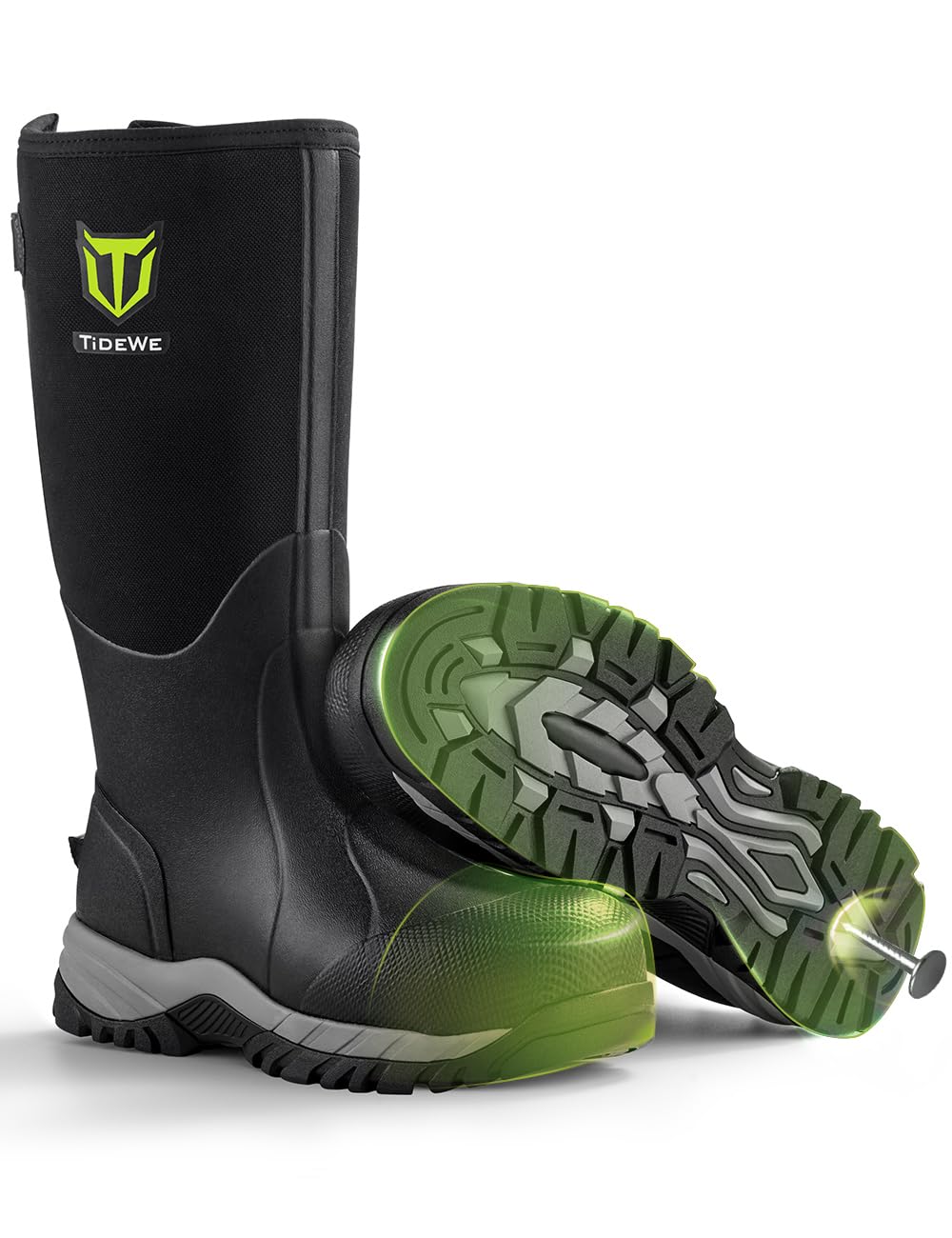
| TIDEWE Rubber Work Boots★ Best Overall | Wet and muddy sites | Steel toe & steel shank | 100% waterproof rubber and neoprene | Neoprene | Amazon |
| ARIAT Outpace Composite ToeIndoor Comfort Pick | Indoor hard floors | Composite toe | — | — | Amazon |
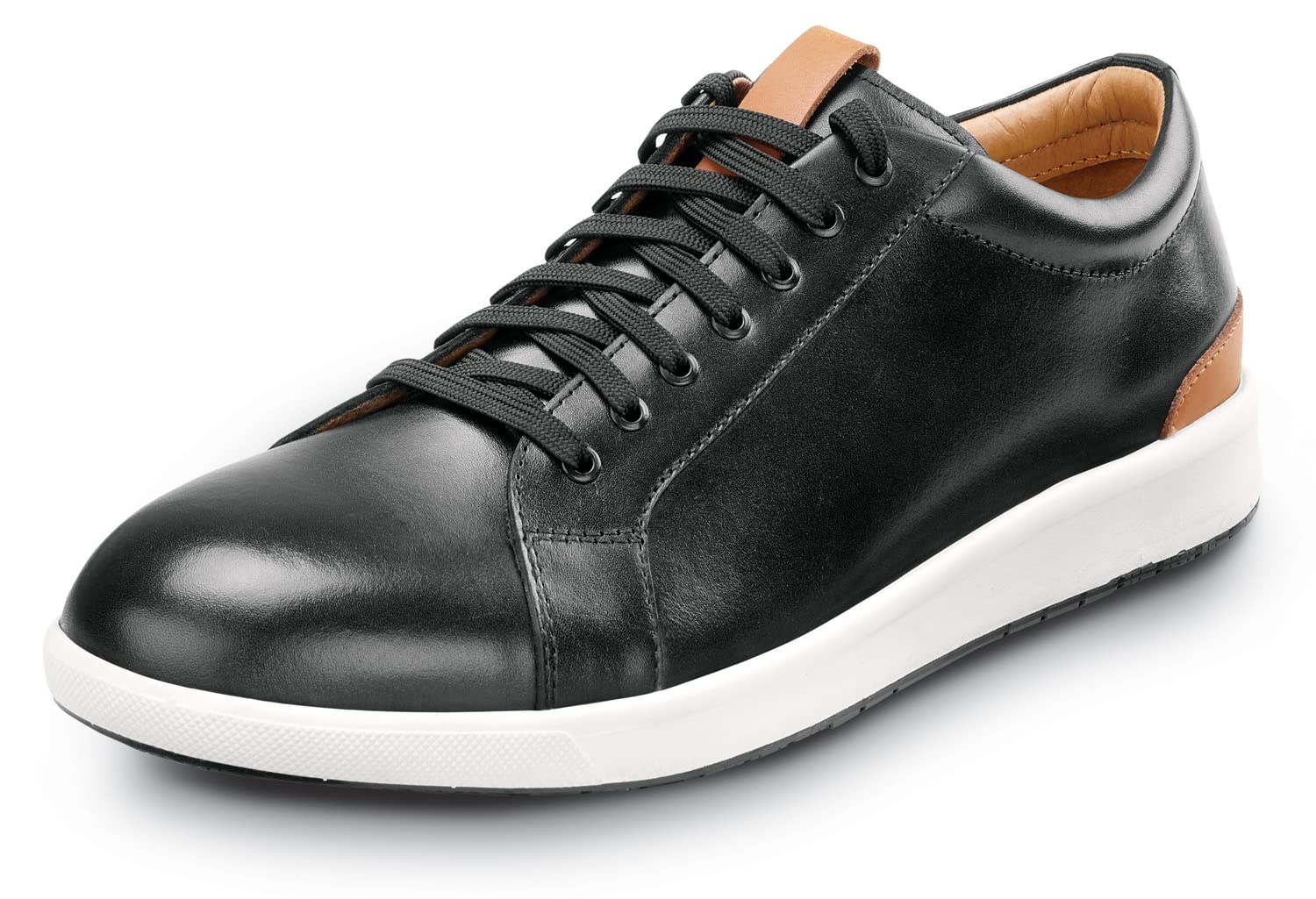
| Florsheim Crossover MaxTraxGrip Specialist | Slip-prone shop floors | Steel toe, EH | — | Leather | Amazon |
| KEEN Utility Detroit XT Low | Metatarsal protection | Steel toe with metatarsal guard | — | — | Amazon |
| Timberland PRO Intercept | Sneaker look on site | Asymmetrical steel toe, EH | — | Ripstop nylon | Amazon |
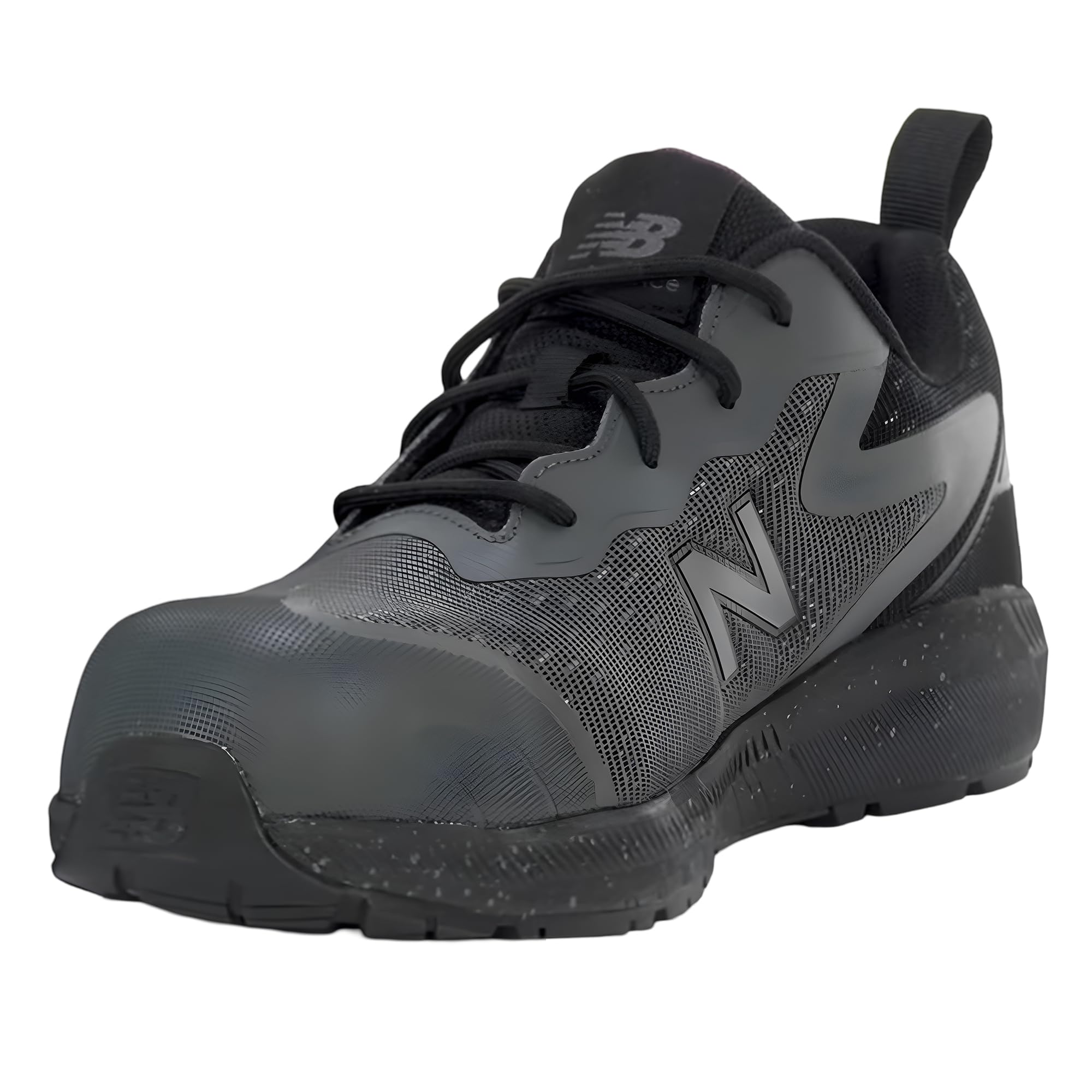
| New Balance Logic Composite Toe | Light industrial work | Composite toe, EH & PR | No | Synthetic and mesh | Amazon |
| Skechers Arch Fit Tarver | Arch support priority | Composite safety toe | Waterproof | Leather, synthetic and mesh | Amazon |
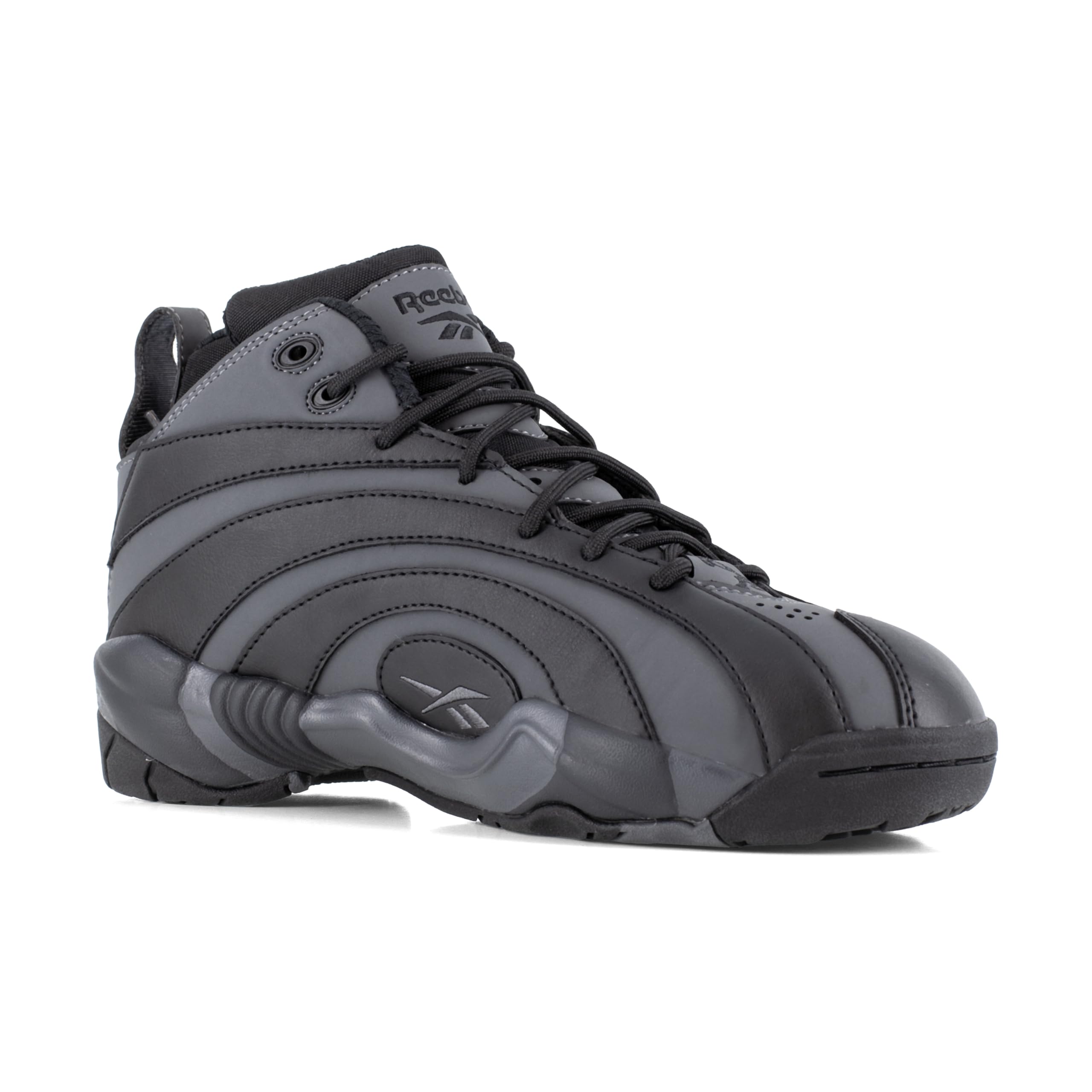
| Reebok Shaqnosis Composite Toe | High-top ankle support | Composite toe (XTR), EH | — | Action leather, mesh, PU | Amazon |
| ARIAT Treadfast 8″ Steel Toe | Boot-length support | Steel toe, EH | DRYShield waterproof | Full-grain leather | Amazon |
Detailed Reviews
1. TIDEWE Rubber Work Boots
Our pick — 4.5+★ from 750+ verified ratings; the strongest balance of quality and price.
The sludge-proof boot that guards your sole as well as your toes.
For a wet, messy site — a fishery, a muddy farmyard, a job that ends with you hosing off your boots — this is the pair to start with. It is built from 100% waterproof rubber and neoprene, so standing in a puddle is not a slow soak. The steel shank is a stiff strip between the insole and outsole that spreads your weight and eases the flex that tires a foot over a long day, and beneath that sits a puncture-resistant plate that shields your sole from a nail or a sharp edge you never see.
The reason this tops the list is the fit of its protections. The steel toe stands up to impact from a falling or rolling load, while the 6mm neoprene inside adds warmth when the temperature drops — a layer you appreciate on a cold morning pour. The breathable inner lining keeps air moving when it is warm instead. A 10-inch shaft circumference wraps the ankle without flapping, and the pull-on tab with a kick tab gets them off fast at the end of the shift.
What wins people over is the overall build — most buyers describe them as quality boots with a good insole, and the warmth-and-dryness side draws steady praise. The honest catch sits in the rubber itself. A share of buyers report the material splitting at the middle and losing its waterproof hold over time, so treat these as a rugged work boot rather than a boot you abuse daily for years. If your foot measures exactly to the chart, size up to roughly 0.16 inches beyond it — that is the maker’s own advice for a proper fit.
The protection math
- Steel toe plus a puncture-resistant plate guards both the top and the underside of your foot.
- 100% waterproof rubber and neoprene keep feet dry in wet and muddy work.
- 6mm neoprene adds warmth when it turns cold.
- Pull-on and kick tab for fast on and off.
Where to stay realistic
- Rubber construction can split at the middle over time, which affects the waterproof seal.
- Only listed for fall-season wear in the spec sheet.
- You need to size off the insole chart rather than your regular shoe number.
Reach for these if: you work wet, muddy or hosing-down jobs and want sole protection underfoot.
Think twice if: you want a breathable summer shoe — this is a rubber boot built for wet and cool ground.
2. ARIAT Work Men’s Outpace Composite Toe Safety Shoe
A sneaker-soft shoe for long shifts on warehouse concrete.
This one is aimed at the indoor worker — the aisle-walker, the assembly-line stander, the shift that never leaves a hard floor. Ariat built it as a composite-toe shoe with a slip-resistant outsole and long-lasting cushioning, so it bends and softens where a leather boot stays rigid. Unlike the rubber TIDEWE above, it is not a wet-site boot; its job is comfort on a flat, dry surface.
Comfort is the headliner, and owners back it up — many report their feet no longer hurting and existing aches easing after switching in. It runs true to size across most feet and feels light on the foot, which cuts the drag that tires your legs by the third hour. The slip-resistant sole holds on smooth shop floors, and the styling passes as an ordinary sneaker rather than a safety shoe.
The trade-off to know is longevity. Some owners get a solid stretch out of theirs and others find the upper separating within a month, so it rewards careful use rather than heavy scraping. Value pulls both ways too, with some buyers feeling it earns its keep and others calling it steep. Best treated as a comfortable indoor pick you replace on a cycle, not a lifetime boot.
What the footbed buys you: true-to-size fit, a lightweight feel and a cushioned ride make this the pick when your feet ache on hard indoor floors.
The honest catch: durability splits in owner feedback — some last a long stretch, others wear down fast, so factor replacement into how hard you wear them.
Made for: warehouse and plant workers who stand on concrete all day and want sneaker comfort with a protective cap.
Not the one for: wet outdoor sites — there is no waterproofing here, so a rainy yard will soak straight through.
3. Florsheim Mens Crossover Work MaxTrax Lace to Steel Toe SRO
A dress-leather steel toe that keeps its footing on a greasy floor.
If the risk on your shift is a slick floor rather than a puddle, this is the one. The oil-resistant rubber wedge outsole carries Florsheim’s patented SR Max MaxTRAX tread pattern, a sole shaped to shed oil and hold its footing, and the leather upper looks closer to an office shoe than a bulky work boot. A removable Comortech footbed with Rebound Foam sits under your arch, and the moisture-wicking nylon mesh lining keeps the inside dry over a long shift.
It clears ASTM F2413-18 M/I/C EH, the published standard for impact, compression and electrical-hazard protection, with the EH marking meaning it resists electrical hazard. Buyers single out how well the steel toe disappears into the silhouette — the cap is there but the shoe does not look like safety gear. The lightness draws a nod too, and the look earns compliments on site.
The recurring gripe is the heel. A share of owners mention it peeling away around the four-month mark, so this is the pick for a worker who wants grip and appearance and will keep an eye on the heel rather than one who needs an armored boot for bashing jobs. Owners stay happy with the overall quality and comfort, so the pros outweigh the wear note for most.
Where it earns its spot: the MaxTRAX slip-resistant tread and oil-resistant outsole make greasy shop floors far less of a hazard, and the leather upper keeps you looking presentable.
Keep an eye on: the heel can peel off around four months, so it suits a worker who prefers grip and looks over hard-wearing armor.
Your pick if: you need steel-toe protection with real slip grip and a shoe that still looks smart on the shop floor.
Look elsewhere if: you need a waterproof all-weather boot or a boot you can thrash for years.
4. KEEN Utility Detroit XT Low Work Shoes

Guards the whole top of your foot, not just the toes.
Most steel toe shoes protect the toes and leave the rest of your foot exposed. This pair adds a metatarsal guard — a stiff cover across the top of the foot behind the cap — which is the piece you want if a heavy box or a falling tool tends to land on the ridge of your foot. The cap and guard together defend a much broader strip of the foot than a plain steel toe.
Fit is where it gains its following. Customers note it lands well, true to size for the most part, and the comfort follows close behind — a group of buyers describe them as comfortable and well-fitting right from the start. Some who expected weight describe theirs as surprisingly light, and for all the protection stacked on top, that counts for a lot over a full shift.
Durability is the honest question mark. Some owners get years of rugged service and others see them come apart within about a year, so the guard is not a lifetime warranty. If you are a lighter-weight worker who wants the extra coverage without a heavy boot, this fits you. If you are on the absolute roughest site and replace boots often, weigh the cost against that.
Why it beats a plain steel toe
- Metatarsal guard covers the top of the foot behind the cap, not just the toes.
- Fit lands true to size for most owners.
- Often feels lighter than its protection level suggests.
What to weigh honestly
- Durability is a coin flip — some go the distance, others give out within about a year.
- Mixed feelings on value in owner feedback.
- Weight opinions split between light and heavy.
Worth grabbing if: falling loads hit the top of your foot, not just the toes, and you want a metatarsal guard with an easy fit.
Second-guess if: you need a boot to survive years of hard use — this one can give out around the year mark.
5. Timberland PRO Intercept Work Shoe

An athletic work sneaker that hides its steel toe behind a running-shoe shell.
You would not clock this as a safety shoe until you drop something on it. The upper is ripstop nylon that resists abrasion and tearing, and the asymmetrical steel toe sits under the shell with electrical-hazard protection built in. Timberland PRO’s 24/7 Comfort System layers a suspension design under the arch to cushion each step, and the EVA outsole with anatomically placed flex grooves bends with your foot instead of fighting it.
This is the most-reviewed pick on the list, and the cushioning is the reason the crowd keeps coming back — the arch support and soft ride hold up over a long day on your feet. The look earns a strong following too, with buyers comparing it to any athletic sneaker, plus a colorway they actually like wearing. The breathable mesh lining is made of ReBOTL fabric containing at least 50% recycled plastic, so it breathes rather than bakes.
Fit is the part that splits. A large group find it true to size, while just as many report it runs about a half size big, and a few find the soles wear out fast. My read: order your normal size and expect to swap if it feels roomy, because the comfort is the draw and the sizing is the gamble. It is the sneaker-look pick, not the rugged armored boot.
The look-and-cushion play: the 24/7 Comfort System and flex-groove outsole make this feel like an athletic sneaker while the asymmetrical steel toe quietly does its job.
Size it carefully: owner reports split between true-to-size and a half size big, so be ready to exchange if the fit feels roomy.
Pick it if: you want sneaker styling and cushioned arch support with a hidden steel toe for light-duty site work.
Choose another if: you need a rugged boot for heavy abrasion or you demand a precise, consistent fit from the start.
6. New Balance Logic Work Shoe
Built to a full safety spec, then made light enough for a long walk.
New Balance points this one at light industrial work — logistics, warehousing, manufacturing, auto and general construction — and it clears a stack of standards in one go. The composite toe meets ASTM F2413-18 M/I/C for impact and compression, plus EH for electrical hazard and PR for puncture resistance, and the slip rating comes from ASTM F3445-21 SR. The synthetic and mesh upper with an Acteva foam midsole keeps air moving, and it is one of the few here with a debris-free construction built to keep grit out.
Weight is the other headline. The composite cap skips the metal, so it stays light on the foot, which owners appreciate over a full shift of walking. Quality earns its own following, with buyers saying they would buy it again. It comes in sizes 7 to 14 in both regular and wide fit, and there is a women’s version.
Be honest about the fit. Comfort feedback splits hard — some find it very comfortable, others hit tightness across the toes — so if you have a wide foot, order the wide fit rather than hoping the standard one gives. The interior lining wears through on some pairs too. Fit is your friend here if you use the chart, and your enemy if you guess.
The spec-clean winner: it meets ASTM F2413-18 M/I/C, EH/PR and ASTM F3445-21 SR together, so the safety claims are all tested to a published benchmark.
Order the wide fit if your foot is broad: toe-tightness shows up in the feedback, and the wide option is the fix.
Best matched to: light-industrial workers who want a certified composite toe and good breathability without the metal weight.
Consider elsewhere if: you have a wide foot and would rather not rely on the wide size to bail you out.
7. Skechers Men’s Arch Fit Tarver

The work boot that puts the arch first and the steel second.
If arch pain is your daily battle, start here. Skechers builds in podiatrist-certified Arch Fit support — a shaped footbed that cradles the arch — inside a waterproof boot with a composite safety toe and a slip-resistant Goodyear rubber outsole. The leather, synthetic and mesh upper balances durability with breathability, and electrical-hazard protection is built in.
Owners rave about the comfort. Owners describe these as extremely comfortable and well-made, with the arch support called out as a genuine plus, and the design earns compliments. It is built for the worker who wants a boot that supports the foot through a whole shift rather than just armor for the toes.
The honest catch is the fit and the lining. The wide size runs slightly big, so if you are between widths, size down rather than up. Some owners also find the internal lining rips early, so treat the interior gently. Weigh that against the comfort and support everyone values here, and this suits the worker who prioritizes their arch over rough-and-tumble abuse.
What the arch support gives you
- Podiatrist-certified Arch Fit support underfoot, built for the arch more than the cap.
- Waterproof construction with a composite safety toe.
- Slip-resistant Goodyear rubber outsole and electrical-hazard protection.
- Very comfortable and well-built according to owners.
What to watch for
- The wide size runs slightly big, so size down if you are between widths.
- The internal lining can rip early on some pairs.
- Weight splits in feedback — some find them light, others heavy.
This is your pair if: arch support is the reason you are shopping and you want a waterproof composite-toe boot to go with it.
Try another if: you use the wide size and need a snug fit, or you are hard on boot linings.
8. Reebok Work Men’s Shaqnosis Composite Toe Work/Duty – Black
A high-top with the boldest look on the list and a grip on your ankle.
This is the high-top work sneaker — the one shaped like the classic court shoe, with the iconic bullseye pattern across the upper. Under that styling sits an XTR composite toe that meets ASTM F2413 standards and gives extra-wide room for your toes, plus electrical-hazard protection and a slip-resistant outsole. A MemoryTech foam footbed adds a soft first step, and the microfiber lining with an EVA midsole and high-abrasion rubber bottom carries the build.
Ankle support is the standout, and nobody argues with it here — every owner who mentions it comes away praising the hold it gives for any activity. If you want a work shoe with personality, this one has it.
The trade-offs are fit and weight. Owner reports split on sizing, with some saying it runs smaller than their other work shoes and pinches the toes — so consider a half size up if your feet sit on the wider side. It is also not a light shoe, and some pairs do fall apart over time. Know those before you commit to the look.
Where it holds its ground: the high-top cut and the XTR composite toe deliver ankle support and toe-room together, and the 100% non-metallic build will not trip a metal detector.
The size question: reports say it runs smaller and tighter in the toe than other work shoes, so size up if you have a generous foot.
Matches well with: workers who want high-top ankle support and a bold retro look with a composite toe.
Steer clear if: you need a featherweight shoe or you want the exact fit of your usual work size.
9. ARIAT Work Treadfast 8″ Waterproof Steel Toe Work Boots
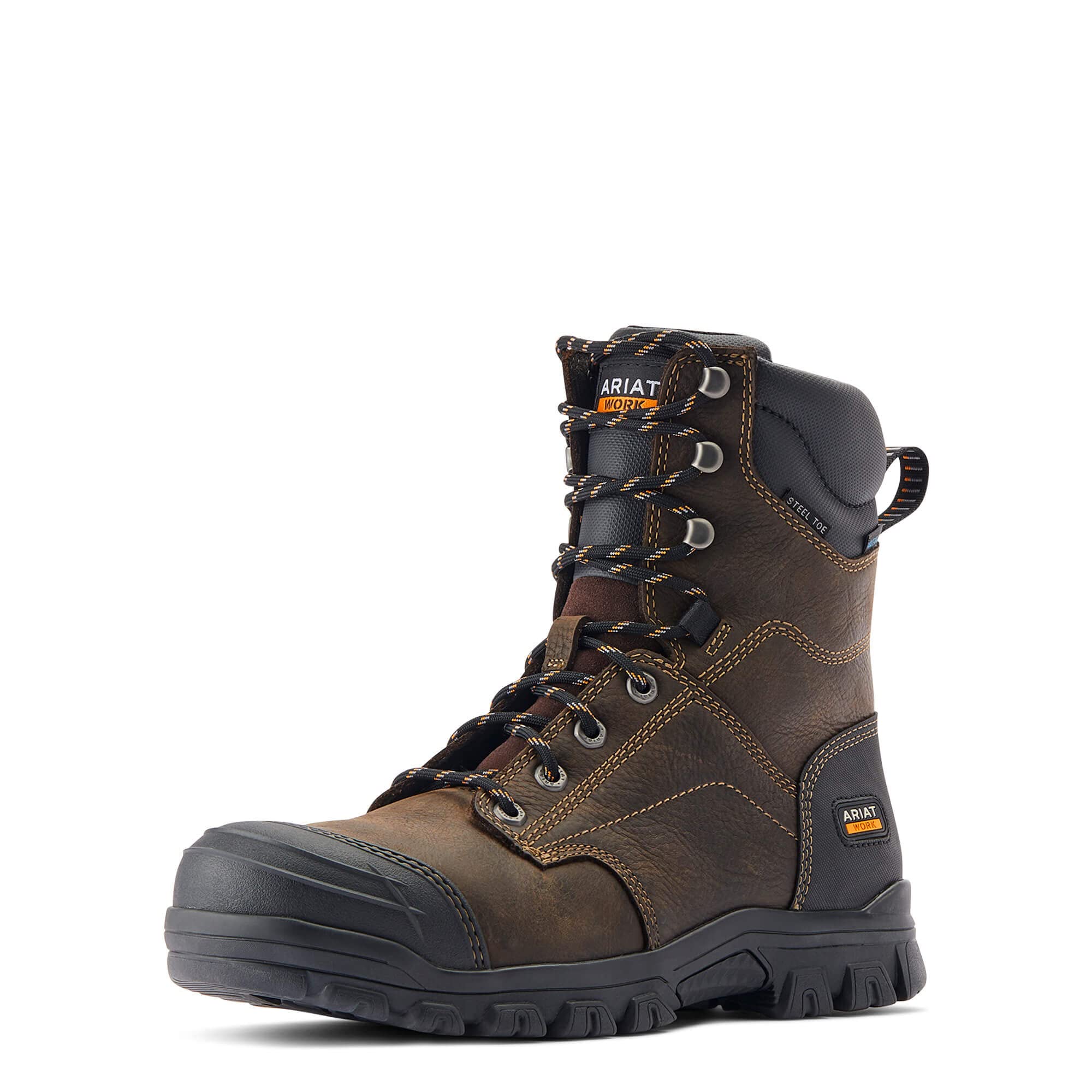
An eight-inch leather boot that wraps the ankle and shuts out water.
The tallest pick on the list, this is the one for a boot-first worker who wants full-grain leather and a high shaft around the ankle. Ariat’s DRYShield construction pairs full-grain leathers with an impermeable barrier for dry feet, and the 8-inch height gives the ankle more support than a low shoe. The 4LR technology layers lightweight support and stability underfoot, and the All-Day Cushioning insole softens every step.
It also meets ASTM F2413 and F3445, the published standards for safety-toe protection plus electrical-hazard and slip resistance. The oil- and slip-resistant Duratread outsole holds a grip, and the reinforced ExGuards on the toe and heel cut down on wear at the two spots a boot takes the most abuse. Fit earns praise from owners — they say it grips perfectly at the ankle and the size runs accurate.
Now the honest part. The durability and waterproof claims split in owner feedback, with some finding them dry and long-lasting while others report splitting at the heel after 6 to 8 months or getting soaked. Treat these as a solid boot for the price rather than an armored lifetime partner. Comfort in the cushioning is real, but if a boot must survive years of the harshest work, weigh that.
Where it puts in the work: the 8-inch full-grain leather with DRYShield gives a tall, waterproof boot that clears ASTM F2413 and F3445, and the ExGuards protect the toe and heel from wear.
The honest limit: durability and waterproofing both split in owner reports, so it is a strong boot for the money rather than a lifetime pair on a brutal site.
Right for: a worker who wants a tall, waterproof full-grain leather boot with reliable ankle hold and a cushioned step.
Weigh it against: you need a boot proven to last past a year on the roughest sites — reports on long-term wear vary.
Know the Specs
Steel toe versus composite toe
A steel toe is a metal cap over your toes that absorbs impact from dropped or rolling loads. A composite toe does the same protective job without metal, so it stays lighter and does not pull cold into your toes. Both are rated to a published standard (ASTM F2413 is the common one), so check which cap a shoe carries before you buy.
What ASTM F2413 tells you
The ASTM F2413 label means the shoe has met a published test for toe impact and compression — the M/I/C marking covers impact, compression and metatarsal protection. When a spec sheet also lists F3445, that is the slip-resistance test, and EH means electrical-hazard resistance. If a shoe lists neither, the protection is described rather than tested.
The shank and the puncture plate
A steel shank is a stiff strip set between the insole and the outsole that spreads your weight and eases the flex that tires a foot. A puncture-resistant plate does a different job — it shields the sole of your foot from a nail or sharp edge. Both work underfoot and both make an orthopedic work shoe more comfortable on a long day.
The removable footbed
An orthopedic work shoe is only as good as its removable, cushioned footbed. A removable insole with foam or rebound material lets you lift it out and slot in your own orthotic, which is the difference between a generic fit and one shaped to your arch. Look for a footbed the maker calls removable rather than fixed if you plan to customize support.
Common Questions
Do orthopedic steel toe shoes support a high arch?
What is the difference between a steel toe and a composite toe for comfort?
Will a puncture-resistant plate stop a nail from going through the sole?
How do I size an orthopedic work shoe if my foot is between sizes?
Are waterproof work boots also breathable?
What does EH mean on a work shoe spec?
Can I put my own orthotic insole inside these shoes?
Is a metatarsal guard worth it over a plain steel toe?
How long should a work shoe last before the sole wears out?
Do these work shoes come in wide sizes?
The Bottom Line
For most workers, the winner in the search for the best orthopedic steel toe shoes is the TIDEWE Rubber Work Boots, because its steel toe, steel shank and puncture-resistant plate protect both the top and underside of your foot on wet, muddy ground. If arch support is your priority, the Skechers Arch Fit Tarver layers podiatrist-certified Arch Fit support inside a waterproof composite-toe boot. And for a cushioned sneaker feel on an indoor floor, the ARIAT Outpace is the one to grab.
How we choose
We do not accept paid placement. Every pick is matched to a real buyer and a real use-case; we do not hands-on test units.
Sources
Specifications: manufacturer listings and product documentation. Review insights: verified customer reviews, as of November 2026. Pricing: not shown on this page (it changes often); check the current price via the retailer link.
As an Amazon Associate, My Heart Lives Here earns from qualifying purchases. This does not affect which products we feature.