Heads up: This post contains affiliate links. As an Amazon Associate I earn from qualifying purchases, at no extra cost to you. Learn more
Specs are compiled from manufacturer listings and verified buyer reviews and can change over time — please confirm the key details on the product page before buying.
You want the wood grain still visible when the job is done, and you want the rain to bead off it next spring. That combination is exactly what an oil based semi transparent deck stain is built to do: the oil soaks into the fibers instead of sitting on top like paint, while the semi-transparent pigment adds color without hiding the grain. The catch is that oil-based products behave very differently from one can to the next, and the wrong pick can leave lap marks, dry unevenly, or fade inside a year. Below you get seven real options, sorted by what they actually do well.
This guide is built by comparing the manufacturers’ published specifications and the patterns across verified customer reviews, so you get each pick’s real strengths and trade-offs instead of marketing spin.
Start with coverage: a gallon rarely treats the same square footage twice, so measure your deck boards before you open the can. Below you will find the best oil based semi transparent deck stain for weathered boards, fresh cedar, and everything between.
Top Picks

How To Choose The Best Oil Based Semi Transparent Deck Stain
Three numbers decide whether you are happy with a deck stain six months from now: the coverage per gallon, the recoat window your schedule actually allows, and how much grain the pigment lets through. Get those three right and the brand matters far less than the label suggests.
Start With Square Footage, Not With Color
Measure your deck boards and multiply length by width before you shop. Every can lists coverage in square feet per gallon, and that figure usually assumes one coat on smooth wood.
Rough or weathered boards drink far more stain than new ones, so a deck that lists at 300 square feet per gallon can swallow two cans on the first pass. Buying one can short mid-job is the most common way a weekend project turns into a two-weekend project, because a half-stained deck shows a hard color line where you stopped.
Order the extra can up front. Leftover stain keeps for touch-ups on railings and stair treads, which always weather faster than the flat deck surface.
Oil-Based Versus Water-Based: What Actually Changes
Oil-based stains carry pigment and protection into the wood fibers, so the surface stays flat and the grain stays readable. Water-based acrylics form more of a film on top, which can look cleaner on day one but tends to show wear as a coating rather than as gradual fading.
If your deck is older and slightly checked, a penetrating oil is usually the friendlier choice because it soaks into those small cracks instead of bridging over them. If you are recoating a surface that already has a solid film coating on it, check compatibility first — oil will not always bond over an existing acrylic layer.
Reading the Semi-Transparent Label Honestly
Semi-transparent means pigment is present but not dense enough to hide the grain pattern. In practice, the same label covers a wide range — some cans leave the grain crisp, others lay down noticeably more color than the swatch suggested.
Test on a scrap board or an out-of-the-way corner first. That five-minute check tells you more about final color than any product photo, because the same stain on aged gray wood and on fresh cedar reads completely differently.
Weather Windows and Recoat Timing
Even the best stain fails if you apply it at the wrong temperature or right before rain. Check the manufacturer’s stated application conditions and watch the forecast for a dry stretch long enough to let the coating cure.
Some formulas tolerate direct sun and light rain shortly after application; others need shade and a longer dry window. Match that tolerance to how your deck is oriented and how much time you realistically have.
Side-by-Side Comparison
| Model | Best For | Base | Coverage | Finish | Amazon |
|---|---|---|---|---|---|
| Ready Seal Redwood★ Best Overall | One-coat decks and fences | Oil-based | 125-150 sq. ft./gal | Oil | Amazon |
| Armstrong-Clark CedarDeepest Penetration | Deep-penetrating cedar protection | Oil-Based | 150-300 sq. ft./gal | Oil | Amazon |
| Ready Seal Pecan | Goof-proof streak-free application | Oil-based | 125 sq. ft./gal | Flat | Amazon |
| TWP 1530 Natural | Low-VOC wood preservation | wood-based | Broad coverage | Semi-Gloss | Amazon |
| KILZ Cedar Naturaltone | High-coverage waterproofing | Acrylic | 250-500 sq. ft. | Satin | Amazon |
| DEFY Essential Light Walnut | Small projects and railings | Water Based | 100-150 sq. ft./gal | Matte | Amazon |
| Thompson’s Chestnut Brown | Budget one-coat waterproofing | Wood | 150-400 ft²/gal | Semi-Transparent | Amazon |
Detailed Reviews
1. Ready Seal Stain & Sealer Redwood
Our pick — 4.5+★ from 650+ verified ratings; the strongest balance of quality and price.
One can, one coat, no back brushing — the stain that lets you finish a deck in an afternoon.
The feature that decides everything here is the self-blending formula. You spray, roll, or brush it on and the oil levels itself out, so you never chase a wet edge or worry about stopping mid-board. That matters because lap marks — the dark seams where one pass overlaps another — are the single most visible mistake in deck staining, and they are permanent once the oil cures.
Coverage lands at 125-150 square feet per gallon, which is honest but generous on smooth boards and noticeably thinner on rough, thirsty wood. Buy accordingly: a large deck that measures near 300 square feet will want two cans for a clean first coat. What wins people over most is the finish quality — the wood comes out looking conditioned rather than painted, with the grain still readable underneath. The Redwood tone reads as a warm brown rather than a red, so it flatters pressure-treated lumber without turning orange.
The honest catch is opacity. This is a semi-transparent stain, but the pigment lays down more color than some buyers expect, and a few find the grain less visible than the swatch implied. If you want the boards to look almost bare, test a corner first. Also note the listing’s own consistency quirk: the weight field reads 5.29 ounces while the can is a full gallon, so judge by the liquid volume of 1 gallon, not the ounce figure. This is the pick most buyers should start with — the finish quality and the no-back-brushing application are the two things that keep coming up as the reasons people buy it again.
What earns it the top slot
- Self-blending oil formula means no lap marks and no back brushing
- Stain and sealer in one can — no separate primer or topcoat step
- UV and weather resistance built in for fading and water damage
- 125-150 sq. ft. per gallon covers a standard deck in one to two cans
Where it asks for care
- Pigment sits heavier than a bare-grain look — swatch test advised
- Rough or weathered boards will pull coverage well below the listed range
Made for: anyone staining a whole deck solo who cannot afford visible overlap lines.
Look elsewhere if: you want the wood to read almost unstained — the pigment here is real.
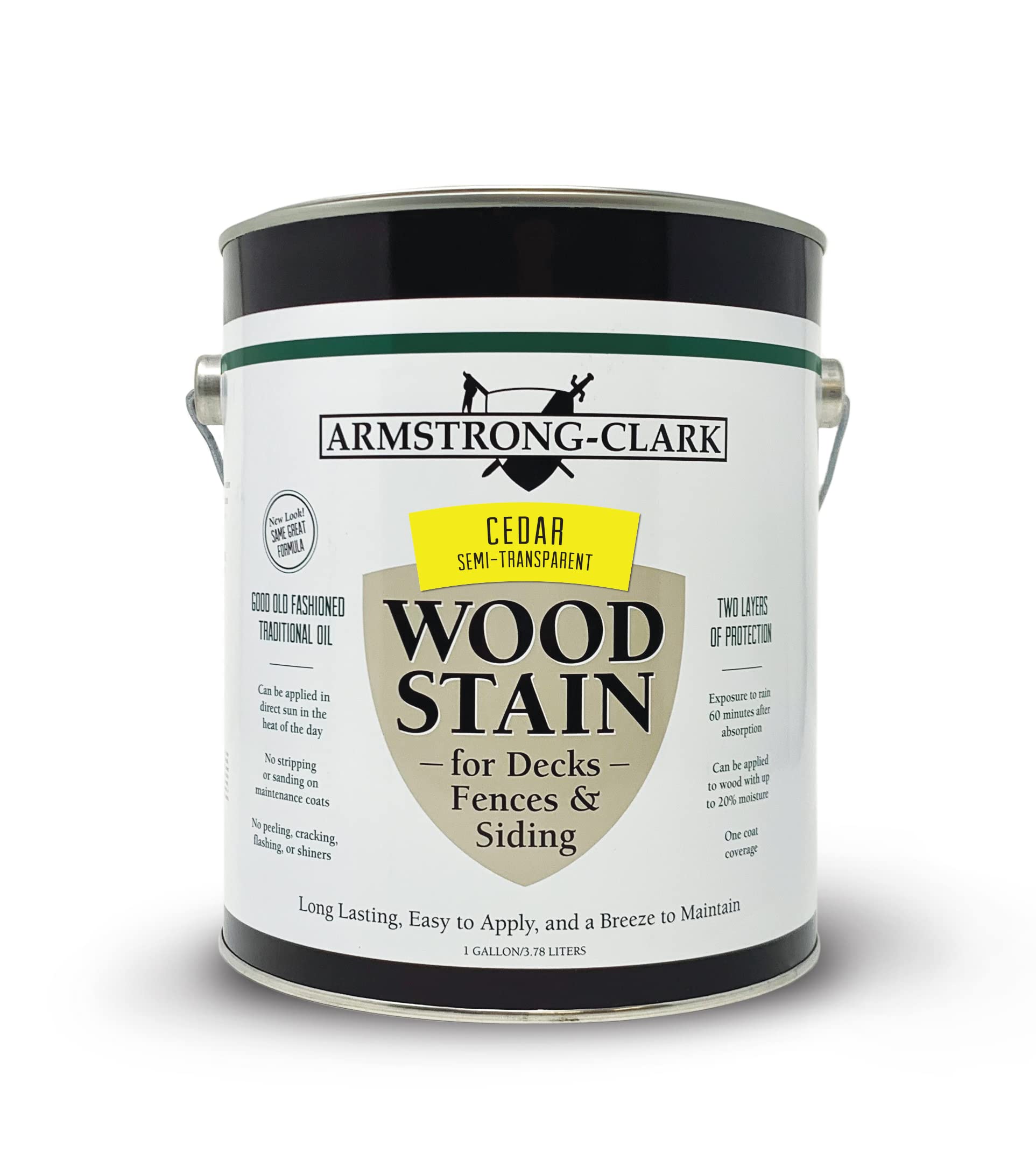
2. Armstrong-Clark Oil-Based Wood Stain, Cedar Semi-Transparent
The pro-shop formula that soaks into cedar instead of sitting on top of it.
This is the pick built for people who care about what happens under the surface. The coating is composed of drying and non-drying oils, and those oils work in two directions: the conditioning oils sink into the wood fibers, and the drying oils cure to lock protection in place. That combination is what helps hold off cracking, peeling, and the slow gray deterioration that turns a good cedar deck into a remodeling project.
Where it pulls ahead of the Ready Seal Pecan is coverage headroom. Armstrong-Clark lists 150-300 square feet per gallon, and the numbers break down further by surface: horizontal softwoods at 150-250, vertical softwoods at 200-300, and hardwoods at 300-400. That tiering tells you something the flat numbers on other cans hide — direction and wood density change your can count enormously. A vertical fence and a flat deck of the same square footage are not remotely the same job.
The semi-transparent Cedar rating keeps the grain readable, and the brand’s own guidance notes that final color shifts with the wood type, its age, how you prepped it, and how you applied it. Maintenance is where the design pays off: recoat coats need cleaning and reapplication, not extensive sanding, stripping, or media blasting. That is the difference between a Saturday and a full week of labor when the deck comes due again. The trade-off to plan around is that this is a smaller brand with a lighter review footprint than the big-box names — the appearance feedback is strong and consistent, but you are trusting a specialist product rather than a widely discussed one.
The penetration story: conditioning oils plus drying oils is a genuine two-stage design, and it is why this pick is aimed at owners protecting cedar, redwood, or pressure-treated boards for the long haul rather than refreshing a rental.
Plan for the color drift: the Cedar tone on aged gray wood will not match the Cedar tone on fresh lumber — sample both ends of your deck before committing the whole can.
Worth the extra: if your deck is cedar, redwood, or pressure-treated and you want the protection to penetrate rather than coat.
Weigh first: the smaller review base means fewer voices to lean on than the big brands, even though the feedback skews strongly positive.
3. Ready Seal Exterior Wood Stain & Sealer, Pecan, 1 Gallon
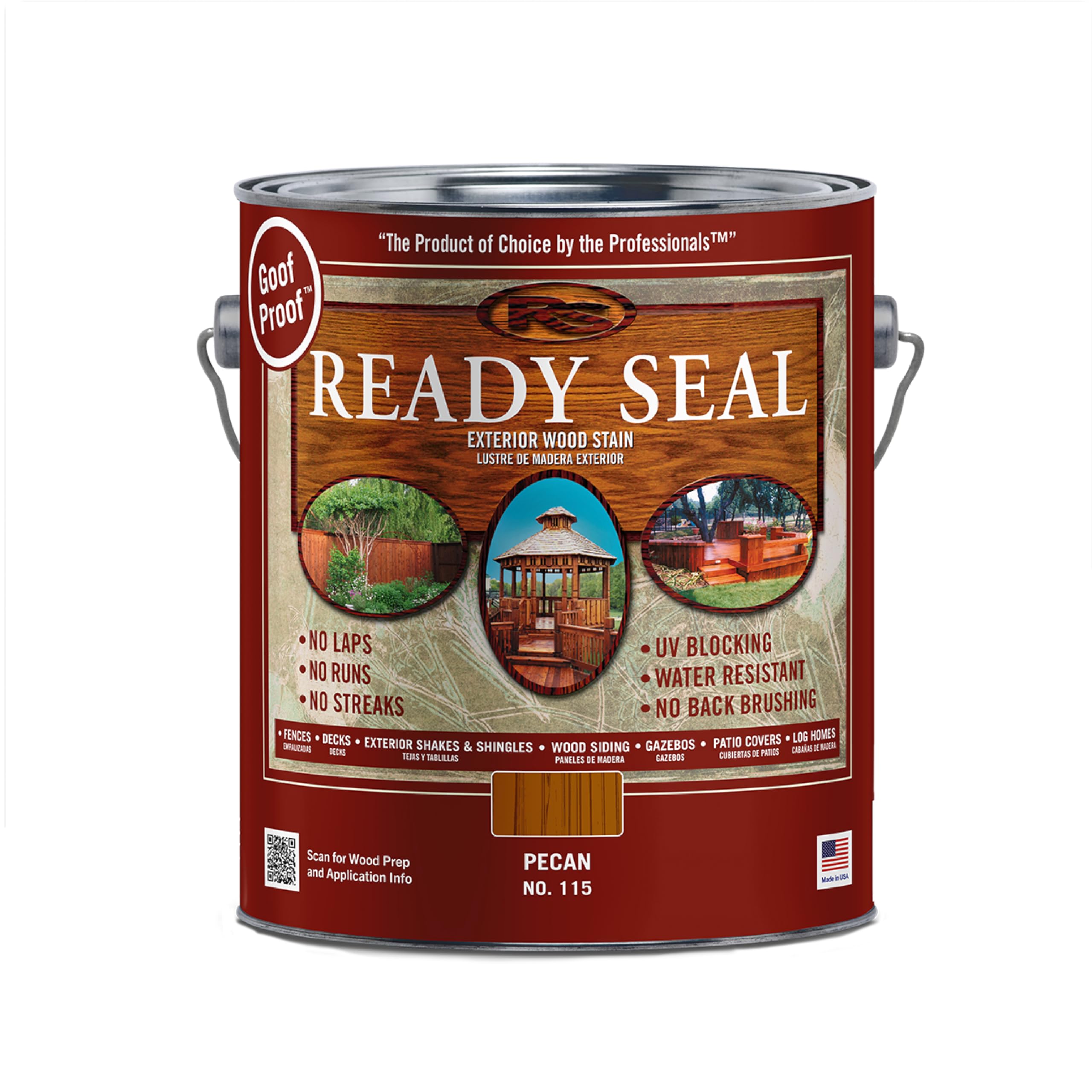
Pecan brown that blends itself — even if the sun is full and the boards are warm.
Application tolerance is the whole argument for this can. It can be applied in direct sunlight, it can be applied across a wide temperature range, and it needs no wet-line application because the formula blends itself. Rain within minutes of application is survivable. If your schedule means you stain when you can rather than when conditions are ideal, that flexibility is worth more than any spec on the label.
The oil base and flat finish keep the surface looking like wood rather than like a coating, and the Pecan tone lands in a mid brown that suits fences and outdoor furniture as readily as deck boards. There is no sanding or stripping required for reapplication, which is the detail that makes a maintenance coat realistic instead of intimidating. Ease of application is the second-strongest thing about it after overall quality — the reviews describe exactly the smooth, forgiving experience the “goof proof” claim promises.
Two things to know before you commit. First, coverage lists at 125 square feet per gallon, which is the tightest figure among the Ready Seal cans here — measure carefully on a large deck. Second, both longevity and coverage draw mixed reactions: some report the finish losing effectiveness over time, and a few hit drips or uneven patches on absorbent wood. Neither is a pattern, but both are why you should plan a light recoat rather than assume one application is final. At 7 pounds per gallon can it is also lighter in hand than the KILZ gallon at 9.3 pounds, which makes the overhead work on a fence line less punishing.
What it forgives: heat, direct sun, temperature swings, and light rain soon after you finish — conditions that ruin more finicky stains.
The number to respect: 125 square feet per gallon is the floor here, so a big deck needs two cans and rough lumber may need a third.
Pick it if: your staining window is short, the forecast is uncertain, or the sun hits your deck all afternoon.
Measure twice: with 125 sq. ft. per gallon, a generous deck will outrun a single can fast.
4. TWP 1530 Natural Low VOC Wood Preservation Stain, 1 Gallon
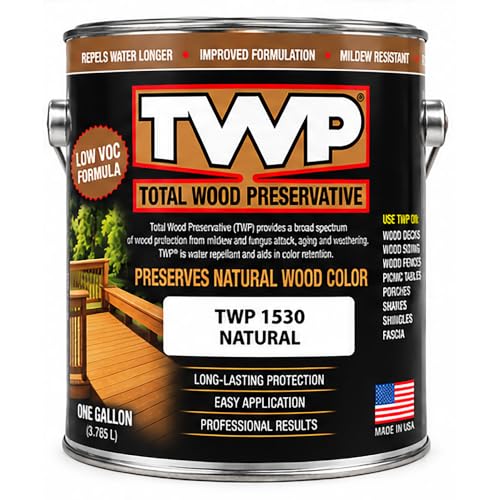
Formulated for low-VOC states, and built to preserve wood rather than just tint it.
If you live somewhere with VOC restrictions on exterior coatings, this can exists specifically to keep you compliant without downgrading protection. The 1500 series is labeled as a wood preservative, meaning its job is to guard against structural damage and wood decay, not merely to add color. That framing puts it closer to a treatment than a cosmetic stain, and it is why it suits log homes, siding, and older fencing as readily as a deck.
What the feedback consistently reflects is a professional-grade feel: the finish repels water well, and the protective barrier it leaves is described as durable against the elements. Quality is the standout in the feedback — nobody seems to be arguing with how it performs. Application is straightforward enough that DIY buyers report getting clean results without a sprayer, and the finish is labeled Semi-Gloss in the Natural tone, which reads shinier than a matte oil on a fresh board but shows wear more gracefully over time.
The practical caveats are real and worth naming. Coverage is listed as “broad coverage, suitable for various exterior wood surfaces” rather than a square-foot number, so you cannot do your can math in advance the way you can with the Ready Seal or KILZ cans — plan on a conservative estimate and buy a spare. The weight field on the listing reads 1.6 ounces, which plainly does not describe a full gallon jug; go by the 1 gallon liquid volume. And the container is a jug rather than a can, which pours differently on a roller tray. This is the specialist choice for restricted areas and preservation-minded owners.
Compliance without compromise: a low-VOC formula that still carries full preservative duty against decay, water intrusion, and sun damage.
Buy a spare jug: with no square-foot figure published, can math has to be estimated rather than calculated.
Best for: homeowners in low-VOC jurisdictions, or anyone treating logs and siding where decay protection matters more than color depth.
Skip the guesswork elsewhere: if you need a precise coverage number before buying, this listing will not give you one.
5. KILZ Waterproofing Wood Stain Cedar Naturaltone

The can that stretches furthest — 250 to 300 square feet on the first coat, 500 to 600 on the second.
Coverage is the reason to consider this one before anything else. A single gallon covers approximately 250-300 square feet on the first coat, and 500-600 square feet on the second — numbers no other can in this list approaches. For a large deck, that difference is two cans instead of three or four, and it is the kind of math that changes the whole project budget.
The formula itself is 100% acrylic, not oil, which is the one place this pick breaks from the article’s oil-based theme. That matters: acrylic protects against rain, snow, and sun damage and cleans up more easily, but it behaves as a coating rather than a penetrating oil. The color is the standout in feedback — the Cedar Naturaltone is described as looking better than the wood did before application, which is the compliment every stain wants. Application is smooth and the cure schedule is spelled out: wait 1-2 hours before recoating, and you can wash the fully cured surface after 72 hours.
Two honest notes. The warranty is 3 years on decks and 5 years on fences and siding, so the maker’s own expectation is a recoat cycle rather than a decade-long finish. And the transparency draws mixed opinions — some buyers find it lays down less grain-visible color than “semi-transparent” led them to expect, so check a sample board if grain clarity is your priority. At 9.3 pounds this is the heaviest gallon here, noticeably weightier in hand than the 7-pound Ready Seal Pecan.
The coverage math that matters: double the square footage of most cans here means a large deck finishes on fewer gallons.
The acrylic caveat: this is a film-forming coating, not a penetrating oil, and it reads heavier on the grain than the label tone implies.
Choose this when: your deck is big, your can count matters, and an acrylic coating suits your existing surface.
Think twice if: you specifically want oil penetration — the base here is acrylic.
6. DEFY Essential Wood Stain Light Walnut

Six color options and soap-and-water cleanup — a sensible entry point for railings and small projects.
Small jobs are where this one makes sense. A gallon covers 100-150 square feet across two coats, so it suits a railing set, a pergola, or a modest patio rather than a full wrap-around deck. The 250 VOC compliance and the soap-and-water cleanup both point the same direction: this is a friendlier product to handle, with less solvent smell and an easier end-of-day wash-up than a straight oil.
It is built with durable acrylic resins that resist cracking, peeling, and fading, and it works on all wood types including deck staining, fence stain, patios, and pergolas. The semi-transparent finish comes in six color options, and the formula includes protection against graying from UV rays and weather damage. The Light Walnut tone keeps things warm without going dark. Matte finish means no sheen to catch the light, which reads more natural on older wood.
Be clear-eyed about the footprint here. The feedback base is very small, so the consistent notes about color and fade resistance and water beading are encouraging but thin evidence compared with the big brands in this list — treat it as a reasonable bet on a small surface, not a proven long-haul performer. Note also the base material listing says water based, so this is not an oil-based pick despite sitting alongside them. At 7.5 x 3.25 x 12 inches the bottle is the most compact container here by a clear margin — the Ready Seal Pecan can measures 6 x 6 x 8 inches — which makes it easy to store between touch-ups.
Where it fits: railings, pergolas, and small patios where a 100-150 square foot per gallon can is enough for two coats.
The evidence gap: a small review base and a water-based formula mean this is a confident small-project pick, not a proven deck-wide one.
Suits you if: you are touching up railings or coating a modest surface and want an easy-cleanup formula.
Not your can if: you need oil penetration or a proven track record across a full deck.
7. Thompson’s WaterSeal Wood Sealer Chestnut Brown
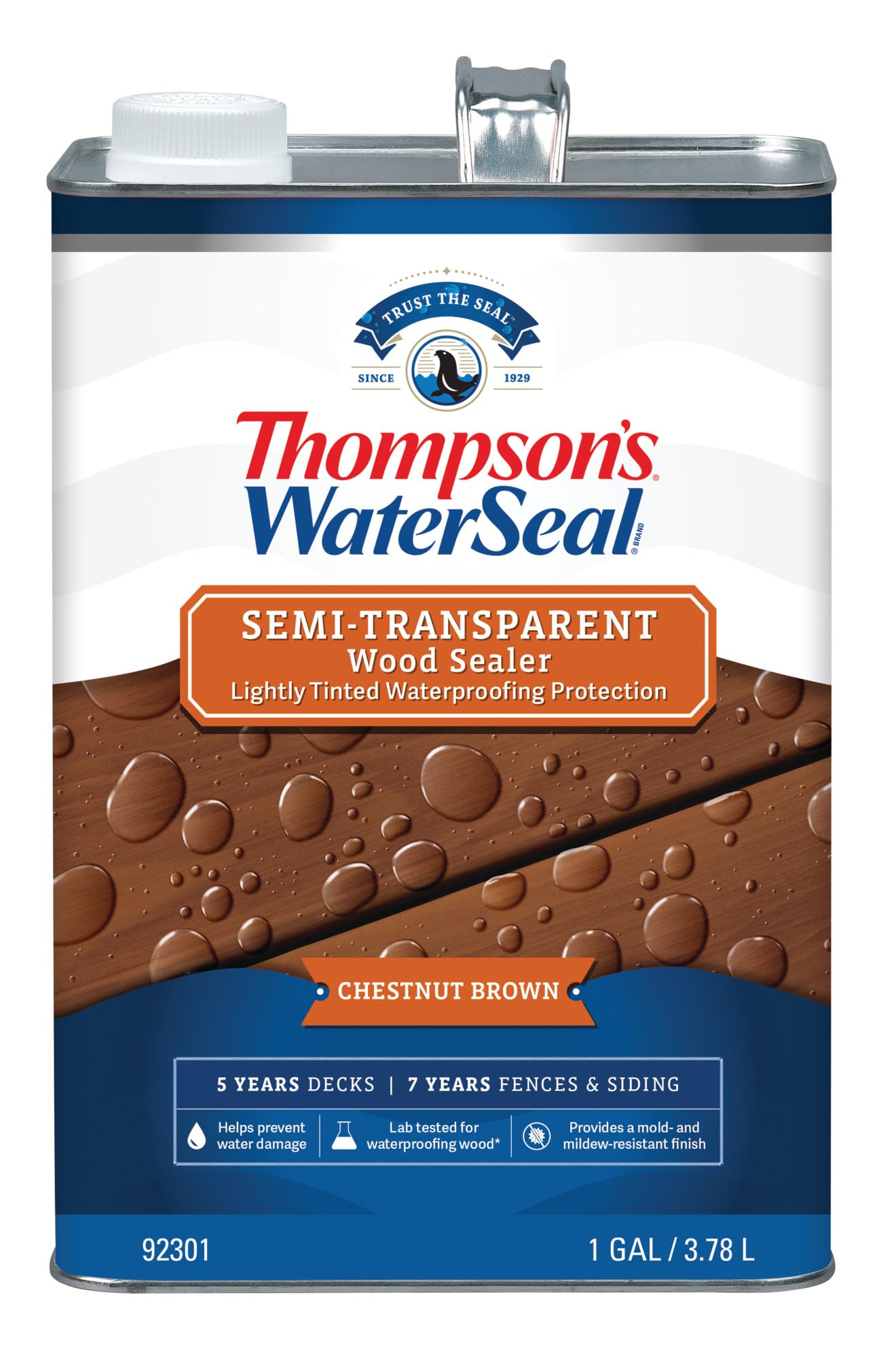
The water-beading workhorse with a published warranty and a one-coat promise.
Waterproofing is the clearest thing this can does. It is tested against ASTM D4446 for waterproofing wood, and the cured finish carries mildew resistance to help hold off mold and mildew. In plain terms, that is the layer that makes rain bead and roll rather than soak into your boards — the difference you actually notice when the weather turns.
The coverage range is unusually wide at 150 to 400 square feet per gallon, and that spread is telling. A smooth, sealed board sits near the top of that range; rough, open-grained lumber drinks toward the bottom. Budget your cans against the pessimistic end. Application is one recommended coat for year-round protection, and cleanup is soap and water, which keeps the end of the job simple. Note that the manufacturer’s coverage of 150 ft²/gal to 400 ft²/gal stands alongside an included warranty of five years on decks and seven years on fences and siding.
Where this one asks for patience is color and durability. The Chestnut Brown draws mixed reactions — plenty find it beautiful, and some report it lands darker than the advertised brown shade, so sample first on a light wood. Durability draws the most divided feedback of anything here, with one side reporting a finish that holds and the other side finding it does not carry past a season or so in exposed spots. That is the honest read: a solid waterproofing product whose longevity depends heavily on sun exposure and prep, and one best planned as a recurring coat rather than a one-and-done. Its base material field also lists wood rather than oil, so match it to how you intend to use it.
The waterproofing case: ASTM D4446 tested, mildew-resistant when cured, and one coat for year-round protection with soap and water cleanup.
Sample the brown: the Chestnut tone runs darker than some buyers expect, and exposed boards may want a recoat sooner than the warranty cycle.
Fits your plan if: waterproofing is the priority and you want a one-coat application with a stated warranty.
Order a sample board first: the Chestnut Brown shade and the season-by-season durability are the two things to verify on your own wood.
Know the Specs
Coverage in Square Feet Per Gallon
This is the number that decides how many cans you carry out of the store. A listing of 125-150 square feet per gallon means one can treats that much smooth wood in a single pass. Rough, weathered, or open-grained lumber absorbs far more, so treat the printed figure as a best case. Multiply your deck length by width, then divide by the low end of the range — that gives a realistic can count.
Oil-Based Versus Acrylic Base
An oil-based stain carries pigment and protection into the wood fibers, so the surface stays flat and the grain stays readable. An acrylic stain forms more of a film on top. Oil typically suits older, checked boards because it soaks into small cracks rather than bridging them. Acrylic tends to clean up more easily and resist fading in strong sun. Match the base to your existing surface and your tolerance for recoating.
Semi-Transparent and Grain Visibility
Semi-transparent means pigment is present but not dense enough to hide the grain pattern. The label covers a wide range in practice — some cans leave the grain crisp, others lay down noticeably more color. The only reliable test is a scrap board or a hidden corner, because the same tone reads completely differently on aged gray wood and on fresh cedar.
UV Protection and Weather Resistance
UV protection is what holds off the gray, sun-bleached look that tells you a deck has given up. Weather resistance covers water intrusion and temperature swings. Together they determine how long a finish stays presentable in an exposed spot. A can that lists both is doing more work than one that only tints. A stated warranty period is usually a fair signal of how long the maker expects the protection to hold.
Common Questions
Can I apply an oil-based deck stain over an existing acrylic coating?
How many gallons do I need for a standard deck?
What does semi-transparent actually mean for grain visibility?
Can I stain a deck in direct sunlight?
How soon can it rain after I stain my deck?
Do I need to sand or strip the wood before recoating?
Is oil-based better than water-based for a cedar deck?
Will a semi-transparent stain hide gray, weathered wood?
How long should I wait between coats?
Can I use a deck stain on fences, siding, and outdoor furniture too?
The Bottom Line
For most decks, the oil based semi transparent deck stain winner is the Ready Seal Redwood, because the self-blending oil formula removes the biggest failure point in the whole job — lap marks — while the stain and sealer work in a single can. If your deck is cedar, redwood, or pressure-treated and you want protection that soaks in rather than coats, the Armstrong-Clark Cedar Semi-Transparent is the specialist’s answer. And if you are staining in uncertain weather or full afternoon sun, the Ready Seal Pecan is the one to reach for.
The one honest nudge: the top pick carries the strongest combination of finish quality and forgiving application in this whole group, and it is the can most likely to make a first-time deck job look like a second-time one. Buy one can more than your math says, keep it for the railing touch-ups, and read the swatch test before you commit the whole deck.
How we choose
We do not accept paid placement. Every pick is matched to a real buyer and a real use-case; we do not hands-on test units.
Sources
Specifications: manufacturer listings and product documentation. Review insights: verified customer reviews, as of November 2026. Pricing: not shown on this page (it changes often); check the current price via the retailer link.
As an Amazon Associate, My Heart Lives Here earns from qualifying purchases. This does not affect which products we feature.