Heads up: This post contains affiliate links. As an Amazon Associate I earn from qualifying purchases, at no extra cost to you. Learn more
Specs are compiled from manufacturer listings and verified buyer reviews and can change over time — please confirm the key details on the product page before buying.
Most narrow walkers fail at the same moment: the doorway. A frame that measures 24 inches across will not clear a 22-inch opening, and a hallway cluttered with a laundry basket becomes a daily obstacle course. The picks below are chosen on measured width first and everything else second, so you can walk from the bedroom to the bathroom without turning sideways or lifting the frame.
This guide is built by comparing the manufacturers’ published specifications and the patterns across verified customer reviews, so you get each pick’s real strengths and trade-offs instead of marketing spin.
Width, wheel size, height range and weight capacity decide whether a walker actually works in your home, and each pick here is sorted on those numbers. These are the best narrow walkers for seniors for tight hallways, small bathrooms and older doorways.
Top Picks
How To Choose The Best Narrow Walkers for Seniors
Start with a tape measure, not a product page. Walk your route — bedroom to bathroom, kitchen to front door — and write down the width of the tightest opening you pass through every day. That single number rules out most frames before you compare a single feature.
Measure the opening, not the room
A frame listed at 23.5 inches wide needs an opening wider than that, because your hands and the wheel housings add a couple of inches of real clearance. If your tightest door measures 22 inches, you want a frame that adjusts down to 18 inches. The Delog and Agrish models here both do that.
Fixed frame or adjustable width
A fixed narrow frame is simpler and usually more rigid. An adjustable-width frame lets you narrow the stance for a tight doorway and widen it again in open rooms, which matters if you want more stability in the kitchen. The trade-off is more moving parts, and that is where a small wobble can appear.
Wheels versus rubber feet
Small wheels roll over tile and low thresholds but catch on deep-pile carpet. Larger wheels glide more easily outdoors. If you mostly walk indoors on hard floors, a 5-inch design is plenty. If the sidewalk is part of your route, look toward the 8-inch wheels on the rollator options.
Side-by-Side Comparison
| Model | Best For | Frame Width | Wheels | Weight / Capacity | Amazon |
|---|---|---|---|---|---|
| Vive Mobility Steel Rollator with Seat★ Best Overall | Tight hallways with a place to rest | 23.5″ wide | 6″ | 19 lb / 300 lb | Amazon |
| Agrish Narrow WalkerAdjustable Width | Adjustable width for small doorways | 18″ to 24″ | 5″ | 7.72 lb / 350 lb | Amazon |
| Delog Narrow Walker | Older homes with narrow doorways | 18″ to 22″ | — | 6 lb / 350 lb | Amazon |
| Whlicks Folding Walker with Tray | Carrying a drink and small essentials | — | 5″ | 9.24 lb / 350 lb | Amazon |
| Vive Mobility Lightweight Walker | Folding and lifting into a car | — | 6″ | 9.5 lb / 300 lb | Amazon |
| HOMLAND Foldable Rollator | All-terrain strolling with a seat | — | 8″ | 17.6 lb / 350 lb | Amazon |
| NOVA Star 8 Petite | Petite users from 4’10” to 5’4″ | — | 8″ | 18 lb / 300 lb | Amazon |
Detailed Reviews
1. Vive Mobility Steel Rollator Walker
Our pick — 4.5+★ from 550+ verified ratings; the strongest balance of quality and price.
A narrow rollator that lets you stop and sit when the hallway is long.
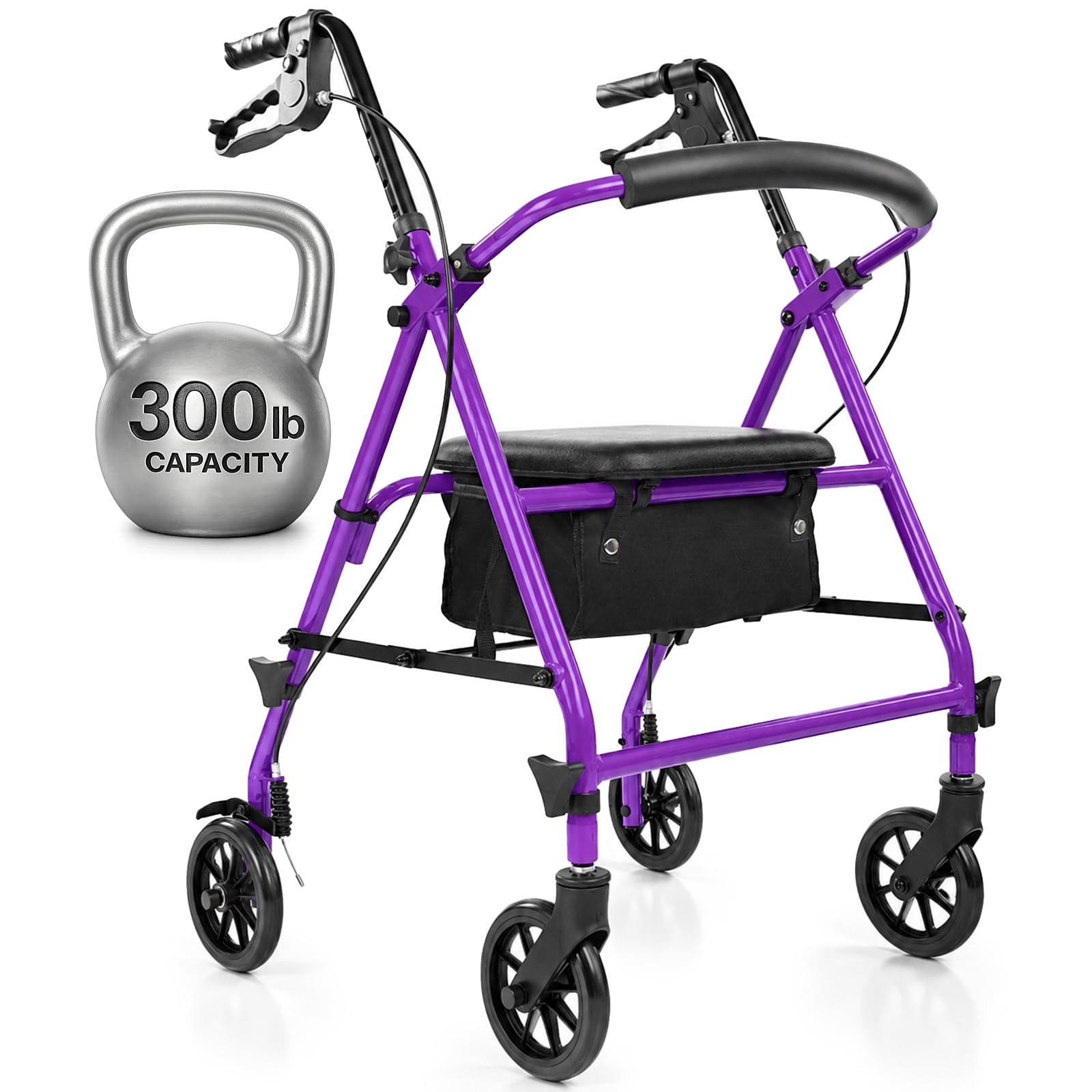
The frame measures 23.5 inches across, so this is the pick for a home where the tight spot is a hallway rather than a 20-inch bathroom door. What you get for that width is a seat — the thing no standard folding walker here offers. When the walk from the kitchen to the mailbox feels long, you turn around and sit down instead of looking for a chair.
The steel frame carries up to 300 pounds, which is the lower of the capacities in this group — the Agrish and Delog both list 350. That is a real ceiling to check against your own weight. At 19 pounds it is also the heaviest fixed-frame choice on this list, and that weight shows up when you lift it into a trunk.
Handle height runs from 31 to 36 inches, so it suits a range of users but stops short of the 39-inch top you get on the Vive lightweight walker. It arrives nearly tool-free to put together. The recurring gripe across the review pages is the braking — the wheels do not always lock cleanly — so test that on day one and treat the locks as a firm press, not a tap. Reviewers consistently praise the steel frame’s planted, solid feel under the hands.
What Earns Its Place
- A seat on a frame this narrow is rare — you can rest anywhere along your route
- 23.5-inch width clears tight hallways and turns in cramped corners
- Height adjusts 31″ to 36″ to fit a natural stride
- Included storage bag keeps keys and glasses within reach
Where It Demands Care
- 300-pound capacity sits below the 350-pound frames here
- 19 pounds is a lift, not a one-hand carry
- Wheel locks need a firm press to engage properly
The right call if: you want to sit down mid-walk and your tightest gap is a hallway, not a narrow doorway.
Think twice if: your doorway measures genuinely narrow — this frame needs an opening wider than 23.5 inches.
2. Agrish Narrow Walker
The width you set yourself, from a doorway squeeze to a roomy stance.
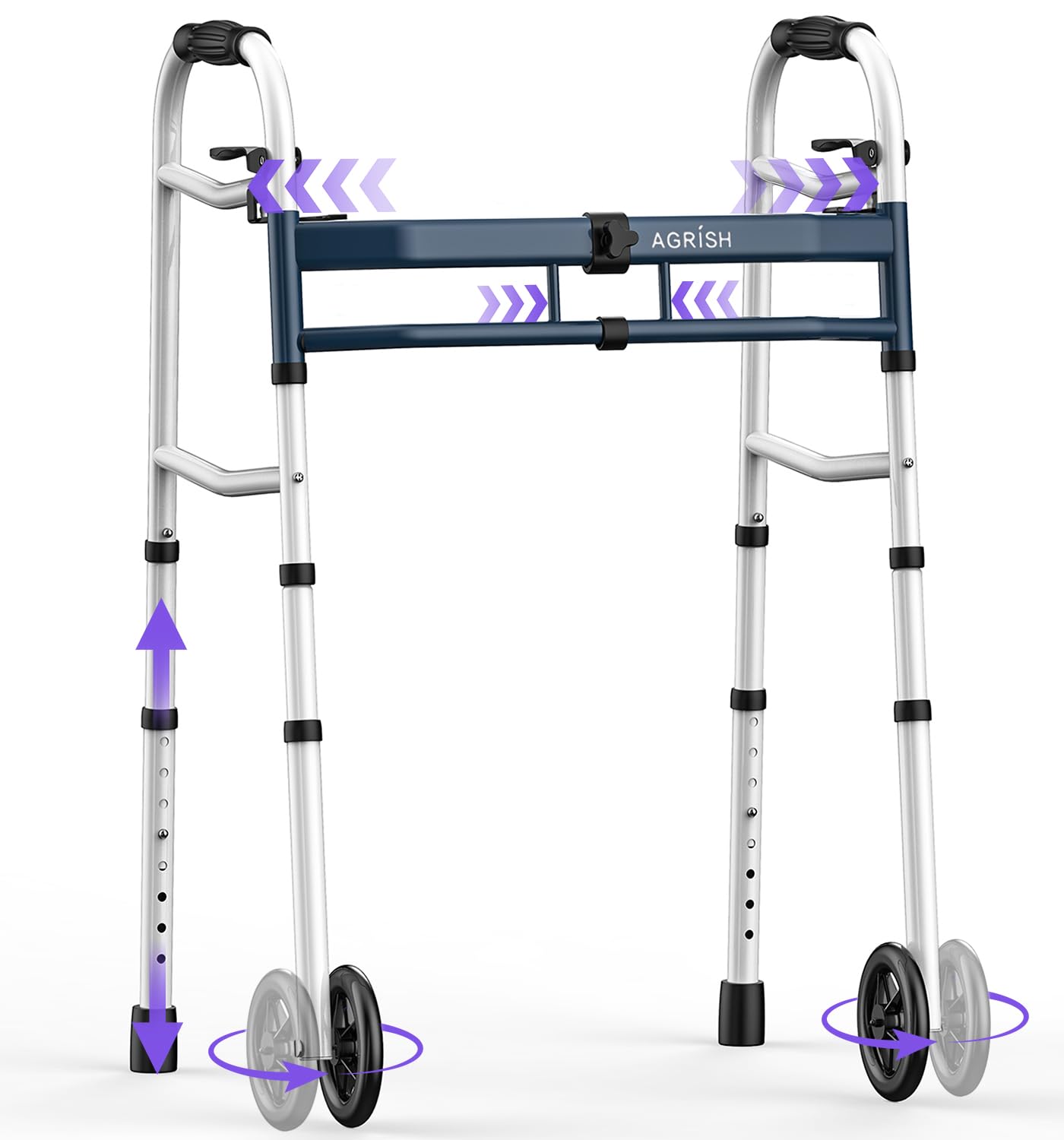
Here is the number that decides it: the frame adjusts from 18 inches to 24 inches wide. That means you can pull it in to pass a narrow bathroom door and open it back up in the living room for a steadier base. Adjustability is what buyers rave about most on this one, and it is the whole point of the design.
The aluminum frame holds up to 350 pounds while the walker itself weighs 7.72 pounds — light enough to lift with one hand into the back seat. Its 5-inch wheels can be mounted on the outside of the frame or rotated to the inside for tight spaces. That inside mounting is the detail that gets it through openings a fixed frame simply cannot manage. Handle height runs 32 to 41 inches, the tallest range in this group.
The honest caveat is that sturdiness divides owners. Some owners describe a firm, planted frame and others find it less steady than a heavier steel model, so this is a walker that rewards a wider stance in open rooms. Narrowing the frame also reduces the side-to-side sway you feel in the joints, so keep it at 18 inches only for the doorway and open it back up afterward. Assembly is quick, and the width loosening is done by hand.
The width is the feature: a frame that measures 18 inches on demand is what solves the older-home doorway problem.
What to expect: a light 7.72-pound frame that feels best when you open the width back up once you clear the tight spot.
Reach for this if: your doorways are genuinely narrow and you want one walker to handle both tight passages and open rooms.
Look elsewhere if: you want a rock-solid heavy feel and never plan to change the width.
3. Delog Narrow Walkers for Seniors, Small Walkers for Tight Spaces, Up to 350lbs

Six pounds of aluminum built for a house that predates wide doorways.
If your home has a 20-inch opening or a 22-inch doorway, this is the frame drawn for exactly that. The width adjusts from 18 inches to 22 inches, and the aluminum wall thickness reaches 1.2 mm while still holding up to 350 pounds. At 6 pounds it is the lightest walker in this article by a clear margin — light enough to swing into a car with one hand.
The trigger release is the clever part. Each side operates independently and closes without you lifting your fingers off the handle, which helps anyone with limited grip strength. On a narrow staircase landing, that frees a hand for the rail. Height adjusts from 30 to 37 inches in one-inch steps, with a soft ribbed grip on the handles.
Now the trade-off. Stability is the most-discussed topic on this walker and opinion splits: plenty find it sturdy, and a smaller group notices a slight wobble. A light 6-pound frame will always feel different from a 19-pound steel rollator, so keep the width open in open rooms and it behaves best. Assembly is straightforward, and the folding action is quick enough for daily trips.
Why It Suits Old Doorways
- 18-inch minimum width passes the tightest openings in older homes
- 6 pounds is easy to lift into a car or closet
- Trigger release closes each side without moving your hands
- 350-pound capacity on a very light frame
What It Asks of You
- A light frame can feel less planted than a heavy steel rollator
- Widening the stance in open rooms helps steady it
- Height tops out at 37 inches, short of the taller frames here
Best fit: a narrow-doorway home and a user who needs to lift the walker in and out of a vehicle daily.
skip it if: you want the planted feel of a steel frame and never carry the walker anywhere.
4. Whlicks Folding Walker
Carries the coffee so your hands can stay on the grips.
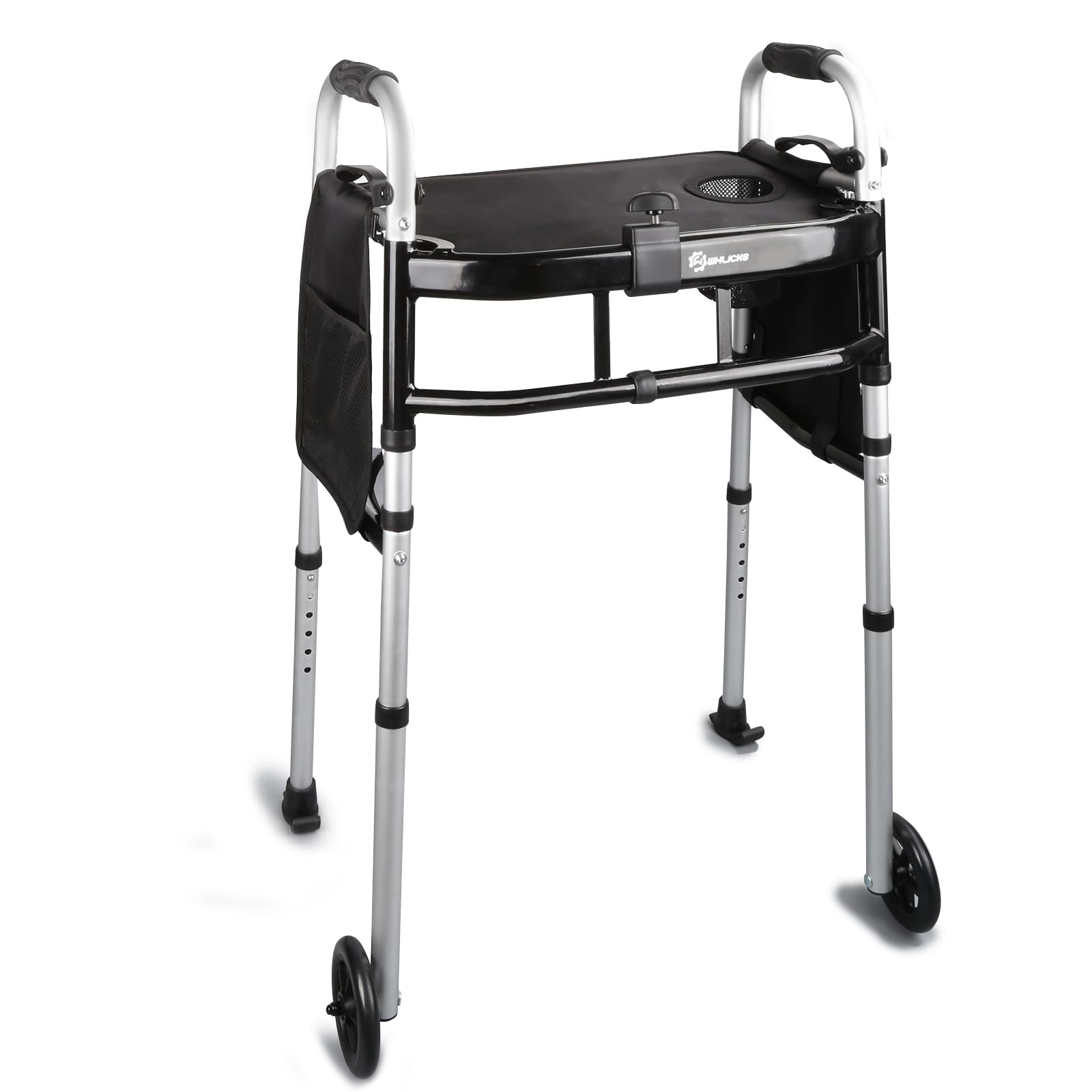
This one solves a different problem: what to do with the things in your hands. An 18-inch waterproof Oxford fabric tray sits across the frame with a built-in cup holder and side pockets, so a drink, a phone and the mail all have a home. The fabric wipes clean, and dual support bars under the tray keep it level.
It ships with pre-installed rubber feet plus two glide skis you can swap on for smoother gliding indoors and out. Its 5-inch wheels roll over floors, and handle height runs 31 to 37 inches to suit users from 4’7″ to 6’3″.
The catch is that this is a newer listing with a limited track record, so there is less owner history to lean on than the long-running picks here. The tray also adds width to the frame, so measure your doorway with the tray in place before you commit. Whlicks backs the main frame with a 3-year warranty and free replacement accessories within 1 year.
The real use case: someone who carries a cup and a purse from room to room and wants both hands free.
Measure first: the tray makes this a wider package than a bare frame, so check your doorway clearance before you buy.
Choose this if: carrying a drink and small essentials is the daily frustration you want solved.
Consider another pick if: you need a proven track record and the widest doorway clearance.
5. Vive Mobility Lightweight Walker
The fold-flat walker that skips the rear bar getting in your stride.
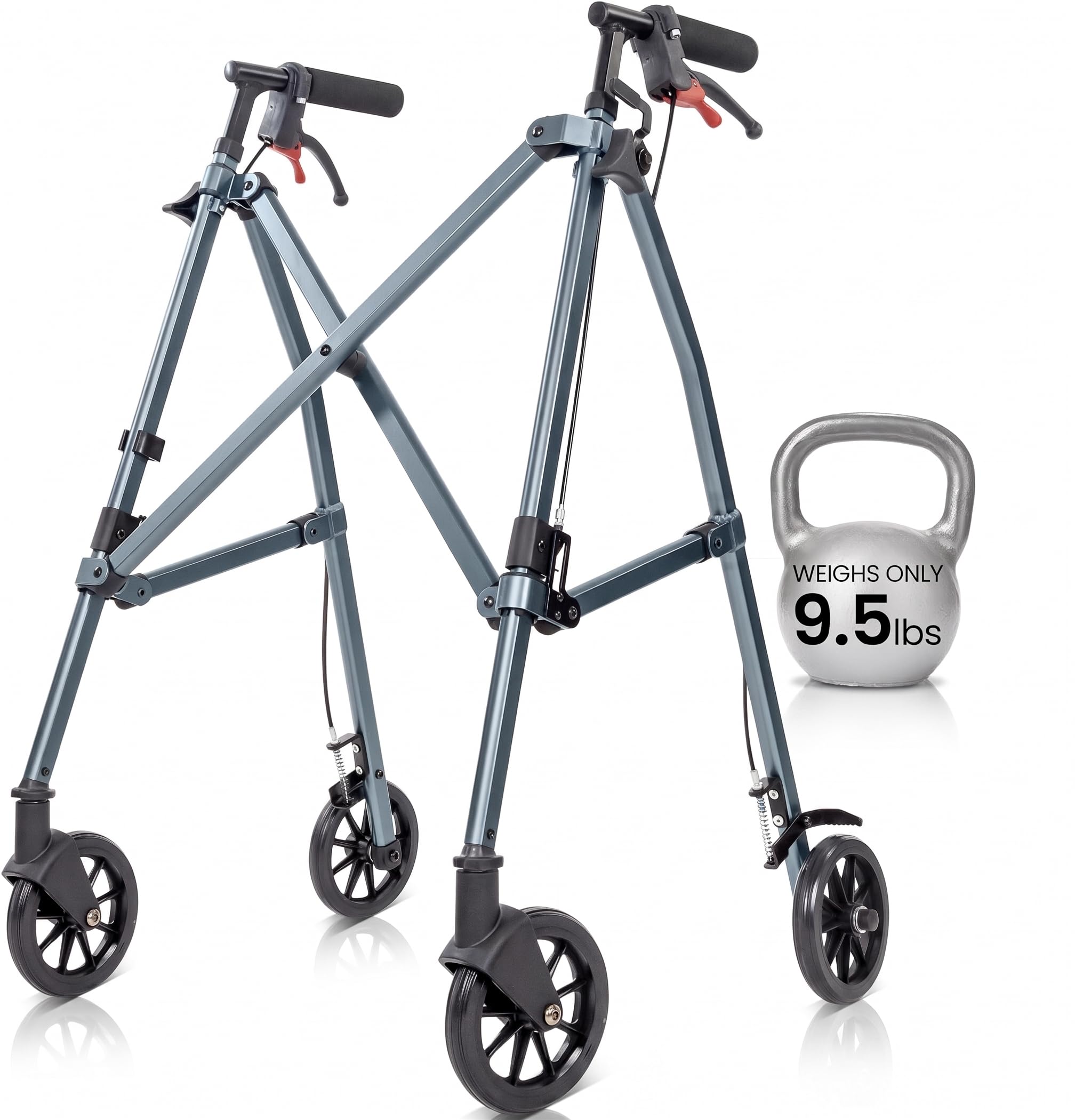
What makes this one different is what it leaves out. There are no rear bars behind you, so your legs swing through a natural stride instead of catching on a crossbar. The frame stays narrow for small hallways and sharp turns, and it folds in a single step with a patented locking system that keeps it shut in the closet or trunk.
It arrives pre-assembled and weighs 9.5 pounds while supporting up to 300 pounds. The 6-inch wheels roll over carpet, tile and pavement. Handle height adjusts from 33 to 39 inches, which tops the Delog’s 37-inch ceiling but falls short of the Agrish’s 41-inch maximum. Hand brakes on the grips give you stopping control on slopes.
Portability is the headline here, and owners rate it highly for folding into a small size and lifting in and out of cars. The honest note is stability: some owners find the front wheels wobble slightly on rough ground. On smooth indoor floors it tracks fine. The lifetime frame guarantee is a genuine long-term backstop.
Standout Traits
- Open frame with no rear bars lets you walk a full stride
- Folds in one step and locks closed for storage
- 9.5 pounds lifts easily into a trunk
- Arrives fully assembled — unfold and go
Keep in Mind
- Front wheels can wobble on uneven ground
- 300-pound capacity is below the 350-pound frames here
- Tall top height suits taller users, less ideal for shorter frames
Made for: the user who is in and out of the car and wants a full stride without a bar behind the legs.
Look at the Delog instead if: you need the lightest possible frame and a lower handle starting point.
6. HOMLAND Foldable Rollator Walkers for Seniors with Seat, 17 lb Lightweight
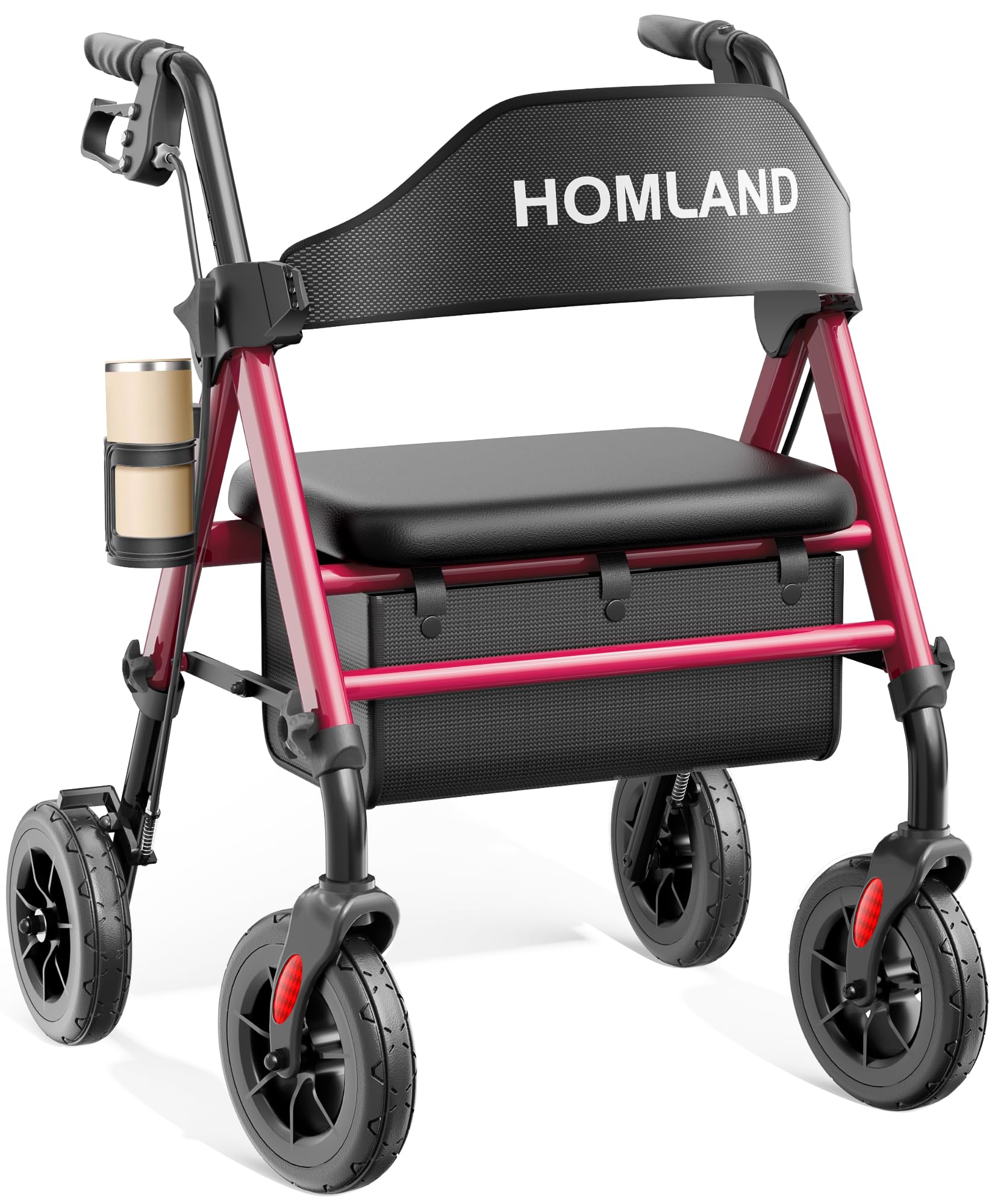
Eight-inch wheels and a memory foam seat for the longer walk outside.
When your route includes the sidewalk and the park path, wheel size starts to matter more than frame width. This rollator runs 8-inch rubber wheels, which roll over uneven pavement more easily than the 5-inch designs here. It carries up to 350 pounds and weighs 17.6 pounds, so it is a sit-and-rest machine rather than a lift-and-carry one.
The seat is where the comfort lives: an extra-wide memory foam cushion with a widened breathable backrest, so a rest stop feels like a rest stop. Handles adjust from 33 to 40 inches and the seat height from 20 to 23 inches, fitting users from 4’7″ to 6’6″. A removable cup holder, a large storage pouch and reflective strips for evening visibility round it out.
Assembly is easy and the brakes work smoothly in regular use, including the push-up brake and push-down wheel lock. The recurring note is that screws and knobs can work loose over time on the folding joints, so a quick tighten now and then keeps it steady. Three-second folding gets the whole thing into a trunk without a wrestling match.
Where it shines: outdoor walks and long days where a cushioned seat makes the trip possible.
One maintenance habit: check the joint screws periodically — a quick tighten keeps the frame feeling planted.
Pick this one for: errands and outdoor strolls where 8-inch wheels and a padded seat do the heavy lifting.
Not your match if: you need the narrowest possible frame for a tight indoor hallway.
7. NOVA Star 8 Petite Rollator Walker
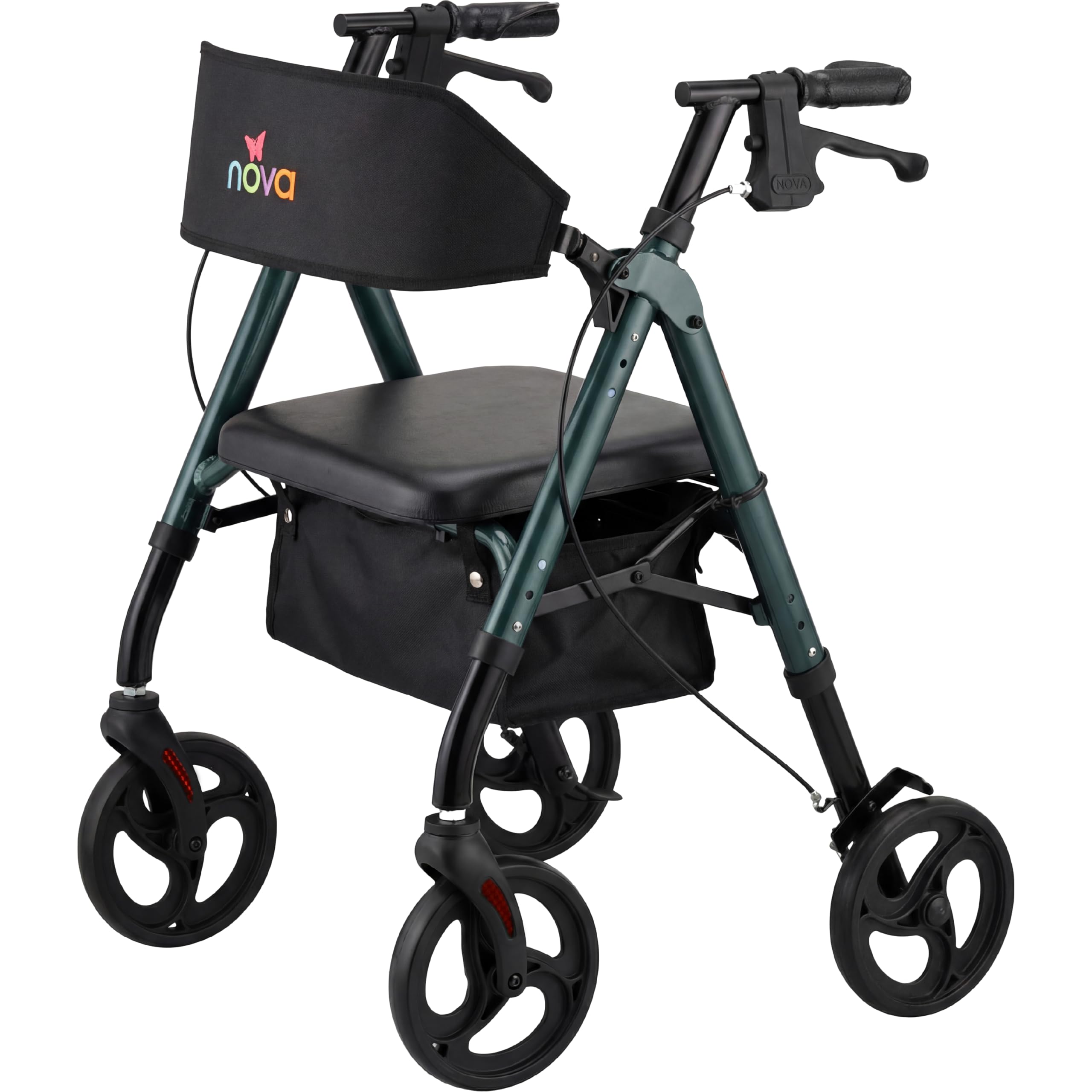
Built for the shorter frame that most rollators quietly ignore.
Most walkers set their handles for a taller user and ask a shorter one to reach. This one is built for 4’10” to 5’4″ with handles that start at 29 inches and top out at 33.25 inches, plus a narrower gap between the grips. The seat offers three height options — 18, 19 or 20 inches — so a petite user can sit without her feet dangling.
The aluminum frame weighs 18 pounds and supports up to 300 pounds. Rugged 8-inch wheels give it control on indoor floors and outdoor paths. A padded seat and extra-wide backrest make rest stops comfortable, and a built-in storage pouch keeps small items close. Quick-fold storage and ergonomic locking hand brakes finish the package.
Sturdiness and smooth rolling are what owners praise — it glides over uneven surfaces without a fight, and assembly and disassembly are easy for travel. The honest note is weight: at 18 pounds, some find it a little heavier than expected when lifting it into a car. That is the price of an 8-inch-wheel rollator with a padded seat. If your route never leaves one floor, a lighter fixed walker will suit you better.
Why Petite Users Choose It
- Handles start at 29 inches for a shorter reach
- Narrower width between the grips for a smaller frame
- Seat height options of 18″, 19″ or 20″
- 8-inch wheels glide over uneven ground
The Honest Limits
- 18 pounds is heavier than the folding walkers here
- 300-pound capacity is below the 350-pound options
- Built for a petite range, so a taller user will not fit it well
Right for you if: you stand under 5’4″ and every other rollator has felt like it was made for someone else.
Pass if: a taller frame or a lower lift weight is your priority.
Know the Specs
Frame Width and Adjustable Width
The listed width is the outside measurement of the frame. A fixed frame at 23.5 inches needs an opening wider than that once your hands and wheel housings are added. An adjustable-width frame lets you dial down to a set number — 18 inches on the Agrish and Delog here — to pass a narrow door, then open back up for a steadier stance in a larger room.
Weight Capacity and Frame Weight
Capacity tells you how much weight the frame is built to hold — 300 or 350 pounds across these picks. Frame weight tells you how much lifting you will do. A 6-pound aluminum frame swings into a trunk with one hand; a 19-pound steel rollator wants two hands and a clear path. Lower capacity numbers usually come with sturdier steel, so match the number to your own weight first.
Handle Height Range
The height range is the span the handles adjust through. Too low and you stoop; too high and you reach. A range of 29 to 33.25 inches is built for a petite user, while 33 to 41 inches covers taller frames. Check the bottom of the range against the user’s height, not just the top.
Wheel Size
Smaller 5-inch wheels suit hard indoor floors and low thresholds. Larger 8-inch wheels roll over pavement cracks and uneven ground more easily. If the sidewalk is part of the walk, size up. If your route stays indoors, a smaller wheel keeps the frame lower and easier to turn.
Common Questions
How do I know if a narrow walker will fit through my doorway?
Is an adjustable-width walker as sturdy as a fixed frame?
What is the difference between a walker and a rollator?
How much weight should I look for in the capacity rating?
Will a narrow walker handle carpet and rugs?
How do I set the handle height correctly?
Are these walkers covered by HSA or FSA funds?
Can I fold a narrow walker for travel in a car?
How often should I check the brakes and joints?
Is a lighter walker always the better choice?
The Bottom Line
For most people, the narrow walkers for seniors winner is the Vive Mobility Steel Rollator with Seat because its 23.5-inch frame slips through tight hallways and gives you somewhere to sit when the walk gets long. If the doorway itself is the problem, the Delog narrows to 18 inches at only 6 pounds, and the Agrish adds adjustable width up to 24 inches for a steadier stance in open rooms. For outdoor walks with a cushion under you, the HOMLAND and its 8-inch wheels are the one to reach for. Measure your tightest doorway first, then pick the frame that clears it.
How we choose
We do not accept paid placement. Every pick is matched to a real buyer and a real use-case; we do not hands-on test units.
Sources
Specifications: manufacturer listings and product documentation. Review insights: verified customer reviews, as of November 2026. Pricing: not shown on this page (it changes often); check the current price via the retailer link.
As an Amazon Associate, My Heart Lives Here earns from qualifying purchases. This does not affect which products we feature.