Heads up: This post contains affiliate links. As an Amazon Associate I earn from qualifying purchases, at no extra cost to you. Learn more
Specs are compiled from manufacturer listings and verified buyer reviews and can change over time — please confirm the key details on the product page before buying.
What you want is simple: a daily nutrient top-up your child will actually take, without a fight at breakfast. Most parents shopping in this corner of the shelf are looking for a multivitamin that fills real dietary gaps, is easy to swallow or chew, and does not turn into a negotiating session every morning. The five options below all solve that core problem in different ways — one leads with tiny capsules, others lean on gummies built around focus and calm — and the first pick is the one that best balances what a kid will accept with what a parent can feel good about giving.
This guide is built by comparing the manufacturers’ published specifications and the patterns across verified customer reviews, so you get each pick’s real strengths and trade-offs instead of marketing spin.
You will see exactly what each formula contains, how it is swallowed or chewed, and where it falls short — so you can match the bottle to your child rather than to the label. Start with the comparison table, then read the reviews to find the right multivitamin for kids with adhd.
Top Picks

How To Choose The Best Multivitamin For Kids With ADHD
Start here: no vitamin treats attention differences, and any bottle that hints otherwise is overselling. What a good daily supplement does is close the gaps a fussy or narrow diet leaves open, and do it in a form your child will take every single morning without a battle. Those two things — the nutrient form and the delivery format — are where the real decision lives.
Format first: swallow, chew, or gummy
Swallowable capsules can carry iron, folate, and coenzyme B vitamins in a precise dose, and a genuinely small capsule is what makes that possible for a child. Gummies are easier to hand over, but they usually compress the formula into fewer nutrients and add their own taste-and-texture hurdle. A child who gags on a large tablet is a capsule candidate. A child who refuses anything but a chewy sweet is a gummy candidate.
The nutrient form is not the same across bottles
Folate arrives either as folic acid or as methylated folate — the already-active form the body can use more readily. B vitamins come either as standard forms or as coenzyme forms, which the label will say outright. Iron sourced as iron bisglycinate is chosen precisely because it is reported to be gentler on the stomach than the cheaper iron salts. If a formula lists these forms by name, that is a sign the maker is telling you where the money went.
Read the “free-from” list, not just the headline
For a child on a restricted diet, the reassuring words are specific: gluten-free, dairy-free, non-GMO, vegetarian, no artificial colors or flavors. Third-party testing is the other phrase to look for, because it means an outside lab checked purity and potency rather than the maker grading its own work. None of this replaces a conversation with your child’s doctor about what they actually need — it just tells you which bottles are worth bringing to that conversation.
Side-by-Side Comparison
| Model | Best For | Format | Key Actives Listed | Free-From / Testing | Amazon |
|---|---|---|---|---|---|
| Super Mini-Multi★ Best Overall | Kids who gag on pills | Swallowable capsule, 120 count | Methyl folate, methyl B12, coenzyme B vitamins, iron bisglycinate | No sweeteners, gluten-free, dairy-free, non-GMO, vegetarian, third-party tested | Amazon |
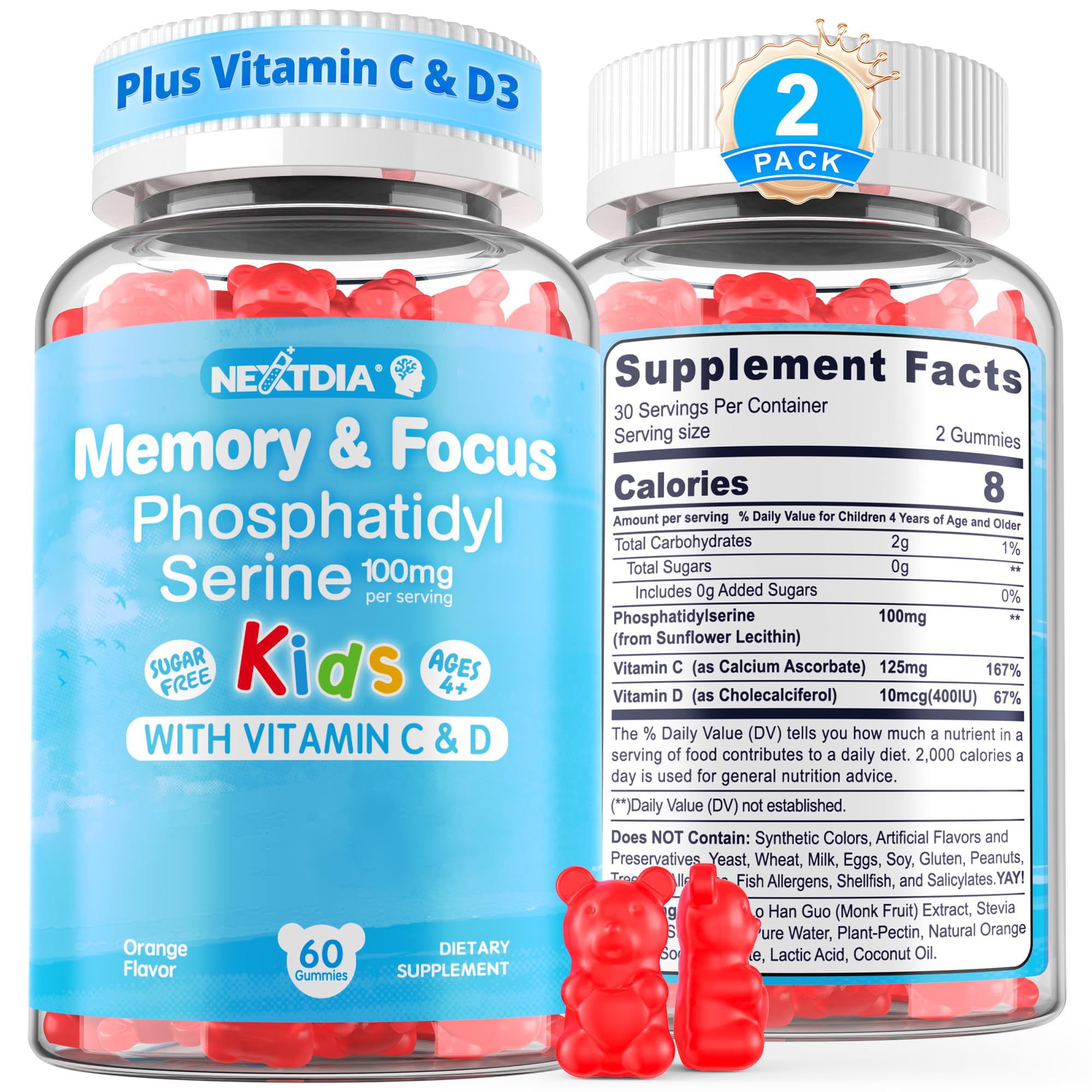
| Phosphatidylserine 100mg GummiesFocus Formula Pick | Focus support in a gummy | Gummy, zero sugar | 100mg Phosphatidylserine, 125mg Vitamin C, 400 IU Vitamin D3 | Gelatin-free, gluten-free, no artificial flavors or preservatives | Amazon |
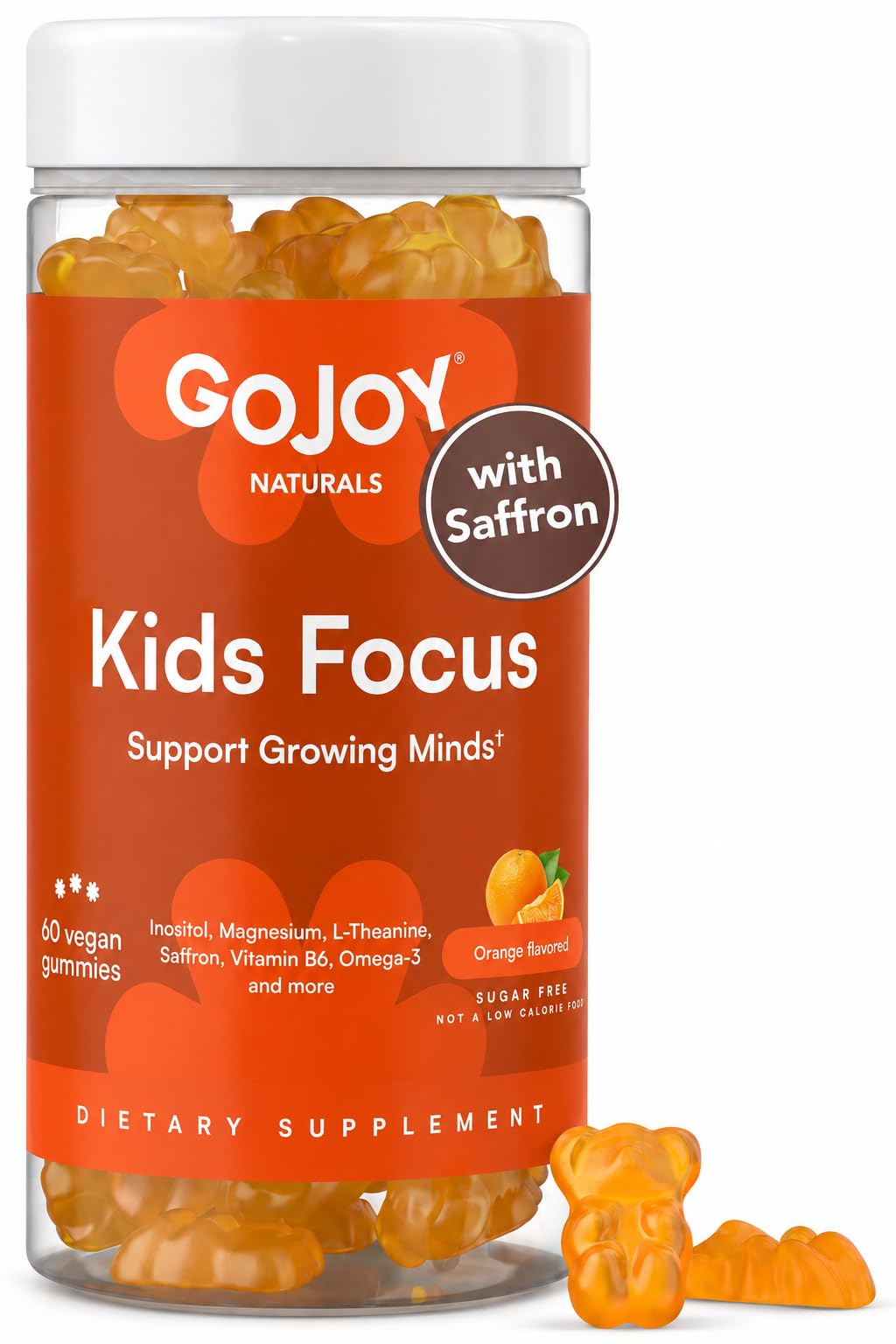
| GOJOY NATURALS Kids Focus Gummies | Calm-and-focus blend | Gummy, vegan, sugar-free | Saffron extract, magnesium glycinate, L-theanine, myo-inositol, zinc, B6, iron | Vegan, gluten-free, sugar-free, soy-free, third-party tested | Amazon |
| BrightKids Focus Gummies | Picky eaters, travel days | Gummy, 60 count | Omega 3 DHA plus kids’ brain vitamins | Non-GMO, gluten-free, gelatin-free, drug-free, Made in USA | Amazon |
| Focus Kids Gummies | Omega blend in a gummy | Gummy, 60 count | DHA and Omega 3-6-9 | Caffeine-free, non-stimulant, non-habit forming, GMP lab tested, Made in USA | Amazon |
Detailed Reviews
1. Super Mini-Multi Capsules
Our pick — 4.5+★ from 950+ verified ratings; the strongest balance of quality and price.
The capsule so small it ends the morning pill fight before it starts.
If your child needs a real nutrient panel but cannot get a standard tablet past their lips, this is the bottle to start with. The capsule measures 0.59 inches long, 0.2 inches wide and 0.16 inches high, and weighs 2.4 ounces as a whole bottle — in practice that means a pill small enough for a younger child to swallow with a mouthful of water rather than a chew-and-grimace routine. That tiny size is why this pick leads: a vitamin only works if it gets swallowed.
The small capsule still carries a full nutrient panel. Folate here is methylated folate, the already-active form the body can use, and the B vitamins come in coenzyme forms that the label names outright. Iron is iron bisglycinate, chosen because it is reported to be easier on a small tummy than the cheaper iron salts. The bottle is also free of sweeteners, gluten, dairy and artificial colors or flavors, and it is vegetarian and non-GMO. Wellness Resources has made supplements since 1985, and the capsules are third-party tested for purity and potency.
What wins people over is quality plus swallowability — the capsule goes down without complaint, and the panel lists a full array of vitamins and minerals rather than a token few. The trade-offs are honest ones. The taste is a split verdict, and the more consistent note is the smell, which more parents find off-putting than appealing. There is also a storage quirk worth knowing: the ingredients absorb moisture from the air, so over time you may see spotting on the capsules. That is expected, not mold — keep them in the original bottle with the included desiccant in a cool, dry place and it stays a non-issue.
Why this one leads
- 0.59 x 0.2 x 0.16 inches — a genuinely tiny capsule a child can swallow
- Methyl folate plus coenzyme B vitamins in their labeled active forms
- Iron bisglycinate for a gentler stomach than standard iron salts
- No sweeteners, gluten-free, dairy-free, non-GMO and vegetarian
- Third-party tested for purity and potency
What to expect going in
- The smell draws more complaints than praise
- Taste splits parents — some fine, some too strong
- Capsules can spot over time from airborne moisture; store with the desiccant
Made for: a child who can swallow a small capsule but freezes at a big tablet, and a parent who wants the full nutrient panel in a precise dose.
Think twice if: your child will only accept a chewy gummy — the capsule format, not the formula, is the blocker there.
2. Phosphatidylserine Supplement 100mg Gummies
A gummy that leads with a named dose and skips the sugar while it does it.
This one is for the household where a capsule is a non-starter but a measured dose still matters. Each serving carries 100mg of phosphatidylserine, 125mg of Vitamin C and 400 IU of Vitamin D3 — three named nutrients at stated amounts, which is more than most gummies bother to disclose. The phosphatidylserine is made with sunflower lecithin, and the gummies are zero sugar, using monk fruit as the sweetener instead. No artificial flavors or preservatives, and the formula is gelatin-free and gluten-free.
Compare the footprint and the difference is stark. This bottle is 4.7 x 2.4 x 4.3 inches and 14.82 ounces, while the Super Mini-Multi above is 0.59 x 0.2 x 0.16 inches and 2.4 ounces. Neither is “better” in the abstract — one is a shelf-friendly gummy jar and the other is a pocket-size capsule bottle — but if counter and cupboard space are tight, that gap is real.
The plain-English read on phosphatidylserine is that it is a nutrient the brain uses, and this formula pairs it with two familiar vitamins rather than stacking ten unfamiliar ones. Parents report the focus support is the thing they notice, and the taste lands well with kids, which matters because a gummy’s whole job is to get eaten. The honest catch is side effects: stomach discomfort is the one that comes up, so start with a single gummy and see how your child handles it before committing to the full routine. An occasional parent also reports no change at all, which is true of every supplement on this list.
Where the value sits: a disclosed 100mg dose plus Vitamin C and D3 at stated amounts, in a zero-sugar gummy that kids accept — a combination that keeps the routine simple.
The fair warning: stomach discomfort is the reported downside, so ease in rather than going straight to a full serving.
Best fit: a gummy-only child whose parents want a named, measured phosphatidylserine dose.
Skip when: your child has a sensitive stomach and you would rather trial a capsule formula first.
3. GOJOY NATURALS Kids Focus Gummies
Seven named ingredients aimed at the restless-afternoon crowd, in one orange gummy.
If the pattern you see at home is a child who cannot settle rather than one who cannot swallow, this is the formula built for that shape of the problem. It puts seven listed ingredients in one gummy: saffron extract, magnesium glycinate, L-theanine, myo-inositol, zinc, Vitamin B6 and iron. Magnesium glycinate is included for a calm nervous system, myo-inositol for emotional balance, and L-theanine alongside the saffron for concentration. It is dosed for kids 4 and up through teens, third-party tested, and free of melatonin, stimulants and artificial flavors.
That seven-ingredient stack is the reason to pick it over a simpler single-nutrient gummy — you are getting a calm-and-focus blend rather than one active. The bottle is 5.08 inches long, and the gummies are vegan, gluten-free, sugar-free and soy-free, made in a GMP-certified facility. Focus is the aspect that lands best: parents describe children settling in and paying attention more readily, which is exactly the promise the ingredient list is making.
Here is the trade-off you need to weigh before you buy. Taste is the most-discussed topic on this bottle and it splits hard — a large share of parents find the gummies great, a similar share find them awful, and the kids who refuse them are a real group. Effectiveness is the other split: some families call it a turning point, others see no difference. That is typical of a seven-ingredient calm blend. If your child is fussy about flavor, buy one bottle first rather than committing to a haul.
The formula, in plain terms
- Seven named ingredients: saffron extract, magnesium glycinate, L-theanine, myo-inositol, zinc, B6 and iron
- No melatonin, no stimulants, no artificial flavors
- Vegan, gluten-free, sugar-free and soy-free
- Dosed for ages 4 through teens and third-party tested
Where it asks patience
- Taste divides families sharply — some kids refuse it outright
- Results are genuinely mixed; not every child shows a change
- Seven ingredients mean more chances for a sensitivity to show up
Reach for this if: your child is restless and distractible, takes gummies willingly, and you want a calm-leaning multi-ingredient blend.
Look elsewhere if: flavor is already the battleground at your house — start with the single-dose gummy instead.
4. BrightKids Focus Gummies

Lemon and orange gummies with no fishy aftertaste, built for the kid who tastes everything.
Omega 3 is the nutrient most parents are chasing when they walk into this aisle, and this is the gummy that delivers it without the fish-oil burp that ends the experiment. The DHA comes in a chewable lemon-orange gummy described as having no fishy aftertaste, which is the single detail that decides whether a DHA supplement survives past week two. It is non-addictive, non-habit forming, non-stimulant and caffeine-free, and the formula is non-GMO, gluten-free and gelatin-free.
Production is also spelled out: made in USA-based cGMP-certified facilities, third-party tested for safety, and confirmed drug-free. That matters if you want to hand a gummy to a teenager without worrying what is in it. The bottle is 3.5 x 2 x 3.5 inches and 8.15 ounces, so it travels fine in a backpack or a carry-on.
What you should go in knowing is that effectiveness is the most-discussed topic on this bottle and it splits — a real share of parents say the gummies work, and a real share are not sure they do anything. Taste divides the same way: some kids love the lemon-orange, others find it horrible. A smaller group of parents questions the value outright. None of that makes it a bad buy — it makes it a try-one-bottle-first buy, especially if your child has already rejected a fishy DHA capsule.
Why it earns a slot: a DHA gummy with no fishy aftertaste in lemon and orange, drug-free, non-stimulant and third-party tested in a cGMP-certified US facility.
The one to weigh: results are a genuine coin-flip for some families, so treat the first bottle as the test rather than the commitment.
Best for: a picky eater who will take a fruity chewable but balks at anything that tastes of fish, and a teen who wants something drug-free.
Not the pick if: your child’s diet already covers omega-3s and you need a broad multivitamin panel instead.
5. Focus Kids Gummies for Kids and Teens – DHA & Omega 3-6-9

One gummy covering DHA plus the full omega 3-6-9 spread, made for school mornings.
This is the option for the parent who wants their child’s fatty-acid bases covered in a single chew rather than three separate bottles. The formula combines DHA with an omega 3-6-9 blend and is aimed at school and study concentration, and it adds support for the immune system alongside brain function. It is caffeine-free, non-stimulant, non-habit forming and non-addictive, and it is tested in GMP-certified labs and made in the USA.
Where this one stands apart from the BrightKids gummy above is scope rather than dose: BrightKids centers on DHA in a lemon-orange chew, while this bottle spreads across omega 3, 6 and 9 together. If you specifically want a DHA-focused gummy with a citrus flavor story, the BrightKids pick fits better. If you want the wider omega spread, this is the one that offers it.
Taste is where this bottle gets discussed most, and it does not land cleanly — roughly as many parents call the gummies great as call them horrific, and an unpleasant smell is a recurring note that no one defends. Effectiveness is close to a coin-flip too, with some families seeing help and others seeing none, and a smaller group questions the value. The gummies themselves are 3.5 x 2.5 x 3.5 inches at 8.15 ounces, so storage is easy. Go in expecting to trial it, and be ready to switch if the flavor or smell ends the routine.
What it brings to the shelf
- DHA plus a full omega 3-6-9 blend in one gummy
- Caffeine-free, non-stimulant, non-habit forming and non-addictive
- GMP lab tested and made in the USA
- Adds immune support alongside brain-function nutrients
What parents run into
- Taste splits sharply, and smell is a repeated complaint
- Effectiveness is mixed — some children show no change
- A smaller share of parents question the value
Pick it when: you want DHA and the omega 3-6-9 trio in one daily gummy and your child is not smell-sensitive.
Pass when: sniff-test resistance is already your daily problem — the smell here has ended more than one routine.
Know the Specs
Methylated folate vs. folic acid
Folate is the nutrient behind the “brain health” claim on these bottles, and it comes in two forms. Folic acid is the standard form; methylated folate is the already-active version the body can use more readily. A label that names methyl folate is telling you it chose the second form. In plain terms, it means less of the dose is wasted in conversion — though which form suits your child is a question for their doctor, not a label.
Iron bisglycinate and gentle iron
Iron is the mineral most likely to upset a small stomach, and the form matters. Iron bisglycinate is a chelated form — iron bound to an amino acid — chosen because it is reported to be easier on the tummy than the cheaper iron salts. If your child has reacted badly to iron before, a formula that names bisglycinate on the label gives you something specific to compare against.
Phosphatidylserine and DHA
These are the two ingredients most gummies in this aisle are built around. Phosphatidylserine is a nutrient the brain uses, and the bottle that leads with it states 100mg per serving along with 125mg Vitamin C and 400 IU Vitamin D3. DHA is an omega-3 fatty acid, and the gummies that carry it usually also flag whether it has a fishy aftertaste — a flavor detail, not a spec, but the one that decides whether the bottle gets finished.
Capsule size and swallowability
Capsule dimensions sound like listing metadata until you realize they are the whole buying decision for a child who gags. A capsule measuring 0.59 inches long and 0.2 inches wide goes down with a sip of water; a gummy measuring 5.08 inches tall as a bottle is a different ritual entirely. Match the format to the child first, then read the nutrient panel — a perfect formula your child refuses is money spent on a shelf ornament.
Common Questions
Can a multivitamin actually help my child focus at school?
Is a swallowable capsule better than a gummy for a kid who won’t chew vitamins?
Does methylated folate work differently from regular folic acid?
My child’s stomach reacts badly to iron — what should I look for?
Can these gummies be taken alongside ADHD medication?
Why do some of these gummies smell so strong?
How long should I give a focus supplement before deciding it works?
Are sugar-free gummies safe for a child’s teeth?
Is a third-party tested label worth paying attention to?
What is the difference between omega 3 DHA and omega 3-6-9?
The Bottom Line
For most families working through this, the sensible first bottle is the Super Mini-Multi. It solves the problem that kills most supplement routines — the pill itself — with a 0.59-inch capsule a child can actually swallow, and it backs that up with methyl folate, coenzyme B vitamins and iron bisglycinate rather than filler. It is the crowd favorite here too, at 4.5+ stars across 900+ ratings, and the one caveat to plan around is the smell and the moisture spotting, both handled by storing it sealed with its desiccant.
If your child will not swallow a pill, the Phosphatidylserine Gummies are the strongest gummy alternative because they disclose a named 100mg dose and stay zero-sugar. Want the calm-and-focus blend instead of a single nutrient? The GOJOY gummies pack seven ingredients for the restless-afternoon child — buy one bottle first, because the taste genuinely divides. And if DHA is what you came for, start with BrightKids and its no-fishy-aftertaste lemon-orange chew, and keep the Focus Kids omega 3-6-9 gummies in reserve if you want the wider fatty-acid spread.
One last thing before you order: none of these replaces a conversation with your child’s doctor about what they actually need. Walk in with the ingredient label, ask about the forms — methyl folate, iron bisglycinate, phosphatidylserine — and let that conversation decide the format. The right bottle is the one your child takes every morning without a fight.
How we choose
We do not accept paid placement. Every pick is matched to a real buyer and a real use-case; we do not hands-on test units.
Sources
Specifications: manufacturer listings and product documentation. Review insights: verified customer reviews, as of November 2026. Pricing: not shown on this page (it changes often); check the current price via the retailer link.
As an Amazon Associate, My Heart Lives Here earns from qualifying purchases. This does not affect which products we feature.