Heads up: This post contains affiliate links. As an Amazon Associate I earn from qualifying purchases, at no extra cost to you. Learn more
Specs are compiled from manufacturer listings and verified buyer reviews and can change over time — please confirm the key details on the product page before buying.
One wrong step on a dew-slick shingle or a steep asphalt pitch can put you on your back, and the sole under you decides whether that happens. Here is the short answer up front: most roofing crews do best in a waterproof leather work boot with a steel or composite toe and a rubber outsole built for slip resistance. The light sneaker-style safety shoes suit flat commercial roofs, service calls, and interior jobs where you are not standing on an incline all day. Below are seven pairs plus one roof-anchoring accessory, and which jobs each one actually fits.
This guide is built by comparing the manufacturers’ published specifications and the patterns across verified customer reviews, so you get each pick’s real strengths and trade-offs instead of marketing spin.
You will see where a steel toe beats a composite cap, why a ladder-lock heel matters more than tread depth on shingles, and which pairs hold up past a single season. Everything below is organized around roof type, climate, and fit so you can land on the right pair.
Top Picks


How To Choose The Best Metal Roofing Shoes
The first question is not which boot looks toughest — it is what you are standing on. Asphalt shingles, standing-seam metal, flat commercial membrane, and a ladder in between all want different things from a sole. Get that match wrong and the rest of the spec sheet does not rescue you.
Start with the surface under your feet
A rubber outsole with a defined heel that catches a ladder rung is the single most useful feature on a shingle roof. A boot like the Timberland PRO Gravel Pit uses Ladder Lock heels for exactly that job. Smooth athletic tread that feels grippy in a warehouse can skate on a hot shingle, so treat “slip resistant” claims as surface-specific rather than universal.
Decide how much toe protection you actually need
A steel toe takes a dropped bundle of shingles without crushing your foot, but it adds weight. A composite toe cuts that weight and stays metal-free, which matters if you pass through security or work near electrical hazards. A metatarsal guard (a shield over the top of the foot) protects those bones but can feel tight across the instep. The Timberland PRO pairs an internal met guard with a steel toe, and that is the heaviest-duty protection in this group.
Weigh waterproofing and warmth against breathability
An internal waterproof membrane (a sealed liner inside the boot) keeps rain and morning dew off your socks. Insulation keeps you warm on cold starts. Both trap heat once the sun climbs, so in a warm climate ask if you need the warmth layer at all. If your mornings are cold and wet, a waterproof leather upper earns its keep.
Treat the heel as a climbing tool
A defined heel (a raised block at the back of the sole) catches the ladder rung and the shingle edge so your foot does not slide off. A flat sole does not. If you climb a ladder every morning, check that heel shape before you check tread depth. The roof boot bracket in this guide is a different category of gear — it secures a ladder on a steep pitch rather than gripping your feet, so read that pick as an anchor, not a boot.
Side-by-Side Comparison
| Model | Best For | Toe / Safety Type | Waterproofing | Weight | Amazon |
|---|---|---|---|---|---|
| Timberland PRO Gravel Pit Steel Toe Waterproof Boot★ Best Overall | Steep shingle roofs and cold, wet jobsites | Steel toe with internal metatarsal guard | Internal waterproof membrane | 3.4 pounds | Amazon |
| Performer Roof Boot Size 12Purpose-Built Pick | Dedicated roof crew footwear | — | — | 4.72 pounds | Amazon |
| Shoes For Crews Bullfrog II Unisex Soft Toe Work Boot | Wet, slick interior and service work | Soft toe, EH-rated | Waterproof | — | Amazon |
| Skechers Men’s Glide-Step Pro | Long shifts on flat surfaces | — | — | — | Amazon |
| PiViT Roof Boot Ladder Anchor | Anchoring a ladder on steep shingle pitch | Metal roof bracket, sold in pairs | — | 5.7 pounds | Amazon |
| HEYDUDE Men’s Wally Work CT | Interior and hospital-style work environments | Composite toe, EH-rated | Water-repellent | — | Amazon |
| Reebok Fusion Flexweave Work Safety Toe Athletic Work Shoe | Flat commercial roofs in warm weather | Composite toe, ASTM F2413 | — | — | Amazon |
Detailed Reviews
1. Timberland PRO Gravel Pit Steel Toe Waterproof Boot
Our pick — 4.5+★ from 450+ verified ratings; the strongest balance of quality and price.
The heaviest-protected boot here, and the one that keeps your feet dry on a wet morning pitch.
Water, cold, heat, impacts, punctures, electrical hazards, slipping — Timberland lists all of those as things the Gravel Pit is built to handle. The waterproofing comes from an internal membrane sitting behind a full-grain waterproof leather upper, with Ever-Guard leather added in the high-wear zones. In plain terms, that means rain and morning dew stay on the outside instead of soaking into a sock by lunchtime. There are 400 grams of insulation in the build too, which is what keeps your feet warm when the temperature drops on an early start.
Where this boot separates itself from a light sneaker-style safety shoe is the protection stack. You get a steel safety toe plus an internal metatarsal guard covering the top of the foot, a steel shank under the arch, and Timberland’s Independent Suspension Network system for control and support on uneven ground. Ladder work gets its own feature: ladder-lock heels that help grip the rungs. What wins people over most is comfort — it dominates the feedback on these boots, and the warmth and water resistance follow closely behind.
The honest trade-off is weight. At 3.4 pounds, this boot sits well under the 5.7-pound PiViT roof bracket here and is noticeably lighter than a full insulated logger. Against a breathable knit work sneaker, though, it feels substantial on the foot, and some owners say so. Sizing runs mixed too, with the metatarsal guard getting tight across the instep for some buyers. Timberland PRO lists this model as a long-running style, so it is a boot you resole rather than replace yearly.
What earns it the top slot
- Steel toe plus internal metatarsal guard covers both the toes and the top of the foot
- Internal waterproof membrane behind full-grain waterproof leather
- 400 grams of insulation for cold-weather starts
- Ladder Lock heels built specifically to grip ladder rungs
- Steel shank and Independent Suspension Network for support on uneven ground
- ReBOTL fabric lining with an antimicrobial treatment for odor control
Where it asks something of you
- 3.4 pounds of boot on each foot, which you feel late in the day
- The metatarsal guard can press across the instep, so try your usual size with care
- The insulation that helps in winter can run warm in high summer
Reach for this if: you climb a ladder onto a shingle pitch most mornings and want the fullest protection stack in one boot.
Look elsewhere if: you work flat commercial roofs in warm weather and want a light, breathable shoe instead.
2. Performer Roof Boot Size 12
Named for the job, sold as a pair, and offered down to a size 12 for crews who want a roof boot that says what it is.
Cougar Paws built this as a roof-specific boot, not a general work shoe with a roof-friendly sole. The 4.72-pound pair runs heavier than the Timberland PRO Gravel Pit, and that weight buys a denser build with less give in the chassis. You notice that firmness when you plant a foot on a sloped shingle and want it to stay put. It comes sold as a pair in size 12, which suits crews who already know their size and want a dedicated roof boot rather than another all-rounder.
Buyers report on quality first, then functionality, and both land in the positive column. Owners describe these boots as doing the job they were bought for, which is the most useful thing you can say about a roof boot. There is not much deep feedback on the sole composition or the break-in curve. That points to a niche product bought by crews who already know what they need rather than newcomers shopping on specification.
Because the listing is lean on details, treat this pick as one to buy on reputation rather than a spec sheet you can compare line by line. If you want a boot with a published waterproof membrane, insulation rating, or toe standard spelled out, the Timberland PRO above gives you all of that. If you want a pair that a working crew buys for the roof and nothing else, the Performer earns its spot.
The fit for a working crew: a roof-specific boot sold as a pair, running 4.72 pounds — heavier than the Gravel Pit and better suited to crews who already trust the format than to first-time buyers.
Buy it if: you already know your boot size and want a pair named for the trade rather than another general work boot.
Hold off if: you need a published waterproof rating, toe standard, or insulation number before you commit.
3. Shoes For Crews Bullfrog II Unisex Soft Toe Work Boot

A waterproof, slip-resistant boot for the days the roof turns into a wet slide and you still have to walk it.
Rain and mud are where the Bullfrog II makes its case. It is a waterproof boot with slip-resistant traction, and that pairing is exactly what a wet roof, a wet deck, or a soaked ladder actually demands. Track the positives and the same pattern shows up: quality leads, then waterproofing, then traction, in that order. In plain terms, owners come back to talk about staying dry and staying upright — exactly what a wet-weather roof boot is for.
Shoes For Crews builds it as an EH-rated boot, meaning it is rated for electrical hazard protection, and this is a soft toe rather than a steel or composite cap. That soft toe saves weight and keeps the foot flexible, and it is the right call if you are worried more about an ankle roll on a wet shingle than about a dropped tool. The unisex sizing widens the appeal across a mixed crew.
The catch here is the fit and comfort curve. Comfort and fit both read mixed with a real spread of experience — some find it super comfortable, others find it rubs at the ankle or runs a touch big. Durability is the other split verdict, with some pairs going for years and a small handful giving out early. Size down if you are between sizes, and treat this as a wet-weather specialist rather than the one boot you wear every single day of the year.
The strong side of the ledger
- Waterproof build keeps feet dry through rain and mud
- Slip-resistant outsole for wet shingles, decks, and ladders
- EH-rated for electrical hazard protection
- Soft toe keeps the boot flexible for climbing
- Unisex sizing works for a whole crew
The part to plan around
- Fit runs a bit big for some, so sizing down can be the safer call
- Ankle ruby is a recurring comfort note rather than a one-off
- Thin rubber top has split on a few pairs early, so inspect the sole area on arrival
- EH-rated with a soft toe means no steel or composite impact cap
Best suited to: crews working wet weather who want a waterproof, slip-resistant boot with a flexible soft toe.
A different boot wins if: you need a hard toe cap and a firmer fit for a steep pitch.
4. Skechers Men’s Glide-Step Pro
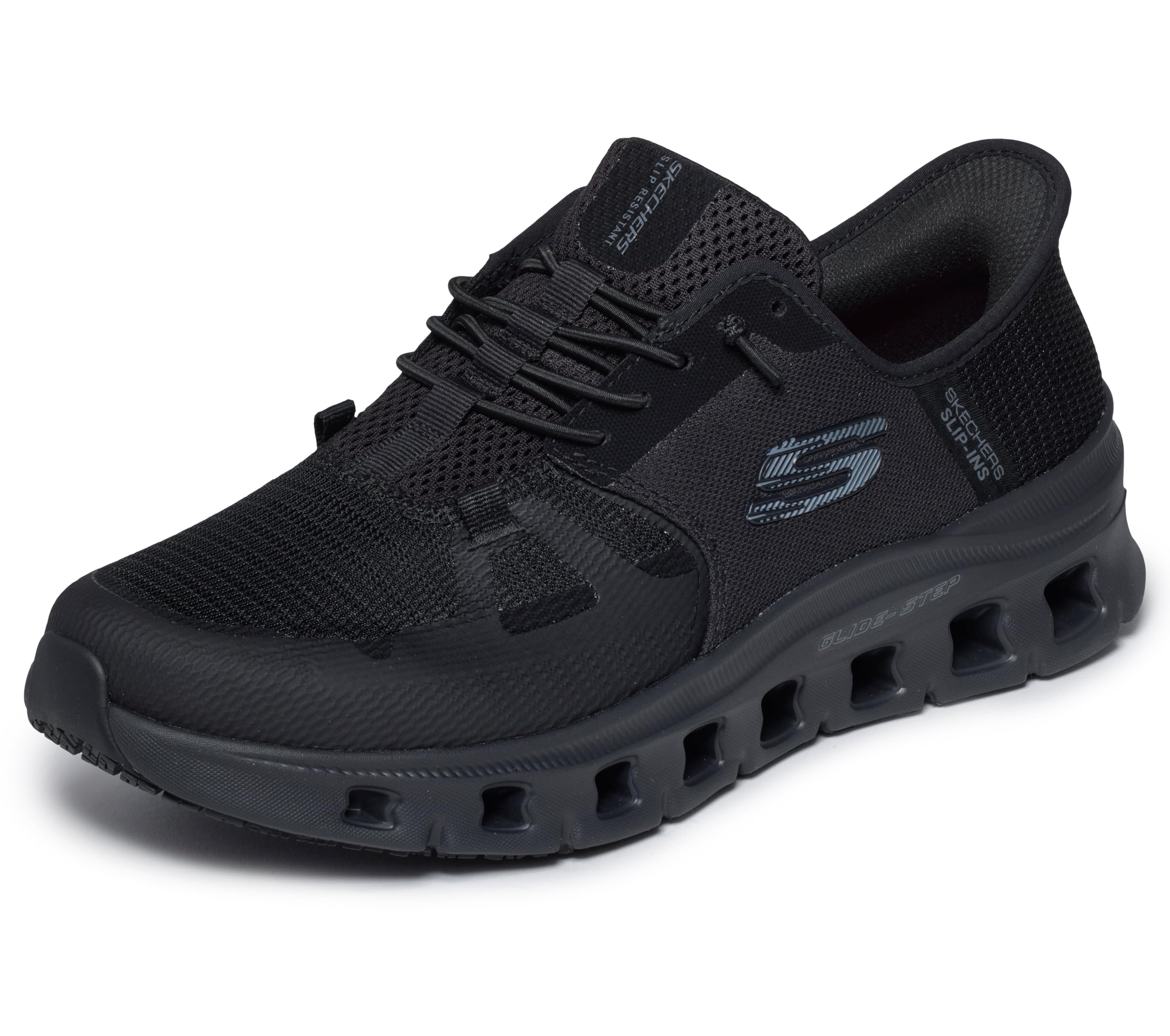
The pair you can step into with both hands full of shingles and kick off at the end of the shift.
Quality leads the feedback here, then comfort, and a slip-on build is the reason the easy-wear rating comes back completely positive. If you handle materials on a roof and want to get your shoes on fast in the morning and off faster at the end of the shift, this is the trade-off worth having. The non-slip sole gets its own credit too, and while it is built for service and kitchen floors, the extra grip does not hurt on a flat or low-pitch roof.
Skechers pitches this as a work sneaker, so read it that way — it is a light, flexible shoe built around long hours standing rather than around rock-hard toe protection. That is where it makes the most sense on a roof: gutters, drainage work, tear-offs on a low pitch, service calls where you are on and off the roof a dozen times. It is not the pair for a steep shingle pitch where the foot needs a firm platform.
Two things to weigh before you buy. Fit is the biggest divider — some find it right, others find it far too narrow, so order with room to exchange. Durability is the other split, with a small set of pairs coming apart early. Neither rules the shoe out if the use case fits. But if you need a boot that survives a whole rough season of tear-offs, the Timberland PRO is a surer bet at the same general tier.
Why it lives on the list: a step-in work sneaker with a non-slip sole and a completely positive easy-wear pattern, best kept to flat roofs and service work where flexibility beats rigidity.
Yes, if: you are on low-pitch roofs and service calls all day and want a light, easy step-in shoe with a non-slip sole.
Not your shoe if: you work steep shingle pitches and need a firm platform under each foot.
5. PiViT Roof Boot Ladder Anchor
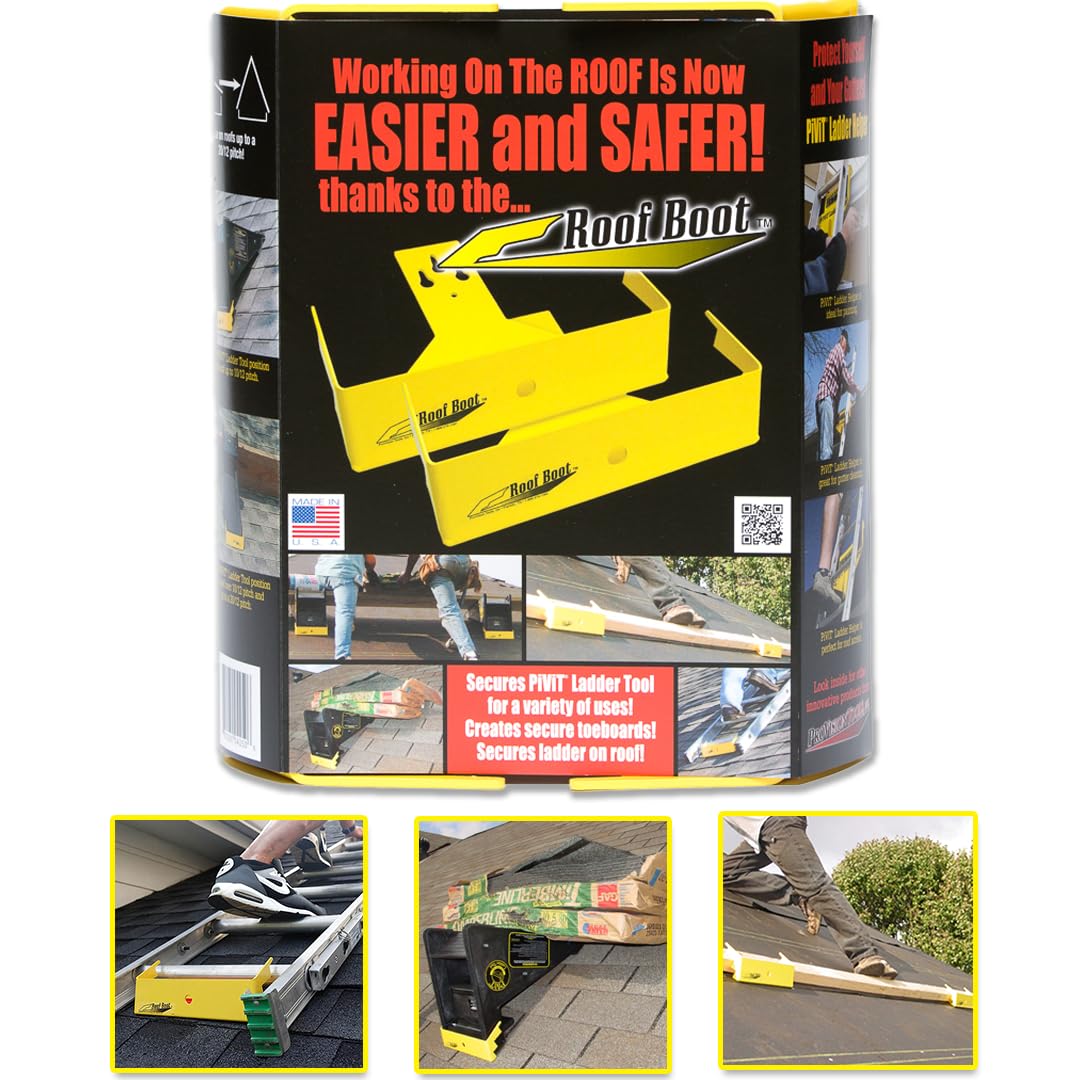
Not a shoe — the metal bracket that keeps your ladder from sliding off a steep shingle roof while you are up there.
Read this one correctly before anything else: this is a roof anchor, not footwear, and it belongs on the list because ladder safety on a steep pitch is the other half of the “roofing shoes” problem. It is a metal bracket that lifts under a shingle and nails into place, anchoring your PiViT LadderTool to asphalt shingle roofs from 7/12 up to 20/12 pitch — pitches a leveler alone is not rated for. Sold in pairs, made in the USA by ProVisionTools, and backed by a one-year material and workmanship warranty.
It does more than hold one ladder. The same bracket secures toe boards and chicken ladders on steep roofs, and there is a built-in tool tether so gear does not slide down the pitch while you work. Recommendation leads the feedback and it does so without a single negative note, with stability running clean behind it. For a roof crew, that is the sort of reputation that matters more than any spec sheet number.
Two limits you have to respect. It is rated for asphalt shingle roofs only — not metal or tile — so the name on the listing is a category label, not a claim that this works on a standing-seam pan. And at 5.7 pounds it is heavy enough that you will notice the pair in your tool bag. Read the full safety instructions before installing, and if your roof is metal, this is the wrong bracket entirely.
Built for the steep stuff
- Holds a ladder on shingle roofs from 7/12 up to 20/12 pitch
- Also secures toe boards and chicken ladders
- Built-in tool tether keeps gear from sliding down
- Quick install: lift a shingle, nail it down, follow the instructions
- Sold in pairs with a one-year material and workmanship warranty
Where it stops
- Asphalt shingle roofs only — not rated for metal or tile
- 5.7 pounds for the pair is real weight in a tool bag
- Requires correct installation to work as designed, so follow the instructions
Worth adding to the truck if: you regularly work steep asphalt shingle pitches and want to anchor a ladder above the leveler’s rating.
Wrong tool if: your roof is standing-seam metal or tile — this bracket is not rated for either.
6. HEYDUDE Men’s Wally Work CT
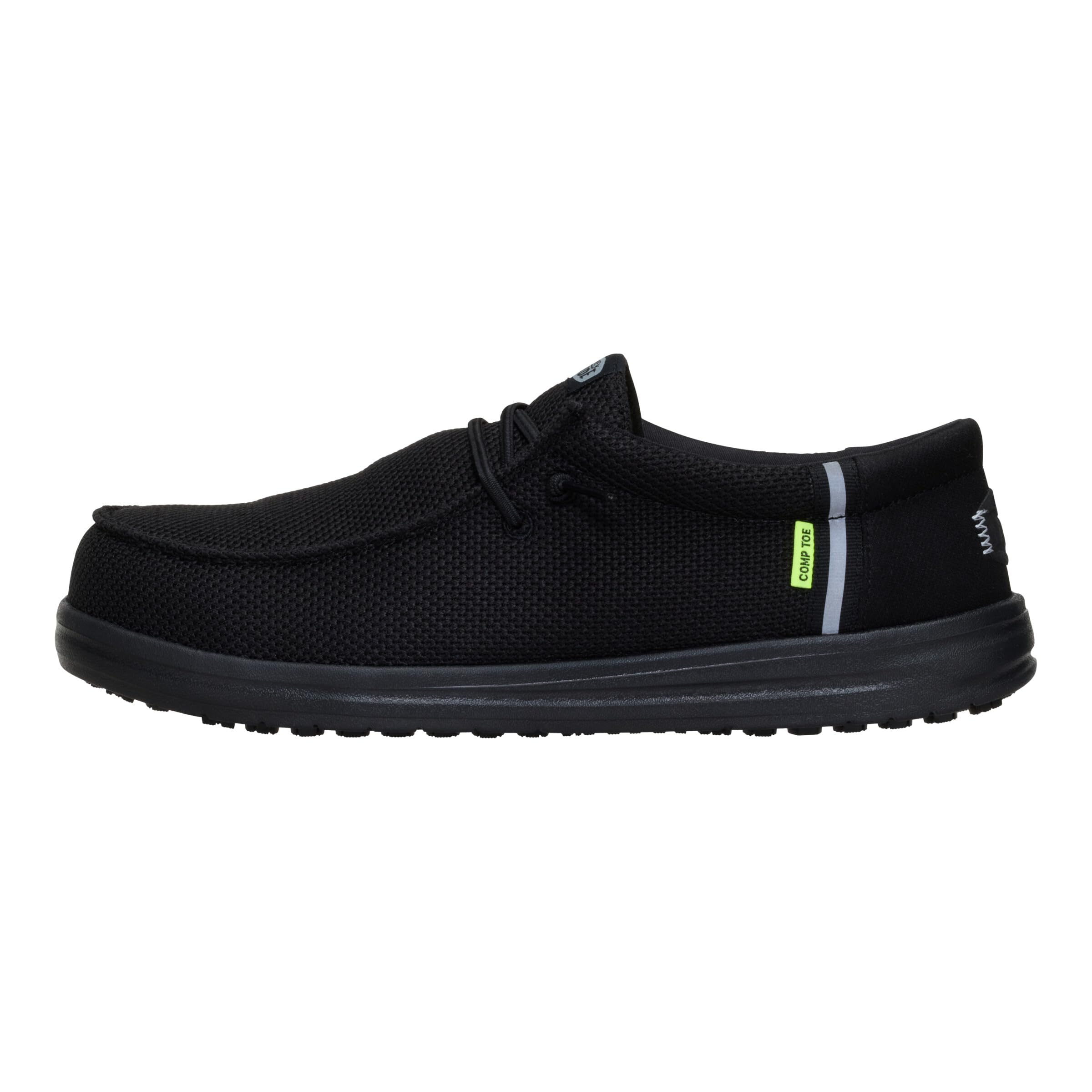
The lightest shape in the guide, built to be worn all day and kicked off with one hand.
Comfort carries this shoe, with quality right behind it, and the light weight gets its own clean share of that praise. HEYDUDE builds these shoes from a starting point of 5oz (150 grams), which is the sort of weight you stop noticing after an hour. If your day involves a hospital floor, a service route, or a mix of flat roof and interior work, that lightness is the reason people keep coming back to the Wally shape.
It is a work shoe, not a heavy boot. The composite toe gives you a hard cap without the metal, and the water-repellent treatment handles a light shower or a wet deck. The slip-resistant outsole covers wet floors, and the design draws compliments on top of that — a rare thing in a work shoe, and a real reason some buyers pick this over a plain safety shoe.
Two honest notes. Fit is the sharpest divider here — a big chunk of the feedback splits on sizing, with a real share of buyers finding it runs small and narrow, so plan to size up if you are between sizes. Durability is the other split, with a small set of pairs tearing in the fabric early. Neither makes it a bad shoe. Both tell you it is built for comfort and lightness on solid ground rather than a steep shingle pitch, so match it to the job.
The reason it sells in volume
- Starts at 5oz (150 grams), the lightest category in this guide
- Composite toe with an EH rating for electrical hazard work
- Water-repellent upper and a slip-resistant outsole
- Comfort and quality carry the strongest feedback pattern here
- Full-size sizing with guidance to size up for a more generous fit
The catch to weigh
- Sizing splits hard — a real share of buyers find it runs small and narrow
- Offered in full sizes only, so half sizes have to choose up or down
- Fabric can tear early on a small set of pairs, so treat it as a light-work shoe
An easy yes for: hospital floors, service routes, and mixed flat-roof work where all-day lightness beats a heavy boot.
Ask for something sturdier if: your day starts on a steep shingle pitch and needs a firm, high-traction boot.
7. Reebok Fusion Flexweave Work Safety Toe Athletic Work Shoe

A breathable athletic safety shoe for roofers who cannot stand a heavy boot in the heat.
Buyers talk about fit first with the Fusion Flexweave, then comfort. That is a good sign on an athletic work shoe, because fit and flexibility are the whole point of the build. The Floatride Energy foam midsole (a cushioned foam layer under your foot) gives you a responsive cushion underfoot. The Flexweave upper (a woven fabric top) delivers flexible support with breathability — what you want on a hot day when a leather boot would trap heat by noon.
Safety is not skipped. The composite toe meets or exceeds ASTM F2413 safety standards, and the shoe is 100% non-metallic, static dissipative with a dual resistor, and metal free throughout. The slip-resistant rubber outsole uses visual foot mapping for adaptive flexibility, and the cushioning feedback comes back positive and comfortable. It is the most breathable option here, and on flat commercial roofs in summer that matters.
The blunt truth is durability. It is the weakest pattern in this whole guide — the soles separar and the rubber peels within a month on a real share of pairs, and traction is a split verdict on top of that. Buy this as a warm-weather, flat-roof shoe and budget to replace it more often than a leather boot. Buy it expecting it to survive a full year of scraper work and you will be disappointed.
The honest read: the most breathable and among the most comfortable safety shoes here, with an ASTM F2413 composite toe (a non-metal safety cap that meets that safety standard) and a Floatride Energy foam midsole — but with the shortest expected service life in the group, so treat it as a seasonal shoe.
Pick it for: flat commercial roofs in hot weather where breathability and a light composite toe matter more than long-term durability.
Look at the Gravel Pit instead if: you need a boot that survives a long, hard season on shingle pitch.
Know the Specs
Toe Type And Metatarsal Guards
A steel toe protects the toes from impact; a composite toe does the same without metal and shaves weight. A metatarsal guard is an extra shield over the top of the foot, useful when something heavy drops on the instep rather than the toe. Guards can press across the top of the foot, so try the boot before committing.
Waterproof Membranes And Insulation
A membrane keeps water out, while insulation keeps warmth in. The Timberland PRO uses both, with an internal membrane and 400 grams of insulation. Together they handle a wet, cold morning start — but the same layers run warm on a hot afternoon, so match the climate to the build.
Slip Resistance And Ladder Locks
Slip resistance tells you how well the outsole holds on a wet floor; a ladder lock is a heel shape designed to catch a ladder rung. On a roof, the ladder lock is what keeps you steady climbing up and the slip-resistant rubber keeps you steady once you are on the surface.
Warning: This Is A Roof Anchor, Not A Boot
The PiViT Roof Boot is a metal ladder anchor that secures a ladder to an asphalt shingle roof, not footwear. It is rated for shingle roofs from 7/12 up to 20/12 pitch and is not rated for metal or tile. Read the full safety instructions and install it correctly.
Common Questions
Are metal roofing shoes different from regular work boots?
Can I wear these boots on a standing-seam metal roof?
Do I need a steel toe, or is a composite toe enough?
How long should roofing shoes last?
Are waterproof boots too hot for summer roofing?
How do I choose between a boot and an athletic safety shoe?
How do I get the right size in a boot with a metatarsal guard?
What does EH-rated actually mean on a work boot?
Can I use the PiViT Roof Boot as a ladder anchor on a tile roof?
Do I need a steel shank for a full day on a roof?
The Bottom Line
For most roofers, the winner is the Timberland PRO Gravel Pit. It stacks a steel toe, an internal metatarsal guard, a waterproof membrane, and a ladder-lock heel into one 3.4-pound boot, and it holds a steady 4.5+ stars from 400+ owners. If you want a purpose-built roof boot from the trade, the Performer Roof Boot gives you a dedicated pair. For hot flat-roof weather, the Reebok Fusion Flexweave is the breathable call. If your steep pitch needs a ladder anchor, the PiViT Roof Boot delivers a clean recommendation record with no negative notes. One honest nudge: the Performer holds the highest rating here at 4.5+ stars, but with a far smaller review base than the Gravel Pit, so weigh the track record over the star. Match the boot to the surface under your feet and the climate you work in, and the first day on the pitch will confirm the call.
How we choose
We do not accept paid placement. Every pick is matched to a real buyer and a real use-case; we do not hands-on test units.
Sources
Specifications: manufacturer listings and product documentation. Review insights: verified customer reviews, as of November 2026. Pricing: not shown on this page (it changes often); check the current price via the retailer link.
As an Amazon Associate, My Heart Lives Here earns from qualifying purchases. This does not affect which products we feature.