Heads up: This post contains affiliate links. As an Amazon Associate I earn from qualifying purchases, at no extra cost to you. Learn more
Specs are compiled from manufacturer listings and verified buyer reviews and can change over time — please confirm the key details on the product page before buying.
The material inside a compression sock decides whether you actually wear it — merino wool blends regulate temperature and stay dry, while high-cotton knits feel soft but can run tight. This short guide covers five real pairs and what each one’s fabric does for your legs.
This guide is built by comparing the manufacturers’ published specifications and the patterns across verified customer reviews, so you get each pick’s real strengths and trade-offs instead of marketing spin.
Read on for the material for compression socks that fits your day.
Top Picks

How To Choose The Best Material for Compression Socks
Three things decide whether a pair works for you: the fiber blend, the pressure level, and how much cushioning sits under your foot.
Fiber Blend
Merino wool and bamboo rayon keep feet dry and regulate temperature, while cotton feels soft but holds moisture longer.
Compression Level
Fifteen to 20 mmHg is mild and easier to pull on, while 20-30 mmHg is firmer and takes more effort.
Cushioning
Extra padding under the sole softens long days on hard floors, but thicker knits can run snug in the toe.
Side-by-Side Comparison
| Model | Best For | Fabric | Compression | Cushioning | Amazon |
|---|---|---|---|---|---|
| Sockwell Women’s Micro Grade★ Best Overall | Everyday wear | 32% Merino Wool | Graduated | Non-Cushion | Amazon |
| Physix Gear Compression SocksFirmest Grip | Nurses and runners | — | 20-30 mmHg | — | Amazon |
| Merino Wool Compression Socks 15-20 mmHg | Flights and travel | Merino Wool | 15-20 mmHg | — | Amazon |
| Wanderlust Knee-High Merino | Cold weather | 9% Wool | Light pressure | — | Amazon |
| Thick Soft Cotton Compression Socks | Soft everyday comfort | High cotton | — | Extra sole padding | Amazon |
Detailed Reviews
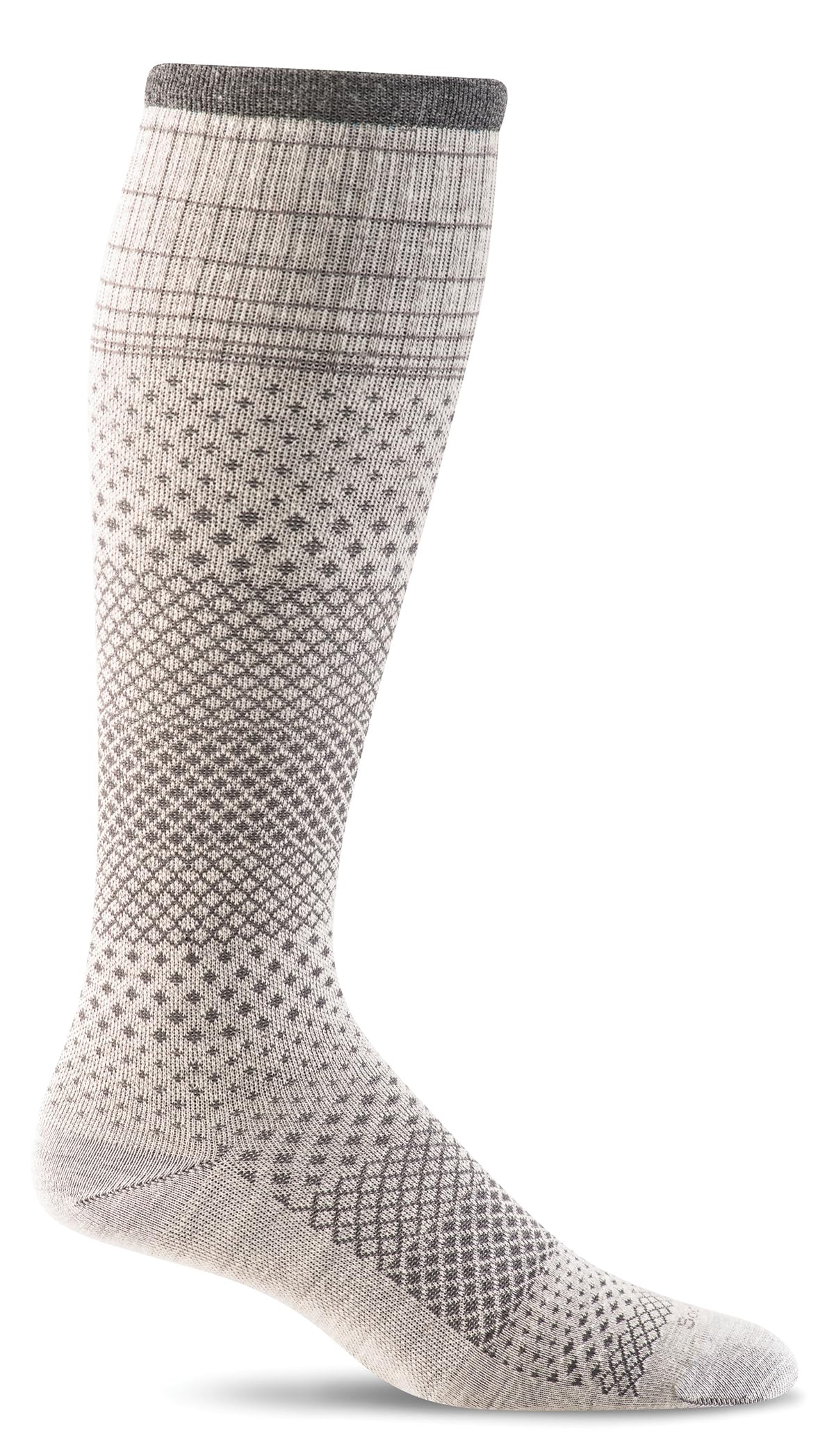
1. Sockwell Women’s Micro Grade
Our pick — 4.5+★ from 850+ verified ratings; the strongest balance of quality and price.
A merino, bamboo, and nylon blend that regulates temperature while it works.
This is the pick to start with if you want a fabric story you can trust: 32% merino wool, 31% rayon from bamboo, 32% stretch nylon, and 5% spandex. That merino-and-bamboo pairing is what keeps feet dry and temperature steady through a long day, which is why the comfort of this knit is the thing that wins people over most. The non-cushion build keeps the profile thin inside a shoe.
Graduated compression across four zones means the pressure is firmest at the ankle and eases further up, and the smooth toe closure removes the seam that rubs on longer walks. It holds 4.5+ stars across 800+ ratings — the strongest score on this list.
What the fabric delivers
- Merino and bamboo blend keeps feet dry and temperature steady
- smooth toe closure removes the rub point
Where it can wear thin
- Durability splits opinion — some pairs develop holes early
Go for it: everyday wearers who want a breathable wool blend and a thin profile inside shoes.
Pause first: if you want thick sole padding, this one is deliberately non-cushion.
2. Physix Gear Compression Socks 20-30 mmHg
The firmest pressure here, built for twelve-hour shifts and long runs.
Physix Gear rates this pair at 20-30 mmHg, the firm end of the scale and the highest number on this list. Compare it to the 15-20 mmHg merino travel pair below and you get a 33% wider pressure gap, so this is the one for legs that need real hold rather than a light hug. Quality is what owners talk about most, and the fit holds its shape through repeated wear.
The trade-off is honest: pulling on a 20-30 mmHg sock takes effort, and getting them on divides opinion. If you have limited hand strength, the milder pairs are easier.
Best for: nurses, runners, and anyone on their feet all day who wants firm graduated hold.
The catch: firm pressure means more effort to pull on and off.
Made for: long shifts where you want the strongest hold on the list.
Look elsewhere: if ease of dressing is your priority over firmness.
3. Merino Wool Compression Socks 15-20 mmHg
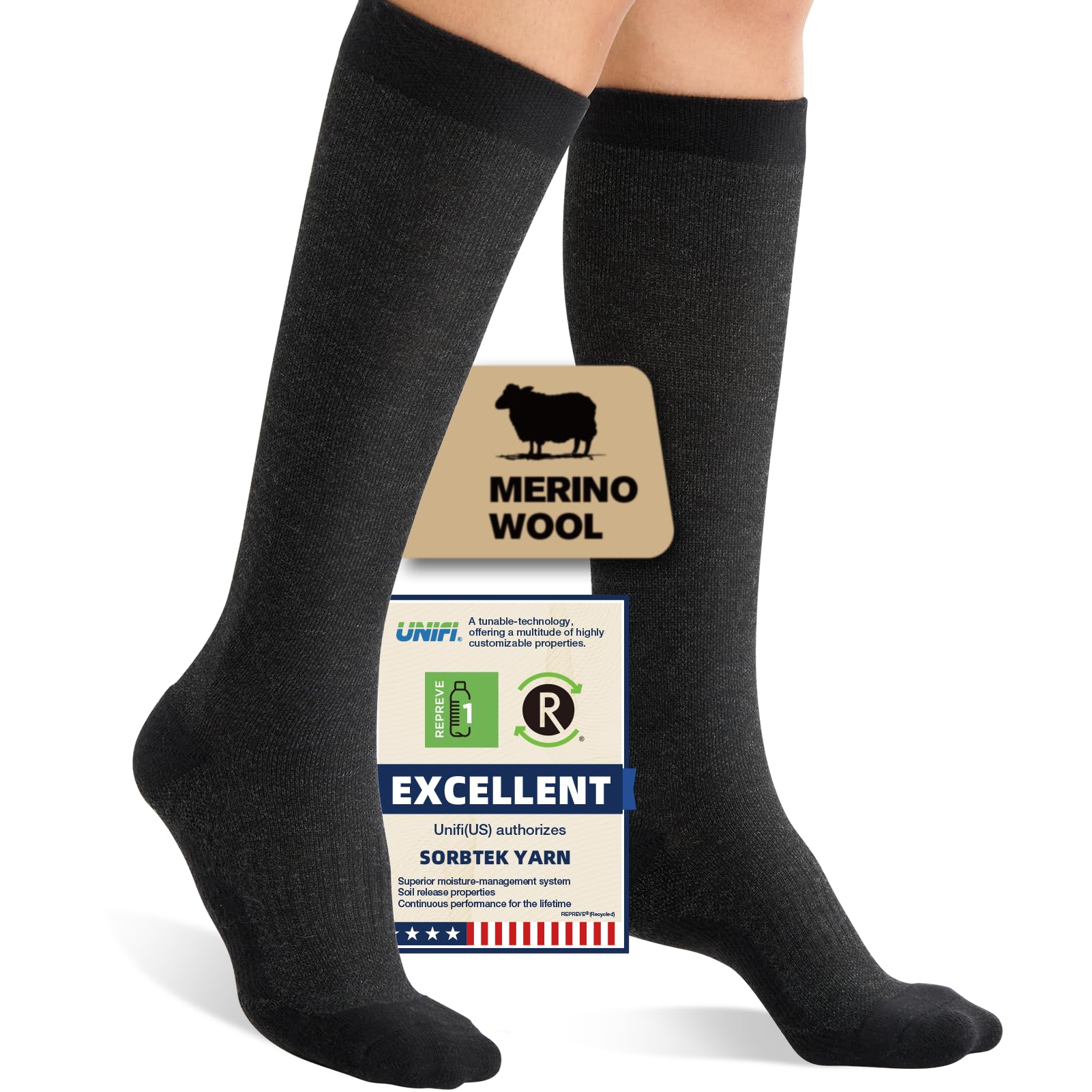
Mild wool pressure that slips on easily before a long flight.
At 15-20 mmHg this merino pair sits at the gentle end of the scale, well below the 20-30 mmHg Physix Gear above. That makes it the easier sock to pull on and off, and the merino wool keeps feet comfortable in both winter and summer. What wins people over is the softness of the wool against the skin, and reviewers consistently call out the room in the toe area.
It also gets praise for being easy to get on, with printed instructions included. On warmer days the wool still breathes enough for all-day wear.
Why travelers like it: mild 15-20 mmHg pressure plus breathable merino for flights and long drives.
Watch the fit: some find the sizing snug, so check the size chart before you buy.
Reach for this: if you want an easy-on wool sock for travel and everyday wear.
Skip the fit gamble: if you wear a larger size and want a looser cut.
4. Wanderlust Knee-High Merino Wool Compression Socks
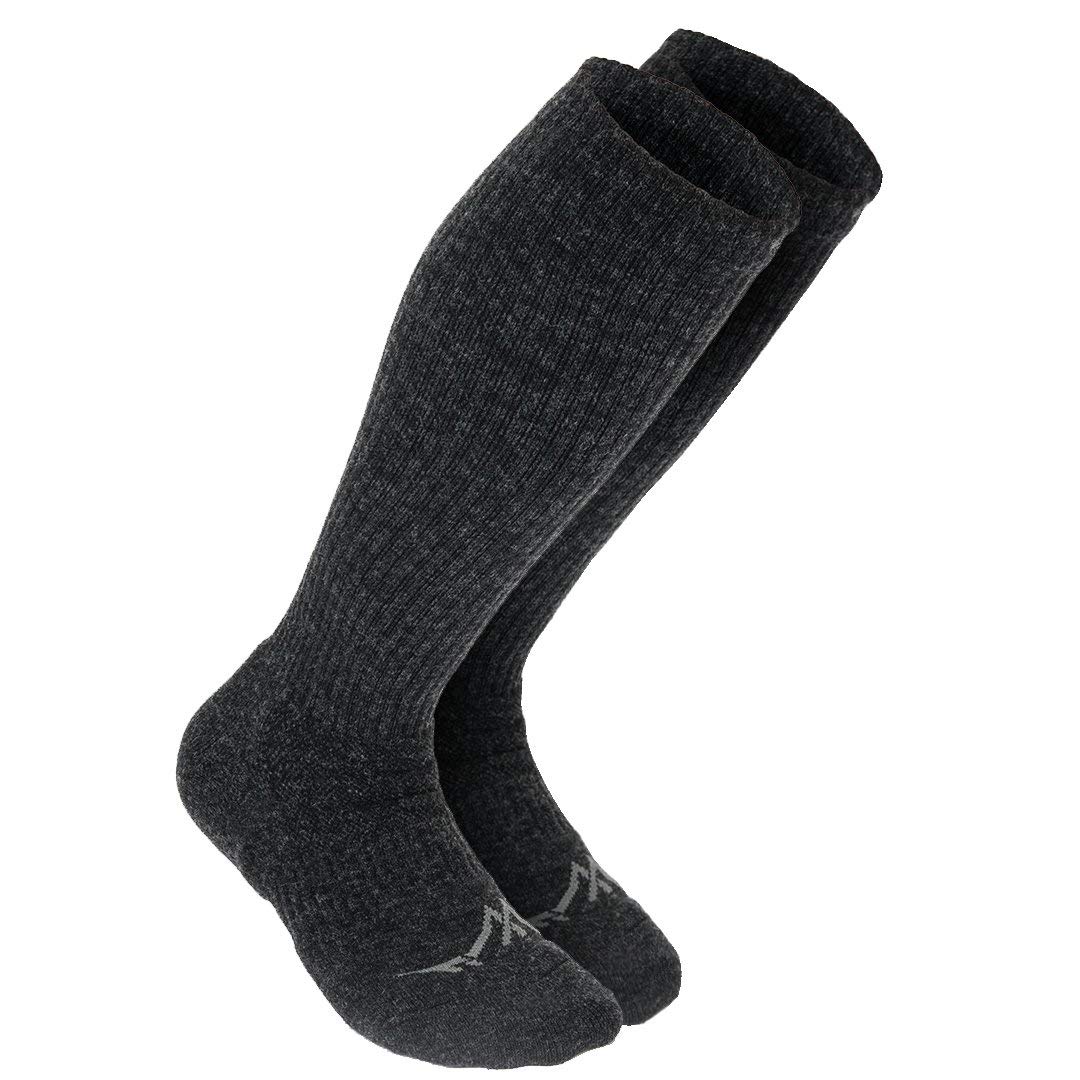
Cold-weather warmth up to the knee, with a lighter wool content than the name suggests.
The thing that sets this pair apart is warmth — it is the one here built for cold days, with a knee-high cut that stays put. The comfort is light and noticeable rather than firm, so it suits cooler weather better than a hard-working long shift.
Durability and value both divide owners, with some reporting heels wearing through early. That is the trade-off for the warmth.
Where it shines: warm knee-high coverage for cold weather.
The honest limit: at only 9% wool, it is not the wool-rich sock the name implies.
Buy this for: cold-season wear when you want warmth up to the knee.
Think twice if: you want high wool content or long-term durability from the heel.
5. Thick Soft Cotton Compression Socks
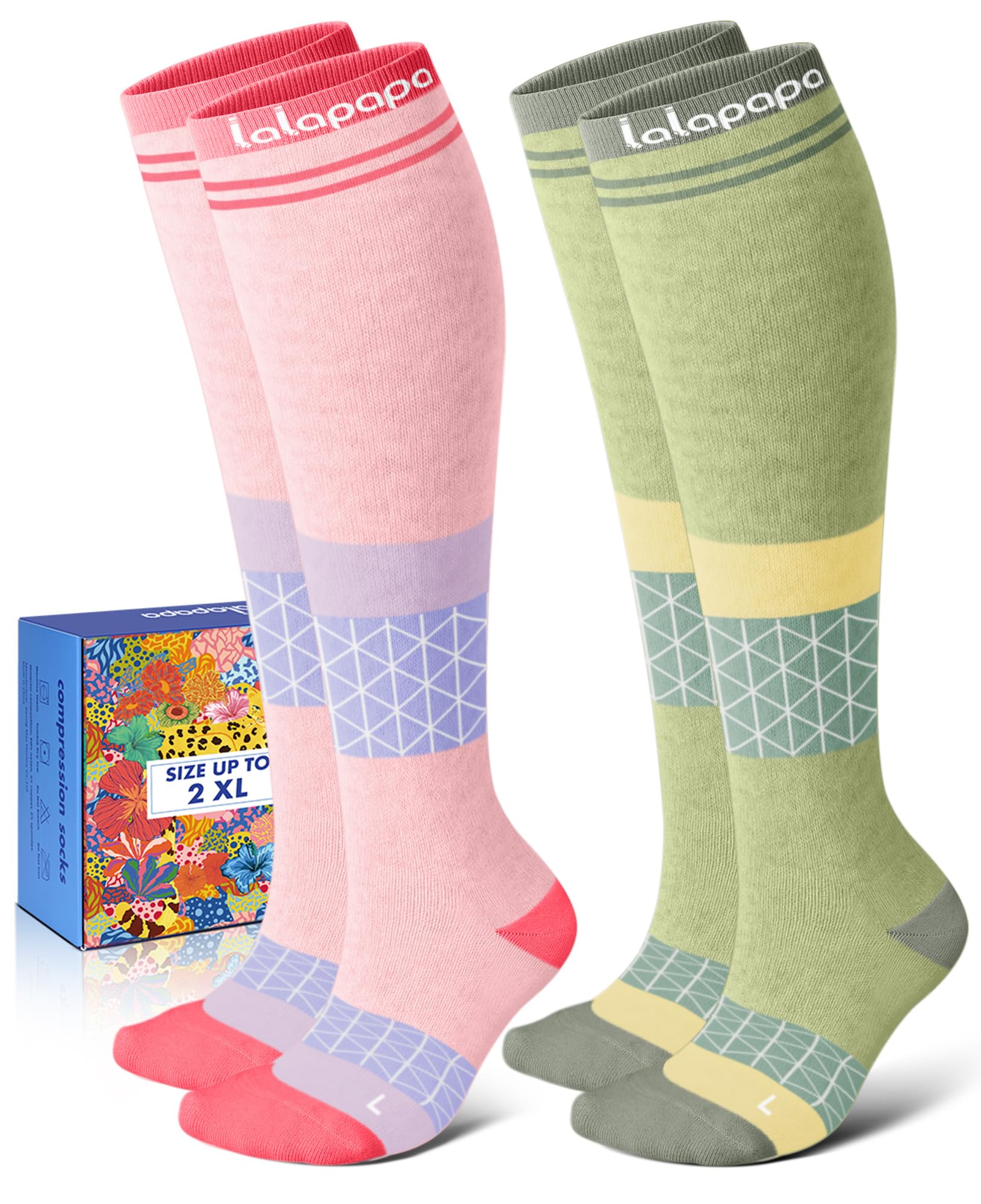
Cotton-rich and cushiony, the soft pick for feet that want padding underfoot.
If wool feels scratchy to you, this cotton blend is the gentle answer. The fabric carries a high cotton count and adds extra cushioning on the bottom, so it feels soft against the skin and gives some padding underfoot. Quality and comfort carry the praise, and the design gets called stylish as well as functional. Note it holds 4.0+ stars across 900+ ratings.
Fit is the mixed part: the XXL size runs small, so order by the size chart rather than your usual sock size.
Reasons it feels good
- Cotton-rich fabric is soft against the skin
- Extra cushioning under the sole
Size it carefully
- The XXL runs small
Pick if: you prefer cotton over wool and want cushioning under the foot.
Order up if: you are buying the XXL, which runs small.
Know the Specs
mmHg Pressure
mmHg measures how firmly the sock squeezes — 15-20 is mild and easy to pull on, while 20-30 is firmer and takes more effort.
Wool Percentage
A higher merino percentage regulates temperature and keeps feet dry, and you should check the exact number rather than trust a name.
Common Questions
Is merino wool better than cotton for compression socks?
What does 20-30 mmHg feel like compared to 15-20 mmHg?
Do compression socks with extra cushioning fit differently?
The Bottom Line
For most people the best material for compression socks is the Sockwell Women’s Micro Grade, with its 32% merino and bamboo blend, and it carries the strongest score here at 4.5+ stars across 800+ ratings. If you need firmer hold for long shifts, the Physix Gear at 20-30 mmHg is the one. And for easy-on travel wear, the 15-20 mmHg merino pair wins.
How we choose
We do not accept paid placement. Every pick is matched to a real buyer and a real use-case; we do not hands-on test units.
Sources
Specifications: manufacturer listings and product documentation. Review insights: verified customer reviews, as of November 2026. Pricing: not shown on this page (it changes often); check the current price via the retailer link.
As an Amazon Associate, My Heart Lives Here earns from qualifying purchases. This does not affect which products we feature.