Heads up: This post contains affiliate links. As an Amazon Associate I earn from qualifying purchases, at no extra cost to you. Learn more
Specs are compiled from manufacturer listings and verified buyer reviews and can change over time — please confirm the key details on the product page before buying.
For sciatic-type shooting pain down the leg, the form that matters is one your gut absorbs — glycinate or malate — not oxide that mostly passes through. Glycinate and malate are the two forms most people land on, and this guide breaks down five real options by form, dose, and how easy each is to take every day.
This guide is built by comparing the manufacturers’ published specifications and the patterns across verified customer reviews, so you get each pick’s real strengths and trade-offs instead of marketing spin.
We will walk through what each magnesium form actually does, how serving size changes your daily routine, and which bottle suits a tight budget. The five bottles below cover the realistic choices in magnesium for sciatica.
Top Picks

How To Choose The Best Magnesium for Sciatica
The label on the front of a magnesium bottle tells you very little. Two bottles can both say “magnesium” and behave completely differently in your body. The form, the elemental dose, and the number of capsules you have to swallow each day are the three things worth reading before you buy.
Read the form before you read the milligrams
Magnesium comes bound to a carrier — an amino acid or an acid — and that carrier decides how much actually reaches your system. Glycinate binds magnesium to glycine, and malate binds it to malic acid. Both are chosen by buyers who want a gentler daily option. Magnesium oxide is the cheap, poorly absorbed form that gives the whole category a bad reputation, and none of the picks below lean on it as the lead ingredient.
Understand elemental magnesium versus total weight
When a bottle says “240 mg,” that figure usually refers to elemental magnesium — the amount of actual mineral you get. The capsule itself weighs more because the carrier is included. This is why a 500 mg tablet and a 240 mg capsule are not as far apart as the numbers suggest. Always check whether the milligram figure is elemental or compound weight.
Count the capsules and the servings
A 300-capsule bottle sounds generous until you read that the serving is 3 capsules a day. That works out to a 100-day supply. On the other side, a 60-capsule bottle at one capsule a day is a 30-day supply. Both are fine — you just want to know which rhythm you are signing up for, because a daily three-capsule habit is easier to drop than a single capsule.
Powder or capsule is a routine decision
Powder gives you a big dose in one scoop and dissolves into water or a shake. Capsules travel better and need no stirring. If you already drink a morning shake, powder fits neatly into that habit. If you take your supplements at a desk or on the move, capsules win on convenience.
Side-by-Side Comparison
| Model | Best For | Magnesium Form | Elemental Magnesium | Supply | Amazon |
|---|---|---|---|---|---|
| Micro Ingredients Pure Triple Magnesium Complex★ Best Overall | Broad daily coverage in one bottle | Glycinate, malate, taurate | 400 mg per serving | 300 capsules, 100 days | Amazon |
| Nature’s Bounty Magnesium 500 mg TabletsBudget Champion | Budget muscle and cramp support | — | 500 mg per tablet | Pack of 1 | Amazon |
| Natrol High Absorption Magnesium Glycinate 240 mg | Sleep-focused glycinate in a small bottle | Glycinate | 240 mg per serving | 60 capsules, 30 days | Amazon |
| NOW Supplements Magnesium Glycinate with BioPerine | Absorption-focused glycinate | Glycinate with BioPerine | — | 180 veg capsules | Amazon |
| Nutricost Magnesium Malate Powder (300g) | High-dose malate without capsules | Malate | 420 mg per serving | 143 servings per container | Amazon |
Detailed Reviews
1. Micro Ingredients Triple Magnesium Complex
Our pick — 4.5+★ from 1,000+ verified ratings; the strongest balance of quality and price.
Three magnesium forms in one capsule, so you are not picking sides on day one
Most bottles force a choice: glycinate for calm, malate for daytime muscle work, taurate for something in between. This one skips the decision by putting all three inside a single capsule — magnesium glycinate, magnesium malate, and magnesium taurate. Between them you get 400 mg of elemental magnesium per serving, which is the actual mineral amount rather than the weight of the whole capsule. It also carries 120 mg of fat-soluble Vitamin C per serving, a nutrient usually chased through plant foods.
The supply math is the real story here. You get 300 capsules in the bottle, and the suggested use is 3 capsules daily, which works out to a 100-day supply. Compare that with the Natrol glycinate at 60 capsules — 300 capsules versus 60 is a 5.0x gap in how long one bottle lasts. If you are the type who forgets to reorder, that cushion matters.
What wins people over is plainly the quality of the make — it is the most-praised thing in the feedback by a wide margin, ahead of effectiveness. Sleep is where the gains show up most clearly, with buyers reporting faster sleep onset and a calmer baseline through stressful days. The formula is non-GMO, made in a cGMP-compliant facility (a manufacturing standard for supplement production), and third-party lab tested for quality and consistency. It is also free of gluten, soy, dairy and tree nuts, which is a real convenience if you read labels for allergy reasons.
Where it earns its keep
- Three separate magnesium forms — glycinate, malate, taurate — in one capsule
- 400 mg of elemental magnesium per serving, a full daily figure
- 100-day supply from a single bottle at 3 capsules a day
- Non-GMO, third-party lab tested, and free of gluten, soy, dairy and tree nuts
What to weigh first
- Three capsules a day is a bigger habit than a single-capsule bottle
- A minority find the multi-form blend less predictable than a single-form capsule
- Vitamin C is included whether you wanted it or not
Go for it if: you want one bottle that covers several magnesium forms and lasts past three months of daily use.
Think twice if: you would rather tune exactly one form and dose — a single-form glycinate gives you finer control.
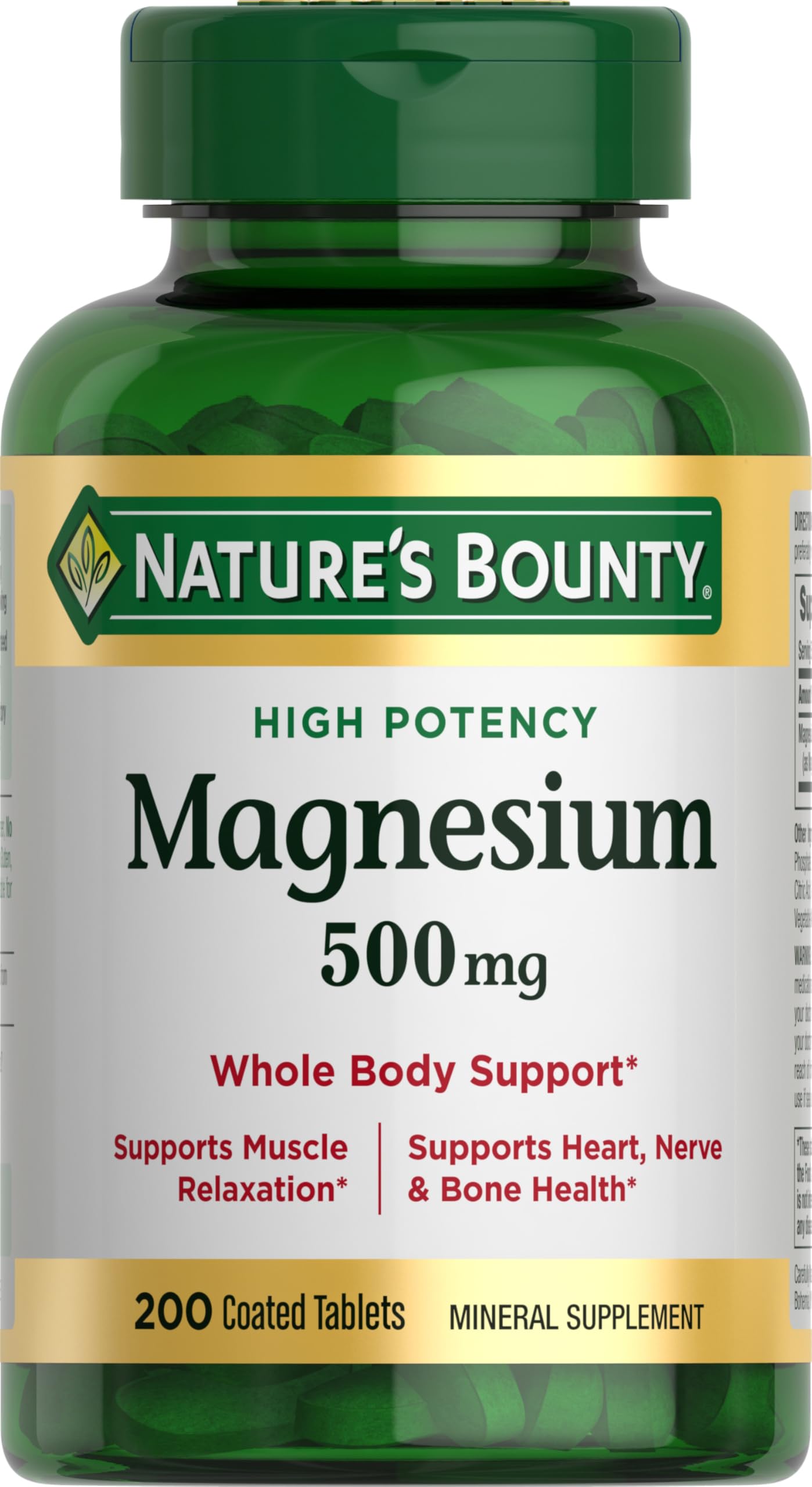
2. Nature’s Bounty Magnesium 500 mg Tablets (Pack of 1)
One tablet a day, a coated surface, and the cheapest entry into daily magnesium
If you have ever given up on a supplement because the routine was too fiddly, this is the bottle built for you. Each tablet delivers 500 mg, which is 119% of the recommended daily intake in a single swallow. No scoop, no three-capsule ritual, no shaking a shaker bottle before work. Nature’s Bounty coats the tablet for easier swallowing, and the formula is gluten-free with no artificial flavors or sweeteners.
This is the crowd favorite of the group by a clear distance, and its track record in the review pages is enormous compared with the smaller bottles here. The most-praised result is relief from muscle cramps, especially night-time leg cramps, followed by daytime alertness from sleeping through instead of waking repeatedly. The 500 mg dose is a large one, so check it against whatever else you take before stacking another magnesium source on top.
Here is the honest catch, and it is the most-discussed one: tablet size. The pill is on the large side, and while the coating helps, a portion of buyers find it a challenge to get down. Digestibility splits the same way — plenty of people report no stomach trouble at all, and a smaller group hit nausea or loose stools. That split is normal for a high-dose magnesium tablet and not a reason to write the bottle off; it is a reason to start with one tablet and see how your gut answers.
Best read on the value: 500 mg in a single coated tablet with a 119% daily intake figure is a lot of magnesium per swallow, and the price tier is the lowest in this group. For a first-time buyer testing whether magnesium helps at all, nothing else here is as low-risk on cost.
The size question: a large tablet is the one thing that trips people up, and it is worth deciding now whether you are comfortable with a big pill before you commit to a bottle.
Reach for this if: you want maximum magnesium per tablet at the entry-level tier and have no trouble with a larger pill.
Look elsewhere if: you have a narrow throat or a history of pill-size trouble — the glycinate capsules here are far smaller.
3. Natrol Magnesium Glycinate 240 mg

A small glycinate capsule aimed squarely at the wind-down hour before bed
Glycinate is the form buyers pick when the goal is a calmer evening, and Natrol leans all the way into that with 240 mg of magnesium glycinate per serving. The capsule count is modest — 60 capsules, framed as a 30-day supply — so this is a bottle you will reorder monthly rather than once a season. Compared with the Micro Ingredients bottle at 300 capsules, this is a 60-versus-300 difference in what lands on your doorstep.
The dose sits at 240 mg elemental, which is well short of the Nutricost powder’s 420 mg per serving. That is not a flaw so much as a different design: a lower per-serving figure is easier to spread across a day or to start slowly on. The capsule itself is small enough to take without drama, and the formula is described as gentle on the stomach and free of major allergens.
Effectiveness leads the feedback and sleep follows close behind, with reviewers repeatedly citing sleeping through the night and waking up genuinely rested. Where it divides people is digestion. Some describe it as easy on the stomach, while others report stomach pain after taking it. With a glycinate this concentrated, that split is the one thing to watch in your first week. Natrol also markets it as a drug-free sleep aid, so expect the pitch to lean toward evening use.
Why the small bottle works: testing glycinate for a month before committing to a bigger supply is a sensible way to find out whether the form agrees with you. The 30-day supply is short on purpose.
The honest trade-off: 240 mg per serving is a lower elemental figure than the powder or the Micro Ingredients complex, so anyone chasing a larger daily dose will be taking more than one serving.
This one is for: evening routines where a single small glycinate capsule is the whole plan.
Pass on it if: you want a bottle that lasts months or a dose above 240 mg in one go.
4. NOW Magnesium Glycinate BioPerine

Glycinate bound to glycine, then paired with BioPerine to push absorption harder
NOW takes the glycinate route and adds BioPerine, a black pepper extract used in supplements to support absorption. The core idea is simple: magnesium bound to the amino acid glycine is easier for your gut to take up, and the BioPerine is there to back that up further. The serving is 2 capsules taken 1 to 2 times daily with food, so a full day can mean 2 or 4 capsules depending on how you run it. The bottle holds 180 veg capsules.
What people rave about is the build quality, and it is the most-praised thing in the feedback by a clear margin, with sleep sitting second. Reviewers describe the same pattern: falling asleep fast, sleeping a full stretch without waking, and a calm, relaxed feeling before bed. Muscle support comes up too, with many calling it gentle on the digestive system and reporting fewer leg cramps — the combination glycinate buyers are after.
The manufacturing story is where NOW differentiates. The company holds an A-rated third-party certification, meaning the manufacturing process has been examined end to end, and its in-house labs are ISO/IEC accredited for testing stability, potency and formulation. NOW was founded in 1968 by Elwood Richard and is one of the largest independent, family- and employee-owned makers of natural products. Absorption is the other theme — several describe it as easier to swallow and more absorbable than other products they have tried. The veg capsule shell is a small but real plus for anyone avoiding gelatin.
Why it stands out
- Glycinate paired with BioPerine for absorption support
- A-rated third-party certification across the manufacturing process
- In-house labs with ISO/IEC accreditation for stability and potency testing
- Veg capsules, and easy on the digestive system for most
Things to plan around
- Two capsules per serving, up to twice a day — up to 4 capsules daily
- Must be taken with food, which pins it to mealtimes
- A minority report it not being as gentle as expected
Worth the shelf space if: absorption credentials and a certified manufacturing chain are what you check before buying a supplement.
Not the fit if: you want one capsule a day with no food timing to think about.
5. Nutricost Magnesium Malate Powder
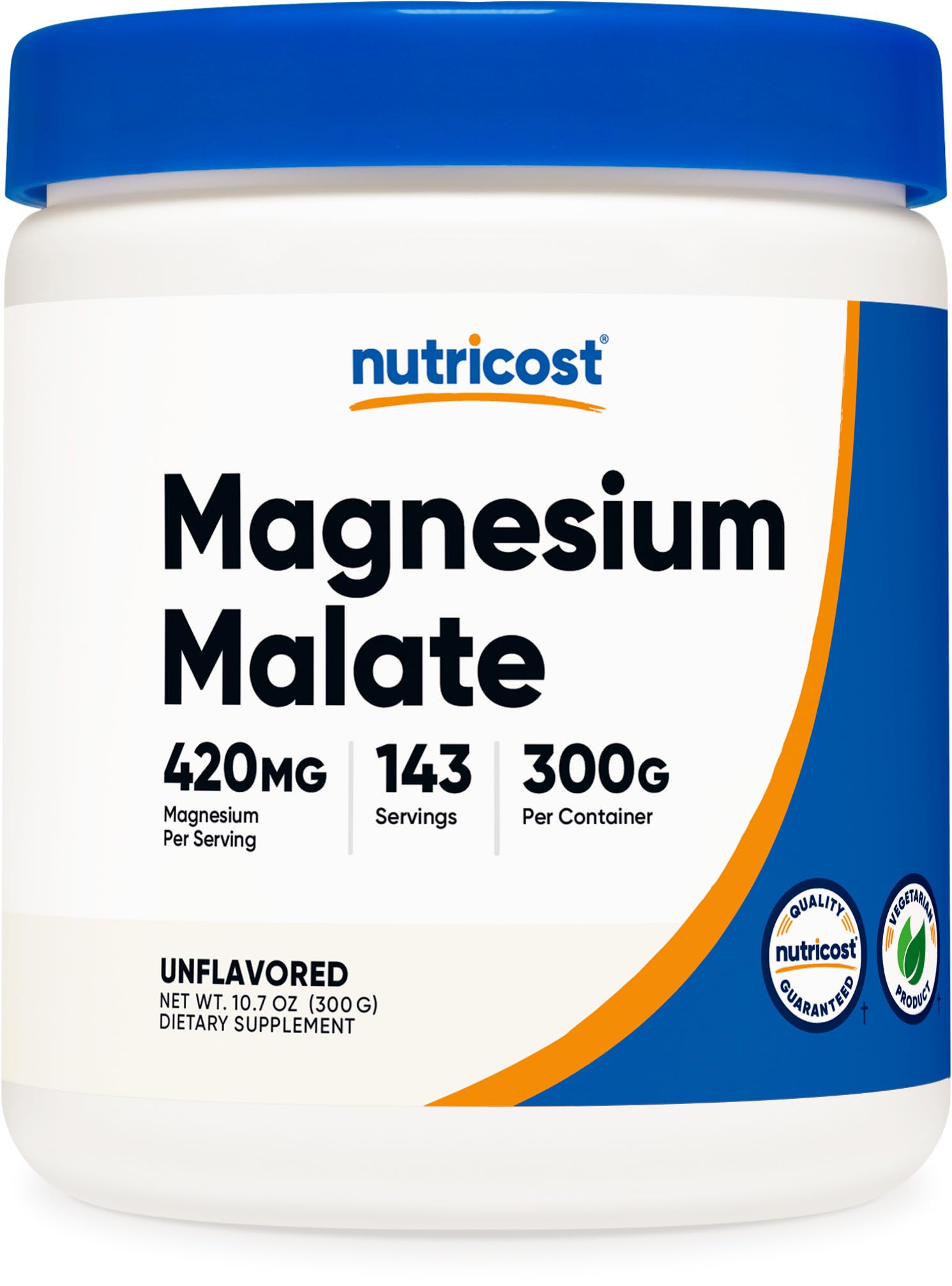
A scoop instead of a capsule, and the biggest elemental dose of the five
The malate form is the one buyers reach for when the goal is daytime muscle comfort rather than a bedtime wind-down. This is a powder, not a capsule bottle: one included scoop gives 420 mg of magnesium from magnesium malate, and the container holds 143 servings. Against the Natrol glycinate at 240 mg per serving, the Nutricost delivers 420 mg — a 75% higher elemental figure per serving. Nobody swallowing capsules gets a dose that big in one go.
Mixing is where the powder lives or dies, and the feedback is strongly on its side. It dissolves easily in liquid and mixes well with drinks, protein shakes and plain water, which makes it the only pick here you can fold straight into a morning shake. The formula is Non-GMO, soy free, gluten free, vegetarian friendly, and made in a GMP compliant, FDA registered facility. For daytime body aches and muscle recovery, reviewers consistently rate it well.
Now the part to decide on before buying: taste. This is genuinely mixed. Some find it flavorless enough to disappear into a drink; others call it bitter or oddly sweet. If you are sensitive to aftertaste, plan to bury the scoop in a strongly flavored shake rather than water. Digestibility splits the same way, with a share of buyers reporting loose stools or stomach upset at the full scoop. Starting at half a scoop is the sensible opening move.
The dose argument: 420 mg elemental in a single scoop beats every capsule here on per-serving magnesium, and 143 servings means one container covers a long stretch.
The taste gamble: powder always carries flavor risk, and this one genuinely splits opinion — the bitter camp is real, not imagined.
Pick this one if: you already drink a daily shake and want the highest elemental magnesium per serving without swallowing capsules.
Steer clear if: you cannot tolerate a bitter note in your drink or need a pre-measured dose you can carry.
Know the Specs
Elemental magnesium versus compound weight
The number that matters is the elemental figure — the actual amount of magnesium mineral in a serving. A label reading 240 mg usually means elemental magnesium, while the capsule’s total weight includes the carrier it is bound to. This is why a 500 mg tablet and a 240 mg capsule can deliver closer doses than the front label implies. Always check which figure the milligram number refers to before comparing two bottles side by side.
Glycinate, malate, and what the carrier does
Magnesium has to be attached to something to be swallowed, and that carrier shapes how gently it sits. Glycinate binds the mineral to glycine and is the form most often chosen for evening routines and calmer sleep. Malate binds it to malic acid and is the form buyers pick for daytime muscle comfort. Taurate is a third binding used in multi-form complexes. None of these is “better” in the abstract — they simply suit different parts of the day.
Serving size and supply length
A bottle’s real value depends on how many days it covers, not how many pills are inside. Three capsules a day from a 300-capsule bottle is a 100-day supply. One scoop a day from a 143-serving powder container is 143 days. A single capsule a day from a 60-capsule bottle is 30 days. Work out the daily rhythm first, then judge the bottle against it.
Absorption aids and certifications
Some formulas add absorption helpers — BioPerine is a black pepper extract used for exactly that purpose. Certifications matter just as much: cGMP-compliant manufacturing is a production standard, third-party lab testing checks quality independently, and an A-rated third-party certification means the whole process was examined. These labels tell you how seriously the maker handles consistency, not how well the product will work for you personally.
Common Questions
Which magnesium form is best for nerve and muscle discomfort?
What is the difference between 400 mg and 500 mg magnesium labels?
Can I take magnesium alongside other supplements or medication?
How long does a bottle of magnesium actually last?
Why does magnesium powder taste different from capsules?
Is a large magnesium tablet harder to swallow than a capsule?
Should I take magnesium with food or on an empty stomach?
Does the magnesium form change how my stomach reacts?
What does third-party lab testing actually verify?
Can I combine a magnesium capsule with a magnesium powder?
The Bottom Line
For most people working through the magnesium for sciatica question, the Micro Ingredients Pure Triple Magnesium Complex is the cleanest starting point. It puts glycinate, malate and taurate in one capsule at 400 mg elemental per serving, and 300 capsules at 3 a day gives you a 100-day supply from a single bottle. If you want the highest elemental dose in one go and already drink a daily shake, the Nutricost Magnesium Malate Powder delivers 420 mg per scoop across 143 servings. And if you simply want one coated tablet a day at the entry-level tier, the Nature’s Bounty Magnesium 500 mg is the no-fuss pick — just be ready for a larger pill.
How we choose
We do not accept paid placement. Every pick is matched to a real buyer and a real use-case; we do not hands-on test units.
Sources
Specifications: manufacturer listings and product documentation. Review insights: verified customer reviews, as of November 2026. Pricing: not shown on this page (it changes often); check the current price via the retailer link.
As an Amazon Associate, My Heart Lives Here earns from qualifying purchases. This does not affect which products we feature.