Heads up: This post contains affiliate links. As an Amazon Associate I earn from qualifying purchases, at no extra cost to you. Learn more
Heads-up: Amazon listings change often, so a product below may not match every detail in this article. Please check the product page on Amazon before you buy.
Specs are compiled from manufacturer listings and verified buyer reviews and can change over time — please confirm the key details on the product page before buying.
If your lower back locks up by mid-afternoon, the right machine is the one that fits how you actually sit, stand, and sleep — not the one with the longest feature list. This guide separates traction tables, TENS stimulators, and heat massagers so you can pick the tool that matches your pain.
This guide is built by comparing the manufacturers’ published specifications and the patterns across verified customer reviews, so you get each pick’s real strengths and trade-offs instead of marketing spin.
Some tools pull your spine apart, some jam deep into a knot, and some simply warm the muscle — knowing which job you need done is the whole game. Here are the machines for back that earn their space.
Top Picks

How To Choose A Back Machine
Three numbers decide whether a machine fits your body and your daily routine.
Load capacity
Check the weight limit first — a table rated to 350 lbs or 300 lbs will feel steadier under a heavier user than one capped at 250 lbs.
Backrest and height range
A longer, wider backrest such as 30.3 inches by 15.3 inches spreads pressure across your whole back, and an adjustable height range keeps your feet and hips lined up.
Session control
An auto-shutoff timer or adjustable intensity keeps a session short and controlled instead of leaving you over-stretched.
Side-by-Side Comparison
| Model | Best For | Type | Capacity | Auto-Shutoff | Amazon |
|---|---|---|---|---|---|
| TENS 7000 Digital TENS Unit★ Best Overall | Budget nerve pain relief | TENS stimulator | — | — | Amazon |
| Zyllion ZMA-13 MassagerBest for Desk Knots | Knot work at a desk | Shiatsu + heat | — | 20-minute timer | Amazon |
| Teclor Inversion Table | Full inversion on a budget | Inversion table | 350 lbs | — | Amazon |
| Sotion Full Body Massage Mat | Lying-down stretching | 3D traction mat | — | — | Amazon |
| Hyperice Venom 2 Back | Heat on the move | Heated vibration wrap | — | 15–20 minutes | Amazon |
| Stamina InLine Traction System | Upright decompression | Standing traction | 250 lbs | — | Amazon |
| Teeter EP-560 | Serious spinal decompression | Inversion table | 300 lbs | — | Amazon |
Detailed Reviews
1. TENS 7000 Digital TENS Unit with Accessories
Our pick — 4.5+★ from 113,000+ verified ratings; the strongest balance of quality and price.
The pocket-sized nerve stimulator that outsells whole aisles of massage gadgets.
This is the tool for sciatica, nerve zingers, and post-workout tightness that a massage roller never reaches. It is a TENS stimulator — a device that sends small electrical pulses through stick-on pads to interrupt a pain signal — and it arrives with 2 lead wires, a four-pack of reusable electrode pads, a 9V battery and a hard case. At 1.15 pounds it slips into a bag, so it is the lightest pick here by a wide margin next to the 10.8-pound Sotion mat.
What wins people over is the everyday reliability of the output — it is a leader in physical-therapy gear and has stayed a clinic favorite for years. The recurring gripe is longevity: some units stop turning on, and the 9V battery drains faster than you would like.
Why it earns first place
- Everything for a session is in the box, including the 9V battery and four pads
- 1.15 pounds means it travels in a tote or briefcase with no fuss
What to keep in mind
- Battery drain and sudden failures are the two things people run into
Grab it if: you want drug-free nerve and muscle relief you can take anywhere.
Think twice if: you need deep kneading pressure — this is electrical, not mechanical.
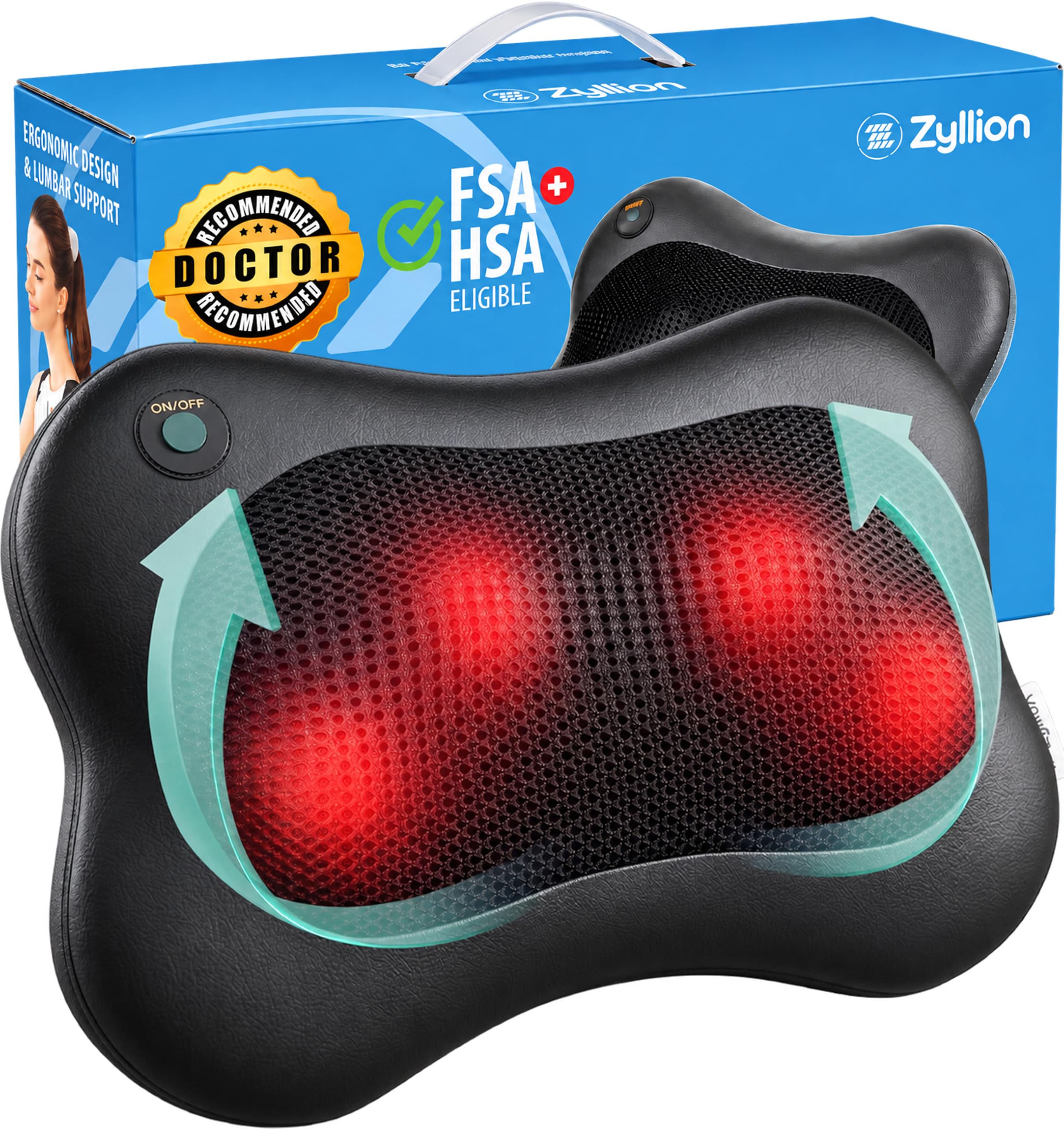
2. Zyllion ZMA-13 Back and Neck Massager with Heat
Deep-kneading silicone nodes that dig into the knot your shoulders have been hiding.
The Zyllion is built for the muscle tension that builds while you sit — upper and lower back, plus neck, shoulders, arms, calves and feet. Its 3D shiatsu nodes rotate and change direction every minute so one spot never gets overworked. It runs on a 6-foot cord rather than a battery, includes adjustable straps for an office chair or car headrest, and adds a bonus car adapter. It measures 13 x 9.5 x 3.5 inches, and the bundled heat can be switched off when you want pressure alone.
Durability is the honest caveat here: some machines keep going for years, others quit well before that, so treat the 20-minute auto-shutoff as the intended session length rather than a nuisance.
Where the pressure lands: the contoured shape adapts to your curves, and the heat ramps up the sense of release after a long shift.
The fair warning: it needs a wall outlet, so it is a chair-and-couch machine, not a travel one.
The right call for: anyone who wants hands-on kneading at their desk.
Worth a second thought if: you need cordless freedom.
3. Teclor Inversion Table for Back Pain Relief

A steel-framed decompression table that holds more weight than either rival.
If you want to hang upside down and let gravity pull your spine apart, this Teclor is the sturdier bargain. Height adjusts from 4’3” to 6’8” with a headrest range of 4 inches, and the whole rig folds for storage. A safety belt and padded ankle holders keep you locked in.
The build quality and ankle comfort draw mixed opinions — some find the finish basic and the ankle cups tight, so check the fit before a long session.
The value read: 350 lbs of steel and a generous backrest for a mid-range outlay is genuinely hard to argue with.
Where it can pinch: the comfort and secure-fit side is inconsistent, so go slower than you think on the first inversion.
Pick this one if: you are a heavier user who wants full inversion without a long warranty premium.
Look elsewhere if: cushioned ankle comfort is your top priority.
4. Sotion Full Body Massage Mat with Heat
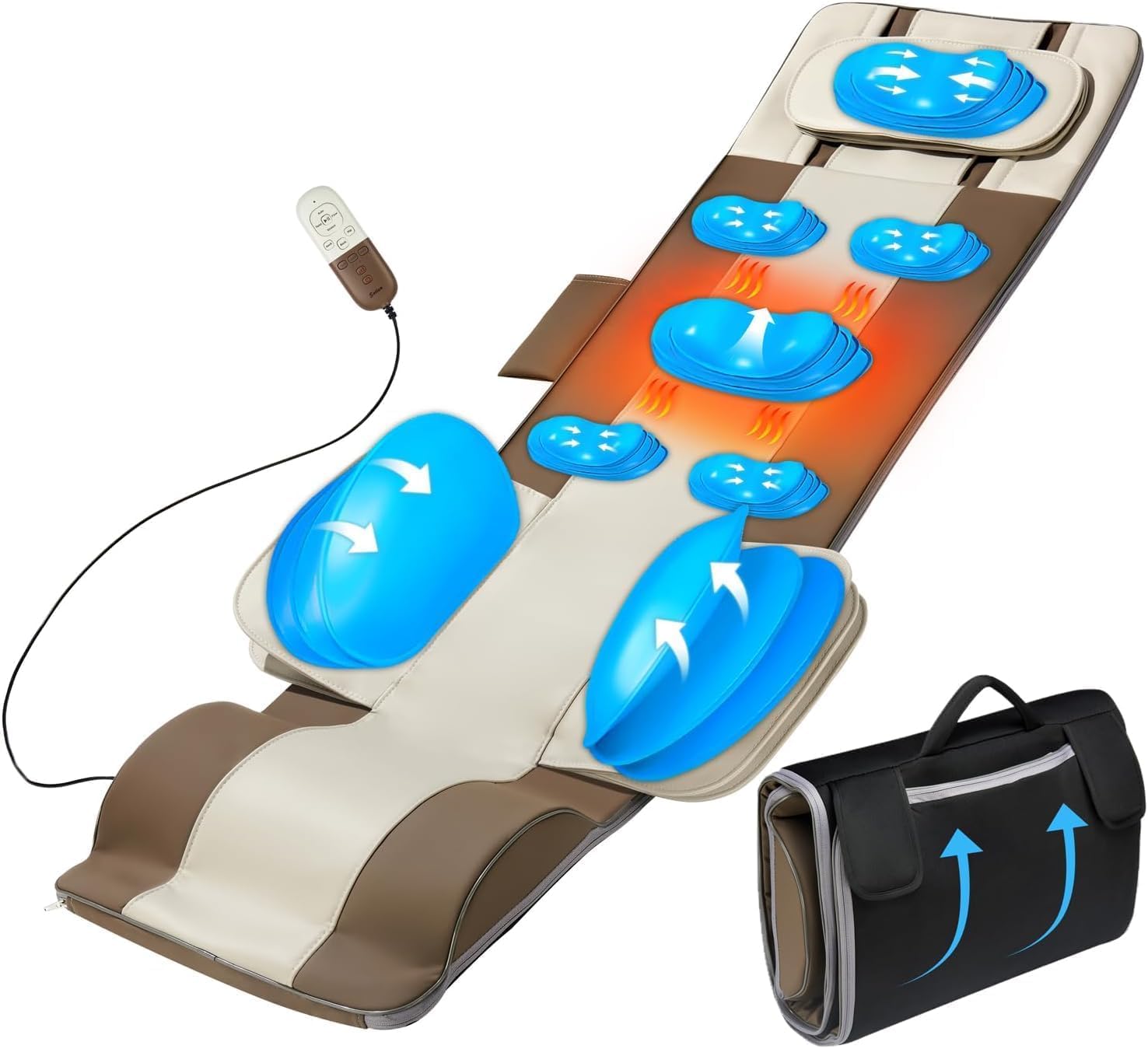
Not a roller, not a shiatsu — this mat pulls and twists you into a stretch.
The Sotion does something different from everything else on this list: its 3D body stretching and lumbar traction pulls up and down, curves your spine and twists left to right. You get 4 modes (Auto, Stretch, Twist, Flow), 3 intensity levels and 3 heat settings at 115℉, 130℉ and 149℉. The adjustable neck section fits 5’0 to 6’2, and the whole pad weighs 10.8 pounds and folds via velcro for storage. It belongs on a bed, sofa or floor — not a chair or recliner.
What people love is how quietly gentle the motion feels compared with the noise and itch of vibration rollers. The catch is simple: it is a lying-down machine, so your floor space has to allow it.
The draw
- Three heat levels and three intensities let you dial the session right down
- Folds and carries by handle at 10.8 pounds
The limit
- Will not work on a chair or recliner, so it needs floor or bed space
Best matched to: someone who wants gentle traction while lying down, not a deep-tissue pound.
Skip if your setup is: a recliner in a small room.
5. Hyperice Venom 2 Back Heated Vibration Wrap

The one you strap on and walk around with, heat and vibration running together.
Hyperice plays the wear-it-anywhere card, and the numbers back it: up to 3 hours of battery per charge, 3 heat levels and 3 vibration patterns. The lightweight neoprene wrap with a compression strap holds itself against your back while seated or reclining. Sessions run 15–20 minutes with an auto-shutoff, and the Hyperice app lets you customize duration and intensity. It weighs 2.2 pounds — the lightest powered pick here.
The catch is that the device will not run while plugged in, and it is built for short recovery bursts rather than all-day wear. Charge it fully — the first top-up takes up to six hours — before your first session.
The standout: cordless heat and vibration you can use in the car, at your desk or on the sofa.
The trade-off: it focuses on heat recovery, so it will not knead a knot like the Zyllion.
Reach for it when: you want hands-free warmth away from an outlet.
Pass if: you expect deep mechanical pressure.
6. Stamina InLine Traction Control System
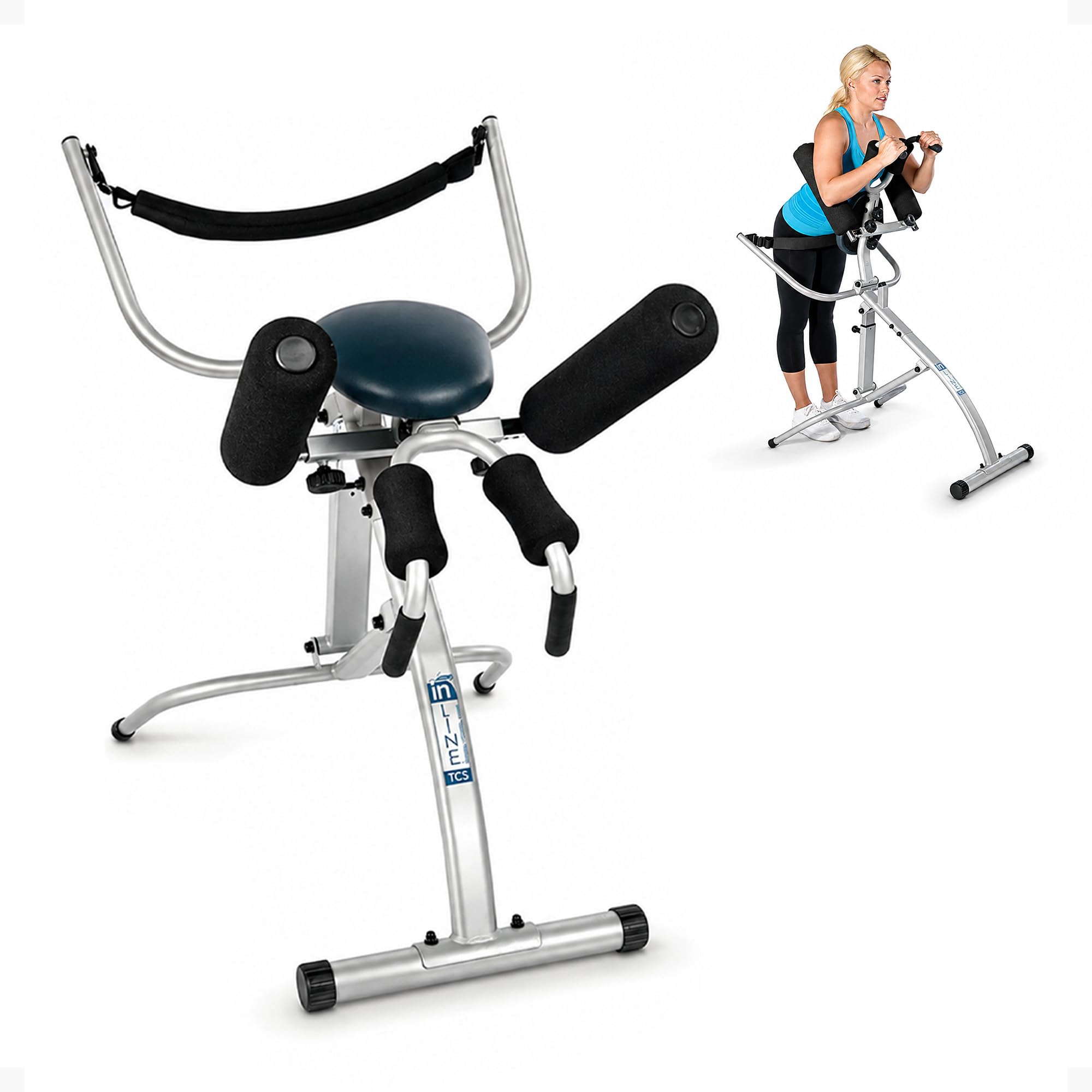
Decompress your spine standing flat-footed, no upside-down hanging required.
This is the pick for anyone uncomfortable with inversion or with blood-pressure concerns — you stretch your back, hips and knees from a flat-footed position instead. The steel frame carries up to 250 lbs with stable front and rear supports. You dial the padded lap belt to hip height, set the arm-support width, then lean into a gentle, controlled pull. It measures 33 x 27 x 43 inches and weighs 29 pounds, so it lives in one spot rather than moving around.
Effectiveness and build quality are what the crowd talks about most — it does the decompression job and the setup is quick. The honest downside is comfort: the shoulder and arm position does not suit every height.
Why it fits real bodies
- You control both the duration and the amount of the stretch
- No inversion, which suits people who cannot hang upside down
Before you commit
- Shoulder comfort is hit-or-miss depending on your height
Built for: the user who wants traction without going upside down.
Not for: tall frames that may find the arm supports awkward.
7. TEETER EP-560 Inversion Table
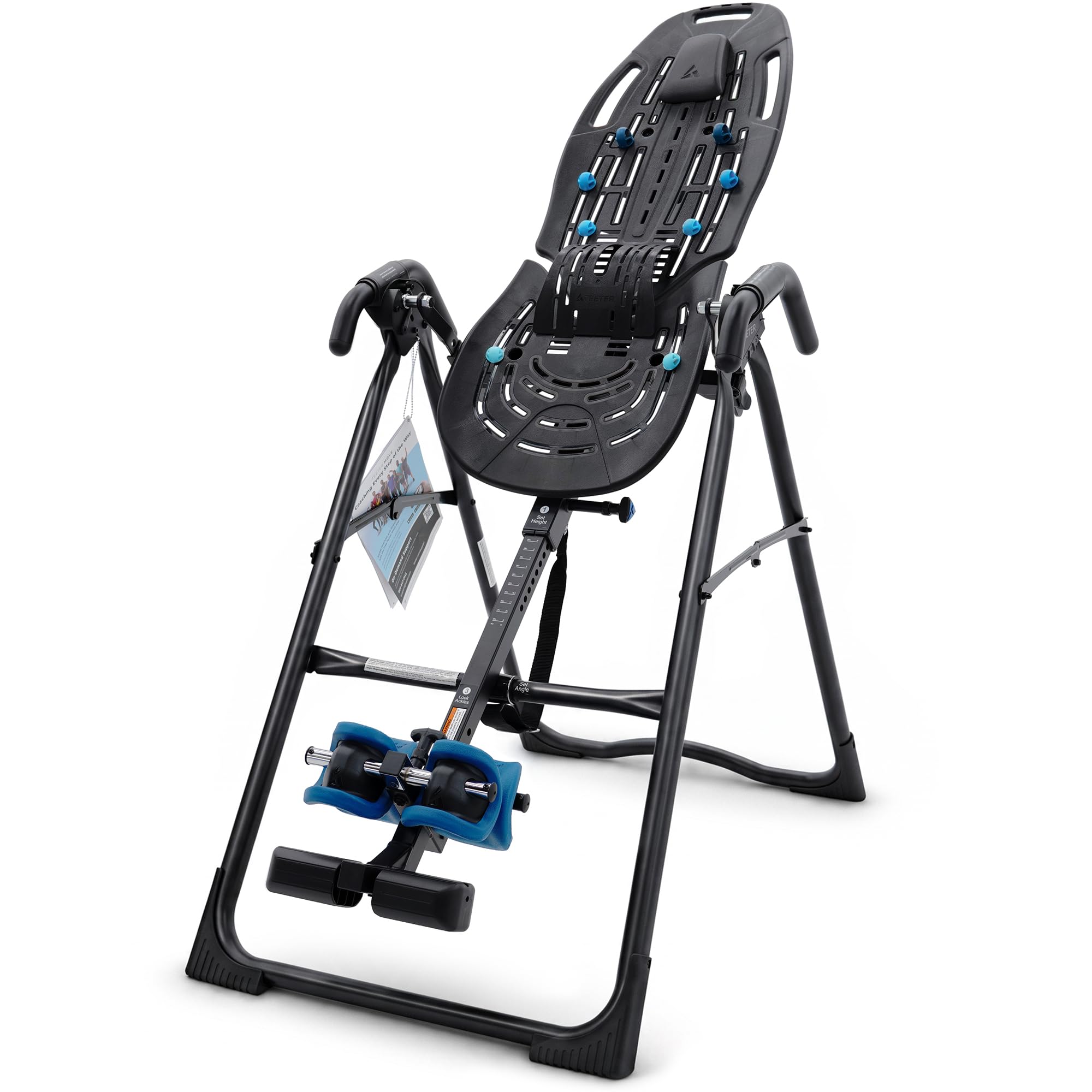
The engineered flagship of inversion, with a flexing ComforTrak backrest.
Teeter charges flagship money and backs it with a heat-treated steel frame rated to 300 lbs and tested to last 10x longer than the competition. The ComforTrak backrest slides with your body for better decompression, while grip-and-stretch handholds add stretch options. Wrap-around ankle cups and a two-position foot platform dial in a secure fit. It is registered with the FDA as a 510(k) device — a formal medical-device listing for back pain and related conditions — and it folds away in seconds without disassembly.
The ComforTrak does make it easy to relax into the stretch, but comfort is the split topic: some bodies feel supported, others feel strain at full inversion. It is also 65 pounds, so plan a permanent spot for it.
What the money buys: heat-treated steel, a 300-lb rating, and the security of a certified, foldable frame.
The honest cost: 65 pounds of machine and a comfort fit that varies by body.
Choose it for: long-term, clinic-grade decompression at home.
Wait on it if: you want something you can tuck in a closet easily.
Know the Specs
Traction vs. massage
Traction machines pull and lengthen your spine (inversion tables, the Stamina system, the Sotion mat), while massage devices knead or vibrate muscle directly — match the job to your pain.
Capacity and fit
Load ratings like 350 lbs or 250 lbs tell you how much weight the frame holds, and a wider, longer backrest with an adjustable height range keeps your hips and feet aligned.
Common Questions
Is a TENS unit the same as a massage machine?
Do I need to be a certain height for an inversion table?
Why do these machines shut off after 20 minutes?
The Bottom Line
For most backs, the machines for back winner is the TENS 7000 — it is the crowd favorite with 4.5+ stars across 113,000+ owners, light at 1.15 pounds, and ready to use straight from the box. If your knot needs mechanical kneading, the Zyllion ZMA-13 is the one to reach for. And for real spinal decompression, the Teeter EP-560 is the most engineered pick here.
How we choose
We do not accept paid placement. Every pick is matched to a real buyer and a real use-case; we do not hands-on test units.
Sources
Specifications: manufacturer listings and product documentation. Review insights: verified customer reviews, as of November 2026. Pricing: not shown on this page (it changes often); check the current price via the retailer link.
As an Amazon Associate, My Heart Lives Here earns from qualifying purchases. This does not affect which products we feature.