Heads up: This post contains affiliate links. As an Amazon Associate I earn from qualifying purchases, at no extra cost to you. Learn more
Specs are compiled from manufacturer listings and verified buyer reviews and can change over time — please confirm the key details on the product page before buying.
A gold seam that looks lovely but lets your cup fall apart again is worthless, so the first thing to check on any kintsugi kit is whether its epoxy, linseed resin, or urushi lacquer actually cures hard and holds. The kits below fall into two real camps. Modern epoxy and BPA-free linseed resin kits set hard in a day or two. Traditional Japanese urushi lacquer kits are food safe but demand patience and a sensitivity check. Every pick here has a genuine gold finish, and each one suits a different kind of mender.
This guide is built by comparing the manufacturers’ published specifications and the patterns across verified customer reviews, so you get each pick’s real strengths and trade-offs instead of marketing spin.
Cure times range from a 30-minute epoxy mix to a 72-hour full cure, and a kit whose resin never hardens leaves you with a sticky, glue-filled mug. Below is a honest kintsugi repair kit rundown covering cure times, gold types, and food safety for each pick.
Top Picks
How To Choose A Kintsugi Repair Kit
Kintsugi is the Japanese art of mending a broken pot with a gold seam so the crack becomes the decoration rather than a flaw to hide. The kit you buy decides how long that seam takes to set, what it can safely touch, and whether the repair survives daily use. Cure time, adhesive base, and food-contact limits decide whether the repair survives daily use; the rest is technique.
Cure time is the spec that trips up beginners
A full cure time (the point at which the adhesive reaches its final strength) is the number to check before you plan a project. A 72-hour full cure like the CHIYU kits means you mix, join, and then leave the piece alone for three days. Shorter advertised set times exist, but food-grade epoxy resin tends to cure longer than standard types, so treat any quoted fast time as a mixing-stage number, not a finished-repair number.
Know your adhesive: epoxy, linseed resin, or urushi
Two-component epoxy (a glue you mix from two parts so it cures hard) is the most common base because it bonds wood, metal, ceramics, glass, concrete, and precious stones, and it fills a missing chunk. BPA-free linseed resin (a plant-based resin with no bisphenol A, a common plastic chemical) stays dishwasher safe once cured. Real urushi lacquer is the traditional Japanese sap finish. It is food safe on dishes but needs humidity and time to harden, and it can cause a skin reaction in some people, so check the listing’s sensitivity note before you buy.
Food safety has limits worth reading twice
Food-safe on a kintsugi kit usually means limited contact with cold foods once fully cured — bread, pastries, nuts, cheese, charcuterie. Hot liquids like coffee, tea, or soup, plus microwaves and ovens, are commonly out of bounds because heat can soften the bond. If you plan to drink from the repaired mug, buy from a kit that states its food-contact terms plainly.
Side-by-Side Comparison
| Model | Best For | Adhesive Base | Cure Time | Weight | Amazon |
|---|---|---|---|---|---|
| CHIYU Modern Repair Kit (Gold)★ Best Overall | Decorative ceramics and cold-food pieces | 2-component epoxy resin | 72 hours full cure | 240 g | Amazon |
| iienjoy 4-Color Kintsugi KitMost Colors | Multi-color decorative mending | Food-safe AB epoxy, 50ml | 30-minute slow cure, dishwasher safe after 24 hours | 13 ounces | Amazon |
| PLEARTY Linseed Resin Kit | Everyday dishware that goes in the dishwasher | BPA-free linseed resin | — | 11.7 ounces | Amazon |
| 4LEAF TREASURE Complete Kit | First-timers who want practice bowls | Dual-component epoxy, 1:1 ratio | Fast drying | — | Amazon |
| CHIYU Modern Repair Kit (Second Listing) | Gap-filling on marble and stone pieces | 2-component epoxy resin | 72 hours full cure | 240 g | Amazon |
| Mejiro Urushi Lacquer Kit | Traditional-method purists | 100% natural urushi lacquer | — | 12.8 ounces | Amazon |
| Chimahaga Traditional Kit | Dishware mending with real gold | Natural urushi with pure gold | — | 6.4 ounces | Amazon |
Detailed Reviews
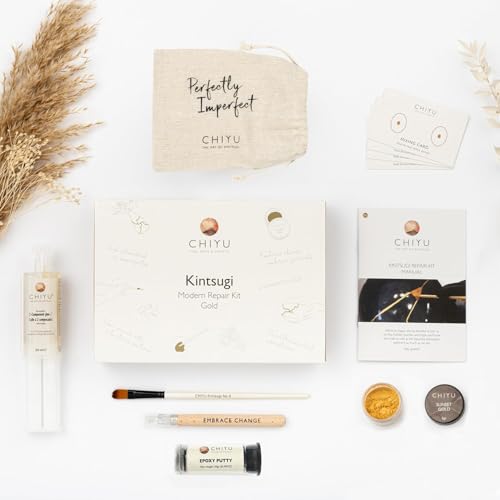
1. CHIYU Modern Repair Kit – Gold
Our pick — 4.0+★ from 400+ verified ratings; the strongest balance of quality and price.
A gold seam that hardens, holds, and survives the dishwasher — if you read the food rules.
What wins people over is the bond: the two-component epoxy cures hard and holds. Repair effectiveness is what menders praise most, and it is why this kit tops the list — it earns its place on a bond that holds, not on packaging. The two-component epoxy brings wood, metal, ceramics, glass, concrete, and precious stones together, and it is thick enough to fill a chunk that has gone missing rather than just close a hairline crack.
The numbers that decide your week are the 72-hour full cure (the point when the bond reaches full strength) and the material. Once mixed, the epoxy gives you a workable window to line up the fragments before it stiffens — plan on three days of hands-off time after the join. You get a manual with tips in six languages, and the maker states the kit covers 6 to 8 medium-sized repairs, so a few broken plates is well within what one tube handles.
The honest catch is the food-safety fine print. This glue is rated for limited contact with cold foods once fully cured — bread, pastries, chips, nuts, cheese, charcuterie. It is not recommended for hot liquids like coffee, tea, or soup, for food storage, or for the microwave or oven, because heat can weaken the adhesive. Dishwasher safe, but handwashing is preferred.
Who it fits best: Anyone repairing display ceramics, platters, or pieces used for cold foods who wants a durable, waterproof bond and a straightforward mix-together process.
Where the seams feel the pinch: The directions split the room — some find them clear, others think they could be tighter — so expect to lean on the tips if you are brand new to epoxy mixing.
Top of the shelf: Reach for this if you want a decorative, cold-food-safe repair that holds up and looks like real gold.
Think again if: you plan to drink hot tea from the mended mug — heat is outside this glue’s stated limits.
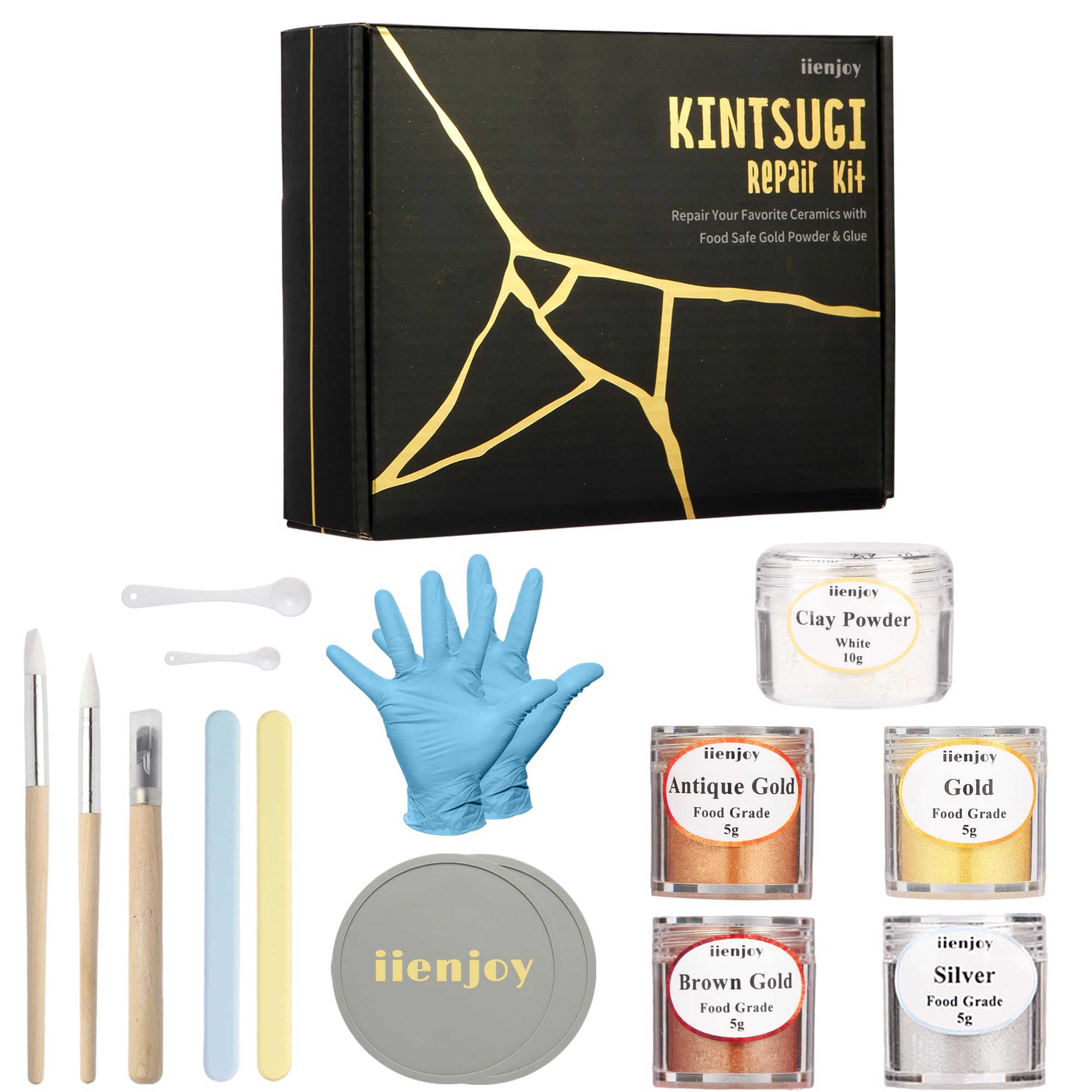
2. iienjoy Kintsugi Repair Kit, 4 Colors
Four metallic colors instead of one gold, plus the heftiest resin bottle on this list.
The defining number here is 50ml of food-safe AB epoxy, and it comes with four metallic pigments, gloves, wooden sticks, and reusable silicone mixing tools. That is the largest stated resin fill in this round-up — the CHIYU kits ship 240 g of material, while this one carries 13 ounces on the scale, the heaviest kit here. More resin means more mends before you run dry, and the four pigments let you pick a finish that suits the piece rather than defaulting to gold.
Where it shines is as a starter kit: four pigments, reusable silicone tools, and 50ml of epoxy give a beginner room to experiment. The quality of the kit and its ease of use are the two things that draw the most praise, and it looks good on the finished piece. Repairs work across ceramics, glass, metal, jade, wood, and décor. The instructions run at a 30-minute slow cure, and the maker notes that food-grade epoxy resin cures longer than standard types — so treat the 30 minutes as mixing guidance, not the whole job. Repaired items are dishwasher safe after 24 hours.
The frustration lands on the squeeze. The glue is hard to get out of the tube evenly, and a few find it takes longer to set than the leaflet promises, so squeeze patiently and mix on a flat, stable surface. A handful of buyers also felt the value did not land the way they hoped. It is still a genuinely capable four-color kit with 50ml of food-safe epoxy — just budget extra patience for squeezing the glue out of the tube.
What nobody argues about
- Four metallic pigments give you real color choice, not just gold.
- 50ml of food-safe AB epoxy is the biggest stated resin volume in this guide.
- Silicone mixing tools are reusable and easy to wipe clean.
- Dishwasher safe after 24 hours, per the maker.
The friction you will meet
- The glue is stubborn to dispense evenly from the tube.
- Setting takes longer than the instructions imply for some users.
- You are trading ease for color range and resin capacity.
Pick it for the palette: Choose this if you want to repair with something other than plain gold and value a big resin fill for the money.
Better elsewhere if: you want a squeeze-and-go tube with no fuss at the mixing stage.
3. PLEARTY Kintsugi Repair Kit Linseed Resin
Plant-based resin that promises a dishwasher-proof seam on the plates you actually eat from.
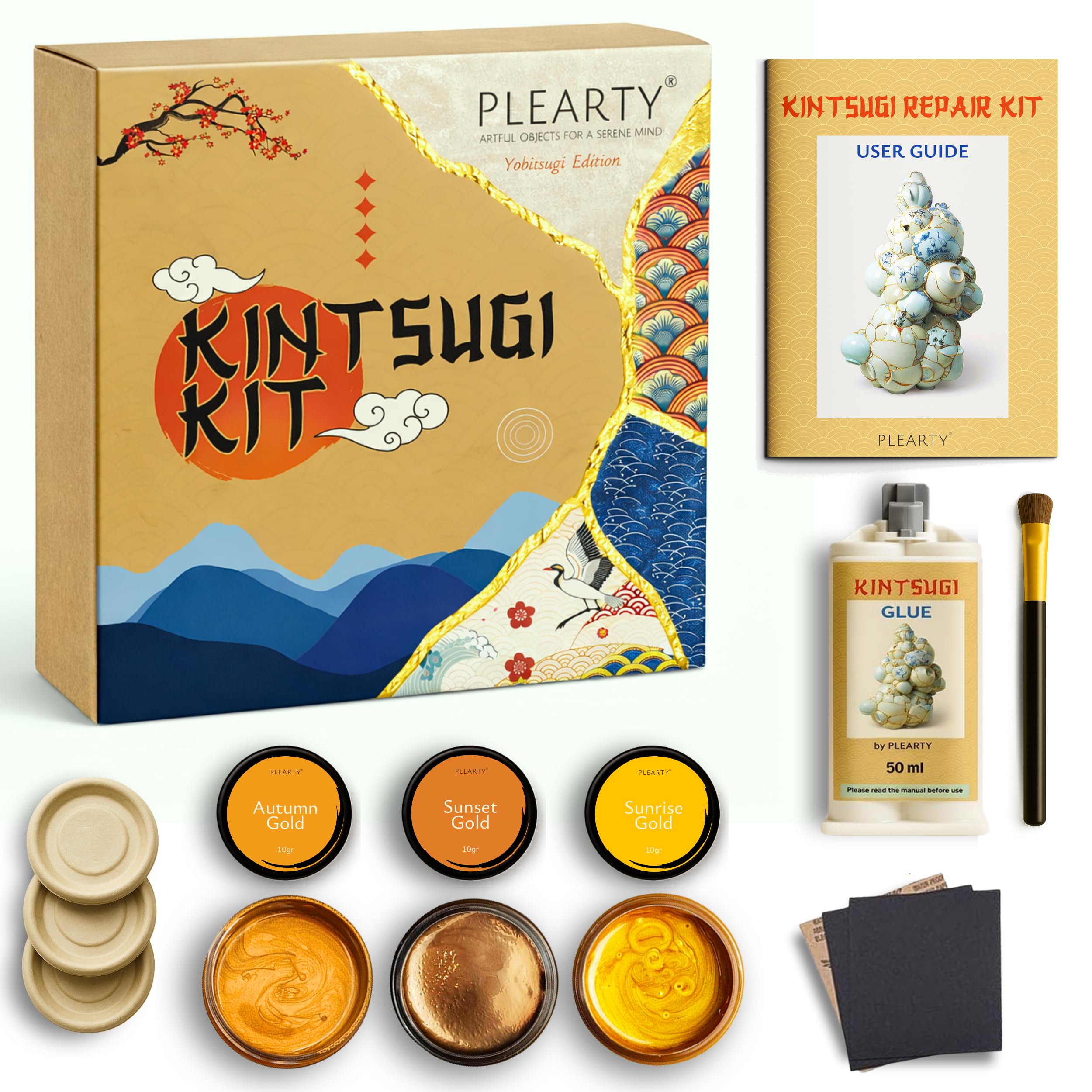
Here is the plant-based path: BPA-free linseed resin, low VOC, and dishwasher safe once cured, so the mended dinner plate can go back in the rack with everything else. It suits ceramic, glass, wood, marble, and concrete, and the maker bills it as bio-based. For readers who want the seam to live on a working dinner plate rather than a display shelf, this BPA-free linseed resin is the kit built for that job.
The 20-page booklet is the real headline for anyone new to the craft, and it walks from mixing the gold powder through to the finished repair. As described and appearance are the two things cited most, and the instructions earn their share of praise; ease of use is repeatedly called beginner-friendly. The kraft-paper packaging is designed to look like a gift, so it doubles as a present for someone who loves Japanese craft.
The trade-off is the glue itself. The recurring gripe is adhesive quality — some buyers report the resin staying soft, or the pieces coming apart after a while. That is the honest split: the kit, the guide, and the look earn steady praise, while the bond is the weak link for a share of users. Mix to a full 1:1, stir longer than feels necessary, and give the seam the full cure before it touches water.
The value read: 11.7 ounces of kit, a 20-page guide, and a dishwasher-safe linseed resin — that is a well-rounded beginner package for the price.
The bet you take: the linseed bond is the thing people split on, so treat the mixing ratio as the most important part of the job.
The beginner’s companion: the clearest path for a first repair, thanks to the 20-page walkthrough and dish-safe resin.
Look past it if: you want the more predictable grab of a two-component epoxy and do not care about bio-based materials.
4. 4LEAF TREASURE Complete Kintsugi Repair Kit
Two bowls to break on purpose, so you learn the seam before a family heirloom is on the table.
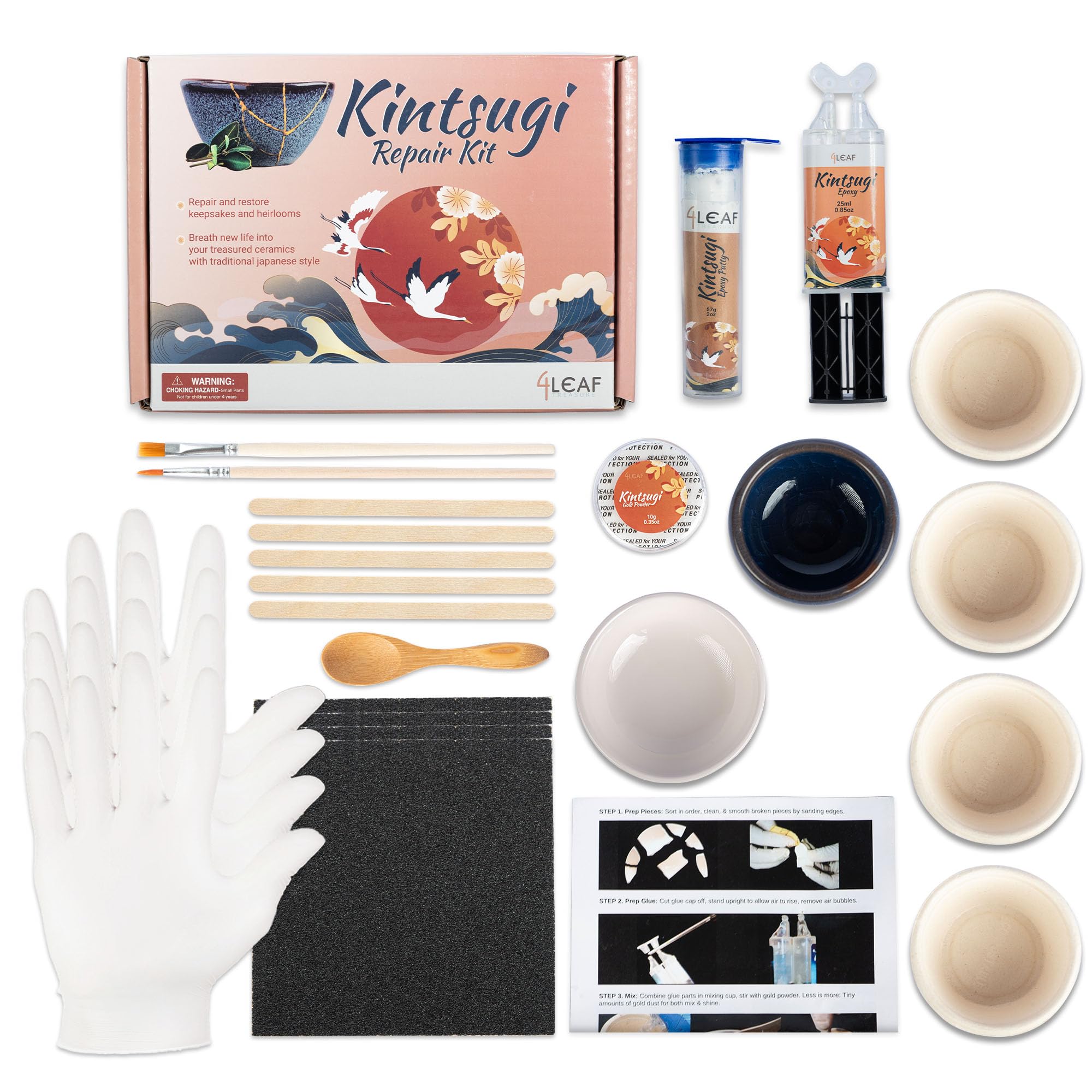
Most kits assume you already have a casualty. This one hands you two practice ceramics in white and dark blue so you can break, decorate, and repair them before touching anything precious. That is the standout — it is a teaching kit at heart, and the practice bowls are the reason to pick it.
You get the fullest roster of supplies in this guide: 25ml epoxy glue, 10g gold powder, 5 wooden craft sticks, a miniature wood spoon, 2 art brushes, 2 pairs of unisex medium-large disposable nitrile gloves (single-use gloves that resist the resin), 4 paper mixing containers, 57g epoxy putty, 4 sandpaper sheets, and instructions. The dual-component epoxy is mixed at a 1:1 ratio, so you get a consistent blend every time. The putty is there to fill a missing chunk, not just a crack. It works beyond ceramic too — marble and granite included.
The catch is that it covers less ground per bottle than the CHIYU kit: 25ml of epoxy against the 240 g CHIYU tube, so you are paying for the teaching extras rather than a huge resin fill. If you already know how to mix epoxy, you are buying equipment you may not need.
Why it earns its place
- Two practice bowls let a beginner ruin something harmless first.
- 57g of putty fills gaps, not just cracks.
- 1:1 epoxy ratio keeps measuring simple.
- Includes sandpaper, brushes, gloves, and mixing cups in one box.
Where it trades off
- 25ml of epoxy is a modest fill next to bigger kits here.
- Repeat, polished menders end up paying for practice gear they will skip.
Made for first-timers: if you have never mixed epoxy for ceramics, the practice bowls are worth the price of admission.
Skip past if: you have done kintsugi before and want sheer resin volume instead.
5. CHIYU Modern Repair Kit – Gold (Second Listing)
The same epoxy formula as the top pick, listed separately — ideal for marble, stone, and heavier pieces.
This is the CHIYU formula in its second Amazon listing: gold, 240 g, the same 72-hour full cure, and the same two-component epoxy that bonds wood, metal, ceramics, glass, concrete, and precious stones. If the first listing is out, this one delivers the same repair durability. The epoxy is stiff enough to fill a missing piece of a stone or marble object, which is where a thin glue would run and fail.
Repeat the 72-hour cure number in your head before you start — plan three days from the joint before the repair is at full strength. The multilingual manual (English, Spanish, German, French, Italian, Dutch) is a genuine help for a mixed-language household, and the maker states the kit covers 6 to 8 medium-sized repairs. Cold-food contact is fine once fully cured; hot liquids, the microwave, and the oven are not.
Some buyers find the directions less thorough than they expected, and the package contents have been called incomplete in a few cases. Check the box on arrival before you start a project. Where the product is in good order, the effectiveness of the repair is what holds it up.
Worth knowing: the two CHIYU listings are the same product sold under different ASINs — if you have one, you have the other.
The watch-out: completeness is the thing to verify, since a missing component mid-project stalls the whole repair.
Choose by function: pick this if you want the CHIYU durability and a strong gap-filler for stone and marble.
Compare against the top pick: this one is the same kit — buy whichever listing is in stock and open the box to check contents before you start.
6. Mejiro Kintsugi Repair Kit – Japanese Urushi Lacquer
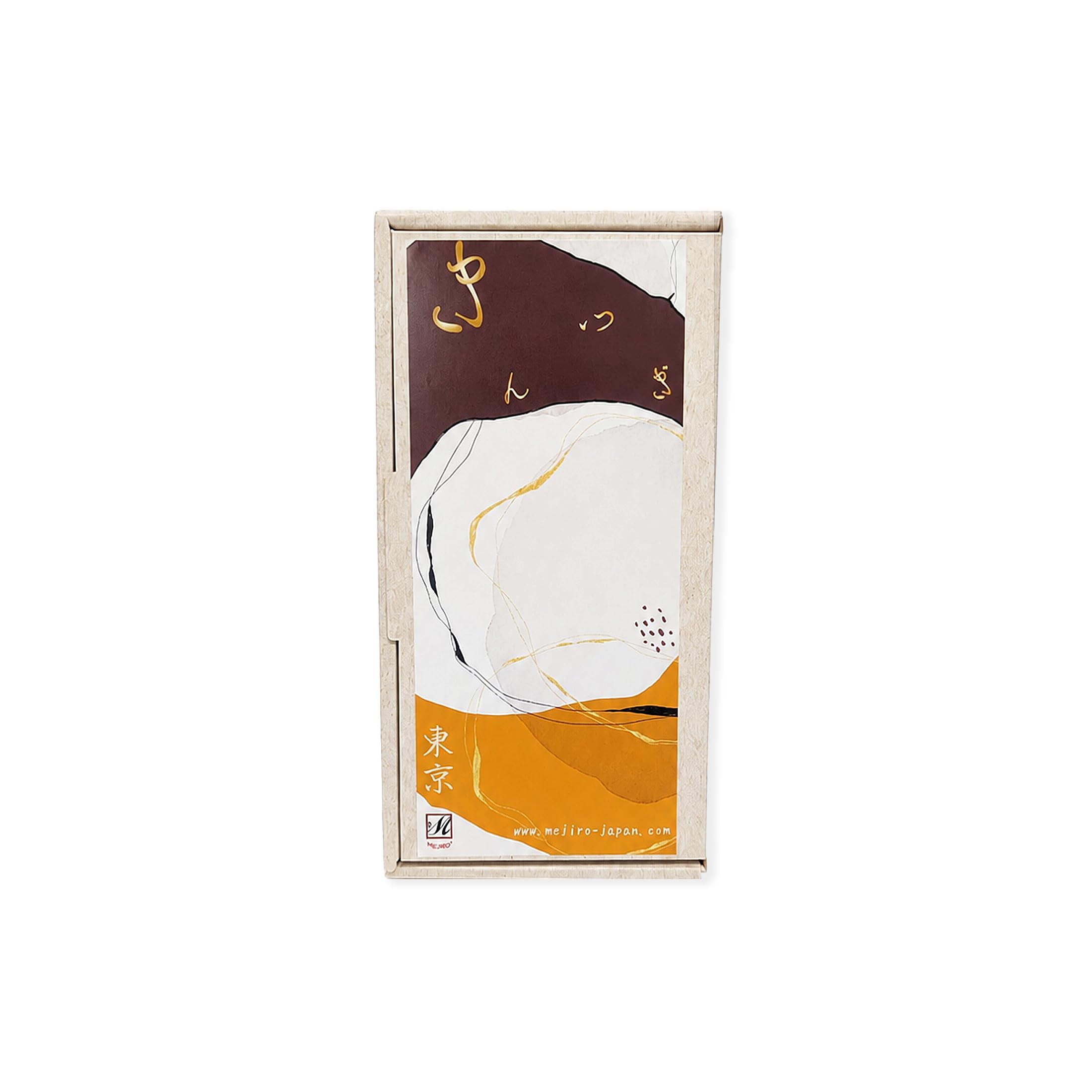
Real urushi lacquer for the purist, with a poison-ivy warning you should not skim.
This is the traditional route. The kit is 100% natural urushi lacquer with no toxic chemical additives, and it mends pottery, porcelain, and wood using the original Japanese method rather than epoxy. If you are mending a treasured piece and want the seam to be made the way it has been made for centuries, this is the only option on this list built to give you that.
The quality of the kit is what carries it — it arrives as a complete set and turns out attractive results. That is the reason it earns a place here despite the caveat below. Urushi is a sap lacquer, and it needs time to harden rather than a fast chemical cure, so the process is slower and quieter than mixing epoxy. Keep the work area clean and expect to work in stages.
The serious note: urushi lacquer contains a compound that can cause a reaction similar to poison ivy. The manufacturer states it plainly and points concerned buyers to a low-allergenic kit. Some owners mention staining and skin reactions — treat that as a real warning, not a quirk. If you have sensitive skin or have reacted to urushiol before, this is not the kit for you.
The traditionalist’s choice: 12.8 ounces of genuine urushi lacquer that gives an authentic finish rather than a plastic one.
Not without gloves: the skin-reaction risk is documented by the manufacturer itself, so wear gloves and test on a scrap first.
For the patient purist: pick this if you want a genuine urushi seam and are comfortable with a slow, careful process.
Better elsewhere if: you have sensitive skin, want a first project to be low-stakes, or need a fast result.
7. Chimahaga Traditional Kintsugi Repair Kit
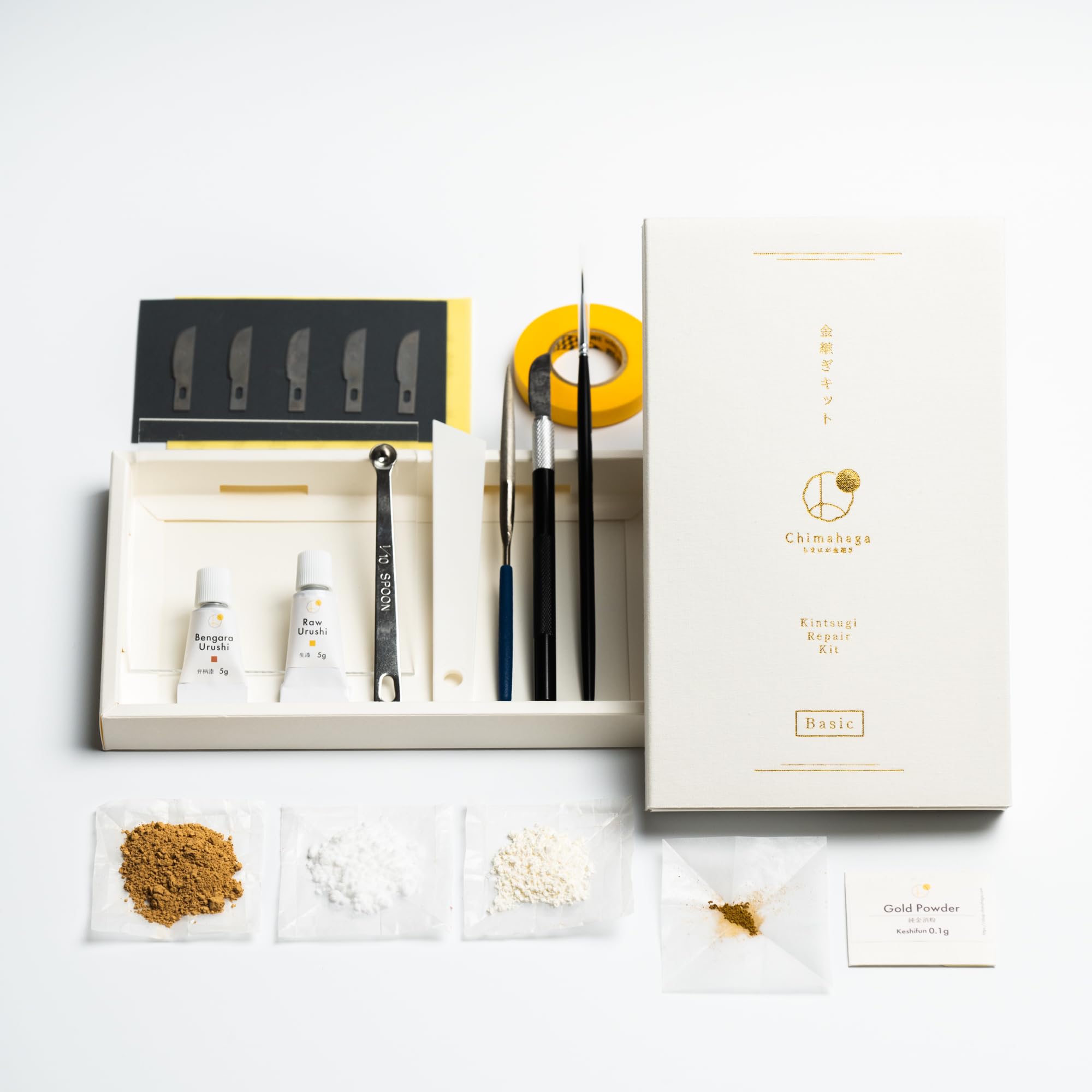
Genuine gold and natural urushi, overseen by a working kintsugi repairer, with a support forum attached.
This is the lightest kit in the guide at 6.4 ounces, and it earns its place on authenticity: natural urushi and pure gold, so the finished repair is safe on dishes and the gold is the real thing. The kit is supervised by Chimahaga, a Japanese kintsugi repairer. If you want the seam to be built from gold rather than a gold-tone powder, this is the one.
The support is the quiet advantage. Tutorial videos are available on YouTube, and the price of entry includes access to a buyer-exclusive Kintsugi Forum where Chimahaga answers questions in English. The 6.4-ounce format is compact enough to store in a drawer between projects.
The trade-off is the material. Like any real urushi kit, it is a slower, more careful process than two-component epoxy, and the light kit means you are buying quality over volume. This is not a starter kit for a quick fix — it is for the mender who respects the method.
What you are paying for: genuine gold and natural urushi, plus expert help when the process confuses you.
What you give up: a fast cure and a generous resin fill — this kit lives on authenticity, not convenience.
The purist’s premium: this suits a mender who wants real gold, real urushi, and a teacher a message away.
Weigh it against faster kits: if you need a repair done this week and do not care about traditional materials, choose an epoxy kit instead.
Know the Specs
Full Cure Time
Full cure time (the point at which the adhesive reaches its final strength) is the number that sets your project timeline. A 72-hour full cure like the CHIYU kits means you should leave the repaired piece untouched for three days after the join. Shorter advertised set times usually refer only to the mixing stage, not the finished bond — so build the cure time into your plan before you start a repair.
Adhesive Base: Epoxy, Linseed, or Urushi
Three bases dominate the market. Two-component epoxy is fast, waterproof, bonds many materials, and fills missing chunks. BPA-free linseed resin is plant-based and dishwasher safe once cured. Natural urushi lacquer is the traditional sap finish, food safe on dishes but slow to harden and a potential skin irritant for some. Match the base to the job and your sensitivity.
Food Safety and Heat Limits
Food-safe on a kintsugi kit typically covers limited contact with cold foods once fully cured — bread, pastries, nuts, cheese, charcuterie. Hot liquids like coffee, tea, or soup, plus microwaves and ovens, are usually excluded because heat can weaken the adhesive. Check the manufacturer’s exact terms before you put a repaired piece into daily service.
Gold Powder vs. Gold Leaf
Gold powder is dusted over the mixed adhesive to mimic the kintsugi seam, while real gold leaf or genuine gold gives a more authentic finish. Both produce the decorative effect; the difference is fidelity and material cost. Natural urushi kits with pure gold sit at the top of the authentic scale, while gold-powder epoxy kits offer the look at a lower material cost.
Common Questions
Can I actually use a kintsugi-repaired mug for coffee or tea?
How long does a kintsugi repair kit take to cure?
Is kintsugi glue safe to use on dinner plates?
What is the difference between epoxy, linseed, and urushi kintsugi kits?
Can I put a kintsugi-repaired bowl in the dishwasher?
Is urushi lacquer safe for sensitive skin?
Which kit should a complete beginner start with?
Will gold powder and epoxy work on marble or wood as well as ceramic?
What happens if the kintsugi repair kit is missing a component?
Do I need real gold leaf, or is gold powder enough?
The Bottom Line
For most people, the strongest kintsugi repair kit on this list is the CHIYU Modern Repair Kit – Gold. It earns its place on effectiveness, the most-discussed strength of the kit, with a 72-hour full cure, a 240 g epoxy tube, and food-safe limits spelled out plainly. If you want the biggest resin fill and four metallic pigments to pick your color, reach for the iienjoy kit. For a first repair without the epoxy worry, the PLEARTY linseed resin kit is the one to reach for. On the budget end, the 4LEAF TREASURE kit earns its place as the one with practice bowls included, which is rare in this category. One honest nudge: check the cure time and any sensitivity warning before you fall for a fancy box, because they matter more than the packaging.
How we choose
We do not accept paid placement. Every pick is matched to a real buyer and a real use-case; we do not hands-on test units.
Sources
Specifications: manufacturer listings and product documentation. Review insights: verified customer reviews, as of November 2026. Pricing: not shown on this page (it changes often); check the current price via the retailer link.
As an Amazon Associate, My Heart Lives Here earns from qualifying purchases. This does not affect which products we feature.