Heads up: This post contains affiliate links. As an Amazon Associate I earn from qualifying purchases, at no extra cost to you. Learn more
Specs are compiled from manufacturer listings and verified buyer reviews and can change over time — please confirm the key details on the product page before buying.
The hardest part of kayaking after sixty usually isn’t paddling — it’s getting in without the boat skittering sideways while you commit your weight. The picks below are chosen for how they behave in that exact moment: wide, flat decks and hulls that stay put, plus seats you can adjust so your lower back isn’t on fire an hour in.
This guide is built by comparing the manufacturers’ published specifications and the patterns across verified customer reviews, so you get each pick’s real strengths and trade-offs instead of marketing spin.
Weight matters more than most buyers expect, because a hull you can’t lift off the roof rack never makes it to the water. These eleven picks cover sit-on-top, sit-in, and inflatable designs — here is how to weigh them for kayak for seniors.
Top Picks


How To Choose The Best Kayak for Seniors
Three things decide whether you’ll actually use a kayak every week: how stable it feels at the dock, how much it weighs when you lift it alone, and whether the seat supports your back for a full paddle.
Boarding stability beats top speed every time
A flatter bottom and a wider beam (the boat’s width across the middle) spread your weight so the hull resists tipping when you shift a leg over the side. That’s the moment most paddlers worry about, so it deserves the first look. Width numbers from 29 in up to 36 in appear in the picks below, and the wider boats are the ones that feel planted at the launch ramp.
Hull weight decides whether you go out alone
A kayak you can carry with one hand on a shoulder is a kayak you’ll use on a whim. Hard shells here run from 39 pounds up to 76 pounds, and that spread is the whole difference between a solo launch and waiting for help. If you load onto a roof rack, weigh that number against how comfortably you lift.
Seat height and back support are not luxuries
An adjustable, framed seat back lets you sit more upright, which takes strain off your lower back over a long paddle. Look for a seat you can raise, recline, or remove entirely — several picks on this list let the chair double as a beach seat. Adjustable footrests matter just as much, because they let you brace your legs and take pressure off your back.
Capacity finally, because gear adds up
Manufacturers quote a maximum weight capacity, and you want headroom above your own weight plus a cooler and a tackle bag. The range here runs from 250 lb to 750 lb, so there’s a boat for a light solo paddler and one for two adults with gear.
Side-by-Side Comparison
| Model | Best For | Weight | Length | Max Capacity | Amazon |
|---|---|---|---|---|---|
| Pelican Catch Mode 110★ Best Overall | Standing to cast | 67 lb | 128 in | 375 lb | Amazon |
| Pelican Sentinel 100X AnglerBest Value | Budget angler | 20 kg | 114.17 in | 275 lb | Amazon |
| Lifetime LotusEasiest to Car-Top | Easiest to car-top | 39 lb | 96 in | — | Amazon |
| Perception Access | Back support | 50 lb | 9 ft | 250 lb | Amazon |
| Emotion Spitfire | Dry, calm water | 45 lb | 108 in | — | Amazon |
| Lifetime Tamarack Pro 103 | Fishing on a mid budget | 57.5 lb | 123 in | — | Amazon |
| Lifetime Kokanee | Paddling with a partner | 76 lb | 126 in | — | Amazon |
| Pelican Argo 100XR | Dry, easy entry | 43 lb | 120 in | 300 lb | Amazon |
| Perception Zip 9.5 | All-around calm water | 41 lb | 114 in | 325 lb | Amazon |
| Perception Tribe 9.5 | Reclining seat back | 46 lb | 113 in | 300 lb | Amazon |
| Sea Eagle 380x Explorer | Two paddlers, stored small | 40 lb | 150 in | 750 lb | Amazon |
Detailed Reviews
1. Pelican Catch Mode 110 Kayak
Our pick — 4.5+★ from 350+ verified ratings; the strongest balance of quality and price.
The widest, most planted deck here — a boat you can stand up in to cast.
What makes this one the top pick for a paddler with stiff knees is the boarding. The tunnel hull (a hull with a channel running down the middle) spreads your weight so the boat sits flat, which is exactly what you want at the launch ramp when one leg is still on the dock. The deck itself is wide and flat at 34.5 in across and 128 in long, so you can plant both feet and stand to cast without stepping over rods.
The seat is the other half of the story. The ERGOBOOST chair raises for a better view and reclines for your spine, and its EVA foam pad hides storage underneath. Extra flotation is built into the hull to meet or surpass ABYC standards, and the stated maximum is 375 lb — the most of any single-seat kayak on this list, ahead of the Perception Access at 250 lb.
Three flush-mount rod holders, two 4 in rigging tracks, front and rear tank wells, two bottle holders and an anti-slip deck carpet come standard. The trade-off is lift weight: 67 lb is the heaviest hard shell in this group, and it arrives 28 lb heavier than the Lifetime Lotus at 39 lb. The core builds are what owners praise most, with the hull’s steadiness the second theme; the weight split is the honest one, so a roof-rack solo lift is where this boat asks for a helper.
shallow water agility
- 375 lb capacity gives real headroom for gear plus a cooler
- Wide flat deck lets you stand and cast
- ERGOBOOST seat adjusts height and angle for back relief
- ABYC-standard flotation built into the hull
narrow hull limits gear
- 67 lb is a two-person lift onto a tall rack
- Seam splits appear in a small share of durability feedback
flat water favorite: you want to fish standing up and have a second pair of hands at the car.
open bay doubts: you launch solo off a high roof rack — the 67 lb hull will wear you out before the water does.
2. Pelican Sentinel 100X Angler Sit on Top Fishing Kayak
The fishing-ready hull that won’t strain your back or your budget.
At 9 ft 6 in and 44 lb, this is the boat for the paddler who wants to fish but doesn’t want a barge. The multi-chine flat bottom (several angled panels instead of one smooth curve) keeps it steady while you’re reeling, and it measures 29.92 in wide against the Catch Mode 110 at 34.5 in — noticeably trimmer through the water. The removable ExoPak compartment drops straight into the tank well for tackle.
The seat is where opinions split. The adjustable backrest and cushion suit plenty of paddlers, but the comfort feedback is genuinely mixed rather than unanimous, so if your lower back is the reason you’re shopping, a framed chair like the Perception Tribe’s is the safer bet. What people settle on instead is the overall package: the size and the value are what buyers single out most, and maneuverability drew no negative notes at all.
Two flush-mount rod holders, a front storage platform with a mesh deck cover, adjustable footrests and a center console with compartments round out the fishing setup. Capacity is 275 lb, which is enough for one adult plus a modest tackle load — just not a heavy cooler as well.
angler-ready layout: you get a fishing layout, a removable tackle box and a 44 lb hull without paying premium money, and the hull is built from Pelican’s Ram-X material.
slow on long paddles: the seat cushion is adequate rather than plush, so plan on a pad or a different chair if you paddle long sessions.
calm lake pick: you fish casually from calm lakes and want an easy one-person load.
big water limits: your back needs a framed, reclining seat — this cushion won’t give you that.
3. Lifetime Lotus Sit-On-Top Kayak with Paddle
39 pounds, a paddle in the box, and a hull that slips into a small SUV.
There’s one number that decides this pick: 39 lb. That’s the lightest hard shell in this whole group, 28 lb under the Catch Mode 110’s 67 lb, and it’s why owners talk about portability more than anything except the size itself. Front and rear T-handles plus a center carry handle let you grab it wherever your grip happens to land. At 96 in long and 30 in wide, it fits into vehicles like a Subaru Outback or Honda CRV.
The hull is UV-protected high-density polyethylene (a tough plastic that resists sun damage), and it’s built with self-bailing scupper holes — openings that let splashed water drain out of the cockpit and tank well so you stay dry. A double-sided Lite Elite paddle and a hard adjustable backrest come included, so you’re not buying extras before your first trip.
Here’s the honest catch, and it concerns your legs. Multiple footrest positions and a quick-release seat back help, but the comfort feedback is split, and the recurring note is that taller paddlers with long legs feel cramped in this shorter hull. If you’re tall, sit in one before you commit to a longer paddle.
starter budget pick: lifting and loading are the parts of kayaking that worry you most.
long trip doubts: you’re tall — the 96 in hull leaves little legroom for long-limbed paddlers.
4. Perception Access Sit on Top Kayak
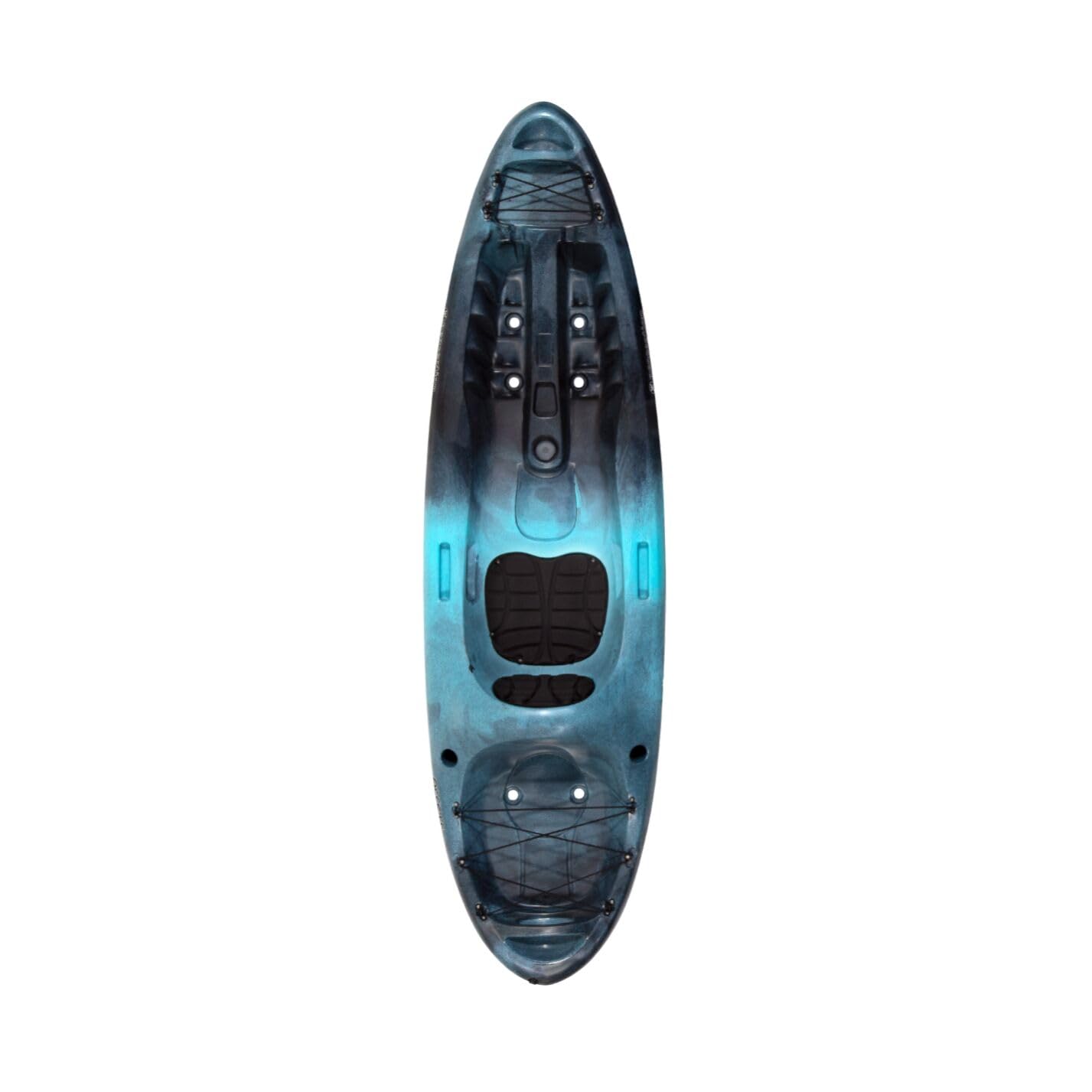
A contoured high-back chair on a compact hull, made for aching lower backs.
If lower-back pain is why you’re shopping, start with this seat. The seat back is contoured and cushioned with a tall profile that supports you in an upright position, and the footrests adjust through five positions so you can brace your legs and unload your spine. That combination is what paddlers with a history of back trouble tend to shop for.
The hull is a compact 9 ft with a 31 in beam, moving 42 lb on the water and listed at 50 lb shipping weight, so it’s manageable to carry and easy to swing onto a rack. Two molded-in rod holders, a drink holder, and open storage front and rear with bungee lashings cover a day on lakes, bays and slow rivers.
Set against the Catch Mode 110, the ceiling is lower: 250 lb maximum capacity versus 375 lb, so gear needs to stay modest. What the Access has going for it is fit — buyers describe it as exactly suited to their needs, and stability is the other consistent theme. Handle it with a light touch on the hull; the plastic is the same class of material as its peers, and scuffs are the cost of a boat this portable.
stable flat hull: a tall, padded seat back plus five footrest positions make this the most back-friendly chair under the premium picks.
heavy to car top: at 250 lb capacity, you’re packing light — one adult and a small dry bag, not a cooler.
beginner friendly choice: a supported, upright posture matters more to you than load capacity.
fast water needs: you carry a cooler and tackle box — 250 lb fills up fast.
5. Emotion Spitfire Sit-On-Top Kayak
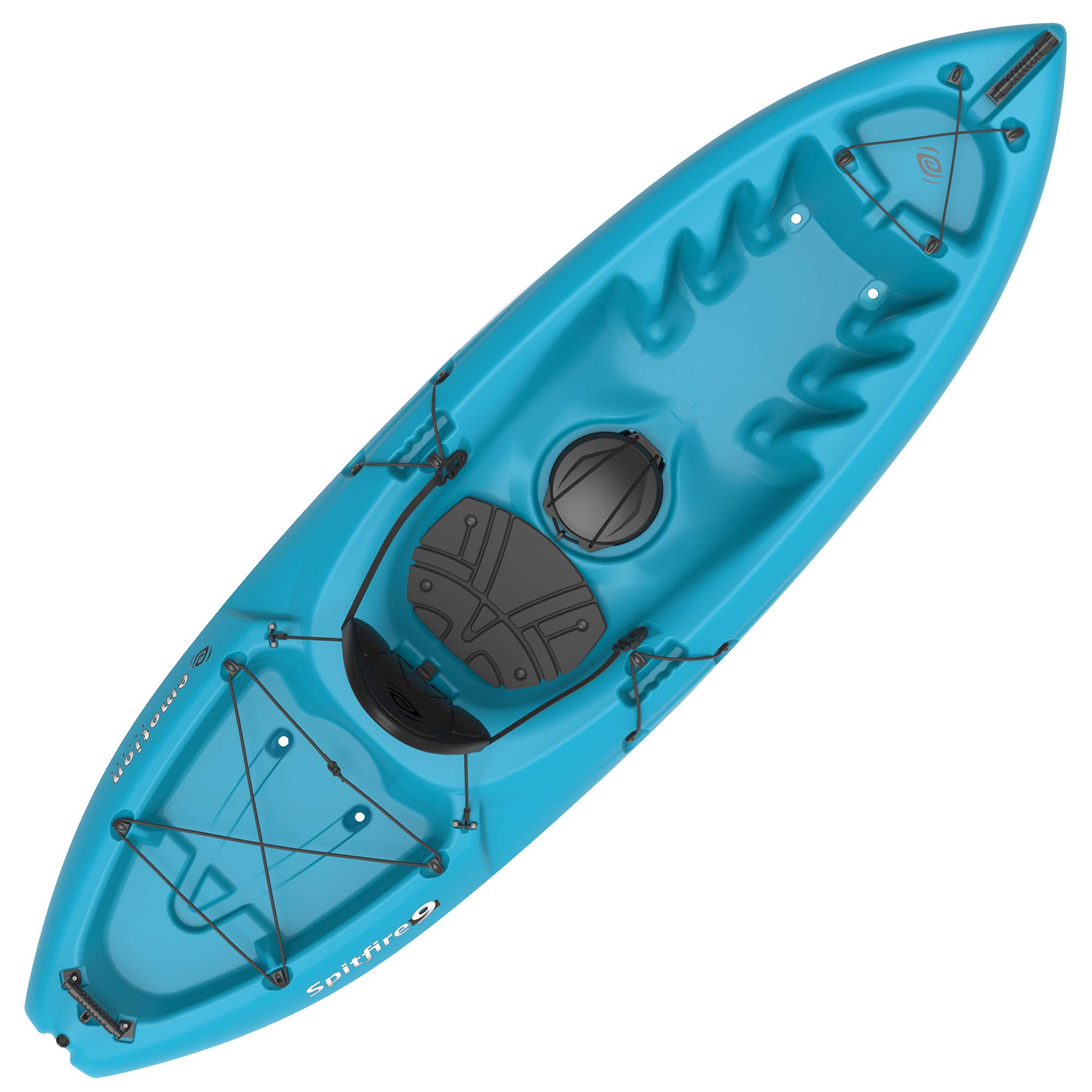
Padded seat, bike-style foot braces, and a hull that keeps you dry.
The comfort story here is straightforward: this boat ships with a padded CRS seat and UltraLite cushion built in, and the molded-in Freedom footwells let you brace your feet instead of letting them float. At 14 in tall, it sits higher off the water than the Lifetime Lotus at 10 in, and that extra height makes the seated position easier on hips and knees.
Build quality is the standout — the hull is UV-protected high-density polyethylene, and the finish and construction earn the most consistent praise of anything on this boat. Self-bailing scupper holes drain the cockpit and tank well so you aren’t sitting in a puddle, and front and rear handles plus side carry handles make it a 45 lb lift.
Now the honest part: this hull draws the widest split of opinion on the list. Stability and tracking are genuinely mixed in owner feedback — some find it planted and easy, others find it unsettled side to side and prone to wandering — and there is a recurring gripe about the bottom pad loosening over time. Keep it on calm, flat water and it behaves; take it onto chop and you’ll feel the difference.
light carry weight
- Padded CRS and UltraLite seat included, not an upgrade
- 14 in deck height eases hip and knee angles
- Self-bailing holes keep the cockpit drained
tight leg room
- Stability and tracking draw split opinions on open water
- Bottom pad loosening shows up as a repeat note
- Flat, sheltered water is this boat’s home
quick launch pick: you paddle calm ponds and want a padded seat included.
gear haul limits: you’ll be on open bays where side-to-side steadiness is non-negotiable.
6. Lifetime Tamarack Pro 103 Sit-On-Top Kayak

A framed adjustable chair and a built-in ruler, aimed at the angler.
The seat is the headline: an adjustable framed chair rather than a foam pad, paired with adjustable footrests so you can dial in an upright position for your back. For fishing, you get three rod holders — one adjustable and two flush-mounted — plus a tackle box storage tray and a ruler molded in to measure your catch. A center hatch with a bucket included and a deeper tank well keep gear out of your feet.
Tracking comes from deep hull channels running the length of the boat, while chine rails (angled edges along the hull) add bite for stability at rest. At 123 in long and 57.5 lb, it’s a mid-weight boat — noticeably heavier to haul than the 45 lb Spitfire, but steadier than the shorter framing suggests.
The seat comfort is the most consistent theme in the feedback, and the overall build reads as a well-made boat. The honest trade is weight — several owners find it heavy to move, and the hull can pick up scratches in transport. Neither is a deal-breaker for a boat that lives on a rack, but if you’re muscling it in and out of a truck bed alone on a bad shoulder, weigh that against the 57.5 lb number.
day trip match: you want a framed fishing chair and a hatch on a mid-weight hull.
choppy water caution: the 57.5 lb weight makes a solo truck-bed load a chore.
7. Lifetime Kokanee Sit-On-Top Kayak

Two seats, 36 inches of beam, and room to paddle with a grandchild.
If the point of getting out there is company, this is the one. It’s the only hard-shell tandem here, with two adjustable quick-release seat backs and multiple footrest positions for different-sized paddlers. At 36 in wide and 126 in long, it’s a wide, steady platform for two — and the hard plastic seat backs are what owners single out as sturdy.
The hull is UV-protected high-density polyethylene, with a 6 in storage hatch, a bungee system, and front and rear toggle handles for carrying. Tracking is manageable, though several owners describe it as not fast — a long two-person hull moves steadily rather than quickly, so plan relaxed outings rather than speed runs.
Two honest limits stand out. At 76 lb this is the heaviest boat on the list, so car-topping it alone is unrealistic — put a partner or a trailer in the plan. And while the front paddle position is comfortable, the rear person tends to feel the tighter fit. The comfort split is real, and worth checking with whoever will take the stern seat.
family size cockpit: a true tandem hull with a 36 in beam and two adjustable seat backs, at a value price for a two-person boat.
slow turning hull: 76 lb needs a second set of hands, and the back seat is the cramped one.
kid friendly pick: a partner or grandchild is your paddling companion.
solo speed needs: you’ll paddle alone — a 76 lb tandem is a lot of boat to move solo.
8. Pelican Argo 100XR Premium Sit-in Recreational Kayak
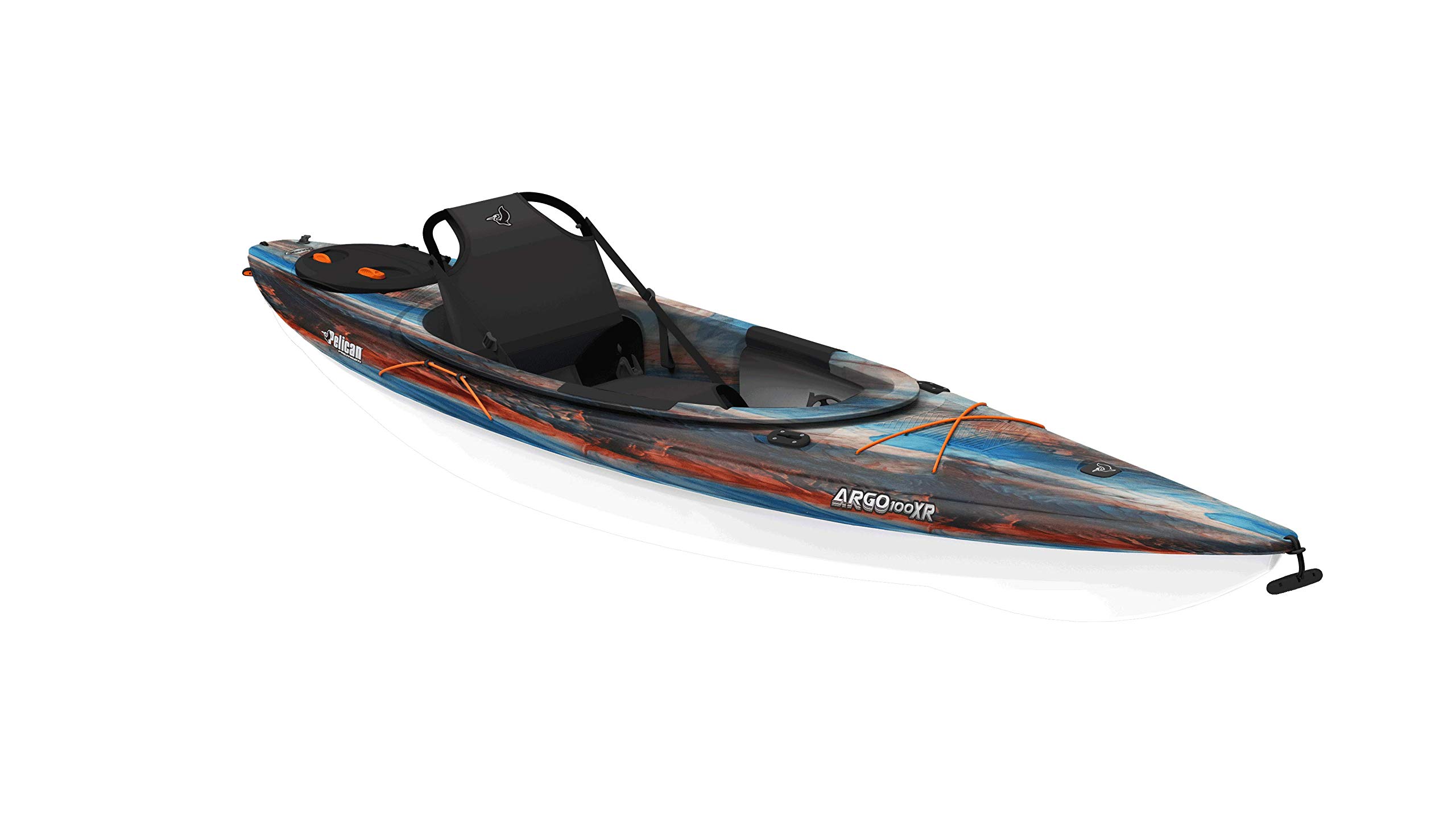
The sit-in that lets you swap the seat for a beach chair.
A sit-in hull puts you lower and out of the wind, and this one opens wide for entry. The Twin-arched Multi Chine Hull — two curved arches along the base with angled panels between — holds a secure, steady line, and the flatter profile makes getting in and out easier than many sit-ins. At 43 lb it’s the lightest of the Pelican hulls here, and 120 in long with a 29 in beam.
The Ergocoast seat lifts out of the boat altogether to become a beach chair, which is the sort of feature that matters when you’re carrying it between the water and a picnic spot. A back quick-lock hatch with a storage bag, a forward storage platform with bungees, adjustable footrests, knee pads, a bottle cage and two 1 in rigging tracks round out the equipment list. Capacity is 300 lb, and floating blocks on each side add buoyancy.
Build quality is what this boat is known for — it takes top billing in owner feedback — with comfort and its 43 lb weight right behind. Ease of use and trackability both drew consistent praise with no negative notes in the trackability itself. The one thing to know is that a sit-in hull keeps you drier on a spray day but makes a wet re-entry from deep water harder than a sit-on-top; if you paddle alone on big open water, a sit-on-top like the Zip 9.5 is the forgiving option.
calm river fit: chilly mornings and paddlers who value a drier, more sheltered ride.
open water caveat: a swamped sit-in is tougher to climb back into than a sit-on-top.
9. Perception Zip 9.5 Sit on Top Kayak
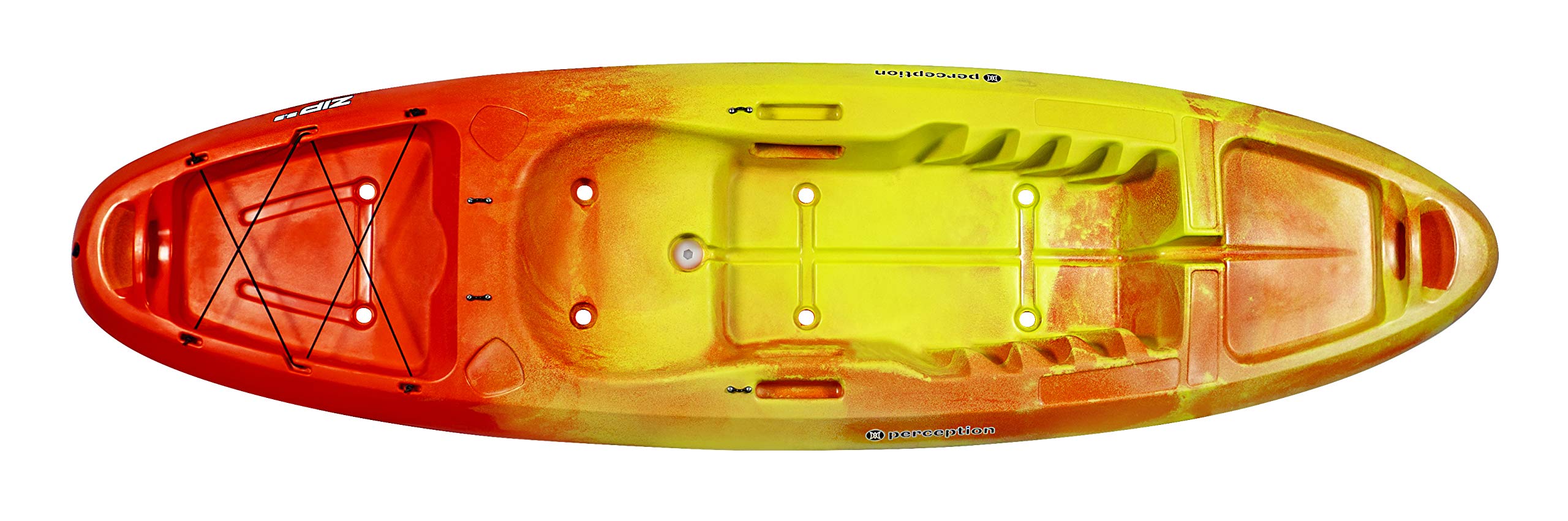
41 pounds, 325 lb capacity, and a cockpit wide enough to step into.
This is the easy all-rounder: 41 lb on the scale with a 325 lb capacity, so one person can lift it and it still carries a cooler. At 9 ft 6 in long and 32 in wide, the cockpit is open and simple to step into or out of, and front and rear handles make it a straightforward load. Self-draining scupper holes keep you high and dry, and a drain plug at the stern makes washing it out quick.
The hull handles lakes, ponds, slow rivers and calm coastal water — a breadth the shorter hulls don’t match. A built-in center cup holder keeps a drink within reach without spilling, and a large rear open storage area with bungee lashings fits a cooler, dry bags or a fishing crate.
Steadiness is where it earns trust: it isn’t tippy at all, and tracking stays true in a straight line. Durability is the honest asterisk — opinions split, and scuffs and plastic damage show up in the feedback, so a bit of care on concrete and gravel ramps will extend its life. It’s not a fast boat; it’s a stable, go-anywhere one.
tracks straight well: 41 lb plus 325 lb capacity plus a wide, open cockpit — an unusual combination at this level.
limited cargo room: hull scuffs and plastic marks appear in the durability feedback, so treat launch ramps gently.
lake touring pick: you want one boat for lakes, ponds and calm coastal water.
overnight gear doubts: you need speed or a hull that shrugs off concrete ramps.
10. Perception Kayaks Tribe 9.5 Sit on Top Kayak

A recline-adjustable high-back chair on a 300 lb platform.
Recline is the difference here. The high-back frame seat back adjusts through several recline positions, so you can sit upright for paddling and lean back to rest — a real benefit on longer outings when your back wants a break. At 46 lb with a 300 lb capacity, it’s a manageable solo lift that still carries a day’s gear. The hull runs 113 in long with a 31.5 in beam and tracks steady from lake cruising to mild ocean waves.
Storage lives at the back: a rear deck with durable tie-downs holds coolers and bags, and the boat is stackable for storage. Made in the USA, it’s built from polyethylene and designed for all-around fun rather than one narrow use.
Build quality is the most consistent theme in owner feedback, with stability and comfort close behind; maneuverability and ease of use also read well. The weight splits opinion — some find it light, others heavy — so if you’re carrying it up a slope, try the lift before you commit. At 46 lb it splits the difference between the 41 lb Zip 9.5 and the 57.5 lb Tamarack Pro.
fishing platform match: a reclining, framed seat is what your back needs after an hour.
windy day mismatch: you want the lightest possible solo lift — look to the 41 lb Zip instead.
11. Sea Eagle 380x Explorer Inflatable Tandem Kayak
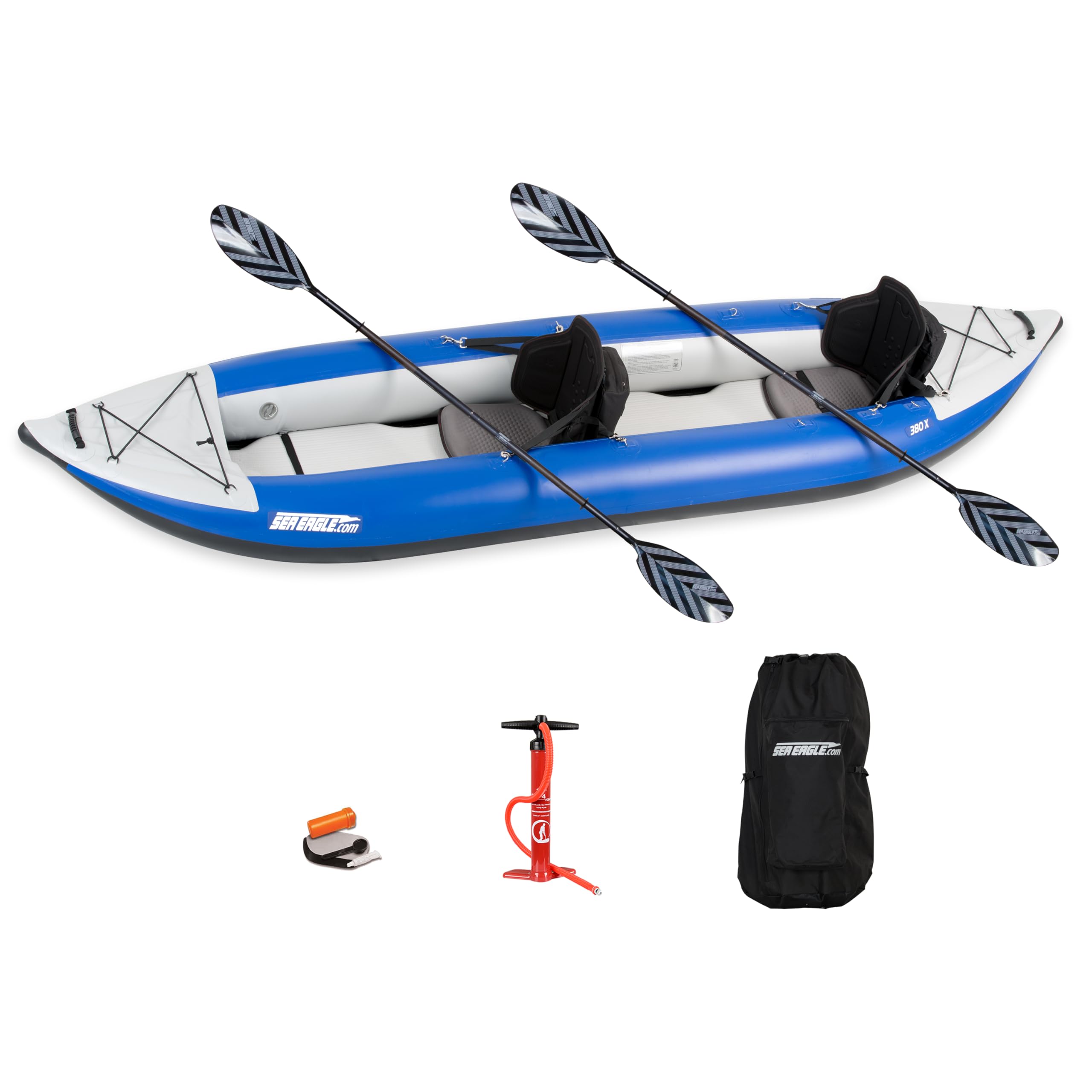
Packs into a backpack, holds 750 lb, and shrugs off Class IV rapids.
For anyone with no roof rack, no garage and no appetite for lifting, this changes the equation. It deflates into a backpack, yet the high-pressure drop-stitch floor (a floor panel that inflates rigid under pressure) firms up to 10 PSI for a platform that feels close to a hard shell. It holds 750 lb for 2-3 adults, and the hull is 1000 Denier reinforced PVC — a heavy woven fabric — with quadruple-overlapped glued seams to bounce off rocks and debris.
The Pro package is genuinely complete: two Tall Back Seats with extra back support, two heavy-duty paddles, a high-output SUP pump and the carry backpack. Sixteen rapid self-bailing drain valves open for wild water and close for dry flatwater touring, and a removable swept-back rear skeg keeps it tracking straight on open water. It’s rated to Class IV whitewater, far beyond what a calm-lake paddler needs.
Two honest notes: it’s a 12 ft 5 in boat at 150 in long, so it needs elbow room to paddle, and the maneuverability splits opinion — some find it easy and fast on lakes, others report a learning curve turning it at first. It’s also the largest hull here by a wide margin; on a narrow creek it’s simply a lot of boat.
travel tandem pick: storage and transport space are your real constraint, not paddling skill.
quick launch doubts: at 150 in long, the hull needs open water and elbow room to turn comfortably.
Know the Specs
Maximum Weight Capacity
This is the total load the hull is rated to float — paddler plus gear. Treat it as a ceiling, not a target: you want margin above your own weight so a cooler and tackle bag don’t push you to the limit. Capacities here range from 250 lb up to 750 lb, and the difference decides whether you pack a cooler or a dry bag. A hull loaded near its limit sits lower and feels less steady.
Hull Weight in Pounds
The number that decides whether you launch alone. A 39 lb hull lifts easily onto a rack; a 76 lb tandem wants help. Weigh the boat against how you’ll actually carry it — roof rack, truck bed, or a short carry to the dock — because a hull that’s too heavy for you just stays in the garage. The right weight is the one you can lift onto your own rack without help.
Beam and Hull Shape
Beam is the width across the middle, and it’s your primary stability number — a 36 in beam spreads your weight wider than a 29 in one. Hull shape works alongside it: a flat multi-chine bottom resists tipping at rest, while a tunnel hull runs a channel down the middle for a secure, steady ride. Wider and flatter means easier boarding and standing; narrower and longer means easier paddling and tracking.
Seat Type and Footrests
A framed, adjustable seat back reclines and supports an upright posture, which takes strain off your lower back over a longer paddle. A foam pad seat is lighter and simpler but offers less support. Adjustable footrests let you brace your legs against the hull so you’re paddling with your legs, not just your arms — and that brace is what keeps your back from doing all the work.
Common Questions
Can I get into a sit-on-top kayak from a dock without kneeling?
How heavy is too heavy for one person to load onto a roof rack?
Is a sit-in or sit-on-top easier to get out of if I tip?
Does a wider kayak paddle slower?
Do I need a framed seat or is a padded cushion enough?
Can an inflatable kayak really feel stable enough for an older paddler?
How much weight capacity should I leave spare for gear?
Will a kayak for calm lakes handle a slow river or a bay?
Do these kayaks come with a paddle included?
The Bottom Line
For most paddlers, the best kayak for seniors here is the Pelican Catch Mode 110, because its tunnel hull and 34.5 in deck let you board confidently and stand to cast, backed by the 375 lb capacity to carry real gear. If lifting is the worry that keeps you off the water, the Lifetime Lotus at 39 lb solves that first. And if you want a companion on board, the Lifetime Kokanee is the tandem that makes two-person paddling practical. Whichever you choose, the honest nudge is this: pick the hull you can lift and board on your worst day, not your best — a boat that’s easy to move gets used, and that’s the whole point.
How we choose
We do not accept paid placement. Every pick is matched to a real buyer and a real use-case; we do not hands-on test units.
Sources
Specifications: manufacturer listings and product documentation. Review insights: verified customer reviews, as of November 2026. Pricing: not shown on this page (it changes often); check the current price via the retailer link.
As an Amazon Associate, My Heart Lives Here earns from qualifying purchases. This does not affect which products we feature.