Heads up: This post contains affiliate links. As an Amazon Associate I earn from qualifying purchases, at no extra cost to you. Learn more
Specs are compiled from manufacturer listings and verified buyer reviews and can change over time — please confirm the key details on the product page before buying.
A cold, damp floor under your feet usually starts with the wrong roll laid down before the pour. To keep a slab warmer and drier, pick a foil-faced foam-core roll with a real radiant barrier and a vapor-blocking face, not thin bubble wrap. For most slab jobs, the SmartSHIELD -3mm 24″x50Ft roll balances coverage, easy cutting, and price best. Two picks here are foam-core, one is a heavier bubble roll, and the rest fill gaps in width and price.
This guide is built by comparing the manufacturers’ published specifications and the patterns across verified customer reviews, so you get each pick’s real strengths and trade-offs instead of marketing spin.
Below, plain explanations of reflectivity, R-value (how well a material resists heat flow), vapor barriers, and thickness help you choose with confidence. Every pick here is judged on how well it works as insulation under concrete slab.
Top Picks

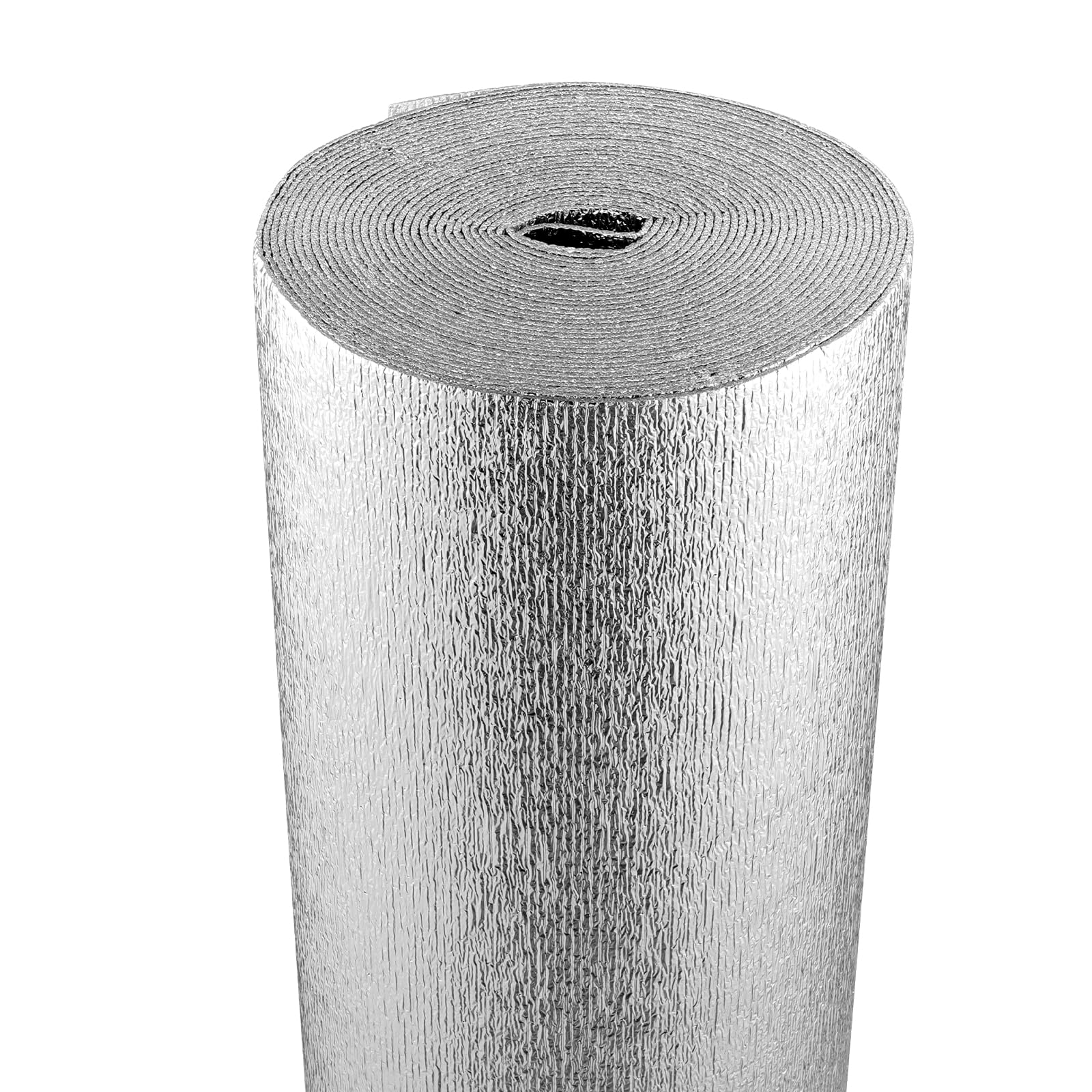
How To Choose The Best Insulation Under Concrete Slab
Under a slab, the roll you pick has to do two jobs at once. It must stop radiant heat (heat that travels through air and surfaces) from moving through the concrete. It must also block ground moisture from wicking up into the pour. Miss either one and you get a cold, damp floor that never quite settles.
Foam core versus bubble wrap
A foam-core roll uses a solid polyethylene foam layer (a closed-cell plastic sheet) between two foil faces. That solid layer gives it more structure and a steadier R-value than trapped air in bubbles. Bubble wrap still works as a radiant barrier, but the foam core holds up better when concrete is poured over it.
R-value and thickness
R-value tells you how well a material resists heat flow — the higher the number, the slower heat moves through it. Thicker foam and better foil faces push that number up. A 3mm roll and a 5mm roll sit on very different points on that scale, so check the R-value before you buy.
Width and length for slab coverage
Width decides how many passes you make across the slab. A 48-inch roll covers a wide pour fast with fewer seams; a 24-inch roll is easier to handle alone but needs more overlaps. Length decides whether you finish the pour in one go or run back to the store mid-job.
Fire rating and vapor barrier
A Class A fire rating matters wherever the insulation meets framing or a wall cavity. A vapor barrier — the foil face that stops moisture — is what keeps ground dampness out of the slab. Check that the product is rated for moisture exposure.
Side-by-Side Comparison
| Model | Best For | Thickness | Width | Roll Length | Amazon |
|---|---|---|---|---|---|
| SmartSHIELD -3mm 24″x50Ft★ Best Overall | Best Overall | 3 millimeters | 24 in | 50 ft | Amazon |
| VEVOR Double Reflective 3.2mmWide Coverage | Wide Coverage | 3.2 millimeters | 48 in | 50 ft | Amazon |
| Reflectix BP48050 | Bubble Roll | 1.6 centimeters | 48 in | 50 ft | Amazon |
| USA Reflective Bubble Roll | Long Rolls | 0.19 inches | 48 in | 125 ft | Amazon |
| SmartSHIELD -5mm 36″x50ft R17 | Top Performer | 5 millimeters | 36 in | 50 ft | Amazon |
Detailed Reviews
1. SmartSHIELD -3mm 24″x50Ft Reflective Insulation roll
The narrow foam roll that slips between rebar and pour without a fight.
What earns this roll the top spot is the 97% radiant-heat reflection from its double foil faces — high reflectivity in a 3mm package. That matters most when you work a modest slab, a garage pad, or a shed floor alone. The 24-inch width keeps the roll light enough to carry and unroll solo. The closed-cell polyethylene foam (a solid plastic layer between the foil faces, not trapped air bubbles) holds its shape when concrete goes over it. Both faces act as a vapor barrier, so damp ground meets foil instead of soaking into the pour.
The fire rating is Class 1 / Class A, meaning it resists flame spread on the standard building test. The maker also lists it as non-toxic and non-allergenic, so handling the roll barehanded is fine. It cuts with utility scissors, so trimming around pipes and grade changes takes minutes rather than a saw job. As a sound barrier it also softens footfall and room echo — a bonus few people expect from a slab product.
Owners praise its insulation performance above all. A large chunk of the feedback calls out the solid foam build as the reason it performs. The recurring gripe is narrow: a handful of buyers found the 24-inch width meant more seams to tape than they expected. Pair this with the wider VEVOR if you are covering a big pour and want fewer passes. Step up to the SmartSHIELD -5mm if you need a higher R-value. For a single small slab, this is the sensible starting point.
What earns it the top spot
- Closed-cell polyethylene foam between two pure aluminum foil faces — more structure than bubble wrap
- Reflects 97% of radiant energy, with the foil faces doubling as a vapor barrier
- Class 1 / Class A fire rating, and listed as non-toxic and non-allergenic to handle
- Cuts clean with utility scissors, so pipe and grade work is quick
Where it asks a little more
- 24-inch width means more seams and overlaps than a 48-inch roll on large pours
- 3 millimeters thick — a leaner R-value than the 5mm option in this list
- Roll length of 50 feet may not cover a very large slab in one pass
Built for the solo pour: a homeowner or small crew working a garage pad, shed floor, or modest slab who wants a light, easy-to-cut foam roll with a real radiant barrier.
Think wider for big slabs: if your footprint is large, the extra seams on a 24-inch roll add taping time you may not want.
2. VEVOR Double Reflective Insulation Roll
Forty-eight inches wide, so a big pour goes down with fewer seams.
Its 48-inch width is the reason this roll makes the list: it covers a broad garage pad or shop floor with far fewer strips, so you tape less at every overlap. Set next to the SmartSHIELD -3mm, it is double the width — 48 inches versus 24 inches. The roll runs 50 feet long, which is the same length as the SmartSHIELD but twice the coverage per pass.
The build is double reflective aluminum foil over high-density EPE foam (a dense polyethylene foam core) at 3.2 mm thick. The maker frames it as a 3-in-1 layer: radiant barrier, insulation, and vapor control. According to the manufacturer, it reflects more than 95% of solar heat — that reflection keeps the concrete from soaking up summer heat and radiating it back inside. It tears and punctures less than plain bubble, folds flat for storage, and cuts to size with a knife so you can DIY the shape.
Buyers rate quality the highest, with most saying it arrived as described. Functionality feedback is nearly all positive, and buyers report garage doors and tiny homes as real wins. One honest note: at 4.2 pounds the roll is easy to carry and unroll, but the foil surface is slick underfoot until it is covered, so keep the pour crew off it. If you are covering a narrow shed pad, the extra width mostly means more offcuts to manage.
Why the width sells it: 48 inches versus the 24-inch SmartSHIELD -3mm means fewer seams and faster coverage on a broad slab — the single spec that changes your day on a large pour.
The catch to plan around: foil on both faces makes the surface slick once unrolled, and at 3.2 mm it is a modest step up in thickness over the 3 mm roll rather than a jump.
Reach for this if: your footprint is wide and you want fewer strips and less taping, with a 3-in-1 foil-plus-foam build that reflects over 95% of heat.
Look elsewhere if: you are covering a small pad and the extra width just means more cutting and offcuts to manage.
3. Reflectix BP48050 Insulation

The classic double-bubble roll that installers reach for out of habit.
A heavy-gauge bubble core is what separates this roll from the foam picks: two layers of heavy-duty polyethylene bubbles sit between two outer layers of 96% reflective film, at a nominal thickness of 5/16 inch. That core gives it strength and easy handling — it does not tear out of your hands the way thinner radiant rolls can. Builders who want a proven, widely stocked name pick this roll.
Installation is the low-fiber kind: no itchy glass fibers, no mess. You need only a staple gun, a utility knife, a tape measure, and safety glasses. The maker recommends the staple-tab edge version if you are laying it on 16- or 24-inch centers. The square-edge option here is the standard one, best suited to a full roll laid flat under a pour rather than stapled tight to framing.
Owners mention the biggest gains in cold weather, with a noticeable inside-versus-outside temperature difference. Insulation quality drives the feedback more than anything else. One honest limit: this is a bubble product, so its R-value leans on trapped air rather than a solid foam core. Against the SmartSHIELD -5mm at R17, it gives up R-value in exchange for that familiar double-bubble build. It works well as a radiant barrier, but it is a bubble product, not a foam-core one.
The honest read: a sturdy, well-known double-bubble roll — 96% reflective film, a 5/16-inch heavy-gauge bubble core, and 48 inches of width — that installs cleanly with a staple gun or a utility knife.
The trade-off to weigh: it leans on trapped air rather than the solid foam core the SmartSHIELD rolls use, so for the highest R-value you want the foam picks ahead of it.
Suits the familiar-name builder: someone who trusts a well-known double-bubble product and wants a 48-inch-wide roll that cuts, handles, and installs without a struggle.
Not the one for peak R-value: when solid foam thickness is the priority, the foam-core rolls in this list are the better fit.
4. USA Reflective Insulation Bubble Roll, 48″ x 125′
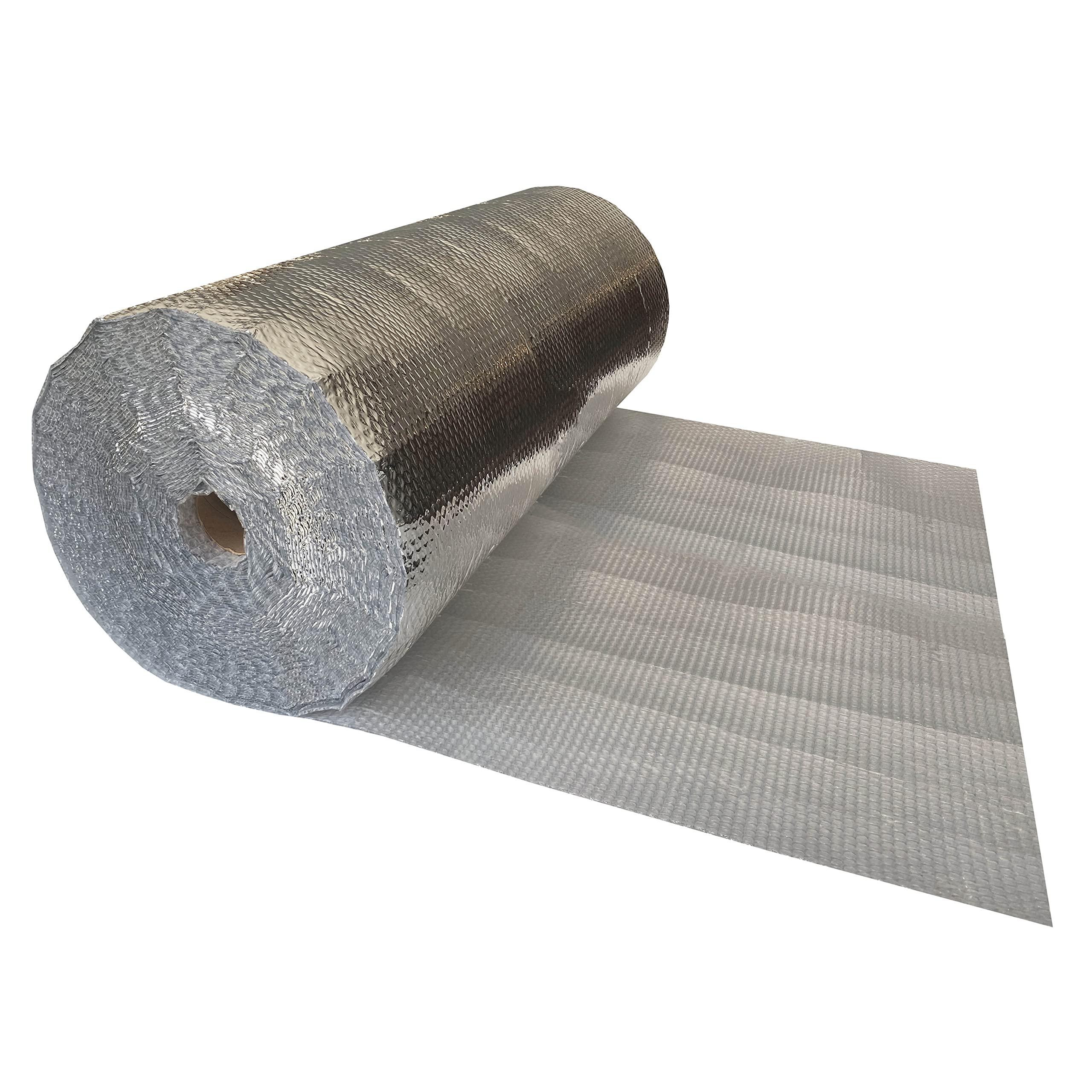
One hundred and twenty-five feet long — the roll that keeps a big spec going.
Sheer length is the story: this one runs 48 inches wide by 125 feet long, a vastly longer run than the 50-foot rolls above. For a long commercial pour or a large basement slab, that means fewer roll changes and fewer trips to restock mid-job. The maker lists a thermal resistance R-value of 4.9 to 14.1, applied to a 3/16-inch bubble layer with a foil outer face — enough to keep a concrete floor from wicking heat up and away.
Against the VEVOR roll, the difference is coverage per purchase: 125 feet of length versus 50 feet, so buying by the linear foot for a big footprint stretches far further before you hit the end of the roll. It cuts with scissors or a knife. It is rated for basements, metal buildings, under concrete, walls, roofs, crawl spaces, and attics — a workhorse coverage roll.
Two things to weigh honestly. Thickness is the most-discussed downside: customers note it feels thin at 0.19 inches. Durability is more mixed, with the foil layer separating from the bubble on some rolls and holding up on others. It works well when sheer coverage is the goal, but for peak thickness and long-term foil adhesion, the foam-core rolls are the safer bet. Note too that some buyers measured the roll short of 125 feet, so check what arrives.
What it does better than any pick here: length — 125 feet versus 50 on the VEVOR roll — so a long slab pour takes far fewer roll changes.
What to accept going in: at 0.19 inches it is a thin bubble product, and the foil-to-bubble bond is the weak point on some rolls, so inspect it before you lay it under a pour.
Pick it for reach: long basement slabs, shops, and multi-room pours where 125 feet of coverage per roll saves you a mid-job restock.
skip it if: you want maximum thickness or the tightest foil-to-foam bond — the foam cores here win that fight.
5. SmartSHIELD -5mm 36″ x50ft R17 Reflective Insulation Roll
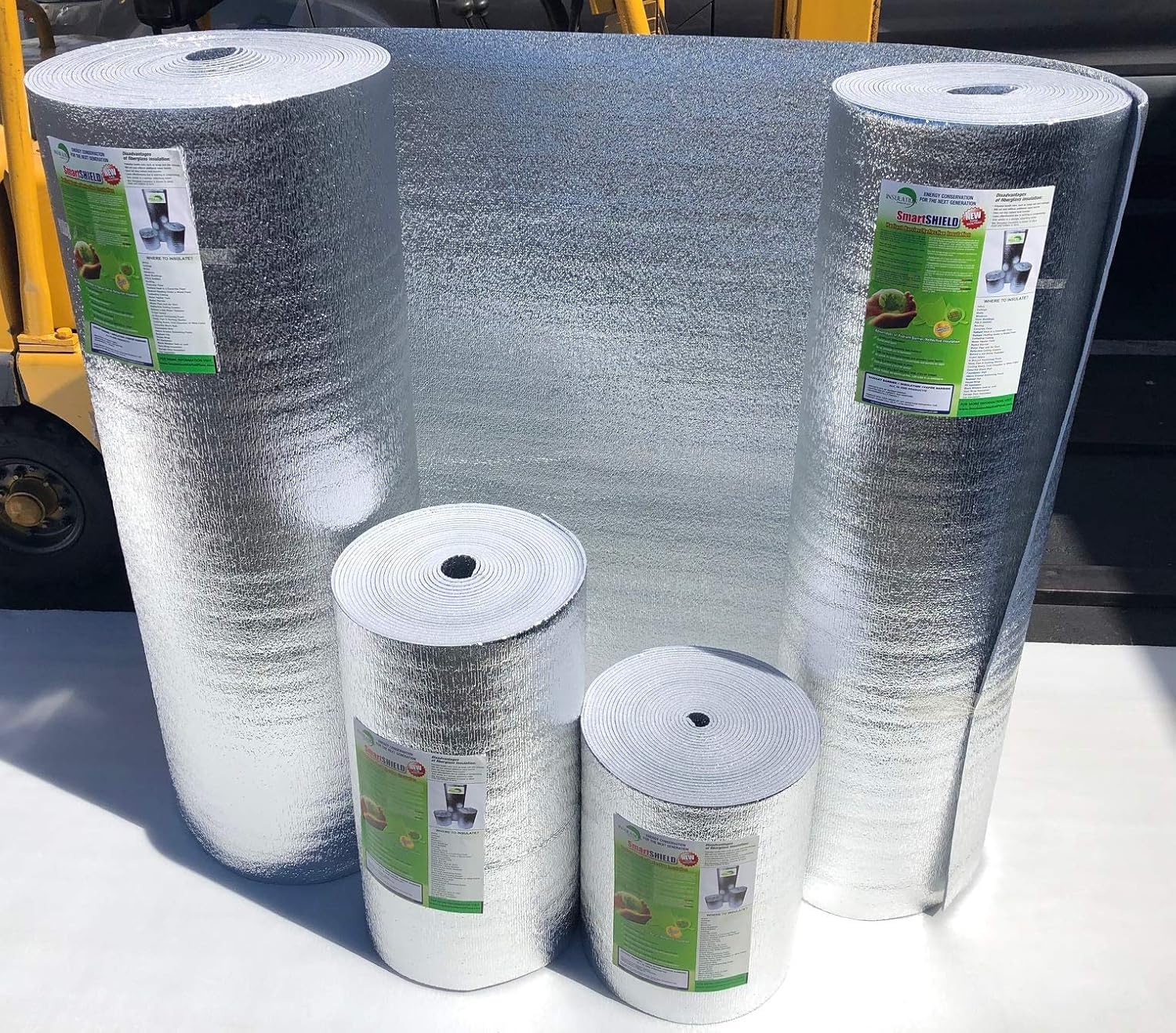
The heaviest foam in the list, with a stated R17 to match.
Its 5 mm foam core — the thickest foam here — and its stated R17 rating are what earn this roll its spot. That is noticeably more foam than the 3 mm SmartSHIELD, and it reflects 95% of radiant energy from both faces. The 36-inch width splits the difference between the narrow 24-inch roll and the wide 48-inch options, which suits a slab with wall returns and footing breaks to work around.
Build quality is the headline: a closed-cell foam core between foil faces, tear and puncture proof but still cuttable with utility scissors. The maker notes it meets or exceeds ASTM C1313 standards (a published spec for reflective insulation), carries a Class A fire rating, and uses a proprietary clear coating on the foil for corrosion resistance. Both faces work as a vapor barrier, so ground moisture meets a foil wall rather than a sponge. It is heavier per square foot than the 3mm roll — that extra mass is the price of the R17.
Owners say the material quality itself impresses them, and reviewers point out real temperature differences across the slab. It also cuts to size easily, which matters when you are fitting it around pipes and grade changes. One honest watch-point is adhesion: some buyers found the foil face did not stick as firmly as they wanted, so plan to tape seams and edges rather than rely on the foil alone. Against the 24-inch SmartSHIELD -3mm it trades width for thickness — 36 inches and 5 mm versus 24 inches and 3 mm.
The strongest build in the lineup
- 5 mm foam core — the thickest foam here, with a stated R17 rating
- Reflects 95% of radiant energy from both faces, doubling as a vapor barrier
- Meets or exceeds ASTM C1313, with a Class A fire rating and corrosion-resistant clear-coated foil
- Tear and puncture proof yet still cuttable with utility scissors for pipe and grade work
What to plan around
- Foil adhesion is the weakest link — plan to tape seams and edges for a tight seal
- 36-inch width needs more overlaps on a wide slab than a 48-inch roll
- The extra foam mass makes the roll heavier to handle than the 3 mm version
For the R-value-first builder: anyone who wants the highest stated R-value and the thickest foam here, and will tape the seams to lock down adhesion.
Only caveat: if you are covering a wide rectangular slab, the 36-inch width and the foil adhesion both cost you extra taping time versus a wider roll.
Know the Specs
Reflectivity and radiant barrier
Reflectivity is the percentage of radiant heat a foil face bounces back instead of absorbing — the higher the number, the less heat the slab takes on from above and below. The SmartSHIELD rolls state 97% and 95%, while the VEVOR roll states over 95%. A true radiant barrier means heat hits the foil and reflects away rather than warming the foam and the concrete over it.
Foam core versus bubble
A foam core is a solid polyethylene layer — closed cell — that holds its shape and resists compression better than trapped air in bubbles. Bubble wrap relies on air pockets, which can compress under the weight of a pour. For a slab, a foam core generally gives you a more consistent layer between the ground and the concrete.
R-value and thickness
R-value measures how well a material slows heat flow — thicker foam and better foil faces raise it. The 5 mm SmartSHIELD states R17; the 3 mm roll is leaner; the USA bubble roll lists a thermal resistance range of 4.9 to 14.1. Check the stated R-value rather than assuming thickness alone tells the whole story.
Vapor barrier and moisture
A vapor barrier is the foil face that stops ground moisture wicking up into the concrete. Both SmartSHIELD rolls, the VEVOR roll, and the USA roll are rated for moisture exposure. Under a slab, that barrier matters as much as the radiant side — a damp slab is a cold slab, no matter the R-value.
Common Questions
Is foam core or bubble wrap better under a concrete slab?
How wide a roll do I need for a garage slab?
Does insulation under a slab need a vapor barrier?
Can I pour concrete directly over a reflective roll?
What does R-value mean for a slab product?
Is the foil fire rated for a house build?
How much roll length does a floor need?
Will a reflective roll hold up under a metal building or pole barn slab?
SmartSHIELD -3mm or -5mm for a slab?
Is the VEVOR roll double-sided reflective?
The Bottom Line
For most people laying insulation under concrete slab, the roll that balances coverage, easy cutting, and a solid foam core is the SmartSHIELD -3mm 24″x50Ft — it reflects 97% of radiant energy, cuts with utility scissors, and carries a Class A fire rating. If you are working a wide pour and want fewer seams, the VEVOR Double Reflective roll gives you 48 inches of width for far fewer strips. And when you want the highest stated R-value and the thickest foam here, the SmartSHIELD -5mm R17 roll is the one — tape the seams and it is ready for the pour.
How we choose
We do not accept paid placement. Every pick is matched to a real buyer and a real use-case; we do not hands-on test units.
Sources
Specifications: manufacturer listings and product documentation. Review insights: verified customer reviews, as of November 2026. Pricing: not shown on this page (it changes often); check the current price via the retailer link.
As an Amazon Associate, My Heart Lives Here earns from qualifying purchases. This does not affect which products we feature.