Heads up: This post contains affiliate links. As an Amazon Associate I earn from qualifying purchases, at no extra cost to you. Learn more
Specs are compiled from manufacturer listings and verified buyer reviews and can change over time — please confirm the key details on the product page before buying.
Cold floors above a basement usually come down to one thing: warm air escaping through the ceiling joists. The picks below each close that gap a different way, from a zippered attic hatch cover to spray foam and reflective rolls, so you can match the fix to your ceiling instead of guessing.
This guide is built by comparing the manufacturers’ published specifications and the patterns across verified customer reviews, so you get each pick’s real strengths and trade-offs instead of marketing spin.
R-value tells you how well a material resists heat flow, so a higher number means a stronger barrier between your warm room and the cold ceiling above it. Below you’ll find the best insulation for basement ceiling work ranked by real coverage and install effort, with the honest catches spelled out for each one.
Top Picks

How To Choose The Best Insulation for Basement Ceiling
Three factors decide which product actually fits your ceiling.
Match the R-value to how cold the space gets
R-value measures resistance to heat flow, so a basement ceiling over an unheated space needs a higher number than one over a conditioned room.
Check coverage against your square footage
A roll that covers 980.39 sqft goes far on a large open ceiling, while a small hatch cover suits a single stair opening instead.
Decide if you need a vapor barrier
A vapor barrier blocks moisture from condensing inside the assembly, which matters most in damp basements.
Side-by-Side Comparison
| Model | Best For | R-Value | Coverage | Thickness | Amazon |
|---|---|---|---|---|---|
| Miloo Attic Door Insulation Cover★ Best Overall | Stair hatches | 15.6 | 25″ x 54″ hatch | 11″ deep | Amazon |
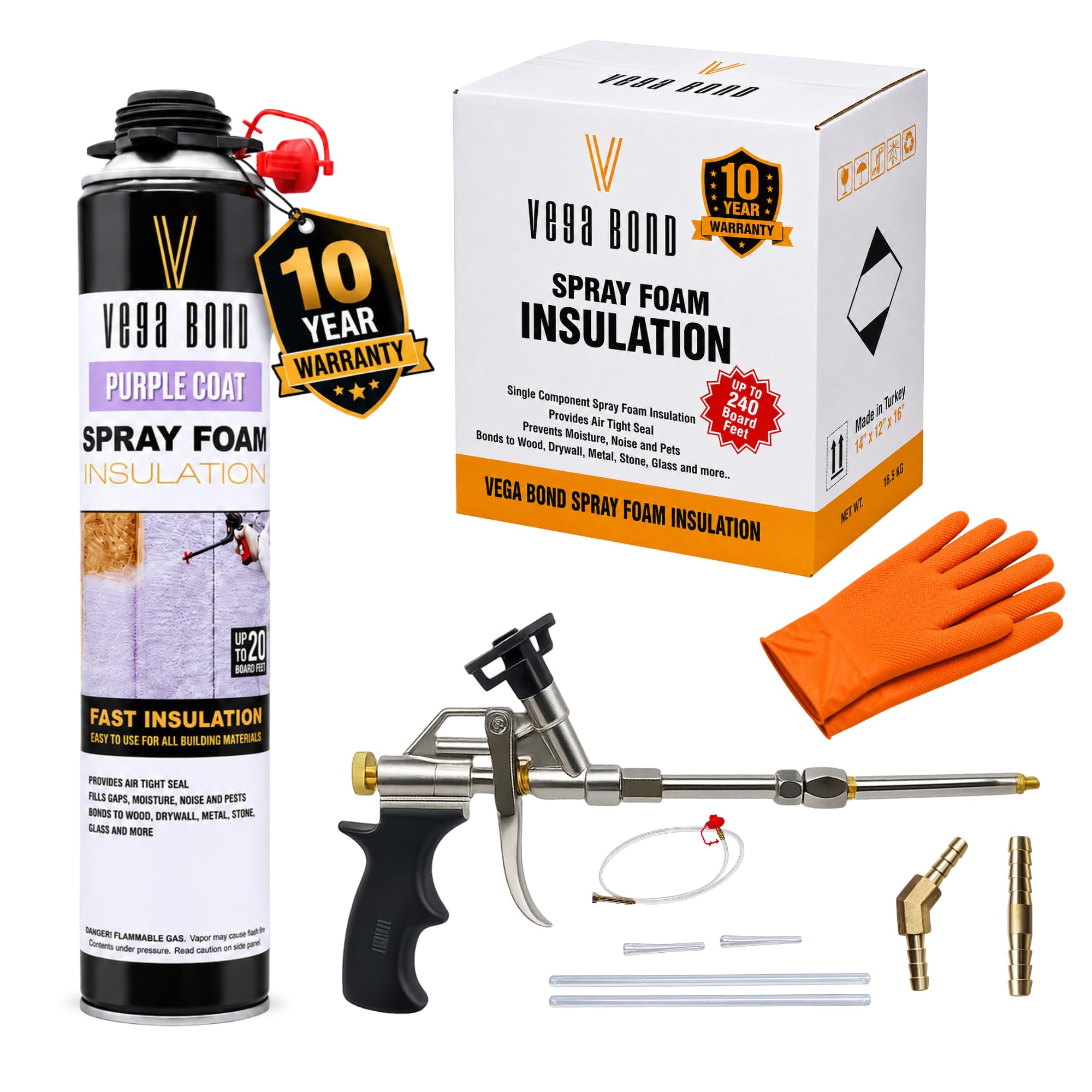
| Purplecoat Closed Cell Spray FoamBest for Sealing Gaps | Sealing gaps | 5.66 per inch | 20 board feet | 2 inches | Amazon |
| Sonicism Acoustic Wall Panels | Noise control | — | 22 sqft | 0.4 inches | Amazon |
| Double Bubble Reflective Foil | Radiant barrier | — | 980.39 sqft | 0.25 inches | Amazon |
| SmartSHIELD 5mm Roll | Mid-range barrier | R17 | 36″ x 50 ft | 5 millimeters | Amazon |
| ROBERTS Floating Floor Underlayment | Sound cushion | — | 600 sq. ft. | 2.5 mm | Amazon |
| SmartSHIELD 20mm Roll | Max R-value | R-23 | 48″ x 25 ft | 0.8 inches | Amazon |
Detailed Reviews
1. Miloo Attic Door Insulation Cover 25″ x 54″ x 11″
Our pick — 4.5+★ from 1,000+ verified ratings; the strongest balance of quality and price.
The zippered cap that seals the one gap every stair opening leaves open.
If your basement ceiling has a pull-down stair hatch, that opening is a chimney for warm air. This cover caps it with an R-Value 15.6 tent and a 6mm double air-bubble lining that bounces heat back from either side.
What wins people over is how fast it goes on — installation is the most-discussed topic and it lands near-unanimously positive. The easy zipper means you climb up without wrestling the cover off each time.
The catch: the fit is cut for a 25″ x 54″ opening, so measure before you buy, and the zipper is the part to treat gently over the years.
What earns the crown
- R-Value 15.6 with a 6mm reflective lining
- Zipper entry keeps attic access simple
Where it stops
- Sized to 25″ x 54″ — measure your hatch first
Reach for this if: your basement ceiling leaks heat through a stair hatch and you want a ten-minute fix.
Look elsewhere if: you have no hatch opening — a roll covers flat joists better.
2. Purplecoat Closed Cell Spray Foam Air Sealant (1 Pack + Gun)
Expanding foam that reaches the odd gaps a roll simply cannot cover.
Rim joists, pipe penetrations, and cracked seams are where basement ceilings leak most — and this single-component foam expands into all of them. Each 29 oz can covers up to 20 board feet at 1-inch thickness, delivering R-5.66 per inch.
Adhesion is what everyone raves about; it sticks to wood, brick, stone, concrete, metal, and drywall. The two-inch thickness also means fewer passes on a deep cavity.
The recurring gripe is coverage and spray consistency — some cans produce a stream rather than a clean fan, so buy a spare and test on scrap first.
Honest caution for rookies: this is the messiest option here. Wear gloves and mask off the area — the cleanup complaints are real enough to plan around.
Go here when: you need to seal irregular gaps and small penetrations, not cover a wide flat ceiling.
Skip the spray if: your job is a clean rectangular run where a roll installs faster.
3. Sonicism 22 Pack Acoustic Wall Panels, 12″ x 12″ x 0.4″
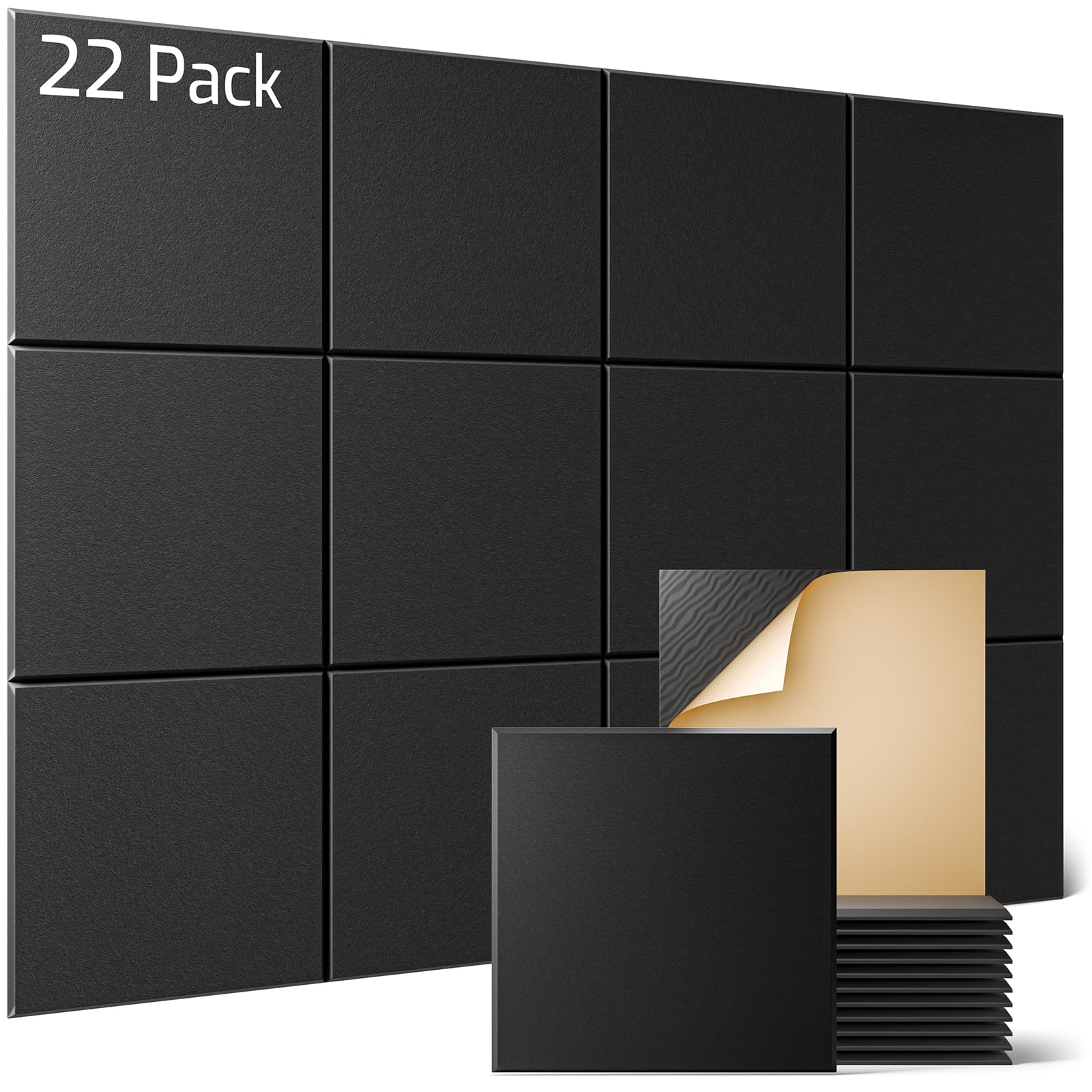
A tile pack that quietens echo rather than blocking heat.
If the basement noise is your real complaint — a door buzzer, an echoing office below — these self-adhesive polyester tiles cover 22 square feet in 22 pieces. The peel-and-stick back means no tape or glue needed.
Cutting them with a knife lets you work around joists shaped awkwardly. Noise reduction is the most-praised aspect here.
Just be clear on the job: at 0.4 inches thick they are not thermal insulation, and a few find the finish cheap-looking up close.
Read before ordering: this belongs on walls and overhead surfaces for sound absorption, not as your basement ceiling heat barrier — buy it for the echo, not the R-value.
Built for: dampening echoes and reflected noise in a finished basement room.
Not the tool for: retaining heat or stopping cold air, so pair it with a proper insulation layer.
4. Double Bubble Reflective Foil Insulation 36 inch X 25 Ft Roll

A huge 980.39 sqft roll that reflects radiant heat instead of trapping it.
The numbers here speak plainly: a 300″L x 36″W roll delivers 980.39 sqft of coverage at just 0.25 inches thick, and the foil blocks up to 97% of radiant heat. That means summer heat bounces back instead of radiating through your ceiling.
Unlike the Purplecoat foam, this is a wrap — lightweight, flexible, and easy to cut for joist bays. It resists tearing and holds up in attics, crawl spaces, and metal buildings.
The catch is condensation: pick the right perforated or solid option for your space, because a sealed foil in a humid basement traps moisture.
Where it earns its keep: a wide flat ceiling where coverage matters most, and where you want a vapor-friendly barrier alongside heat reflection.
Pick it for: large basement ceiling areas that need radiant heat reflection and a broad vapor barrier in one roll.
Think twice if: you need real thickness — at 0.25 inches this is a reflective layer, not a thick batt.
5. SmartSHIELD 5mm 36″ x 50ft R17 Reflective Insulation Roll
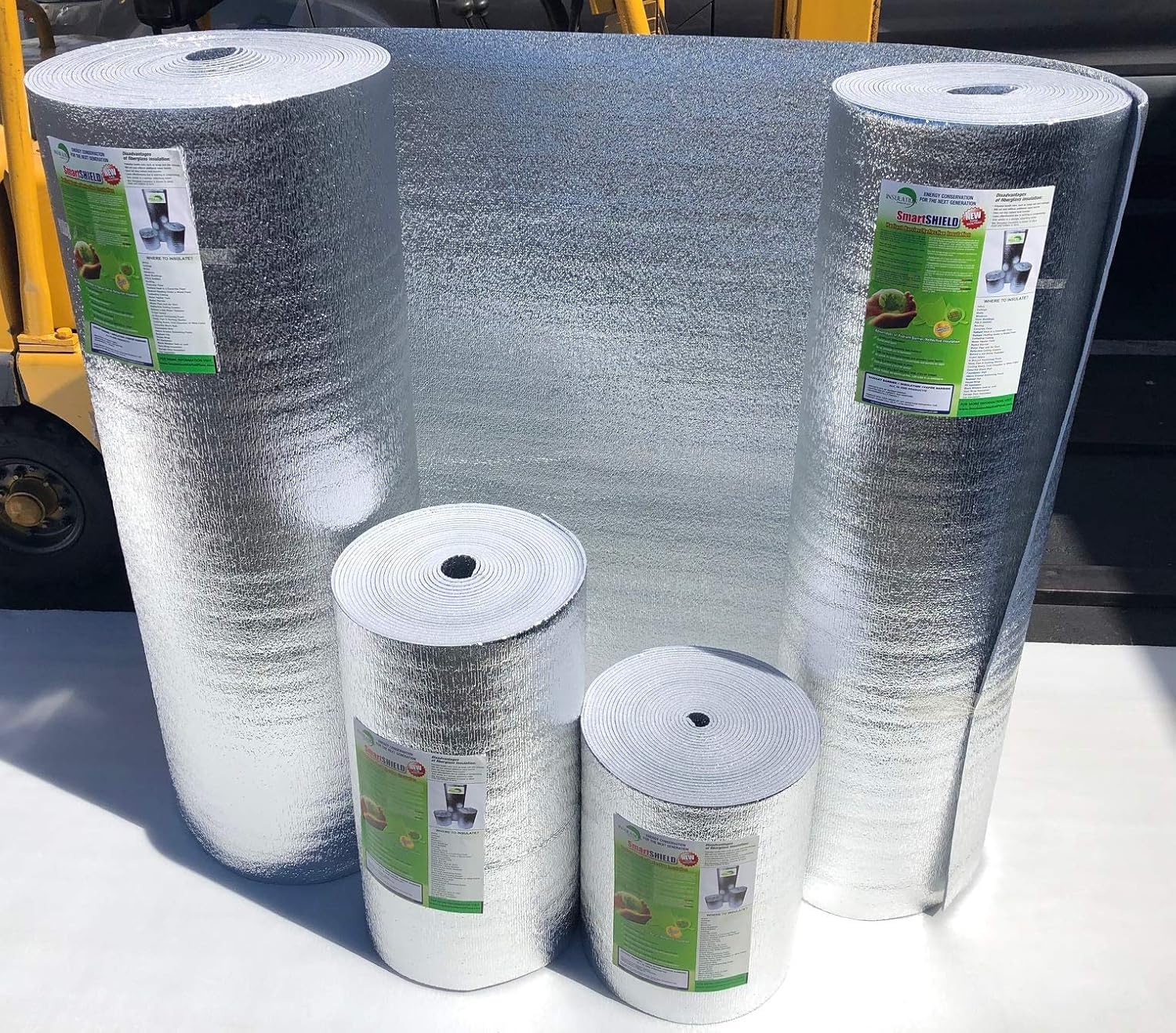
Foam-core foil that reflects 95% of radiant energy at R17.
This 600″L x 36″W roll packs a foam core between two foil faces, reflecting 95% of radiant heat on both sides. R17 gives you real resistance in a 5-millimeter sheet you can cut with utility scissors.
It’s industrial-grade and tear-and-puncture proof, and it carries a Class A Fire Rating. Quality is the most-praised aspect, and heat isolation follows close behind.
One honest note: the glue backing is mixed, so plan on mechanical fastening or your own adhesive rather than relying on a sticky peel.
Why it holds mid-tier: you get meaningful R-value and a vapor barrier without needing a full batt wall, and it works on ceilings, walls, or ducts alike.
Add to cart if: you want a middle ground between a thin reflective wrap and a deep R-23 sheet.
Hold off if: you need self-stick installation — this one wants fasteners.
6. ROBERTS Black Jack Floating Floor Cushion Underlayment Roll

A closed-cell cushion for under a floating floor above the basement.
This one plays a supporting role rather than leading. The 2.5 mm closed-cell foam goes under laminate, bamboo, and engineered wood floors, cutting impact noise and blocking moisture, mold, and mildew.
Its anti-crush design handles shock absorption, and it’s rated for radiant-heated floors, covering 600 sq. ft. per roll. Noise control lands high in owner satisfaction — it’s noticeably quieter than economy alternatives.
The caution is durability: it tears easily if dragged during install, so lay it carefully and keep tools off the surface.
Set expectations: this is a floor underlayment, not a ceiling heat barrier — it belongs in the assembly only if you’re laying new flooring over that basement room.
Right for: floating floors where quiet walking and moisture protection matter more than R-value.
Wrong for: direct basement ceiling insulation — that job needs foil or foam.
7. SmartSHIELD 20mm 48″ X 25ft Reflective Insulation Roll, R-23

The thickest foil here — 0.8 inches pushing R-23 in one layer.
For a cold basement ceiling over an unconditioned space, this roll offers the strongest barrier in the lineup. It hits R-value up to 23 with one layer and up to 29 with two, spanning a 300″L x 48″W sheet that reflects 95% of radiant energy.
It’s tear-and-puncture proof, carries a Class A Fire Rating, and cuts easily with a utility knife. Temperature control reviews are unanimous — it keeps heat out and stops cold air entering basements.
The trade-off is price-to-coverage; at R-23 you’re paying for performance, so buy only what your square footage needs.
Plain verdict: this is the max-performance pick when a single R-value number decides the job, and the 0.8-inch thickness is a real step up from the 5mm SmartSHIELD.
Choose it if: you want the highest R-value in one pass and cold air is your main enemy.
Consider the 5mm instead if: budget or a shallow cavity limits how thick you can go.
Know the Specs
R-Value
R-value measures resistance to heat flow, so higher means a stronger barrier — the SmartSHIELD 20mm at R-23 outranks the spray foam at R-5.66 per inch. Pair a thin reflective sheet with care in a cold basement.
Vapor Barrier
A vapor barrier stops moisture from condensing inside the assembly, and reflective rolls like the Double Bubble offer perforated or solid options to control condensation in damp spaces.
Common Questions
Can I put reflective foil insulation directly on basement ceiling joists?
How much R-value do I need for a basement ceiling?
Will spray foam work on a basement ceiling?
Do I need a vapor barrier along with insulation?
Can reflective insulation go over an attic stair hatch?
Is a reflective roll fire rated?
The Bottom Line
For most basement ceilings, the insulation for basement ceiling winner is the Miloo Attic Door Insulation Cover if your heat loss escapes through a stair hatch — the easy zipper and R-Value 15.6 make it a fast, tidy fix. If you want the strongest flat-ceiling barrier, reach for the SmartSHIELD 20mm R-23 roll. And for sealing awkward gaps no roll reaches, the Purplecoat spray foam earns its place.
How we choose
We do not accept paid placement. Every pick is matched to a real buyer and a real use-case; we do not hands-on test units.
Sources
Specifications: manufacturer listings and product documentation. Review insights: verified customer reviews, as of November 2026. Pricing: not shown on this page (it changes often); check the current price via the retailer link.
As an Amazon Associate, My Heart Lives Here earns from qualifying purchases. This does not affect which products we feature.