Heads up: This post contains affiliate links. As an Amazon Associate I earn from qualifying purchases, at no extra cost to you. Learn more
Specs are compiled from manufacturer listings and verified buyer reviews and can change over time — please confirm the key details on the product page before buying.
If your feet buzz, burn, or go numb, the right insole is the one that spreads pressure off the sensitive spots while still giving your arch stable support — that combination matters far more than any single buzzword on the box. This shortlist covers seven insoles that real owners with nerve pain keep in their shoes, sorted by what each one actually does best.
This guide is built by comparing the manufacturers’ published specifications and the patterns across verified customer reviews, so you get each pick’s real strengths and trade-offs instead of marketing spin.
Below you’ll find the trusted full-length arch supports, the ball-of-foot pads with a metatarsal bump, and the textured sensory styles, all read through the plain spec sheet and owner feedback. Here is a clear read on the insoles for neuropathy in feet that keep pressure off your sore spots.
Top Picks


How To Choose The Best Insoles for Neuropathy in Feet
Three things separate a helpful insole from one that just shifts the sting somewhere new.
Support, not just softness
A semi-rigid arch shell holds your foot steady so pressure stops landing on the same nerve-tingling spot all day.
The pad placement
For ball-of-foot stinging, look for a built-in metatarsal pad that sits right behind the toes rather than a flat surface.
Room in your shoe
Full-length inserts take up volume, so check your shoe has space — several makers note removing the stock insole first.
Side-by-Side Comparison
| Model | Best For | Support Type | Arch Height | Weight | Amazon |
|---|---|---|---|---|---|
| PowerStep Original★ Best Overall | Everyday all-round relief | Full-length semi-rigid shell | Neutral | — | Amazon |
| Cushwork MetatarsalgiaHeavy Support | Wide shoes, heavy support | Heavy-duty orthotic | — | 6.38 ounces | Amazon |
| PowerStep Bridge | Flexible comfort | Adaptable memory-foam frame | Neutral | 4.16 ounces | Amazon |
| Cushwork Morton’s Neuroma | The broadest arch support | Orthotic with arch support | Arch-supported | 5.61 ounces | Amazon |
| Kelaide Arch Support | Ball-of-foot pain | Full-length with metatarsal pad | Neutral | 6.74 ounces | Amazon |
| pedag Sensitive | Sensitive nerve points | Soft dual-layer cushion | Anatomically configured | 3.88 ounces | Amazon |
| Naboso Neuro Sensory | Numbness and balance | Textured sensory surface | Thin, trim-to-fit | — | Amazon |
Detailed Reviews
1. PowerStep Original Insoles
Our pick — 4.5+★ from 27,000+ verified ratings; the strongest balance of quality and price.
The full-length classic that makes even a cheap pair of shoes feel like a supportive one.
This is the pick for the person whose feet ache and tingle by mid-afternoon and who wants one insert to handle it. The defining piece is the semi-rigid neutral arch shell — a firm cradle under the arch and heel that spreads load rather than letting it land on one spot — paired with a thin layer of plush cushioning so it doesn’t feel like a board.
What wins people over is the build quality, and comfort runs a close second in owner feedback; the shoe-makeover effect comes up again and again. A full-length insert takes up shoe volume, so a snug dress shoe may need the stock insole pulled first.
Where it shines
- Firm neutral arch cradle spreads pressure off hot spots
- Thin profile slips into more shoes than a bulky orthotic
Worth knowing
- Full length eats space in tight footwear
Reach for this if: you want one dependable all-day support insert and have normal-to-neutral arches.
Look elsewhere if: your shoes are narrow and already snug.
2. Cushwork Metatarsalgia Insoles
A heavy-duty orthotic built for ball-of-foot and Morton’s neuroma relief in wide-toed shoes.
This one targets metatarsalgia and Morton’s neuroma, the burning under the ball of your foot. The maker notes the design may run wider than standard shoes, so it rewards roomy footwear like sneakers or work boots. At 6.38 ounces it carries real heft, which matches its heavy-duty billing.
The honest catch is break-in: the maker says most new users take 1-2 weeks to adjust, so add wear time gradually. Plan to replace it when support fades, which the maker puts at around 6 months, and spot-clean only — no machine washing.
Best-fit note: pair it with shoes that have spare width, since this insert needs the room to sit flat.
Suits you when: your pain sits under the ball of the foot and your shoes already run wide.
Think twice if: you want a zero-commitment, all-weather no-adjustment insert.
3. PowerStep Bridge Insoles
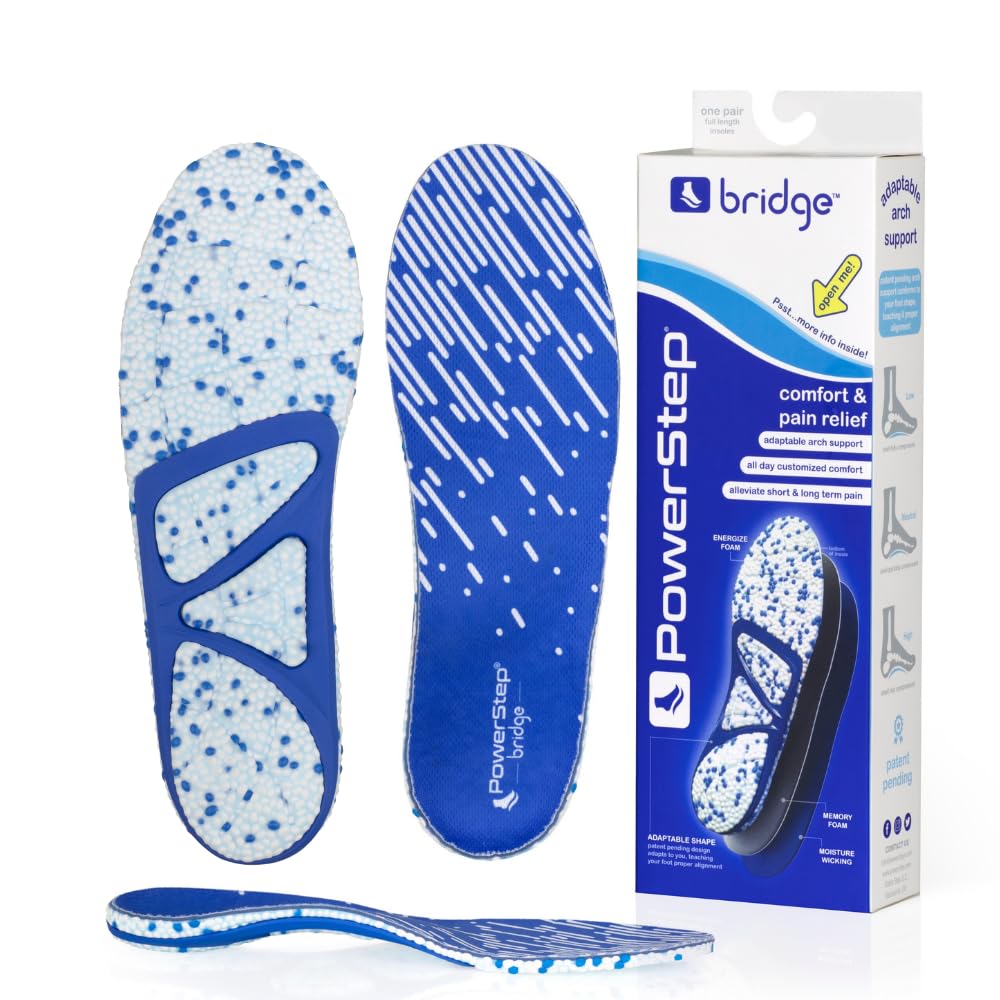
The memory-foam middle ground that trades a stiff shell for a foot-shaped, adapting cushion.
A lighter take than the Original above: at 4.16 ounces it weighs noticeably less and stays flexible under the foot. It pairs the PowerStep arch shape with two layers of energizing memory foam, moisture-wicking fabric, and underside channels that let weight even out across the sole.
Comfort and quality are what owners come back to, and it earns praise for fallen arches specifically. Fit and cushioning split opinions, though — some need to trim it and some expected more plushness. Sized for men 8-9.5 and women 9-10.5.
Why buyers pick it: it bridges orthotic support and a softer, cushioned feel for feet that find firm shells harsh.
Pick this for: a cushioned, flexible insert in that familiar size range.
Pass if: you want maximum firmness or have an unusual shoe size outside the sizing.
4. Cushwork Morton’s Neuroma Shoe Inserts

Built for the forefoot: a metatarsal pad plus arch support aimed at ball-of-foot neuroma pain.
The focus here is the metatarsal pad that sits behind the toes and takes load off the ball of the foot, backed by a full arch that guards against inward and outward rolling. It’s made for roomy footwear — sneakers, work boots, casual shoes — and comes unisex at 5.61 ounces.
Pain relief is the standout, and quality lands right behind it. Fit is the divided part: some owners find it only works in certain shoes, and a few find the cushioning thin. Think of it as a support-first insert rather than a plush one.
What it does well
- Metatarsal pad targets ball-of-foot pressure
- Arch support curbs excess inward-rolling
The trade-off
- Cushioning is on the firm side for some feet
Your match if: the sting is in the forefoot and you want support over softness.
Not ideal if: you’re after a pillowy, deep-cushion feel.
5. Kelaide Arch Support Metatarsalgia Insoles

Full-length cushioning with a metatarsal pad and breathable fabric for hot, tired forefeet.
Here the draw is a neutral arch shell plus a built-in metatarsal pad for ball-of-foot and Morton’s neuroma pain. A soft premium foam layer and breathable fabric work to cut heat and friction, and the low-wrapped heel leaves room so it drops into athletic, walking, and some dress shoes.
At 6.74 ounces it’s the weightier of the two full-length options — the PowerStep Bridge above is 4.16 ounces by comparison. Pain relief and build quality carry it. Fit is the caveat: some find it too narrow for wider footwear, and the maker advises easing in gradually.
Set your expectation: treat the first days as a slow build — the maker says add a little wear time each day before going all-day.
Go for it when: you want breathable, padded support that still fits everyday shoes.
Weigh it if: your feet are wide — the shell can feel narrow.
6. pedag Sensitive Insoles
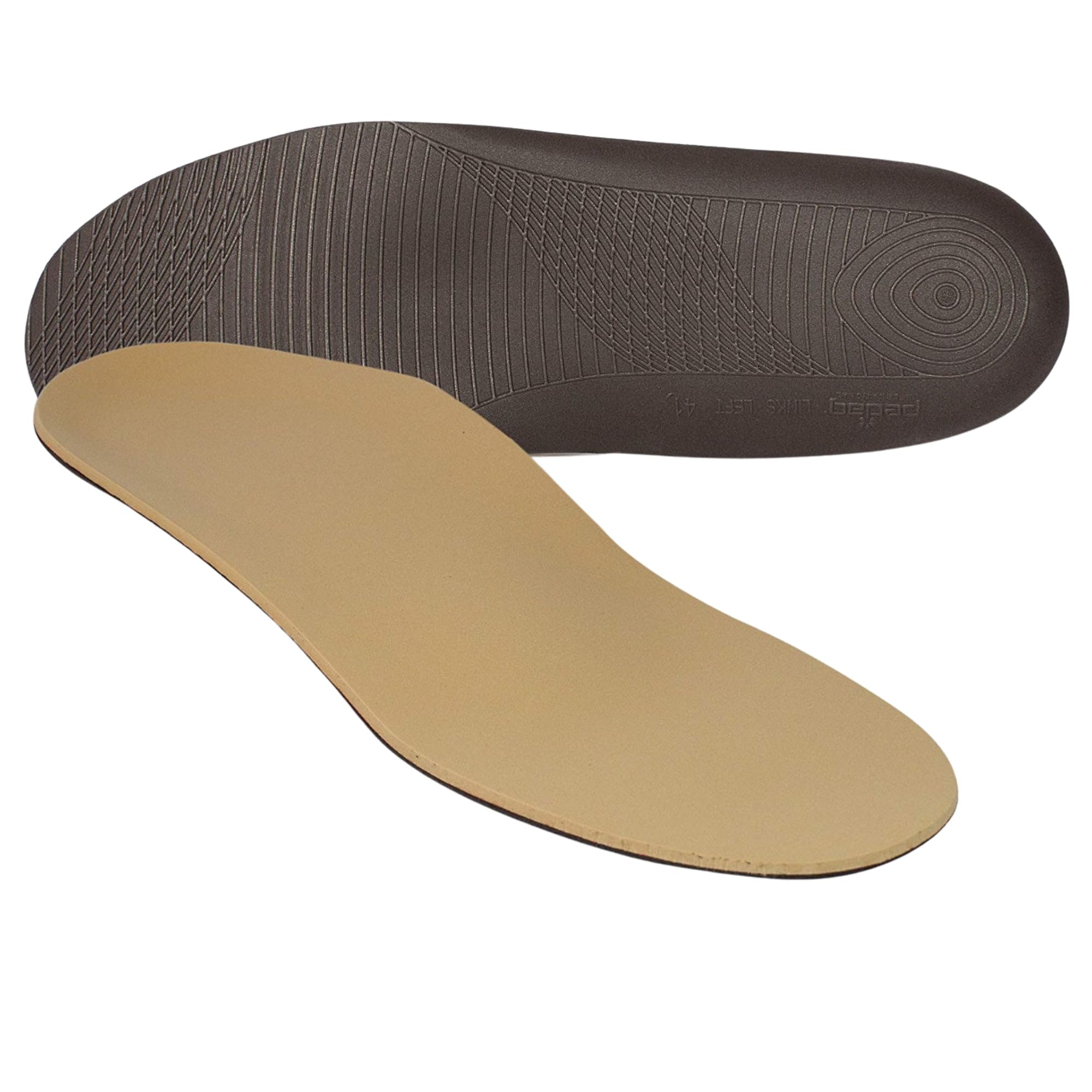
A featherweight, washable pad built to cradle sensitive nerve points without bulky volume.
This one goes soft rather than firm. Anatomically configured dual-layer cushioning spreads weight evenly to ease pressure on sensitive spots, and the lightweight synthetic nora material gives a highly skin-friendly surface. It carries the APMA Seal of Acceptance, and at 3.88 ounces it adds almost no bulk to casual shoes.
The nora surface is hand-washable, so keeping it fresh is simple. The trade-off is slim support relative to a firm arch shell — this is a comfort-first pad for delicate feet, not a heavy-duty stabilizer. Sized for men US 11 / EU 44.
Reasons it earns a spot
- Featherweight 3.88-ounce build adds little volume
- Hand-washable, skin-friendly surface
Size it honestly
- Soft support rather than a rigid stabilizer
It’s your fit when: your feet are sensitive and you want gentle cushioning in slim shoes.
Skip if: you need firm, corrective-style arch support.
7. Naboso Neuro Sensory Insole

A textured surface designed to wake up numb feet and sharpen your sense of the ground.
Different job entirely: instead of cushioning a sore spot, this thin insole uses a patented textured surface meant to stimulate the sole and improve balance and foot awareness — aimed at people with peripheral numbness from conditions like Parkinson’s or MS. It’s thin enough to slip into most footwear and trims to fit.
The catch is that it’s divisive. Foot comfort lands well, but effectiveness, quality, and all-day comfort all split, and the price reads as steep for a thin textured pad. Treat it as a trial-first pick, not an everyday cushion.
Where it makes sense: if numbness and balance are your main worry, a texture-first insert is a genuinely different tool from a pad-and-shell orthotic.
Consider it if: your goal is foot awareness and balance rather than pressure relief.
Hold off if: you need deep cushioning for constant pain.
Know the Specs
Arch shell (semi-rigid vs soft)
A semi-rigid shell like the PowerStep Original holds the arch in place to spread load, while a soft dual-layer pad cushions sensitive spots — firm for stability, soft for delicate feet.
Metatarsal pad
A raised pad sitting behind the toes takes pressure off the ball of the foot, which is where Morton’s neuroma and metatarsalgia pain usually lands.
Common Questions
Will a metatarsal pad help Morton’s neuroma pain?
Do I remove my shoe’s existing insole first?
Is a textured insole better than a cushioned one for numbness?
The Bottom Line
For most feet dealing with tingling and sore arches, the insoles for neuropathy in feet winner is the PowerStep Original — its firm neutral arch shell plus thin cushioning is the balance most people want all day. If ball-of-foot pain is your main issue, the Kelaide adds a metatarsal pad. And for numb, balance-uneasy feet, the Naboso is the texture-first one to try.
How we choose
We do not accept paid placement. Every pick is matched to a real buyer and a real use-case; we do not hands-on test units.
Sources
Specifications: manufacturer listings and product documentation. Review insights: verified customer reviews, as of November 2026. Pricing: not shown on this page (it changes often); check the current price via the retailer link.
As an Amazon Associate, My Heart Lives Here earns from qualifying purchases. This does not affect which products we feature.