Heads up: This post contains affiliate links. As an Amazon Associate I earn from qualifying purchases, at no extra cost to you. Learn more
Specs are compiled from manufacturer listings and verified buyer reviews and can change over time — please confirm the key details on the product page before buying.
If your arches flatten under you, the fix is not a softer insole — it is one with a firm arch shelf and a heel cup that stops your foot rolling inward. Below are the inserts that actually hold a low arch, sorted by how stiff their support really is.
This guide is built by comparing the manufacturers’ published specifications and the patterns across verified customer reviews, so you get each pick’s real strengths and trade-offs instead of marketing spin.
Firmness matters more than thickness here, so check the arch height and heel cup before you buy any inserts for low arches.
Top Picks

How To Choose The Best Inserts for Low Arches
Three specs decide whether an insert actually supports a flat foot or just feels squishy under it.
Arch height
A low-arch foot needs a shelf that fills the space without pushing up hard, so look for a listed arch height like 0.47 inch rather than guessing from photos.
Heel cup depth
A deeper heel cup locks the heel so your foot cannot slide and roll inward with every step.
Firmness and shell material
A rigid or semi-rigid shell holds its shape all day, while a gel pad alone tends to flatten.
Side-by-Side Comparison
| Model | Best For | Support Style | Arch Height | Weight | Amazon |
|---|---|---|---|---|---|
| PowerStep Pinnacle★ Best Overall | Everyday plantar fasciitis relief | Dual-layer cushion with firm arch | — | 3.2 ounces | Amazon |
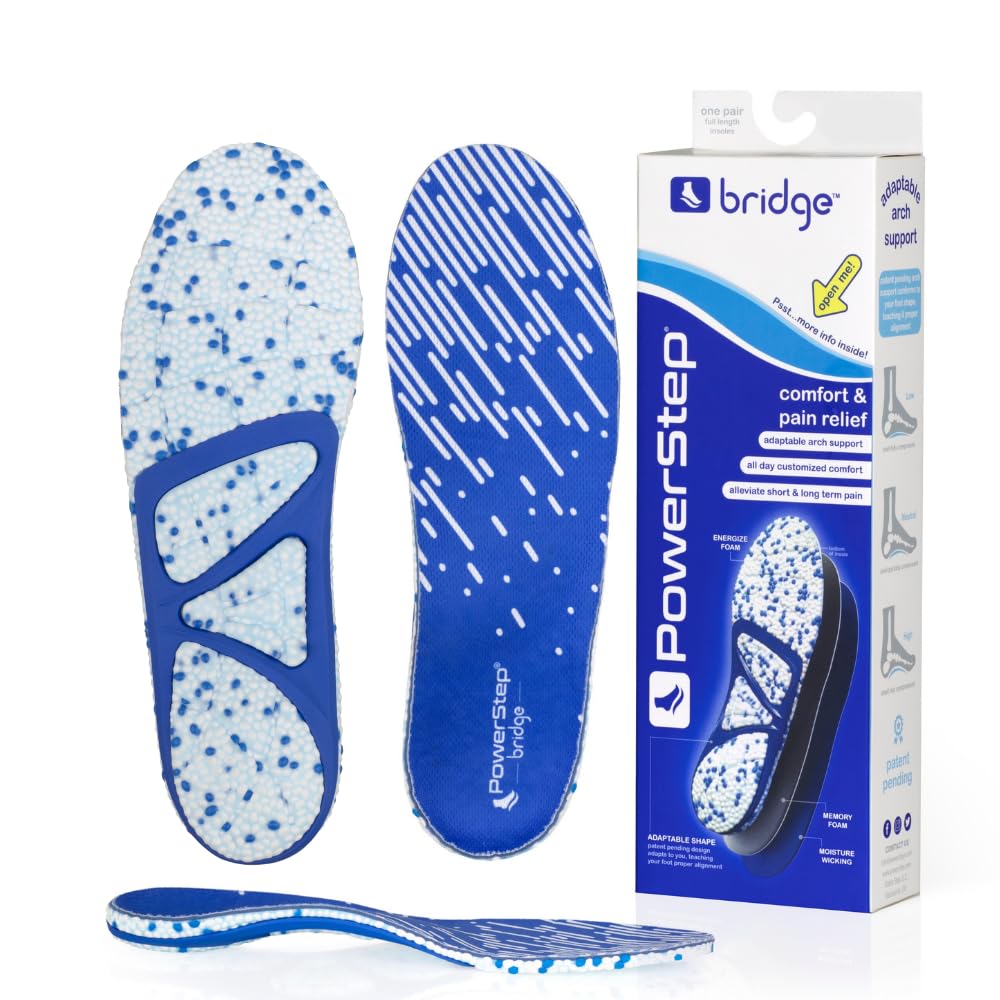
| PowerStep BridgeMost Flexible | Flexible all-arch support | Energize plus memory foam | — | 5.61 ounces | Amazon |
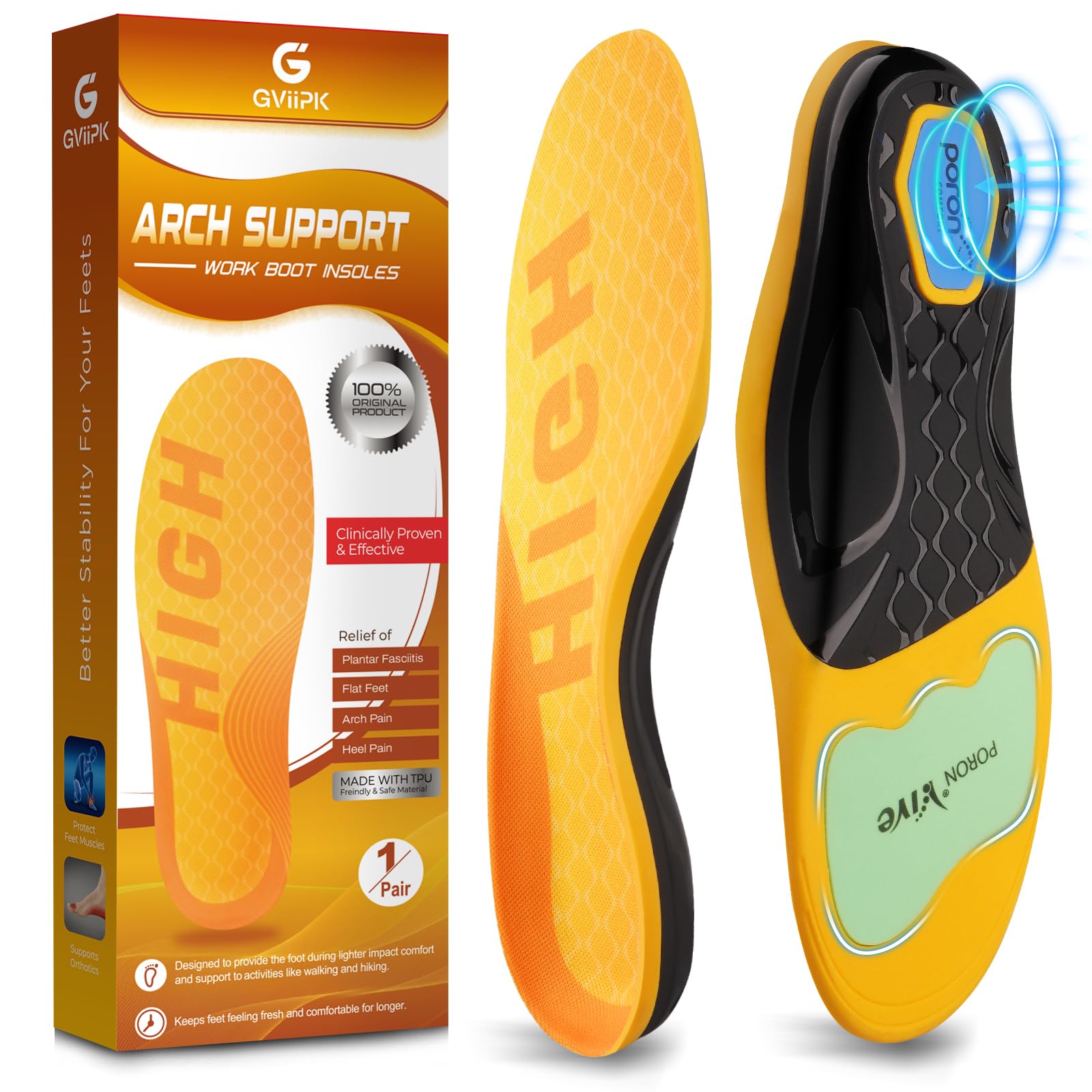
| GVIIPK 280+lbsHeavy-Duty Pick | Heavy weight and long shifts | Rigid TPU plate | 3.5 cm / 3.1 cm | 7.05 ounces | Amazon |
| OUOKK Plantar Arch Insert | Matching arch type by color | Ergonomic arch profile | — | 2.89 ounces | Amazon |
| OUOKK Shoe Inserts | Spare pair for sneakers | Plantar arch profile | — | 2.89 ounces | Amazon |
| Welnove Gel 8-Pair | Sticking pads into many shoes | Adhesive gel pad | 0.47 inch / 0.3 inch | 10.23 ounces | Amazon |
| WalkHero Max Cushion | All-day standing | Rigid arch with EVA base | — | 7.05 ounces | Amazon |
| WalkHero High Arch | Flat feet and overpronation | Semi-rigid shell | — | 6.38 ounces | Amazon |
| VALSOLE Heavy Duty | Work boots and heavy build | Rigid orthotic shell | — | — | Amazon |
| CRUVHEAL Sport | Court and running shoes | Gel shock pads | — | 9.14 ounces | Amazon |
| Superfeet Run Cushion | Low-arch runners | Adaptive Comfort flex | — | 4.16 ounces | Amazon |
Detailed Reviews
1. PowerStep Pinnacle Insoles
Our pick — 4.5+★ from 32,000+ verified ratings; the strongest balance of quality and price.
The firm arch shelf that turned a flat-foot skeptic into a repeat buyer.
The Pinnacle is the crowd favorite — 4.5+ stars across 32,000+ ratings — and what wins people over is the arch support itself, a raised shelf that props up a collapsing arch instead of letting it flatten. Dual-layer cushioning under the heel cuts the morning-step sting that plantar fasciitis brings. Sizing runs by shoe size, so there is no trimming — order your size and drop it in.
The honest catch is durability: the cushion layer can break down with heavy daily wear, so if you pound the same pair on hard floors all day, expect to replace them sooner than you would like. For most people, though, that trade-off is worth the relief.
What works in your favor
- Firm arch support built for flat feet
- No trimming — sized by shoe
What to expect over time
- Cushion can wear out with heavy daily use
Reach for this if: you want proven, firm arch support for plantar fasciitis and a flat foot.
Look elsewhere if: you want a soft, cushy insole rather than a firm one.
2. PowerStep Bridge Arch Insoles
For low arches that want support without a rock-stiff plate underneath.
This is the flexible option: a memory-foam top over Energize foam, with a flexible arch that adapts to your foot rather than forcing a fixed shape. It delivers 55% energy return, which in plain terms means the foam springs back under each step instead of packing down. A moisture-wicking mesh top helps cut heat and sweat on long days.
It is 14.25 inches long end to end, so measure your shoe before ordering. The trade-off is cushioning firmness — if you want deep correction, this is softer than a rigid orthotic.
Who it fits: Neutral arches that just need gentle lift and a well-padded heel pad for running or walking all day.
Room to grow: This one is only 4.0+ stars and the support plate is not the firmest, so a collapsing arch may want more.
The flexible middle ground: a good day-to-day insert if you are between flat and neutral.
Not for: someone who needs a rigid correction plate.
3. GVIIPK High Arch Support Insole
A rigid TPU plate that holds a heavier foot without caving in.
This one is built for bodies over 280 lbs and long shifts on hard floors. The high-strength TPU support plate — a stiff plastic shell — reaches deep into the arch to stabilize the foot and resist collapse. There are two arch heights to pick from: 3.5 cm for correction work and 3.1 cm for daily maintenance once you have adapted.
At 1.93 inches tall it is a pronounced arch, so it takes real break-in time. The PORON cushioning under the heel softens the landing.
The core promise: deep, weight-bearing support that does not fold under a heavy foot.
Worth knowing: the tall 1.93-inch profile can feel aggressive on a very flat arch at first — build up your wear time.
Pick this if: you are heavier or on your feet for whole shifts and need a plate that resists collapse.
Skip if: you want a gentle, low-profile insert.
4. OUOKK Plantar Fasciitis Arch Insert

An insole system that tells you which color matches your arch type.
Most insoles make you guess your arch height. This one cuts it out of the equation: pick black for high arch, grey for medium, or blue for low arch and flat feet. That makes it the simplest first buy if you are unsure where you fall on the spectrum.
The arch is ergonomically shaped to fill the space under a low foot. It is a lightweight insert at 2.89 ounces, so it will not weigh down a casual shoe.
Why it stands apart: the color-coded fit removes the guesswork for a low arch.
Keep in mind: this is a newer listing with few ratings, so the long-term feel is still being proven.
A smart starter: the low-arch answer if you are not sure what your arch type is.
Think twice if: you want a heavily tested, long-established insert.
5. OUOKK Plantar Arch Support Shoe Inserts
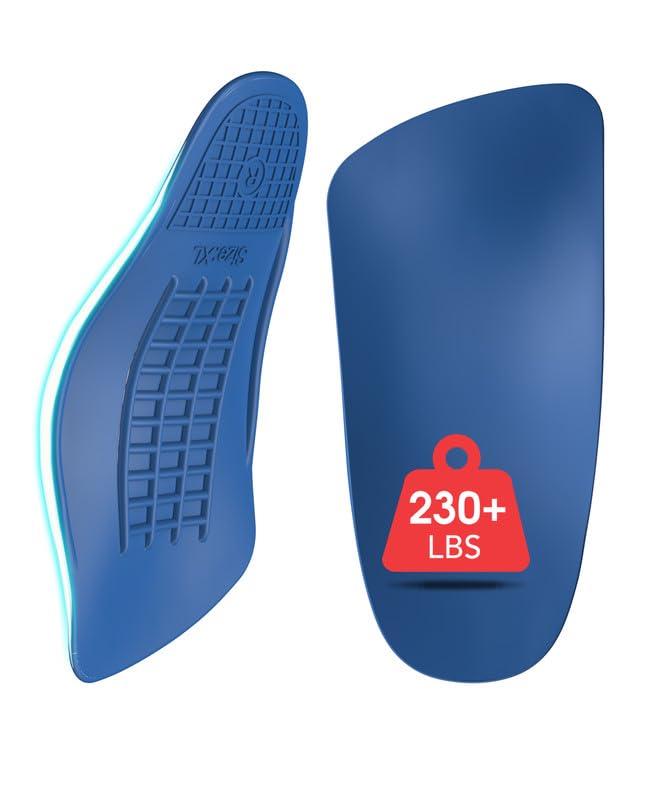
The slimmest, lightest spare pair in the lineup.
Weighing just 2.89 ounces — the same featherweight build as the color-coded OUOKK above — this is the insert you stash in a second pair of shoes without noticing it is there. Its slim 6.65-inch body slips into low-volume sneakers that would choke on a thick orthotic.
Because it is so minimal, it gives lighter support than the rigid plates here. It suits a barely-flat foot or a backup pair, not a collapsing arch.
Best use: a light, low-bulk backup for a second pair of sneakers.
Where it falls short: it is a very new listing and offers the least structural support of the group.
Good fit for: a minimal, barely-there insert for a roomy sneaker.
Not the one if: your arch needs firm correction.
6. Welnove 8-Pair Gel Arch Support Insoles

Eight pairs of stick-on gel pads so every shoe gets its own arch lift.
What wins people over here is the adhesion — these stay put all day and do not slide inside the shoe. The soft gel adds a cushion under a flat arch, and you get a 0.47-inch and a 0.3-inch height to pick from. The 8-pair set means one purchase covers your sneakers, boots and work shoes.
The catch is shape: the pads are a fit-it-yourself shape, so placement matters more than on a full-length insole. At 0.91 inches thick they add real bulk.
The selling point: strong self-adhesive that keeps the pad in place all day across many shoes.
The reality check: the shape takes some fiddling to sit right under your arch.
Worth grabbing if: you want a quick, cushioned lift you can stick in every pair of shoes you own.
Consider a full insole if: you need firm structural correction rather than a gel pad.
7. WalkHero Plantar Fasciitis Relief Insoles
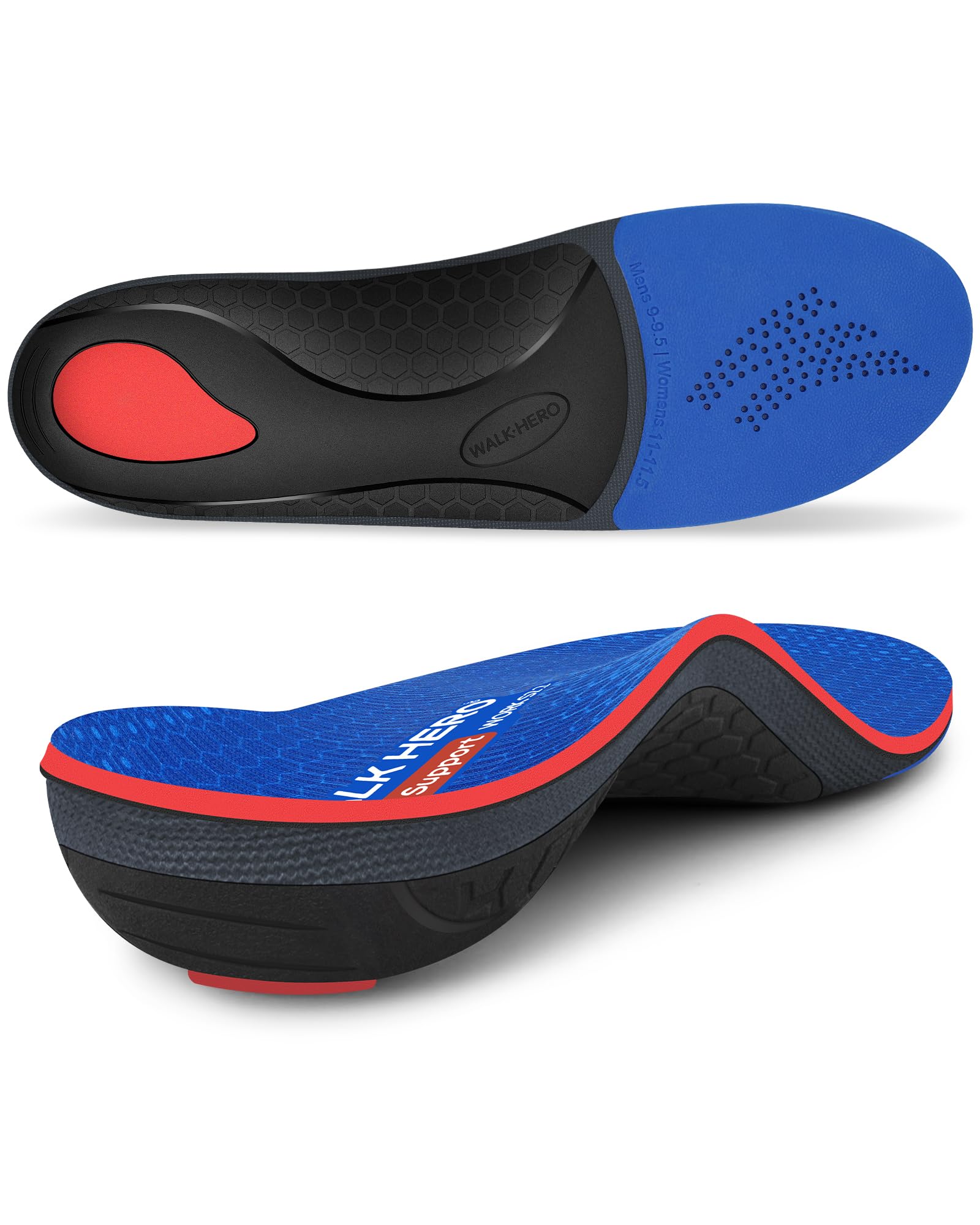
Standing-shift support that keeps a flat arch from sagging by noon.
The arch support is what buyers praise most, and it is rigid enough to stop a flat foot collapsing over a long day on your feet. A 3D-contoured arch and deep U-shaped heel cup wrap the heel to stop sliding and inward roll. It needs no trimming — choose your shoe size and drop it in.
The honest trade-off is firmness. These feel unlike soft insoles at first, so start with 2–3 hours a day and build up over a week or two.
Strong points
- Rigid arch support for flat feet and overpronation
- Deep heel cup locks the heel in place
Adjustment note
- Firm feel needs a gradual break-in period
Suits you if: you stand or walk all day and want a firm, stable arch under you.
Pass if: you expect a pillowy soft insole from day one.
8. WalkHero High Arch Support Inserts
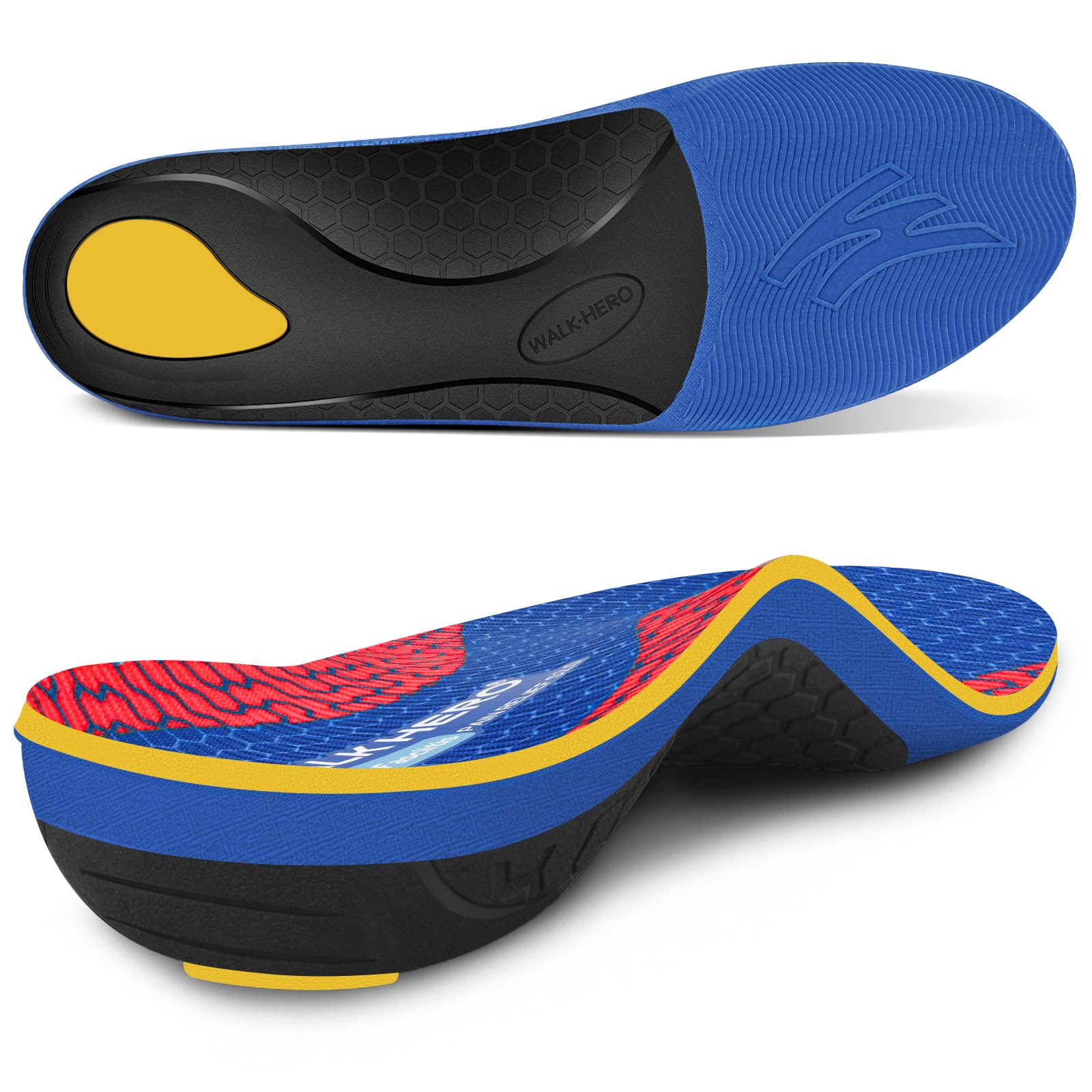
A flat-foot favorite with a semi-rigid shell that flexes but holds.
Where the rigid plates can feel harsh, this one uses a semi-rigid shell — firm enough to hold your arch, flexible enough to move with your step. The deep heel cup limits overpronation and helps even out weight across the foot. High-density foam and EVA cushioning, plus a reinforced PU shock pad in the heel, soften each landing.
Fit is the thing to watch: arch height and shoe volume both change how it feels, so start with short wear periods.
Where it shines: that flex-and-hold shell makes it a comfortable starting point for a flat foot.
Check first: shoe volume — a snug shoe may feel tight with the added heel pad.
Consider this if: you want correction that still lets your foot move naturally.
Choose a firmer plate if: you need maximum rigidity under a heavy build.
9. VALSOLE Heavy Duty Support Orthotics

A rigid orthotic built to take 220 lbs and a full shift in work boots.
Rated for 220+ lbs, this insert uses a rigid construction that holds its arch under weight instead of flattening. It is aimed squarely at work boots and flat feet, with shock absorption tuned for every step. The firm shell is what delivers the correction a collapsing arch needs.
The recurring gripe is fit — the bulky shell can make a boot feel tighter and may run short of your foot length. Check your size against the boot before you commit.
Reasons it earns a slot
- Rigid arch for heavy-duty support
- Rated for 220+ lbs of weight
Fit caveat
- Bulky shell can crowd a tight boot
Reach for it if: you wear work boots and need a plate that stays rigid all day.
Go smaller if: your boots are already snug — the shell needs room.
10. CRUVHEAL Sport Shock Absorbing Insoles

Court-ready cushioning that keeps a low arch steady through fast breaks.
For basketball, running and training, this insert puts gel pads where impact lands hardest and adds a deep curved heel cup to keep it from sliding during sprints. The aim is less joint stress and less fatigue in a hard session. It is a 1-year-covered pair, even after you trim it.
The trade-off is sizing: the fit runs large for some feet and the XL does not suit everyone, so double-check your size before checkout.
The draw: gel shock absorption plus a non-slip heel for active sports.
Watch the size: sizing is the most common fit complaint — confirm before buying.
A good match for: athletes who want cushioning and a stable heel on the court.
Not ideal if: you need firm flat-foot correction over cushioning.
11. Superfeet Run Cushion Low Arch Insoles
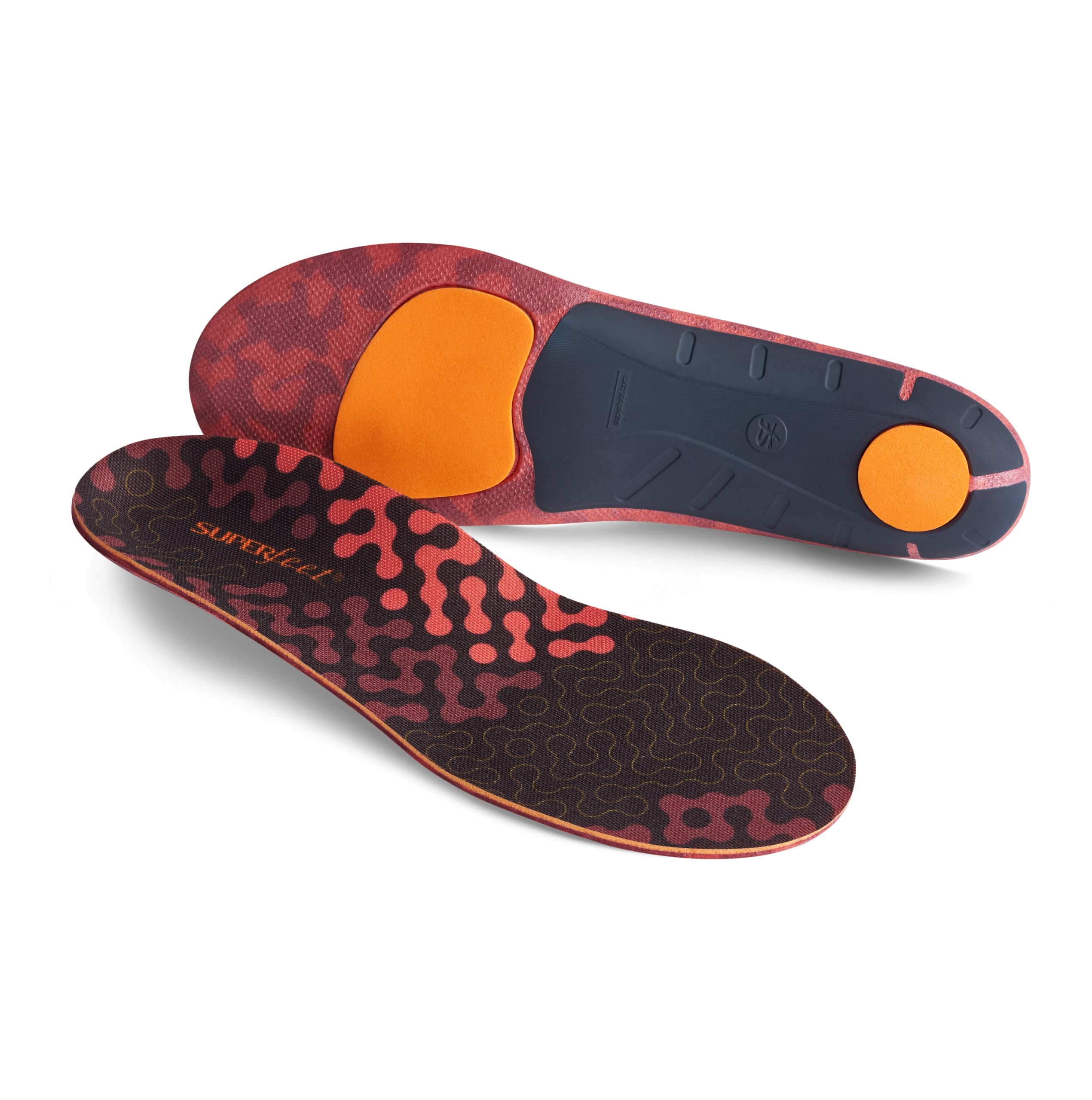
The low-arch running insole that flexes with every heel-to-toe turn.
Superfeet built this specifically for low arches, with a flexible support that moves through the running stride instead of fighting it. Patented Adaptive Comfort Technology lets the insole flex with the foot for an efficient heel-to-toe roll. A moisture-wicking top cover helps control odor and keep feet fresh, and the medium heel cup sits snug without pressure.
Trim it to fit — go up a size if you are between sizes and cut down. The trade-off is durability: the support can come apart faster than expected under heavy use.
What it delivers
- Support shaped for low arches
- Flexes with the stride for runners
Where it wears
- Can separate under heavy, prolonged use
Made for you if: you run or walk in flexible shoes and have a genuinely low arch.
Look past it if: you want a single pair to survive years of daily battering.
Know the Specs
Arch height
This is how far the insole rises under your arch. A larger number like 0.47 inch fills more space under a very flat foot, while a lower one suits a barely-flat arch.
Support shell
Rigid TPU or a semi-rigid shell holds its shape under weight, while a gel pad cushions but does not correct.
Common Questions
Do low-arch inserts work in flat or barefoot shoes?
How long before my feet adjust to a firm arch insert?
Can I trim these inserts to fit my shoe size?
The Bottom Line
For most low arches, the PowerStep Pinnacle is the pick — its firm arch shelf and proven following make it the safe first choice. If you want a softer, flexible daily insert, go with the PowerStep Bridge. And for running specifically, the low-arch shape of the Superfeet Run Cushion is the one built for your stride.
How we choose
We do not accept paid placement. Every pick is matched to a real buyer and a real use-case; we do not hands-on test units.
Sources
Specifications: manufacturer listings and product documentation. Review insights: verified customer reviews, as of November 2026. Pricing: not shown on this page (it changes often); check the current price via the retailer link.
As an Amazon Associate, My Heart Lives Here earns from qualifying purchases. This does not affect which products we feature.