Heads up: This post contains affiliate links. As an Amazon Associate I earn from qualifying purchases, at no extra cost to you. Learn more
Specs are compiled from manufacturer listings and verified buyer reviews and can change over time — please confirm the key details on the product page before buying.
You walk out to the cucumber patch and the leaves look like someone hit them with a shotgun — holes everywhere, plus yellow wilting you can’t explain. Cucumber beetles cause both, and killing them early is what saves the crop. The five sprays below cover that job from every angle: fast knockdown on contact, disease control alongside the bugs, and a systemic option for ornamentals.
This guide is built by comparing the manufacturers’ published specifications and the patterns across verified customer reviews, so you get each pick’s real strengths and trade-offs instead of marketing spin.
You’ll see which spray acts on contact, which one also fights mildew, and where a systemic product belongs in the rotation — all inside this shortlist of the insecticide for cucumber beetles.
Top Picks


How To Choose The Best Insecticide for Cucumber Beetles
Three things decide whether a spray actually helps your patch.
Contact versus systemic action
A contact spray kills beetles on the leaf surface, which is what you want when the beetles are visibly chewing right now.
Concentrate versus ready-to-use
A concentrate is diluted with water in a hose-end or tank sprayer, so one bottle stretches across many applications.
if you need disease cover
Cucumber beetles spread bacterial wilt and powdery mildew, so a spray that also controls disease can save you a separate product.
Side-by-Side Comparison
| Model | Best For | Form | Bottle Size | Weight | Amazon |
|---|---|---|---|---|---|
| Bonide Captain Jack’s Orchard Spray★ Best Overall | Bugs plus disease in one pass | Spray concentrate | 32 fl oz | 2.5 lb | Amazon |
| Pyrethrin Bonide Garden Insect SprayBest for Edibles | Beetles and aphids on leafy greens | Spray concentrate | 16 fl oz | 16 oz | Amazon |
| Bonide Systemic Insect Control | Hard-to-kill pests on ornamentals | Spray concentrate | 16 fl oz | 16 oz | Amazon |
| Hi-Yield 55% Malathion Spray | Vegetables and fruit trees | Oil spray | 32 fl oz | 2.5 lb | Amazon |
| Mighty Mint Peppermint Oil Spray | Repelling around the garden edges | Ready-to-use spray | 128 fl oz | 9 lb | Amazon |
Detailed Reviews
1. Bonide Captain Jack’s Orchard Spray 32 oz
Our pick — 4.5+★ from 1,000+ verified ratings; the strongest balance of quality and price.
One bottle that goes after the beetles and the mildew they bring with them.
Most cucumber-beetle sprays only kill the bug. This one lists beetles, caterpillars, mealybugs, thrips and leafhoppers as targets, then adds powdery mildew, rust, blight and leaf spots to the same label. That matters because beetle feeding opens the leaf up for disease — you treat both in one walk down the row.
Value comes from the dilution. A single 32 oz bottle makes up to 6.4 gallons of finished spray, and you can mix as little as 2 and 1/2 fluid ounces per gallon of water. It’s safe up to the day before harvest, and it’s the heavier of the two Bonide bottles here at 2.5 lb versus the Pyrethrin’s 16 oz.
The honest catch is cost per bottle — value opinions split, with some growers calling it pricey. If you only need beetle knockdown on ornamentals and nothing else, a single-purpose spray covers it.
Why it earns the top slot
- Kills beetles and controls powdery mildew in the same pass
- One 32 oz bottle makes up to 6.4 gallons of spray
What to weigh first
- Cost per bottle reads high to some buyers
Grab this one if: your cucumbers show holes and white leaf patches together.
Hold off if: you want the cheapest single-purpose bug spray and nothing more.
2. Pyrethrin Bonide Garden Insect Spray Concentrate 16 oz
The one you reach for when the beetles are already chewing and the bees are still working.
Pyrethrin is a plant-derived contact insecticide, and this concentrate controls a broad range of insects while being labeled safe for beneficial insects. For a cucumber patch in flower, that’s the difference between knocking back the beetles and wiping out your pollinators.
The 16 oz bottle is the light half-pint of this lineup — same 16 oz weight as the Bonide Systemic, but aimed at a different job. Buyers report it doing real work on aphids and Japanese beetles, and the value reads as solid for the bottle size.
Where it falls short of the Captain Jack’s pick: it’s a single-purpose bug spray with no disease listing, so if mildew is already on the leaves you’ll still need a second product.
Bee-friendly timing: spray in the evening after the bees quit for the day, and this contact spray does its job without taking the pollinators with it.
Reach for this if: you want beetle knockdown and you’re worried about the bees.
Look elsewhere if: powdery mildew is part of your problem.
3. Bonide Systemic Insect Control, 16 oz Concentrate
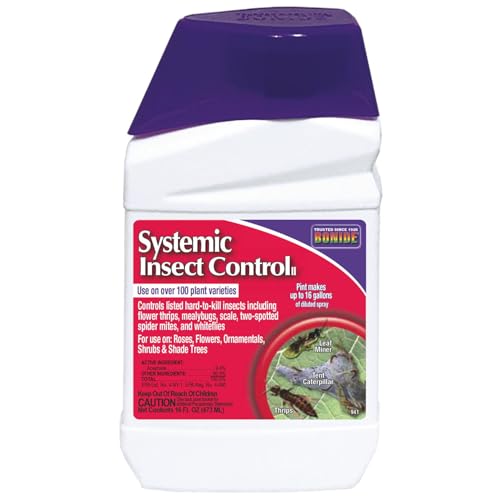
A systemic that moves inside the plant — but read the label before you aim it at cucumbers.
A systemic gets taken up by the plant itself, so it reaches pests that hide where sprays can’t. This one lists thrips, mealybugs, scale, 2-spotted spider mites and whiteflies, and it’s labeled for over 100 plant varieties.
Here’s the boundary you need to know: it is not intended for vegetable or fruit plants. It’s for flower beds, roses, shrubs and other listed ornamentals. The same 16 fl oz bottle holds 16 fluid ounces against the Hi-Yield’s 32, so you get half the volume — but this isn’t the product for your cucumber row anyway.
The recurring complaint is the smell — that’s the trade-off with this formula, so plan to apply when windows are shut and you’re not hosting. Effectiveness is what most of the feedback centers on, and it reads positive.
Where it belongs: rose beds and shrubs next to the vegetable plot, not on the cucumbers themselves.
The smell note: strong odor is the most-flagged downside, so time your application accordingly.
Choose this if: hard-to-kill pests are on your ornamentals.
skip it if: you need something labeled for vegetables.
4. Hi-Yield (32029) 55% Malathion Spray, 32 oz
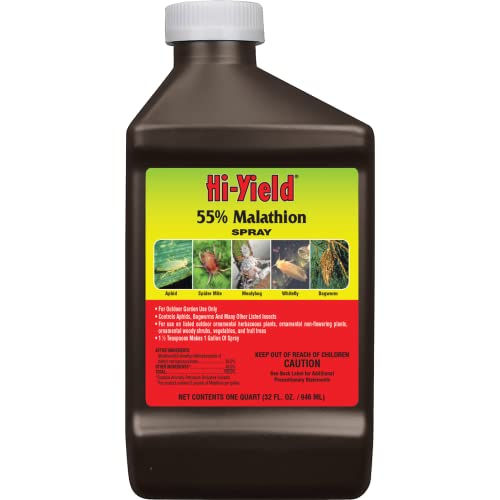
The old-guard orchard spray, mixed at 55% Malathion and built for vegetables and fruit trees.
Malathion is a broad-spectrum contact insecticide, and this bottle carries it at 55% active ingredient. The label covers aphids, thrips, spider mites, lace bugs and more, and it’s cleared for herbaceous plants, shrubs, vegetables and fruit trees.
This is the bigger of the two premium bottles — 32 fluid ounces against the Bonide Systemic’s 16, so it goes twice as far. Application wants calm weather with no rain predicted for the next 24 hours, through a hose-end or tank sprayer.
Where it loses ground to the Captain Jack’s: no disease control on the label. You’re buying bug knockdown only, at the highest bottle position in this lineup.
Worth your money if: you’re spraying a mixed vegetable and fruit-tree plot.
Think twice if: you want one bottle that also handles mildew.
5. Mighty Mint Peppermint Oil Insect Repellent Spray 1 Gallon
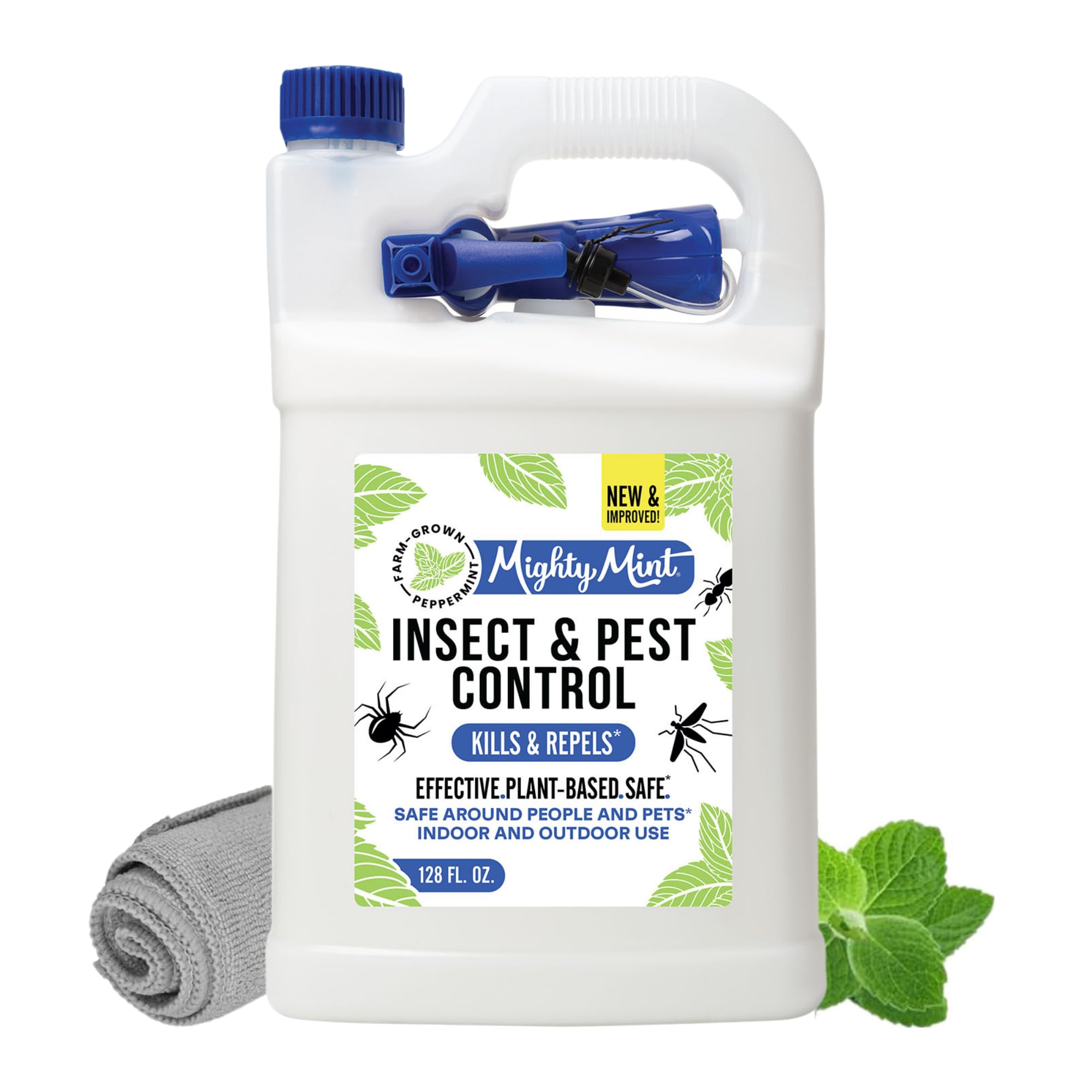
A gallon of peppermint oil for the fence line and the patio — a repellent, not a beetle killer.
This is the different tool in the box. It’s a plant-based repellent built on extra-concentrated peppermint oil, aimed at spiders, ants, roaches and similar home-and-garden pests around baseboards, entryways, patios and garden edges. It’s free from synthetic fragrances and formulated to be used around dogs, cats and kids as directed.
The gallon is enormous next to everything else here — 128 fluid ounces and 9 lb, roughly the size of a small watering can. Refill smaller bottles from it and it lasts a long time.
Be clear about what it isn’t: this is a repellent, not a knockdown insecticide, so it won’t clear an active beetle infestation on your cucumber leaves. The scent is what carries it, and duration is the softer spot — some report weeks of effect, others report far less on exposed surfaces.
Its real job: spraying the perimeter so beetles and ants think twice before coming in.
Know the limit: a repellent can’t substitute for a contact insecticide on an active infestation.
Get this if: you want a low-scent chemical-free barrier around the garden and patio.
Don’t rely on it if: beetles are already eating holes in your leaves.
Know the Specs
Concentrate versus ready-to-use
A concentrate is mixed with water in a hose-end or tank sprayer, so a small bottle stretches across many applications — the Captain Jack’s bottle makes up to 6.4 gallons of finished spray. A ready-to-use spray like the Mighty Mint gallon needs no mixing but won’t dilute to cover more ground.
Active ingredient percentage
The percentage on the label tells you how much of the pest-killing ingredient is in the bottle — the Hi-Yield lists 55% Malathion. Higher percentages usually mean you dilute more, so read the label rates before you mix.
Common Questions
Will Captain Jack’s Orchard Spray kill cucumber beetles directly?
Can I use Bonide Systemic Insect Control on my cucumber plants?
How soon can I harvest after spraying Captain Jack’s Orchard Spray?
The Bottom Line
For most cucumber patches, the winner is Bonide Captain Jack’s Orchard Spray because it fights the beetles and the mildew they bring in a single pass. If you’re spraying vegetables and fruit trees in one go, grab the Hi-Yield Malathion Spray for its 32 oz bottle and 55% active ingredient. And if you want a chemical-free barrier around the garden, the Mighty Mint gallon is the one to reach for.
How we choose
We do not accept paid placement. Every pick is matched to a real buyer and a real use-case; we do not hands-on test units.
Sources
Specifications: manufacturer listings and product documentation. Review insights: verified customer reviews, as of November 2026. Pricing: not shown on this page (it changes often); check the current price via the retailer link.
As an Amazon Associate, My Heart Lives Here earns from qualifying purchases. This does not affect which products we feature.