Heads up: This post contains affiliate links. As an Amazon Associate I earn from qualifying purchases, at no extra cost to you. Learn more
Specs are compiled from manufacturer listings and verified buyer reviews and can change over time — please confirm the key details on the product page before buying.
If your baseboard heaters leave one room toasty and another chilly, the fix is usually matching wattage to room size, not buying the biggest unit on the page. This list ranks six baseboard heaters — electric models plus one true hot-water kick-space unit — by how they actually perform in real rooms.
This guide is built by comparing the manufacturers’ published specifications and the patterns across verified customer reviews, so you get each pick’s real strengths and trade-offs instead of marketing spin.
Below you get wattage, amperage, and coverage laid out side by side, plus the installation quirks that trip people up. Every pick here earns its spot as a solid hot water baseboard heaters option.
Top Picks


How To Choose The Best Hot Water Baseboard Heaters
Three numbers decide whether a baseboard heater feels right or feels useless in your room.
Match wattage to the room
A 2500-watt unit like the Marley can warm about 250 square feet, while a 750-watt Cadet unit covers 187.5 square feet — so measure before you buy.
Check the amperage against your circuit
The Comfort Zone draws 12.5 A and the Cadet draws 6.25 A, so confirm what your breaker can carry before wiring anything in.
Decide hardwired or plug-in
Hardwired models like the Cadet give a clean built-in look, while the Fahrenheat plugs into a standard 120-volt outlet and moves wherever you need heat.
Side-by-Side Comparison
| Model | Best For | Heat Output | Amperage | Coverage | Amazon |
|---|---|---|---|---|---|
| Marley 240V 2′ Baseboard Heater★ Best Overall | Big rooms | 2500 watts | — | 250 sq ft | Amazon |
| Comfort Zone Digital ConvectionSmartest Controls | Quiet bedrooms | 1500 watts | 12.5 A | 150 sq. ft. | Amazon |
| Cadet F Series 36 in. | Small rooms | 750 watts | 6.25 A | 187.5 square feet | Amazon |
| King 4K1210-BW K Series | Basements | 1000 watts | 8.3 A | 1000 | Amazon |
| Fahrenheat FBE15002 | Portable heat | 5120 BTU | 12.5 A | 250 sq ft | Amazon |
| Twin-Flo III K42 | Hot-water systems | 4,200 BTU | — | — | Amazon |
Detailed Reviews
1. Marley 240V 2′ Baseboard Heater
Our pick — 4.0+★ from 100+ verified ratings; the strongest balance of quality and price.
The raw-output pick that warms a whole room without a fan blowing dust around.
For larger rooms, this Marley pours out 2500 watts and hits about 250 square feet — the highest output on this list. It moves heat by natural convection, so there’s no blower pushing dust or allergens into the air.
Wiring is the easy part here: a large wiring compartment, dual knockouts, and a built-in cable clamp make the hookup straightforward. Owners consistently rate the build and the installation as the best parts of the deal. UL Listed with overheat protection that cuts the unit if the intake gets blocked.
The catch: it’s 240-volt, so you need a dedicated circuit and an electrician unless you’re comfortable with panel work. That 4.8″D x 13.2″W x 18.2″H footprint is also taller than the slim units.
Why it earns the top spot
- 2500 watts covers about 250 sq ft
- Large wiring compartment and dual knockouts
- Overheat protection with UL Listing
The trade-off to weigh
- Needs a 240-volt dedicated circuit
Go for it if: you have a large room and 240-volt wiring ready.
Think twice if: you only have standard 120-volt outlets.
2. Comfort Zone Digital Convection Baseboard Heater with Timer
A quiet, low-profile heater with a timer and thermostat that fit a bedroom’s needs.
The Comfort Zone brings 1500 watts and covers 150 sq. ft., with a digital thermostat that lets you set and hold an exact temperature. A built-in timer schedules operation and auto shut-off, and two heat settings give you a simple high/low choice.
What wins people over is how quiet it runs — no fan noise to disturb sleep or work. The elongated baseboard shape sits close to the wall without drawing attention. Overheat protection and a tip-over switch that cuts power if it’s knocked over round out the safety side.
The honest caveat is reliability and heat output, which owners describe as hit-or-miss. Some units warm a small room well; others give off very little heat or quit working. Think of this as a small-space heater where you manage expectations, not a whole-house solution.
The strongest argument: silent convection plus a programmable timer is a rare combo for a bedroom.
The honest caveat: heat output and durability vary, so keep your room size modest.
Reach for this if: you want quiet, timed heat in a small bedroom or office.
Look elsewhere if: you need to warm a large open space.
3. Cadet F Series 36 in. Electric Baseboard Heater

The slim under-window workhorse for a bedroom or office the main system forgets.
The Cadet delivers 750 watts and 2560 BTU on a standard 120-volt circuit, with a front discharge that pulls cool air in low and pushes warm air up. It’s built for supplemental zone heating in bedrooms, bathrooms, and home offices — up to 187.5 square feet. The slim cabinet measures 36 inches wide and about 6.75 inches high.
Owners praise how well it heats a room and how easy it is to wire. Functionality and build quality are the consistent highlights, and the all-steel cabinet looks tidy along a wall.
Two things to know going in. First, the thermostat is sold separately, so budget for a line-voltage thermostat or an end kit. Second, a small number of reports describe the heating element burning through — note for confidence, though most units run fine for years.
Where it shines: efficient 750-watt zone heat that slips under a window with a clean, hardwired look.
Plan for: a separate thermostat, plus a circuit that can carry 6.25 A.
Suits you if: you have a cold small room and want discreet built-in heat.
Not for you if: you need a thermostat included in the box.
4. King 4K1210-BW K Series Baseboard Heater

A 4-foot aluminum-fin unit that quietly handles a basement room the rest of the house ignores.
The King brings 1000 watts at 8.3 A on 120 volts, with an aluminum ribbon fin element and a full-length safety cutout. Its dent-resistant die-form cover and crushproof element are built to withstand a basement’s knocks. At 48 inches wide and only 2.94 inches deep, it fits close to a wall while spanning a wide stretch.
Heating performance is the thing buyers rave about — it effectively heats rooms up to 10×14 feet, and the natural convection stays quiet while it does. Some units hold up for years; a few mention clicking sounds when first turned on.
Installation is the variable. Instructions can be confusing, so a careful read or a pro’s help goes a long way. It’s also a 120-volt unit at 1000 watts, so plan the circuit accordingly.
Pick this if: you want reliable quiet heat for a basement or long wall run.
Know that: the install directions need patience.
5. Fahrenheat FBE15002 Portable Electric Baseboard Heater
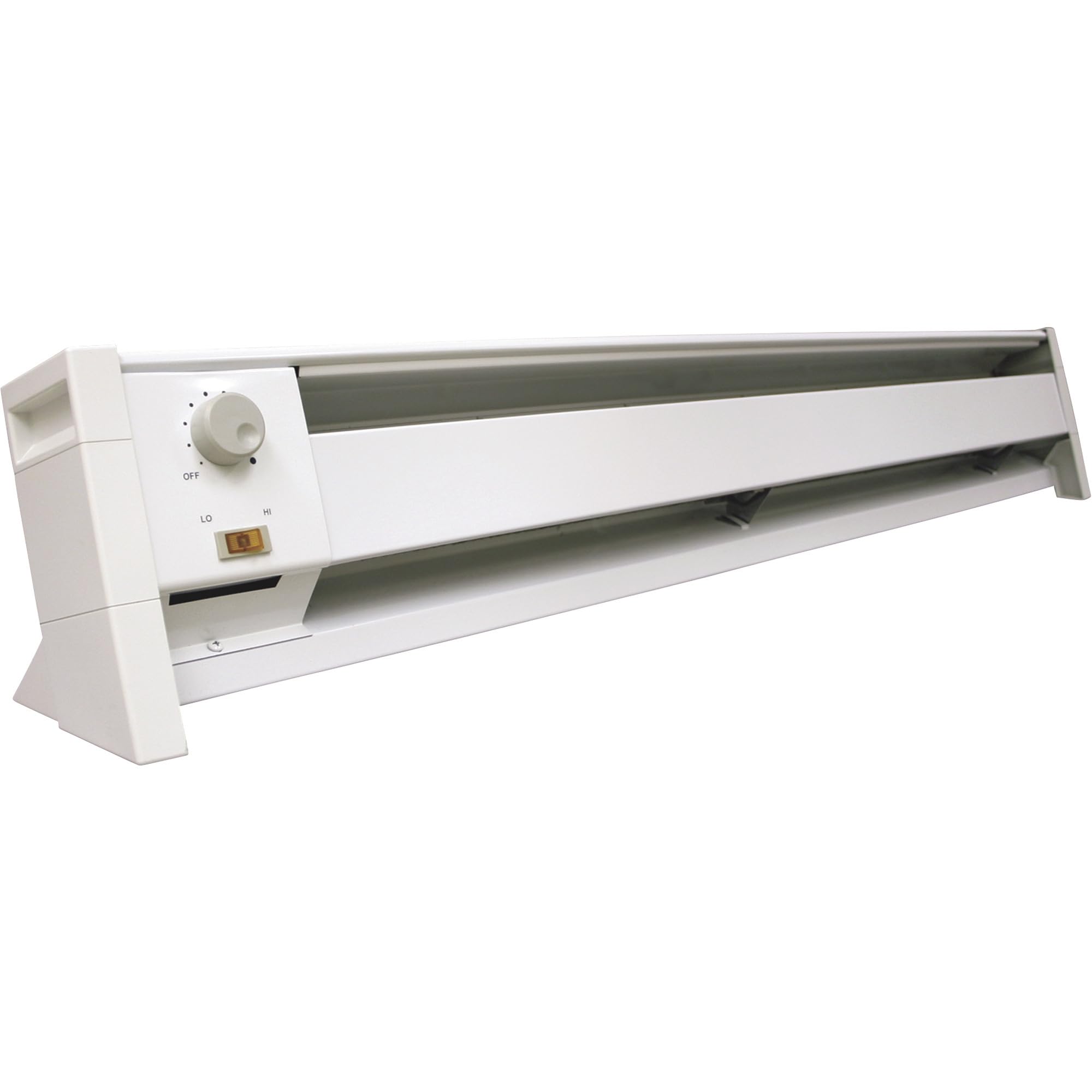
Slide this 46-inch heater wherever a room needs extra warmth — no hardwiring required.
The Fahrenheat is the odd one out in the best way: it plugs into a standard 120-volt outlet and rolls to any room that needs heat. At 45 inches long and 7.5 inches high, it’s a low profile that blends into a room’s decor.
The fanless convection design is a big selling point for allergy-prone homes — no blower means no dust kicked into the air. It’s also one of the better-looking units here, and owners appreciate how it works in average rooms.
The recurring gripe is durability — some breakers trip, and a few report clinking or popping sounds as it heats. Heat output can be slow in a big room, and it draws 12.5 A, so avoid sharing the circuit with other appliances.
The standout: plug-in portability with 5120 BTU and a genuinely clean look.
Sized caveat: durability and noise are the trade-offs, so give it its own circuit.
Right for you if: you rent or want to move heat room to room without an electrician.
skip it if: you need quiet, predictable long-term service.
6. Twin-Flo III K42 4,200 BTU Hot Water Kick Space Heater
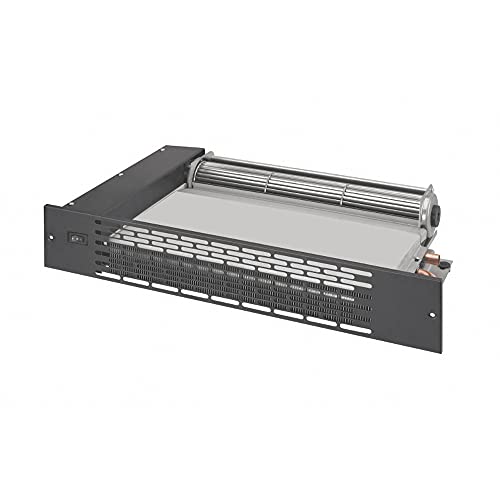
The only true hot-water heater here — a kick-space unit for pipes, not a plug.
If your home runs on a boiler and hot water, this Twin-Flo III is the pick built for that system. It puts out 4,200 BTU using hot water rather than electric elements — it’s not an electric heater, so it needs existing hydronic piping to work. At 10.1 pounds and 16.8 x 14 x 5.5 inches, it’s a compact box meant to tuck into a kick space under cabinetry.
Because it taps your boiler’s hot water, it adds warmth to a bathroom or kitchen nook without a new circuit. Beacon Morris builds it, and the listing simply notes great tools at an affordable price.
The honest limit: it only makes sense if you already have a hot-water system feeding that spot. It won’t replace a plug-in heater for someone without hydronic plumbing.
Best matched to: boiler-based homes adding heat to a tight kick space.
Wrong pick if: your home has no hot-water piping to connect.
Know the Specs
Wattage and BTU
Wattage is the electrical power a heater draws, while BTU measures the heat it delivers — the Marley’s 2500 watts and the Cadet’s 2560 BTU both describe output, so compare them on the same room size.
Convection vs. hydronic
Convection units warm air as it drifts over a hot element, while a hydronic unit like the Twin-Flo taps boiler water, so match the type to your home’s system before buying.
Common Questions
Can I use a 240-volt baseboard heater on a normal outlet?
Do these electric baseboard heaters need a separate thermostat?
What is the difference between a hot-water heater and an electric one?
How much square footage can one baseboard heater warm?
Do baseboard heaters blow dust around?
The Bottom Line
For most homes, the hot water baseboard heaters winner is the Marley 240V 2′ Baseboard Heater — 2500 watts across about 250 square feet with the cleanest wiring setup. If you have a boiler system, the Twin-Flo III K42 is the true hydronic pick. And for plug-in flexibility in a small room, the Fahrenheat FBE15002 is the one to reach for.
How we choose
We do not accept paid placement. Every pick is matched to a real buyer and a real use-case; we do not hands-on test units.
Sources
Specifications: manufacturer listings and product documentation. Review insights: verified customer reviews, as of November 2026. Pricing: not shown on this page (it changes often); check the current price via the retailer link.
As an Amazon Associate, My Heart Lives Here earns from qualifying purchases. This does not affect which products we feature.