Heads up: This post contains affiliate links. As an Amazon Associate I earn from qualifying purchases, at no extra cost to you. Learn more
Specs are compiled from manufacturer listings and verified buyer reviews and can change over time — please confirm the key details on the product page before buying.
Most people shopping here want one thing: to follow a conversation without asking anyone to repeat themselves, without paying clinic prices. Under three hundred dollars you can now get real digital hearing aids with noise processing, rechargeable cases, and app control. The catch is that the cheap end hides a lot of plain amplifiers dressed up as hearing aids, so this shortlist sticks to devices with actual digital chips.
This guide is built by comparing the manufacturers’ published specifications and the patterns across verified customer reviews, so you get each pick’s real strengths and trade-offs instead of marketing spin.
Below you will find six digital hearing aids ranked by what they actually do for speech clarity, fit, and daily charging, with the biggest crowd favorite taking the top spot. If you want a fast, honest route to the best hearing aids under $300, start with the Delight OTC pair and read down from there.
Top Picks
How To Choose The Best Hearing Aids Under $300
Three specs decide whether a pair works for you or sits in a drawer.
Channel count
More digital channels split sound into finer bands, so speech gets boosted while background rumble stays down — 16-channel processing is the standard worth holding out for.
Gain and noise handling
Gain in decibels sets how much louder the aid can push sound into your ear, and active noise cancellation keeps that boost from turning harsh.
Battery and fit
Look for hours of single-charge use plus a charging case that tops the units up on the go, and check the fit type against your ear canal.
Side-by-Side Comparison
| Model | Best For | Channels | Battery Per Charge | Noise Control | Amazon |
|---|---|---|---|---|---|
| Delight OTC (ELEHEAR)★ Best Overall | Overall balance | — | Rechargeable, 3 cells | Active Noise Cancellation | Amazon |
| Vivtone Lucid508Longest Backup | Long backup power | Multi-channel digital | 25 hours | Quiet & noisy modes | Amazon |
| Ceretone CE-A18A | Windy outdoors | 16-channel | 25-30 hours | Wind noise management | Amazon |
| Nova iB-Nb-brA | Simple wearing | — | — | — | Amazon |
| UWTLFCE 902blk | Scene modes | 16-channel | 20 hours | 16-channel noise reduction | Amazon |
| Flaygo 911 | Tiny in-ear fit | — | 16 hours | Adaptive noise reduction | Amazon |
Detailed Reviews
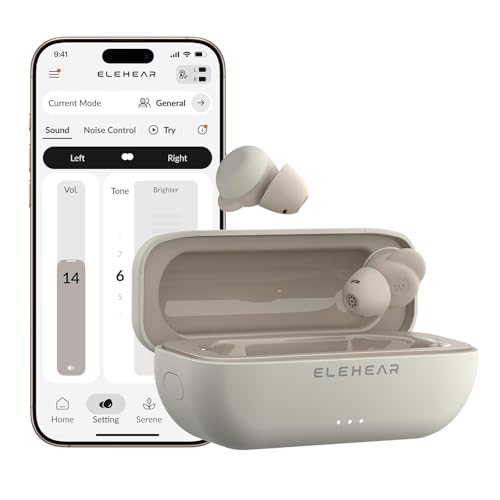
1. Delight OTC Hearing Aids for Seniors (ELEHEAR)
The one that streams calls straight from your phone to your ears.
What earns the Delight pair the top slot is hands-on tunability, not raw power. You get app control and Bluetooth 5.3 — the wireless standard that pairs to a smartphone — so a call or a video can be piped directly in, and 45dB of gain lets you dial up quiet voices. The AI speech enhancement targets human conversation rather than just making everything louder.
Buyers gravitate to the value first: a device that adjusts per ear without a clinic visit reads as money well spent. Between picks, note the Delight’s lithium-ion pack weighs 18.9 g against the 0.5 g cell in the Flaygo below, a reminder that comfort here comes from the in-ear shape rather than featherweight parts.
What lands well
- Per-ear adjustment and app control
- 45dB gain with Bluetooth streaming
Where it asks patience
- Sound and loudness split opinion
Reach for it if: you want an adjustable, app-connected pair for conversations and calls.
Think twice if: loud environments already overwhelm you and you want simplified sound.
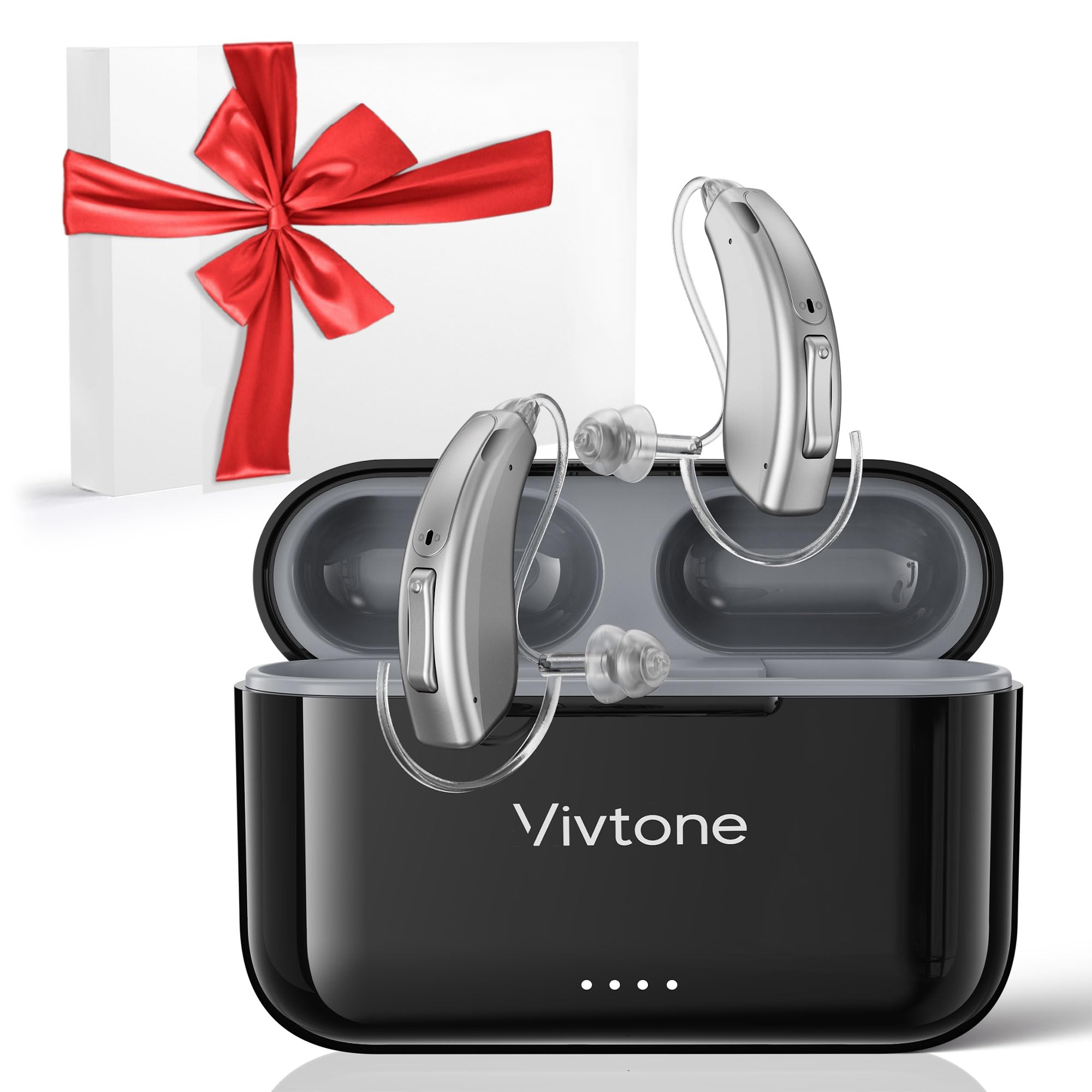
2. Vivtone Rechargeable Hearing Aids, Lucid508
Two hours on the charger buys a full 25 hours of wear.
This behind-the-ear (BTE) model sits on the outside of your ear, which tends to suit people who want an easy, uncluttered fit. Charging is the headline: 25 hours of use per charge, and the carrying case holds enough reserve to refill the pair four times for 125 hours of backup power — handy for a week away or a long trip.
Owners describe it as working far better than they expected for the category, and the quiet and noisy modes let you switch strategy when a room gets loud. Volume control is the quibble: it takes some fiddling to settle in. With 41dB peak gain it handles mild through significant loss.
Why it stands out: that 125 hours of total backup power is the most generous among these picks.
Set your expectation: plan on a few minutes of volume tweaking before it feels right.
Best fit: travelers and heavy daily wearers who hate hunting for a charger.
Less ideal: anyone who wants volume dialed in on day one.
3. Ceretone OTC Hearing Aids, CE-A18A

Built for the person who spends their afternoons in the wind.
Inside this one is an Intricon-made 16-channel digital processing chip paired with a Knowles-branded speaker — the 16 channels split sound into fine slices so speech gets lifted above the breeze. Wind noise management is the speciality, cutting the whistle that ruins outdoor conversation.
Battery runs 25-30 hours of continuous use with 100+ hours of total life, and a full recharge takes about two hours. The six-level volume switch and five hearing-mode switch run off one button, and volume memory means it wakes up where you left it.
Deserves a look
- 16-channel Intricon chip with Knowles speaker
- 25-30 hours of use per charge
Worth weighing
- Single-button controls need practice to master
Pick this for: gardeners, walkers, and anyone who talks outdoors a lot.
Pass if: you prefer touch-screen simplicity over a click button.
4. Nova Hearing Aids for Seniors, iB-Nb-brA
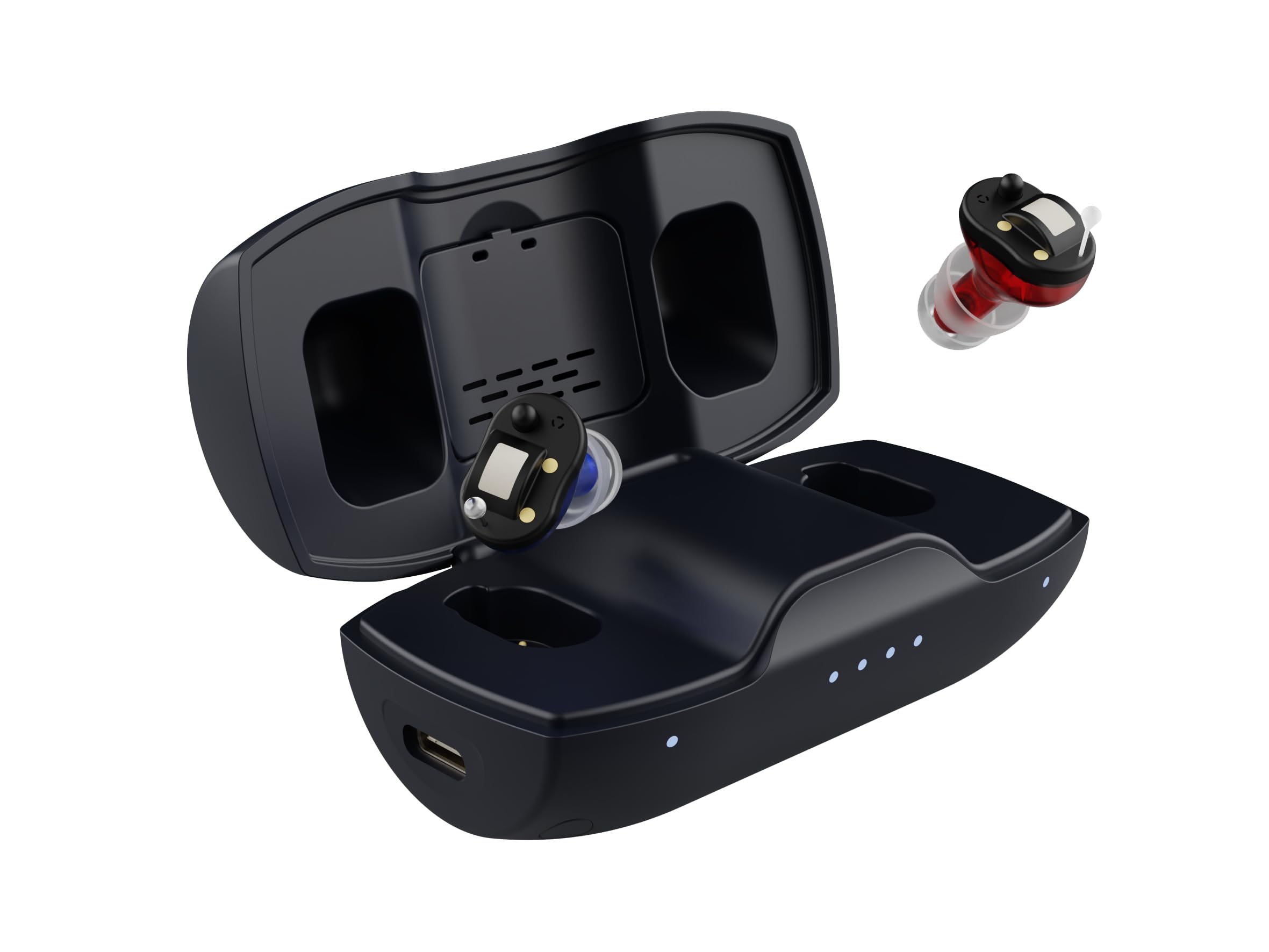
A straightforward pair that wins on being dead simple to put on.
The Nova from iBstone leans on simplicity rather than channel counts. Buyers consistently describe it as easy to use and easy to wear, which matters when the person wearing it is not a gadget person. Sound quality lands on the positive side too.
It arrives with its battery included, so there is no separate cell to source before first use. What you give up is detail — there is no published channel count or noise-management spec to compare against the more sophisticated picks above. If you want a low-fuss starting pair, that trade is reasonable.
The appeal: quality and ease of use are the two things it does well.
Plan around: limited published specs make it a simpler tool than the chip-driven models.
Made for: first-time wearers who want a no-fuss daily pair.
Not for: buyers who want to fine-tune channels and modes.
5. UWTLFCE OTC Hearing Aids, 902blk
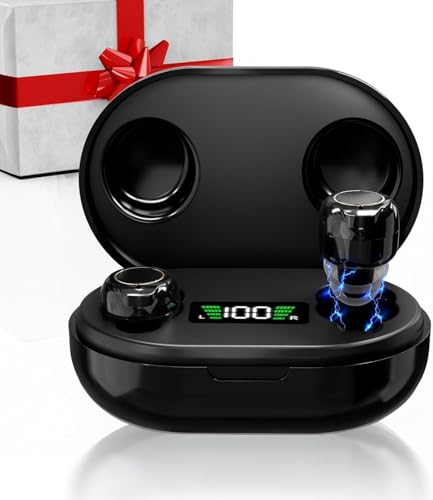
Three scene modes take the guesswork out of switching settings.
General, Meeting, and Outdoor modes cover the three rooms you actually stand in, and a double tap switches between them while a single tap changes volume. Under the hood is 16-channel digital noise reduction, and the 300mAh lithium battery runs up to 20 hours on a two-hour charge. The case itself recharges the pair three to four times.
At 3 grams per unit it stays comfortable, and eight pairs of ear tips help you find a seal. The volume is limited to four levels, so fine-tuning is coarser than app-based rivals.
Solid points
- Three modes and 20 hours per charge
- 8 pairs of ear tips for fit
Trade-off to know
- Only four volume levels to choose from
Choose it if: you move between home, meetings, and the street each day.
Look elsewhere if: you want granular volume control.
6. Flaygo Rechargeable Hearing Aid, 911

So small it disappears into the canal and switches on by itself.
If being noticed is your worry, this deep in-ear design sits out of sight. Its battery cell weighs 0.5 g, the lightest part among these units and a contrast to the 18.9 g pack in the Delight. A dedicated noise-reduction chip suppresses background rumble, and the aid switches on automatically 15 seconds after you seat it.
Each charge gives 16 hours of use, and the display case carries 110+ hours and up to seven days of use. Fit is the sticking point — some find the snug canal fit right for small ears, others find it uncomfortable, so it rewards careful placement.
The draw: near-invisible in-ear size with a 110+ hour charging case.
Be ready for: a snug canal fit that suits some ears better than others.
Ideal for: anyone who wants their aid unseen and self-starting.
Skip if: your canal is sensitive to a deep in-ear seat.
Know the Specs
Channel count
A channel is a slice of the sound range the chip processes separately. More channels (16 is a common standard here) let the aid lift speech while leaving rumble lower, which is why a chip-based pair can sound clearer than a plain amplifier.
Gain in dB
Gain is how much louder the aid pushes sound into your ear. Higher figures suit greater loss, while active noise cancellation keeps that boost from turning shrill in a crowded room.
Common Questions
What is the difference between a hearing aid and an amplifier?
Will a rechargeable hearing aid last a full day out?
Can a behind-the-ear model look invisible?
The Bottom Line
The hearing aids under $300 winner is the Delight OTC because it pairs 45dB gain and app control with Bluetooth 5.3 streaming. Need maximum backup power, grab the Vivtone Lucid508. And for windy afternoons outdoors, the Ceretone CE-A18A is the one to reach for.
How we choose
We do not accept paid placement. Every pick is matched to a real buyer and a real use-case; we do not hands-on test units.
Sources
Specifications: manufacturer listings and product documentation. Review insights: verified customer reviews, as of November 2026. Pricing: not shown on this page (it changes often); check the current price via the retailer link.
As an Amazon Associate, My Heart Lives Here earns from qualifying purchases. This does not affect which products we feature.