Heads up: This post contains affiliate links. As an Amazon Associate I earn from qualifying purchases, at no extra cost to you. Learn more
Specs are compiled from manufacturer listings and verified buyer reviews and can change over time — please confirm the key details on the product page before buying.
California lawns fail for one reason most bags never fix: the seed was bred for a wetter climate. You need a mix that shrugs off dry August heat, clay soil, and shade under a live oak. This shortlist covers the five bags worth your water bill.
This guide is built by comparing the manufacturers’ published specifications and the patterns across verified customer reviews, so you get each pick’s real strengths and trade-offs instead of marketing spin.
Below you’ll find coverage math, germination windows, and the honest trade-offs, all so you can pick the right grass seed for california without wasting a season on the wrong bag.
Top Picks

How To Choose The Best Grass Seed for California
Three things decide whether a bag works in this state.
Match the blend to your sun and soil
Tall fescue and Texas bluegrass blends handle both sunny and shady ground, and they tolerate the clay soil common across California yards.
Check the coverage math against your square footage
A bag that seeds 1,750 sq. ft. for a new lawn covers double that when you are overseeding an existing one.
Respect the planting window
Cool-season seed establishes best from mid-August to mid-October, so a fall sowing beats a spring gamble.
Side-by-Side Comparison
| Model | Best For | Bag Weight | New Lawn Coverage | Plant Height | Amazon |
|---|---|---|---|---|---|
| Jonathan Green Golden State★ Best Overall | Overall California lawns | 7 lb | 1,750 sq. ft. | 3 in. | Amazon |
| Jonathan Green Heat & DroughtHeat Specialist | Full sun and heat | 3 lb | 750 sq. ft. | — | Amazon |
| Eretz Creeping Red Fescue | Heavy shade | 3 lb | — | 6 in. | Amazon |
| Mountain Valley Micro Clover | No-mow lawn swap | 1 lb | 1,000 sq. ft. (1-2 lb rate) | 4-6 in. | Amazon |
| Ferry-Morse Annuals Mix | Pollinator color | 1 lb | 2,682-5,364 sq. ft. | 6-36 in. | Amazon |
Detailed Reviews
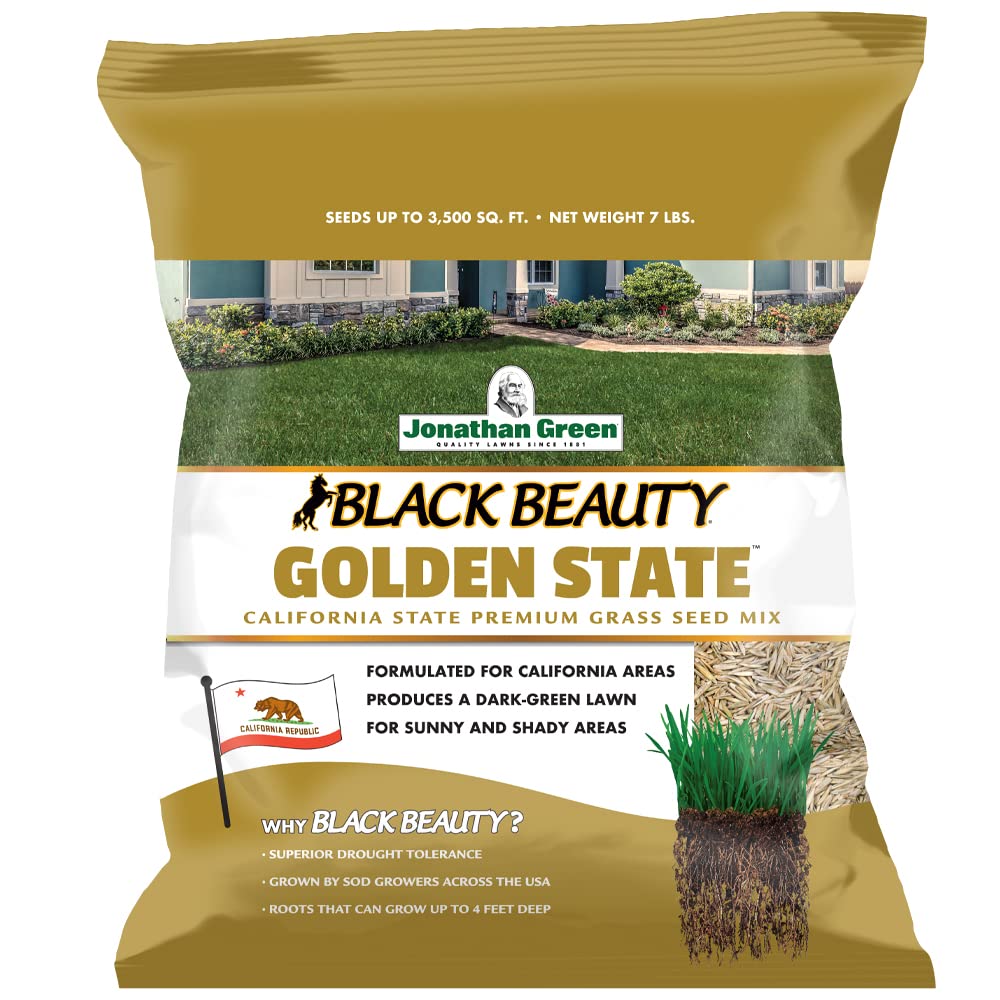
1. Jonathan Green Black Beauty Golden State Grass Seed 7 lb
Our pick — 4.0+★ from 80+ verified ratings; the strongest balance of quality and price.
The bag actually built for California dirt, not borrowed from a Midwest catalog.
Roots that reach 4 feet down are the whole pitch here. Combined with a waxy leaf coating that slows evaporation, this mix keeps going through a dry spell instead of browning out. It handles clay soil and grows in both sun and shade, which matters when half your yard sits under a tree.
One 7 lb bag seeds up to 1,750 sq. ft. of new lawn, or 3,500 sq. ft. when you overseed an existing one. That is 2.3x the coverage of the 3 lb Jonathan Green bag below, from a bag weighing 7 pounds against its 3 pounds. Expect sprouts in 14 to 21 days, though plenty of buyers see green in 3 to 4. The dark-green color and dense turf are what win people over — quality is the trait praised most.
The catch is that results are not universal. A handful of yards report nothing coming up at all, and this is the smallest-reviewed pick here at 4.0+ stars across 80+ ratings. Sow it in the mid-August to mid-October window and keep the seedbed damp, and you stack the odds in your favor.
What carries it
- 4-foot root depth plus a waxy leaf coating for moisture retention
- 1,750 sq. ft. new-lawn coverage from one 7 lb bag
Where it wobbles
- Sprouting is inconsistent in some yards — timing and watering matter
Reach for this if: you want the most California-specific blend and have a fall window to sow it.
Look elsewhere if: you need instant results in a heatwave with no irrigation.
2. Jonathan Green Black Beauty Heat & Drought Grass Seed 3 lb
The bag that names its number out loud — heat tolerance up to 100°F.
Tall fescue and Texas bluegrass carry this mix, and the same 4-foot root depth and waxy coating show up here as on the Golden State bag. That coating works like the skin of an apple, holding moisture in and shielding the blades. It wants full sun to light shade, and it is a smaller bag: 750 sq. ft. of new lawn, or 1,500 sq. ft. for overseeding.
Where it delivers is looks — the deep, lush green is what earns the strongest praise, followed closely by sheer greenness. Where it struggles is germination, and that is the honest fit note here. You either get a fast, thick lawn or you get patches, and results skew heavily by region. Sow mid-August to mid-October, or mid-March through mid-May.
Buy multiples for a full lawn.
Your bag if: you are filling bare spots in a sunny yard that bakes in summer.
Pass if: your lawn is northeast-facing or heavily shaded.
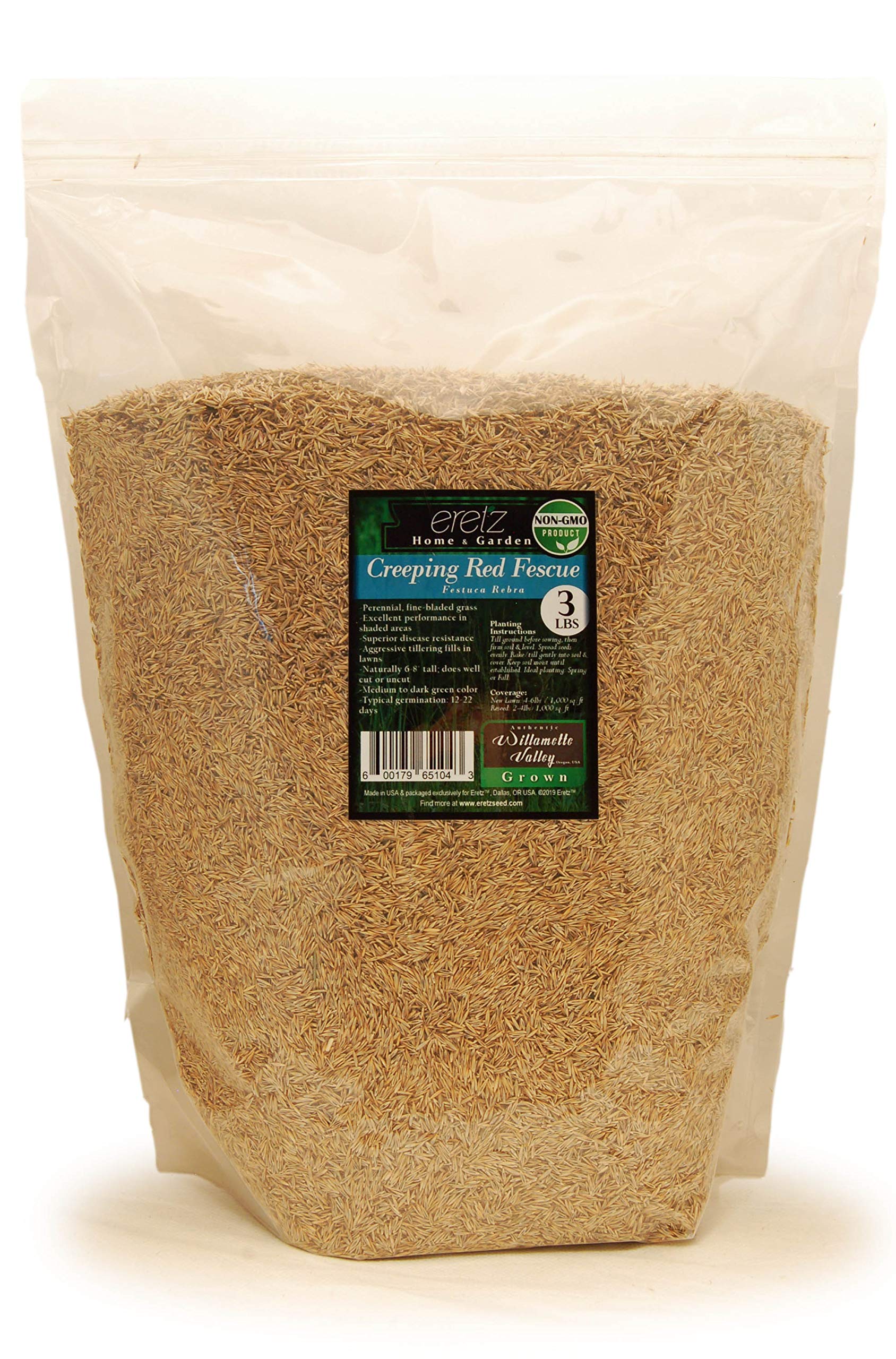
3. Eretz Creeping Red Fescue Seed 3lb
Pure fescue for the corner of the yard the sun never finds.
This is a single-species bag, not a blend, and that purity is the point: 99.6% pure seed with 0.4% inert matter, and no fillers in the mix. Fine-bladed fescue spreads by aggressive tillering, meaning it fills in bare patches on its own. It naturally stands 6 inches tall but mows fine, and it stays green in shade where a sun-lover would thin out.
Shade tolerance and appearance are the traits that win people over, and quality is praised most of all. Germination is the honest trade-off — it comes up fast and thick in some yards and barely at all in others. Note also that the listed plant height is 6 inches versus 3 inches on the Golden State bag, so this one wants a mower.
Best use: a shaded side yard or under a mature tree, where this fescue’s disease resistance and tillering do the heavy lifting.
Pick it for: dappled shade and full-to-partial sun mix, where a single-species fescue suits the space.
skip it if: you want the fastest possible uniform coverage across a big sunny lawn.
4. Mountain Valley Seed Co Micro Clover Seed 1 Lb

Not grass at all — a dwarf clover that mows itself out of a job.
If you are done with a thirsty lawn, this is the swap. It is Trifolium repens, a dwarf white clover with leaves a third to half the size of standard clover, and it tops out at 4-6 inches, roughly half the height of regular white clover. Perennial in Zones 3-10, it fixes nitrogen from the air, so it feeds the soil instead of asking for fertilizer. Sow 1-2 lbs per 1,000 sq. ft. for a full clover lawn.
Quality and appearance are what win people over — the green sprouts come up beautifully across nearly the whole seeded area. Germination is the real variable, ranging from quick sprouting inside 8 days to thin results. Some bags also carry weeds mixed in, so buy from a fresh batch and sow generously.
Reasons it earns the swap
- Grows 4-6 inches tall, so mowing pressure drops
- Fixes its own nitrogen and needs less water than grass
Honest friction
- Germination and weed content vary bag to bag
Think of it as: a bee-friendly, low-mow ground cover rather than a traditional lawn.
The trade: it is not a grass, so go in expecting clover texture underfoot.
5. Ferry-Morse Annuals Assortment Seed Mix
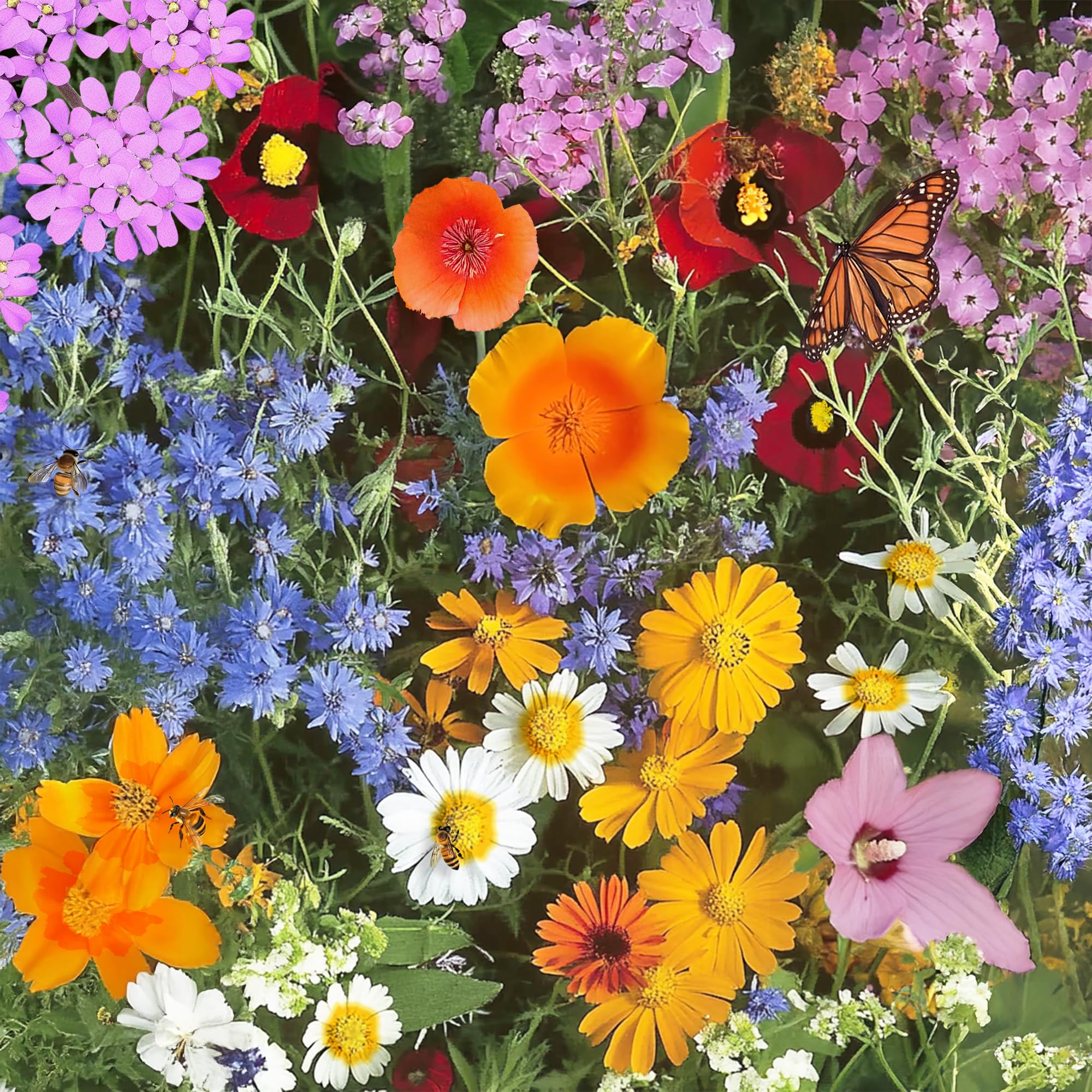
Wildflowers, not turf — for the bare slope you would rather see in color.
One pound holds roughly 500,000 to 520,000 seeds, enough to cover 2,682 to 5,364 sq. ft. at high or low density. It is built for hardiness zones 2a to 11b and wants full sun with regular watering. Plants range from 6 to 36 inches tall and bloom from spring into summer, drawing pollinators along the way.
Two things to know before you buy. First, these are annuals — expect a season of color, not a permanent lawn. Second, this is a flower mix suited to a meadow strip or a slope, not a play surface. It is a newer listing with limited feedback so far.
Where it shines: covering a large sunny area fast, with 2,682-5,364 sq. ft. of coverage from a single pound and non-GMO seed.
Good fit: a pollinator strip, a bare slope, or a garden bed you want buzzing.
Not your bag: if you want a lawn to walk on barefoot.
Know the Specs
New Lawn vs. Overseeding Coverage
The new-lawn number assumes bare ground and full seeding density. The overseeding number is typically double, because you are thickening existing turf rather than starting fresh — so the same bag goes twice as far.
Root Depth and Waxy Coating
Roots that run 4 feet deep reach moisture below the surface crust, and a waxy leaf coating slows evaporation off the blade. Together they stretch the time between waterings, which is the whole game in a dry California summer.
Common Questions
When should I plant grass seed in California?
Will cool-season grass seed survive a California summer?
How much seed do I need for a new lawn?
The Bottom Line
For most California yards, the Jonathan Green Black Beauty Golden State is the pick — it is formulated for the state’s drought areas, handles clay soil, and seeds 1,750 sq. ft. per bag. If your problem is a blazing sunny patch, step down to the Heat & Drought bag. And if your yard is mostly shade, the Eretz Creeping Red Fescue is the one to reach for.
How we choose
We do not accept paid placement. Every pick is matched to a real buyer and a real use-case; we do not hands-on test units.
Sources
Specifications: manufacturer listings and product documentation. Review insights: verified customer reviews, as of November 2026. Pricing: not shown on this page (it changes often); check the current price via the retailer link.
As an Amazon Associate, My Heart Lives Here earns from qualifying purchases. This does not affect which products we feature.