Heads up: This post contains affiliate links. As an Amazon Associate I earn from qualifying purchases, at no extra cost to you. Learn more
Specs are compiled from manufacturer listings and verified buyer reviews and can change over time — please confirm the key details on the product page before buying.
If your garage floor turns chalky under a tire, drinks every oil drip, and puffs dust onto whatever you store there, a sealer is the fix — but only the right one. Penetrating sealers soak in and leave the concrete breathing, while film-forming acrylics and epoxies sit on top as a coat you can see. Pick the wrong one and you get peeling or a slippery gloss where you wanted grip. This guide sorts the seven worth your time by what each one actually does, from a concentrate that makes five gallons to a heavy-duty five-gallon pail.
This guide is built by comparing the manufacturers’ published specifications and the patterns across verified customer reviews, so you get each pick’s real strengths and trade-offs instead of marketing spin.
The short version: a penetrating sealer handles most home garages, an epoxy suits a workshop you want to mop, and a wet-look acrylic is for curb appeal. Below you’ll find coverage rates, cure windows, and the honest catches on every pick. Here’s how to pick the right garage floor sealer without guessing at coverage.
Top Picks

How To Choose The Best Garage Floor Sealer
Your first decision isn’t brand — it’s if you want a sealer that soaks in or one that sits on top. A penetrating sealer (silane, siloxane, or a densifier — chemicals that soak into the concrete) goes below the surface and stops water from wicking in while leaving the concrete’s texture intact. A film-forming sealer (acrylic or epoxy) leaves a visible coat that can catch light, brighten the space, and make cleaning easier. Both are legitimate; they just solve different problems.
How much floor do you actually have to cover?
A typical one-car garage runs roughly 240 square feet, and a two-car about 400. That matters because coverage per gallon varies wildly here: some products state up to 1,000 square feet per coat from a concentrate, while others state 175-225 square feet per gallon. Let that number — not the sticker — set your budget. A concentrated gallon that mixes into five can beat a cheaper single gallon that dies at 200 square feet, and the coverage figures on this page tell you which is which.
Match the finish to how you use the floor
A high-gloss epoxy or wet-look acrylic makes a garage look like a showroom and wipes clean with a mop. But gloss plus a damp tire is a grip question, so think about whether the floor stays dry and if you want shoes to squeak on it. A matte or invisible penetrating sealer keeps the concrete reading as concrete — no slip risk added, no color change, nothing to peel. If you’re sealing a decorative or stamped slab and want the color to pop, a wet-look acrylic is the tool for that job.
Watch the weather and the cure clock
Two products here carry an explicit cold-weather warning: don’t apply if temperatures stay below 50°F for 48 hours around the job. Plan around that window. Also separate “dry to touch” from “cured” — a kit may allow light foot traffic in 12-16 hours but ask for three days before a car parks on it, while another lists a full cure of 7 days. Load the garage back up on the early side and you risk marring the surface you just paid to protect.
Side-by-Side Comparison
| Model | Best For | Type | Coverage | Finish | Amazon |
|---|---|---|---|---|---|
| Lithi-Tek 9500 Ultra Concentrate★ Best Overall | Big slabs on a budget | Water-based densifier | Up to 1,000 sq ft per coat | Invisible | Amazon |
| AQUA-X 11 Clear Penetrating SealerNatural Finish Pick | Natural look, low odor | Water-based penetrating | 100-400 sq ft per gallon | Clear, natural | Amazon |
| Foundation Armor SX5000 WB | Matte, no film | Silane siloxane | — | Clear, invisible | Amazon |
| DOMINATOR LG+ Clear Acrylic | Pavers and color pop | Water-based acrylic | 250-400 sq ft per gallon | Low gloss, wet look | Amazon |
| Magic Resin Clear Floor Epoxy | Basement or workshop floor | Clear epoxy, 1.5 gal kit | ~225-300 sq ft per kit | High gloss | Amazon |
| Rust-Oleum EpoxyShield Clear Kit | Enclosed garages only | Two-part epoxy | Up to 500 sq ft on painted | High gloss | Amazon |
| Armor AR500 Wet Look Sealer | Driveways and stamped concrete | Solvent-based acrylic | 175-225 sq ft per gallon | High gloss, wet look | Amazon |
Detailed Reviews
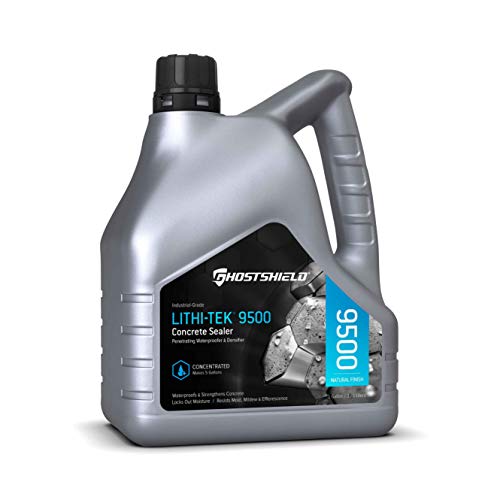
1. Lithi-Tek 9500 Ultra Concentrate
Our pick — 4.5+★ from 700+ verified ratings; the strongest balance of quality and price.
One jug of concentrate that stretches across a whole two-car slab and leaves nothing to peel.
The number that decides this one is on the label: mix the single gallon with four gallons of water and you get a batch that treats up to 1,000 square feet per coat. That is the widest coverage on this list by a distance, and for a home garage it means one purchase can cover the job with room to spare. Better still, it holds twice the capacity of the Foundation Armor SX5000 WB — a 1-gallon concentrate versus the SX5000’s 1 gallon — only here the gallon becomes five. It waterproofs and densifies in one pass, hardening the slab’s surface as it seals.
Because it’s water-based and soaks in, it leaves no film and no shine — the concrete still looks like concrete. That is the whole point for a working garage where you want traction underfoot and a floor that doesn’t show every scuff. It also helps push back the white, chalky salt bloom (efflorescence) that plagues damp basement slabs, though you need to clean any existing bloom off first. The maker claims up to 50% better abrasion resistance and a stronger slab.
Mixing is where the product earns its keep or annoys you. The concentrate has to be diluted correctly before it goes down, and reviewers find it mixes well and sprays on cleanly. The honest caveat sits in the residue reports: while the majority see no staining, a minority end up with white spots or discolored patches — usually a sign of over-application or a surface that wasn’t prepped. Get the prep and dilution right and this is a quiet, invisible, long-haul sealer for a fraction of the effort of an epoxy.
Where it earns its keep
- Up to 1,000 sq ft per coat from one concentrated gallon — the biggest coverage here.
- Penetrating water-based formula leaves zero film, so nothing to peel or flake.
- Water resistance shows up within a couple of days, with water beading like it should.
- Maker claims up to 50% stronger, denser concrete.
What to watch
- You must dilute it correctly — get the ratio wrong and you invite the white-spot residue some end up with.
- Existing efflorescence has to be cleaned off before you apply.
- Not meant for surfaces exposed to deicing salts.
Reach for this if: you want one purchase to cover a large garage or basement slab without changing how the floor looks.
Look elsewhere if: you’re after a glossy, showroom-style finish — this one is designed to leave no visible coat at all.
2. AQUA-X 11 Clear Penetrating Concrete Sealer & Stone
The indoor-friendly sealer you can spray on without a mask or a headache.
If the garage door is shut and you’re working indoors, the deciding factor may be the smell — or the lack of it. AQUA-X 11 is a water-based, low-VOC formula with no harsh odor, which the maker says means no mask and no extra ventilation needed. That’s a real comfort win for anyone sealing a basement or a garage they’ll be living above. Coverage runs 100-400 square feet per gallon on concrete, and the manufacturer says it holds 2-4 years before you reseal, depending on your environment.
Speed is the other headline. You can park a vehicle on it after 2 hours and walk on it after 1 hour, though high humidity and low temperatures stretch those windows. The finish stays clear and natural, so it protects against stains, spalling, freeze-thaw, pitting, and salt damage without leaving a glossy shell. Water beads up and soaks in properly once it’s dry, which is exactly the sign a penetrating sealer is working.
The catch lives in the coverage numbers. Some buyers find the stated spread optimistic and report it dies faster than the label promises, which turns into a second-gallon surprise on a big slab. The manufacturer warns two things plainly: don’t apply if it’ll be below 50°F for 48 hours after, and expect porous surfaces to need extra coats. Budget your quantity with a little margin, and be ready for a blotchy patch if the surface wasn’t fully prepped. Used with the weather window respected, it’s a clean, low-fuss sealer.
Best suited to: sealing a garage or basement slab indoors where fumes would be a problem.
The trade-off to expect: the spread can run short on thirsty concrete, so buy with a spare gallon in mind.
3. Foundation Armor SX5000 WB Silane Siloxane Sealer

A sealer that works entirely below the surface and leaves not a trace on top.
Silane siloxane is the chemistry behind concrete that repels water while looking untouched — the stuff soaks into the pores and lines them so moisture can’t wick through. That means no film, no coating, nothing to scuff or peel off under a dragging jack. It’s rated for unsealed concrete, brick, pavers, and stone, and it guards against water, snow, ice, and salt. Apply it with a pump sprayer and you’re done. This is the pick for a garage floor you want protected but not redecorated.
The appearance is the quiet victory here — a matte finish that keeps the natural look and enhances color without the unnatural shine a film sealer leaves. Water beads and rolls off like it would on glass. For a stamped or decorative slab where you still want the surface to read as concrete, that invisible protection is worth a lot. Its water-based formula cleans up with soap and water, not solvents.
Two honest notes. First, value divides opinion — some find it well worth the money, others find it on the pricey side for what is essentially water-thin liquid in a jug. Second, on aggregate driveways it can darken the stone a shade, which is usually fine but is a change you should want. The weight lands heavier than the DOMINATOR LG+ — 9 pounds to the DOMINATOR’s 8.7 — so if you’re carrying it up a flight to a basement, expect a solid jug. For a matte, no-film seal on a working floor, this is one of the cleanest options in the bunch.
What wins people over: the finish — a matte, invisible seal that protects without changing the surface.
Honest limit: it darkens aggregate driveways somewhat, and the price-per-jug divides opinion.
Pick this one when: you want water and salt protection with absolutely no visible film to maintain.
Consider a different route when: you’re sealing a colored aggregate you need to keep the exact same tone.
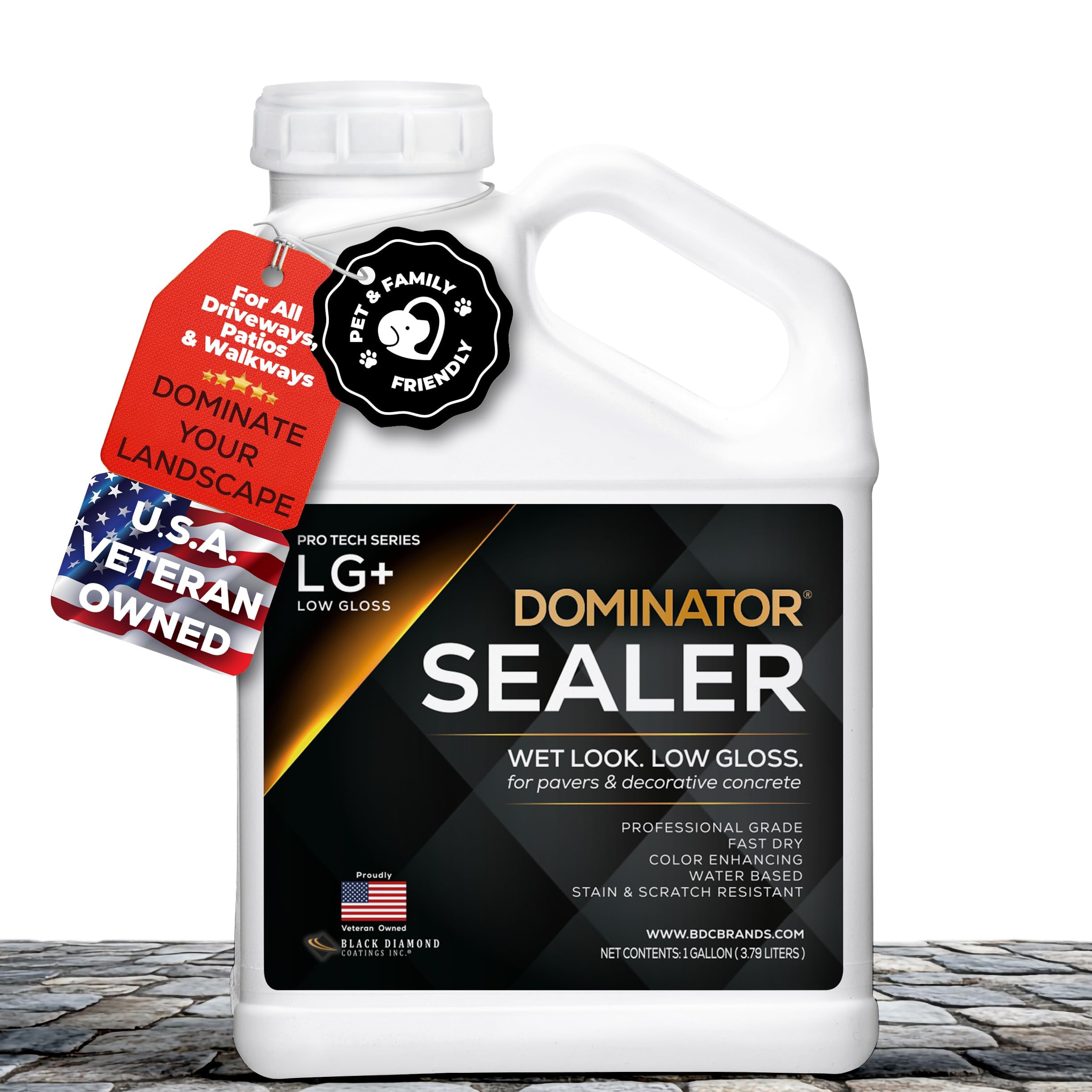
4. DOMINATOR LG+ Clear Acrylic Sealer
For the concrete you want to show off, not just protect — pavers and decorative slabs get a wet-look boost.
This is the one you buy because the slab is pretty. DOMINATOR LG+ is a water-based acrylic that darkens and enriches the surface for a low-gloss wet look — the “just-hosed-down” appearance that holds. If you’re sealing concrete pavers or decorative concrete and the goal is a richer, deeper color, this is the tool. It’s not for clay or natural stone; keep it to concrete. Coverage runs 250-400 square feet per gallon per coat, and the manufacturer says you get 2-4 years before resealing.
Application is fast and forgiving: spray it on per the included Quick Start guide, and the between-coat dry time is short enough that a whole project fits in a single day. It resists oil stains and spills, and the water-based formula keeps odors and VOCs low. For a garage floor where you want a sealed, slightly deepened look without committing to a full epoxy system, this is the middle path.
The catch is the finish — and the coverage. On gloss, opinion splits: some love the low-gloss sheen, others find it flatter than the wet look they pictured. And coverage can run short; as buyers report, 1 gallon barely covers 210 square feet on thirsty pavers, well under the optimistic end of the stated spread. The acrylic also sits on the surface, so it can wear or peel on a hard-used garage slab in a way a penetrating sealer won’t. For pavers and patios, though, it does the one job it’s built for.
Why pavers love it
- Wet-look finish deepens and enriches concrete color.
- 250-400 sq ft per gallon per coat, 2-4 years between reseals.
- Fast between-coat dry time — an easy one-day project.
- Low-VOC water-based formula, no harsh odor.
The catches
- On porous pavers it can fall well short of the stated coverage — plan a spare gallon.
- Gloss level splits opinion; some find it flatter than expected.
- Not for clay or natural stone.
Made for: decorative concrete and pavers where a richer wet look is the whole point.
Not your pick for: a hard-worked garage slab where you want max grip and zero surface film.
5. Magic Resin Clear Floor Epoxy Resin Kit

A high-gloss clear coat for basements and workshops when you want a mop-and-go surface.
If your goal is a floor you can wipe down like a countertop, clear epoxy is the answer. This 1.5-gallon kit pours on as a self-leveling, high-gloss finish that resists scratches, spills, and stains — the kind of surface that shrugs off an oil change. It’s a step up in capacity from a single-gallon sealer, and at 1.5 gallons to the Foundation Armor’s 1 gallon it gives you 50% more product in the bucket. Coverage is stated at roughly 225-300 square feet for the kit — about 150-200 per gallon mixed, depending on how thick you flood it.
The gloss brightens a dim basement, reflects light, and can be customized with color pigments if you want anything but clear. Non-porous and smooth when it sets, it keeps dirt from settling into pores. Full cure is listed at 7 days, so plan the garage reload around that. For a home workshop, retail space, or basement where clean matters, the finished look is genuinely impressive.
The reviews split on effectiveness and durability — some end up with exactly the tough floor they wanted, others deal with a batch that fights them or a surface that never hardens as hoped. Bubbles in the finish are the most common headache. Measure the two parts precisely and prep the slab clean, or the cure goes wrong. Give it the time and it’s a budget-friendly door into a real epoxy floor.
The glossy upside: self-leveling, stain-resistant clear coat that wipes clean and brightens a basement — 1.5 gallons for roughly 225-300 sq ft.
The honest caveat: curing is finicky; bubbles and uneven results happen when mixing and conditions aren’t right, so prep carefully.
Reach for this if: you want a high-gloss, mop-friendly floor and you’ll take the time to mix and cure it properly.
Look elsewhere if: you want a low-effort application with no two-part chemistry to get wrong.
6. Rust-Oleum EpoxyShield Clear Finish Floor Coating Kit

A clear epoxy topcoat that lays a showroom shine over a coated or bare concrete floor.
Think of this as the finishing coat rather than the whole job. It’s a two-part, 100% solids epoxy designed to go over coated or bare concrete and add a durable, high-gloss clear layer on top. The gloss is the draw — a showroom shine that makes a floor look new. It resists salt, oil, and gasoline — the spills a garage floor actually sees. If you’ve already got a base color down and want the wet, glassy finish on top, this is that step.
On paper the coverage looks generous: one kit states up to 500 square feet on painted surfaces or 250 on bare concrete. Timing is spelled out plainly — light foot traffic in 12-16 hours, full vehicle traffic in 3 days, and a listed full cure of 72 hours. The catch you must respect: it’s built for enclosed garages only and isn’t meant for areas in direct sunlight, so an open carport or an exterior apron is out.
The set-back is coverage that rarely lives up to the claim. The reviews are clear on this — it tends to come up short of the stated square footage, and some find it peels and scratches within a year on a hard-used slab. The finish itself earns praise; the durability is the variable. If you want the shine and you’ll keep the floor out of sun and heavy runover, it delivers a striking look.
The showroom shine: 100% solids clear epoxy that resists salt, oil, and gasoline and looks glossy and new.
Watch the numbers: coverage runs short of the claim, and durability on a busy floor is inconsistent — this is a topcoat for a protected, enclosed garage.
Best for: sealing an enclosed garage floor where you want that glassy showroom finish over a base coat.
Steer clear if: your slab is in direct sun or takes constant heavy traffic and peeling would break your heart.
7. Armor AR500 High Gloss Wet Look Concrete Sealer, 5 Gallon

A five-gallon pail of solvent-based acrylic built for driveways, stamped concrete, and pavers.
This is the heavy-hitter for exterior concrete — the five-gallon pail that says “whole driveway” instead of “one slab.” Armor AR500 is a professional-grade solvent-based acrylic that darkens and enriches concrete and pavers for a high-gloss wet look, the same effect as when the surface is freshly wet. If you love what your stamped concrete or pavers look like after rain, this locks in that look. It’s designed for unsealed concrete and pavers, or surfaces already sealed with a solvent-based acrylic.
Coverage is stated at 175-225 square feet per gallon, so a full pail goes a long way — the largest jug here at 42 pounds. The non-yellowing high-gloss layer resists abrasion, traffic, road salts, UV, and water absorption. It’s self-priming and ready to use with a roller or sprayer, and when it’s time to refresh, a single coat on a clean dry surface brings the look right back. It’s available in three formulations — 700 VOC, 350 VOC, and 50 VOC — to meet the sealer rules across all 50 states, so check which one your area allows before buying.
The main trade-off is that it’s solvent-based: you’ll want airflow, and it’s a heavy pail to wrangle. Value splits opinion too — some find it well worth the money, others feel it’s pricey for the amount of floor it covers once you factor in the low-per-gallon spread. And like any gloss acrylic, it sits on the surface, so a slick finish on a wet, sloped driveway is a grippy-shoes question. For restoring a tired patio or making a stamped driveway look new again, it’s the tool that does the dramatic transformation.
What it does brilliantly
- Dramatic wet-look color enhancement that makes stamped concrete and pavers look new.
- Non-yellowing high gloss rated to resist traffic, road salts, UV, and water.
- Self-priming, ready to use with a roller or sprayer; refreshes with one coat.
- Three VOC formulations (700, 350, 50) for all-50-state compliance.
What to weigh first
- Solvent-based — needs ventilation during application.
- At 175-225 sq ft per gallon, a big slab drinks a lot of product.
- Value divides opinion; a 42-pound pail is a commitment to handle.
Built for: driveways, patios, and stamped concrete where you want a serious wet-look upgrade on a large area.
Think twice if: you’re sealing an enclosed garage with no airflow, or a slab where a gloss coat underfoot is a slip concern.
Know the Specs
Penetrating vs film-forming
A penetrating sealer (silane, siloxane, or a densifier) soaks into the pores and lines them, so water can’t wick through but the concrete’s texture stays put. Nothing sits on top, so nothing peels. A film-forming sealer (acrylic or epoxy) leaves a visible coat you can see and mop, which brightens a space and makes cleaning easy, but can wear or flake on a hard-used floor. For a working garage, penetrating tends to mean less upkeep; for show, film-forming wins.
Coverage per gallon
The number that sets your real cost. On this list, spreads range from as much as 1,000 square feet per coat from a concentrate down to 175-225 square feet per gallon for a solvent acrylic. Thirsty or porous concrete drinks more than a smooth slab, so treat the top of a stated range as a best case and buy a little extra. Measure your floor in square feet first — length times width — and you won’t come up short mid-job.
Common Questions
Do I need to etch or prep the slab before sealing?
Can I seal a garage floor that already has sealer on it?
How long before I can park a car on a freshly sealed floor?
What temperature can I apply a garage floor sealer in?
Will a glossy sealer make my garage floor slippery?
How do I stop white spots from appearing after I seal?
How long does a garage floor sealer actually last?
Is a concentrate cheaper than a single-gallon sealer?
Can I use an exterior wet-look sealer inside a garage?
Why do some epoxy kits fail to harden?
The Bottom Line
For most garages, the winner is the Lithi-Tek 9500 — one concentrated gallon that stretches to up to 1,000 square feet per coat, strengthens the slab by up to 50% per the maker, and leaves no film to peel. If you’re sealing indoors and want the cleanest, lowest-odor job, the AQUA-X 11 gets you dry and parked fastest. And for the floor you want to show off — stamped concrete, pavers, a charmed driveway — the Armor AR500 delivers the dramatic wet look in a five-gallon pail. Start by measuring your slab and matching the coverage figure to it, and the right pick practically names itself.
How we choose
We do not accept paid placement. Every pick is matched to a real buyer and a real use-case; we do not hands-on test units.
Sources
Specifications: manufacturer listings and product documentation. Review insights: verified customer reviews, as of November 2026. Pricing: not shown on this page (it changes often); check the current price via the retailer link.
As an Amazon Associate, My Heart Lives Here earns from qualifying purchases. This does not affect which products we feature.