Heads up: This post contains affiliate links. As an Amazon Associate I earn from qualifying purchases, at no extra cost to you. Learn more
Specs are compiled from manufacturer listings and verified buyer reviews and can change over time — please confirm the key details on the product page before buying.
The right fungicide for succulents stops rot before it eats the whole pot. Most succulents die from moisture sitting in the soil, not from pests — so the product you choose should treat disease, work with your watering routine, and stay gentle on the plant itself.
This guide is built by comparing the manufacturers’ published specifications and the patterns across verified customer reviews, so you get each pick’s real strengths and trade-offs instead of marketing spin.
Below is a short list of proven options, each explained in plain English so you can pick the right one without trial and error, and every fact comes straight from the label and owner experiences with the best fungicide for succulents.
Top Picks

How To Choose The Best Fungicide for Succulents
Succulents store water, so a rot problem usually starts underground and moves up.
Pick a soil drench for stem rot
A drench reaches the roots where rot begins, so look for products that explicitly allow a soil application.
Choose live biofungicides for gentle protection
A biofungicide (a product built on a living microbe rather than a harsh chemical) keeps working in the root zone without burning new growth.
Weigh concentrate strength against bottle size
Concentrates stretch further per treatment but cost more upfront, while smaller bottles suit a handful of pots.
Side-by-Side Comparison
| Model | Best For | Form | Volume | Active Approach | Amazon |
|---|---|---|---|---|---|
| Root 98 Garden Friendly Bio Fungicide★ Best Overall | Root-zone rot | Spray | 8 fl oz | Bacillus amyloliquefaciens D747 | Amazon |
| Cute Farms Succulent, Cacti & Aloe FertilizerBest Value | Monthly feeding | Liquid | 8 fl oz | NPK 0.02-0.02 | Amazon |
| Grower’s Ally Crop Defender 3 | Mildew and mites | Liquid | 24 fl oz | Botanical oil blend | Amazon |
| Growth Technology GT Succulent Focus | Nutrient top-up | Liquid | 250 ml | 12 essential minerals | Amazon |
| Bonide Revitalize Biofungicide | Blight and mold | Spray | 16 fl oz | Immune-response biofungicide | Amazon |
Detailed Reviews
1. Root 98 Warehouse Bio Fungicide 8 oz
Our pick — 4.5+★ from 800+ verified ratings; the strongest balance of quality and price.
The live microbe drench that treats rot where it starts — at the root.
Root 98 packs 98.85% Bacillus amyloliquefaciens strain D747, a beneficial bacterium that colonizes roots and shuts down disease before it spreads. For a succulent with soft, dark patches at the base, that root-zone defense is exactly the treatment you want.
Here is the standout: this 8 fl oz bottle is the leanest volume on the list — versus 24 fluid ounces in the Grower’s Ally, this makes it a smaller commitment for a few pots. The effectiveness of the biofungicide is what wins people over, and many owners mention it beats the alternatives value-wise.
The trade-off is the smell — a few find it off-putting — and the bottle runs small for a big collection.
Works with the plant
- Live D747 strain targets root disease
- USDA-listed for organic use
Mind the scent
- Small bottle, strong odor
Pick this if: you are fighting stem or root rot on a few beloved pots and want a proven biofungicide.
Hold off if: you need to treat a whole greenhouse and bottle size is your priority.
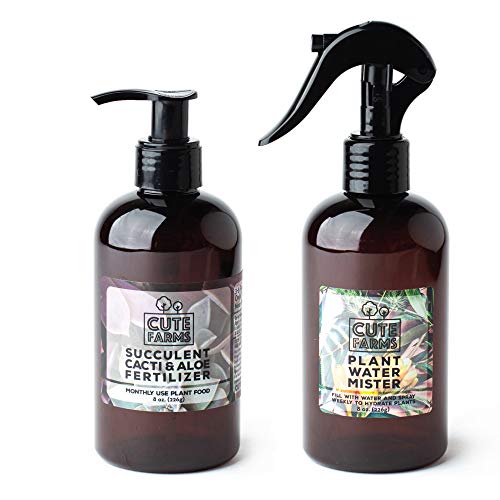
2. Cute Farms Succulent Fertilizer 8 oz
A gentle monthly feeder made for the whole succulent shelf.
Cute Farms is a ready-to-use liquid in an 8 fl oz bottle with a dispensing pump — three to five pumps at the base once a month. It covers aeonium, jade, echeveria and more, and the kit includes a mister bottle for hydration.
Owners notice their plants looking greener and pushing new growth after regular use. But the effects vary: some find it works, others find it does nothing, and a handful feel it is pricey for what it delivers.
That mixed result tells you it is best treated as a gentle top-up, not a rescue.
Where it shines: the simple pump dose and included mister make monthly care nearly simple to use for a beginner.
Fair warning: if you need to stop active rot, this is not the disease-control product you are looking for.
Reach for this if: you already have healthy succulents and want a low-effort feeding routine.
3. Grower’s Ally Crop Defender 3 Concentrate, 24 Oz

The 24-ounce triple-threat that handles mildew, mites and fungus together.
If mold has joined forces with pests, Crop Defender 3 covers both. It blends thyme, rosemary, clove and peppermint oils into one miticide, insecticide and fungicide, OMRI-listed for organic gardening. At 24 fluid ounces it is the largest bottle on the list.
Effectiveness is the thing everyone raves about, especially against spider mites and aphids, and the OMRI listing gives reassurance for organic setups. The scent draws mixed reactions — some call it pleasant, others intensely strong.
Value also splits opinion, with some finding it worth the cost and others not. Compared with the Bonide below, it brings heavier pest coverage but a stronger smell.
One bottle, three jobs
- Fungus, mites and aphids in a single formula
- Largest volume of the group
Expect a noseful
- Powerful botanical scent that some dislike
Best matched to: growers who want broad-spectrum protection in one spray bottle.
Skip when: you prefer a low-odor product or only need to target mold.
4. Growth Technology GT Succulent Focus 250 mL
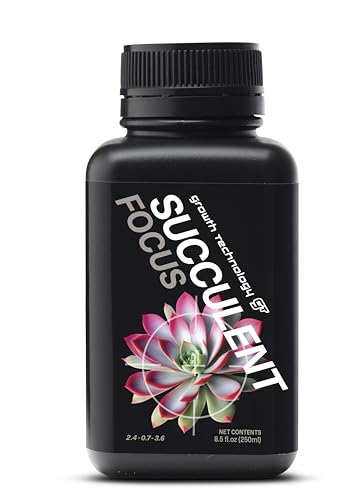
A succulent-specific feed built to keep colors vivid and growth balanced.
GT Succulent Focus is formulated specifically for succulents, with all 12 essential minerals and lower nitrogen and phosphorus to match their slow growth. It is pH buffered and free from sodium, chlorides, urea, cobalt and nickel.
Mix 3–5ml per litre for soil or 5–7ml per litre for hydroponics. It weighs 15 ounces — roughly double the 8 ounces of the Bonide bottle below — but that heft reflects a concentrated formula that stretches across many waterings.
It is a feeding product, not a disease treatment, so pair it with a fungicide if rot is already present.
The real draw: tailored lower-nutrient ratios mean you can feed with most waterings without pushing weak, stretched growth.
Know before you buy: this corrects deficiencies, it does not kill fungus on an infected plant.
Worth grabbing for: collectors who want a precise, succulent-tuned nutrient schedule.
Not the tool for: active mold or rot, which needs a dedicated biofungicide.
5. Bonide Revitalize Biofungicide Concentrate, 16 oz

A biofungicide that nudges the plant to defend itself against blight and mold.
Bonide Revitalize works differently from the rest — it triggers an immune response in the plant to control blight, anthracnose, powdery mildew and black spot. It is approved for organic gardening and usable up to the day of harvest.
Mix it with water and apply as a foliar spray or soil drench, so you can reach roots or foliage as needed. Owner consensus is very positive on effectiveness, with many also highlighting overall quality and ease of use.
At 1.3 pounds versus 1.7 pounds for the Grower’s Ally above, it is the lighter concentrate of the two. The main caveat: it is a disease-control product, so it will not feed your plants.
Why it earns a slot: the immune-boosting mechanism means it works proactively, not just on contact.
Set expectations: it targets disease only — pair it with a fertilizer for overall health.
Suits you if: you want organic disease protection you can spray up to harvest day.
Pass if: your real goal is feeding rather than fighting fungal disease.
Know the Specs
Concentrate vs. Ready-to-Use
A concentrate must be mixed with water, so you control strength and it stretches across more treatments, while a ready-to-use spray saves time on a single plant.
Biofungicide vs. Fertilizer
A biofungicide fights disease with a living microbe, while a fertilizer feeds nutrients — a healthy succulent shelf may want both, but they do different jobs.
Common Questions
Can I use a fungicide on succulents without burning the leaves?
Is a biofungicide better than a chemical one for rot?
How often should I treat a succulent with fungus?
The Bottom Line
For most succulent growers, the fungicide for succulents winner is the Root 98 Garden Friendly Bio Fungicide, because its live D747 strain targets disease right at the root zone where rot starts. If mold and mites are both a problem, grab the Grower’s Ally Crop Defender 3. And for proactive organic protection you can spray up to harvest, the Bonide Revitalize is the one to reach for.
How we choose
We do not accept paid placement. Every pick is matched to a real buyer and a real use-case; we do not hands-on test units.
Sources
Specifications: manufacturer listings and product documentation. Review insights: verified customer reviews, as of November 2026. Pricing: not shown on this page (it changes often); check the current price via the retailer link.
As an Amazon Associate, My Heart Lives Here earns from qualifying purchases. This does not affect which products we feature.