Heads up: This post contains affiliate links. As an Amazon Associate I earn from qualifying purchases, at no extra cost to you. Learn more
Specs are compiled from manufacturer listings and verified buyer reviews and can change over time — please confirm the key details on the product page before buying.
Jumping spiders hunt by sight and by motion. They will stalk a moving fly across a windowsill and ignore a dead one entirely. That single fact reshapes what you should buy. A feeder that arrives limp, oversized, or half-dead is money burned, because a jumping spider wants live prey it can track, pounce on, and overpower safely. This guide sorts the real feeders from the ones that arrive as a bag of disappointment.
This guide is built by comparing the manufacturers’ published specifications and the patterns across verified customer reviews, so you get each pick’s real strengths and trade-offs instead of marketing spin.
You will learn which feeder sizes fit a typical jumping spider, how gut-loading passes nutrition through to your pet, and which live shipments actually survive the mail. The right food for jumping spiders is live prey sized to a quarter to a half of the spider’s body length, shipped so it arrives alive. food for jumping spiders is not complicated once you know the four numbers that matter: prey length, count per order, gut-load history, and temperature tolerance in transit.
Top Picks


How To Choose The Best Food for Jumping Spiders
A jumping spider is a visual hunter with a body often measured in millimeters. Its prey should be roughly a quarter to a half of its own body length — small enough to grapple, big enough to notice. That is the whole game, and almost every bad feeder purchase traces back to ignoring it.
Match the prey to the spider, not the spider to the prey
A sling that is barely visible needs pinhead-sized prey. An adult female can handle a mealworm several times her weight if the worm is soft and wriggling. Buying “small” and assuming it means “small enough” is the most common mistake — read the actual measurement in inches on the listing rather than the word.
Understand what gut-loading actually does
Gut-loaded means the insect was fed a nutrient-rich diet right before shipping, so whatever is in its stomach passes to your spider when eaten. A gut-loaded cricket or mealworm is a delivery vehicle for calcium and vitamins. A starving one is mostly shell and water.
Weigh the live arrival risk honestly
Live insects die in transit. Heat, cold, and rough handling all take a toll. Sellers who publish a temperature window for their live-delivery guarantee are telling you exactly when they can protect the shipment and when they cannot. Read that window before you order in a heatwave or a cold snap.
Side-by-Side Comparison
| Model | Best For | Prey Size | Count Per Order | Form | Amazon |
|---|---|---|---|---|---|
| Surmen Legacy 1000 Live Mealworms★ Best Overall | Best Overall | 3/4–1 inch | 1000 | Live insect, gut-loaded | Amazon |
| Fluker’s Live CricketsGut-Loaded Nutrition | Gut-Loaded Nutrition | 1/4 inch | 100 | Live cricket, gut-loaded | Amazon |
| Predator Foods Bulk Live Mealworms | Fridge-Storable Bulk | ~.25 inch | 500 | Live mealworms, organic | Amazon |
| Dubia Roaches 200 Extra Small | Soft-Bodied Prey | ~1/4 inch | 200 | Live nymphs, low fat | Amazon |
| Josh’s Frogs Banded Feeder Crickets | Hardy Adult Crickets | 1 inch | 60 | Live banded crickets, gut-loaded | Amazon |
Detailed Reviews
1. Surmen Legacy 1000 Live Mealworms
Our pick — 4.0+★ from 650+ verified ratings; the strongest balance of quality and price.
A thousand wriggling mealworms arrive gut-loaded and ready for a grown spider’s appetite.
For an adult jumping spider that has graduated past fruit flies, this is the practical answer. Mealworms in the 3/4 to 1 inch range are substantial prey — a mature spider can take one down and stay satisfied. They come gut-loaded, so the worm’s stomach is packed with the nutrition your spider needs, and it passes straight through when eaten. The 1000 count means you are not reordering every few weeks.
What wins people over is the quality of the worms themselves — they arrive wriggling rather than curled and lifeless. Gut-loaded live insects are the whole point of buying from a specialist instead of a bait shop, and these worms arrive packed with that meal. The quiet advantage is how long a bag stretches: a single spider eats a small fraction of a thousand worms, so one order feeds for months — far longer than the 60-count banded cricket carton below.
The catch is dead-on-arrival loss. Live shipments are unpredictable, and some bags arrive with a meaningful share dead. Size is the other variable — a few bags run smaller than the label promises. Neither is a dealbreaker at this scale, because even a partially surviving bag of a thousand worms leaves hundreds of feeders. Refrigerate them to slow growth and offer a slice of carrot or bran to keep them going. 4.0+ stars across 600+ ratings, and the crowd consensus on quality is what earns this the top spot.
Where this one wins
- 1000 worms means months of feeding for one spider
- Gut-loaded before shipping, so nutrition transfers on eating
- 3/4–1 inch length suits a mature jumping spider, not a sling
What to watch for
- Some bags arrive with a noticeable share dead
- Size can run smaller than the label on some shipments
Reach for this if: you keep a grown spider and want one order that covers months of feeding.
Look elsewhere if: you are feeding slings — a 1-inch worm is too much prey for a spider measured in millimeters.
2. Fluker’s Live Crickets 100 Count
Crickets fed a calcium-rich diet before shipping, so your spider eats what the cricket ate.
Jumping spiders chase movement, and crickets move. That movement is the pitch here, and the gut-loading is where it earns attention. Fluker’s feeds these crickets High Calcium Cricket Diet, Orange Cube, and Quencher before they ship, so calcium and hydration ride along in the cricket’s gut. For a spider that needs soft, digestible prey, that matters. The 1/4 inch size suits a spider that is past the pinhead stage but not yet taking full mealworms.
Now the honest part. Live cricket shipments are brutal, and this listing’s arrival record is the weakest on the list. Some boxes arrive with most crickets dead within 24 hours. Size also draws mixed reactions — some buyers find the 1/4 inch right, others find it smaller than they expected. This is not a product you buy in a heatwave and expect a full live box from.
What it does well is nutrition and size range. Tiny pinheads for hatchlings, small crickets for juveniles, larger ones for adults — the size menu fits a growing spider rather than locking you into one prey size. Get the temperature right on shipping day and this is a fine feeder. The calcium loading alone makes it worth considering over plain crickets. 3.0+ stars, and 100 crickets per order.
Best fit for a growing spider: the size menu runs from pinhead up to adult, so you can match prey to the spider as it grows.
The real risk: arrival survival is the weakest on this list. Order when temperatures are moderate, not in a heatwave.
Pick it when: you want calcium-loaded prey and a size option for a spider that is still growing.
Think twice when: shipping weather is extreme — dead-on-arrival rates climb fast in bad temperatures.
3. Predator Foods Bulk Live Mealworms 500 Count

Half the count of the top pick, but with organic mealworms and a live-delivery guarantee.
Here is the comparison that decides it for a lot of keepers. This bag holds 500 small mealworms.25 inch, while the Surmen Legacy bag above holds 1000 — twice the worms for a small price step up. If you want the smaller prey size, this is the sensible pick. The.25 inch worms are a better fit for a juvenile spider than a full 3/4 to 1 inch worm.
The distinguishing feature is the live-delivery guarantee. Predator Foods promises live arrival when the temperature is between 40 and 80 degrees — a published window, not a vague promise. That tells you exactly when the guarantee applies. The worms are also grower-direct and organic, and the listing notes they can last weeks when refrigerated. Fridge storage is a real advantage for a single spider: you buy once, store cold, and feed for weeks.
The trade-off is predictability. Worm quality and quantity both draw mixed reactions — some bags arrive fully alive, others mostly dead, and the packaging can make the worms hard to get out. Size draws the most grumbling, with plenty of buyers finding them smaller than the “small” label implies. Pet acceptance is where this one shines: the worms get eaten with enthusiasm. 4.0+ stars across 700+ ratings.
The storage win: weeks in the fridge means one order feeds a single spider for a long stretch without another delivery.
The size lottery:.25 inch is right for juveniles, but some bags run smaller than expected and the packaging makes extraction fiddly.
Suits you if: you want fridge-storable worms and a published live-delivery window at 40–80 degrees.
Pass it by if: you are feeding a large adult spider that needs a full 3/4 to 1 inch meal per sitting.
4. Dubia Roaches 200 Extra Small

Soft little roach nymphs at a quarter inch — a gentler prey for a delicate spider.
Dubia roach nymphs have a softer body than a mealworm’s shell, and this extra small size runs about 1/4 inch. For a jumping spider that struggles to break through a hard exoskeleton, a soft-bodied nymph is easier to eat. The listing also notes a low-fat nutrient profile. You get about 200 nymphs per order, measured by weight in grams, mixed male and female.
The seller adds a guaranteed overcount for dead or undersized roaches — a practical buffer for a live shipment. Quality is what carries this listing. Buyers describe the roaches as excellent and healthy, arriving well-fed, and value-for-money draws the second-strongest praise. Functionality — the plain fact that they live and move as prey should — gets no complaints at all.
Survival is the honest variable, as with every live feeder. Some orders land fully alive and thriving; others lose a chunk within the first day. Size occasionally misses the “extra small” mark, with roaches too large for small geckos turning up. A few buyers report other bugs in the packaging. Every one of these is a live-shipment story, not a product flaw — this is a well-regarded feeder. 4.0+ stars across 300+ ratings.
Why keepers rate it
- Soft-bodied nymphs are easier for a small spider to eat than shelled worms
- Guaranteed overcount covers dead and undersized roaches
- Low-fat profile for a leaner feeder
Where it can slip
- Some roaches arrive larger than “extra small”
- Survival varies shipment to shipment
The choice for: keepers who want soft-bodied prey their spider can take down easily.
Not the fit for: anyone with a full-grown spider that needs bigger, denser prey than a quarter-inch nymph.
5. Josh’s Frogs Banded Feeder Crickets 60 Count
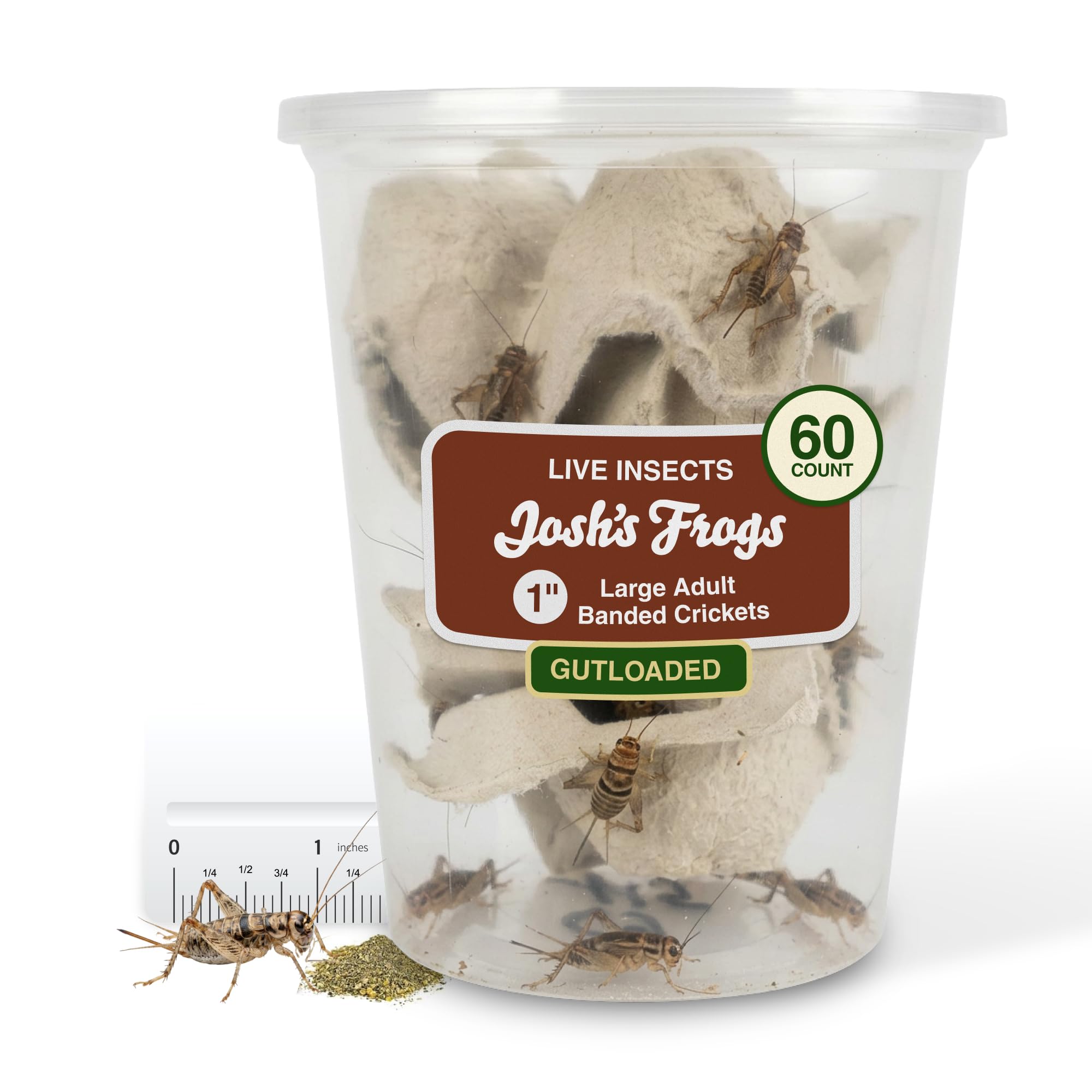
Banded crickets built to survive longer than the usual feeder — if your spider can handle the size.
These are 1 inch banded crickets, and that length rules them out for a small jumping spider. A spider needs prey roughly a quarter to a half its body size. For a large adult, though, a 1 inch cricket is a real meal. The count is 60 per carton, and that is the key number: against the Surmen Legacy bag above at 1000 worms, this is 60 — you are buying far fewer feeders per order.
Where banded crickets earn their following is hardiness. The species tolerates a wide range of conditions and lasts longer than many common feeder crickets, so a box that arrives healthy tends to stay healthy for weeks. They come gut-loaded, packed with protective egg crate during transit, and the softer shell is easier to digest than a hard-shelled insect. High protein is the headline nutrient claim. They are also quieter and lower-odor than many feeder bugs — a real consideration if the box lives in your home.
The honest close: arrival survival is genuinely mixed. Some cartons land with every cricket alive and healthy; others arrive with almost all dead. Value-for-money opinions split the same way. Order in temperate weather, not a heatwave. Quality itself is well regarded — this is a hardy, healthy insect, and the risk is the shipping, not the cricket. 4.0+ stars across 800+ ratings.
What stands out
- Banded crickets tolerate a wide range of care conditions and last longer than many feeder species
- Gut-loaded and packed with egg crate support for transit
- Quieter and lower-odor than many feeder bugs
Know before you order
- Only 60 crickets per carton
- Arrival survival is genuinely hit-or-miss
Worth it for: a large adult spider and a keeper who wants hardy, gut-loaded crickets that keep well.
Skip it for: a small or juvenile spider — a full 1 inch cricket is too big to be safe prey.
Know the Specs
Prey Size in Inches
The measurement on a feeder listing tells you whether the prey is safe for your spider. A sling needs prey measured in pinheads; an adult can take a mealworm several times its weight. Read the actual inch figure, not the word “small,” because sizes vary wildly between sellers. Match prey to roughly a quarter to a half of your spider’s body length.
Gut-Loaded vs Plain Feeders
Gut-loaded means the insect was fed a nutrient-rich diet just before shipping, so calcium, vitamins, and hydration pass to your spider when it eats the prey. A plain feeder is mostly shell and water. For a spider that eats only occasionally, every meal counts — gut-loading boost what each catch delivers.
Live Arrival and Temperature Windows
Live insects die in transit when it is too hot or too cold. Sellers who publish a temperature window — such as 40 to 80 degrees — are telling you when their live-delivery guarantee applies. Ordering outside that window means you accept the risk. Timing your order to mild weather is the single biggest lever on arrival survival.
Count, Storage, and Lifespan
A single jumping spider eats a small fraction of a bulk order, so count matters mostly as a measure of how long an order lasts. Mealworms can be refrigerated for weeks, which stretches a bag further. Crickets and roaches are best kept at room temperature in a ventilated container with food and moisture. Buy the count that matches your storage ability, not just the headline number.
Common Questions
What size prey should I feed a jumping spider?
Can jumping spiders eat dead or canned insects?
What does gut-loaded mean for feeder insects?
How do I keep live mealworms alive once they arrive?
Why did my feeder crickets arrive dead?
Are Dubia roaches better than crickets for a jumping spider?
How many feeders do I need for one jumping spider?
Do I need to add calcium or vitamins to feeder insects?
How often should I feed a jumping spider?
Can I use fishing crickets or wild-caught insects for my spider?
The Bottom Line
The pick that covers the most keepers is the Surmen Legacy 1000 Live Mealworms — gut-loaded worms in a size that suits a mature spider, and enough of them that one order feeds for months. If you want smaller prey and fridge storage, the Predator Foods Bulk Live Mealworms brings a published live-delivery window and organic worms at roughly half the count. And if your spider prefers soft-bodied prey it can break through easily, the Dubia Roaches Extra Small nymphs are the gentler option. Whichever you choose, match the inch measurement to your spider’s body, order in mild weather, and store what you get so a single bag does the work of several.
How we choose
We do not accept paid placement. Every pick is matched to a real buyer and a real use-case; we do not hands-on test units.
Sources
Specifications: manufacturer listings and product documentation. Review insights: verified customer reviews, as of November 2026. Pricing: not shown on this page (it changes often); check the current price via the retailer link.
As an Amazon Associate, My Heart Lives Here earns from qualifying purchases. This does not affect which products we feature.