Heads up: This post contains affiliate links. As an Amazon Associate I earn from qualifying purchases, at no extra cost to you. Learn more
Specs are compiled from manufacturer listings and verified buyer reviews and can change over time — please confirm the key details on the product page before buying.
Plywood soaks up paint like a sponge, and the wrong can leaves you with a floor that peels at the seams within a season. The fix is a wood-rated acrylic floor coating over a sanded, primed plywood face — not a thicker coat. This guide covers seven real options, from mid-range workhorses to premium kits, and tells you plainly which one fits your porch, basement, or shed floor.
This guide is built by comparing the manufacturers’ published specifications and the patterns across verified customer reviews, so you get each pick’s real strengths and trade-offs instead of marketing spin.
Each pick lists its coverage per gallon, dry and cure times, and the trade-offs buyers report.
Top Picks

How To Choose The Best Floor Paint for Plywood
Plywood is a sandwich of thin wood layers glued together, and its face is porous and thirsty. That porosity is why every pick below is judged on how well it bites into a wood face. A coating that lays a hard, even film over that face will last; one that sits on top without biting in will scuff and lift.
Match the formula to the wood, not the room
Look for an acrylic or waterborne coating designed for wood, decks, and floors. These grip a prepared plywood face and flex slightly rather than cracking when the panel moves underfoot. Garage-concrete formulas are built for a different surface and a different kind of abuse.
Check that the label names wood, floors, porches, or patios among its surfaces. A can labeled for hot tires or masonry is a concrete formula and will not grip a plywood floor.
Do the coverage math before you buy
Coverage is stated in square feet per gallon, and smooth versus rough surfaces change the number. A smooth plywood face sits at the top of the range; a rough or previously painted surface pushes you toward the low end. Measure your floor, divide by the coverage figure, and round up.
Dry time and recoat time decide how long the floor stays off-limits. Some cans let you recoat in a few hours, while a full cure can run a full day or more. Plan foot traffic around the cure, not the touch-dry time.
Decide how much slip resistance you need
A sealed floor can turn slick when wet, and most labels say so plainly. A satin or flat finish tends to show less glare and hide scuffs better than a high-gloss film. If the floor gets wet, a textured additive or a matte finish is the safer call.
Side-by-Side Comparison
Every row uses the same three measures so you can scan trade-offs at a glance: coverage per gallon, dry-to-touch time, and finish.
| Model | Best For | Coverage | Dry Time | Finish | Amazon |
|---|---|---|---|---|---|
| KILZ Porch & Patio Latex Floor Paint, Slate Gray★ Best Overall | All-round porch and plywood floors | 200–400 sq. ft. | 1 hour | Satin | Amazon |
| INSL-X Tough Shield Floor and Patio Paint, Gray PearlBest Coverage | Deck and masonry decks with wood | 350–450 sq. ft./gal | — | Satin | Amazon |
| EVOLVE Porch & Floor Paint, Tan | Scratch-resistant interior floors | 300–400 sq. ft./gal | 1 hour | Semi-Gloss | Amazon |
| Rust-Oleum Concrete & Garage Floor Paint, Sand | Garage and concrete, not plywood | Up to 400 sq. ft. | — | Satin | Amazon |
| Giani Wood Look Paint, Step 2 Wood Grain Finish Coat, Honey Oak | Wood-grain finish over a base coat | 100 sq. ft. | 3 hours | Satin | Amazon |
| EVOLVE Barn & Fence Paint, Flat Black | Outbuildings and fence boards | 300–400 sq. ft./gal | — | Flat | Amazon |
| Rust-Oleum EpoxyShield Satin Tan Basement Floor Coating Kit | Basement concrete surfaces | Up to 250 sq. ft./kit | 24 hours | Satin | Amazon |
Detailed Reviews
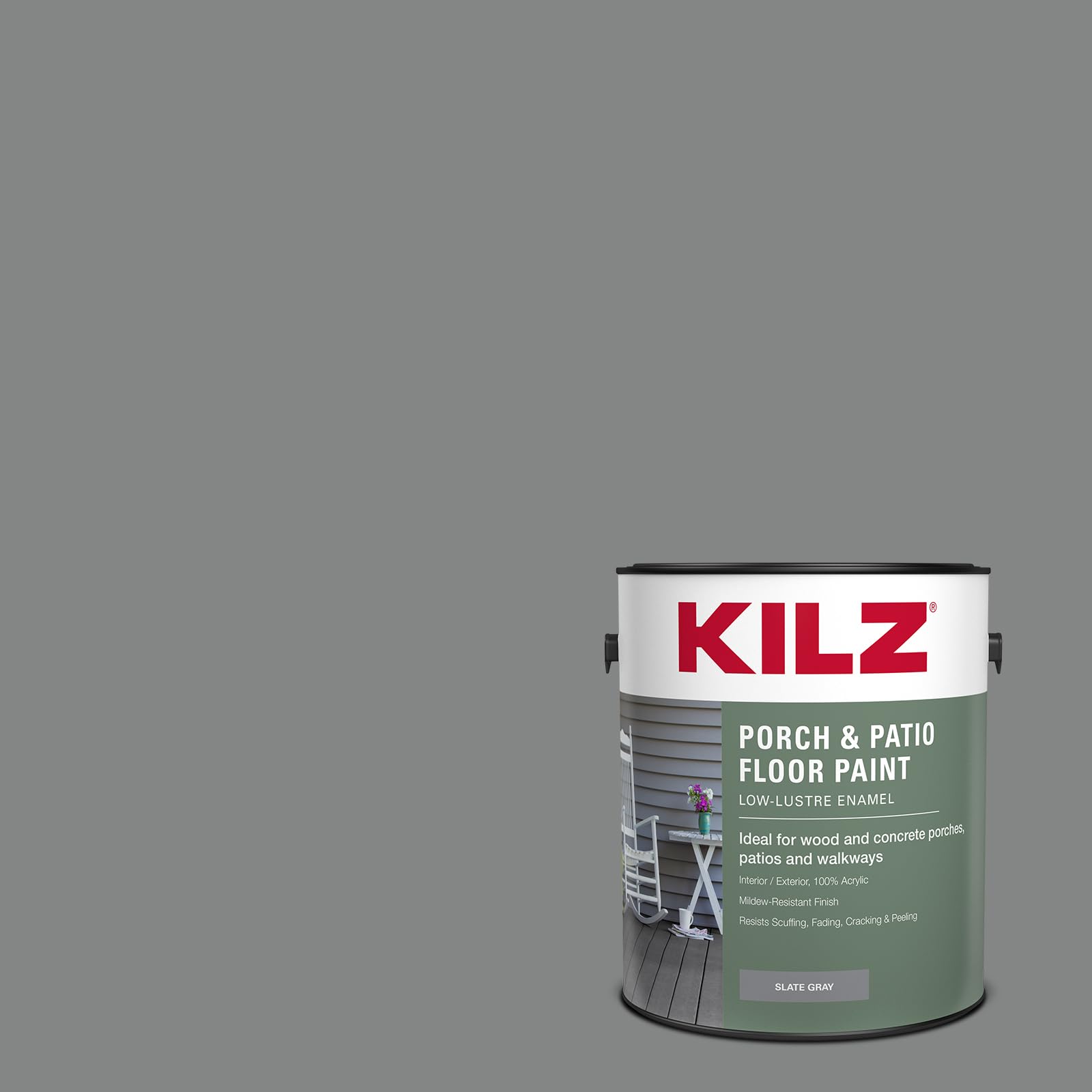
1. KILZ Porch & Patio Latex Floor Paint, Slate Gray, 1 Gallon
Our pick — 4.5+★ from 2,500+ verified ratings; the strongest balance of quality and price.
The acrylic workhorse that covers a plywood porch in one pass and dries before dinner.
This one earns the top spot because it does the two things a plywood floor needs at once: it lays down a durable acrylic film, and it does so fast. It is a 100% acrylic latex coating that dries to the touch in 1 hour (the point where you can brush past it) and can be recoated in 4–6 hours. So a Saturday morning job is walkable by evening.
The coverage is generous for the money. KILZ rates 1 gallon at 300–400 square feet on smooth surfaces and 200–300 square feet on rough ones, so a smooth plywood face sits at the top end. The finish is a low-lustre satin that is moisture resistant and built to resist scuffing, fading, cracking, and peeling across variable weather. One can handles a typical porch floor with room to spare.
What wins people over is the quality of the film — it is the most-praised trait of this can by a wide margin. Coverage ranks second, with owners noting a good one-coat hide that makes a tired balcony or porch look new again. The formula sets quickly and cleans up easily, which is why application and drying time both draw steady praise. The recurring gripe is long-term durability: some surfaces chip and peel over the years, so prep is everything. A sealed floor is also slippery when wet, and the label warns you to watch your step.
Where this can wins
- Touches dry in 1 hour and recoats in 4–6 hours, so a weekend job stays a weekend job
- 300–400 sq. ft. on smooth surfaces gives a plywood floor real headroom per gallon
- 100% acrylic latex resists scuffing, fading, cracking, and peeling
- One-coat hide on prepared surfaces, per the coverage consensus
- Water-cleanup makes the finish work low-fuss
Where to slow down
- Long-term durability is the most mixed point — bare or poorly prepped wood can chip
- Not for areas subject to automotive tires
- The finish gets slick when wet, so use caution on a damp porch
Take this one if: you want a proven acrylic floor coating that covers a plywood porch in a coat and dries fast.
Pause if: your floor sits under car tires or takes hot-tire traffic — this formula is not built for it.
2. INSL-X Tough Shield Floor and Patio Paint, 1 Gallon
A waterborne enamel that shrugs off scrubbing, oils, and grease in a Gray Pearl satin.
Where this one pulls ahead is durability under cleaning. It is a waterborne acrylic enamel (a water-thinned coating that cures to a hard film) built for good abrasion resistance and made to withstand detergents, oils, greases, and scrubbing. So a mudroom or workshop plywood floor that gets scrubbed and spilled on holds up better than a lighter porch coating would.
The coverage is a little higher than the KILZ above — 350–450 square feet per gallon, where the KILZ tops out at 400. It also resists ponding water, which matters if a corner of your plywood floor pools after rain. The 1-gallon can holds 128 fl. oz., so you get a full gallon of working product. Color is where this coating shines most — the Gray Pearl shade draws the strongest praise, with coverage close behind and durability right there too.
The catch is the fine print: INSL-X says plainly not to use it on garage floors or car parking surfaces, and the surface and air need to be above 50 °F (10 °C) to apply. If your plywood floor lives in a cold shed, wait for a warmer day or it will not cure right. Prep still matters — the label wants a properly prepared surface, and skipping that step is the usual reason a coating underperforms.
Why it holds up: the abrasion-resistant acrylic enamel resists detergents, oils, and greases, and tops the KILZ on coverage at 350–450 vs 300–400 sq. ft.
What to respect: keep it off automotive surfaces and apply above 50 °F; it is a floor coating, not an all-weather one.
Made for messy floors: pick it for a workshop or mudroom plywood floor that sees scrubbing and spills.
Think twice if: your project is a cold-weather shed or a garage that holds a car.
3. EVOLVE Porch & Floor Paint (Tan), 1 Gallon
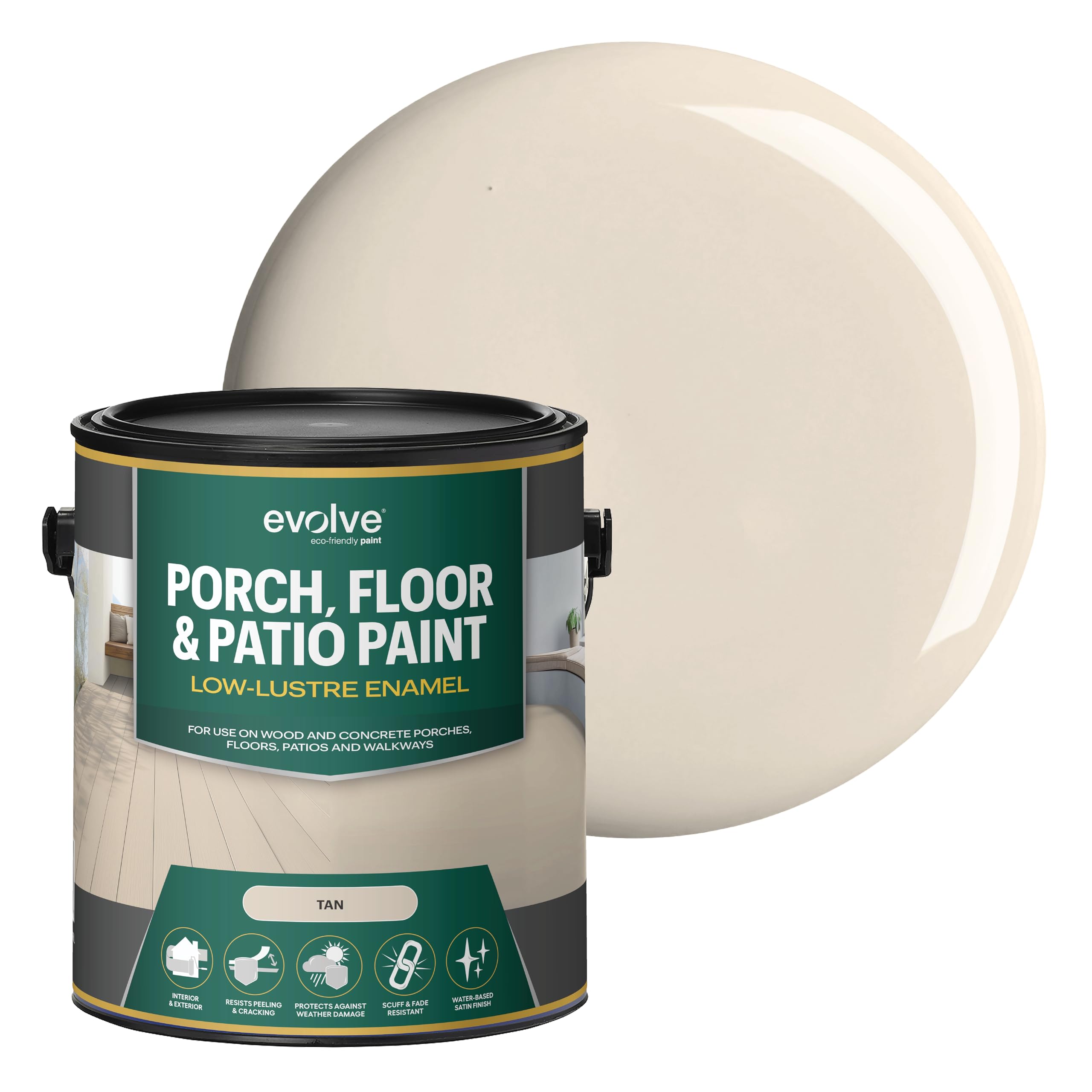
A semi-gloss acrylic latex built for heavy foot traffic, with a hard, scuff-resistant film.
This is the pick for a hallway or basement plywood floor that takes a pounding. EVOLVE engineered it for heavy foot traffic, daily use, and repeated cleaning, with a hard, resilient finish that resists marks, abrasions, and scuffing from shoes and furniture. It dries to the touch in as little as 1 hour, so the room comes back quickly. Coverage runs 300–400 square feet per gallon, and the 1-gallon can holds 128 fl. oz.
It also reaches beyond a porch. The Water-based acrylic latex (a low-odor coating you thin and clean with water) carries low VOCs (volatile organic compounds — the fumes that build up in a closed room) and cleans up with soap and water. That makes it the friendlier choice for an enclosed basement or mudroom where you cannot open windows wide. It resists rain, humidity, and UV, so an exterior plywood porch is fair game too.
The thing everyone notices is how easy it goes on, and the coverage follows close behind — owners regularly report a good one-coat hide on prepared wood. What lands mixed is the color: some see a bright finish and others find the shade drifts from the label, and water contact can shift it further. Durability also splits, with some floors holding beautifully and others peeling. Read that as a prep note — sand, clean, and prime a glossy or sealed plywood face first. The semi-gloss film is also the least forgiving if your prep leaves sanding scratches.
The strength: heavy-traffic durability and easy application drive its reputation, and the low-VOC water-based formula suits enclosed basement work.
The honest snag: color consistency is the sticking point, and durability tracks how well you prep the wood.
Reach for it for: a busy porch or basement floor where scuffs and traffic are the daily enemy.
Look elsewhere if: a precise, predictable shade is critical — the color draws mixed feeling.
4. Rust-Oleum Concrete & Garage Floor Paint, Sand, 1 Gallon

The garage-first formula that saves a step by priming and painting in one can.
Read the label before you buy: this is a concrete and garage floor coating, not a wood coating. It belongs on this list because a garage or carport floor is where many readers start, and because the sand satin film covers up to 400 square feet without a separate primer. It resists hot tires, motor oil, grease, and gasoline, which is exactly the abuse a plywood floor will not face.
If you are coating a concrete slab rather than plywood panels, this saves you the primer step. It is self-priming, so you clean, roll, and move on. Its full cure time is 12 hours, so plan to keep heavy traffic off it for a full day after it feels dry. The satin finish resists fading and peeling indoors and out.
Buyers split sharply on this one, and the split is worth understanding before you order. Coverage and appearance get good reviews in the main, and the finished floor looks the part when it lays down right. The friction sits with adhesion — some slabs take it smoothly and others lift in spots. Hot tire marks that will not wash out come up often enough to matter, and a few find the overall result fell short of the label promise. Every one of those complaints traces back to surface prep or to bare, damp, or dusty concrete. If your slab is clean and dry, it does the job it is built for.
Where it shines: paint-and-primer-in-one saves a step, hot-tire and chemical resistance guards a real garage slab, and up to 400 sq. ft. goes a long way.
The split to know: adhesion and hot-tire results are uneven, and that tracks surface prep more than the can itself.
Right call for: a clean, dry concrete garage or carport slab where you want a one-step coating.
Wrong tool for: a bare plywood floor — a wood-built coating above serves that surface far better.
5. Giani Wood Look Paint Step 2, Pint
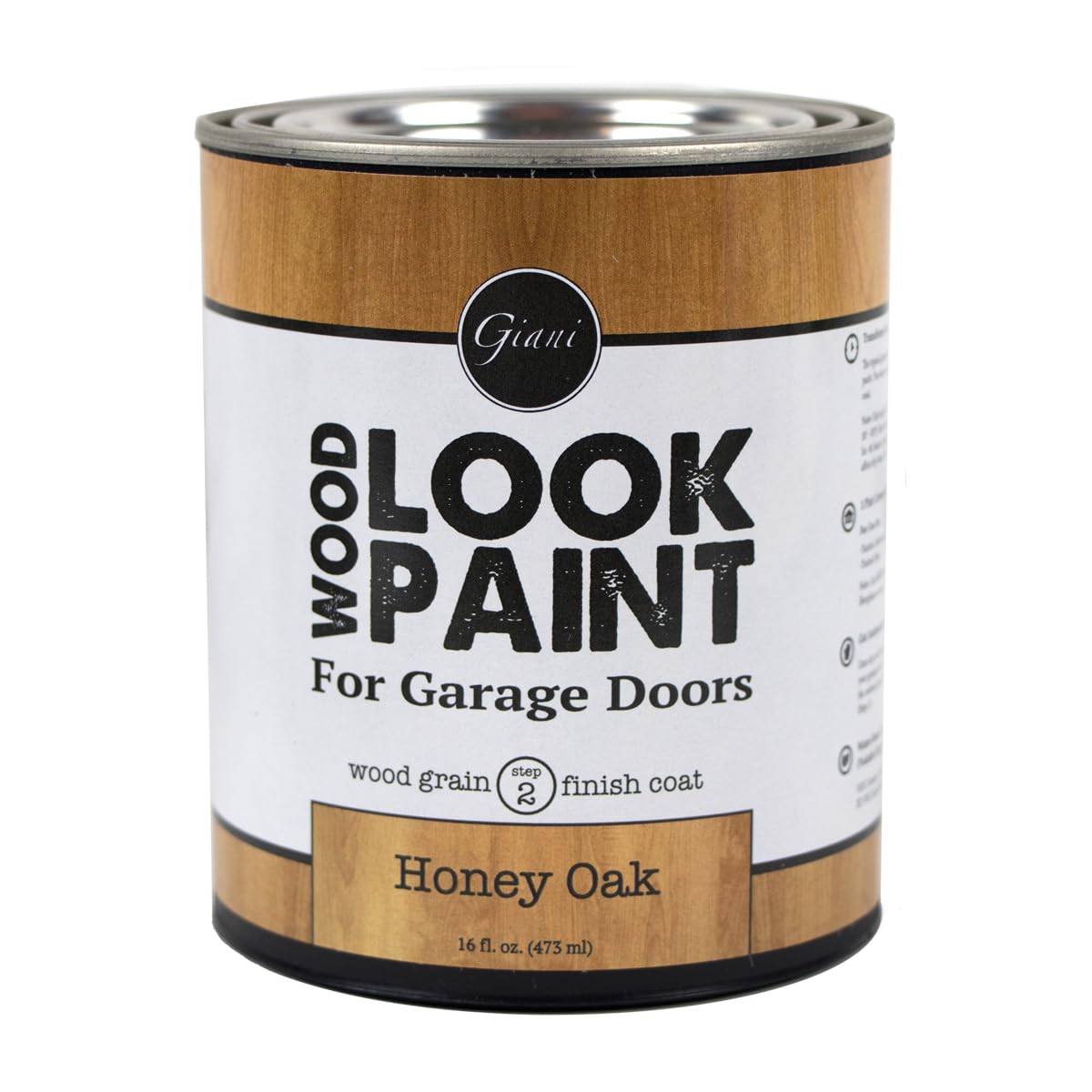
A grain-coat that fakes the look of real oak on a flat panel in about three hours.
This is a specialty can, and the label says it loud: it is Step 2 of a two-step system, not a standalone floor paint. You need the Step 1 base coat on first, then this 16 fl. oz. Honey Oak finish coat to pull the wood-grain look. That small can is why it belongs in a comparison of finishes — it is a texture layer, not a full-floor coating. The coverage tells the story: 100 square feet from a pint, where a full gallon of the KILZ above tops 300.
Applied as intended, it transforms in three hours, thanks to a dry and full-cure time both listed at 3 hours. That is faster than the Rust-Oleum Concrete & Garage Floor Paint, which needs 12 hours to full cure. The water-based acrylic is low on odors and VOCs, so a closed garage or basement stays comfortable to work in. It is rated for outdoor use.
What buyers love is the look — it reads as a genuine wood grain and turns flat surfaces into something that resembles stained oak. Ease of use draws clean praise. Where it frays is the shade: some find the Honey Oak true to the label and others see a strange dark brown, so test a scrap first. Application can also go splotchy on an uneven hand, and the value question comes up because the pint covers so little. This is a finish for a feature panel or door, not a whole floor.
The appeal
- Fakes a convincing wood-grain look on a flat panel
- Dries and cures in 3 hours, fast for a finish coat
- Low-odor, low-VOC water-based acrylic
- Simple enough that a first-timer can pull it off
The fine print
- Step 2 only — you must buy and apply the Step 1 base coat first
- 100 sq. ft. from a pint covers little, so a full floor needs several cans
- The Honey Oak shade reads true to some and dark brown to others
- Grain can go splotchy if your hand is uneven
Buy it to: get a warm Honey Oak grain look on a door, beam, or feature panel.
Don’t buy it as: a one-can floor solution — without the Step 1 base coat, it cannot finish the job.
6. EVOLVE Barn & Fence Paint, Flat Black, 1 Gallon
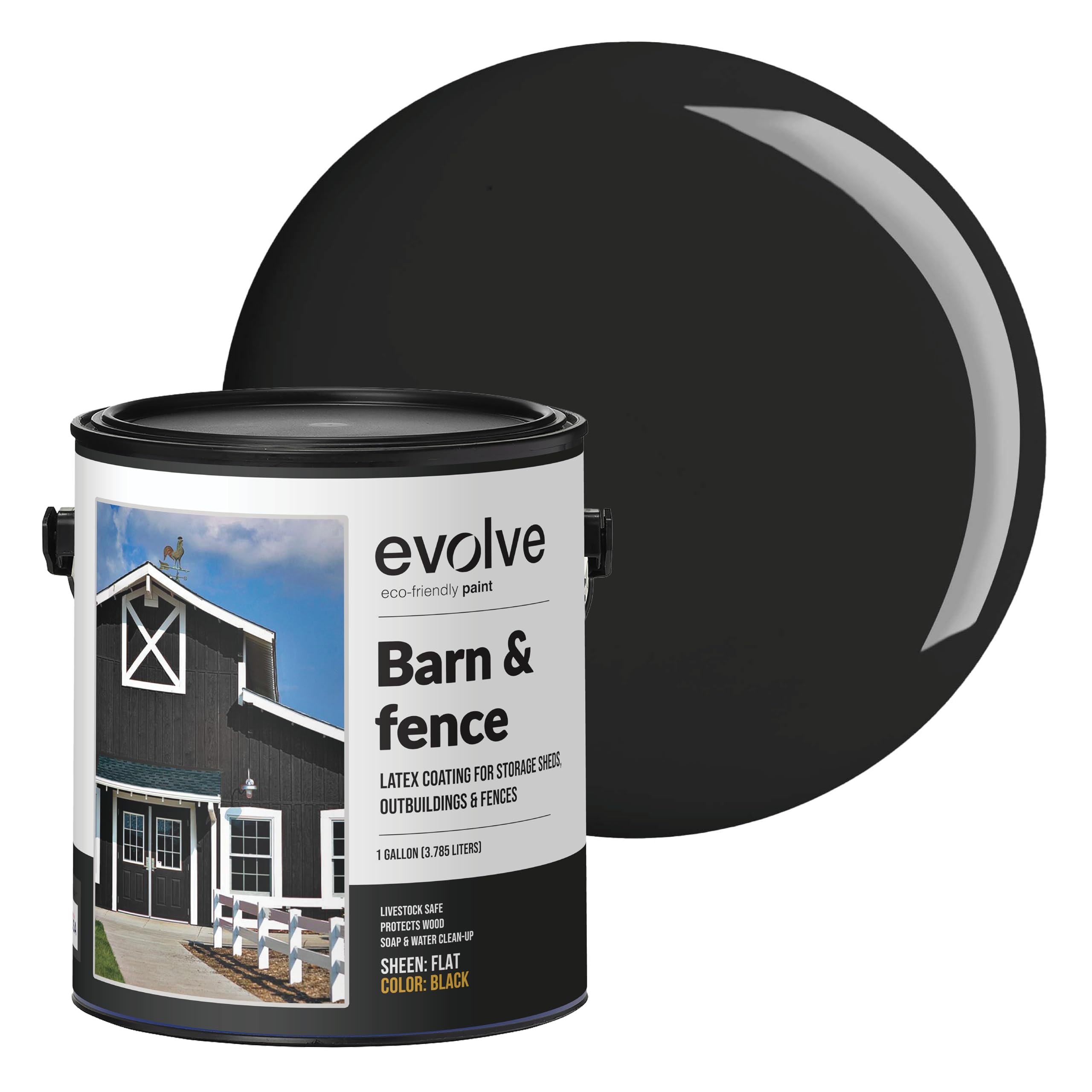
A flat black wood coating for sheds and fences that wipes clean and takes a weather beating.
This one is a wood coating first, which is what makes it credible on a plywood shed wall or a rough-cut board. It is an acrylic latex in a flat (non-reflective) finish, rated for outdoor use and built to resist sun, rain, and temperature swings without peeling, cracking, or fading. Coverage runs 300–400 square feet per gallon, and the water-based formula cleans up with soap and water.
The film is the draw. It wipes clean easily, which keeps an outbuilding looking tidy through a muddy season, and the flat finish hides the uneven texture of fence boards better than a gloss would. It dries fast, so you can coat a fence run and move on to the next section. For a barn door, a shed, or exterior trim, the low-reflective black gives a clean farmhouse look.
What earns the trust here is the quality of the coating, followed by coverage — it covers well and goes on smoothly, and the value conversation lands positive for most. The color is the wildcard: some love the deep black and others say it landed off-black or not black as expected, so open the can and stir before committing a whole fence. Durability splits too, with some boards weathering well and others chipping and peeling. On raw plywood, prime first and give it a full dry before the weather turns.
What sells it: a flat, weather-resistant wood coating that wipes clean, covers 300–400 sq. ft. per gallon, and holds up on fences and sheds.
What to test first: the black can read off-shade for some, and durability depends on a primed, dry surface.
Choose it for: a shed, barn, or fence that needs a durable flat black coat and easy upkeep.
Check a sample if: a specific black is the whole point — the shade is the split among owners.
7. Rust-Oleum EpoxyShield Satin Tan Basement Floor Coating Kit
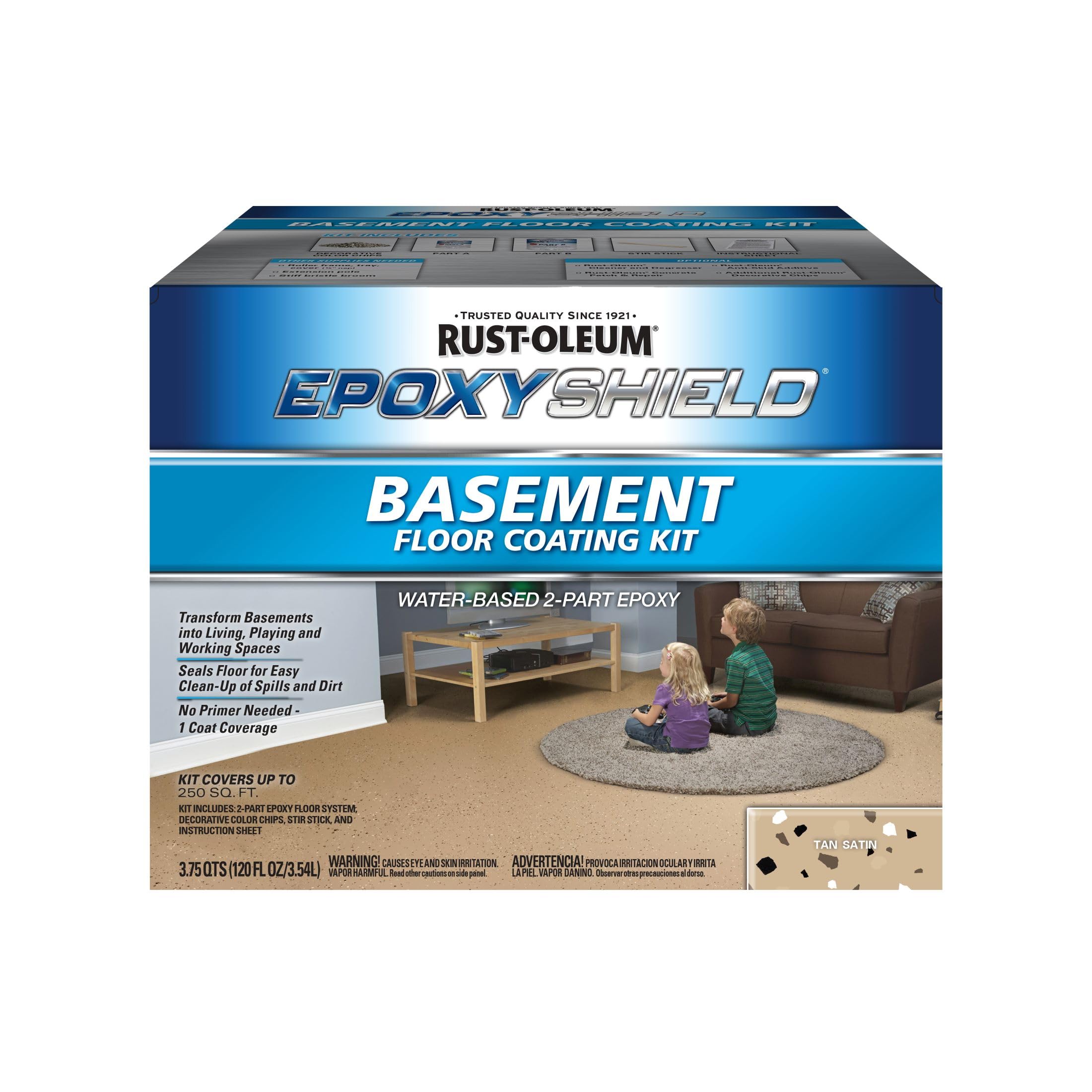
A two-part epoxy kit that turns a bare basement slab into a hard, stain-resistant floor.
This is the premium option on the list, and it is built for interior concrete, not wood. It is a two-part water-based epoxy (you mix an activator into the base and the chemical reaction cures a hard film) that works on basement surfaces. The satin finish cleans easily and guards against stains, wear, and abrasions. The kit covers up to 250 square feet in one coat with no primer needed, and includes the activator, base, decorative color chips, a stir stick, and instructions.
The cure schedule is the number to plan around. It is walk-on ready in 8 hours and accepts regular foot traffic in 24 hours, which is slower than the 1-hour touch-dry porch paints above but far harder once it sets. That two-part chemistry is why it holds up to basement traffic and moisture where a one-part coating might not. It is rated waterproof and indoor.
If you are set on an epoxy floor, budget the full day of downtime and mix in small batches to keep the working time manageable. The 120 fl. oz. kit covers 250 square feet, so a larger slab needs a second kit. Do not mistake this for a plywood floor coating — wood moves and breathes, and epoxy wants a stable concrete base. For a bare basement slab, it is the toughest finish here.
The premium move for: a bare indoor concrete basement slab that needs a hard, stain-resistant satin coat.
Not for wood: a plywood floor wants a wood-built coating below — epoxy belongs on stable concrete.
Know the Specs
Coverage per gallon
This figure, usually listed in square feet, tells you how much floor one can handles on a smooth surface. A rough or previously painted plywood face drops you to the lower end of the range, so buy one extra can if you are near the limit. Multiply that figure by your square footage to get the can count and the project total.
Dry time vs full cure
Dry-to-touch is when you can brush a surface without sticking; full cure is when it reaches final hardness and tolerates traffic. A can that touches dry in an hour can still need many hours to cure. Keep foot traffic off until the full-cure window passes, not the touch-dry one.
Finish type
Satin, flat, and semi-gloss describe how much light the cured film reflects. Flat hides texture and glare; satin cleans easily and looks even; semi-gloss shows scuffs and sanding marks more clearly. A sealed floor can get slick when wet, so a matte-leaning finish is the friendlier option on a damp porch.
Acrylic latex vs epoxy
Acrylic latex is a water-based coating that grips wood and flexes with it, which suits plywood. Epoxy is a two-part mix that cures to a very hard film and wants a stable base like concrete. Match the chemistry to the surface — wood moves, concrete does not.
Common Questions
Will porch and patio paint actually stick to plywood?
How much paint do I need for a plywood floor?
Can I use garage floor paint on plywood?
How long before I can walk on a freshly painted plywood floor?
Does a semi-gloss plywood floor get slippery when wet?
Is epoxy a better choice than acrylic floor paint for plywood?
Do I need a primer under floor paint on plywood?
Can floor paint on plywood be used outside on a porch or shed?
What is the difference between the Giani Step 2 coat and a full floor paint?
Why does my painted plywood floor peel after a season?
The Bottom Line
For most plywood floors, the floor paint for plywood that earns the nod is the KILZ Porch & Patio Latex Floor Paint, with its 1-hour touch-dry and 300–400 sq. ft. per gallon. If your floor takes heavy scrubbing, reach for the INSL-X Tough Shield at 350–450 sq. ft. For a basement slab only, the tough two-part EpoxyShield kit is the premium finish. Sand, clean, and prime first — prep and primer decide how long any of these coats lasts.
How we choose
We do not accept paid placement. Every pick is matched to a real buyer and a real use-case; we do not hands-on test units.
Sources
Specifications: manufacturer listings and product documentation. Review insights: verified customer reviews, as of November 2026. Pricing: not shown on this page (it changes often); check the current price via the retailer link.
As an Amazon Associate, My Heart Lives Here earns from qualifying purchases. This does not affect which products we feature.