Heads up: This post contains affiliate links. As an Amazon Associate I earn from qualifying purchases, at no extra cost to you. Learn more
Specs are compiled from manufacturer listings and verified buyer reviews and can change over time — please confirm the key details on the product page before buying.
Exterior caulk fails for one boring reason: the wrong tube for the joint. A gap that flexes with heat and cold needs a flexible sealant, and a gap between a window frame and siding needs something that sticks without a primer. Match the formula to the joint and the bead holds for years. Pick the wrong one and you are scraping it out next spring. This guide sorts five real options by where each one actually belongs.
This guide is built by comparing the manufacturers’ published specifications and the patterns across verified customer reviews, so you get each pick’s real strengths and trade-offs instead of marketing spin.
You will see which tubes need a caulk gun and which do not, how fast each one skins over, and where the honest weak spots sit. By the end you will know exactly which tube to hand a helper and which to keep for the joints that really move — a straightforward read on the best exterior caulk for your own house.
Top Picks

How To Choose The Best Exterior Caulk
The outdoor bead has a harder job than anything inside the house. Sun bakes it, rain sits on it, and the joint underneath it moves as the temperature swings. That is why the formula on the label matters more outside than the color or the brand.
Match the formula to the joint, not the label
A sealant that stays rubbery after it cures (called elastomeric) is what you want on window frames, door surrounds, and siding seams — anywhere two different materials meet and shift at different rates. A siliconized acrylic is the friendlier choice when you plan to paint over the bead, because paint grips it and it will not shine through the finish. Pure silicone is the toughest against standing water, which is why it shows up around tubs, sinks, and RV panels.
Work out how much tube you actually need
A single 10 oz cartridge covers a long run of a standard bead, but a full house re-seal eats tubes fast. Multi-packs cost less per tube and save a second trip, while a single squeeze tube suits one small repair. If you are sealing one window, buy one tube. If you are walking the whole exterior, buy the pack.
Check the cure clock before you start
Most exterior sealants here skin over in about 30 minutes and reach full cure in 24 hours. Plan around the weather rather than the clock: a bead laid just before rain needs to be skinned enough to shed water. Paint-ready time is a separate number from full cure, so read both if the finish coat is part of your plan.
Side-by-Side Comparison
| Model | Best For | Formula | Volume Per Tube | Full Cure | Amazon |
|---|---|---|---|---|---|
| DAP DYNAFLEX 230 (12 Pack)★ Best Overall | Whole-house re-seal | Elastomeric latex | 10.1 oz | Cured sealant | Amazon |
| OSI Quad 517Primer-Free Grip | Primer-free siding and frames | Elastomeric polymers | 10 fl oz | Paintable after cure | Amazon |
| Flex Caulk Silicone | Quick repair, no gun | 100% silicone | 6.5 fl oz | 24 hours | Amazon |
| PAULINN Silicone (4 Pack) | RV and marine panels | 100% silicone | 10.2 oz | 24 hours | Amazon |
| DAP Alex Plus (12 Pack) | Painting over the bead | Siliconized acrylic | 10.1 fl oz | 24 hours | Amazon |
Detailed Reviews
1. DAP DYNAFLEX 230 Sealant 12 Pack
Our pick — 4.5+★ from 650+ verified ratings; the strongest balance of quality and price.
One box, twelve tubes, and a bead that stays rubbery through a full year of weather.
If your plan is to walk the whole exterior in one weekend, this is the box that makes it possible. You get 12 cartridges of DAP’s elastomeric latex sealant, each holding 10.1 oz, which covers window frames, door surrounds, and siding seams without a mid-job trip to the store. The formula flexes with the joint instead of fighting it, so a gap that opens in July and closes in January does not tear the bead apart.
It carries a Federal Spec listing, TT-S-00230C Type II Class A, along with ASTM C 920 Class 25 — a mobility class that describes how much the cured sealant can stretch and recover. In plain terms, that is the certification that tells you it is built for joints that move rather than static trim. It is rated for interior and exterior use, so leftover tubes are not wasted once the outside is done.
Buyers praise its effectiveness most often, and the cured bead holds through real outdoor seasons. The catch worth knowing is the tube itself: adhesion is the one split topic, and some tubes are stiff to push out of the cartridge. Warm the tube in your hand before loading it and it flows far more easily. It reads a bit thicker than a silicone squeeze tube, so a decent gun helps.
Worth the box
- 12 cartridges at 10.1 oz each means one order covers the whole exterior re-seal.
- Class 25 mobility rating is built for joints that expand and contract with the seasons.
- Rated for interior and exterior, so unused tubes still earn their keep inside.
- Elastomeric latex stays flexible instead of going brittle in cold snaps.
Where it fights you
- Some tubes come out stiff and need a strong gun and a warm-up in the hand.
- You need a caulk gun for every tube — no squeeze-and-go option here.
- The box is bulk: one small repair does not justify a dozen cartridges.
Reach for this if: you are sealing an entire house exterior in one pass and want a flexible, spec-listed bead in every tube.
Leave it on the shelf if: you are patching one window gap — a single tube or a squeeze applicator suits that job better than a bulk box.
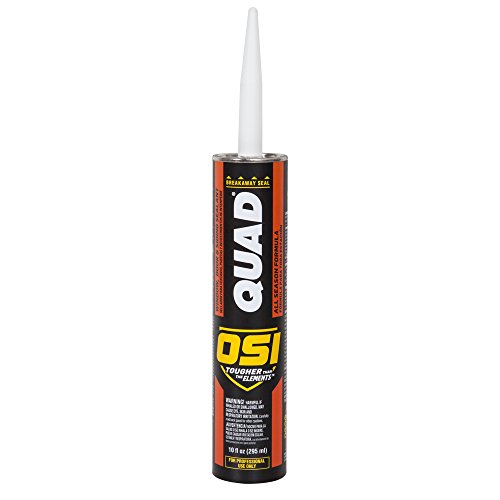
2. OSI Quad 517 Sealant
The tube that skips the primer step entirely, even on a cold or damp morning.
Most sealants ask you to clean and prime before they will stick to vinyl, fiberglass, or coated aluminum. This one is designed to grab without a primer across a long materials list — fiber cement, cedar, brick, stone, coated aluminum, steel, fiberglass, vinyl, PVC, stucco, wood, glass, concrete, and masonry all appear on it. On a real siding job, skipping the primer step saves the fiddly part of the work.
It carries Class 25 as well, which is the joint-movement rating that tells you the cured bead stays elastic rather than hardening. The weather resistance is aimed at what actually wrecks a bead outside: water, UV, dust, and dirt, with a stated resistance to cracking and yellowing. It goes on with a 4-inch professional spout and self-tools, meaning you lay the bead and let the nozzle shape it rather than fighting it with a finger.
For color, OSI’s free online match tool covers a stated 9,200+ manufacturer colors if gray 517 is not the finish you want. Buyers cite quality most often, and the cured bead holds. The honest limit is how permanently this stuff sets — once cured, it is not a bead you casually peel away, so lay it where you mean it. It is paintable only after cure, so a same-day finish coat is not on the table.
Adhesion without the prep: the primer-free claim is the headline here, and it holds across a materials list that runs from stucco to glass — unusual breadth for one cartridge.
Set it once: this is a permanent-set sealant, so slow down and get the bead right on the first pass rather than planning to redo it.
Who it beats: any job where you would otherwise drag out a primer can and wait for it to dry before caulking a vinyl or aluminum frame.
Who should pass: anyone who wants to paint the same afternoon — this one only takes paint after it has fully cured.
3. Flex Caulk Silicone Sealant 1-Pack

A squeeze-and-go silicone tube for the repair you want done before lunch.
No caulk gun, no loading, no cleanup of the gun afterward. This 6.5 oz tube has an adjustable trigger flow nozzle built in, so you squeeze and the bead comes out at the rate you set. It is 100% silicone, which is the formula that shrugs off water and moisture instead of absorbing them, and it is rated to seal out water, air, and moisture.
The surface list is broad: porcelain, tile, metal, glass, fiberglass, wood, granite, stone, marble, and more. It is stated to resist UV and chemicals, to stay flexible and durable, and to avoid shrinking, cracking, or going brittle. Full cure is 24 hours. A Snap & Save cap is included to keep the rest of the tube usable instead of wasting it after one pass.
Its built-in trigger nozzle is the top praise point, since it skips the caulk gun entirely. Cleaning up with water is straightforward and it dries quickly. Sized honestly: 6.5 fl oz is the smallest tube in this group, and the value and durability notes split, so treat it as a repair tube rather than a whole-wall tube. For a window sill, a threshold, or a crack around a vent, that is exactly the right size.
Why it lives in the junk drawer
- Built-in trigger nozzle means no gun to buy, load, or clean.
- 100% silicone seals out water, air, and moisture without shrinking or cracking.
- Snap & Save cap keeps the tube usable for a second repair.
- Surface list covers tile, glass, metal, wood, stone, and more.
Know before you squeeze
- 6.5 fl oz runs out fast on anything bigger than a spot repair.
- The per-tube value and durability notes split, so buy for the job size, not the shelf.
- Full cure is 24 hours — no rushing the finish.
The right tool for: a small exterior crack, a sill joint, or a one-tube repair where dragging out the gun is more work than the job.
Wrong tool for: sealing a long run of siding — the 6.5 oz tube will not last the distance.
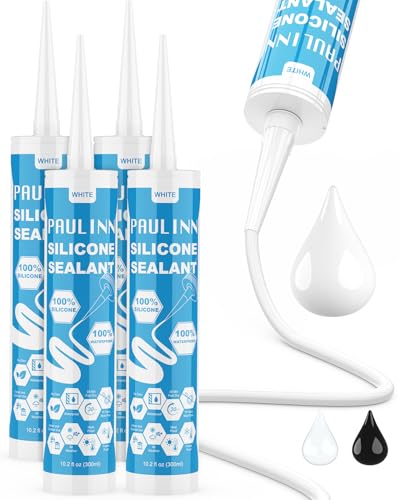
4. PAULINN Silicone Caulk 4 Packs
Four cartridges built for panels that shake, bake, and take a soaking.
An RV or a boat panel does not just sit there — it vibrates, heats up, and gets rained on. This sealant is aimed squarely at that life. The maker states it withstands vibration and -122°F to +302°F swings after cure, lasts up to 15 years, and will not yellow. It is a 4-pack of 10.2 oz cartridges, 38 fluid ounces in total.
The setting schedule is quick to plan around: the surface skins over in 30 minutes, then it sets firmly and reaches full cure in 24 hours. It comes in a high-pressure-resistant cartridge with an anti-clogging nozzle, and it is described as safe with no chemical smell. Application runs to window and door frames, kitchen sink, shower and tub surrounds, RV, car, marine, plumbing, glass, and general exterior sealing.
Buyers cite quality and durability most, noting it holds up over time on outdoor jobs. The one real snag is the nozzle situation: several buyers find the tubes come without the nozzles they expected, and those are needed to apply it properly. The supplied nozzle is removable via a threaded fitting and arrives pre-cut flat rather than at an angle, so bring a utility knife to shape it. There is also no storage cap included, so plan to use an opened tube rather than park it.
Built for the rough ride: the stated vibration and temperature tolerance is what sets this apart from a plain window bead — a moving, sun-baked panel is a different problem than a static frame.
Bring your own knife: the pre-cut flat nozzle and missing cap are application chores, not sealing failures, but they need handling before you start.
Buy it for: RV seams, marine trim, and any exterior joint that moves and gets wet — the 4-pack gives you spares for the second and third leak.
Skip the bulk if: you want one tube with a ready angled nozzle and a storage cap — buy a single-tube product instead.
5. DAP Alex Plus Acrylic Latex Caulk, White, 10.1 Oz, 12 Pack

The one you reach for when the bead has to disappear under a coat of trim paint.
Paint does not like silicone. It beads up and slides off, which is why a silicone bead stays visible even after you paint over it. Alex Plus solves that: it is a siliconized acrylic formula that takes latex or oil-based paint in 30 minutes and is stated not to shine through or discolor the finish. If your exterior trim is getting a fresh coat, this is the tube that keeps the caulk line invisible.
It bonds to trim, baseboards, windows, door frames, and molding, and it fills gaps up to 0.5 inches — a generous opening for a single bead. The formula is low odor and cleans up with water, so a bucket and a rag cover the tooling step. It comes as a 12-pack of 10.1 fl oz tubes, and full cure is 24 hours. That pack size suits a whole trim repaint rather than a one-window touch-up.
The quality is strong and the cleanup is easy — water cleanup and void filling are both things buyers speak well of. The split topic is durability: some report it holds for the long haul while others see it crack after a few weeks. That points to joint prep and how much the joint moves. On static trim against a painted surface, it behaves. On a joint with real seasonal movement, a flexible elastomeric or pure silicone is the safer pick.
The paintable advantage: a 30-minute paint-ready time and a stated no-discoloring finish is the reason to choose acrylic over silicone on trim you are about to repaint.
The 0.5-inch fill: a single bead handles a half-inch gap, which covers most exterior trim joints without backing rod.
Go with it when: the bead sits under paint and you want a smooth, invisible seam on trim, molding, and window casings.
Think twice when: the joint takes real seasonal movement — on a flexing gap, an elastomeric or silicone sealant is the more durable route.
Know the Specs
Elastomeric vs. Siliconized Acrylic vs. Pure Silicone
Elastomeric means the cured sealant stays rubbery and stretches with the joint — the right choice on window frames and siding where two materials move at different rates. Siliconized acrylic is an acrylic base with silicone added for flexibility, and its big advantage is that paint sticks to it, so the bead vanishes under a finish coat. Pure silicone is the most water-resistant of the three and does not shrink or go brittle, but paint will not adhere to it, so it belongs on joints you are not painting. Match the formula to whether you plan to paint over the joint or leave it exposed.
Class 25 Joint Movement and Cure Times
Class 25 is a joint-movement rating that describes how much a cured sealant can stretch and recover as the gap changes — the higher the class, the more movement it tolerates before it tears. On an exterior wall that sees hot afternoons and cold nights, that flexibility is what keeps the bead intact. Cure time is a separate clock: most sealants here skin over in about 30 minutes and reach full cure in 24 hours, and paint-ready time can be shorter than full cure. Read both numbers so you know when it can take rain and when it can take paint.
Common Questions
Can I paint over 100% silicone exterior caulk?
Do I need a caulk gun for every product on this list?
How long before exterior caulk can get rained on?
What does Class 25 mean on a sealant label?
Which exterior caulk is best for an RV or a boat?
Do I have to prime before caulking vinyl or aluminum siding?
How big a gap can exterior caulk fill?
How much tube do I need for a whole house exterior?
Will exterior caulk shrink or crack over the winter?
Can I store an opened tube of exterior caulk for later?
The Bottom Line
Most homeowners doing a full exterior walk should grab the DAP DYNAFLEX 230 — 12 cartridges of flexible, spec-listed sealant covers the whole job in one order. If your siding or frames need primer-free grip across vinyl, aluminum, or stone, the OSI Quad is the tube to load. And for trim that is getting a fresh coat of paint, the DAP Alex Plus keeps the bead invisible under the finish.
How we choose
We do not accept paid placement. Every pick is matched to a real buyer and a real use-case; we do not hands-on test units.
Sources
Specifications: manufacturer listings and product documentation. Review insights: verified customer reviews, as of November 2026. Pricing: not shown on this page (it changes often); check the current price via the retailer link.
As an Amazon Associate, My Heart Lives Here earns from qualifying purchases. This does not affect which products we feature.