Heads up: This post contains affiliate links. As an Amazon Associate I earn from qualifying purchases, at no extra cost to you. Learn more
Specs are compiled from manufacturer listings and verified buyer reviews and can change over time — please confirm the key details on the product page before buying.
Thin, fragile skin tears easily — and the wrong dressing makes it worse every time you change it. The fix is a dressing whose contact layer doesn’t grab the wound bed and whose adhesive lets go without pulling skin with it. Below are five dressings that do exactly that, sorted by how much fluid they handle and how gently they release.
This guide is built by comparing the manufacturers’ published specifications and the patterns across verified customer reviews, so you get each pick’s real strengths and trade-offs instead of marketing spin.
A good skin tear dressing holds the flap flat, has a non-adherent contact layer, and peels off without lifting new skin. Below, you’ll see which of the five options matches your wound.
Top Picks

How To Choose The Best Dressing for Skin Tear
A skin tear is a flap of skin peeled back from the layer underneath. The dressing’s job is to hold that flap flat without gluing itself to it. That single requirement rules out most standard adhesive bandages and pushes you toward a non-adherent contact layer, a silicone border, or a petrolatum mesh.
Start with the contact layer, not the absorbency
The contact layer — the sheet touching the wound bed — decides how much pain you feel at the next change. A non-stick pad or a petrolatum-coated mesh releases from the wound bed cleanly. A plain cotton pad dries onto the surface and pulls the flap off when you lift it — which resets healing to day one.
Then match the absorbency to the drainage
A tear that weeps lightly needs a thin mesh or foam. A tear over a leg ulcer or a pressure sore can pour out fluid, and that calls for a superabsorbent core that turns liquid into gel and holds it away from the skin. Get this wrong and the pad saturates, the border lifts, and bacteria get a route in.
Look hard at the adhesive’s grip
Silicone adhesive holds firmly enough to stay put through a shower but releases with a gentle peel. Acrylic adhesive grips harder and costs less, but it can lift fragile skin on removal. If the skin around the tear is thin and bruised, pay more per dressing for silicone.
Side-by-Side Comparison
| Model | Best For | Size | Count | Adhesive Type | Amazon |
|---|---|---|---|---|---|
| Medline Optifoam Gentle EX Bordered Foam★ Best Overall | Everyday tears with moderate drainage | 3″ x 3″ square | 10 | Gentle silicone border | Amazon |
| Carbou Medical Xeroform Petrolatum GauzeBest for Grafts | Light drainage and skin grafts | 4″ x 4″ | 25 | Non-adherent petrolatum mesh | Amazon |
| Senormed Silicone Bandages Variety Pack | Small tears, kids, and elderly skin | Large and small | 60 | Silicone, four-side sealed | Amazon |
| Niceful Silicone Super Absorbent Wound Dressing | Heavy drainage and long incisions | 4″ x 8″ | — | Silicone with adhesive border | Amazon |
| Telfa Kendal Ouchless Adherent Sterile Dressings | Stocking up for repeat changes | 3″ x 4″ | 100 | Ouchless adherent contact layer | Amazon |
Detailed Reviews
1. Medline Optifoam Gentle EX Bordered Foam Adhesive Dressing 3″ x 3″
Our pick — 4.5+★ from 950+ verified ratings; the strongest balance of quality and price.
Five layers of foam that convert wound fluid into gel and let go of the skin without a peel-back.
Start with the number that decides whether a dressing belongs near a tear: five. Medline builds this one from five separate layers, with a superabsorbent core in the middle. That core drinks the fluid coming off the wound, turns it into a gel, and locks it in place so the skin around the flap stays dry instead of macerated.
The outer border is where the gentleness lives. It’s a silicone adhesive, which means you can lift the dressing, reposition it, and press it back down without losing grip. For a tear that needs checking twice a day, that repositioning is the whole point. A firm adhesive border would mean a fresh dressing every peek; this one comes up and goes back on. The low-profile build also means it sits flat under a sleeve or a sock, and the moisture vapor transmission rate adjusts to how wet the wound is — more breathable as the drainage drops off. Medline lists a maximum wear time of 7 days, which suits a partial or full-thickness wound with moderate drainage.
Because it’s a bordered foam with a built-in adhesive, it works as either a primary dressing right on the tear or a secondary layer over a contact mesh. Quality is what wins people over here — it’s the most-discussed positive trait by a wide margin, and adhesion comes second. The honest catch is the count against the price: this is a 10-pack, so a long recovery means repeat orders. It’s also 2.4 ounces for the pack, against 12 ounces for the Telfa 100-count box, which tells you how differently these two are built. Weigh that against the fact that adhesion and skin sensitivity both land firmly on the positive side, and this is the one dressing you can actually trust to stay put and come off gently.
Where It Earns Its Place
- Five-layer build with a superabsorbent core that gels fluid and holds it away from the tear
- Silicone border lifts and reapplies, so you can inspect the flap without wasting a dressing
- Moisture vapor transmission rate adapts to fluid level for better breathability
- Listed for up to 7 days of wear on moderate-drainage partial and full-thickness wounds
What To Weigh Up
- Only 10 dressings per pack, so a lengthy healing period means restocking
- Cost per dressing sits above the bulk mesh and gauze options
Reach for this if: you want one dressing that both absorbs and releases gently, and you’d rather change it less often than buy in bulk.
Think twice if: the wound is draining heavily enough that a 3″ x 3″ pad won’t cover it with a clean border.
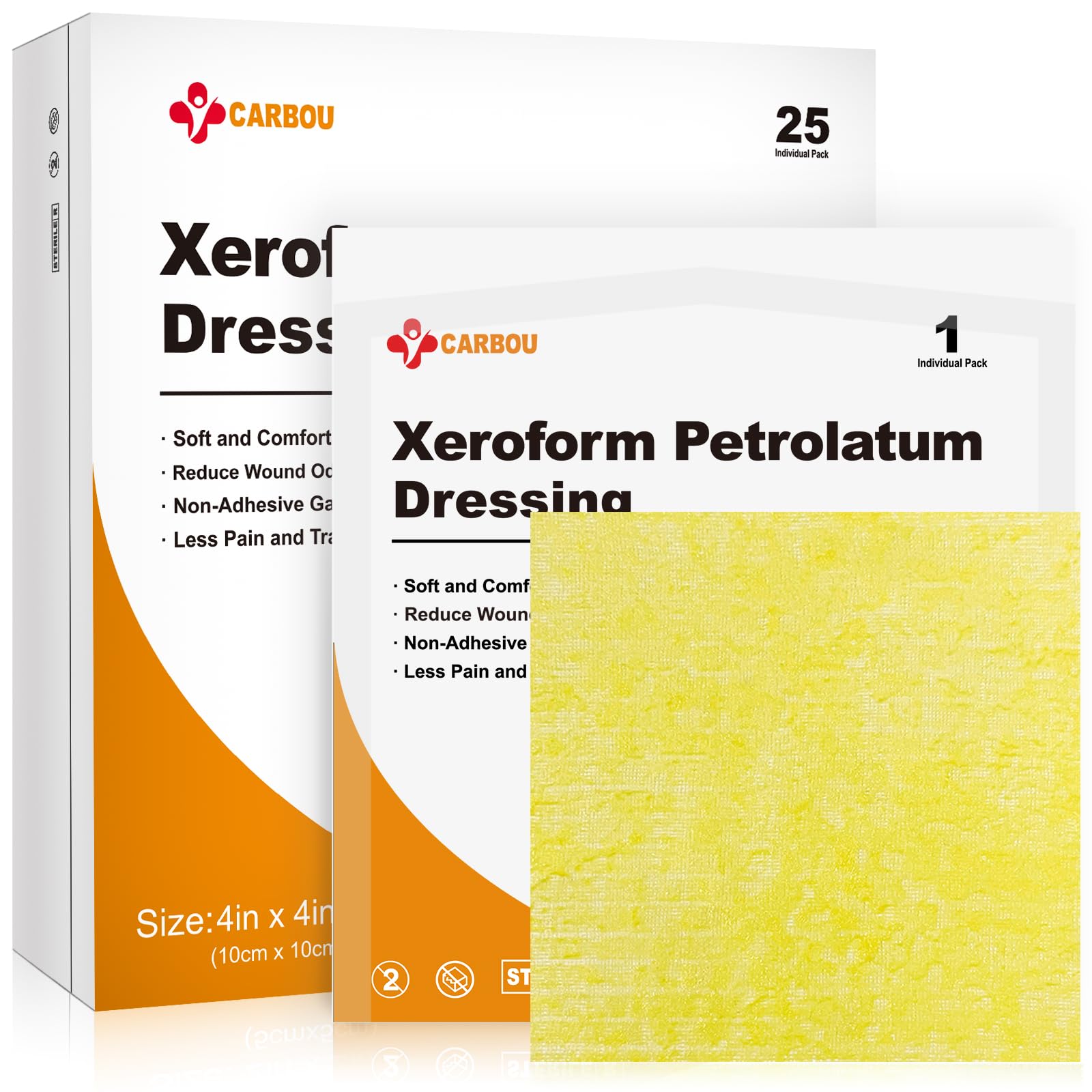
2. Carbou 4″x4″ Medical Xeroform Petrolatum Dressing 25 Pack
A petrolatum-coated mesh that slides off a raw surface because it never bonds to it in the first place.
The key figure here is the 4″ x 4″ size — 33% more square coverage than the 3″ x 3″ Optifoam above. That extra surface matters when the tear is long or sits near a joint, because you need the mesh to overlap the wound edge, not just touch it.
This is a different animal from a bordered foam. It’s a fine, soft mesh gauze impregnated with petrolatum and 3% Bismuth Tribromophenate, designed as a primary contact layer that sits directly on the wound. The petrolatum keeps the mesh from drying onto the surface, so it lifts away cleanly at the next change. It’s cuttable, which means you trim it to the shape of the tear instead of padding the surrounding skin with dressing you don’t need. Each of the 25 pieces is individually wrapped and sterile, so you can keep one in a bag and the rest in a drawer without contaminating the box.
Carbou lists it for surgical incisions, lacerations, abrasions, donor sites, skin grafts, pressure ulcers, I-II degree burns and trauma wounds — a wide net, and skin grafts are the reason it’s on this list. A graft site is the most fragile surface there is, and this mesh is built not to pull on it. What buyers report lands where you’d expect: wound care is the most-praised trait by a clear margin, quality second. The honest caveat is stickiness — this is a non-adherent contact layer, so it doesn’t stick down on its own and needs a secondary dressing or tape over the top to hold it in place. Plan for that and it does its job.
The trade-off in plain terms: Xeroform is a contact layer, not a finished dressing. It goes on the wound, then something else goes over it. If you want one piece that goes on and stays on by itself, the bordered foam above is the simpler answer.
Where it wins: 25 sterile pieces that you can cut to fit, on a surface where nothing should ever adhere.
Best fit for: skin tears over grafts, burns, or any surface where a sticky layer would do damage on removal.
Not the one for: a quick peel-and-stick application with no secondary dressing on hand.
3. Silicone Bandages for Sensitive Skin Variety Pack
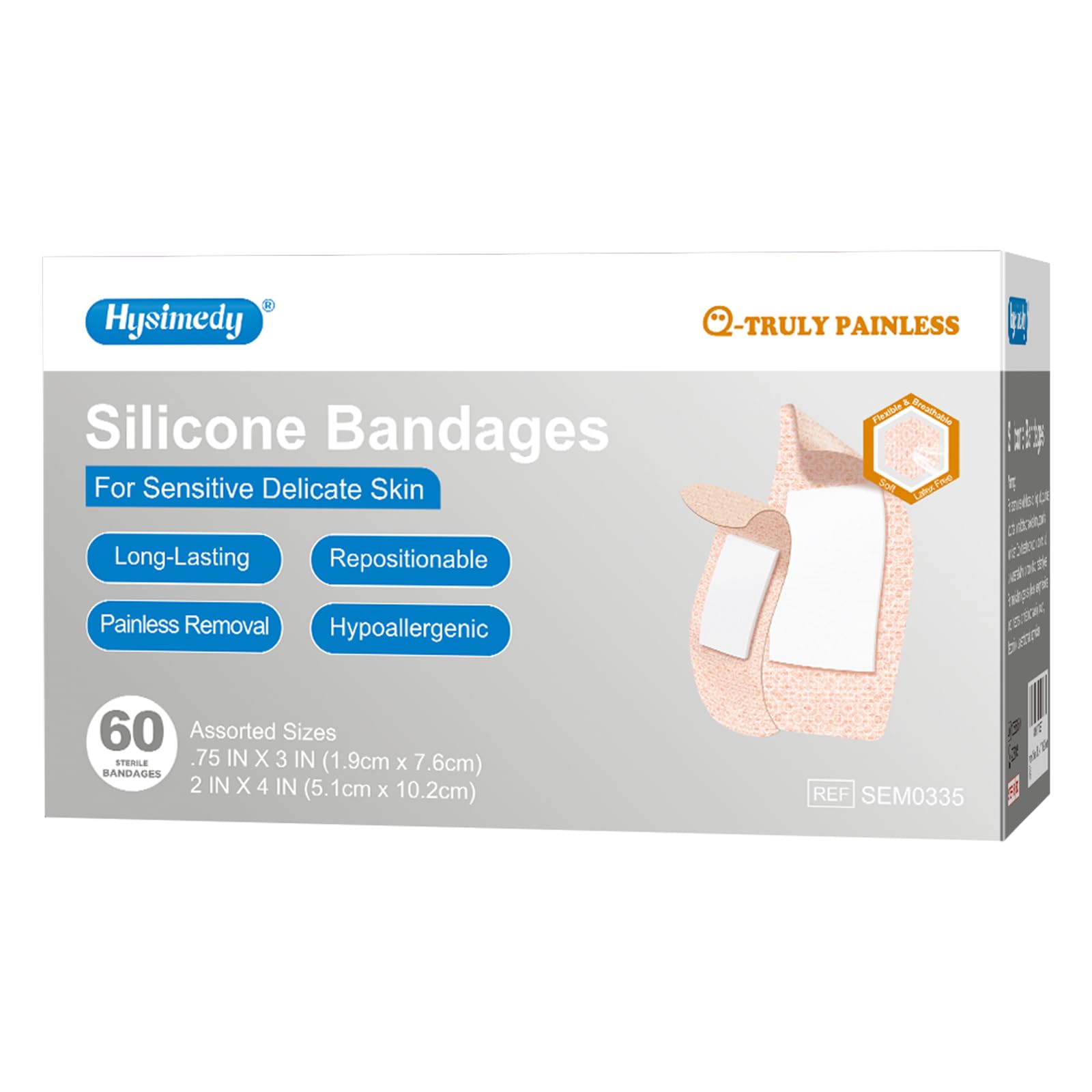
Sixty silicone bandages that come off without a yelp — the pick for paper-thin skin and nervous hands.
These are bandages, not wound dressings, and that distinction matters. They suit a small tear or a shallow scrape on skin that shreds under normal adhesive. The four-side sealed silicone adhesive means there’s no hard edge to catch, and the pad next to the wound is a non-stick absorbent cotton that won’t bind to the surface. The small pad measures 0.47″ x 1.06″ and the large 1.34″ x 2.05″, so match the pad to the tear, not the bandage outline to the whole limb.
Repositioning is the quiet feature that earns its keep. If the first placement is off, you lift it, move it, and press again — Senormed states the stickiness isn’t damaged by that. Anyone who has tried to place a bandage one-handed over a tear on an elderly forearm knows how often the first try lands crooked. The soft non-woven fabric also conforms to a joint, which is where a lot of tears happen after a bump against a table edge or a doorframe. Latex free and rubber free, made by a manufacturer that lists FDA, ISO13485 and CE qualifications.
What owners value most is that it works — effectiveness is the top positive theme, with gentleness on sensitive skin right behind it. The real friction is stickiness: some find the hold perfect, others find it lets go, particularly as the pad takes on moisture. Treat these as short-wear bandages and change them often, and the grip issue disappears. The other thing to know is size. The variety pack covers small problems beautifully; the large bandage still won’t span a wide tear across a shin.
A good fit for: homes with kids or elderly relatives where a normal bandage removal causes more damage than the original cut.
Set expectations: short wear, frequent changes, and a large size that covers small tears rather than big ones.
Pick this when: the skin around the tear is thin, bruised, or allergic to standard adhesive and every removal needs to be painless.
Look elsewhere when: the tear is broad or weeping heavily — you need a foam or superabsorbent dressing at that point, not a bandage.
4. Silicone Super Absorbent Wound Dressing 4″×8″

A 4″ x 8″ pad with 20 times the absorption capacity — built for the tear that keeps soaking through.
Twenty times the absorption capacity is the claim, and the mechanism behind it is a SAP polymer core. SAP stands for superabsorbent polymer: a material that swallows fluid and holds it as a gel rather than letting it sit against the skin. The pad is listed as keeping the wound in a moist environment without leakage, which cuts the risk of the skin around the tear going soggy and breaking down further.
The 4″ x 8″ size is the other reason it earns a spot. That’s long enough to cover a tear on a shin or forearm with room to spare. It also fits the wound types Niceful lists: pressure ulcers (sore spots from staying in one position), venous ulcers (sores from poor leg-vein flow), diabetic foot ulcers, first- and second-degree burns, tears, abrasions, and long surgical incisions. The border is already adhesive, so you skip the taping step. It flexes onto a joint without a separate fixation layer, and the silicone contact layer (a soft, non-stick wound-side sheet) means the wound side doesn’t stick.
Adhesion is the trait people talk about most after quality, and it holds up during a shower — which is the practical test most dressings fail. Comfort gets a nod too, specifically that it doesn’t hurt the skin. The fair warning is that this is a big pad for a small tear. If your cut is the size of a fingernail, you’re trimming a lot of dressing to waste, and buying more of it than you need.
What It Brings To A Weeping Tear
- SAP polymer core with 20 times the absorption capacity holds fluid away from skin
- 4″ x 8″ coverage suits long incisions and leg wounds
- Adhesive border goes on without tape and holds through showers
- Soft breathable contact layer doesn’t bind to the wound bed
Where It Costs You
- Oversized for small tears, so you’ll cut off more than you use
- Cost per dressing feels steep to buyers treating a minor wound
The one to grab: when drainage is the problem and a thin mesh or bandage keeps saturating within hours.
Overkill if: your tear is small and dry — the 4″ x 8″ pad is far more dressing than that needs.
5. Telfa Kendal Ouchless Adherent 3″ x 4″ Sterile Dressings 100 Count
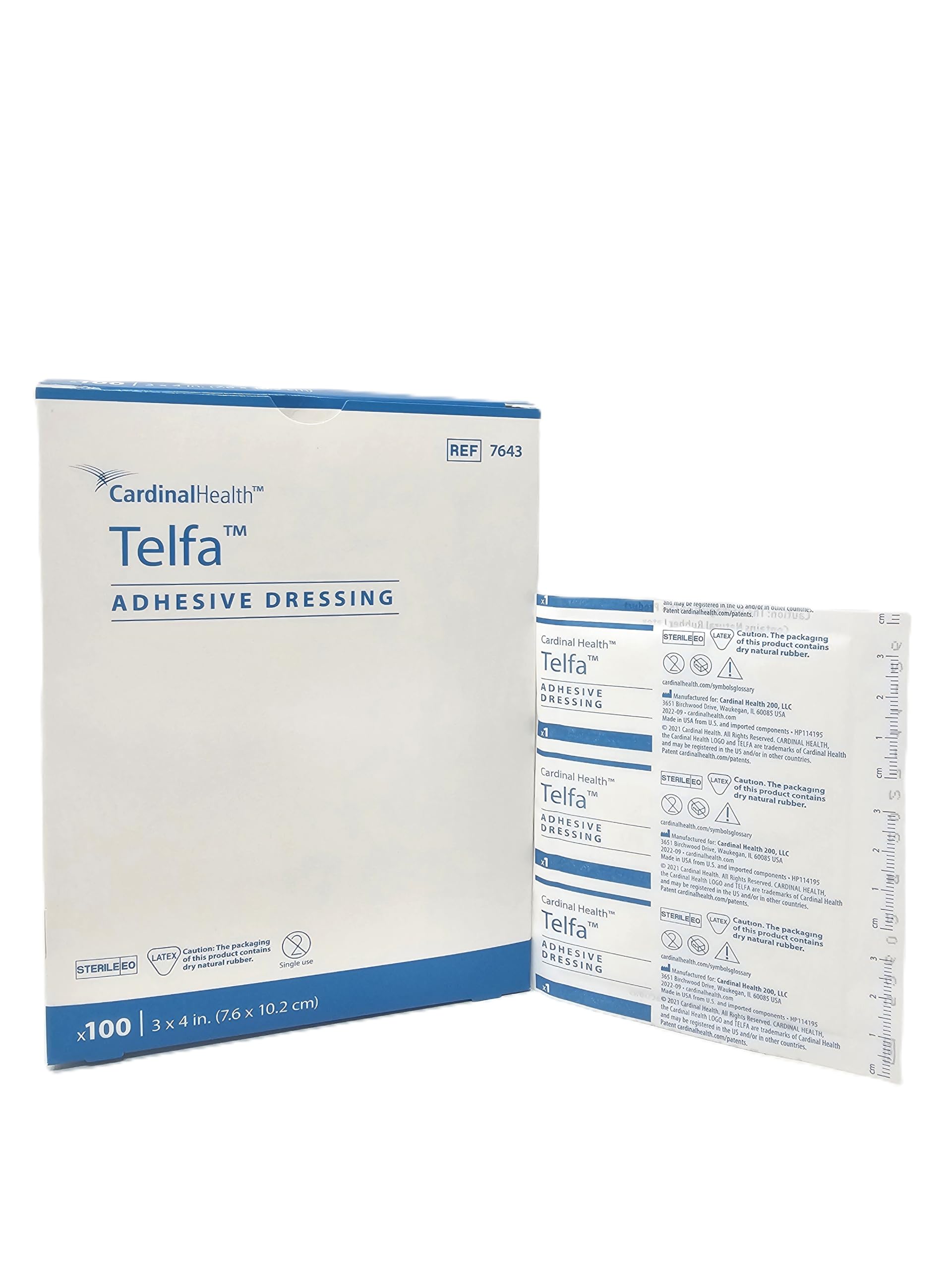
A hundred sterile 3″ x 4″ pads that you can cut to fit — the box you stop thinking about.
One hundred dressings in one box is the number that matters. Compare that to the 10-count Medline pack: the same product count would need ten of those boxes. For a tear that needs a fresh dressing every day for weeks, or a household managing more than one fragile-skin patient, that changes the math entirely. The whole box weighs 12 ounces, against 2.4 ounces for the Medline pack, so the difference in volume is real.
The 3″ x 4″ pad can be trimmed down to fit the spot, which is why it works for tears in awkward places — a knuckle, an ankle, the back of a hand. Buyers single out the ability to cut it to size as a genuine plus, and the effectiveness of the dressing is the trait praised most, with wound protection a clear second. It’s a straightforward, sterile, individually wrapped pad, and there’s value in a supply you don’t have to ration.
Two honest notes. The adhesive is the most contested thing about it. Some owners mention the contact layer feels gentle and doesn’t grip the wound. Others report the pad sticks to itself out of the wrapper instead of to the skin, so have tape or a secondary film ready. And the colour: some buyers expect a tan dressing and get white. Neither is a reason to skip the box, but both are worth knowing before you open it.
Why the box makes sense: a hundred sterile pads you can cut to any shape, for the price of a few premium bordered foams.
The thing to plan for: this pad needs something over it to stay put, so keep medical tape or a film dressing with the box.
Choose this for: long recoveries and repeat changes, where running out mid-week is the real risk.
Choose something else for: a tear that needs a self-adhesive, stay-put dressing with no taping step.
Know the Specs
Adhesive type: silicone versus acrylic
Silicone adhesive is a soft, rubbery grip that holds through a shower but peels away with a slow, low-pull release. Acrylic adhesive grips harder and costs less, but it can lift fragile skin on removal. For a skin tear, where the surrounding skin is already thin, silicone is the gentler choice. You’ll see it on the Optifoam bordered foam and on the Senormed bandages.
Non-adherent contact layers
A non-adherent layer is the part of the dressing that touches the wound and is designed not to bond to it. Petrolatum mesh, silicone film and “ouchless” pads all do this job. These dressings usually need a secondary layer over the top — tape or a film — to hold them in place. If you want a one-piece application, choose a bordered foam instead.
Absorbency and drainage level
A superabsorbent core turns wound fluid into gel and holds it away from the skin. That matters when a tear is weeping heavily, because a saturated dressing lifts at the edges and lets bacteria in. Lightly weeping tears need only a thin mesh or a bandage. Match the absorbency to the drainage you actually see, not to the worst case.
Size and borders
Size the dressing so it covers the tear with a margin of clean skin, keeping the adhesive on intact skin rather than on the wound. A 3″ x 3″ pad suits a small tear. A 4″ x 8″ pad covers a tear across a shin or a long incision. Cuttable mesh and gauze give you the flexibility to fit an awkward spot.
Common Questions
Should a skin tear be covered or left open to dry?
Will silicone adhesive stick well enough to stay on through a shower?
How often should I change a dressing on a skin tear?
Is a petrolatum dressing better than a foam for a tear over a graft?
Can I cut a dressing down to fit a small tear?
What size dressing do I need for a tear on the shin?
Do I need a secondary dressing over a non-adherent mesh?
Are silicone bandages safe for elderly skin that tears on every removal?
How do I stop the dressing sticking to the wound bed?
The Bottom Line
For most people managing a skin tear, the dressing for skin tear that balances absorption with gentle removal is the Medline Optifoam Gentle EX Bordered Foam. Its silicone border lifts and reapplies, and its five-layer core gels the fluid so the skin around the flap stays dry. If the tear is over a graft or a burn, the Carbou Xeroform mesh is the contact layer that never bonds to the raw surface. When drainage is heavy, the Niceful 4″ x 8″ pad holds twenty times its absorption capacity and stays put through a shower.
For small tears on fragile elderly or young skin, the Senormed silicone bandages come off painlessly and reposition without losing grip. And if you’d rather buy once and cut to fit for weeks, the Telfa Ouchless 100-count box is the practical stash — just keep tape on hand, because it needs a layer over it.
How we choose
We do not accept paid placement. Every pick is matched to a real buyer and a real use-case; we do not hands-on test units.
Sources
Specifications: manufacturer listings and product documentation. Review insights: verified customer reviews, as of November 2026. Pricing: not shown on this page (it changes often); check the current price via the retailer link.
As an Amazon Associate, My Heart Lives Here earns from qualifying purchases. This does not affect which products we feature.