Heads up: This post contains affiliate links. As an Amazon Associate I earn from qualifying purchases, at no extra cost to you. Learn more
Specs are compiled from manufacturer listings and verified buyer reviews and can change over time — please confirm the key details on the product page before buying.
Lice on a dog are not the same problem as fleas, and treating them wrong wastes weeks while your dog keeps scratching. The short answer: you want a product you can use on the dog and in the kennel, with a label that actually names lice. All five picks carry a lice label, but they differ in form — dilute concentrate, ready-to-use coat spray, or fabric treatment — and in whether they cover bedding and carpets as well as the dog.
This guide is built by comparing the manufacturers’ published specifications and the patterns across verified customer reviews, so you get each pick’s real strengths and trade-offs instead of marketing spin.
Some sprays go straight on the coat; others treat fabric and bedding so reinfection never gets a foothold. Below you will find the honest differences between them, laid out so you can choose the right one for your dog and your home — the complete breakdown of every dog lice treatment worth a place in your cupboard.
Top Picks
How To Choose The Best Dog Lice Treatment
Dog lice are species-specific, which means they will not live on you — but they will happily stay on your dog and in its bedding until you break the cycle. That is why the products here split into two jobs: treating the animal and treating the environment. You usually need both.
Does the label actually say lice
Flea sprays are everywhere; lice-labeled formulas are a smaller group. Read the insect list on the back before you buy. A concentrated permethrin product that explicitly lists lice and mange mites does a different job than a peppermint-scented flea spray. If lice are confirmed, start with a product whose label names them.
Concentrate or ready-to-use
A concentrate needs measuring and mixing, and one bottle can treat a lot of animals and surfaces. A ready-to-use spray is grab-and-go but covers less ground per bottle. If you have one dog and a small flat, ready-to-use is simpler. If you have a kennel, multiple dogs, or want to treat barn surfaces, a concentrate stretches much further.
What you can safely treat around
Some formulas are labeled for dogs only, some for dogs and cats, and some state plainly that cats must be kept away. Read that line twice if you have a cat in the house. Plant-based options with peppermint or cedar oil are often chosen by owners who want to avoid harsher chemistry — just know that “natural” does not mean “no reaction possible,” so a small patch test first is smart.
Side-by-Side Comparison
| Model | Best For | Form | Size | Key Active | Amazon |
|---|---|---|---|---|---|
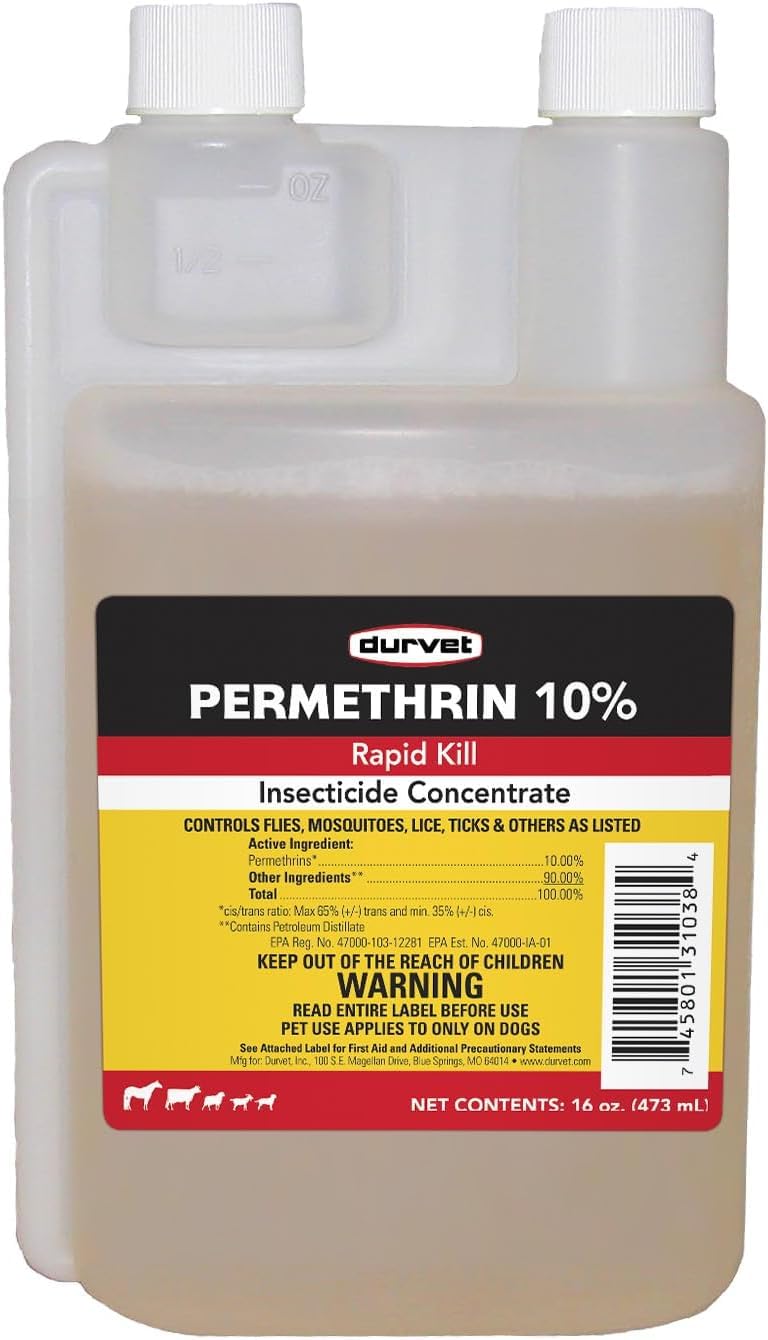
| Durvet Permethrin Concentrate 10%★ Best Overall | Multi-dog homes and kennels | Liquid concentrate | 16 oz | 10% Permethrin | Amazon |
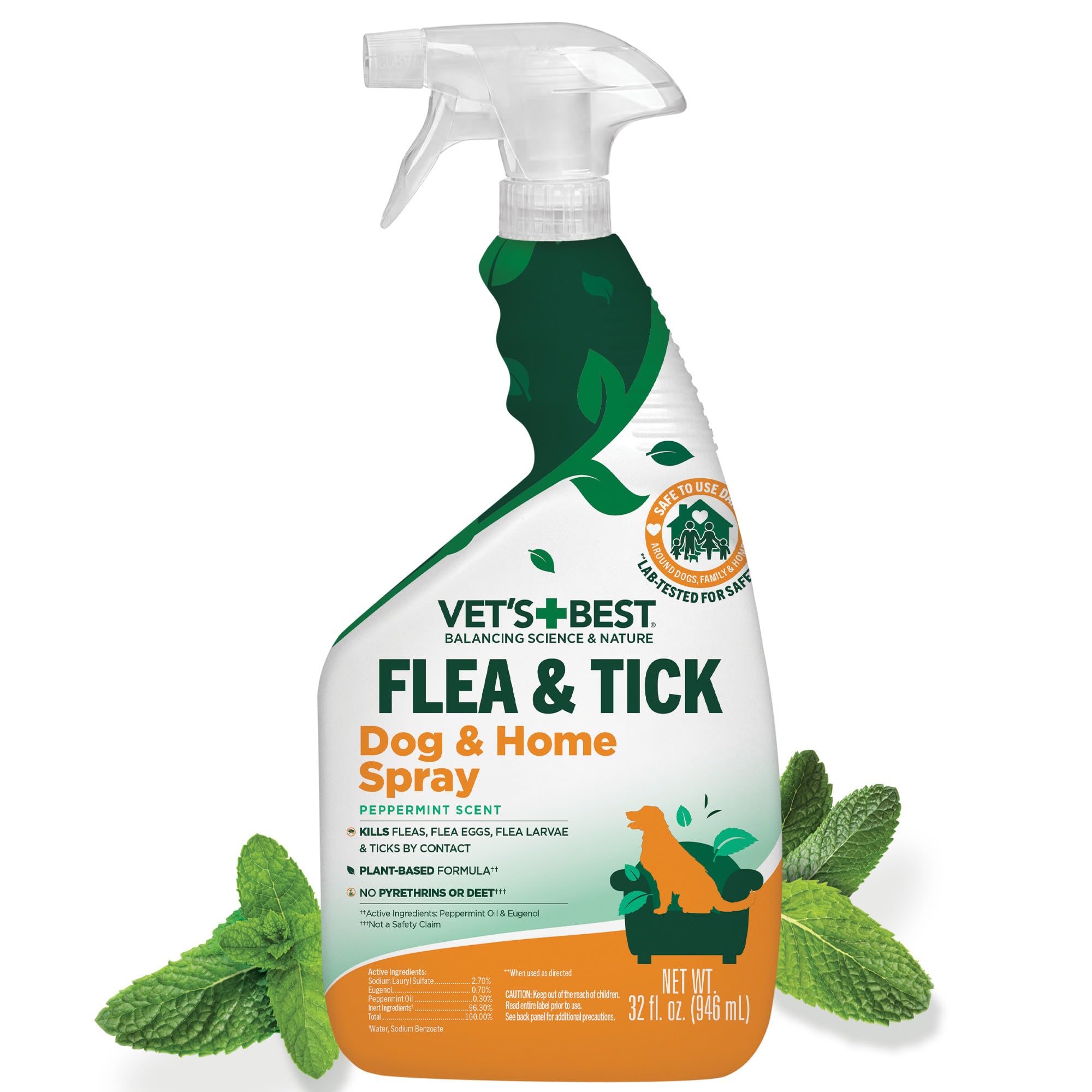
| Vet’s Best Indoor Flea & Tick Home SprayBest for Home & Dog | Treating home and dog together | Spray | 32 oz | Eugenol, peppermint oil | Amazon |
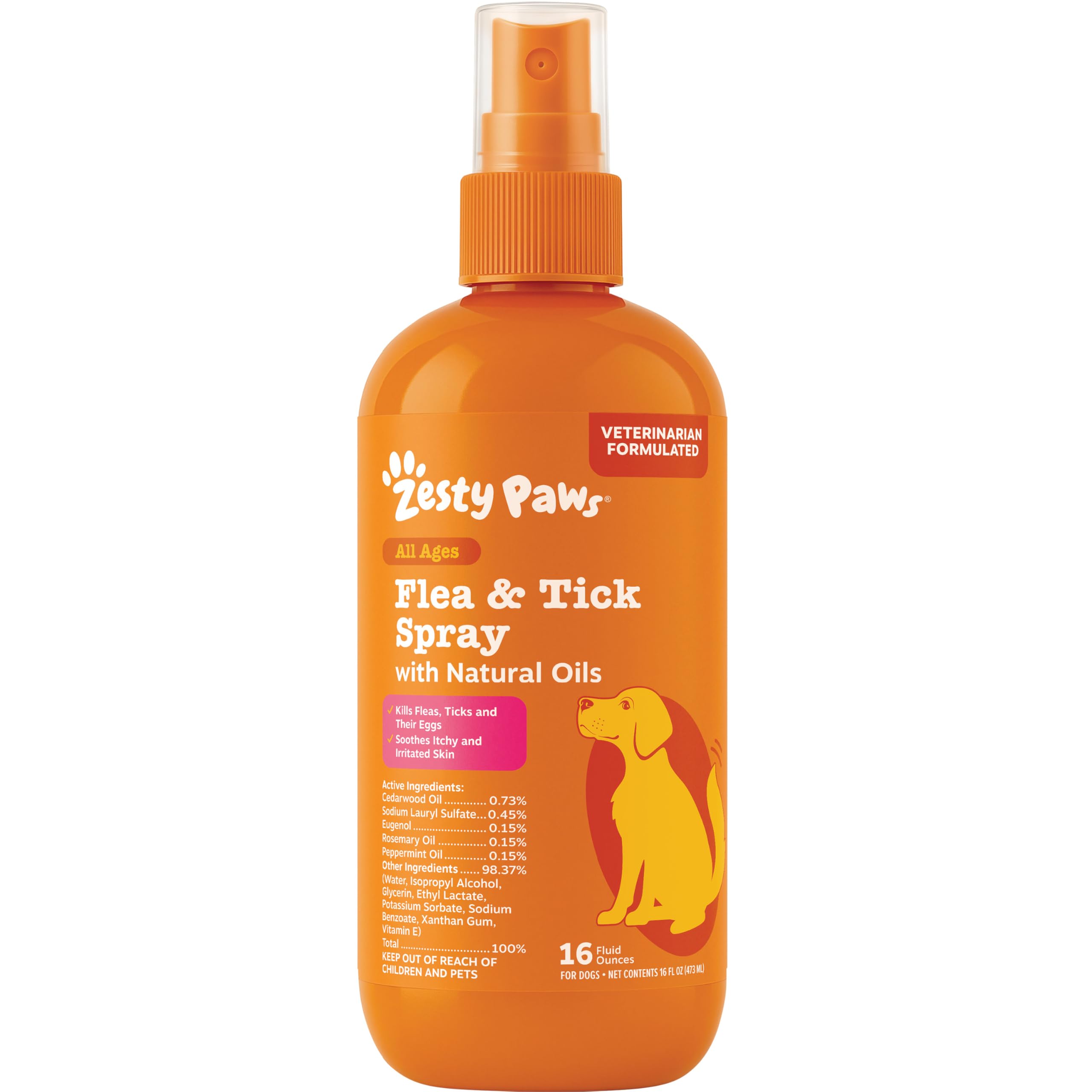
| Zesty Paws Flea and Tick Spray | Coat care on sensitive skin | Spray | 16 oz | Cedarwood, rosemary, eugenol, peppermint oils | Amazon |
| Sawyer Products SP624 Permethrin | Outdoor gear and clothing | Aerosol | 24 fl oz | Permethrin | Amazon |
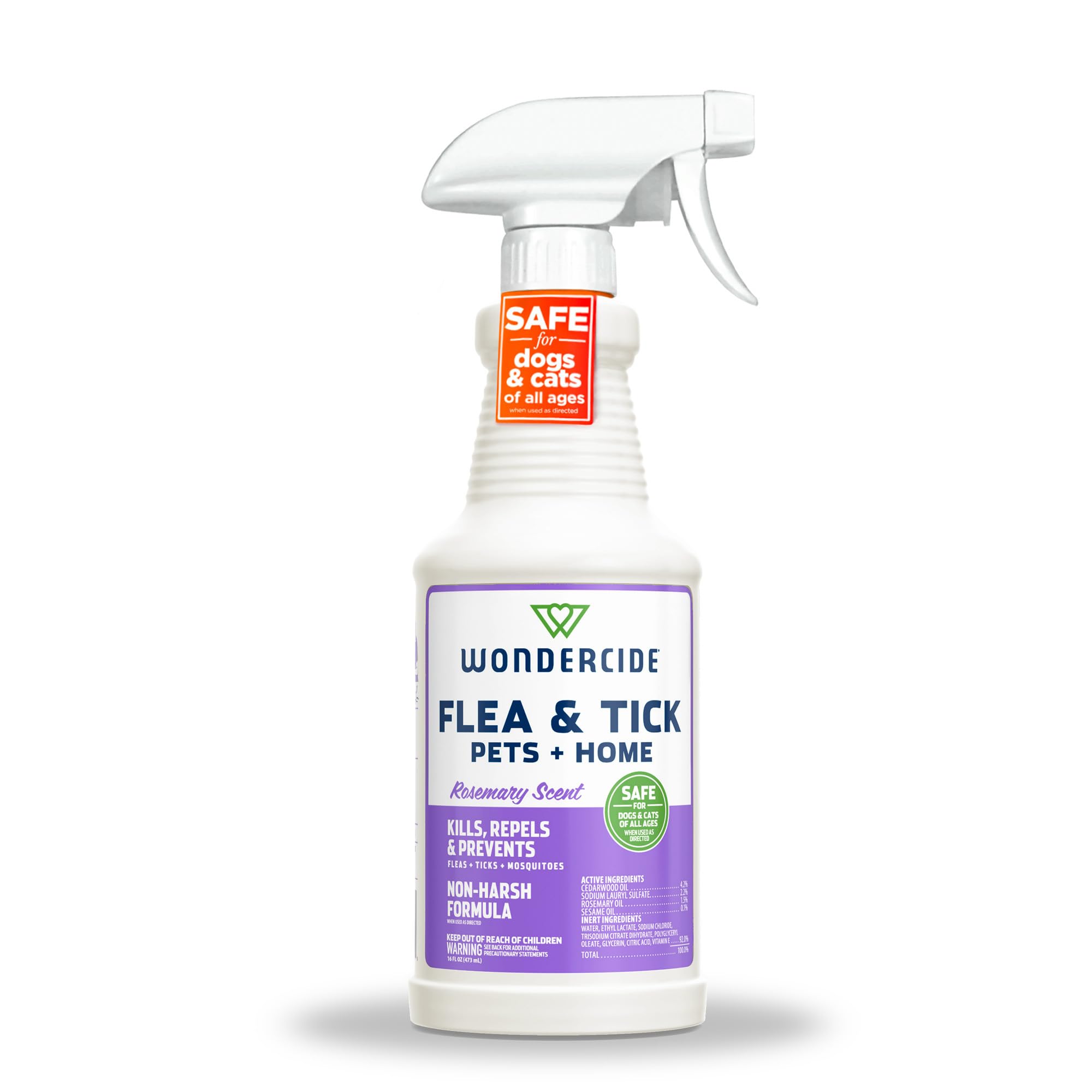
| Wondercide Flea Tick & Mosquito Spray | Whole-home, all-ages households | Spray | 16 fl oz | Cedar oil, rosemary oil, SLS | Amazon |
Detailed Reviews
1. Durvet Permethrin Concentrate 10%
Our pick — 4.5+★ from 1,000+ verified ratings; the strongest balance of quality and price.
One bottle that treats the dog, the kennel, and the barn floor.
The number that decides this one is 10% — that is the permethrin strength, and it is a concentrate you dilute yourself rather than a spray you point and shoot. For a household with several dogs, or a kennel where lice keep coming back, that single 16-ounce bottle is the workhorse of this list. The label names lice and mange mites directly, alongside fleas and ticks, so you are not guessing whether it covers your problem.
Owners praise its effectiveness more than any other quality, and the overwhelming majority of those comments are positive. It also handles premises: the same mix goes on poultry houses, dairies, cattle barns, horse barns, and kennels, which is why it earns its place at the top for anyone treating more than one animal. Note the target species list carefully: cattle, horses, sheep, goats, dogs, swine, and poultry are named, and cats are explicitly excluded.
The catch is real and worth stating plainly. Diluting means measuring, and the smell is a genuine split — a good share of owners find it strong. Safety is the other honest caveat: it is not a product anyone describes as gentle, so it suits a buyer comfortable handling a concentrated insecticide to label and less well someone who wants a spritz-and-go bottle. Compared with the Sawyer aerosol below, this is a drench-and-mix job rather than a spray-can treatment.
What earns it the top spot
- Lice and mange mites are named on the label, not implied
- 16 oz of concentrate goes across multiple animals and surfaces
- Approved for kennels, barns, and premises as well as dogs
- Effectiveness is the quality owners rate highest by a wide margin
Where it asks more of you
- You must measure and dilute it yourself — no ready-to-use shortcut
- The odor divides people; expect a strong chemical smell
- Not for use on cats, and not a gentle-formula product
Reach for this if: you have more than one dog, a kennel, or want to treat bedding and surfaces with the same bottle.
Look elsewhere if: you want a spray you can grab without measuring, or you keep cats in the same space.
2. Vet’s Best Indoor Flea & Tick Home Spray for Dogs
The peppermint spray you can hit the carpet and the dog with in one pass.
If your problem is a dog that keeps reinfecting itself from its own bed, this is the practical pick. It is a 32-ounce ready-to-use spray built on peppermint oil and eugenol, and it is labeled for dogs 12 weeks or older, applied directly to the skin. It is also explicitly fine on carpet and furniture without leaving stains or residue — which is the whole point of a home spray rather than a coat-only one.
The peppermint scent is the runaway favorite here. Owners praise the scent more than any other quality by a wide margin, describing it as pleasant rather than medicinal — a big deal when you are spraying a sofa. Safety runs second, with owners drawn to its plant-based formula precisely because it is gentler than a permethrin concentrate. Worth knowing on the weight front: at 2.4 pounds this bottle is heavier than the Sawyer spray, which sits at 1.1 pounds — a real difference if you are carrying it up and down stairs.
Now the honest part. Effectiveness is genuinely mixed — plenty of buyers report it works, and plenty report it did not shift their infestation. That range is the trade-off for a plant-based formula. If you are dealing with a stubborn, confirmed lice case, use this as the bedding-and-furniture layer alongside a lice-labeled treatment, not as your only weapon. The pleasant scent is a bonus, not a substitute for coverage.
Why it earns a slot: a 32-ounce bottle that covers dog and soft furnishings without staining, in a scent most owners actually like, makes it the natural second purchase for a home outbreak.
The fair warning: plant-based means results vary, so treat it as one layer of a two-part plan rather than a guaranteed solo fix.
The honest read: buy it for the scent, the coverage, and the no-stain finish on carpet and couches.
Pair it with: a lice-labeled formula on the dog itself if you have an active infestation.
3. Zesty Paws Flea and Tick Spray for Dogs
A four-oil coat spray that leaves a shine while it works.
This one is built for the dog that scratches itself raw. The formula blends cedarwood, rosemary, eugenol, and peppermint oils, and it is aimed at fleas, ticks, and their eggs on small, medium, and large dogs alike. The peppermint is specifically pitched at soothing hot, itchy, sensitive skin — so it is the pick for an owner whose main worry is comfort as much as eradication.
Owners single out the coat condition: after spraying, the coat feels softer and carries a shine. That is a nice side effect of an oil-heavy blend, and it makes this an easy spray to reach for between treatments. Scent is the split point — some find it pleasant, others describe it as strong — so if your dog is scent-sensitive, go gently the first time.
Here is the thing to weigh before you commit. The spray application itself draws complaints: several owners mention it streams out rather than misting, which means uneven coverage and more passes over the same patch. Effectiveness is a mixed bag overall as well. For a soft-coat, gentle-care routine on a dog with mild irritation, this fits. For a heavy infestation that needs dead-certain kill, the Durvet concentrate above is the stronger tool.
What people like about it
- Leaves the coat soft and shiny — a noted bonus
- Peppermint oil aimed at hot, itchy skin
- Vet-formulated and sized for small, medium, and large dogs
What to know before you spray
- The nozzle can stream instead of misting
- Scent is divisive — strong to some noses
- Effectiveness is mixed; not the surest kill for a heavy case
Best suited to: a dog with sensitive, itchy skin where coat condition matters alongside pest control.
Think twice if: you need a hard-hitting knockdown for a confirmed, entrenched lice infestation.
4. Sawyer Products SP624 Permethrin

The one that bonds to fabric so bedding and gear keep working between washes.
The standout figure here is six weeks — that is how long this permethrin bonds to fabric fibers, or through six washings, whichever comes first. That makes it the odd one out on this list: it is a treatment for the dog’s bedding, your clothing, tents, and sleeping bags rather than a coat spray. It will not stain or damage clothing, fabrics, plastics, finished surfaces, or outdoor gear, and it is fragrance free.
For anyone whose dog sleeps in the tent or rides along on hikes, this is the layer that keeps lice and ticks off the fabric in the first place. The aerosol treats four outfits per 24-ounce bottle, by the manufacturer’s own math. At 1.1 pounds it is lighter than the Vet’s Best bottle, which sits at 2.4 pounds — an easy thing to toss in a pack. Owners rate its effectiveness highest, and the fabric bond holds up through sweat and water, breaking down instead from UV exposure or washing-machine agitation.
That the label lists dogs among its target species does not make it a coat spray — treat fabric, not the animal, and read the full label. The safety picture is split: some owners consider it fine around cats, others state firmly it is toxic to them, so keep cats well clear while you apply it. There is also a greasy feel on application that some note and others do not. Use it on the environment, and use a dedicated coat product for the dog itself.
The case for it: six weeks of fabric protection from a single 24-ounce aerosol, fragrance free, and tough against both sweat and rain.
Keep it off the dog: this treats gear and bedding — pair it with a body spray for the animal, and mind the mixed reports about cats.
Made for: hiking, camping, and hunting households that want the dog’s bedding and gear protected.
Not for: spraying directly onto your dog’s coat, or homes where cats roam the treated area.
5. Wondercide Flea Tick & Mosquito Spray
A home-and-pet spray built for households with puppies and senior dogs.
What separates this 16-ounce rosemary spray is who it is cleared for: dogs and cats of all ages when used as directed — puppies, kittens, and seniors included. The formula pairs cedar oil, rosemary oil, and sodium lauryl sulfate, and it works on the eggs, larvae, and adults, which is the part that actually breaks a lice cycle rather than just thinning the adults. It also crosses over to carpet, furniture, bedding, and flooring.
Owners praise its safety most, followed closely by its plant-and-mineral ingredients, and the formula is gentle on fabrics. The calming rosemary scent is a selling point for some and a bit strong for others. In a house with young children and an old dog, that all-ages label is the reason many owners land here in the first place: it is non-toxic to fabrics and cruelty free.
Then there is the honest trade-off, and for a plant-based spray it matters. Effectiveness here is genuinely divided — a strong share of owners swear by it and an equally vocal share say it did not kill fleas for them. The scent is the same story, and some pets simply hate being sprayed. It is a reasonable choice for a mild case or as a preventive in a busy household, but for a confirmed, stubborn lice infestation the Durvet concentrate gives you a more certain kill.
The strong points
- Labeled for dogs and cats of all ages when used as directed
- Hits eggs, larvae, and adults to break the cycle
- Safe on carpet, furniture, bedding, and flooring
The honest limits
- Effectiveness is genuinely mixed across owners
- Rosemary scent is strong to some noses
- Some dogs resist being sprayed entirely
Where it wins: busy, all-ages homes needing one spray for the dog, the cat, and the carpet.
Where it falls short: a heavy, established infestation that calls for a stronger, lice-labeled formula.
Know the Specs
Concentrate vs Ready-to-Use
A concentrate is an undiluted formula you mix with water to a set ratio before use. The upside is coverage — one bottle treats many animals and surfaces, which is why kennels and multi-dog homes favor it. The catch is that you must measure, and getting the ratio wrong matters. A ready-to-use spray skips that step entirely; you grab it and apply. If you have one dog and a small space, that convenience is usually worth more than the extra reach.
What the Active Ingredient List Tells You
Look for whether lice are named. Permethrin-based products that list lice and mange mites are aimed at those pests specifically. Plant-based blends leaning on peppermint, cedar, rosemary, and eugenol are gentler and often chosen when harsh chemistry is a concern. Neither is universally right — the difference is fit. Heavier chemistry tends toward more certain knockdown; plant-based formulas are the gentler option with results that vary more between dogs.
Common Questions
Are dog lice the same as fleas and can I use a flea spray on them?
Do I need to treat the bedding and carpet too?
Can I use these sprays on cats as well?
How do I dilute a permethrin concentrate correctly?
Do plant-based lice sprays actually work?
How long does a permethrin fabric treatment last on bedding?
Is it safe to spray a plant-based formula directly on a dog’s skin?
Can lice live on humans or transfer from my dog?
How much product do I go through for one dog?
Why does my dog scratch more right after spraying?
The Bottom Line
For most dog owners facing a lice problem, the dog lice treatment winner is the Durvet Permethrin Concentrate 10% — it names lice on the label, treats the dog and the kennel with the same bottle, and its effectiveness is the quality owners rate highest by a wide margin. If your main focus is the home itself, the Vet’s Best Home Spray covers carpet and dog in one pass with a scent most people actually enjoy. And for the dog that sleeps in a tent or rides along on hikes, the Sawyer SP624 bonds to bedding and gear for up to 6 weeks so the environment stops reinfecting the animal.
How we choose
We do not accept paid placement. Every pick is matched to a real buyer and a real use-case; we do not hands-on test units.
Sources
Specifications: manufacturer listings and product documentation. Review insights: verified customer reviews, as of November 2026. Pricing: not shown on this page (it changes often); check the current price via the retailer link.
As an Amazon Associate, My Heart Lives Here earns from qualifying purchases. This does not affect which products we feature.