Heads up: This post contains affiliate links. As an Amazon Associate I earn from qualifying purchases, at no extra cost to you. Learn more
Specs are compiled from manufacturer listings and verified buyer reviews and can change over time — please confirm the key details on the product page before buying.
You want teeth that look natural, hold their shape, and do not crumble the week after you finish them. That is the whole game with denture teeth material. Most confusion comes from mixing up three different things sold under the same label: printable resin (a liquid you harden with UV light in a 3D printer), acrylic tooth sets (pre-made plastic teeth), and full DIY kits with gum material and molds. This guide separates them so you buy the right one for the job you actually have.
This guide is built by comparing the manufacturers’ published specifications and the patterns across verified customer reviews, so you get each pick’s real strengths and trade-offs instead of marketing spin.
The short answer: match the material to your workflow first, then worry about shade. A printer resin needs a 405nm curing setup, an acrylic tooth set needs dental cement you buy separately, and a DIY kit needs patience and a moldable gum base. Everything below is filtered through that reality, so you can find the right denture teeth material without guessing.
Top Picks


How To Choose The Best Denture Teeth Material
The first question is not which product is best. It is which of the three formats you actually need. A 3D-printing resin is a liquid you cure in layers with a printer. Loose acrylic teeth are solid tooth shapes you set into a denture base with cement. A DIY kit bundles gum material, molds, and tooth units so you build the whole thing at the kitchen table. Buy across those lines and nothing works.
Match the format to your tools
If you own a DLP or LCD 3D printer, you are shopping for liquid resin — look for the wavelength the printer uses on the bottle. If you have no printer and no lab, buy a kit or a pre-set partial, not a bottle of resin. Loose acrylic teeth are for someone repairing an existing denture or building one with a professional, because they need a separate cement to stay put.
Read the shade code before anything else
Shade letters and numbers describe how white or warm the tooth looks. A1 is the lightest and closest to milky white. A2 sits slightly warmer and is often the closest match for most adult teeth. A3 is darker than A2. Pick the shade nearest the teeth still in your mouth, not the brightest one you like in a photo.
Hardness and cure decide how long it lasts
A finished tooth’s durability depends on how fully the resin cures under your light. A hardness figure on the bottle describes the surface after secondary curing, so it only holds if you run that extra light pass. Moldable gum-base kits are judged on fit instead, and fit is the part you control by re-molding until it seats.
The supplies nobody includes
Most DIY kits ship the teeth, gum material, and mold but leave out dental cement, extra polishing compound, or a curing light. Budget for those separately before you start. A kit missing its cement or curing light stalls your build until the rest of the order arrives.
Side-by-Side Comparison
| Model | Best For | Format | Shade / Color | Quantity | Amazon |
|---|---|---|---|---|---|
| Antinsky Temporary Dental Model Resin★ Best Overall | 3D printer owners making temporary teeth | Liquid resin, 405nm | A2 | 500g | Amazon |
| At-Home DIY Denture KitPremium Pick | Craft-minded beginners starting from scratch | Moldable DIY kit | — | — | Amazon |
| Prime Dental VLC Flowable Composite A2Best for Precision | Precise cosmetic and restorative application | Light-cure composite, 4 syringes | A2 | 2 Gm per pack | Amazon |
| JMU 112 Pcs Dental Acrylic Resin Denture Teeth | Repair, teaching, and prop work | Loose acrylic tooth sets | A1 | 112 pcs (4 sets of 28) | Amazon |
| Denture Fake Teeth DIY Full or Part Kit | Temporary replacement with a teaching angle | Gypsum model + gum + teeth | — | — | Amazon |
| Fake Teeth-DIY Dentures Customizable Kit | Full or partial denture built at home | Moldable DIY kit | — | — | Amazon |
| DENTUREWAY Dentures DIY Kit | All-in-one starter kit with spares | Full kit with mold tools | Natural | 56 synthetic resin teeth | Amazon |
| DIY Dentures Customizable Kit, 12 Pieces | Upper and lower set on a modest budget | Moldable DIY kit | — | 12 pieces | Amazon |
| Custom Removable Partial Dentures (5 Teeth) | Filling a small gap, no molding required | Pre-made partial | Natural | 5 teeth | Amazon |
| Custom Partial Dentures Removable Set (6 Teeth) | Larger gaps needing a finished partial | Pre-made partial | Natural shade matching | 6 teeth | Amazon |
Detailed Reviews
1. Antinsky Temporary Dental Model Resin 500g
Our pick — 4.0+★ from 80+ verified ratings; the strongest balance of quality and price.
A tooth-hard resin that cures in 3 seconds a layer and polishes to a scratch-resistant finish.
You own a resin printer and you want to print a temporary tooth that actually feels like a tooth. That is who this 500g bottle of A2 is for. The blend cures under 405nm light — the near-ultraviolet wavelength most DLP and LCD printers run — and it is built specifically to resist shrinking as it sets. Less shrink keeps the printed tooth at the size you designed, which matters when it has to sit against your own gum line.
The number to hold onto is the hardness: 80~90D once cured. That is a Shore D reading, a scale that measures how hard a plastic is, and 80~90D puts this up in the range where the surface takes a simple polish and stands up to scratching after secondary curing. Secondary curing is the extra light pass after printing that fully sets the resin — skip it and the surface stays softer than the 80~90D rating. Antinsky also calls out a sharp, high-precision surface that captures fine tooth detail.
Speed is the other real-world win: 3 seconds per layer. A short print run finishes faster than most craft resins allow, so a spare tooth is not an all-evening project. The catch is that this is a material, not a whole solution. You need the printer, the 405nm light source, and the design file — the bottle gives you none of those. Note too that it is marketed as a temporary model resin, so treat it as a short-term piece rather than a permanent restoration.
Where this resin earns its place
- Cures to 80~90D hardness, hard enough to polish and tap after secondary curing
- 3 seconds per layer makes short print runs genuinely quick
- Low-shrink formulation keeps printed dimensions stable
- Works with most 405nm DLP and LCD printers
The fine print worth knowing
- Material only — printer, curing light, and design file are on you
- Sold as a temporary model resin, not a permanent restoration
- One shade in this listing: A2
Made for: anyone with a 405nm DLP or LCD printer chasing a hard, polished temporary tooth.
Needs first: a curing setup you already own — without it, the hardness figure never shows up.
2. At-Home DIY Denture Kit
A kit that hands you the resin, the mold, and the case — and asks for patience in return.
This is the option for someone with no printer, no lab, and no loose teeth to cement, but who wants to shape a full set at the kitchen table. The build centers on moldable resin you customize and polish yourself. The gum components are described as skin-friendly resin, and the kit ships with a decorative storage case that doubles as gift packaging.
Two specs stand out in the listing. The moldable parts suit medium to large mouths, so this is not a one-size-fits-small product. And the resin is billed as reusable, meaning you can rework your fit rather than accept the first attempt. Stability claims cover color holding and resistance to deformation and microcracking — the things that undo a thinly cast temporary piece.
Here is the honest part: at this rating level, the kit has not yet built a track record you can lean on. Treat it as a beginner-friendly starter, not a proven performer. The fit still depends entirely on how carefully you mold and how many passes you give it. If you want a defined shape and a finished look from the first try, this is the wrong first purchase.
What you actually get: resin, moldable gum components, polishing tools, and a storage case — a full start-from-scratch kit for medium to large mouths.
Where it asks more of you: the reusable resin rewards patience and re-molding, and the review base is thin, so go in expecting to iterate rather than nail it once.
Reach for this if: you want a complete mold-and-shape kit with a reusable resin and a case to keep it in.
Hold off if: you need a proven track record before you spend — the review history here is still short.
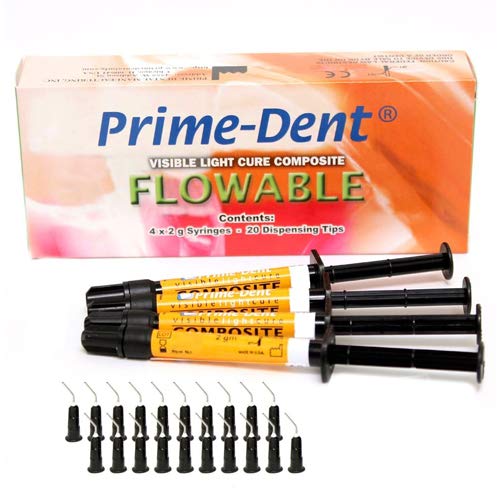
3. Prime Dental 004-010A2 Flowable Composite A2
Four syringes of flowable A2 for small, careful fills where squeeze precision beats bulk.
Think of this as the repair-paste option. It is a visible-light-cure composite — meaning it hardens when a dental curing light shines on it — packaged as four 2 Gm syringes in A2 shade. The flowable consistency is the selling point: it squeezes precisely into a small gap instead of needing to be packed and shaped. For cosmetic or restorative touch-up work where you want the material to land exactly where you point it, that consistency is the whole argument.
The weight difference versus the big DIY kit on this list is worth naming. This pack runs about 2 ounces against the 12.17 ounces of the Fake Teeth DIY kit — a 6.1x gap. That is the difference between a small drawer-sized set of syringes and a full box of molding materials. The quality of the composite itself draws the most consistent praise from buyers, with the material earning repeat recommendations.
Now the caveat, and it is a real one: cure and stick are where this splits opinion. Some report strong hold; others say it fails to cure properly or does not adhere. Value draws a similar split. That makes it a fit question — this rewards someone who already understands light curing and surface prep. If you are new to the process, the mixed reports on adhesion mean you should expect a learning curve rather than plug-and-play results.
Best used for: precise, small fills in A2 where flowable control matters more than volume.
What to plan for: adhesion and cure results vary, so surface prep and a proper curing light are not optional — go in ready to learn the technique.
Pick it for: cosmetic and restorative touch-ups where you can control the light cure and the prep.
Look elsewhere for: a build-it-yourself full denture — this is paste, not a kit.
4. JMU 112 Pcs Denture Teeth A1

A bulk box of solid, full-sized acrylic teeth that looks layered like the real thing.
If your job is repair, teaching, or prop work, you do not need a kit — you need a pile of tooth units in the right shade. This box delivers 112 pieces across four sets of 28, made from a medical grade resin synthetic. Each tooth carries two layers of coloring, so the edge shows a translucent milky effect with enamel and dentin tones that read as real rather than flat white plastic.
The A1 shade is the lightest of the common codes, closest to milky white. These are solid, full-sized adult teeth rather than crowns, sized for European and American tooth proportions. The set also packs flat: measured at 8.75 x 6.7 x 0.99 inches, it slots into a shallow drawer where a bulkier kit would not. For comparison, the Prime Dental composite pack measures 6 x 3 x 2 inches — this box is broader but flatter, the shape of a parts tray rather than a supply caddy.
Read the listing carefully before you buy, though. The box does not include cement or plastic beads; the maker tells you to buy professional dental cement separately if the teeth are going into a mouth. That one missing item is the difference between a working repair and a box of loose teeth. For teaching models and costume work, that is a non-issue.
Why this box earns its spot
- 112 pieces across 4 sets of 28 — plenty of spares for repairs and practice
- Two layers of coloring give a translucent milky edge near the enamel line
- Solid full-sized adult teeth, not undersized children’s units
- Shade A1, the lightest standard code, for a milky-white match
Bring your own cement
- No cement or plastic beads in the box — sold separately
- A1 is one shade; warmer mouths will want A2 or A3
- Intended for adults, so it will look oversized on a child’s model
Built for: repair trays, dental teaching models, and prop work that need volume and a milky-white shade.
Order alongside: dental cement if a real mouth is involved — the box does not include it.
5. Denture Fake Teeth

A gypsum-model kit that doubles as a lesson in how dentures are actually built.
This one ships with a gypsum model, gum material, and fake teeth — the three pieces you need to mold a full or partial set. It covers both top and bottom, so it is not limited to a single arch. The brand pitches it two ways: as a temporary replacement for a better smile, and as an educational tool that walks you through the basics of denture crafting.
Reusability is the practical hook. The materials let you repeat the molding process until the result satisfies you, which matters when the fit on a first pass is rarely perfect. The product also leans on the idea that patience is the deciding factor — with practice, the kit is designed to produce a comfortable custom result.
The honest read: fit and quality are where this kit gets its split verdict. Some report a great fit; others hit awkward placement, alignment trouble, and durability that falls short of a temporary fix. That split points to a real skill dependency — this is a kit where the result tracks how carefully you mold. Going in with a take-your-time mindset is the difference between a usable temporary and a frustrating afternoon. The gypsum model also makes it a reasonable pick for a classroom or a teaching demonstration.
Two jobs in one box: a gypsum model, gum material, and teeth for a full or partial build, reusable so you can rework the fit.
The luck-of-the-draw factor: fit reports split both ways, so plan on a patient, careful molding session — and treat the piece as temporary.
Good match for: patient DIYers and anyone who wants a teaching-grade kit to learn the denture process.
Think twice if: you want a quick, forgiving first attempt — placement and alignment demand care here.
6. Fake Teeth DIY Dentures

A make-it-yourself denture kit pitched at the patient, with every accessory in the box.
The volume tells you what kind of purchase this is. At 12.17 ounces, the package weighs about 6.1x what the Prime Dental composite syringes do at 2 ounces — this is a full molding operation with accessories, not a small repair paste. In the box you get the accessories needed to shape a full or partial denture, plus reusable materials and step-by-step instructions. It is aimed at covering missing or imperfect teeth and at teaching the denture-making process.
The design is built around adjustability. The tooth piece can be molded, shaped, trimmed, and adjusted to sit in your mouth, so you are not locked into the first shape. The maker frames the whole thing as patient work — the note about spending patience to make it comes directly from the listing, and that lines up with how molding kits behave. There is also a full denture or partial denture scope, so it is not limited to a single tooth gap.
Be clear-eyed about what buyers are reporting. Quality and value both land in negative territory here, and that is the reality of this category at the DIY end: results depend on the hands doing the molding. It is the right tool if you expect to rework it. It is the wrong tool if you want a finished set that drops in without patience.
What this is: a full-molding kit with reusable materials, step-by-step instructions, and a 12.17-ounce package of accessory supplies.
The trade-off: the molding workload is heavy and buyer experience varies widely, so go in patient and ready to redo the fit.
Worth it if: you want a full accessory kit for a patient, adjustable, make-it-at-home denture build.
Skip for: a quick fix for a single missing tooth — the scope and workload are bigger than that.
7. DENTUREWAY Dentures DIY Kit

Fifty-six teeth, two full sets, and every tool in one box — the deepest kit on this list.
Look at the parts list and it is clear why this one is the go-to for a first full build. You get a full set of 56 synthetic resin teeth, gum material, trays, molding materials, stone powder, a mixing bowl and knife, sand boards, a measure cup, and spares to remake false teeth. Upper and lower pieces are both included, and two sets ship together. Almost nothing is left on the shopping list.
What buyers respond to most is how the finished piece looks — the shade reads as real, not chalky or flat. That is the strong point of the natural color option here. The kit is sized small and built for unisex adults, so it is not a custom-fit single tooth but a full-scale build. The tutorial materials are included to walk you through the process.
The honest shape of the feedback is mixed on the parts that depend on skill. Quality, ease of use, the dental mold, and fit all draw a spread of reactions, and the value question splits too. Some say the smallest mold is still too big and the finished result does not align well; others find it easy to work with and appreciate the short video and simple instructions. That spread tells you the outcome tracks effort and technique rather than the product alone. Budget for a practice pass.
What makes this the deepest kit
- 56 synthetic resin teeth plus spares — genuine headroom to remake a set
- Mixing bowl, knife, stone powder, sand boards, and measure cup all included
- Natural shading that reads as real to the eye
- Upper and lower pieces, two sets, in one purchase
Where the fit can fight back
- Reports of the smallest mold running too big for a snug fit
- Outcome quality depends heavily on how carefully you mold
- Alignment of the finished piece is not guaranteed on the first try
Go for it when: you want the most complete tool-and-materials stack for a full upper and lower build.
Be ready for: a sizing gamble on the molds — the smallest option is reported large, so plan a practice pass.
8. DIY Dentures, Customizable Kit with 12 Pieces
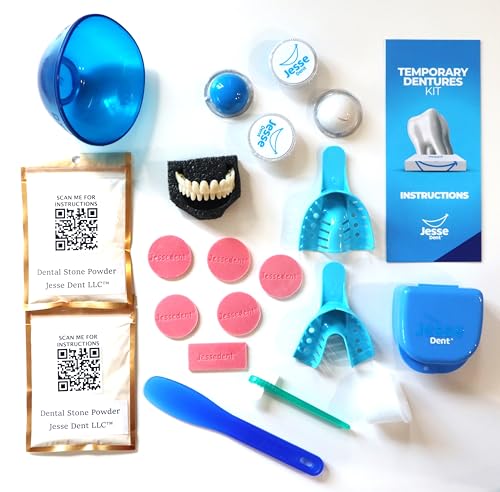
Twelve pieces and a mold-it-yourself fit, built for both arches in one run.
For someone who wants upper and lower coverage and a kit that claims precision fit without a big parts list, the 12-piece setup is the tighter package. It ships with all the materials for a personalized denture, plus clear instructions, and the form is moldable so the finished piece adapts to the shape of your mouth. The materials are described as reliable and durable for daily use.
Effectiveness is what the buyer feedback circles back to — it works, and often better than expected. That is the strength of this kit, and it lands among the more consistent notes in this category. The feel of a good result is a snugger fit around the gum line plus an affordable route to a finished piece compared with traditional options.
Where it can trip: getting the dentures to actually look right and to sit comfortably. Some of the final results are noted as looking more like a child’s teeth than an adult set, and a few report the working process takes more effort than expected. Size also runs toward babies’ teeth proportions, so it is not a match for everyone’s mouth. On durability, expect the material to work for its stated temporary role but treat it as a short-term piece.
What it does reliably: moldable materials for upper and lower pieces with clear instructions and a precision-fit target.
Where it needs expectations set: appearance and comfort vary, and some find the finished look suited more to a smaller mouth than an adult one.
Choose this if: you want a full upper-and-lower kit with a modest parts count and a customizable, mold-to-fit approach.
Weigh the look: some results read small and child-like, so if a natural adult appearance is the priority, consider what you can tune with trimming.
9. Custom Removable Partial Dentures 5 Teeth
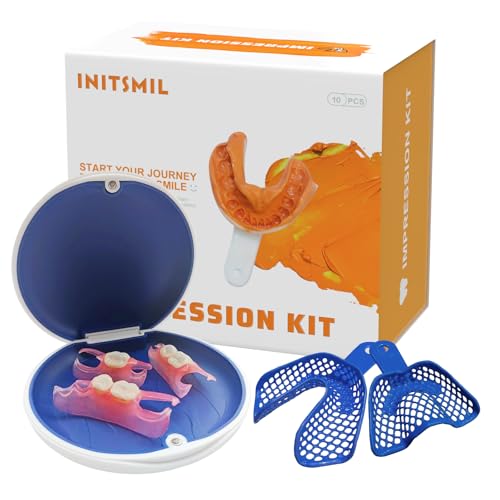
No molding, no mixing — a five-tooth partial that simply slides in and out.
If the whole idea of mixing powder and molding a base sounds like a weekend project you do not want, this is the other route. It is a finished removable partial sized for five missing teeth, built to sit securely and fill the gaps in both men and women. There is no kit to assemble — you insert it, remove it, and clean it like a finished appliance.
The handful of design notes matter more here: natural appearance, a comfortable seat, durable construction for daily use, and easy insert-and-remove for cleaning. There is also a functional angle — a fitted partial helps chewing and speaking by replacing teeth rather than leaving a gap. That is the everyday payoff, and it is the reason someone picks a pre-set over a build-your-own kit.
The trade-off depends on track record and sizing. This is a newer listing with only a small review base, so there is less experience to lean on than the deeply reviewed kits on this page. And a fixed five-tooth partial is a fit proposition — it works if the tooth count and gaps line up with yours, and it will not help if the gap pattern is different.
No assembly required: a finished, removable five-tooth partial for daily wear and simple cleaning.
Two things to weigh: the review history is still short, and a five-tooth config only fits gaps that match that count and layout.
Pick it when: your gaps map to a five-tooth arrangement and you want zero DIY work.
Look elsewhere if: you need a different tooth count — a fixed partial cannot stretch to cover more.
10. Custom Partial Dentures 6 Teeth
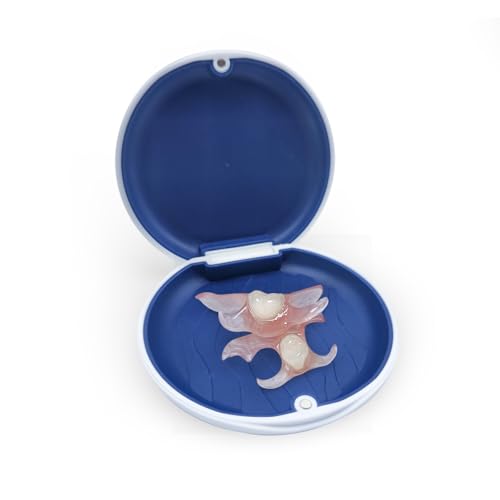
A finished six-tooth partial with a custom-molded seat and a case to keep it in.
For a bigger gap, this finished partial comes in flexible configurations from one to six missing teeth, so the count can match the span you are filling. It is custom-molded to sit firmly in place, shaped for comfort during meals and conversation, and includes a dedicated storage case to keep the appliance clean between wears.
This is the pick whose strengths are clearest in real use. Effectiveness earns the strongest response — the partial is reported to do an outstanding job. Fit and appearance back that up, with buyers noting it looks totally normal and sits as it should. For many, that is the payoff of a finished set over a molding kit: no mixing, no practice passes, just wear it and go.
The honest note is ease of use. Some find the process simple; others find it takes time to get comfortable, and a few note gaps between the false and real teeth. Plan for a short settle-in period. As with any pre-made partial, the fit is only as good as the match to your own gaps, so confirm the configuration lines up with yours before you buy.
Why the finished look wins here
- Natural shade matching that reads as real to the eye
- Custom-molded to sit firmly during meals and talking
- Storage case included to keep it clean between wears
- Configurations for 1 to 6 missing teeth to match the gap
What settling in feels like
- Some find it takes time to get comfortable in the mouth
- Reports of gaps between false and real teeth if the fit is off
- Custom count means a mismatch with your gaps reduces the benefit
The easy route: a finished, natural-looking six-tooth partial with a case and firm custom-molded seating.
Give it time: comfort is a settle-in process, so expect a short adjustment before it feels like yours.
Know the Specs
Light-cure wavelength (405nm)
405nm is the near-ultraviolet wavelength most DLP and LCD resin printers use to set liquid resin. If your printer runs at that wavelength, a resin labeled 405nm will cure correctly. A mismatched wavelength leaves the piece gummy or under-cured. Check the bottle and the printer before you buy.
Shore D hardness
A Shore D reading measures how hard a cured plastic is. A figure like 80~90D tells you the surface will take a polish and resist scratching after secondary curing. Lower hardness means a softer surface that scuffs easily. Secondary curing — the extra light pass — is where that hardness gets locked in, so it is not a step to skip.
Shade codes (A1, A2, A3)
These codes describe tooth warmth. A1 is the lightest and closest to milky white. A2 sits slightly warmer and is often a close match for adult teeth. A3 is darker than A2. Choose the code nearest the teeth still in your mouth — a shade too bright stands out more than one slightly off.
Flowable vs. packable composite
Flowable composite squeezes from a syringe and lands where you point it, so it works for small, precise fills. Packable material needs shaping by hand. Flowable earns its keep where control matters more than volume, which is why small syringes suit touch-up and restorative work.
Cure time per layer
On a resin printer, cure time is how long each layer takes to set — 3 seconds per layer is a short cycle. Shorter layers finish a print faster, so a quick spare tooth is not an all-evening job. Slower resins force longer waits on the same print.
Shrink and dimensional stability
Resin shrinks slightly as it cures, and any shrink changes the printed size. A low-shrink formula keeps the shape you designed, which matters when the piece sits against the gum line. Stability here means the piece keeps its fit against the gum line, not just its appearance.
Common Questions
Will 405nm dental resin work in my LCD or DLP printer?
How long does a DIY denture kit take to make?
Do the acrylic denture teeth come with cement?
What is the difference between A1, A2, and A3 denture teeth shades?
Is a pre-made partial denture better than a DIY kit?
How long will a temporary resin or DIY denture last?
Do I need a secondary cure after printing dental resin?
Can I use flowable composite to fill a denture tooth gap?
What shapes the fit of a mold-it-yourself denture?
Are acrylic denture teeth sized for adults or children?
The Bottom Line
For most buyers, the denture teeth material winner is the Antinsky Temporary Dental Model Resin because it delivers a hard, polished, low-shrink tooth with a 3-second-per-layer cure (each thin layer hardens in 3 seconds) — exactly what a printer owner needs. If you do not own a printer, the DENTUREWAY DIY Kit is the better fit, with 56 resin teeth, two full sets, and every mixing tool in the box. And for a finished partial with no molding at all, the six-tooth custom partial earns its place on natural shade matching and a firm custom-molded seat.
How we choose
We do not accept paid placement. Every pick is matched to a real buyer and a real use-case; we do not hands-on test units.
Sources
Specifications: manufacturer listings and product documentation. Review insights: verified customer reviews, as of November 2026. Pricing: not shown on this page (it changes often); check the current price via the retailer link.
As an Amazon Associate, My Heart Lives Here earns from qualifying purchases. This does not affect which products we feature.