Heads up: This post contains affiliate links. As an Amazon Associate I earn from qualifying purchases, at no extra cost to you. Learn more
Specs are compiled from manufacturer listings and verified buyer reviews and can change over time — please confirm the key details on the product page before buying.
If your crepe myrtle pushes leaves all summer and barely a flower, the fix is usually the food, not the tree. These five picks cover the real spread: a bloom-boosting powder, a liquid made just for crepe myrtles, and slow granular options for bigger yards.
This guide is built by comparing the manufacturers’ published specifications and the patterns across verified customer reviews, so you get each pick’s real strengths and trade-offs instead of marketing spin.
Most buyers get this wrong by grabbing a high-nitrogen lawn feed, which grows wood and foliage at the expense of flowers. Below, you’ll see which nutrient ratios actually push buds and which ones suit container trees. This is the practical shortlist of crepe myrtle fertilizer.
Top Picks
How To Choose A Crepe Myrtle Fertilizer
Three things decide whether your tree rewards you with flowers or just leaves.
Read the NPK ratio first
Those three numbers on the bag tell you the share of nitrogen, phosphorus, and potassium, and for flowering you want the middle two to stand out.
Match the form to the planting
A powder or liquid mixed in water reaches roots fast, while granules release over weeks and suit a tree already settled in the ground.
Check the mixing rate
Powders and liquids are dosed per gallon of water, so a simple ratio keeps you from overfeeding a young tree.
Side-by-Side Comparison
| Model | Best For | NPK Ratio | Form | Mix Rate | Amazon |
|---|---|---|---|---|---|
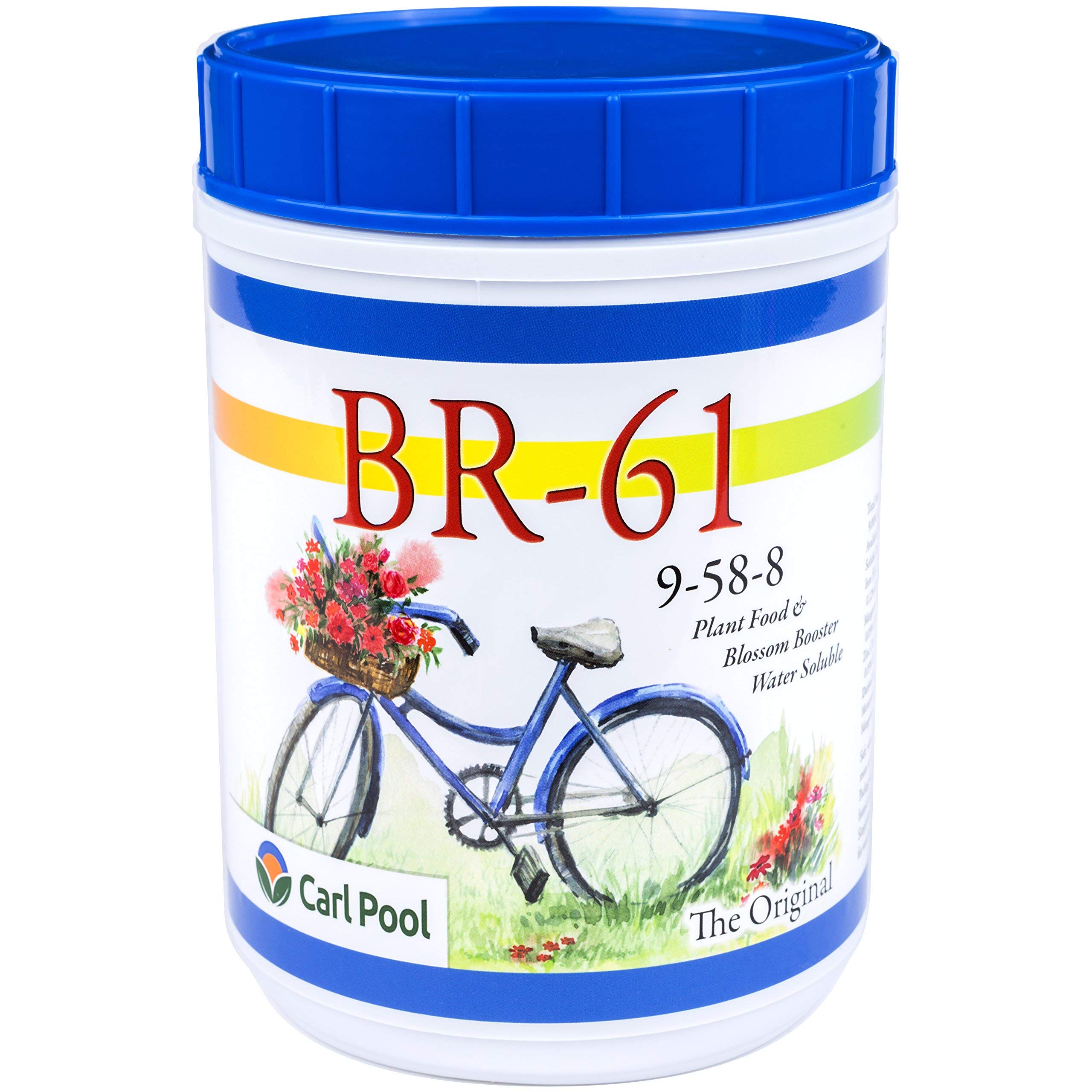
| Carl Pool BR-61 Plant Food 9-58-8★ Best Overall | Fast bloom boost | 9-58-8 | Powder | 1 tablespoon per gallon of water | Amazon |
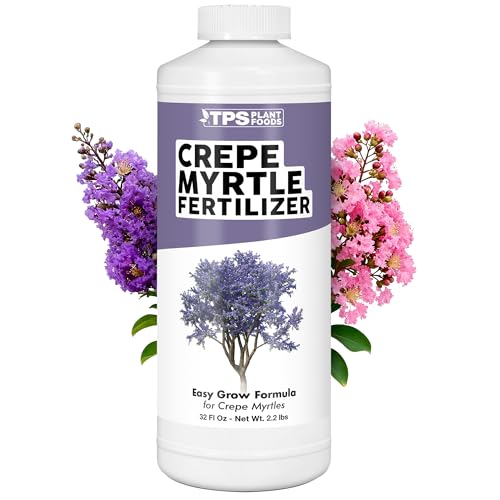
| TPS Nutrients Crepe Myrtle Liquid, 32 ozCrepe Myrtle Specific | Crepe-myrtle-only feeding | — | Liquid | 1:10 | Amazon |
| Fertilome Tree and Shrub Food 19-8-10 | Established yard trees | 19-8-10 | Granules | 19-8-10 | Amazon |
| Jobe’s Organics Granular All Purpose 4-4-4 | Organic gardening | 4-4-4 | Granules | 4-4-4 | Amazon |
| NutriStar Crape Myrtle Granular, 4 lb | Container and flowering trees | 10-15-19 | Granules | 10-15-19 | Amazon |
Detailed Reviews
1. Carl Pool BR-61 Plant Food 9-58-8
Our pick — 4.5+★ from 950+ verified ratings; the strongest balance of quality and price.
A bloom-first powder with a phosphorus number that dwarfs the rest.
The 9-58-8 ratio is the headline here — that middle 58 is phosphorus, the nutrient tied to flower and root production. It is a powder you dissolve at 1 tablespoon per gallon of water, and it feeds through both roots and leaves, so you are not digging around the trunk. With 48 ounces in the tub, the 3-pound bag stretches across a good stretch of watering cans.
What wins people over is how visibly it pushes flowering — the bloom and appearance feedback on this one is almost entirely positive, and the ease of mixing gets called out as much as the results. The catch: it is a bloom-season feed, not a soil-builder, so lean on it when you want flowers fast rather than as your only annual treatment.
The Strong Points
- 9-58-8 pushes flowering hard with almost no digging
- Feeds through roots and leaves for faster uptake
Where It Falls Short
- Best treated as a bloom-season booster, not a full-year feed
Reach for this if: you want the most direct route to more flowers this season.
Not your pick if: you want one slow granule to feed the tree all year.
2. TPS Nutrients Crepe Myrtle Liquid, 32 oz
The only pick built and labeled for crepe myrtles alone.
Where the Carl Pool powder is a general bloom booster, this one is a liquid made specifically for crepe myrtles, and it mixes at a simple 1:10 ratio. It is high-potassium, which is the last number in an NPK ratio and the one tied to sturdy growth and flower quality. It suits both potted and in-ground trees, and it is made in the USA.
Owners describe new growth showing up almost overnight after feeding, and the feedback leans heavily toward visible blooming rather than just greener leaves. Honest note: as a liquid, it needs re-mixing every few weeks through the season rather than a single spring dose.
Mix-and-go feeding: a 32-ounce bottle at a 1:10 ratio is simple to dose and dialed to one plant type.
Go with this if: you want a formula aimed squarely at crepe myrtles.
Look elsewhere if: you would rather set out granules and forget them.
3. Fertilome Tree and Shrub Food 19-8-10

Granules that sink toward the feeder roots without a shovel.
This is a 4-pound granular with a 19-8-10 ratio, and its selling point is a penetrating action that moves the food down to the feeder roots so you skip the hole-digging entirely. That makes it a sensible choice for an established tree whose roots run wide.
The quality feedback is uniformly strong, though growth results divide — some report lush summer color, and a few report surprises after feeding. Treat it as a steady general tree feed rather than a dedicated bloom booster; the higher nitrogen favors growth first.
What Earns Its Place
- Penetrating granules reach feeder roots without digging
- 4 pounds covers a settled yard tree
The Honest Trade-off
- Growth results are mixed depending on the tree
Best for: established trees you want fed with zero digging.
Think twice if: your goal is pure bloom load over foliage.
4. Jobe’s Organics Granular All Purpose 4-4-4

The big-bag organic option for a whole-garden feeding routine.
A 16-pound bag at a balanced 4-4-4 ratio, OMRI listed for organic gardening, and meant to be applied every 2-3 weeks through the growing season. That 16 pounds is roughly five times the heft of the 3-pound Carl Pool tub, so it covers far more than one tree. It is a general feeder, so crepe myrtles share it with vegetables and shrubs.
The quality and effectiveness reputation here is broad and strong — it is the most-reviewed pick for good reason. The honest catch is odor: it is organic and earthy, and not everyone loves the smell of a freshly fed bed.
Big-bag value: 16 pounds of organic granules goes a long way across a mixed garden.
Choose this if: you want one organic bag for the whole yard.
Skip the organics if: a earthy smell in the garden puts you off.
5. NutriStar Crape Myrtle Granular, 4 lb
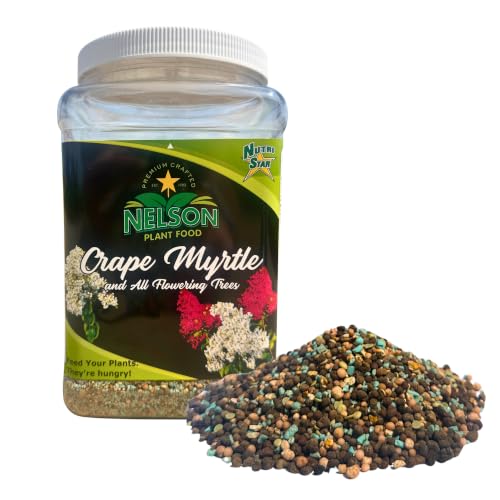
A flowering-tree granule that leans on potassium for the finish.
The 10-15-19 ratio puts the biggest number on potassium, which supports bloom quality and stem strength, and it is sold as a granular for crape myrtle and other flowering trees, indoor or in containers. At 64 ounces it is the largest tub in this lineup, edging out the 48-ounce Carl Pool by a clear margin.
What people rave about is season-long flowering — continuous blossoms and fresh growth within a week of feeding come up again and again. Worth knowing: it carries a premium tier feel, and a fair share of buyers find it steep for the size.
Why It Stands Out
- 10-15-19 pushes bloom quality and stem strength
- 64 ounces is the biggest tub here
What To Weigh
- Voice of value is split — priced at the premium end
Ideal if: you grow in containers or want flowering-tree focus.
Weigh the cost if: budget matters more than the largest tub.
Know the Specs
The three-number NPK ratio is the whole game: the first number feeds leafy growth, the middle drives flowers and roots, and the last supports bloom quality and strong stems. For more buds, favor the middle and last numbers; for a leafy hedge, the first. The form matters too — powders and liquids act fast through water, while granules release slowly and suit a tree in the ground.
Common Questions
What NPK ratio is best for crepe myrtle blooms?
Can I use a lawn or all-purpose fertilizer on crepe myrtle?
Is liquid or granular better for a potted crepe myrtle?
The Bottom Line
The best crepe myrtle fertilizer for most people is the Carl Pool BR-61, whose 9-58-8 ratio targets flowers directly and mixes in a watering can. Want a formula labeled for crepe myrtles alone? Grab the TPS Nutrients liquid. For a whole mixed garden, the Jobe’s Organics 16-pound bag stretches furthest.
How we choose
We do not accept paid placement. Every pick is matched to a real buyer and a real use-case; we do not hands-on test units.
Sources
Specifications: manufacturer listings and product documentation. Review insights: verified customer reviews, as of November 2026. Pricing: not shown on this page (it changes often); check the current price via the retailer link.
As an Amazon Associate, My Heart Lives Here earns from qualifying purchases. This does not affect which products we feature.