Heads up: This post contains affiliate links. As an Amazon Associate I earn from qualifying purchases, at no extra cost to you. Learn more
Specs are compiled from manufacturer listings and verified buyer reviews and can change over time — please confirm the key details on the product page before buying.
If you are caring for someone who cannot turn themselves in bed, you already know the routine: every change, every sheet, every hour matters. The right cream is not a cosmetic extra — it is the barrier that keeps moisture and friction off skin with no padding left to spare. This shortlist covers five different jobs: a barrier ointment for everyday protection, an antifungal cream, a non-greasy moisture shield, a hydrating wound gel, and an antimicrobial cleanser. Each one does something the others do not, and picking the wrong one wastes both money and healing time.
This guide is built by comparing the manufacturers’ published specifications and the patterns across verified customer reviews, so you get each pick’s real strengths and trade-offs instead of marketing spin.
You will see which product suits intact but irritated skin, which suits an open pressure sore, and which one is a cleanser rather than a cream at all. Below, each pick is matched to the stage of skin damage it actually fits, so you can buy the right tube the first time and stop guessing at the bedside. My goal here is simple: to make choosing a cream for bed sore care a calm, informed decision rather than a frantic one.
Top Picks


How To Choose The Best Cream For Bed Sore
The first thing to settle is what you are actually looking at. A red, unbroken patch that stays red after you take the pressure off is a different problem from an open sore with a crater in it. Creams, ointments, and gels are built for one or the other, and using a heavy barrier on an open cavity can trap what needs to drain.
Match the product to the skin, not the label
For intact skin that is red, damp, or chafing under a pad, you want a barrier that seals moisture out and stays put through a change. For broken skin with depth, a hydrating gel that fills the cavity and keeps it moist is the tool. A cleanser is neither — it is the step before either one, used to clear the wound without burning.
Read the ingredient line before the front of the tube
Dimethicone, beeswax, and aloe appear in barrier creams that are meant to sit on top of skin. Hydrocolloids such as pectin and sodium carboxymethyl-cellulose belong to gels that interact with wound fluid. If a family member reacts to scent or has very thin skin, a fragrance-free formula is the safer default, because washing a scented cream out of a sore is its own small ordeal.
Tube size tells you how often you will reorder
A barrier layer is reapplied at every change, so ounces disappear faster than most families expect. A larger tube means fewer mid-week scrambles. A smaller tube is fine for spot use on a single area. Think about how many changes a day you do, then buy the size that keeps you ahead of it rather than behind.
Cleansers come first, creams come after
An antimicrobial spray or cleanser is for clearing bacteria and debris before you dress the skin. It does not replace a barrier cream, and a barrier cream does not clean a wound. Buy them as a pair if the sore is open, so you are not improvising with what is in the bathroom cabinet at eleven at night.
Side-by-Side Comparison
| Model | Best For | Format | Size | Key Ingredient | Amazon |
|---|---|---|---|---|---|
| Critic-Aid Clear Moisture Barrier Ointment★ Best Overall | Everyday barrier protection on red, intact skin | Ointment | 6 oz (170 g) | Moisture barrier base | Amazon |
| BAZA Antifungal CreamBest for Rash | Rash with a fungal component under a pad | Cream | 5 oz (142 g) | Antifungal agent | Amazon |
| TriDerma Protect & Heal Barrier Cream | Sensitive skin that hates greasy residue | Creamy ointment | 4 oz | Dimethicone and aloe | Amazon |
| ConvaTec DuoDERM Hydroactive Gel | Filling an open pressure sore cavity | Gel, 3 tubes | 30 g each | Hydrocolloids and pectin | Amazon |
| Antimicrobial Wound Cleanser Spray | Clearing an open sore before dressing | Spray | 4 oz | Antimicrobial formula | Amazon |
Detailed Reviews
1. Critic-Aid Clear Moisture Barrier Ointment 6 oz
Our pick — 4.5+★ from 1,000+ verified ratings; the strongest balance of quality and price.
The tube that does the boring, vital job: sealing wetness away from skin that cannot take another rub.
The number that decides this one is 6 oz (170 g) in a single tube, and that matters because a barrier layer gets wiped off and reapplied at every change. A bigger tube means you are not reordering in the middle of a bad week. The formula is built as a clear ointment, so you can see the skin underneath it instead of hunting for redness under a white paste.
What wins people over is plain effectiveness — it is the thing this product is known for, and by a wide margin over every other quality buyers discuss. Skin sensitivity comes second, with the ointment calming irritation and diaper rash rather than aggravating it. It also spreads smoothly and wipes off without scrubbing, which sounds small until you are the one doing it at two in the morning. As owners put it, it simply works.
Here is the honest catch: value opinions split. Some families find it well worth the cost; others feel the tube runs out too fast for what they paid, and that is a fair read for anyone doing many changes a day. It is an ointment, not a treatment for an open cavity — if the sore has depth, you want the DuoDERM gel below for that job. Sizing the tube to your change schedule fixes most of the value argument.
What earns the top spot
- 6 oz (170 g) tube covers a lot of changes before you reorder
- Clear ointment lets you check the skin without wiping it bare
- Calms irritation and rash on fragile, sensitive skin
- Goes on smooth and cleans off easily, which matters at every change
Where it asks patience
- Value splits opinion — heavy daily use burns through a tube
- It is a barrier, not a cavity filler, so open depth needs a different product
Reach for this if: you need one dependable barrier for red, damp, intact skin and want a tube that lasts past the weekend.
Pair it with: a cavity gel if the sore has actually opened and needs filling.
2. BAZA Antifungal Cream 5 oz Tube
When the redness under the pad has a fungal edge, a plain barrier will not touch it.
This is the one pick in the group that is doing a different job: it is an antifungal cream, not just a seal. That matters when the rash in a skin fold or under a brief has that stubborn, spreading quality that ordinary barrier ointment never quite clears. The tube is 5 oz (142 g), which is 20% less product than the 6 oz Critic-Aid above, so it runs out sooner if you are applying it broadly.
Buyers rate it highest for effectiveness, and the everyday verdict is that it clears the rash it is meant to clear. That is the whole appeal here — you are buying a cream that handles a fungal component, not a cosmetic moisturizer. The texture is a cream rather than a heavy ointment, so it goes on lighter and does not leave the same film.
The trade-off you should know before ordering is the scent. Reactions split clean down the middle, with some finding it pleasant and others describing it as bad-smelling. In a closed room at close range, that is a real consideration. Nothing else about the product draws the same division, so if scent does not bother your household, this is a straightforward pick.
The reason to pick it: a genuine antifungal job in a 5 oz (142 g) tube, sized for targeted use on folds and rash rather than full-body barrier coverage.
The one thing to weigh: the fragrance divides people — pleasant to some, off-putting to others — so it is the deciding factor for a scent-sensitive room.
Go with this one when: the rash keeps returning and you suspect a fungal cause rather than plain moisture.
Pick something else if: scent is a problem in the household, because this formula carries one.
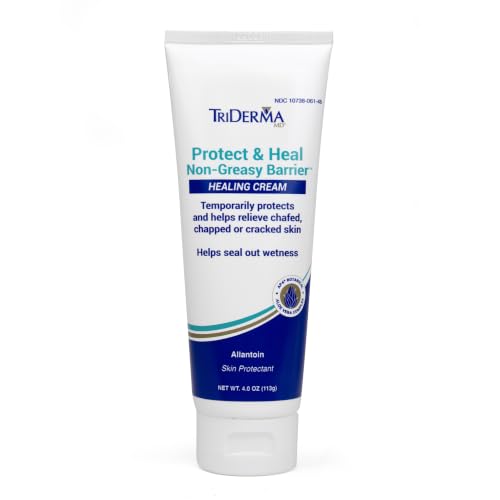
3. TriDerma Protect & Heal Non-Greasy Barrier Cream, 4 oz
For skin so fragile that the cleanup is as hard on it as the rash itself.
This is the barrier for the person who dreads the wipe. It is built as a non-greasy creamy ointment that spreads easily and wipes off without the sticky pull of a zinc oxide paste. The package runs 3 x 1.75 x 6.25 inches, which is shorter and narrower than the Critic-Aid tube at 6.61 x 2.95 x 1.89 inches — easier to tuck into a bedside caddy or a travel bag.
The formula pairs dimethicone with a second skin protectant, plus aloe vera and beeswax, to form the barrier layer. It is fragrance free with no parabens, and it is listed as HSA FSA eligible, which helps if you are managing care costs out of a health account. The 4 oz size is the smallest barrier tube here, so plan for more frequent reorders if you apply it at every change.
Why it suits delicate skin
- Non-greasy finish — no sticky paste during cleanup
- Fragrance free with no parabens, good for a shared room
- Dimethicone and aloe vera form the barrier layer
- HSA FSA eligible for care-account spending
The limits worth knowing
- 4 oz is the smallest tube here, so it empties fastest
- Not an antifungal, so a fungal rash needs a different cream
Best matched to: a scent-sensitive, thin-skinned patient where easy wiping matters more than tube size.
Look past it if: you go through barrier cream fast and want a bigger tube per order.
4. ConvaTec DuoDERM Hydroactive Gel, 30 g, 3 Ct

Not a barrier at all — this is the gel that goes inside a sore that has opened into a cavity.
Get the category right before you buy this one. DuoDERM Hydroactive is a clear, preservative-free viscous gel built from natural hydrocolloids, pectin, and sodium carboxymethyl-cellulose — a water-based product that fills a dry cavity wound and keeps the surface moist. It is labeled for partial- and full-thickness wounds, including pressure sores, and ships as three 30 g tubes.
Build quality is what buyers praise most, and that reputation is why it sits at the premium end. Reviewers also cite it for effectiveness on chronic wounds, and its moisture content draws steady praise — it fills a cavity as intended. The formula is latex-free and preservative-free, which keeps the ingredient list short for skin that reacts to everything.
Ask one question first: is the skin broken, or just red? If it is intact and simply red, the Critic-Aid or TriDerma barrier is the right purchase, and this gel is overkill. This gel is for the sore your nurse has described as having depth, where a flat barrier cannot reach. Buy it for that specific case and it earns its premium placement; buy it for a surface rash and you have spent more than you needed to.
What it is built for: filling a dry cavity pressure sore and holding moisture against the wound bed, with three 30 g tubes per box.
Where it does not fit: intact, unbroken skin — a barrier ointment handles that cheaper and better. This is a cavity product, and it should be bought only when there is a cavity.
Choose it for: an open, full-thickness pressure sore that needs hydrating from the inside of the wound.
Do not buy it for: surface redness on unbroken skin, where a plain barrier cream is the correct spend.
5. Antimicrobial Wound Cleanser Spray, 4 oz

The step everyone forgets: clearing bacteria off a sore before any cream goes near it.
This is a cleanser, not a cream, and that is exactly why it belongs in the lineup. This antimicrobial spray is labeled for acute and chronic wounds, including pressure sores, bed sores, and diabetic ulcers. The package measures 6.26 x 1.54 x 1.46 inches and holds 4 oz, so it fits in a first aid bag or a bedside drawer without taking over the space.
The thing that makes people keep using it is that it does not sting. Skin irritation is the third most-discussed quality here, and the news is good — it cleans without the burn that makes an already sore patient flinch away. Effectiveness and overall quality are the two qualities it is known best for, and both land strongly. Spray it on, let it clear the wound, then layer your barrier or gel over the top.
Two honest notes come up. The spray nozzle is the weak point — it works well for most, but the mechanism has been known to fail on some units, so test it before you rely on it mid-change. The liquid can also leave a yellow mark on fabric, so keep a spare pad or towel under the area while you spray. Value also splits, so buy it for the cleansing job rather than as an all-purpose substitute for cream.
The case for it: a fragrance-free-path cleanser that clears a sore without stinging, sized at 4 oz for a first aid kit, and named for pressure and bed sores directly.
Buy it as: the first step of the routine, before the barrier cream or gel, especially on an open or infected-looking sore.
Keep in mind: test the nozzle before the moment you need it, and protect fabric from the spray.
Know the Specs
Ounces and tube format
The weight on the tube tells you how far one purchase stretches. A 6 oz (170 g) tube covers more changes than a 4 oz or 5 oz (142 g) tube, so families doing many changes a day should size up. Gel sold as three 30 g tubes gives you separate sealed units, which is handy if one area is treated at a time.
Barrier versus treatment
A barrier ointment or cream — dimethicone, beeswax, aloe — sits on the skin and seals wetness out. An antifungal cream addresses a fungal rash. A hydrocolloid gel goes into a cavity. A cleanser clears bacteria before anything else is applied. Reading which of these four jobs a product does keeps you from buying the wrong tube.
Fragrance and sting
Scent matters more here than in an ordinary lotion, because you are applying it in a closed room to someone who may be in pain. A fragrance-free formula like the TriDerma avoids the issue entirely, while an antifungal cream may carry a scent that some find pleasant and others do not. A cleanser that does not sting makes the whole routine calmer.
Open skin and intact skin
Red, unbroken skin takes a moisture barrier. A sore with depth takes a cavity gel. An infected-looking wound takes a cleanser first. Getting this order wrong is the most common mistake in home care, and it is why a shortlist with one of each beats five near-identical creams.
Common Questions
Should I use a barrier cream or a gel on a bed sore?
How often should I reapply barrier cream during a change?
Will an antifungal cream work on a regular pressure sore?
Does the wound cleanser replace the cream?
Is a dimethicone cream better than a zinc oxide paste for bed sore care?
Can I use these creams on skin that is already broken and weeping?
What size tube should I buy for daily care?
Are fragrance free formulas important for bed sore care?
Will the wound cleanser stain bedding or clothing?
Can I use these products together in one routine?
The Bottom Line
One tube rarely covers every stage of a cream for bed sore routine, so treat it as a set of steps. Start with the Critic-Aid Clear Moisture Barrier Ointment if the skin is red and intact — the 6 oz (170 g) tube stretches through a hard week, and the clear formula lets you keep an eye on the skin underneath. Add the TriDerma Protect & Heal when the room is scent-sensitive and cleanup is the hard part. Reach for the ConvaTec DuoDERM Hydroactive Gel the moment the sore has real depth, and keep the Antimicrobial Wound Cleanser as the step before everything else. If a fungal rash keeps coming back, that is the one case where the BAZA Antifungal Cream is the right buy. Match the product to what the skin looks like each day, and the tube you buy will fit the job.
How we choose
We do not accept paid placement. Every pick is matched to a real buyer and a real use-case; we do not hands-on test units.
Sources
Specifications: manufacturer listings and product documentation. Review insights: verified customer reviews, as of November 2026. Pricing: not shown on this page (it changes often); check the current price via the retailer link.
As an Amazon Associate, My Heart Lives Here earns from qualifying purchases. This does not affect which products we feature.