Heads up: This post contains affiliate links. As an Amazon Associate I earn from qualifying purchases, at no extra cost to you. Learn more
Specs are compiled from manufacturer listings and verified buyer reviews and can change over time — please confirm the key details on the product page before buying.
The thing you actually want from a cotton compression sock is simple: real squeeze that holds your legs through a long day, without the sweaty nylon feel most compression socks leave you with. Cotton changes the equation — it breathes, it feels soft against your skin, and it keeps feet from turning clammy. The trade-off is that true cotton compression is rarer than the label suggests, and the fit is where most buyers get burned. This guide cuts straight to the five that hold up, so you can pick the right pair for your legs and your day instead of guessing from a listing photo.
This guide is built by comparing the manufacturers’ published specifications and the patterns across verified customer reviews, so you get each pick’s real strengths and trade-offs instead of marketing spin.
A good pair should feel snug at the ankle and easy everywhere else, and the picks below cover that range. Below you will find the practical differences between these cotton compression socks so you can match a pair to your own legs with confidence.
Top Picks
How To Choose The Best Cotton Compression Socks
Compression socks are not one product — they are a squeeze level wrapped in a fabric, and both halves have to suit your legs. Get the mmHg level and the cotton blend right and you forget you are wearing them. Get either wrong and you will be tugging at your calves by lunchtime. Here is what actually decides whether a pair works for you.
Start with the squeeze, not the color
Compression is measured in mmHg (millimeters of mercury, the same unit a blood-pressure cuff uses). Everyday socks usually sit in a mild range, while firmer travel and running pairs push higher. Graduated compression means the sock is tightest at the ankle and gradually looser as it climbs your calf — that gentle push upward is what supports circulation through a long flight or a twelve-hour shift. If a listing never states a compression level, treat that as a soft everyday sock rather than a firm one.
Read the cotton content honestly
Pure cotton does not spring back, so real compression socks blend it with stretch fiber to hold their grip. A higher cotton count generally means a softer, more breathable feel against the skin — good for warm days and sensitive feet. Lower cotton counts lean on synthetic fiber for a firmer, more athletic squeeze. Neither is wrong; they simply suit different days.
Measure your calf, not your shoe
The number-one reason compression socks get returned is sizing by shoe size. Calf circumference and ankle measurement are what decide whether the band sits flat or digs in. If you land between two sizes, most brands cut smaller than you expect, so it pays to check the size chart before you commit.
Match the height to your day
Crew height covers the calf and suits work, travel, and running. A cushioned footbed adds comfort underfoot but can feel bulky inside slim dress shoes. Think about where the sock will spend its hours before you decide how much padding you want.
Side-by-Side Comparison
| Model | Best For | Compression Level | Pack Size | Fabric Focus | Amazon |
|---|---|---|---|---|---|
| Dickies Men’s Dri-Tech Original Crew★ Best Overall | Everyday wear and work | — | 6 Pairs | Dri-Tech moisture-wicking blend | Amazon |
| Thick Soft Cotton Compression SocksSoftest Feel | Softness and cushioning | — | — | High cotton count | Amazon |
| 6 Pack Copper Compression Socks | Long days on your feet | Graduated | 6 Pairs | Copper blend | Amazon |
| Merino Wool Compression Socks 15-20 mmHg | Flights and travel | 15-20 mmHg | — | Merino wool | Amazon |
| Juclise Women’s Compression Crew | Running and hiking | — | 3 Pairs | Breathable mesh blend | Amazon |
Detailed Reviews
1. Dickies Men’s Dri-Tech Original Crew Socks
Our pick — 4.5+★ from 219,000+ verified ratings; the strongest balance of quality and price.
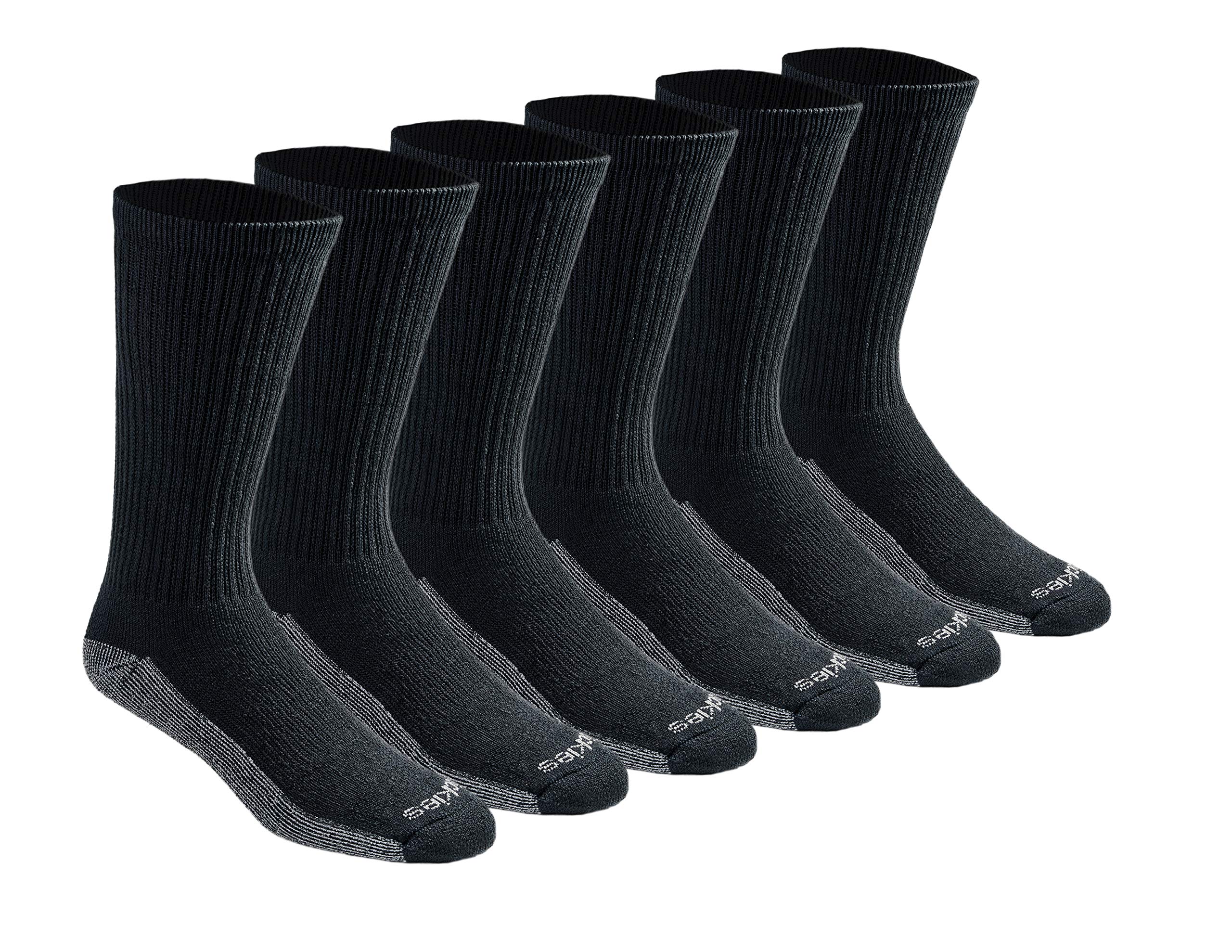
Six pairs of moisture-wicking crew socks that keep your feet dry from the first hour to the last.
Dickies wins this list on the strength of one number: six pairs in a single pack. That is twice the count of the Juclise crew socks, which come as three — so a full work week of fresh socks is covered without a mid-week laundry run. The fabric is a Dri-Tech blend built for moisture management, with ventilation channels knitted in to move air around the foot. Arch compression hugs the midfoot and keeps the sock from sliding down inside a boot.
What wins people over is the sheer consistency of the quality — it is comfortably the most-praised part of these socks, and comfort and fit follow close behind. The heel and toe are reciprocated (shaped to match the curve of your foot rather than stitched flat), which is why they sit where you put them. The slightly padded feel is the other detail that keeps showing up; it reads as soft underfoot without turning into a thick sports sock. Value earns plenty of goodwill too, because a six-pack at the entry-level tier stretches a long way.
The honest catch is longevity. Durability is the one mixed note here — plenty of pairs wear well for months, while a share start showing holes sooner than you would like. Thickness splits opinion the same way, with some finding them nicely cushioned and others describing them as on the thin side. Treat them as a hard-working everyday sock and rotate the pack, and you get the best of what they offer.
Where These Socks Deliver
- Six pairs per pack — double the three-pair Juclise set, so a work week is covered
- Dri-Tech moisture-wicking fibers and ventilation channels keep feet dry and aired
- Arch compression holds the sock in place and supports the instep
- Reciprocated heel and toe shape the fit to your foot
- Slightly padded feel that owners describe as soft and cozy
What To Keep In Mind
- Durability is the mixed note — some pairs develop holes sooner than expected
- Thickness splits opinion: cushioned to some, thin to others
- No stated mmHg compression level, so treat them as an everyday support sock
Made for: Anyone who wants a dry, supportive crew sock for work, weekends, and long shifts without restocking every few weeks.
Think twice if: You need a stated clinical compression level for travel or recovery — this pair is about everyday comfort and moisture control.
2. Thick Soft Cotton Compression Socks
The pair for anyone who wants compression to feel like a soft cotton sock, not a tight athletic sleeve.
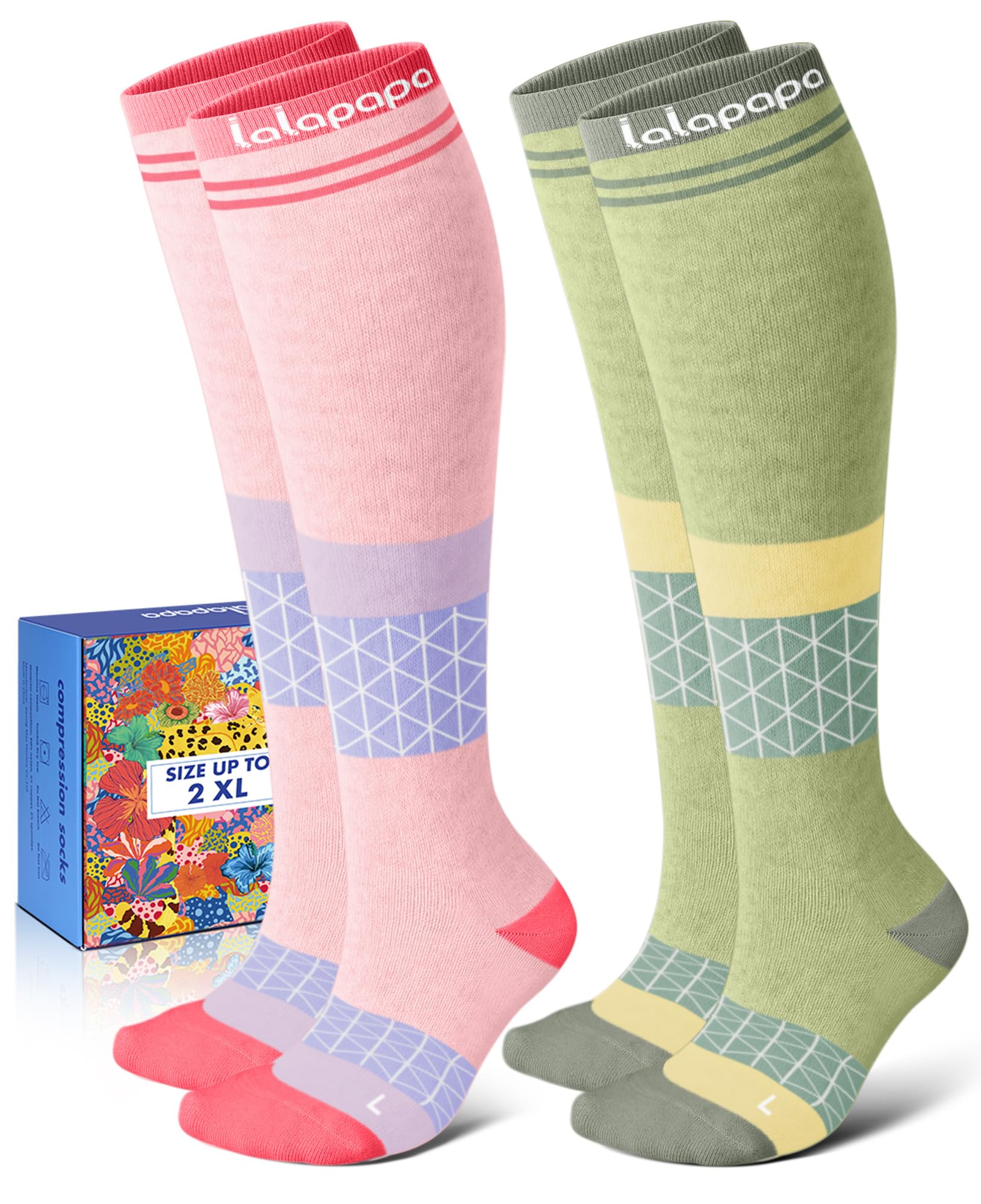
If the phrase high cotton count is what you have been hunting for, this is the pick. The blend leans heavily on cotton, and the material is the detail buyers keep coming back to — it feels pleasant against the skin rather than scratchy. Extra cushioning sits under the sole, so each step lands on something soft. Quality and comfort are the two things that carry this sock, with compression and softness right behind them.
Comfort here means feet that do not ache and legs that do not feel tired by the end of a long day. Appearance earns strong marks too — these read as well-designed rather than medical. Plenty of owners say they will repurchase, and for a sock still finding its footing on the market, that is the sort of loyalty most brands take years to earn.
Here is the trade-off you need to know before ordering: fit is the one split decision. Some find the sock snug and stay-put; others find it too tight, and the XXL size in particular runs small. That is a sizing mismatch rather than a flaw in the sock itself, so check the chart against your calf measurement before you choose a size — especially if you sit at the top of the range.
The cotton payoff: A high cotton count gives you the breathable, skin-friendly feel that synthetic compression sleeves cannot match, and the extra sole cushioning makes standing hours easier.
Size up if you are between sizes: The XXL runs small and the fit runs tight for some wearers, so a careful look at the size chart is the difference between snug and uncomfortable.
Your pair if: Softness and a genuinely cotton feel matter more to you than a firm, athletic squeeze.
Look elsewhere if: You are at the top of the size range — the XXL sizing is the one place this sock draws complaints.
3. 6 Pack Copper Compression Socks for Women and Men

Six pairs of graduated compression that squeeze hardest at the ankle and ease off up the calf.
This is the pack that treats compression as the main event rather than a side note. The squeeze is graduated — firmest at the ankle and gradually lighter as it climbs the calf — which is the pattern that supports circulation through a long shift or a long flight. A wide top band is built to stop the sock rolling down, and the 360-degree stretch gives you give where you need it. Six pairs in the pack means you can keep one pair clean and ready at all times.
Quality is what carries this sock, and compression is the close second — the squeeze is the reason people buy it, and the reason they come back. Reviewers keep coming back to the same point: legs and feet feel better after a shift in these.
The one thing to plan around is fit. The band is firm, and a share of wearers find it tighter than expected — so if you are between sizes or new to compression, start with the size chart rather than assuming. Get that right and the six-pack becomes an easy way to keep a fresh pair in rotation all week.
Why it works: True graduated compression plus a wide no-roll band, in a six-pack that covers a full work week of wear.
The sizing caveat: The band runs firm and some find it tight, so measure your calf before you commit to a size.
Reach for this if: You want real graduated compression and enough pairs to rotate through the week.
Hold off if: You prefer a loose, barely-there sock — this one is built to squeeze.
4. Merino Wool Compression Socks for Women Men 15-20 mmHg
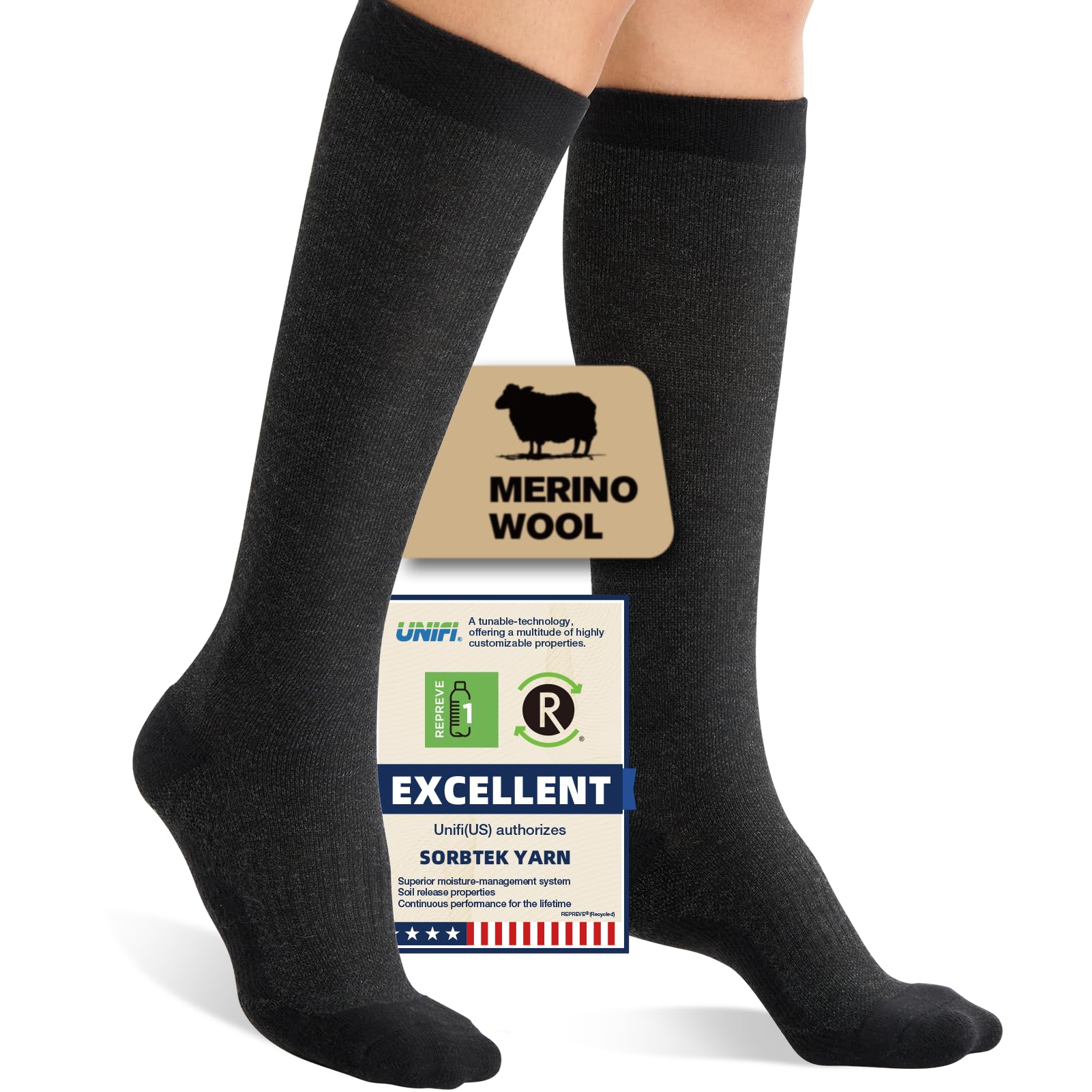
A stated 15-20 mmHg squeeze in merino wool, built for the hours you spend sitting on a plane.
This is the only pick on the list that puts its compression number right on the label: 15-20 mmHg, the moderate range that suits travel and everyday support. Merino wool is the other reason it stands apart — it regulates temperature, so the sock works in winter and stays wearable on warmer days, which is more than most wool socks can claim. The fit is snug with room built into the toe area, so your toes are not pinched while the rest of the sock holds firm.
Softness is where this sock shines, and quality and comfort are right behind it. It is fairly easy to get on and off for a compression sock, and instructions are included for pulling them on — a small thing that helps a lot if this is your first firm pair. Legs feel good after a day in them, and the merino warmth helps on a cold flight or a drafty office.
Two things to weigh honestly. Fit draws a mixed reaction — some find it snug and stay-put, others find it tight — so the size chart matters. And value sits at the higher end for a single pair, which is a fair trade only if merino and a stated mmHg are things you actually want. For a frequent flyer, they usually are.
The Travel Case
- Stated 15-20 mmHg moderate compression, printed on the label
- Merino wool keeps feet warm in winter and wearable on warm days
- Snug fit with extra room in the toe area
- Fairly easy to pull on for a compression sock, with instructions included
- Soft merino feel that owners describe as comfortable all day
The Honest Limits
- Fit splits opinion — snug to some, tight to others
- Wool construction sits at the upper end of the value range for a single pair
- No multi-pair pack, so you buy pairs one at a time
Built for: Frequent flyers and cold-weather wearers who want a stated mmHg and a warm, soft merino feel.
Skip the wool if: You want a budget multi-pack — this is a single premium pair, not a week’s supply.
5. Juclise Women’s Compression Crew Running & Hiking Socks

Mesh panels across the whole footbed and a smooth toe keep your feet cool and blister-free on long runs, not desk days.
The Juclise crew sock is built for movement. Breathable mesh panels run across the entire footbed, which keeps feet cool and dry on a long run, and the toe is finished truly smooth to head off blisters. A TAB at the heel cushions against shoe friction, and reinforced padding sits at the heel and ankle to protect the tendon. Each sock is shaped for left and right feet for a closer fit. Three pairs come in the pack — half the count of the six-pair Dickies set, though these are cut for running rather than everyday wear.
What runners respond to is the arch support and the compression that keeps feet from swelling without feeling suffocating. Ankle stability gets called out, and so does the way the sock stays up in a boot and refuses to slide down. Swelling reduction is the practical win, with some runners noticing less puffiness after a single day in them. Quality is the most-praised part of the sock, with comfort close behind, and softness rounds out the feel.
The one wrinkle is fit, which draws mixed reactions — the crew height and sizing run true for most but not everyone. If you are between sizes, check the chart before you pick. For the trail and the treadmill, though, the seam-free toe and full-foot mesh are hard to argue with.
Made for miles: Full-footbed mesh, a smooth toe, and an ankle protector cover the blister and friction issues that undo a long run.
The fit question: Sizing runs true for most but not all, so confirm your size on the chart before ordering a three-pack.
Best match for: Runners and hikers who want mesh breathability, a smooth toe, and arch support on every stride.
Not your pair if: You want maximum pairs for the money — this is a three-pack aimed at active days, not a full week of work socks.
Know the Specs
Compression Level (mmHg)
mmHg stands for millimeters of mercury — the same unit a blood-pressure cuff uses — and it tells you how firmly the sock squeezes. A stated range like 15-20 mmHg sits in the moderate zone that suits travel and everyday support. Graduated compression means that squeeze is tightest at the ankle and gradually looser up the calf, which is the direction that helps push blood back up your leg. A sock with no stated level is best treated as a gentle everyday support rather than a firm one.
Cotton Content And Stretch
Cotton is what makes a compression sock feel soft and breathable against your skin, and a high cotton count is the detail that keeps feet from feeling clammy through a long day. Pure cotton will not spring back, so the best pairs blend in stretch fiber to hold their grip. More cotton generally means more comfort and breathability; more synthetic fiber generally means a firmer, more athletic squeeze. Read the blend to know which you are getting.
Pack Size And Rotation
The number of pairs in a pack decides how often you wash. A six-pair pack covers a work week of fresh socks, while a three-pair pack suits a few active days. Rotating pairs also spreads the wear, which matters most on socks where durability is the weak point. If you wear compression daily, a larger pack is usually the more practical buy.
Height And Cushioning
Crew height covers the calf and suits work, travel, and running. Cushioning under the sole and around the heel adds comfort for standing and impact, but it can feel bulky inside a slim dress shoe. Match crew height to your day and cushioning to your footwear, and the sock disappears into your routine.
Common Questions
What does mmHg mean on a compression sock?
Are cotton compression socks better than nylon ones?
How do I size a compression sock correctly?
Can I wear compression socks all day?
How long does a pair of compression socks last?
Are merino wool compression socks too warm for summer?
What is the difference between graduated and regular compression?
How many pairs should I buy for daily wear?
Are compression socks safe for everyone to wear?
Can I wear compression socks for running and hiking?
The Bottom Line
For most buyers, the best place to start is the Dickies Dri-Tech Crew socks — six pairs of moisture-wicking, arch-supported comfort in one pack, which is why they sit at the top of this list. If a genuinely cotton feel and extra sole cushioning are what you are after, the Thick Soft Cotton Compression Socks deliver that softness, just check the size chart first. And if you want a stated compression level for travel, the Merino Wool 15-20 mmHg pair is the one to reach for before your next flight. The strongest overall performer is also the easiest to stock up on — start with the six-pack and you will not be hunting for a clean pair mid-week.
How we choose
We do not accept paid placement. Every pick is matched to a real buyer and a real use-case; we do not hands-on test units.
Sources
Specifications: manufacturer listings and product documentation. Review insights: verified customer reviews, as of November 2026. Pricing: not shown on this page (it changes often); check the current price via the retailer link.
As an Amazon Associate, My Heart Lives Here earns from qualifying purchases. This does not affect which products we feature.