Heads up: This post contains affiliate links. As an Amazon Associate I earn from qualifying purchases, at no extra cost to you. Learn more
Specs are compiled from manufacturer listings and verified buyer reviews and can change over time — please confirm the key details on the product page before buying.
If you are shopping for a COPD inhaler, start here: the picks below are not prescription bronchodilators (doctor-prescribed medicines that open your airways). They are over-the-counter breathing aids, steam devices, and supplements that people use alongside their doctor’s plan for everyday congestion and comfort. Which one fits you depends on if you want warm steam, cordless suction, or a daily capsule. This guide breaks down seven real options and tells you plainly which one suits which situation.
This guide is built by comparing the manufacturers’ published specifications and the patterns across verified customer reviews, so you get each pick’s real strengths and trade-offs instead of marketing spin.
You will see how each device handles steam or suction, how easy it is to clean, and where the honest trade-offs sit before you decide. Every option here is a real, currently sold product you can check on Amazon, and each one fits a different kind of breathing routine. Here is a straight-talking look at the copd inhaler options worth considering today.
Top Picks
How To Choose The Best Copd Inhaler
Before you buy anything in this category, know what job you actually need done. A handheld steam inhaler warms and moistens the air you breathe in. A nasal aspirator pulls mucus out of a congested nose. A supplement is a daily capsule routine. Matching the tool to the job matters more than which brand you pick.
Steam Output and Heat Control
The single spec that separates a useful steam inhaler from a frustrating one is how much steam it actually produces and how warm that steam runs. A device that delivers warm, gentle steam in a short session is easier on irritated passages than one that runs hot or barely steams at all. Look for adjustable steam control so you can dial the intensity to what feels comfortable for you. If a device claims a fast warm-up, check whether that time is measured in minutes or seconds — it changes how practical it is for a quick morning routine.
Cordless Versus Plug-In
Plug-in steamers tend to be simpler motors with fewer battery parts to fail. Cordless models free you to use them anywhere but add a battery that needs charging and can wear out. If you plan to use your inhaler in bed or in a chair away from an outlet, cordless convenience may be worth the trade-off. If you only ever steam at a bathroom counter, a plug-in model removes a whole category of reliability worry.
Cleaning and Maintenance
Steam devices sit with water in them, so cleaning is not optional — it is what keeps them running. A model with a self-clean cycle or simple rinse instructions saves you the hassle of descaling by hand. Nasal aspirators need their chamber emptied and their tips rinsed after each use. Whatever you pick, read the cleaning steps before you buy, because a device that is hard to clean tends to get abandoned.
Side-by-Side Comparison
| Model | Best For | Type | Key Spec | Power | Amazon |
|---|---|---|---|---|---|
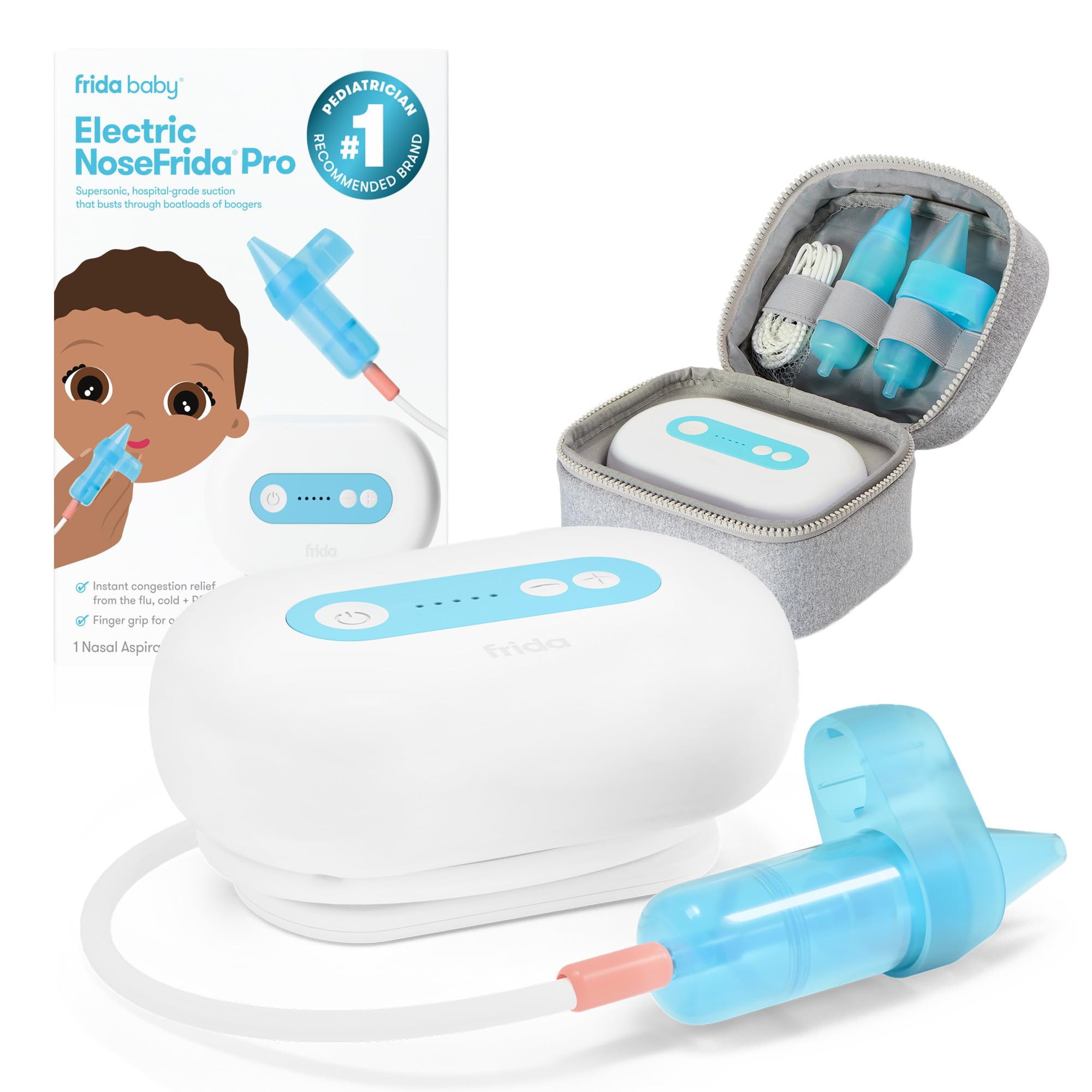
| Frida Electric NoseFrida Pro★ Best Overall | Newborn congestion | Nasal aspirator | 5 suction levels | 1 AAAA battery | Amazon |
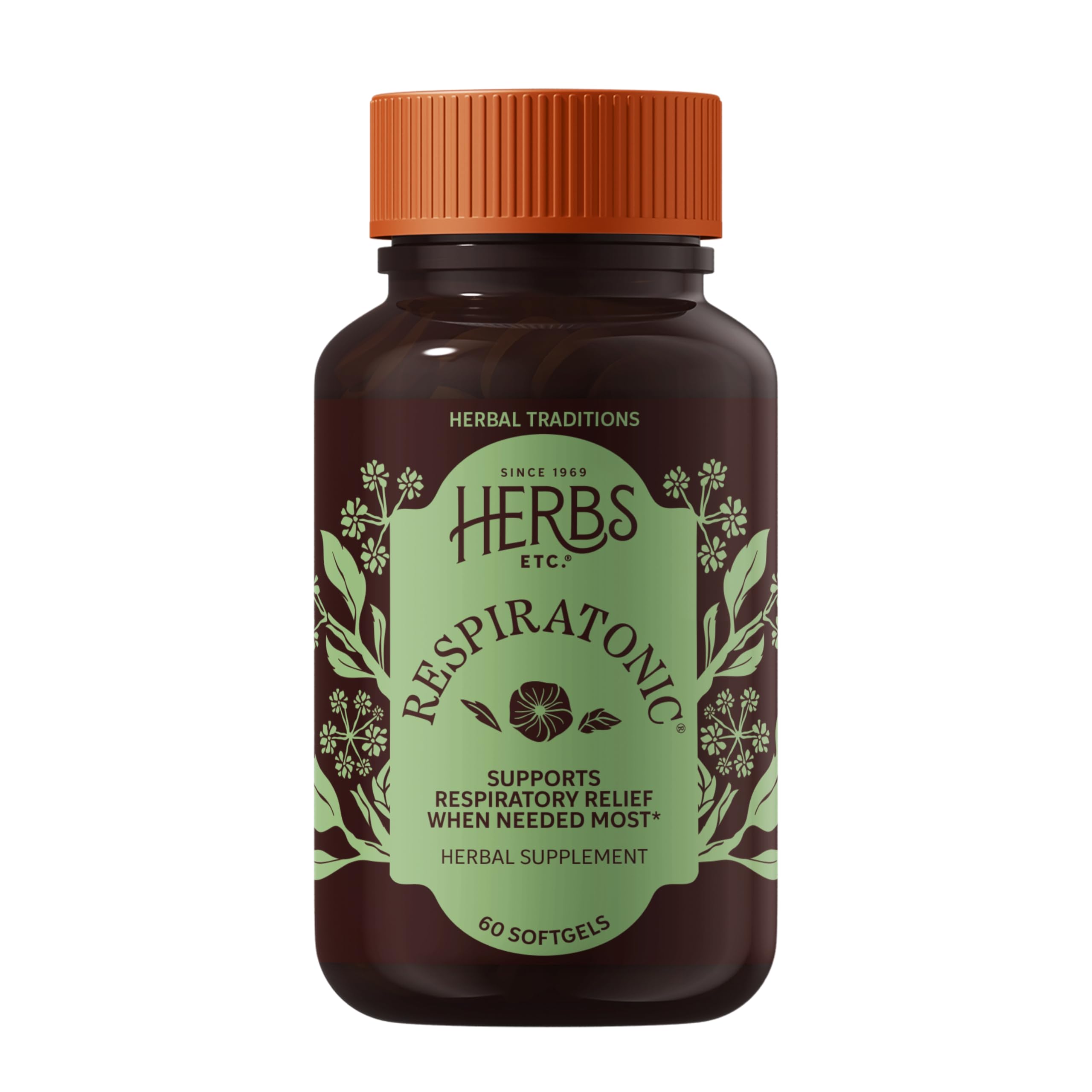
| Herbs Etc. Respiratonic SoftgelsBest Value | Seasonal lung comfort | Herbal supplement | 60 softgels | — | Amazon |
| Pulmonary Miracle COPD Relief Capsules | Daily lung support routine | Supplement | 60 capsules | — | Amazon |
| Original Himalayan Crystal Salt Inhaler | Salt-air breathing | Salt inhaler | Refillable ceramic | None needed | Amazon |
| Boost Oxygen Large Natural 10L, 3 Pack | On-the-go oxygen boost | Canned oxygen | 10L per canister | None needed | Amazon |
| Vicks Sinus Inhaler | Steam sinus relief | Steam inhaler | Adjustable steam | Plug-in | Amazon |
| Mypurmist Free Cordless | Cordless steam anywhere | Cordless steam inhaler | Ultrapure micromist | Rechargeable battery | Amazon |
Detailed Reviews
1. Frida Electric NoseFrida Pro Nasal Aspirator
Our pick — 4.5+★ from 1,000+ verified ratings; the strongest balance of quality and price.
The cordless suction tool that lets you dial in just enough pull for a stuffed little nose.
For a parent dealing with a newborn who cannot breathe through a blocked nose, the Frida NoseFrida Pro is the pick that does the actual clearing rather than just soothing. It steps through five suction levels, so you can start gentle and work up to firm when the congestion is stubborn. That range is the whole point: you are not stuck with one fixed pull that is either too weak or too harsh. It also ships with two different nosepieces — one soft, one firmer — so you can match the tip to nostril size and get a proper seal.
What makes it convenient is that it runs on its own charge with no cord in the way, and a carry case keeps the aspirator, tips and valve together for travel. Cleaning is a quick routine: empty the chamber, rinse the nosepiece and umbrella valve, then run it on level 5 for three minutes over a sink to clear moisture. Just know it does not run while charging, so plan your sessions around a top-up rather than mid-use. It takes one AAAA battery, which is included.
What wins people over with this one is straight-up effectiveness — the aspiration gets better results than the manual squeeze bulbs parents used before. The recurring gripe is suction strength on the toughest, thickest congestion, which some find weaker than expected and prone to leaving bits stuck in the machine. For everyday newborn stuffiness and morning clear-outs, it handles the job well. For a truly plugged-up nose, you may need a few passes with the softer tip first.
Where it pulls ahead
- Five suction levels let you start soft and scale up to firm as needed.
- Two nosepieces — one soft, one firmer — for a better seal on different nostrils.
- Cordless design with a carry case keeps everything together for travel.
- Simple rinse-and-run cleaning keeps the valve and tip clear.
Where it falls short
- Suction is mixed on very thick congestion — some find it weaker than hoped.
- Will not run while charging, so you need to plan around the battery.
- Overkill for anyone who only needs occasional light clearing.
Reach for this if: you are a new parent who wants controlled, cordless suction for a newborn’s blocked nose.
Look elsewhere if: you need maximum pull on thick congestion — the suction here is adjustable but not the strongest.
2. Herbs Etc. Respiratonic Softgels 60 Count
A small, easy-to-swallow softgel for the seasonal weeks when your airways feel tight.
If you would rather take a capsule than plug in a machine, the Respiratonic Softgels are a lightweight way to add a breathing-support routine to your day. The formula is built around Osha Root, Yerba Santa, and Pleurisy Root — three herbs traditionally used to support lung and respiratory wellness. It is gluten-free and organic, and the instructions are simple: take one softgel three to five times per day as needed. This is a daily habit, not a one-shot rescue device, so think of it as something you keep on the shelf for the weeks when the air feels heavy.
You can stash this bottle in a bag or a bathroom cabinet because it is small: at just 2.08 ounces and roughly 2 x 2 x 4.06 inches, it is noticeably more compact than the 12.8-ounce ceramic salt inhaler in this list. The softgel format (a small, smooth capsule) is easy to swallow, which matters if you dislike powders or gritty drinks. There is no battery, no water tank, and no cleaning routine, which is the appeal of a supplement you simply take and forget.
The honest catch here is that this is a supplement, not a medical device, and it will not do the work of a steam inhaler or an aspirator. It is best treated as part of a routine for seasonal discomfort, and it is not a substitute for whatever your doctor has prescribed. What it does well is make a daily lung-support habit easy to stick with. Reviewers most often describe it as easing seasonal tightness during colds and flare-ups.
The easy habit: a small, gluten-free softgel with a three-to-five-times-daily dosing that fits into a morning and evening routine without any setup.
What to keep in mind: it is a herbal supplement, so it supports comfort rather than replacing a prescribed inhaler or doing the job of a steam device.
Best for: people who want a simple capsule routine for seasonal lung comfort.
Not a substitute for: a steam inhaler or a doctor’s plan — this is support, not rescue.
3. Pulmonary Miracle COPD Relief and Lung Detox Capsules

A two-capsule-a-day bottle aimed at people building a long-term lung-care routine.
This one is designed for the person who has already decided they want a daily capsule as part of their respiratory routine. The blend centers on Vinitrox and GABA plus antioxidants, and its pitch is about supporting circulation and oxygen delivery. The routine is a clean two-capsule dose with no powders or unpleasant tastes. It is made in the USA in a GMP-certified facility and comes in a non-GMO, clean-label formula free from harsh fillers.
Size-wise the bottle is compact at roughly 4.09 x 1.81 x 1.77 inches and 2.08 ounces, so it tucks into a drawer or travel bag with no fuss. The capsules are easy to swallow, which is the one thing almost everyone agrees on. If you are the kind of buyer who wants a simple swallow-and-go supplement with no machine to clean or charge, this fits that shape well.
The catch is honesty: this is a supplement, and people do not agree on how well it works. Reviews split between easier breathing and less coughing versus no noticeable change at all. It is best approached as a supportive add-on to a plan you have discussed with your doctor, not as a replacement for prescribed therapy. If you want guaranteed mechanical relief, a steam device or aspirator is the more predictable route.
The simple routine: two capsules a day with no powders or messy prep, in a clean-label, non-GMO formula.
The honest ceiling: results vary widely between users, so go in expecting support rather than a guaranteed fix.
Worth trying if: you want an easy capsule to fold into an existing lung-care routine.
Skip if: you need predictable, mechanical relief — steam and suction tools deliver more consistent comfort.
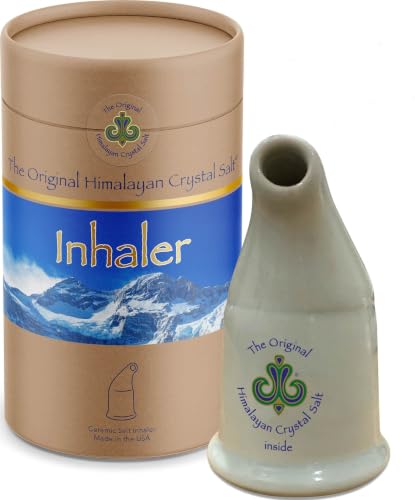
4. Original Himalayan Crystal Salt Inhaler
A handcrafted ceramic you breathe through, no plug and no charge required.
Inspired by centuries-old practices like halotherapy and speleotherapy — salt-air and cave-air therapy — this inhaler lets you breathe air that passes over coarse Himalayan salt crystals. Inhaling through the ceramic draws air over the coarse crystals before it reaches your nose. The salt comes pre-filled, hand-mined from a single protected source, with no detectable microplastics, additives, bleaches, or anti-caking agents.
The most striking spec is its footprint: at 3 x 3 x 6 inches and 12.8 ounces, it is a substantial, solid object roughly half again the overall size of the 2 x 2 x 4.06-inch Respiratonic bottle. That heft comes from the ceramic body and coarse salt, and it sits on a shelf like a piece of decor rather than a gadget. The coarse crystals may last 9-12 months with normal use, and it is refillable with a BPA-free rubber stopper. No batteries, no water, no charging — it just works when you pick it up.
Its fans point to the single-source coarse salt and the ritual of slow breathing through the ceramic. The trade-offs are real, though: effectiveness is debated, some find the salt taste noticeable, and a few units arrive with cracks in the ceramic body. Treat it gently and check it on arrival. For anyone curious about salt-air breathing as a daily ritual, it is a low-tech, no-power option.
Why people keep it
- Refillable and long-lasting — crystals may last 9-12 months with normal use.
- No batteries, water, or charging to manage.
- Hand-mined coarse salt from a single source, free of additives.
What to watch
- Effectiveness divides opinion — some find it useful, others not.
- Some units arrive with cracked ceramic, so inspect it on delivery.
- The salt taste is noticeable to some users.
Try it if: you like the idea of a no-power, salt-air ritual you can keep on a shelf.
Think twice if: you want a device with predictable, adjustable relief — this relies on simple breathing over salt.
5. Boost Oxygen Large Natural 10L Canister, 3 Pack

Canned breathing oxygen you can toss in a bag for hikes, workouts, or a breathless afternoon.
Boost Oxygen is a different animal from the steam devices and supplements here — it is canned 99.5% oxygen, all-natural and prescription-free, meant for non-medical use. Each canister holds 10 liters, and this pack gives you three of them. It is marketed for exercise, altitude, and moments when you feel winded, not for medical oxygen therapy. It is manufactured in the USA and is fully recyclable.
For portability, nothing else on this list is easier to carry. A canister is far smaller than the 2.76-pound Mypurmist cordless steamer and needs no charging, water, or cleaning. When you are hiking a ridge or catching your breath after a workout, that grab-and-go nature is the entire appeal. It is also the most popular kind of product in this space by a wide margin, which tells you a lot of people keep a canister within arm’s reach.
The honest warning is that this is supplemental oxygen for non-medical purposes, not a COPD treatment, and it is not a replacement for prescribed oxygen therapy. People’s experiences split sharply: many find it genuinely useful during exercise and altitude, while others notice little effect and say it delivers less than expected. It also draws the loudest value complaints of anything here, with plenty of buyers feeling it runs out fast for what you pay. Buy it as a portable boost, not a medical solution.
Where it shines: a grab-and-go oxygen boost for workouts, hikes, and altitude with no setup or charging.
Where it disappoints: results are hit-or-miss and the cans empty quickly, so it is a supplement, not a therapy.
Great for: athletes, hikers, and travellers who want a quick portable oxygen hit.
Not for: anyone expecting a medical-grade oxygen supply or long-term lung therapy.
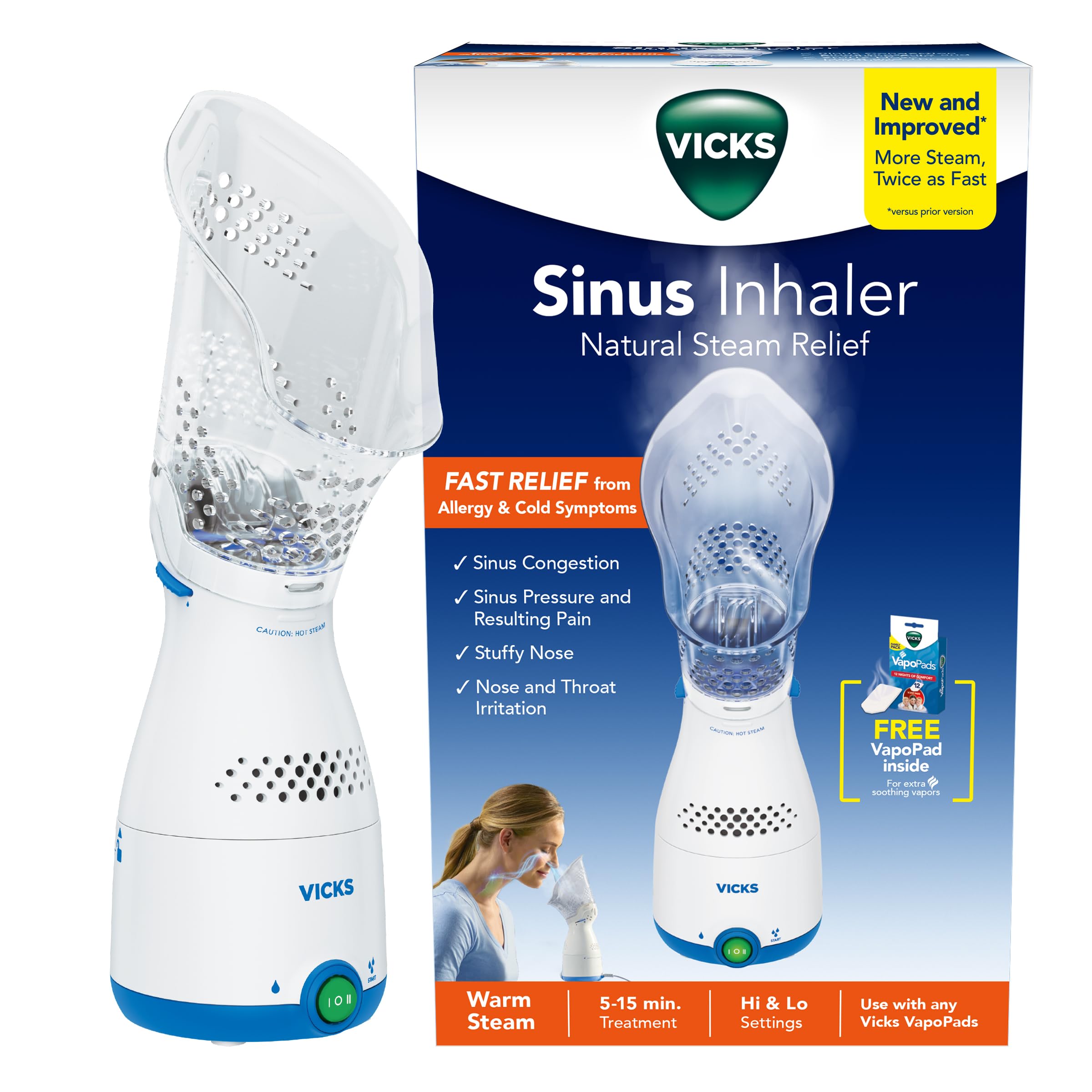
6. Vicks Sinus Inhaler for Sinus Relief, Works with VapoPads
Warm steam in as fast as three minutes, with a mask that aims right at your nose.
The Vicks Sinus Inhaler is built around a quick, targeted steam session for colds, congestion, and seasonal allergies. Its headline claim is speed: it delivers warm steam in as fast as 3 minutes and produces more steam, twice as fast as the old model. The soft face mask directs that steam at your nose and sinuses, and adjustable steam control lets you set the intensity to what feels right. It runs on tap water, needs no filter, and offers a 5-15 minute treatment window.
It is a plug-in steamer, so there is no battery to charge or wear out — one less thing to fail. You can run it with Vicks VapoPads for a non-medicated vapor boost, and one pad is included. The whole unit weighs in at 1.2 pounds and takes up about 5.16 x 5.16 x 8.58 inches, so it sits neatly on a counter or nightstand. For a simple at-home steam routine before bed, the setup could hardly be easier.
Reviewers consistently praise the warm steam for loosening congestion and easing morning dryness. The catch, and it is a real one, is consistency: the steam output draws heavy criticism from some, and a meaningful share of units reportedly give out after a couple of months of regular use. Others work like a charm for years. If you get a good one, it is a comforting, low-cost part of a congestion routine. If you get a dud, the plug-in simplicity is what makes replacing it painless.
The draw
- Warm steam in as fast as 3 minutes, with a 5-15 minute treatment.
- Adjustable steam control plus a soft mask for targeted relief.
- Plug-in and filter-free — no battery to manage.
- Works with VapoPads for added non-medicated comfort.
The risk
- Steam output is inconsistent — some units produce very little.
- Reliability is a genuine concern, with some failing within months.
- It is a comfort device for colds and allergies, not a COPD treatment.
Reach for this if: you want fast, plug-in warm steam for colds and allergies without a battery to worry about.
Look elsewhere if: you need rock-solid reliability — read the return window carefully before you rely on it daily.
7. Mypurmist Free Cordless Steam & Sinus Inhaler Essential Kit
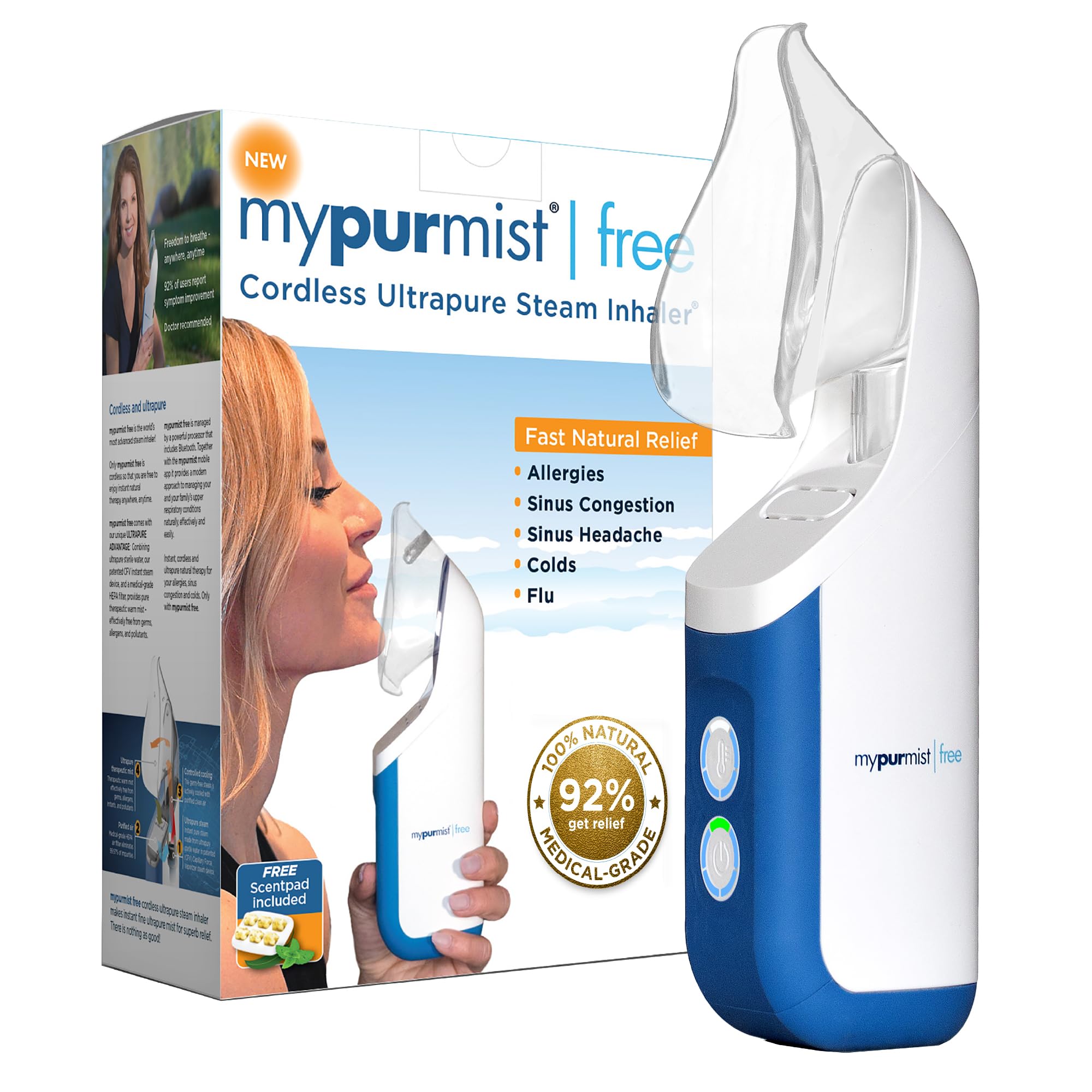
The only fully cordless steam inhaler here, giving you warm mist with no cord and no warm-up wait.
The Mypurmist Free is the most ambitious device in this list. It delivers warm (not hot) ultrapure steam with no boiling water, no cord, and no warm-up time — you fill it with water, press ON, and breathe. It uses patented micromist technology with 4-10 micron water vapor particles, and it runs on a rechargeable lithium-ion battery. The Essential Kit is generous: the inhaler, 8 water refills (up to 48 sessions), 6 aromatherapy sessions with eucalyptus and peppermint, a travel bag, and a charger. After each use it cleans itself automatically.
The cordless freedom is the real selling point. Unlike the plug-in Vicks, this one goes wherever you are — bed, couch, or on a trip — and self-cleaning takes the fuss out of upkeep. It weighs 2.76 pounds and measures 5 x 8 x 11.2 inches, so it occupies a small bag or nightstand. For someone who wants steam therapy without being tethered to a wall outlet, only this model offers that.
Here is the honest trade-off, and you need to weigh it before committing: this is the most expensive option here, yet it is also one of the least reliable in user reports. Some love the steam and relief, but a substantial share report units that stop working, run hot, or deliver no steam at all. Battery life draws complaints too, with reports of units only lasting a short session and taking hours to recharge. If it works for you, it is a wonderfully convenient device. Go in with eyes open about the reliability risk.
The luxury of freedom: truly cordless steam with instant-on operation, self-cleaning, and a full travel kit of refills and aromatherapy.
The gamble: reliability and battery life are the most common concerns, so buy from a seller with a clear return policy.
Best for: frequent travellers and people who genuinely need steam away from an outlet.
Think hard if: you want dependable daily use for years — the corded Vicks is the safer bet on reliability.
Know the Specs
Suction and Steam Levels
On a nasal aspirator, suction levels (like the five on the Frida) let you control how hard it pulls, so you can start gentle on a newborn. On a steam inhaler, adjustable steam control sets how much warm mist reaches your nose. More levels mean more fine-tuning for comfort, especially on sensitive, irritated airways.
Cordless vs Plug-In Power
A cordless steam inhaler runs on a rechargeable battery and goes anywhere, but the battery must be charged and can wear down over time. A plug-in model, like the Vicks, needs an outlet but removes the battery as a failure point. Choose cordless for bedside or travel, plug-in for a fixed counter spot where convenience of power matters more than mobility.
Cleaning and Refills
Steam devices must be cleaned to keep working — the Mypurmist self-cleans after each use, while the Frida needs its chamber emptied and tip rinsed. The salt inhaler uses coarse crystals that last months before refilling. Cleaning effort, not just purchase cost, is what determines whether you actually stick with the routine.
What the Categories Really Are
A nasal aspirator physically removes mucus, a steam inhaler adds warm moisture to passages, and a supplement or canned oxygen is taken internally or inhaled for support. None of these replace prescribed COPD medication. They ease everyday congestion and comfort, so match the tool to the job you need done.
Common Questions
Does a steam inhaler actually help with COPD symptoms?
Can I use these inhalers together with my prescribed COPD medicine?
How long should a steam session last?
Is cordless better than plug-in for a steam inhaler?
How do I clean a nasal aspirator after each use?
Do salt inhalers need to be refilled?
Is canned oxygen safe for someone with COPD?
How long should I expect a steam inhaler to last?
Can I use a nasal aspirator or steam inhaler on a child?
Are the supplements a replacement for a real inhaler?
The Bottom Line
For most people dealing with everyday congestion who also happen to be shopping this category, the copd inhaler winner here is the Frida Electric NoseFrida Pro, because its five adjustable suction levels and cordless design do the actual clearing job with control. If you want a simple capsule routine instead, the Herbs Etc. Respiratonic Softgels are an easy, gluten-free habit to keep on the shelf. And for a plug-in warm-steam session that costs little to try, the Vicks Sinus Inhaler is the one to reach for — the crowd favorite in this space and the handiest entry point into steam relief.
How we choose
We do not accept paid placement. Every pick is matched to a real buyer and a real use-case; we do not hands-on test units.
Sources
Specifications: manufacturer listings and product documentation. Review insights: verified customer reviews, as of November 2026. Pricing: not shown on this page (it changes often); check the current price via the retailer link.
As an Amazon Associate, My Heart Lives Here earns from qualifying purchases. This does not affect which products we feature.