Heads up: This post contains affiliate links. As an Amazon Associate I earn from qualifying purchases, at no extra cost to you. Learn more
Specs are compiled from manufacturer listings and verified buyer reviews and can change over time — please confirm the key details on the product page before buying.
Your knee is healing, but swelling still settles into your calf and ankle. The right sock keeps steady, graduated pressure on your calf and ankle without digging in around a still-tender knee. The wrong one either squeezes so hard you cannot pull it over your heel, or so gently it does nothing for swelling. This shortlist sticks to pairs real buyers wear all day. One detail matters more than any label: the compression level, measured in mmHg (millimetres of mercury, the standard unit for how much squeeze a sock puts on your leg). Each pick below includes a plain-language sizing chart and cautious fit notes so you can choose with confidence.
This guide is built by comparing the manufacturers’ published specifications and the patterns across verified customer reviews, so you get each pick’s real strengths and trade-offs instead of marketing spin.
Recovery legs need steady, graduated squeeze — not the tightest pair you can find. That one idea shapes every pick in this guide to compression socks after knee replacement.
Top Picks

How To Choose The Best Compression Socks After Knee Replacement
After knee surgery, your leg is managing two things: a joint that is still healing and a lower leg that collects fluid when you sit or stand for long stretches. Compression socks push that fluid back up toward your heart. The trick is matching the mmHg level to your stage of recovery, then matching the fit to your ankle and calf measurements.
Start with the mmHg level, not the fabric
The mmHg figure tells you how firm the squeeze is. A 20-30 mmHg sock (millimetres of mercury, the standard pressure measure) applies noticeably more hold than an 8-15 mmHg sock. Graduated compression means the sock is tightest at the ankle and eases as it climbs toward the knee, so fluid keeps moving upward. If your leg is still tender, a lower level can feel far more manageable to pull on each morning.
Measure your ankle and calf, not your shoe size
The single most common mistake is ordering by shoe size instead of ankle and calf circumference. Recovery socks press on your calf as much as your foot, so the chart that matters takes both ankle and calf circumference. When a brand offers a detailed chart with both measurements, use it. A sock that is slightly too small becomes a wrestling match over a sore knee.
Weight the trade-off between squeeze and ease
Firmer compression tends to mean more effort to get the sock over your heel and up your calf. That trade-off between firm squeeze and easy donning is the honest tension in this category. If you have limited grip or a stiff knee, favor a pair that owners describe as easy to pull on, even if the pressure is gentler. Save the firmer 20-30 mmHg pairs for when your mobility has come back.
Side-by-Side Comparison
| Model | Best For | Compression | Style | Pack | Amazon |
|---|---|---|---|---|---|
| Hoplite Premium High Performance★ Best Overall | All-day wear and active legs | — | Knee-high | Single pair | Amazon |
| ABSOLUTE SUPPORT 3 Pairs UnisexBest Value Pack | Wide size range and value | 20-30 mmHg | Knee-high | 3 pairs | Amazon |
| Dr. Motion Therapeutic Graduated | Gentle everyday squeeze | 8-15 mmHg | Knee-hi | 3 pairs | Amazon |
| JOBST Relief Regular Band | Firm support, long wear | 20-30 mmHg | Knee-high | Single pair | Amazon |
| JOBST Relief Closed Toe | Firm, tidy everyday support | 20-30 mmHg | Knee-high | Single pair | Amazon |
Detailed Reviews
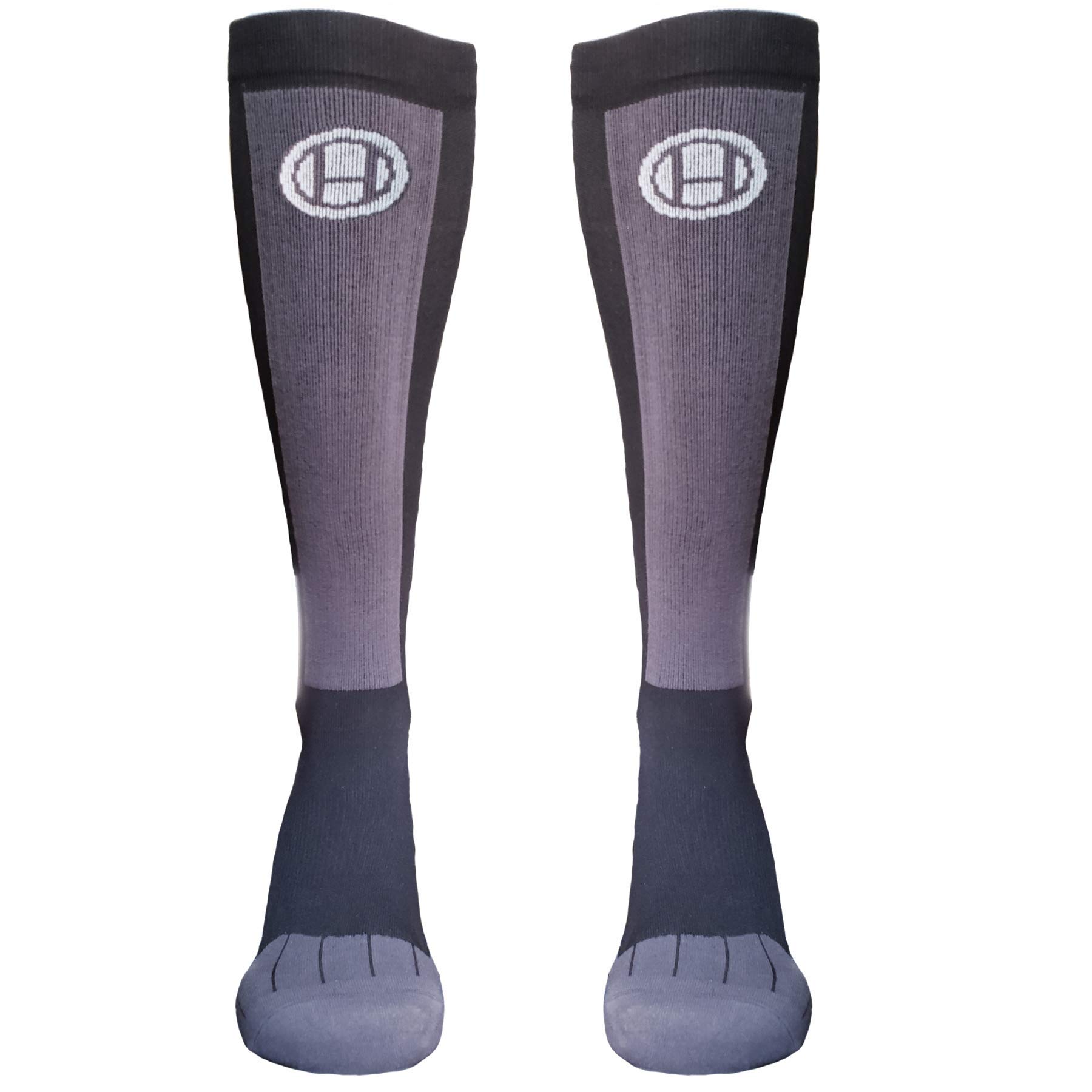
1. Hoplite Premium High Performance Compression Socks
Our pick — 4.5+★ from 400+ verified ratings; the strongest balance of quality and price.
The all-day pair that keeps its hold without turning your morning into a fight.
For a leg that has just come out of surgery, the biggest daily win is a sock you can actually get on. The Hoplite is the pick here for one stubbornly simple reason: it stays comfortable enough for long stretches of wear. The pair weighs in at 3.59 ounces — lighter than the Dr. Motion three-pack’s 8 ounces — so it vanishes on the leg instead of dragging at the calf. What people praise most is quality, and it shows in a sock that holds its shape through repeat wear.
The build is aimed squarely at people who are up and moving: shin and ankle support that keeps swelling in check, plus a grip that holds up during deadlifts and gym sessions. The heel and toe hold together through heavy use — the socks come through events like a Tough Mudder intact. That kind of sturdy construction makes it a solid everyday choice once you are cleared to be active again.
The honest catch is sizing. The fit is the most-discussed point on this sock, and it leans snug — several build notes suggest going up a size if your calves run thick. Treat the size chart as a starting point and size up if you are between sizes. Also remember this is a single pair, not a multi-pack, so you will be doing laundry more often if you plan to wear one daily. It holds 4.5+ out of 5 stars, and owners keep coming back to buy another pair.
What earns the top spot
- Weighs just 3.59 ounces, so it sits light on a healing leg
- Sturdy heel and toe that hold up through repeated wear
- Reliable shin and ankle support for swelling and active use
- Quality is the standout strength — owners describe it as exactly as advertised
Where it asks a little patience
- Fit runs snug — size up if you are between sizes
- Sold as a single pair, so frequent wearers wash often
Best for: Anyone who wants one trustworthy pair for daily recovery wear and light activity.
Size up if: Your calves run thick — the snug fit is the one thing to plan around.
2. ABSOLUTE SUPPORT 3 Pairs Unisex Compression Socks, 20-30mmHg
Three pairs of firm 20-30 mmHg support, made for a wider range of bodies.
If you want to rotate through the week without hand-washing every night, a multi-pack makes sense. This one gives you three pairs at 20-30 mmHg, the firmer tier of squeeze that gives real hold on a swollen lower leg. What gets the most praise is exactly that compression — owners say it eases leg fatigue and swelling through the day.
The sizing story is the standout. Sizes run up to 7XL, and the included chart accounts for both calf and ankle measurements, so it fits a wide range of men and women. The non-slip band is designed to stay put instead of sliding down toward your heel. The fabric blend is 65% nylon and 35% spandex — a stretchy, springy mix that hugs the leg and returns to shape after washing. The reinforced heel and toe also add wear-life for daily use.
The fair warning is that this is the least-reviewed pick here, and its fit is the mixed point. Some find it too tight on the first wear, and a narrow top band has come up as a gripe. That makes it a good fit for people who already know their measurements and prefer firm pressure — less ideal if your leg is still fragile and you want something gentle to slip on. The 20-30 mmHg hold is a big step up from a light 8-15 mmHg sock, so ease into it.
Fit is the deciding factor: Measure your ankle and calf before ordering, then size up if you are right on a boundary. The 20-30 mmHg squeeze is firm and effective, but it rewards an accurate chart reading.
Best use case: A recovering leg that wants steady, non-slip firm support and a full week of clean pairs at hand.
Reach for this if: You prefer firm 20-30 mmHg hold, have your measurements ready, and want three pairs on rotation.
Look elsewhere if: You want something gentle to pull on right after surgery — the tightness here is the thing to plan for.
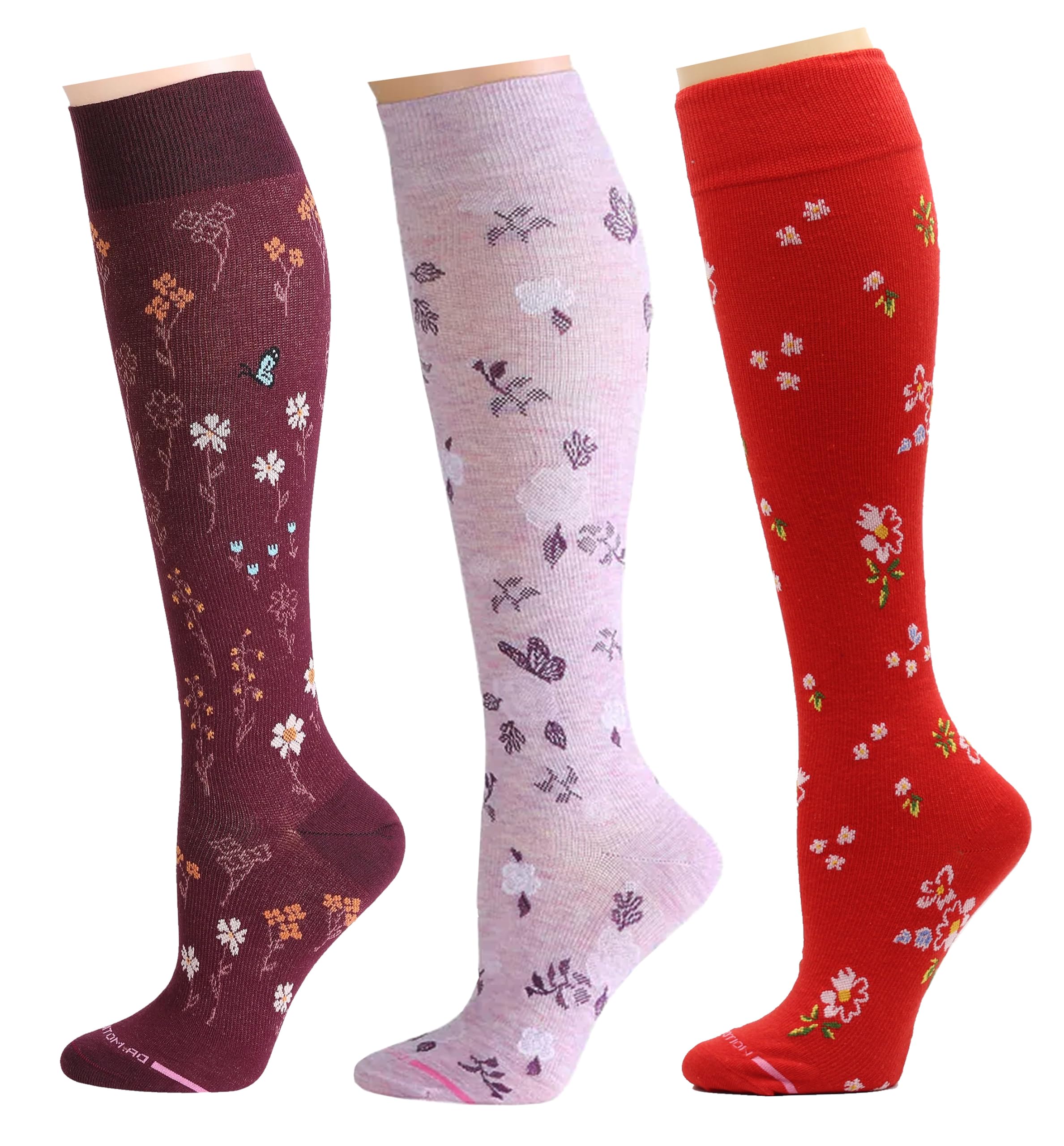
3. Dr. Motion 3 Pairs Knee-hi Socks
The gentle squeeze that slips on easy when your knee still complains about a hard pull.
Right after surgery, the hardest part can be getting the sock on at all. This is the pick for that stage. It runs 8-15 mmHg — the lightest level on this list — so the squeeze is a soft, steady hold rather than a firm one. Compared with a firm 20-30 mmHg sock, that is a far gentler grip on a tender leg, and it leaves room to graduate to firmer pairs later.
Comfort wins here. The fit does not feel as tight as other brands and stays put through the day, which means fewer readjustments. It looks like an ordinary knee-high, so it does not announce itself as medical gear. Owners find it easy to put on and take off, which matters most in the first weeks. You also get three pairs in the pack, so wash day is not a scramble.
The trade-off is durability at the heel, which is the mixed point on this sock. Some pairs hold up through 12-hour shifts; others wear through at the heel in a short time. That does not make it a bad sock — it makes it a lighter-duty one you rotate rather than thrash. Treat the wear as part of owning a soft 8-15 mmHg sock, and swap to a new pair when the heel thins.
Why it earns a spot: Easy donning plus a soft 8-15 mmHg hold is exactly what early recovery asks for. For a healing knee that resists a firm pull, that combination is worth more than raw pressure.
Keep an eye on: The heel is where these tend to wear first, so rotate all three pairs evenly.
Pick this when: You need forgiving, easy-start compression and a sock that looks like everyday wear.
Graduate beyond it if: You want firm 20-30 mmHg support — that is a job for a stronger pair.
4. JOBST Relief 20-30 mmHg Regular Band

A firm 20-30 mmHg stocking built for legs that need serious, steady hold.
When the swelling needs stronger control, this is the heavier-duty option. It holds a firm 20-30 mmHg — the pair that gives real pressure on a tired, aching lower leg. Owners describe a hold that eases tension from toes to knees and matches what they used to get from prescription stockings. What comes through most is the quality of the build.
The regular band is designed to stay in place on the calf, and the closed toe keeps the foot covered. This is the pair for a leg that has moved past the fragile early stage and can take a firmer squeeze. It is a long-standing design that many recovering legs know well.
Be realistic about the effort. Firm compression means more work to get it over the heel, and the fit here is a mixed point — several find it too tight to slip on easily. It also tends to slide down over long stretches, so it rewards a proper fit from the size chart. Legs that need firm hold and have the grip to manage a snug pull will get the most from it.
The case it makes
- Firm 20-30 mmHg hold for a leg that needs solid support
- Closed toe and regular band for full-foot coverage
- Firm 20-30 mmHg hold owners say eases tension from toes to knees
What to brace for
- Can be a struggle to pull on over the heel
- Tends to slide down over long wear, so fit matters
Go for it if: Your leg needs firm 20-30 mmHg pressure and you can manage a snug pull.
Think twice if: Dressing independently right now is hard — the tight fit is the one hurdle.
5. JOBST Relief 20-30 mmHg Closed Toe

Firm, tidy support in a closed-toe knit that reads as an everyday sock.
Here is the everyday version of firm support. It holds the same 20-30 mmHg squeeze as the other JOBST pick, aimed at tired, aching or swollen legs. It comes in several colors, so you can match it to what you actually wear. Unisex sizing makes it easy to share a style across the household. For a recovering leg that wants dependable pressure with a neat look, this one fits the bill.
Owners say the compression feels just right — good hold on the leg without feeling rough against the skin. Leg support comes through as a clear strength, and the sock keeps its shape over time. That makes it a comfortable all-day wearer once your knee has settled. What owners notice most is the overall quality of the knit, and it matches what the listing promises.
The catch is the ankle. Fit is the big divided point on this sock — some find it really tight around the ankle at first, so it can feel like a firm grip where you might want give. Durability is mixed too: some pairs last a long while, while others wear at the heel or hem sooner. If your ankle is still sensitive, break it in slowly rather than wearing it all day from the start.
Straight read: Firm 20-30 mmHg pressure in a closed-toe, multiple-color knit that reads like normal hosiery while doing real support work.
The one watch-out: The ankle runs snug, so ease into it and check the chart before you buy.
Choose it for: Firm daily support that looks tidy and stays put, in a unisex fit and several colors.
Hold back if: A sensitive ankle makes a snug opening hard to face right now.
Know the Specs
mmHg Compression Level
mmHg (millimetres of mercury) is the pressure a sock applies to your leg. The lower a number, the gentler the hold. A light 8-15 mmHg sock feels soft and is easier to pull on, which suits a leg that is still tender. A firm 20-30 mmHg sock gives stronger support for a swollen lower leg, but demands more effort to get over the heel. Match the level to your stage of recovery, not to the firmest option on the shelf.
Graduated Compression
Graduated means the sock is tightest at the ankle and eases as it moves up toward the knee. That design pushes fluid upward toward the heart instead of letting it pool at the ankle. Every sock on this list uses graduated compression, so the difference between picks is really the level of squeeze and the fit — not the basic design.
Ankle and Calf Sizing
Recovery socks press on your calf as much as your foot, so the size chart that matters uses ankle and calf circumference. Shoe size alone is not enough. When a brand offers a detailed chart with both measurements, use it. Sizing up when you are between sizes is the safe play on snug-fitting pairs.
Ease of Donning
Donning means pulling the sock on. A light 8-15 mmHg sock slips on with little effort; a firm 20-30 mmHg sock takes more pull over the heel. If your knee or grip is still limited, favor a gentler pair to start and move to firmer support once your mobility returns.
Common Questions
What compression level is right after knee replacement surgery?
How do I size compression socks over a swollen leg?
Can I put on 20-30 mmHg socks by myself with a stiff knee?
Is 20-30 mmHg too tight for everyday recovery wear?
How long should I wear compression socks each day after surgery?
What is the difference between 8-15 mmHg and 20-30 mmHg socks?
Do these socks work over a knee that is still healing and tender?
Why do my compression socks keep sliding down during the day?
How do I wash compression socks to keep them firm?
Are closed-toe or open-toe socks better for recovery?
The Bottom Line
For most recovery legs, the compression socks after knee replacement winner is the Hoplite Premium High Performance Compression Socks. It balances a light 3.59-ounce feel with steady support, and its sturdy heel and toe hold up through daily wear. If you want firm 20-30 mmHg hold and a week of clean pairs on hand, grab the ABSOLUTE SUPPORT 3 Pairs. For the early days when a hard pull is the last thing your knee wants, the gentle 8-15 mmHg Dr. Motion set is the easiest to live with. Start at the mmHg level your leg can manage today, then work up to firmer pairs as mobility returns.
How we choose
We do not accept paid placement. Every pick is matched to a real buyer and a real use-case; we do not hands-on test units.
Sources
Specifications: manufacturer listings and product documentation. Review insights: verified customer reviews, as of November 2026. Pricing: not shown on this page (it changes often); check the current price via the retailer link.
As an Amazon Associate, My Heart Lives Here earns from qualifying purchases. This does not affect which products we feature.