Heads up: This post contains affiliate links. As an Amazon Associate I earn from qualifying purchases, at no extra cost to you. Learn more
Specs are compiled from manufacturer listings and verified buyer reviews and can change over time — please confirm the key details on the product page before buying.
Buying tinted lenses for glare is easy to get wrong: a lens that looks dark in the shop can still leave you squinting on the road, because what actually matters is how much light it lets through and whether it shifts as conditions change. This short guide sorts the interchangeable-lens and photochromic pairs worth your money, and tells you which one fits how you actually spend your day outside.
This guide is built by comparing the manufacturers’ published specifications and the patterns across verified customer reviews, so you get each pick’s real strengths and trade-offs instead of marketing spin.
Photochromic lenses change shade with UV light, while fixed tints stay put — and the light transmission figure decides which one suits your ride or drive. Here is the shortlist of the best color sunglass lens options for bright roads and shifting skies.
Top Picks

How To Choose A Color Sunglass Lens
Three things decide whether a tinted lens works for you, and none of them is the shade of the plastic.
Light transmission
A stated percentage tells you how much light reaches your eye, so a lens at 15% transmission keeps far more glare out than one letting through 83%.
Photochromic versus polarized
A polarized lens cuts reflected glare off roads and water on sunny days, while a photochromic lens darkens and lightens as UV exposure changes through the day.
Fit and airflow
Adjustable nose pads and lens vents matter as much as the tint, because a pair that presses on your head or fogs up gets left in the car.
Side-by-Side Comparison
| Model | Best For | Lens Setup | Light Transmission | Frame / Weight | Amazon |
|---|---|---|---|---|---|
| ROCKBROS Cycling Glasses★ Best Overall | Cycling and bright roads | Polarized plus photochromic, two lenses | 15% polarized / 21–83% photochromic | TR90, 1.12 ounces | Amazon |
| UV400 Transition Safety GlassesWorkshop Standard | Workshop and yard work | Photochromic light to dark grey | — | — | Amazon |
| ZAMGIC Photochromic Eyeglasses | Everyday day-to-night wear | Photochromic with blue light blocking | — | — | Amazon |
| Global Vision Hercules | Safety-rated all-day use | Auto-darkening clear to smoke | — | ANSI Z87.1 rated | Amazon |
| Lamicall Sports Sunglasses | Running and driving | Photochromic PC lens, red tint | — | TR90, 27g | Amazon |
| Murph Photochromic Motorcycle Sunglasses | Riding with wind protection | Polarized with photochromic tint | — | EVA foam liner | Amazon |
| 100% SPEEDCRAFT | Performance cycling | Sport performance lens | — | — | Amazon |
Detailed Reviews
1. ROCKBROS Cycling Glasses
Our pick — 4.0+★ from 350+ verified ratings; the strongest balance of quality and price.
Two lenses in one pair, so the tint changes with your ride, not your plans.
You get a polarized lens that lets through just 15% of light, which is what keeps glare off wet roads and car hoods down on a bright ride. Swap in the photochromic lens and transmission swings from 21% to 83%, so the same frame works at noon and at dusk. That two-lens setup is the reason this pair takes the top spot — you are not picking one darkness level and living with it.
The TR90 frame (a flexible plastic that flexes instead of cracking) weighs 1.12 ounces, light enough that it stays put on long climbs. Fit is what wins people over, and the adjustable nonslip nose pads let you dial the pressure. The lower frame pops off if you want a different look, and lens vents keep air moving to cut fogging.
The catch sits in the photochromic lens: it does not get very dark, so in full sun the tint stays light. Comfort splits too — some love it, a few find it presses on the head. Neither is a dealbreaker, just a reason to check your head size. It is the highest-rated pick here at 4.0+ stars across 300+ ratings.
What Comes In The Box
- Polarized lens at 15% transmission for harsh sun
- Photochromic lens spanning 21% to 83%
- Removable lower frame for a second look
Where It Falls Short
- Photochromic tint stays light in full sun
Reach for this if: you ride or drive in light that changes hour to hour and want one frame covering both.
Look elsewhere if: you need a genuinely dark lens at midday — the photochromic side runs light.
2. UV400 Transition Photochromic Safety Glasses
Safety-rated eye cover that doubles as sunglasses, for the shed and the yard.
These carry an ANSI Z87 impact rating (a US safety standard for eye protection against flying debris), which is the whole point of putting them on over a mower or a saw. The lens runs light to dark grey as UV hits it, so you do not swap glasses walking from a dim garage into the sun.
Owners find they work well and look far better than typical safety goggles. The honest part: the tint side is inconsistent. Some report a strong dark transition, others say the lens barely shades at all, and the transition itself draws mixed feedback. Durability is the other variable, with a handful seeing an early break.
If you want predictable shade for hours in harsh light, this is not it. If you want rated protection that mostly stops you squinting in the driveway, it earns its place.
The honest read: buy these for the Z87 rating and everyday utility first, and treat the auto-darkening as a bonus that may or may not go deep.
Best suited to: garage and garden work where rated eye protection leads the shopping list.
The trade-off: transition depth varies pair to pair, so do not count on a dark lens outdoors.
3. Photochromic Sunglasses Blue Light Blocking

The pair you leave on from the desk to the drive home.
Built as multi-use eyeglasses, these are meant to sit on your face indoors and out rather than go on and off at the door. The lens is photochromic, so it shades up with UV and clears when you step back inside, and it adds a blue light blocking layer for screen time.
Style is the clear strength here — the classic frame shape draws no complaints, and the look stays neutral enough for work. Where it wobbles is darkening: plenty find it just right, but a share say it never goes as dark as advertised. A few also raise build quality, so keep the hinge in mind.
For a reader who wants one pair that handles the walk to lunch and the glare on the windshield, this is a sensible middle choice. For harsh noon sun, look at the ROCKBROS set instead.
Who it clicks for: people who want a single understated frame for commute, errands and screen hours, without a switching routine.
Pick this one when: outward style and day-night convenience outrank maximum darkness.
Think twice if: you need a deep tint — the shade tops out lighter than the listing suggests.
4. Global Vision Hercules 7 Safety Sunglasses
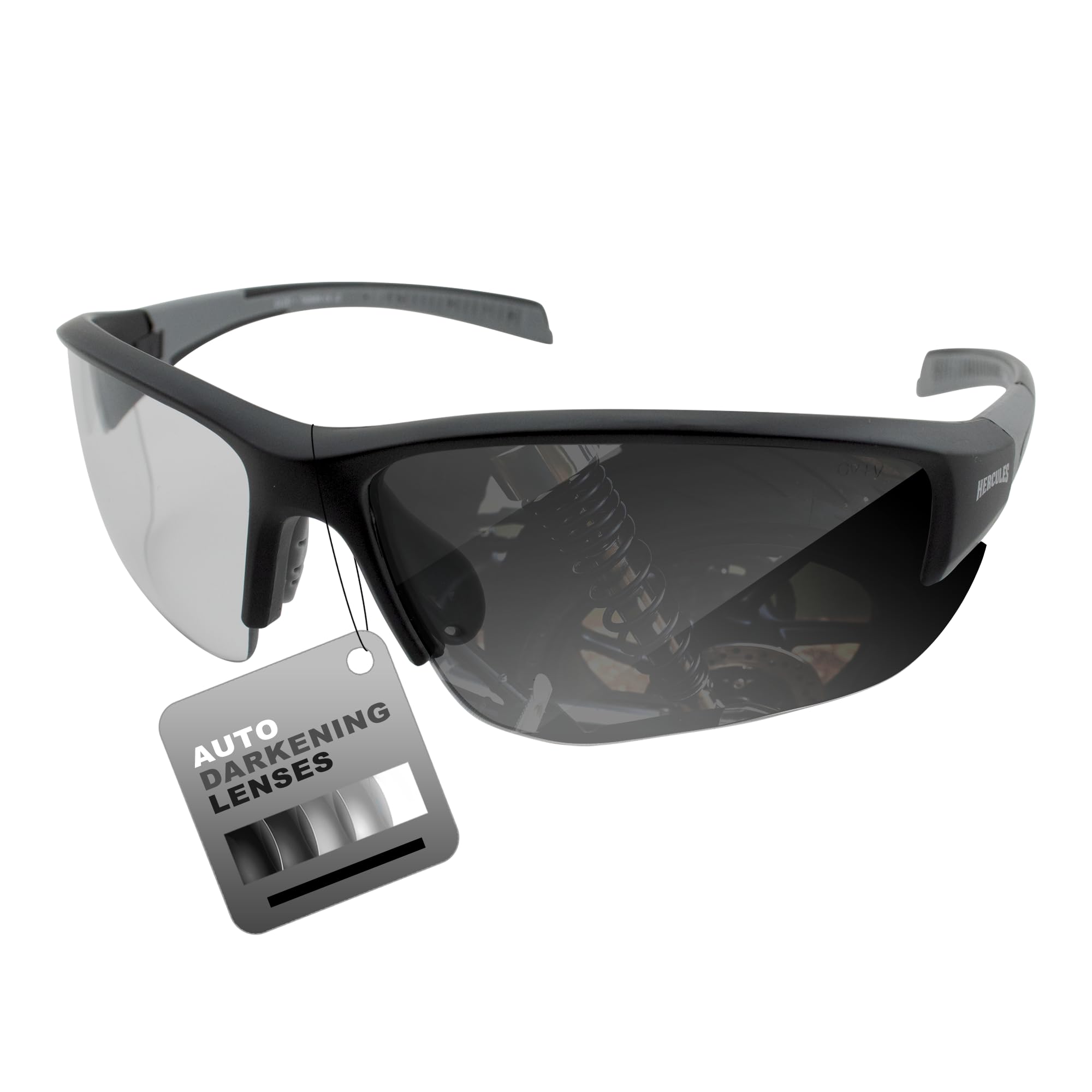
Nearly clear on the bench, smoke-tinted in the sun, rated for both.
The Hercules 7 starts clear and darkens to smoke as UV rises, which is exactly what you want if you are moving between a lit workbench and open ground. The ANSI Z87.1 rating backs the eye protection, and the clarity stands out — the lens stays near clear indoors without distorting your view.
Fit draws the most praise of all: these stay put and people report them comfortable through a full shift. The tint is the split point. Some see a clean clear-to-dark shift; others find the lens hardly darkens in direct sun at all, and the transition itself gets mixed reports.
Treat the smoke shade as a mild tint rather than real sun protection for long hours outside. As everyday safety glasses with a light tint, they hold up well.
Why People Keep Them On
- Clarity holds up indoors with no distortion
- Fit stays put through a full workday
- ANSI Z87.1 impact rating
The Honest Caveat
- Tint often stops short of dark in direct sun
Made for: shop and jobsite wear where clear indoor vision matters most.
Not the pick for: driving into low sun — the smoke shade stays light.
5. Lamicall Photochromic Sports Sunglasses for Men Women

A wraparound that weighs almost nothing and shades as you move.
At 27g the TR90 frame all but disappears on your face, and the wraparound shape pushes wind past your eyes rather than into them. The polycarbonate lens carries a UV400 coating to filter UVA and UVB rays, plus an anti-fog coating. Air holes on both sides of the lens keep air moving so your view does not cloud over on a climb.
The nose pads adjust across three levels, and the temples use silicone tips so you can set the height and angle to your face. A hardshell case with a clip comes in the set, so it can hang off a backpack instead of burying in a pocket.
With a smaller pool of buyer feedback behind it, this is the pair to choose on the spec sheet — ultralight, ventilated, and shaped for sport — rather than on long-term track record.
Built for movement: 27g, three-level nose adjustment and lens vents add up to a pair that stays put and stays clear on a run.
Go for it if: weight and fog control drive your choice more than tint depth.
Weigh the other side: the buyer history is thin, so you are trusting the specs more than a long record.
6. Murph Photochromic Motorcycle Sunglasses by WYND Blocker
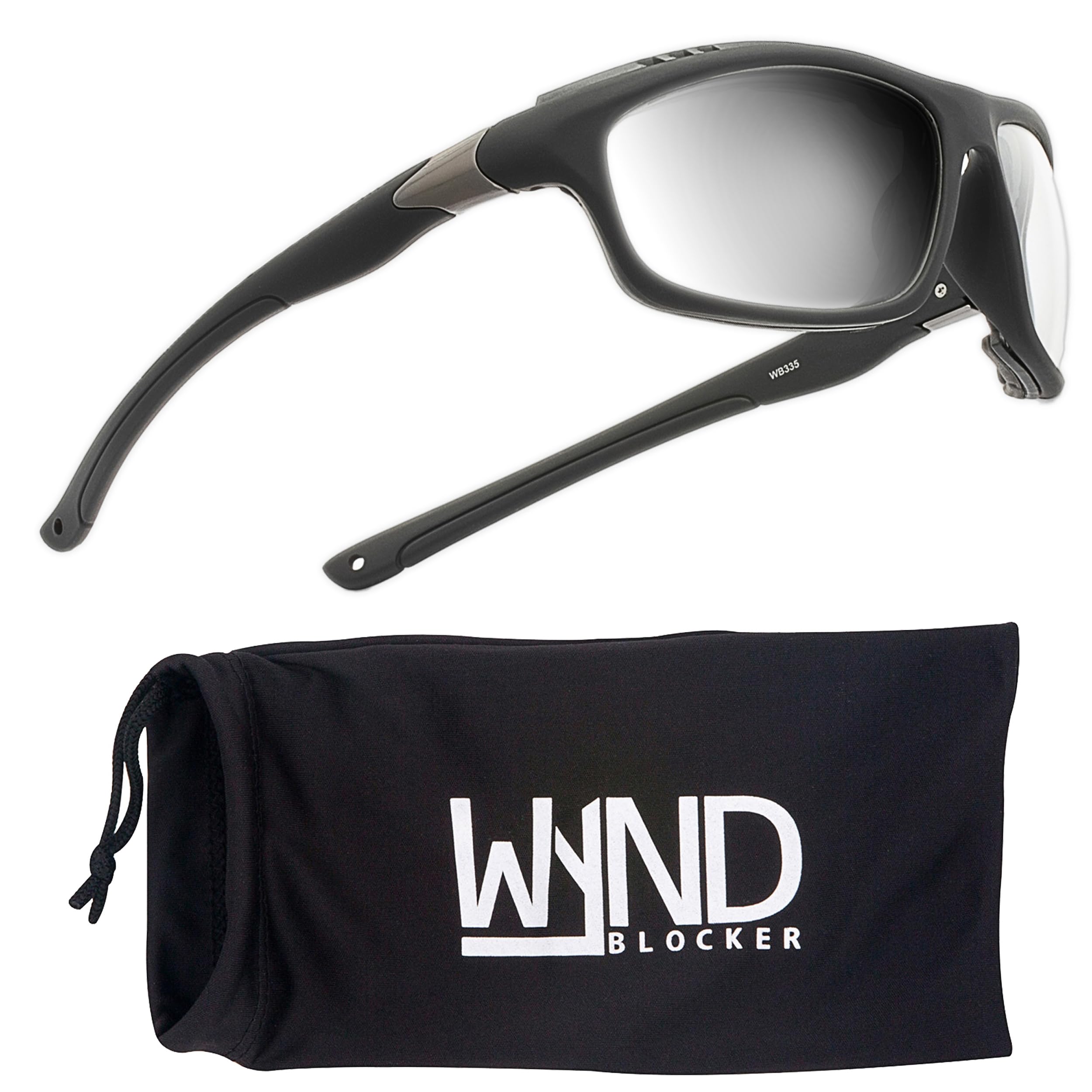
Foam-lined shades made to stop the wind, not just the glare.
Riding at speed is the scenario here, and the EVA foam liner is the part that matters — it seals against your face so wind and grit stay out and your eyes do not dry out over a long run. The polarized lens cuts reflected glare, and the photochromic layer shifts with the light so you are not pulling over to swap glasses.
Quality and wind protection are the strongest notes, and riders report the inside stays clear of fog. The tint draws mixed views: some like the shift, others say it barely darkens in sunlight. Durability is the weak spot — a share of buyers describe fragile frames that break.
If you ride with a helmet and want wind blockage first, the liner is the reason to pick these. Handle them carefully and they do the job.
The real draw: the foam liner turns an ordinary sunglass into a wind shield for highway speeds.
Right for: motorcyclists who want debris and wind kept off the eyes on the open road.
The risk to weigh: frame fragility shows up often enough that gentle handling is part of ownership.
7. 100% SPEEDCRAFT Sport Performance Cycling Sunglasses

The top of the list, on the strength of its score and its race pedigree.
Built for performance cycling, the SPEEDCRAFT is the highest-rated pair in this round at 4.5+ stars, and it sits at the premium end of the group. If your rides are long and your position is low, this is the frame aimed squarely at that use.
What it does not have is the swappable-lens trick of the ROCKBROS pair — no second lens in the box and no photochromic shift — so you commit to one tint. Nor does it carry a deep body of buyer feedback yet, meaning you lean on the rating rather than a long history.
For a committed cyclist chasing the sharpest-rated option, it earns the premium spot. For anyone wanting flexibility across changing light, the two-lens pick above wins on value.
The premium case: the highest score in the lineup, aimed at riders who already know what they want on the bike.
The pick for: dedicated cyclists who want the best-rated sport frame and ride in consistent light.
Skip if: you need a lens swap or an auto-darkening tint through the day.
Know the Specs
Light transmission and lens darkness
Light transmission is the share of light a lens lets through, so a lower number means a darker, glare-cutting lens and a higher number means a lighter one. It is the figure to check when a lens color looks dark in the photo but may not be dark in practice.
Photochromic versus polarized
Photochromic means the lens darkens with UV exposure and clears again, which suits changing conditions. Polarized means the lens filters reflected glare off flat surfaces, which suits bright roads and water where the sun bounces back at you.
Common Questions
Do darker lens colors block more light than lighter colors?
Will photochromic lenses darken behind a car windshield?
Can I swap lenses on the ROCKBROS pair myself?
What does ANSI Z87 on a safety sunglass actually mean?
Is a polarized lens better than a photochromic one for driving?
Why do some photochromic lenses barely tint in strong sun?
Do lens vents really stop fogging?
Can I wear photochromic eyeglasses indoors all day?
The Bottom Line
For most people the color sunglass lens winner is the ROCKBROS Cycling Glasses, because two interchangeable lenses cover both harsh sun and shifting light in one frame. Want rated protection for the workshop instead? The Global Vision Hercules 7 has the ANSI Z87.1 rating and near-clear indoor vision. And for maximum wind blockage on a bike, the Murph foam liner is the one to reach for.
How we choose
We do not accept paid placement. Every pick is matched to a real buyer and a real use-case; we do not hands-on test units.
Sources
Specifications: manufacturer listings and product documentation. Review insights: verified customer reviews, as of November 2026. Pricing: not shown on this page (it changes often); check the current price via the retailer link.
As an Amazon Associate, My Heart Lives Here earns from qualifying purchases. This does not affect which products we feature.