Heads up: This post contains affiliate links. As an Amazon Associate I earn from qualifying purchases, at no extra cost to you. Learn more
Specs are compiled from manufacturer listings and verified buyer reviews and can change over time — please confirm the key details on the product page before buying.
You want something green climbing that north-facing fence, and the sun simply never shows up there. That is the whole problem in one line — most flowering vines want six hours of direct light, and a shady wall gives them almost none. The answer is picking vines sold as shade-tolerant, then planting them at the right depth and watering them through their first season. This short list does exactly that.
This guide is built by comparing the manufacturers’ published specifications and the patterns across verified customer reviews, so you get each pick’s real strengths and trade-offs instead of marketing spin.
Below you get five live vines, sorted by what they actually do in low light, plus the one shipping detail that decides whether your plant arrives alive. Choosing well among these climbing plants for shade starts with matching the vine to your zone, not to the photo.
Top Picks

How To Choose A Vine That Tolerates Shade
Three things decide whether a shade climber thrives on your wall or sulks and drops leaves.
Match the zone number first
Every listing carries a USDA hardiness zone range — the coldest winters a plant survives — and a vine rated for a warmer zone than yours may not come back after winter.
Read the light wording literally
A vine described as tolerating partial shade will grow there, but the listing usually says the heaviest blooming happens in sunnier spots, so expect fewer flowers in deep shade.
Buy more than one plant
Vines sold as multi-packs or groundcover trays let you fill a wall in one order, and losing a single plant to shipping is far less painful when seven others are already in the ground.
Side-by-Side Comparison
| Model | Best For | Light | USDA Zone | Units | Amazon |
|---|---|---|---|---|---|
| Star Jasmine ‘Large Leaf’★ Best Overall | Fragrant trellis in warm zones | Full sun to partial shade | 8-11 | 1 | Amazon |
| Honeysuckle LoniceraCold-Hardy Pick | Cold-climate scent | Full sun | 3 | 1 Count | Amazon |
| Baltic English Ivy (8 Plants) | Shady wall coverage | Full Sun | 4 | 8 Count | Amazon |
| Creeping Jenny (4 Pack) | Trailing over shade beds | Sun or partial shade | — | 4 | Amazon |
| Sweet Autumn Clematis | Fall bloom on a shady fence | Full Sun | 4-8 | 1 | Amazon |
Detailed Reviews
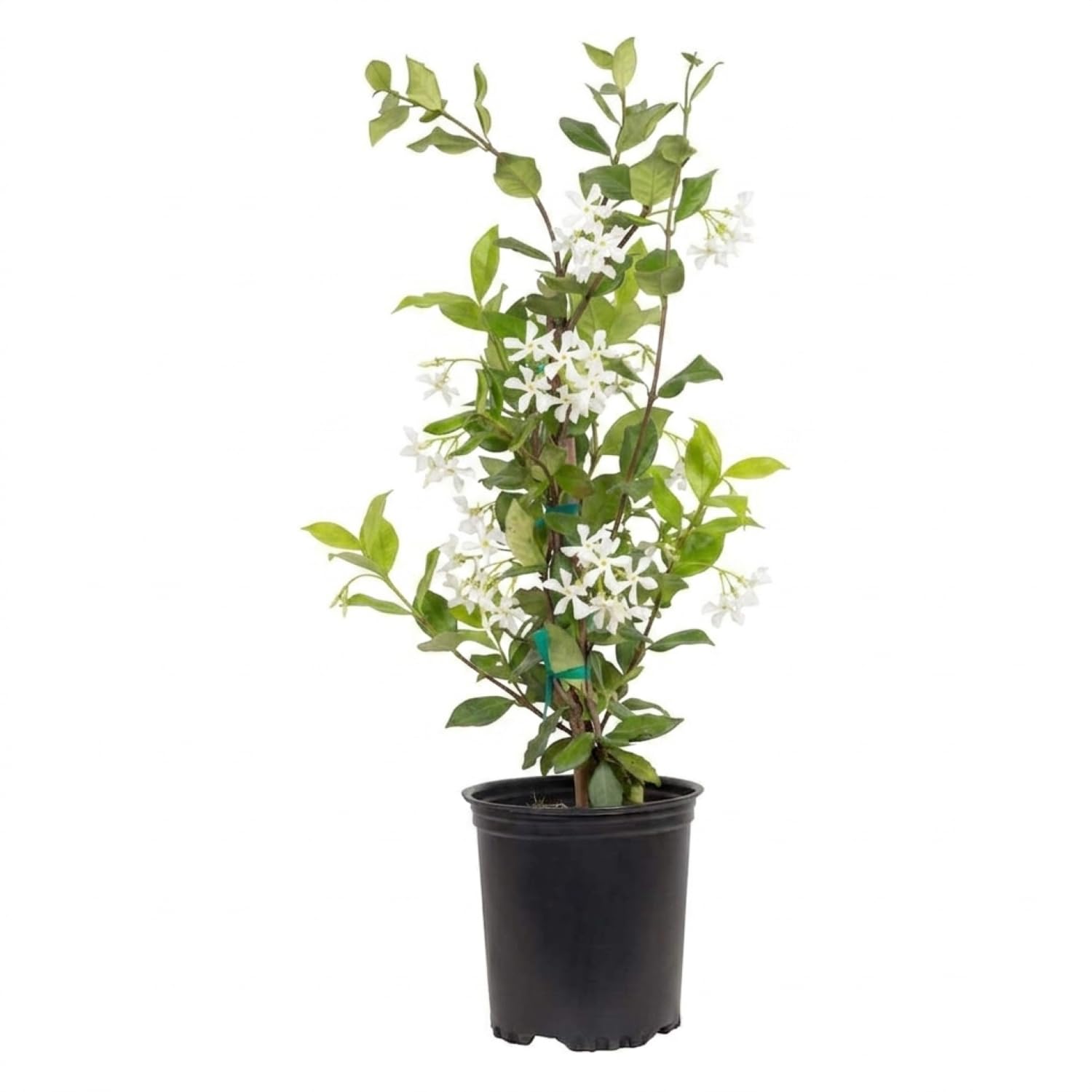
1. Star Jasmine ‘Large Leaf’ (2.5 Quart)
Our pick — 4.5+★ from 250+ verified ratings; the strongest balance of quality and price.
The vine that turns a warm, half-shaded fence into a wall of scent.
If you garden in USDA zones 8-11 — the winter-cold map number that tells you how cold a plant tolerates — this is the friendliest pick on the list. It is sold as accepting full sun to partial shade, and the listing is honest that the heaviest flowering comes in the sunnier spots. The reward for a partially shaded wall is glossy, dark green foliage plus star-shaped white flowers and genuine fragrance, from spring through summer. The mature spread of 3-4 feet fills a trellis quickly.
Appearance is what wins people over — it is by far the most-discussed quality in the reviews, followed closely by plant health. Buyers report: The plant is larger than expected, reaching over 3 feet tall, and is already blooming.
What you get for a warm wall
- Fragrant spring-to-summer bloom and glossy evergreen foliage
- Double duty as a climber on a trellis, arbor or fence, or as ground cover
- Clear care schedule: water 2-3 times a week in the first growing season
The catch worth knowing
- It is not a cold-climate plant — zones 8-11 only, so a frosty garden is out
Reach for this if: you have a warm-zone trellis or arbor that catches morning light and you want perfume on the air.
Think twice if: your winters dip below zone 8, where this one simply will not survive.
2. Honeysuckle Lonicera Live Plant
A zone 3 survivor that brings summer scent where other vines freeze out.
Cold is where this one earns its place. It is listed as hardy to USDA zone 3 — far colder than most flowering vines manage — and it is deer resistant, which matters on an open garden edge. It arrives as a single 16-ounce plant, so it is one vine, not a tray. Compared with the Baltic English Ivy’s 8 Count below, that is an 8.0x difference in unit count, and you feel it when you are trying to cover a whole fence in one order.
Honest read: vining is the most-discussed trait here and it comes out mixed. Owners mention the experience splits — some noting it’s thriving while others mention it died within 10 days. The quality feedback is mixed in the same way. That is a shipping-and-establishment risk, not a bad plant, so order it in mild weather and open the box the day it lands.
Where the value sits: a genuinely cold-hardy, deer-resistant vine that returns scent to a northern garden.
Where it stings: one plant per order and an establishment risk that rewards ordering in mild weather rather than a heat wave.
Your match if: you garden in a cold zone and want scent on a sunny fence.
Not for you if: your wall is deep shade, since the listing calls for full sun.
3. Baltic English Ivy (8 Plants, 2 1/4″ Pots)

Eight hardy plugs that accept a shady wall and just get on with it.
Here is the shade answer that does not depend on sun at all: Baltic English Ivy (Hedera helix ‘Baltic’) is sold as growing in sun or shade, and it is described as the hardiest English Ivy. It takes zones 4-8 and is deer resistant. You get eight plants in 2 1/4″ pots, versus 1 Count for the Creeping Jenny’s nearest single-plant rivals — a 4.0x difference in item count over the Honeysuckle, and far more coverage per order than any single vine here.
Plant quality is what gets praised most — well ahead of every other trait in the feedback — with hardiness close behind. The plants wake up fast: customers note they were growing about 2 inches in just a week. On size, the read is split, so expect plugs rather than bushy pots.
Why it fits shade: the only pick sold explicitly as a sun-or-shade grower in a cold zone, and it comes as a tray of eight.
The catch: some find the plugs very small on arrival, so plan on a season of patience before they knit together.
Pick this one for: a north-facing wall or bare patch under trees where you want coverage, not flowers.
Look elsewhere if: you want blooms — ivy gives foliage, full stop.
4. Creeping Jenny (4 Pack)
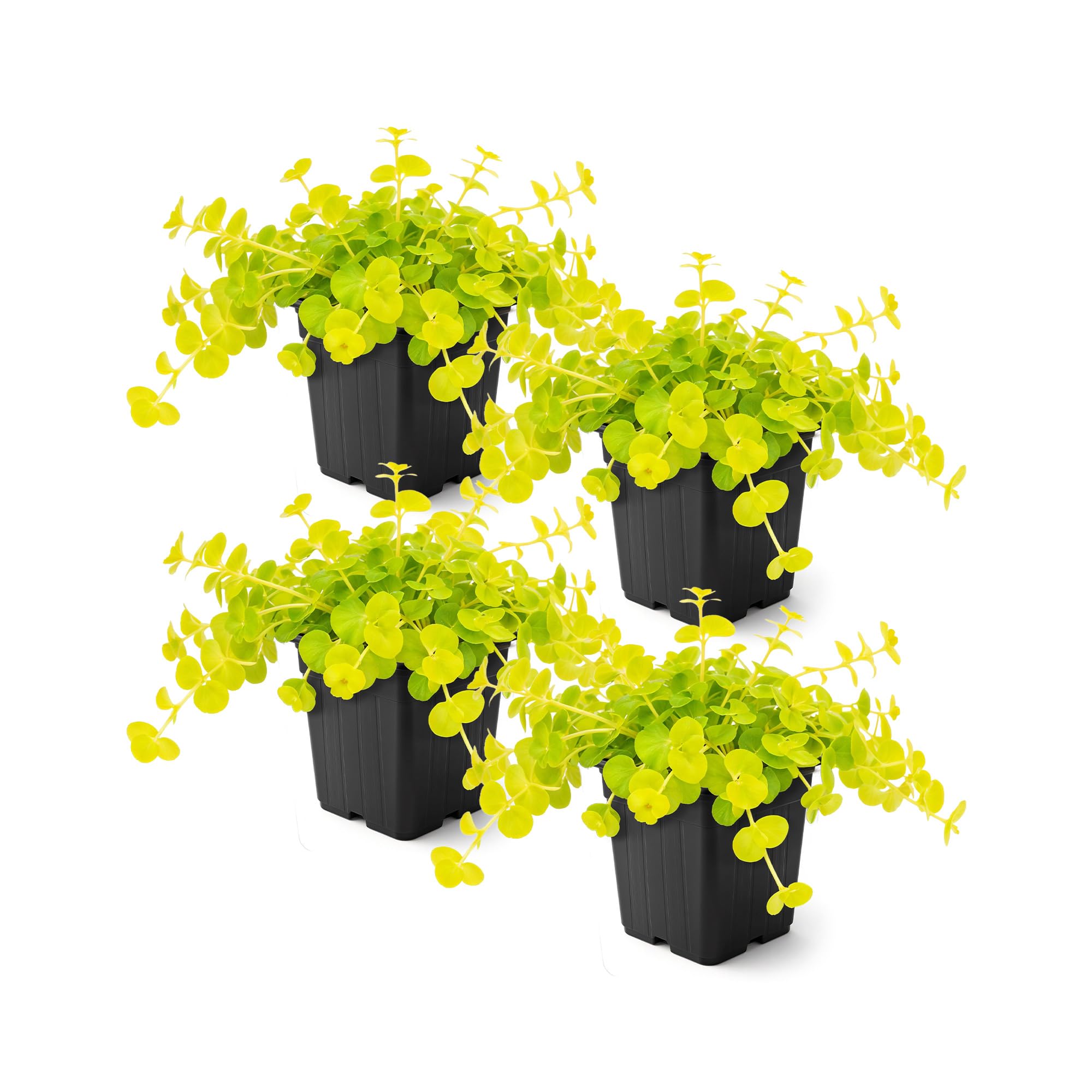
The bright chartreuse spiller that lights up a dull, half-shaded bed.
It is easy in sun or partial shade and tops out around 4 inches tall with roughly an 18-inch spread. Use it to soften the base of a shady trellis or spill over a wall lip. Each plant weighs 12 ounces, lighter in the hand than the 16-ounce Honeysuckle vine above.
Quality is the trait that gets recommended most, with appearance close behind, and the chartreuse color is the reason people buy it. The honest note: health and size feedback both come out mixed. Reviewers point out a split — some plants arrive healthy and large, others in poor condition and were smaller than advertised. Treat it as a plant that rewards a careful unboxing and a drink of water the same day.
What earns it a spot
- Bright chartreuse leaves that break up a dark, shaded border
- Four plants per pack and a quick, weed-suppressing spread
What to watch for
- Arrival condition varies, so inspect and water within a day
Best used as: a bright green spiller at the foot of a shade trellis or over a low wall.
skip it if: you need height — this one hugs the ground.
5. Clematis paniculata (Sweet Autumn Clematis)
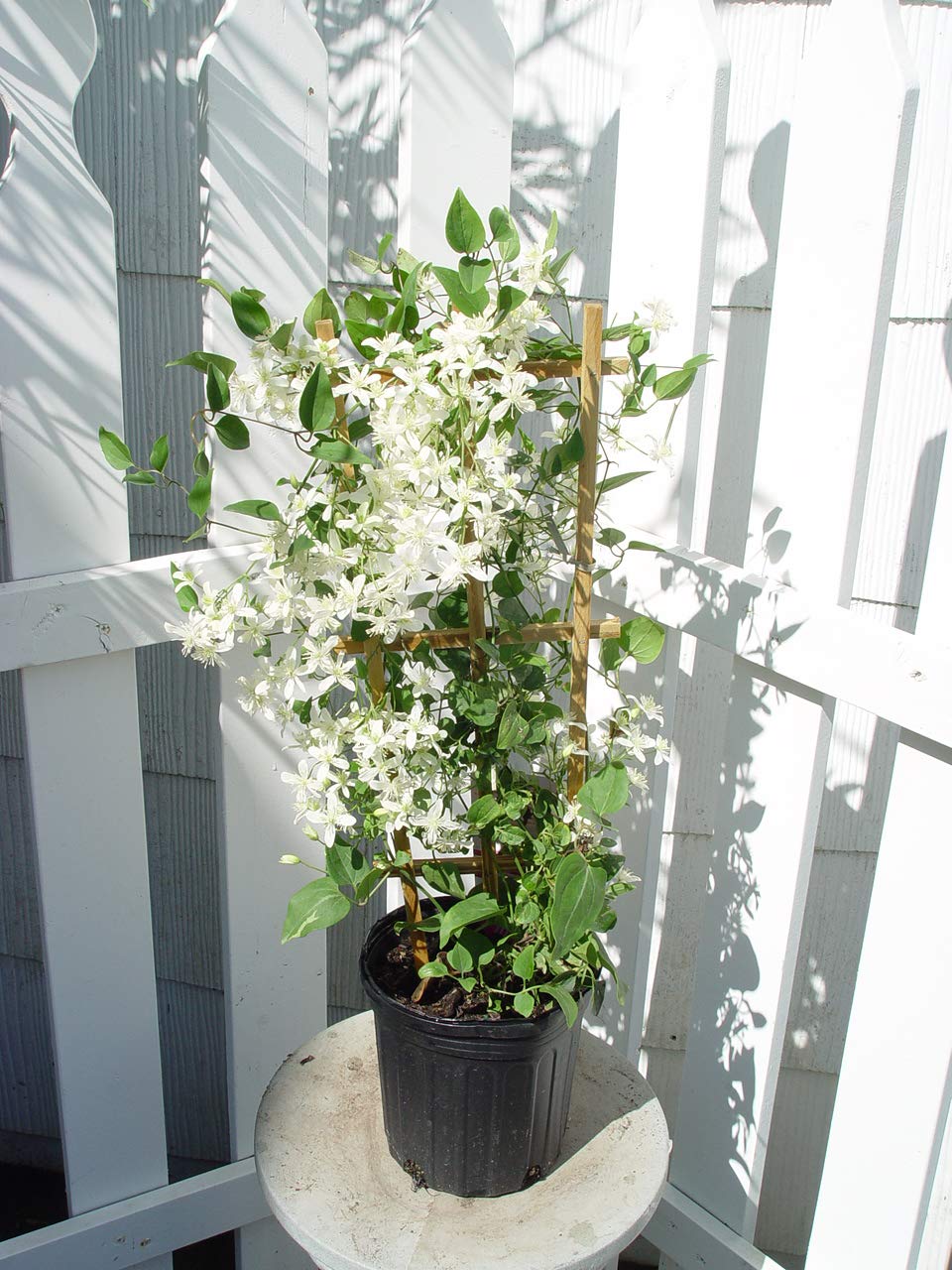
A rooted 8-inch clematis that blooms in fall and doubles its size fast.
This is the only pick here sold for fall bloom, which makes it the smart partner to a spring-flowering vine on the same fence. It takes USDA zones 4-8, arrives fully rooted in an 8″ container, and can go straight in the ground on arrival. At 5 pounds it is 20% lighter than the 6-pound Star Jasmine above — a smaller box, but a plant that is already established rather than a bare plug.
Health is what gets praised most, with quality right behind it. Expect it to leap: shoppers say the plant exceeds expectations in terms of size, doubling in size within about a month, and immediately starts blooming. Note the sunlight label says full sun, so give it the brighter end of your shady wall and it will still reward you.
The standout: a ready-to-plant 8″ specimen for zones 4-8 that blooms in fall and grows visibly in weeks.
The honest limit: the listing calls for full sun, so a deep-shade wall will cost you flowers.
The one to grab for: a partly sunny fence in a cold zone that deserves a late-season white show.
Hold off if: your spot is true deep shade — this vine wants light to bloom.
Know the Specs
USDA Hardiness Zone
A zone number is a winter-cold rating: it tells you the coldest conditions a plant is rated to survive, so a zone 8-11 jasmine will not endure a zone 5 frost and a zone 3 honeysuckle will. Always compare it to your own garden’s zone before you order.
“Sun or Shade” Wording
When a listing says sun or shade, the plant will grow in both, but the bloom usually weakens in lower light. Read the light line as output, not survival — tolerating shade and flowering hard in it are two different things.
Common Questions
Will English ivy really grow on a north-facing wall?
How long does a shipped live vine take to establish?
Is Star Jasmine or Sweet Autumn Clematis better for a shady fence?
Can I plant honeysuckle in a cold winter zone?
What do I do if my plant arrives looking dead?
Does Creeping Jenny climb a trellis?
How many plants do I need to cover a fence?
When should I plant a live vine that arrives in a pot?
The Bottom Line
For most shade gardens, the top pick among these climbing plants for shade is the Star Jasmine, because it accepts partial shade and delivers scent and evergreen foliage in warm zones. If your wall is truly dim and cold, reach for the Baltic English Ivy 8-pack instead, since it is the only pick sold for sun or shade. Want fall bloom on a slightly brighter fence? The Sweet Autumn Clematis is the one to order.
How we choose
We do not accept paid placement. Every pick is matched to a real buyer and a real use-case; we do not hands-on test units.
Sources
Specifications: manufacturer listings and product documentation. Review insights: verified customer reviews, as of November 2026. Pricing: not shown on this page (it changes often); check the current price via the retailer link.
As an Amazon Associate, My Heart Lives Here earns from qualifying purchases. This does not affect which products we feature.